1
Electronic copies of the most current TSM issue can be found on the Viking Pump website at www.vikingpump.com
TECHNICAL SERVICE MANUAL
HEAVY-DUTY BRACKET MOUNTED PUMPS
SERIES 125 AND 4125
SIZES LS, Q, QS, M
SECTION
TSM 141.2
PAGE
1 of 12
ISSUE
F
CONTENTS
Introduction . . . . . . . . . . . . . . . . . . . . . . . .1
Special Information . . . . . . . . . . . . . . . . . . . .2
Maintenance . . . . . . . . . . . . . . . . . . . . . . .2
Packed Pumps . . . . . . . . . . . . . . . . . . . . . .3
Mechanical Seal Pumps . . . . . . . . . . . . . . . . .6
Standard Rubber Bellows Type . . . . . . . . . . . 8
Optional PTFE Seal . . . . . . . . . . . . . . . . . 9
Thrust Bearing Adjustment . . . . . . . . . . . . . . . 10
Installation of Carbon Graphite Bushings . . . . . . . 11
Pressure Relief Valve Instructions . . . . . . . . . . . 11
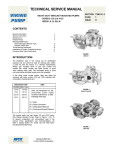
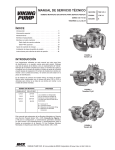
figure 1
Size LS
INTRODUCTION
The illustrations used in this manual are for identification
purposes only and cannot be used for ordering parts. Obtain a
parts list from the factory or a Viking® representative. Always
give complete name of part, part number and material with
model number and serial number of pump when ordering
repair parts. The unmounted pump or pump unit model
number and serial number are on the nameplate.
In the Viking model number system, basic size letters are
combined with series number (125 and 4125) and used to
indicate either an unmounted pump or mounted pump unit.
UNMOUNTED PUMP
UNITS
PACKED MECH. SEAL
LS125
LS4125
Q125
Q4125
QS125
QS4125
M125
M4125
figure 2
Sizes Q and M
Units are designated by the
unmounted pump model
numbers followed by a
letter indicating drive style.
V = V-belt
D = Direct Connected
R = Viking Speed Reducer
P = Commercial Speed
Reducer
This manual deals only with Series 125 and 4125 Heavy
Duty Bracket Mounted Pumps. Refer to Figures 1 through
15 for general configuration and nomenclature used in this
manual. Pump specifications and recommendations are
listed in Catalog Section 141, Series 125 and 4125 Heavy
Duty Bracket Mounted Pumps.
figure 3
Size QS
VIKING PUMP, INC. • A Unit of IDEX Corporation • Cedar Falls, IA 50613 USA
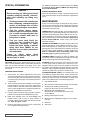
SPECIAL INFORMATION
DANGER !
Before opening any Viking pump liquid
chamber (pumping chamber, reservoir,
relief valve adjusting cap fitting, etc.)
Be sure:
1. That any pressure in the chamber has
been completely vented through the
suction or discharge lines or other
appropriate openings or connections.
2.That the driving means (motor,
turbine, engine, etc.) has been “locked
out” or made non-operational so that
it cannot be started while work is
being done on pump.
3.That you know what liquid the
pump has been handling and the
precautions necessary to safely
handle the liquid. Obtain a material
safety data sheet (MSDS) for the
liquid to be sure these precautions
are understood.
Failure
to
follow
above
listed
precautionary measures may result in
serious injury or death.
ROTATION: Viking pumps operate equally well in a clockwise or counterclockwise rotation. Shaft rotation determines
which port is suction and which is discharge. Port in area
where pumping elements (gear teeth) come out of mesh is
suction port.
PRESSURE RELIEF VALVES:
1. Viking pumps are positive displacement pumps and
must be provided with some sort of pressure protection.
This may be a relief valve mounted directly on the pump,
an inline pressure relief valve, a torque limiting device or
a rupture disk.
2. There are relief valve options available on those pump
models designed to accept a relief valve. Options may
include a return to tank relief valve and a jacketed relief
valve. Pumps equipped with a jacketed head plate are
generally not available with a relief valve.
3. If pump rotation is reversed during operation, pressure
protection must be provided on both sides of pump.
4. Relief valve adjusting screw cap must always point
towards suction side of pump. If pump rotation is
reversed, remove pressure relief valve and turn end for
end. Refer to Figures 1 and 2.
5. Pressure relief valves cannot be used to control pump
flow or regulate discharge pressure.
SECTION TSM 141.2
ISSUE
F
PAGE 2 OF 12
For additional information on pressure relief valves, Refer
to Technical Service Manual TSM000 and Engineering
Service Bulletin ESB-31.
SPECIAL MECHANICAL SEALS
Extra care must be taken in repair of pumps with mechanical
seals. Read and follow all special information supplied with
pump.
MAINTENANCE
Series 125 and 4125 pumps are designed for long, troublefree service life under a wide variety of application conditions
with a minimum of maintenance. The points listed below will
help provide long service life.
LUBRICATION: External lubrication must be applied slowly
with a hand gun to all lubrication fittings every 500 hours of
operation with multi-purpose grease, NLGI #2. Do not overgrease. Applications involving very high or low temperatures
will require other types of lubrication. Refer to Engineering
Service Bulletin ESB-515. Consult factory with specific
lubrication questions.
PACKING ADJUSTMENT: New packed pumps require initial
packing adjustment to control leakage as packing “runs in”.
Make initial adjustments carefully and do not over-tighten
packing gland. After initial adjustment, inspection will reveal
need for packing gland adjustment or packing replacement.
Refer to instructions under Disassembly, page 4, and
Assembly, page 5, regarding repacking pump.
CLEANING PUMP: Keep pump as clean as possible. This
will facilitate inspection, adjustment and repair work and help
prevent overlooking a dirt covered grease fitting.
STORAGE: If pump is to be stored, or not used for six months
or more, pump must be drained and a light coat of nondetergent SAE 30 weight oil must be applied to all internal
pump parts. Lubricate fittings and apply grease to pump shaft
extension. Viking suggests rotating pump shaft by hand one
complete revolution every 30 days to circulate the oil.
SUGGESTED REPAIR TOOLS: The following tools must
be available to properly repair Series 125 and 4125 pumps.
These tools are in addition to standard mechanics’ tools such
as open end wrenches, pliers, screw drivers, etc. Most of the
items can be obtained from an industrial supply house.
1. Soft Headed hammer
2. AlIen wrenches (some mechanical seals and set collars)
3. Packing hooks, flexible (packed pumps)
Large for 0.38 inch and up cross section packing
4. Mechanical seal installation sleeve
Viking Part No. 2-751-005-630 for 2.44 inch seal;
Q, QS & M4125
5. Bearing locknut spanner wrench
6. Spanner wrench, adjustable pin type for use on double end caps
7. Brass bar
8. Arbor press
PACKED PUMPS
IDLER
ROTOR
HEAD
PACKING
PACKING GLAND
BRACKET
SHAFT
IDLER PIN
CASING
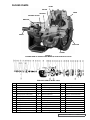
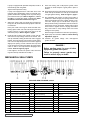
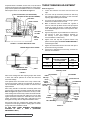
FIGURE 4
CUTAWAY VIEW OF PACKED PUMP MODEL Q OR M125 WITH CALLOUTS
EXPLODED VIEW OF MODEL LS125
ITEM
NAME OF PART
ITEM
NAME OF PART
ITEM
NAME OF PART
1
Locknut
14
Packing Retainer Washer
27
Idler Bushing
2
Lockwasher
15
Bracket Bushing
28
Head Gasket
3
End Cap (Outer)
16
Grease Fitting
29
Idler Pin
4
Lip Seal for End Cap
17
Bracket and Bushing
30
Head and Idler Pin
5
Bearing Spacer Collar (Outer)
18
Capscrew for Bracket
31
Gasket for Jacket Head Plate
6
Ball Bearing
19
Bracket Gasket
32
Jacket Head Plate
7
Bearing Spacer Collar (Inner)
20
Casing
33
Capscrew for Head
8
Ring, Half Round
21
Nut for Flanges
34
Relief Valve Gasket
9
End Cap (Inner)
22
Capscrew for Flanges
35
Capscrew for Relief Valve
10
Packing Gland
23
Pipe Flange Gasket
36
Internal Relief Valve
11
Packing Gland Nut
24
Pipe Plug
37
Cover Plate, Relief Valve
12
Packing Gland Capscrew
25
Rotor and Shaft
13
Packing
26
Idler and Bushing
SECTION TSM 141.2
ISSUE
F
PAGE 3 OF 12
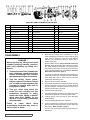
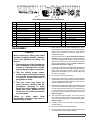
EXPLODED VIEW FOR MODELSQ, QS AND M125
ITEM
1
NAME OF PART
ITEM
13
Locknut
NAME OF PART
ITEM
25
Bracket Bushing
NAME OF PART
Idler Bushing
2
Lockwasher
14
Bracket and Bushing
26
Head Gasket
3
End Cap (Outer)
15
Grease Fitting
27
Idler Pin
4
Lip Seal for End Cap
16
Capscrew for Bracket
28
Head and Idler Pin
5
Bearing Spacer Collar
17
Bracket Gasket
29
Stud for Head
6
Ball Bearing
18
Nut for Flanges
30
Nut for Head
7
End Cap (Inner)
19
Stud for Flanges
31
Relief Valve Gasket
8
Packing Gland
20
Casing (QS size has opposite ports)
32
Capscrew for Relief Valve
33
9
Packing Gland Nut
21
Pipe Flange Gasket
10
Packing Gland Capscrew
22
Pipe Plug
11
Packing
23
Rotor and Shaft
12
Packing Retainer Washer
24
Idler and Bushing
DISASSEMBLY
DANGER !
Before opening any Viking pump liquid
chamber (pumping chamber, reservoir,
relief valve adjusting cap fitting, etc.)
Be sure:
1. Mark head and casing before disassembly to insure
proper reassembly. The idler pin, which is offset in pump
head, must be positioned toward and equal distance
between port connections to allow for proper flow of
liquid through pump.
Remove head from pump. Do not allow idler to fall from
idler pin. Tilt top of head back when removing to prevent
this. Avoid damaging head gasket. If pump is furnished
with pressure relief valve, it need not be removed from
head or disassembled at this point. Refer to Pressure
Relief Valve Instructions, page 11.
1. That any pressure in the chamber has
been completely vented through the
suction or discharge lines or other
appropriate openings or connections.
2.That the driving means (motor,
turbine, engine, etc.) has been “locked
out” or made non-operational so that
it cannot be started while work is
being done on pump.
3.That you know what liquid the
pump has been handling and the
precautions necessary to safely
handle the liquid. Obtain a material
safety data sheet (MSDS) for the
liquid to be sure these precautions
are understood.
Failure
to
follow
above
listed
precautionary measures may result in
serious injury or death.
SECTION TSM 141.2
ISSUE
F
PAGE 4 OF 12
Internal Relief Valve
Suckback Line, Not Illustrated
If LS pump has jacketed head plate, it will separate from
head when it is removed. The gasket between head and
jacket head plate must be totally removed. Use new
gasket when assembling pump.
2. Remove idler and bushing assembly.
3. Insert length of hardwood or brass through port opening
between rotor teeth to keep shaft from turning. Bend up
tang of lockwasher and with a spanner wrench remove
locknut and lockwasher from shaft.
4.
Remove packing gland nuts.
5. Tap shaft forward approximately 0.5 inch and remove pair
of half round rings under inner bearing spacer collar.
6. Carefully remove rotor and shaft to avoid damaging
bracket bushing.
7. Remove packing gland from side of bracket.
8. Loosen four setscrews over the inner and outer end caps.
Remove both end caps with lip seals, spacer collars and
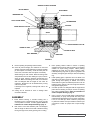
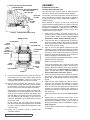
ball bearing. Refer to Figure 5, page 11.
The inner cap can be removed through side opening of
the bracket.
GREASE FITTING LOCATION
NYLON INSERT
SETSCREWS
INNER END CAP
OUTER END CAP
HALF ROUND RINGS
LOCKWASHER
LOCKNUT
INNER SPACER COLLAR
SHAFT
OUTER SPACER COLLAR
INNER LIP SEAL
OUTER LIP SEAL
BALL BEARING
BRACKET
FIGURE 5
9. Remove packing and packing retainer washer.
10.Clean all parts thoroughly and examine for wear and
damage. Check lip seals, ball bearing, bushings and idler
pin and replace if necessary. Check all other parts for
nicks, burrs, excessive wear and replace if necessary.
Wash bearings in clean solvent. Blow out bearings with
compressed air. Do not allow bearings to spin; turn them
slowly by hand. Spinning bearings will damage race
and balls. Make sure bearings are clean, then lubricate
with non-detergent SAE 30 weight oil and check for
roughness. Roughness can be determined by turning
outer race by hand.
If bearings have roughness, bearings will need to be
replaced.
11.Casing can be checked for wear or damage while
mounted on bracket.
ASSEMBLY
1. Install bracket bushing. If bracket bushing has a
lubrication groove, install bushing with groove at 6:00
o’clock position in bracket. If carbon graphite, Refer to
Installation of Carbon Graphite Bushings, page 11.
3. Place packing retainer washer in bottom of packing
chamber and pack pump with new packing. Use packing
suitable for liquid being pumped. Install packing,
staggering the joints from one side of shaft to other.
Lubricate packing rings with oil, grease or graphite to aid
assembly. A length of pipe will help to seat each packing
ring.
4. Install packing gland, capscrews and nuts. Back rotor
and shaft out of casing just far enough to insert packing
gland through side opening of bracket over end of
shaft. Make sure gland is installed square and nuts are
tightened evenly. Tighten nuts wrench tight then back off
until gland is slightly loose.
5. Coat idler pin with non-detergent SAE 30 weight oil and
place idler and bushing on idler pin in head. If replacing
with carbon graphite bushing, Refer to Installation of
Carbon Graphite Bushings, page 11.
6. Using a .010 to .015 inch head gasket, install head and
idler assembly on pump. Pump head and casing were
marked before disassembly to insure proper reassembly.
If not, be sure idler pin, which is offset in pump head,
is positioned toward and equal distance between port
connections to allow for proper flow of liquid through
pump.
2. Coat shaft of rotor shaft assembly with non-detergent
SAE 30 weight oil. Start end of shaft in bracket bushing
turning from right to left, slowly pushing rotor in casing.
SECTION TSM 141.2
ISSUE
F
PAGE 5 OF 12
If pump is equipped with jacketed head plate, install at
this time along with new gasket.
Tighten head capscrews evenly.
If pump was equipped with a relief valve and it was
removed during disassembly, install on head with new
gaskets. Relief valve adjusting screw cap must always
point toward suction port. Refer to Figures 1, 2 and 3
on page 1. For relief valve repair or adjustments, Refer
to Pressure Relief Vavle Instructions, Page 11.
7. Slide inner spacer collar over shaft with recessed end
facing rotor. Q, QS and M size bearing spacer collars are
not recessed.
Place pair of half round rings on shaft and slide inner
bearing spacer collar over half round rings to lock them
in place. There is no pair of half round rings on Q, QS
and M size pumps. Refer to Figure 5, page 5.
8. Press lip seal, lip facing end of shaft, in inner end cap
and insert end cap through shaft end of bracket. Turn
end cap clockwise, looking at shaft end, until it engages
threads. End cap spanner wrench holes must be facing
rotor. Turn end cap with spanner wrench until it projects
slightly from opening on side of bracket. End cap must
not be turned so far that lip seal drops off end of spacer
collar on shaft or end cap becomes disengaged from
threads. Refer to Figure 5, page 5.
9. Pack ball bearing with multi-purpose grease, NLGI
#2. Place on shaft and push or gently drive in place in
bracket.
10.Press lip seal, lip facing end of shaft, in outer end cap and
insert end cap in bracket. Turn end cap in bracket until
it is tight against bearing. Refer to Figure 5, page 5.
11.Put Iockwasher and locknut on shaft. Insert length of
hardwood or brass through port opening between rotor
teeth to keep shaft from turning. Tighten locknut to 120150 ft.-lbs. Torque (LS) or 170-190 ft.-lbs. Torque (Q,
QS, M). Bend one tang of lockwasher into slot of locknut.
If tang does not line up with slot, tighten locknut until it
does. Failure to tighten locknut or engage lockwasher
tang could result in early bearing failure and cause
damage to rest of pump.
Remove length of hardwood or brass from port opening.
12. Adjust pump end clearance. Refer to Thrust Bearing
Adjustment, page 10.
13.
Lubricate all grease
grease, NLGI #2.
If this happens, remove inner spacer collar, half round
rings and end cap and start over at Step 7.
MECHANICAL SEAL PUMPS
fittings
with
multi-purpose
DANGER !
Before starting pump, be sure all drive
equipment guards are in place.
Failure to properly mount guards may
result in serious injury or death.
EXPLODED VIEW FOR MODEL LS4125
ITEM
NAME OF PART
ITEM
NAME OF PART
ITEM
NAME OF PART
1
Locknut
14
Mechanical Seal
27
Rotor and Shaft
2
Lockwasher
15
Set Collar
28
Idler and Bushing
3
End Cap (Outer)
16
Grease Fitting
29
Idler Bushing
4
Lip Seal for End Cap
17
Pipe Plug
30
Head Gasket
5
Bearing Spacer Collar (Outer)
18
Bracket and Bushing
31
Idler Pin
6
Ball Bearing
19
Capscrew for Bracket
32
Head and Idler Pin
7
Bearing Spacer Collar (Inner)
20
Bracket Bushing
33
Gasket for Jacket Head Plate
8
Ring, Half Round
21
Bracket Gasket
34
Jacket Head Plate
9
End Cap (Inner)
22
Casing
35
Capscrew for Head
10
Nut for Seal Holder
23
Nut for Flanges
36
Relief Valve Gasket
11
Capscrew for Seal Plate
24
Capscrew for Flanges
37
Capscrew for Relief Valve
12
Seal Plate
25
Pipe Flange Gasket
38
Internal Relief Valve
13
Seal Holder
26
Pipe Plug
39
Cover Plate, Relief Valve
SECTION TSM 141.2
ISSUE
F
PAGE 6 OF 12
EXPLODED VIEW for MODELs q, qs and m125
ITEM
1
2
3
4
5
6
7
8
9
10
11
12
NAME OF PART
Locknut
Lockwasher
End Cap (Outer)
Lip Seal for End Cap
Bearing Spacer Collar
Ball Bearing
End Cap (Inner)
Nut for Seal Holder
Capscrew for Seal Holder
Seal Holder Plate
Seal Holder
Mechanical Seal
ITEM
13
14
15
16
17
18
19
20
21
22
23
24
NAME OF PART
ITEM
Set Collars
Pipe Plug
Grease Fitting
Bracket and Bushing
Capscrew for Bracket
Bracket Bushing
Bracket Gasket
Stud for Flanges
Nut for Flanges
Casing (QS size has opposite ports)
Pipe Flange Gasket
Pipe Plug
DISASSEMBLY
DANGER !
Before opening any Viking pump liquid
chamber (pumping chamber, reservoir,
relief valve adjusting cap fitting, etc.)
Be sure:
3.That you know what liquid the
pump has been handling and the
precautions necessary to safely
handle the liquid. Obtain a material
safety data sheet (MSDS) for the
liquid to be sure these precautions
are understood.
Failure
to
follow
above
listed
precautionary measures may result in
serious injury or death.
Rotor and Shaft
Idler and Bushing
Idler Bushing
Head Gasket
Idler Pin
Head and Idler Pin
Stud for Head
Nut for Head
Relief Valve Gasket
Capscrew for Relief Valve
Internal Relief Valve
Suckback Line, Not Illustrated
1. Mark head and casing before disassembly to insure
proper reassembly. The idler pin, which is offset in pump
head, must be positioned toward and equal distance
between port connections to allow for proper flow of
liquid through pump.
Remove head from pump. Do not allow idler to fall from
idler pin. Tilt top of head back when removing to prevent
this. Avoid damaging head gasket. If pump is furnished
with pressure relief valve, it need not be removed from
head or disassembled at this point. Refer to Pressure
Relief Valve Instructions, page 11.
1. That any pressure in the chamber has
been completely vented through the
suction or discharge lines or other
appropriate openings or connections.
2.That the driving means (motor,
turbine, engine, etc.) has been “locked
out” or made non-operational so that
it cannot be started while work is
being done on pump.
25
26
27
28
29
30
31
32
33
34
35
NAME OF PART
If LS pump has jacketed head plate, it will separate from
head when it is removed. The gasket between head and
jacket head plate must be totally removed. Use new
gasket when assembling pump. Q, QS and M pumps
have one piece gasket.
2. Remove idler and bushing assembly.
3. Insert length of hardwood or brass through port opening
between rotor teeth to keep shaft from turning. Bend up
tang of lockwasher and with a spanner wrench remove
locknut and lockwasher from shaft.
4.
Standard Mechanical Seal (synthetic rubber bellows type)
uses a set collar behind the seal spring. Two setscrews
must be loosened before shaft can be removed. Access
to collar setscrews is through seal access hole on right
hand side of mounting bracket (viewed from shaft end,
Refer to Figure 6.)
5. Tap shaft forward approximately 0.5 inch and remove
pair of half round rings under inner spacer collar. There
is no pair of half round rings on Q, QS and M size pumps.
Refer to Figure 7.
6. Carefully remove rotor and shaft to avoid damaging
bracket bushing.
7. Remove seal holder and seal holder plate.
8. The seal seat and rotary member of the seal can now be
removed from the side opening of bracket.
SECTION TSM 141.2
ISSUE
F
PAGE 7 OF 12
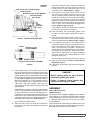
seal access hole (for setscrews)
spring adapter
mechanical seal (Rotary member)
seal seat gasket
seal holder
right side
of pump
seal
holder
plate
set collar
FIGURE 6 - standard mechanical seal
grease fitting
setscrews
outer end cap
half
round
rings
inner spacer
collar
locknut
outer
spacer
collar
outer lip
seal
bracket
ball bearing
FIGURE 7
9. Loosen the four setscrews over the outer and inner end
caps. Remove both end caps, spacer collars and ball
bearing. Refer to Figure 7. The inner end cap can be
removed through the side openings in the bracket.
10. Clean all parts thoroughly and examine for wear or
damage. Check lip seals, ball bearing, bushing and idler
pin and replace if necessary. Check all other parts for
nicks, burrs, excessive wear and replace if necessary.
Wash bearings in clean solvent. Blow out bearings with
compressed air. Do not allow bearings to spin; turn them
slowly by hand. Spinning bearings will damage race
and balls. Make sure bearings are clean, then lubricate
with non-detergent SAE 30 weight oil and check for
roughness. Roughness can be determined by turning
outer race by hand.
Be sure shaft is free from nicks, burrs and foreign
particles that might damage bracket bushing. Scratches
on shaft in seal area will provide leakage paths under
mechanical seal.
11.Casing can be checked for wear or damage while
mounted on bracket.
SECTION TSM 141.2
The seal used in this pump is simple to install and good
performance will result if care is taken during installation.
The principle of the mechanical seal is contact between the
rotary and stationary members. These parts are lapped to
a high finish and their sealing effectiveness depends on
complete contact.
1. Install bracket bushing. If bracket bushing has a
lubrication groove, install bushing with groove at 6:00
o’clock position in bracket. If carbon graphite, Refer to
Installation of Carbon Graphite Bushings, page 11.
2. Coat rotor shaft with non-detergent SAE 30 weight oil.
Start end of shaft in bracket bushing and turn from right
to left, slowly pushing until the ends of the rotor teeth are
just below the face of the casing.
3. Using a .015 inch head gasket, install head and idler
assembly on pump. Pump head and casing were marked
before disassembly to insure proper reassembly. If not, be
sure idler pin, which is offset in pump head, is positioned
toward and equal distance between port connections to
allow for proper flow of liquid through pump.
lockwasher
inner
lip seal
Standard Mechanical Seal
(Synthetic Rubber Bellows Type)
Viking furnishes a number of heavy-duty pumps with
special mechanical seals installed in the packing end of the
pump. These special seals are not discussed in TSM141.2.
Information is available by contacting the factory. When
requesting special seal information, be sure to give pump
model number and serial number.
seal
seat
nylon inseRt
inner
end cap
ASSEMBLY
ISSUE
F
PAGE 8 OF 12
If pump is equipped with jacketed head plate, install at
this time along with new gasket.
Tighten head capscrews evenly.
If pump was equipped with a relief valve and it was
removed during disassembly, install a head with new
gaskets. Relief valve adjusting screw cap must always
point toward suction port. Refer to Figures 1, 2 and 3 on
page 1. For relief valve repair or adjustments, Refer to
Pressure Relief Valve Instructions, page 11.
4. Clean rotor shaft and bracket seal housing bore. Be sure
they are free of dirt, grit and scratches. Gently radius
leading edge of shaft diameter over which seal must be
placed.
5. Install seal set collar. Examine set collar for burrs or
scratches, and setscrews are withdrawn to prevent
shaft from being scratched when set collar is installed.
Place set collar onto shaft, push into seal chamber until
centerline of setscrews coincides with centerline of
tapped seal access holes on right side of bracket (viewed
from shaft end).
Tighten all setscrews securely to shaft. Refer to Figure
8.
6. Sealing faces on mechanical seals should not be
touched with anything but fingers or a clean cloth. A
tapered sleeve is available, at extra cost, for Q, QS and
M pumps from Viking Pump for seal installation on shaft.
Refer to Figure 9.
LS pump shaft is tapered and an installation sleeve is
not available.
Place pair of half round rings on shaft and slide inner
bearing spacer collar over half round rings to lock them
in place. There is no pair of half round rings on Q, QS
and M size pumps. Refer to Figure 7, page 8.
right side
of pump
seal access hole (for setscrews)
spring adapter
mechanical seal (Rotary member)
seal seat gasket
seal holder
seal
holder
plate
set collar
seal
seat
FIGURE 8 - standard mechanical seal
spring
mechanical seal
(rotary member)
9. Press lip seal, lip facing end of shaft, in inner end cap
and insert end cap through shaft end of bracket. Turn
end cap clockwise, looking at shaft end, until it engages
threads. End cap spanner wrench holes must be facing
rotor. Turn end cap with spanner wrench until it projects
slightly from opening on side of bracket. End cap must
not be turned so far that lip seal drops off end of spacer
collar on shaft or end cap becomes disengaged from
threads. Refer to Figure 7, page 8.
If this happens, remove inner spacer collar, half round
rings and end cap and start over at Step 8.
10.Pack ball bearing with multi-purpose grease, NLGI
#2. Place on shaft and push or gently drive in place in
bracket.
11. Press lip seal, lip facing end of shaft, in outer end cap
and insert end cap in bracket. Turn end cap in bracket
until it is tight against bearing. Refer to Figure 7, page 8.
12. Put lockwasher and locknut on shaft. Insert length of
hardwood or brass through port opening between rotor
teeth to keep shaft from turning. Tighten locknut to 120150 ft.– lbs. Torque (LS) or 170-190 ft. – lbs. Torque (Q,
QS, M). Bend one tang of lockwasher into slot of locknut.
If tang does not line up with slot, tighten locknut until it
does. Failure to tighten locknut or engage lockwasher
tang could result in early bearing failure and cause
damage to rest of pump.
tapered sleeve
coat with light oil before assembly
FIGURE 9
7. Install rotating member of seal. Slide spring over shaft
into seal chamber and onto set collar pilot. Center spring
adapter (Q, QS and M size only) against back of metal
retainer so spring will push against adapter and not work
itself over back of mechanical seal. Place tapered sleeve
on shaft. Refer to Figure 9. Apply a liberal coating of
SAE-30 non-detergent oil to large diameter portion of
shaft, tapered sleeve and to inside diameter of seal
rubber parts. Start rotary member, carbon face out,
onto shaft and push along shaft until spring is centered
against adapter.
Install Stationary Seal Seat. Lubricate outside diameter
of seal o-ring seat gasket and flush lapped face with lube
oil. Press stationary seat into bore until lapped face is
just inside bore. Position stationary seat by installing seal
holder and secure to machined face of bracket with seal
holder plate. Tighten nuts securing seal holder evenly so
seal holder will not be distorted. Refer to Figure 8.
Remove tapered installation sleeve.
8. Slide inner spacer collar over shaft with recessed end
facing rotor. Q, QS and M size bearing spacer collars are
not recessed.
Remove length of hardwood or brass from port opening.
13. Adjust pump end clearance. Refer to Thrust Bearing
Adjustment, page 10.
14. Lubricate all grease fittings with multi-purpose grease,
NLGI #2.
DANGER !
Before starting pump, be sure all drive
equipment guards are in place.
Failure to properly mount guards may
result in serious injury or death.
ASSEMBLY
Optional Mechanical Seal
(PTFE Fitted Type)
The seal type shown in Figure 10, page 10 can be installed
as an alternate to the standard mechanical seal (synthetic
rubber bellows type). This seal is setscrew driven, is simple
to install and good performance will result if care is taken
during installation.
Clean rotor shaft and seal housing bore. Make sure they are
free of dirt, grit and scratches. Gently radius leading edge of
shaft diameter over which seal is to be placed.
SECTION TSM 141.2
ISSUE
F
PAGE 9 OF 12
A tapered sleeve is available, at extra cost, for Q, QS and M
pumps from Viking Pump for seal installation on shaft. LS size
pump shaft is tapered and installation sleeve is not available.
Place tapered sleeve on shaft, Refer to Figure 11.
seal access hole (for setscrews)
mechanical seal (rotary member)
seal seat
seal holder
left side
of pump
seal
holder
plate
seal seat gasket
FIGURE 10 - OPTIONAL MECHANICAL SEAL
TAPERED INSTALLATION SLEEVE
THRUST BEARING ADJUSTMENT
Refer to Figure 13
1. Loosen two setscrews over each outer and inner end
caps.
2. Turn inner end cap clockwise (viewed from shaft end)
until it projects slightly into opening on side of bracket
exposing approximately three threads.
3. Turn outer end cap clockwise until rotor is tight against
head and rotor shaft cannot be turned.
4. Make a reference mark on bracket end, opposite a
notch on outer end cap. Back off outer end cap required
number of notches as shown in Total End Clearance
Chart. Refer to Figure 11. Each notch represents .002”
end clearance.
5. High viscosity liquids require additional end clearances.
The amount of extra end clearance depends on
the viscosity of the liquid pumped. For specific
recommendations contact factory.
6. Tighten inner end cap with a spanner wrench. Tap
spanner wrench lightly but DO NOT OVER-TIGHTEN as
it will damage threads.
7. Tighten set screws that hold inner and outer end caps to
prevent their turning in bracket.
8. Check rotor to determine if it turns freely; if it does not,
add more end clearance.
TOTAL END CLEARANCE CHART
MECHANICAL SEAL
ROTARY MEMBER
PUMP
SIZE
TURN OUTER END CAP
COUNTER-CLOCKWISE
NO. OF NOTCHES
TOTAL
END
CLEARANCE
LS
2.5
.005
Q, QS AND M
5
.010
SHAFT
grease fitting
FIGURE 11
Never touch sealing faces with anything except clean hands
or clean cloth. Minute particles can scratch the seal faces
and cause leakage.
Coat tapered sleeve and inside of the rotary member with
a generous quantity of SAE 30 non-detergent oil. Grease is
not recommended. Start rotary member on shaft and over
tapered sleeve.
Move rotary member so setscrews are directly below seal
access holes on left side of bracket (viewed from shaft end)
Refer to Figure 10. Tighten all setscrews securely to shaft.
Flush sealing faces of both rotary member and seal seat with
oil and install seal seat and seat gasket over end of shaft
against machined bracket face. Assemble other seal seat
gasket, seal holder, seal holder plate, capscrews and nuts
and tighten securely. Remove tapered installation sleeve.
Some PTFE seals are equipped with holding clips which
compress the seal springs. Remove holding clips to release
springs after seal is installed on shaft.
AT THIS POINT, FINISH ASSEMBLY PROCEDURES
STARTING AT STEP 8, PAGE 9 (STANDARD
MECHANICAL SEAL).
SECTION TSM 141.2
ISSUE
F
PAGE 10 OF 12
nylon inseRt
inner
end cap
half
round
rings
inner spacer
collar
setscrews
outer end cap
lockwasher
locknut
outer
spacer
collar
inner
lip seal
outer lip
seal
bracket
ball bearing
FIGURE 13
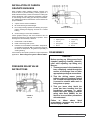
INSTALLATION OF CARBON
GRAPHITE BUSHINGS
When installing carbon graphite bushings, extreme care
must be taken to prevent breaking. Carbon graphite is a
brittle material and easily cracked. If cracked, the bushing will
quickly disintegrate. Using a lubricant and adding a chamfer
on the bushing and the mating part will help in installation.
The additional precautions listed below must be followed for
proper installation:
1. A press must be used for installation.
2. Be certain bushing is started straight.
FIGURE 15
3. Do not stop pressing operation until bushing is in proper
position. Starting and stopping will result in a cracked
bushing.
Sizes Q, QS and M
4. Check bushing for cracks after installation.
Carbon graphite bushings with extra interference fits are
frequently furnished for high temperature operation. These
bushings must be installed by a shrink fit.
1. Heat bracket or idler to 750 °F.
LIST OF PARTS
1.
Valve Cap
6.
Valve Body
2.
Adjusting Screw
7.
Valve Spring
2. Install cool bushings with a press.
3.
Lock Nut
8.
Poppet
4.
Spring Guide
9.
Cap Gasket
3. If facilities are not available to reach 750 °F. temperature,
it is possible to install with 450 °F. temperature; however,
the lower the temperature, the greater the possibility of
cracking bushing.
5.
Bonnet
Consult factory with specific questions on high temperature
applications. Refer to Engineering Service Bulletin ESB-3.
PRESSURE RELIEF VALVE
INSTRUCTIONS
10.
Bonnet
DISASSEMBLY
DANGER !
Before opening any Viking pump liquid
chamber (pumping chamber, reservoir,
relief valve adjusting cap fitting, etc.)
Be sure:
1. That any pressure in the chamber has
been completely vented through the
suction or discharge lines or other
appropriate openings or connections.
2.That the driving means (motor,
turbine, engine, etc.) has been “locked
out” or made non-operational so that
it cannot be started while work is
being done on pump.
FIGURE 14
Size LS
3.That you know what liquid the
pump has been handling and the
precautions necessary to safely
handle the liquid. Obtain a material
safety data sheet (MSDS) for the
liquid to be sure these precautions
are understood.
Failure
to
follow
above
listed
precautionary measures may result in
serious injury or death.
SECTION TSM 141.2
ISSUE
F
PAGE 11 OF 12
TECHNICAL SERVICE MANUAL
HEAVY-DUTY BRACKET MOUNTED PUMPS
SERIES 125 AND 4125
SIZES LS, Q, QS, M
SECTION
TSM 141.2
PAGE
12 of 12
ISSUE
F
DISASSEMBLY
Mark valve and head before disassembly to insure proper
reassembly.
1. Remove valve cap.
2. Measure and record length of extension of adjusting
screw. Refer to “A” on Figures 14 and 15.
3. Loosen locknut and back out adjusting screw until spring
pressure is released.
4. Remove bonnet, spring guide, spring and poppet from
valve body. Clean and inspect all parts for wear or
damage and replace as necessary.
DANGER !
Before starting pump, be sure all drive
equipment guards are in place.
Failure to properly mount guards may
result in serious injury or death.
PRESSURE ADJUSTMENT
If a new spring is installed or if pressure setting of pressure
relief valve is to be changed from that which the factory has
set, the following instructions must be carefully followed.
1. Carefully remove valve cap which covers adjusting
screw.
Loosen locknut which locks adjusting screw so pressure
setting will not change during operation of pump.
2. Install a pressure gauge in discharge line for actual
adjustment operation.
3. Turn adjusting screw in to increase pressure and out to
decrease pressure.
WARRANTY
Viking warrants all products manufactured by it to be
free from defects in workmanship or material for a
period of one (1) year from date of startup, provided
that in no event shall this warranty extend more than
eighteen (18) months from the date of shipment from
Viking. The warranty period for Universal Seal series
pumps ONLY (Universal Seal models listed below) is
three (3) years from date of startup, provided that in
no event shall this warranty extend more than forty-two
(42) months from the date of shipment from Viking.
UNDER NO CIRCUMSTANCES SHALL VIKING BE
LIABLE UNDER THIS WARRANTY OR OTHERWISE
FOR
SPECIAL,
INCIDENTAL,
INDIRECT,
CONSEQUENTIAL OR PUNITIVE DAMAGES OF ANY
KIND, INCLUDING, BUT NOT LIMITED TO, LOST
OR UNREALIZED SALES, REVENUES, PROFITS,
INCOME, COST SAVINGS OR BUSINESS, LOST OR
UNREALIZED CONTRACTS, LOSS OF GOODWILL,
DAMAGE TO REPUTATION, LOSS OF PROPERTY,
LOSS OF INFORMATION OR DATA, LOSS OF
PRODUCTION, DOWNTIME, OR INCREASED
COSTS, IN CONNECTION WITH ANY PRODUCT,
EVEN IF VIKING HAS BEEN ADVISED OR PLACED
ON NOTICE OF THE POSSIBILITY OF SUCH
DAMAGES AND NOTWITHSTANDING THE FAILURE
OF ANY ESSENTIAL PURPOSE OF ANY PRODUCT.
THIS WARRANTY IS AND SHALL BE VIKING’S SOLE
AND EXCLUSIVE WARRANTY AND SHALL BE IN
LIEU OF ALL OTHER WARRANTIES, EXPRESS
OR IMPLIED, INCLUDING, BUT NOT LIMITED
TO, ALL WARRANTIES OF MERCHANTABILITY,
FITNESS FOR A PARTICULAR PURPOSE AND
NON-INFRINGEMENT ALL OF WHICH OTHER
WARRANTIES ARE EXPRESSLY EXCLUDED.
See complete warranty at www.vikingpump.com.
4. With discharge line closed at a point beyond pressure
gauge, gauge will show maximum pressure the valve will
allow while pump is in operation.
IMPORTANT
In ordering parts for pressure relief valve, always give model
number and serial number of pump as it appears on
nameplate and name of part wanted. When ordering springs,
be sure to give pressure setting desired.
VIKING PUMP, INC. • A Unit of IDEX Corporation • Cedar Falls, IA 50613 USA
© 3/2013 Viking Pump Inc.
All rights reserved