1
OM−06106
OPERATION
80 SERIES
pump and allow it to cool before servicing it. Refill
the pump casing with cool liquid.
Lines With a Bypass
Close the discharge throttling valve (if so
equipped) so that the pump will not have to prime
against the weight of the liquid in the discharge
line. Air from the suction line will be discharged
through the bypass line back to the wet well during
the priming cycle. When the pump is fully primed
and liquid is flowing steadily from the bypass line,
open the discharge throttling valve. Liquid will then
continue to circulate through the bypass line while
the pump is in operation.
Lines Without a Bypass
Open all valves in the discharge line and start the
engine. Priming is indicated by a positive reading
on the discharge pressure gauge or by a quieter
operation. The pump may not prime immediately
because the suction line must first fill with liquid. If
the pump fails to prime within five minutes, stop it
and check the suction line for leaks.
After the pump has been primed, partially close the
discharge line throttling valve in order to fill the line
slowly and guard against excessive shock pressure which could damage pipe ends, gaskets,
sprinkler heads, and any other fixtures connected
to the line. When the discharge line is completely
filled, adjust the throttling valve to the required flow
rate.
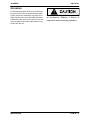
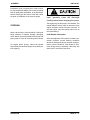
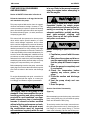
Do not remove plates, covers, gauges,
pipe plugs, or fittings from an overheated pump. Vapor pressure within the
pump can cause parts being disengaged to be ejected with great force. allow the pump to cool before servicing.
Strainer Check
If a suction strainer has been shipped with the
pump or installed by the user, check the strainer
regularly, and clean it as necessary. The strainer
should also be checked if pump flow rate begins to
drop. If a vacuum suction gauge has been installed, monitor and record the readings regularly
to detect strainer blockage.
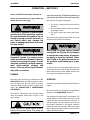
Never introduce air or steam pressure into the
pump casing or piping to remove a blockage. This
could result in personal injury or damage to the
equipment. If backflushing is absolutely necessary, liquid pressure must be limited to 50% of the
maximum permissible operating pressure shown
on the pump performance curve.
Pump Vacuum Check
NOTE
Leakage
No leakage should be visible at pump mating surfaces, or at pump connections or fittings. Keep all
line connections and fittings tight to maintain maximum pump efficiency.
Liquid Temperature And Overheating
The maximum liquid temperature for this pump is
160_ F (71_C). Do not apply it at a higher operating
temperature.
Overheating can occur if operated with the valves
in the suction or discharge lines closed. Operating
against closed valves could bring the liquid to a
boil, build pressure, and cause the pump to rupture or explode. If overheating occurs, stop the
PAGE C − 2
Petroleum products are very sensitive to changes
in temperature. Warmer temperatures elevate the
product vapor pressure resulting in low vacuum
readings. Do not mistake temperature problems for
faulty pump installation or performance.
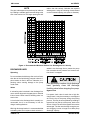
With the pump inoperative, install a vacuum gauge
in the system, using pipe dope on the threads.
Block the suction line and start the pump. At operating speed the pump should pull a vacuum of 20
inches (508,0 mm) or more of mercury. If it does
not, check for air leaks in the seal, gasket, or discharge valve.
Open the suction line, and read the vacuum gauge
with the pump primed and at operation speed.
Shut off the pump. The vacuum gauge reading will
OPERATION