1
6622T DCC Thermometry Bridge Series
Design and Innovation
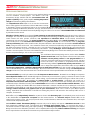
See what you have been missing! The on screen graphical display and associated data buffers can visually track temperature
and the realization of fixed points! The 6622T is the only
thermometry bridge available with this on-instrument data and
graphics capability, which greatly simplifies tracking temperature
changes and monitoring fixed point realization.
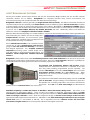
The comprehensive menu allows users to view the measurement
data in either graphical or text format. The last 1000 entries are kept
in the 6622T’s memory and individual entries can be examined. A user can either view the present measurement result, a
Summary detailing the Minimum, Maximum, Average, Standard Deviation, or the Graphic Trace of the measurement. Every
effort has been taken in the 6622T Thermometry Bridge design to reduce noise and error. Thermal EMF effects are eliminated
by automatic current reversal.
DC Bridges, like the 6622T, have inherently better immunity to external electromagnetic and mechanical noise relative to
AC Bridges. This is based on the underlying direct current comparator technology used for DC Bridges which is not subject to
switch contact and other parasitic resistances, nor capacitance or inductance effects on the internal measurement
components and connection leads. The unique architecture of the 6622T Bridge and a control algorithm further removes
gain and offset errors in the nanovolt balance detector and the precision toroid. The end results are shown by long term
accuracy and linearity without the need for routine, frequent calibrations. Measurements are conducted in true four-terminal
mode so long test leads can be used. Since excitation current is DC, reactance introduced by the probe and probe leads does
not affect measurement accuracy. Immunity to noise is very important because of the electromagnetic noise generated by
furnaces and baths that are present in Thermometry Laboratories. Finally DC Bridges are not susceptible to temperature
variations or warm up times. The result is that 6622T DC Thermometry Bridges have much better stability and noise resistance
than AC temperature Bridges, such as those provided by ASL.
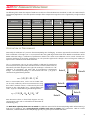
The model 6622T thermometry bridge can be used in either a fixed or
dynamic reversal rate mode of operation. In fixed reversal rate mode,
automatic current polarity reversal is user programmable from 4
seconds to 27 minutes with two measurements per reversal. Dynamic
reversal rate mode is only available in computerized measurements,
where the bridge software optimizes the polarity reversal rate in real
time. In temperature applications, this feature makes it easy to track a
fast changing temperature. Guildline’s 6622T Bridge can make measurements every two seconds, which eliminates any
concerns that DC Bridges are slower than AC Bridges. This measurement time is more than fast enough to track temperature
changes. In fact a two second measurement rate is much faster than the time required for PRTs and Fixed Points to stabilize.
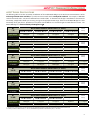
Two Internal Buffers are used by the 6622T Series for Temperature Measurements. The 6622T Series of Bridges incorporates
two independent buffers which dramatically improves thermometry measurements by giving a customer the tools to make
educated choices and obtain optimum results. When making a measurement the 6622T will begin to collect data in both a
Summary and a Detail buffer. By watching the summary buffer or graphics display a metrologist can visually see a
temperature measurement settle into plateau. Once into plateau a user can switch over to the summary data screen and see
a statistical analysis of both the Summary and the Detail buffers which includes the mean and the standard deviation. At this
point both the summary and detail buffers have identical information. However now that the test is settled you can clear the
Detail buffer and let it build up a new data set that contains only information taken at the plateau level. This will give you a new
average, standard deviation, and graphical view of your measurement, which can be used for your official reported
reading. Meanwhile all the information on the full test realizing the plateau is still retained in the Summary buffer and on a
computer, if connected.
Both buffers can be independently cleared at any time and come with their own graph. The individual points can be viewed
in the detail buffer and captured to a computer over the remote interface. The statistical analysis of both buffers can be
viewed in the summary screen. This analysis provides mean, standard deviation, minimum value, maximum value, and sample
counts for both independent buffers.
With Guildline’s 6622T Thermometry Bridge, customers only need to deploy and support a ONE-BRIDGE SOLUTION to meet
their temperature calibration needs, and optionally their resistance measurement needs. For customers this means a
substantial reduction in staff training and capital spending. The flexibility to purchase options and upgrades for the 6622T
Bridge means that new calibration procedures can be implemented inexpensively without additional training and support
that is required when new calibration instruments are purchased from multiple vendors.
2