1
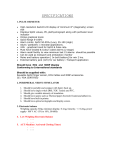
Technical Specifications & Technical Compliance
Biphasic Defibrillator, Monitor & Recorder
Biphasic
Waveform display (min 3)
External energy selection from 2 J to 200 J, biphasic
Charging time less than 8 seconds @ 200 J (with a charged battery)
Synchronizer and cardio version
Unique disarm button (in addition to automatic time delay)
Should come with high resolution monitor.
Should come with 3 lead ECG that can be measured from cables, adult external paddles,
paediatric paddles.
Heart rate: 20 to 300 bpm BPM with user selectable alarms.
Should come with external pacing, demand and asynchronous modes
Should display CPR in real time.
Should have large internal memory that stores and prints 25 ECG events.
Battery to last not less than 2 hours of continuous ECG monitoring or 30 full energy
discharges.
Battery indicator on display and self test on battery
Accessories needed
Paddles with charge and discharge buttons.
Pediatric paddles adapters (set of 2)
A/c 240 v V 50 hz charger and mains power source. Adult paddles and test paddles.
3 lead patient cable
One spare battery
Roll of 50mm recording paper x 10 rolls
5 oz tube of defibrillation gel x 5 tubes
ECG cable with leads- 2 sets.
External disposable pacing pads-2 sets
Operation manual, service manual complete.
Should have US FDA Approval
Multi Channel ECG Machine-12 Channels
1 Description of Function
1.1 ECG Machine is primary equipment to record ECG Signal in various configurations. 12
channels with interpretation are required for recording and analyzing the waveforms with a
special software.
2 Operational Requirements
2.1 The ECG Machine should be able to acquire all 12 Leads simultaneously and interpret them
3 Technical Specifications
3.1 Should acquire simultaneous 12 lead ECG for both adult and pediatric patients
3.2 Should have Real time display of ECG waveforms with signal quality indication for each
lead
3.3 Should have Artifact, AC, and low and high pass frequency filters.
3.4 Should have a storage memory of at least 40 ECGs with easy transfer by optional modem
and data card.
3.5 Should have full screen preview of ECG report for quality assessment checks prior to print.
3.6 Should have interpretation facility of the amplitudes, durations and morphologies of ECG
waveforms and associated rhythm for adult and pediatric patients
3.7 Should have alphanumeric Keyboard for patient data
Entry. (virtual or hard keys)
3.8 Should have High resolution (200 dpix500dpi on 25 mm/sec speed) digital array A4 size
printer
3.9 Should have report formats of 3 x4; 6 x2, Rhythm for up to 12 selected leads; 12 Lead
Extended measurements, 1 minute of continuous waveform data for 1 selected lead.
3.10 Should have battery capacity of at least 30 ECGs or 30 minutes of continuous
rhythm recording on single charge
3.11 Should be able to be connected to HIS /LAN/Wireless LAN(OPTIONAL)
3.12 Should display ECG on LCD/TFT Display.
3.13 USB Support (optional) for Storage on external portable memories.
3.14 Minimum 150 ECG Storage in Floppy or flash memory or any better device.
4 System Configuration Accessories, spares and consumables
4.1 ECG Machine 12 Leads with Interpretation - 01
4.2 Patient Cable -02
4.3 Chest Electrodes Adult-(set of six) -02 sets.
4.4 Chest Electrodes Paediatric-(set of six) -02 sets
4.5 Limb Electrodes(set of 4)- 02 sets
4.6 Thermal Paper A4 Size for 500 patients
5 Environmental factors
5.1 The unit shall be capable of being stored continuously in ambient temperature of 0 -50deg C
and relative humidity of 15-90%
5.2 The unit shall be capable of operating continuously in ambient temperature of 10 -40deg C
and relative humidity of 15-90%
5.3 Shall meet IEC-60601-1-2:2001(Or Equivalent BIS) General Requirements of Safety for
Electromagnetic Compatibility. or should comply with 89/366/EEC; EMC-directive.
6 Power Supply
6.1 Power input to be 220-240VAC, 50Hz fitted with Indian plug
7 Standards, Safety and Training
7.1 Should be FDA/CE or BIS approved product
7.2 Electrical safety conforms to standards for electrical safety IEC-60601-1 General
Requirements and IEC-60601-2-25 Safety of Electrocardiograms.
(OR EQUIVALENT BIS Standard)
8 Documentation
8.1 User Manual in English
8.2 Service manual in English
8.3 List of important spare parts and accessories with their part number and costing
8.4 Certificate of calibration and inspection.
8.5 Log book with instruction for daily, weekly, monthly and quarterly maintenance checklist.
The job description of the hospital technician and company service engineer should be clearly
spelt out
8.6 List of Equipments available for providing calibration and routine Preventive Maintenance
Support. as per manufacturer documentation in service/technical manual.
ECG Monitor & Pulse Oximeter
1
Description of Function
1.1
A pulse oximeter is a medical device that indirectly measures the amount of
oxygen in patient‘s blood (as opposed to measuring oxygen saturation directly
through a blood sample) and changes in blood volume in the skin, producing a
photoplethysmograph.
2.
Operational Requirements
2.1
Suitable for all types of patient range: Adult, pediatric, infant, and / or neonate.
3.
Technical Specifications
3.1
3.2
3.3
3.4
3.5
3.6
3.7
3.8
3.9
3.10
3.11
Display – LCD, Backlight illuminated.
Parameters and waveform displayed – SpO2, pulse rate, ECG, system
status, plethysmogram, menus for user settings.
SPO2 range – 70-100%
Accuracy of SPO2 -3%
Pulse rate range should be 30-240 bpm
Audiovisual Alarms- high/low SpO2 and pulse rate, sensor off, sensor failure,
low battery.
Alarm override facility.
Cable length should be minimum 1 metre.
RS 232C Interface for data communication
Integrated Printer
Battery back-up operating time 5 hours.
4.
System Configuration Accessories, spares and consumables
4.1
System as specified
4.2
SpO2 sensor with cable – two nos per monitor and pediatric SpO2 sensors – one
no. per monitor, Neonatal Sensor – 01
5.
Environmental Factors
5.1
5.2
0-
Shall meet IEC-60601-1-2:2001 (Or Equivalent BIS) General Requirements
of Safety for Electromagnetic Compatibility or should comply with
89/366/EEC; EMC-directive.
The unit shall be capable of being stored continuously in ambient temperature of
50 deg C and relative humidity of 1590%.
6.
Power Supply
6.1
6.2
Should work on 220-240 VAC as well as rechargeable batteries. Main adaptor to
be supplied.
Rechargeable battery operated system. Charger to be provided if integrated
charger is not there.
7.
Standards, Safety and Training
7.1
7.2
8
Should be FDA, CE, UL or BIS approved product.
Electrical safety conforms to standards for electrical safety IEC-60601-1 General
Requirem
ents.
Documentation .
8.1
8.2
8.3
User/Technical/Maintenance manuals to be supplied in English
Certificate of calibration and inspection.
List of important spare parts and accessories with their part number and costing.
Multi-parameter Monitor with Capnometer
1 Description of Function
1.1 Monitor is required to monitor vital parameters of patients.
2 Operational Requirements
2.1 Monitor should be portable and lightweight and should monitor vital parameters of patients.
2.2 Capability of storage of patient data and printing of patient reports.
3 Technical Specifications
3.1 Portable and Light weight preferably <10kg
3.2 12 inch multi color TFT display
3.3 Monitoring parameters: - ECG, respiration, NIBP, SaO2, capnometery and temperature
3.4 Digital and 4 waves / traces display
3.5 Monitor should have audible and visual alarms capability. Alarms should have three
distinct audible alarm tones to distinguish alarm levels. Also monitor should permit automatic
viewing of alarming parameter waveform and numeric from any bedside in alarm as and when
connected in a network.
3.6 Trends should be automatically stored for at least 24 hours in at least one-minute intervals.
3.7 Numeric monitored data trend shall be viewable and recordable in a patient chart type format
in at least 1, 5, 15, 60 minutes intervals.
3.8 Convenient handle for carrying the same
3.9 Able to fix with bed/trolley.
4 System Configuration Accessories, spares and consumables
4.1 Portable/Transport Monitor-01
4.2 Patient cables (5 lead) –01
4.3 Adult Cuff – 01
4.4 Paediatric Cuff –01
4.5 Adult Probe SPO2 –02
4.6 Paediatric Probe SPO2 –02
4.7 Skin Temp Probe –02
4.8 Dual channel recorder –01
4.9 Paper Recorder- 100 cases.
5 Environmental factors
5.1 The unit shall be capable of operating continuously in ambient temperature of 10 -400 C
and relative humidity of 15-90%.
5.2 The unit shall be capable of being stored continuously in ambient temperature of 0 -500 C
and relative humidity of 15-90%.
5.3 Shall meet IEC-60601-1-2: 2001(Or Equivalent BIS) General Requirements of Safety for
Electromagnetic Compatibility.
6 Power Supply
6.1 Power input to be 220-240VAC, 50Hz fitted with Indian plug
6.2 Resettable over current breaker shall be fitted for protection
6.3 Suitable UPS with maintenance free batteries for minimum one hour back up should
be supplied with the system.
7 Standards, Safety and Training
7.1 Should be FDA or CE approved or ISI marked product
7.2 Shall meet the safety requirements as per IEC 60601-2-27:1994—Medical electrical
equipment—Part 2: Particular requirements for the safety of electrocardiographic
monitoring
8 Documentation
8.1 User Manual in English
8.2 Service manual in English
8.3 List of important spare parts and accessories with their part number and costing.
8.4 Certificate of Calibration and inspection from the factory
8.5 Log book with instruction for daily, weekly, monthly and quarterly maintenance checklist.
The job description of the hospital technician and company service engineer should be clearly
spelt out
8.6 List of Equipments available for providing calibration and routine maintenance support as
per manufacturer documentation in service / technical manual.
PEDIATRICS – A- OPD
Infant Weighing Machine
Capable of weighing 0-20 Kg with a count of 50 gms with 0 adjustment
Infant weighing pan should be stable with smooth surface.
Epoxy coated
Infantometer
Infant meter for measuring length of Baby
Material Acrylic
Sleek broad acryl base with one sliding side.
Marking for direct reading in centimeters for 0 to 90 cms.
Folding sides for easy storage.
Infant Staid Meter Paediatric
1.
Description of Function
1.1
2.
Operational Requirements
2.1
3.
Used for routine height and weight measurements of patients.
It should be a platform type of weight and height measuring scale on which
the patient can stand for measurement of weight and height.
Technical Specifications
3.1
1.
2.
3.
4.
5.
6.
7.
8.
9.
10.
1.
It should be a robust model for day to day rough use in wards, OPD.
It should measure the weight in kilogram.
There should be LCD display of weight.
It should measure the height in centimeter.
It should be equipped with tare function to allow a baby to be
weighed in its mother‘s arms.
The graduation of measuring weight should be 50 gm.
The height measuring rod should be attached with it.
The scale should also have BMI function.
It should measure the height from 60 cm onwards. In other words,
the minimum height which it can measure should be 60 cm.
It should be mounted on transport castors to allow free mobility
from one place to other.
System Configuration Accessories, spares and consumables
None
5.
Environmental Factors
5.1
5.2
0-
Shall meet IEC-60601-1-2: 2001 (Or Equivalent BIS) General Requirements
of Safety for Electromagnetic Compatibility or should comply with
89/366/EEC; EMC-directive.
The unit shall be capable of being stored continuously in ambient temperature of
50 deg C and relative humidity of 1590%
5.3
6.
The unit shall be capable of operating continuously in ambient temperature of
10-40 deg C and relative humidity of 15-90%.
Power of Supply
6.1
Should work on 220-240V AC as well as rechargeable batteries. Main adaptor to
be supplied.
7.
Standards, Safety and Training
7.1
8.
Should be FDA, CE, UL or BIS approved product.
Documentation
8.1
8.2
8.3
8.4
User / Technical/ Maintenance manuals to be supplied in English.
Certificate of calibration and inspection from factory.
List of important spare parts and accessories with their part number and costing.
Log book with instructions, for daily, weekly, monthly and quarterly
maintenance checklist. The job description of the hospital technician and
company service engineer should be clearly spelt out.
B. NURSERY
Baby Bassinets
Size of Basket – 75 to 77 x 40 x 42 cms Height of the Bassinet from floor to basket top 103105 cams.
Strong CR ERW steel stand on four rubber stumps with hanging basket with
removable mosquito net of aluminum rod.
Epoxy created at lest 50 micron
Open Care System for Neonates
1 Description of Function
1.1 Required for care of new born and infants
2 Operational Requirements
2.1 Complete system with cart and oxygenation facility is required.
3 Technical Specifications
3.1 Essential parts : Cart & bassinet Warming system with controls & alarms. Examination light
Storage space- 2 sliding drawers below bassinet 2 platforms of the size 9‖ x 12‖ capable of
holding up to 5 Kgms of equipments.
Cart: Should swivel on 4 wheels of at least 5‖ dia- with foot operated., 2 front lockable wheels.
Dimensions:- Height : 180-200 cms, Width : 60-70 cms, Depth : 100-120 cms. Working level :
95110 cms and adjustable.
Bassinet : 1 fixed and 3 movable transparent side walls :Portion above X-Ray cassette
holder radiolucent. Mattress- Width : 55 – 60 cms, Length : 65- 70 cms, Thickness : Minimum
4 cms Material : Soft, Comfortable, easy to clean, radiolucent.
Bassinet tilt in steps of 6 – 8 degrees, Trendelenburg or reverse Trendelenburg
Warmer module swivel : 45-65 degrees on either side
Warming systems- Modes :Manual & skin. Manual mode :Adjustable in steps from zero to 100
Skin mode - Method : Flexible, unbreakable skin temperature probe Set point range : 34 –
38 degrees C. Skin temp variability at Temperature equilibrium :+ 0.2 degrees C
Skin temperature display- Accuracy : + 0.2 degrees C. Type : digital LED with 0.1
degree resolution. Correlation of displayed And actual skin temp : difference £ 0.2 degrees C.
Silence/ Reset switch : To silence the alarm & reset set point.
Alarms
Probe failure
Heat failure
High and low temperature
Power failure
System failure
Examination light : Illuminance 100 foot candles at mattress center
Storage space : 2 drawers, preferably covered and sliding
Pulse oximeter : to measure oxygen saturation and heart rate resistant to motion artifact.
Able to pick up signals in low perfusion states (Price to be quoted separately).
CPAP system : Flow driven (Price to be quoted separately).
With air oxygen blender and FiO2 control, with heated humidifier, airway pressure display 015 cm H2O, With bonnet, cap and nasal prongs (10 of each size) for babies 600 gm-4000 gms,
with reusable circuits, with 1 reusable flow generator
Power requirements : 220/240 V AC, 50/60 Hz,
Accessories
I.V. line pole with pivot bracket : should be able to accommodate 2 fluid bottles
Monitor shelves : 2 in number
Should support upto approx. 20 kgs per shelf or upto 25 kgs total on single side
Standard X- Ray cassette holder : sliding holder located just below undersurface of
Bassinet, with markings to help placement of cassette
Patient Probes : 4 reusable temperature
probes
4 reusable oxygen saturation
probes
2 patient extension cables for the saturation
probes
4 System Configuration Accessories, spares and
consumables
4.1 System as
specified4.2 All consumables required for installation and standardization of system to be given free of
cost.
5 Environmental
factors
5.1 The unit shall be capable of being stored continuously in ambient temperature of 0 50deg C
and relative humidity of 1590%.
5.2 The unit shall be capable of operating continuously in ambient temperature of 10 -40deg C
and relative humidity of 15-90%.
6 Power
Supply
6.1 Power input to be 220-240VAC, 50Hz fitted with Indian
plug
6.2 UPS of suitable rating with voltage regulation and spike protection for 60 minutes back
up.
7 Standards, Safety and
Training
7.1 Should be FDA/CE or BIS approved
product
7.2 Shall comply with electrical safety requirements as per IEC or BIS
regulations.
7.3 Comprehensive warranty & CMC after warranty. CMC would include all electronic
and mechanical items including PCBs and heater elements. It should provide every year per
unit four re-usable temperature probes, four oxygen saturation monitor probes, 20 Flow
generator, and CPAP circuit.
7.4 Comprehensive training for lab staff and support services till familiarity with the
system.
8
Documentat
ion
8.1 User/Technical/Maintenance manuals to be supplied in
English.
8.2 Certificate of calibration and
inspection.
8.3 List of Equipments available for providing calibration and routine Preventive
Maintenance
Support. as per manufacturer documentation in service/technical
manual.
8.4 List of important spare parts and accessories with their part number and
costing.
8.5 Log book with instruction for daily, weekly, monthly and quarterly maintenance
checklist.
The job description of the hospital technician and company service engineer should be clearly
spelt out.
Phototheraphy Unit
1. Dimensions of the chamber should be at least 6 feet x 3 feet x 3feet.
2. Phototheraphy chamber of 18 UVA+18 NB UVB tubes designed for providing even
irradiation of the body in the treatment area.
3. UV chockes must be provided to provide long life to the tube light and cooling fans
for effective cooling of the unit.
4. integrated dosimeter system for easy calculation of irradiation levels.
5. The equipment have CE or FDA or ISI certification.
6. Advanced micro computerized electronic LCD/TFT Controller which allows setting of
joules/time for UVA and milli Joules/time for NB UVB tubes.
7. Automatic computation of irradiation time from joules/time for NB UVB tubes.
8. Dose limit can be preset and cumulative dose is displayed instntaneously with
provision of storage of data. Provision of 'software backup' is preferable.
9. Variation in irradiation is taken care by built in UVA/NB UVB sensors which should
be able to detect all irradiation completely and uniformly.
10. Switches the system 'off' automatically with warming alarm at the end of set
irradiation time.
11. Built in memory system that helps to avoide error in treatement.
12. Body to be of a metal which is rust free so as to ensure long rust free life of the unit.
13. Automated and/or mechaical safety mechanism to prevent excess irradiation to the
pantients so as to avoid/prevent burns etc.
14. Electrical leakage circuit tripper/breaker in each panel to ensure maximum safety of
the patient.
15. Open top unit to ensure maximum ventilation and prevent claustrophobia.
16. Mechanism to provide information to the patient regarding duration of treatment and
time left for exposure during their treatment.
17. Computer for patient data management with software and interface for the
phototheraphy chamber which is RS-232 compatible.
18. To be supplied with suitable stabilizer.
19. Black UV Goggles and Eye pads cover (3 pairs each for adult and 3 pair for
children ) as protective+.
BABY WARMER UNIT
· Infant warmer to be used in neonatology.
· The unit should conform all relevant international, national and local standards.
Specifications
· Temperature control:
· Range 30-38° C
· Skin range 25 – 42 °
· Increment 0.1°
· Display Digital
· Control Unit (to be supplied with.)
· Automatic heat control type
· Set point mechanism
· Heater Indicator.
Alarms (Audible and Visual)
· High air temperature
· Sensor disconnect
· Power Failure
· Alarm in manual mode: every 15 minutes with automatic shutoff
The warmer should includes:
· Self- check features
· Breaks for casters
· Skin sensor
· Supplemental humidity
· Protection against breaks and bursts of radiant and light source
· Spares and accessories
· Service and users manuals
Accessories:
· No. of hand ports 6
· No. of tubing ports 6
· No. of oxygen inlet port 1
· Backup thermostat
· Examination Light 50 W Halogen
· Radiant heat source Quartz tube 600w
· Phototherapy lights
· Resuscitation equipment packages
· X-Ray cassette holder
Digital Infusion Pump
1. The equipment should have Roller type Peristaltic pump /Volumetric pump technology
for delivery of IV fluids and blood/blood products ranging between 2.5 ml to 750 ml per
minute.
2. The Equipment should have high levels of safety from air embolism by integrating atleast
two ultrasonic air detection sensors.
3. Heating process should be done by an electro magnetic induction heating system.
4. The Equipment should have two infra –red temperature sensors for accurate delivery of fluids
at
37deg.C.
5. The equipment should have the facility to automatically purge air for removal of any
outgassed air to prevent it from entering the patient line. No manual process should be
involved.
6. The equipment should have operator controlled Bolus infusion key for rapid response in
critical situations.
7. The equipment should have a line pressure control sensor for restriction of flow in case of
line occlusion immediately and stop the delivery of fluids for patient safet y.
8. The Equipment should have a recirculate mode for pre – warming of fluids during transport.
9. The Equipment should have an interactive on-board display system which displays
information about the rate of infusion , total volume infused , real temperature of fluids, line
pressure etc.
10. The equipment should have an internal rechargeable battery backup.
11. Consumables should be universal for all flow rates ranging between 2.5 ml to 750 ml
per minute.
Apnea Monitor
0.20 breath / minute with alarms and sensitivity setting for neonatal & pediatric use.
Bilirubinometer (Transcutaneous Serum)
1. Method of measurement –reflectance bichromatic photometry.
2. Light source- two white light emitting diodes (LED)
3. Detector- two photocell system
4. Measuring gauge- 2-58 (in unit of TBI)
5. Optical unaccuracy- <10%
6. Imprecision (CV%)-<2%
7. Correlated between TBI and laboratory values for serum bilirubin levels- more or equal
to 0.92
8. Readout- three digits liquid crystal display
9. Measuring cycle time -~2 seconds. Between the measuring cycles the device is in a stand
by mode.
10. Power source- 3 batteries of AAA (or LR03) type or equivalent
Auto Blood Gas Analyzer
A fully automated pH/Blood gas/electrolyte analyzer measuring the following
parameters:- pH, PCO2, PO2, Barometric pressure.
Na, K,
Ca, Cl
Co-oximetry: ct Hb, CCO Hb, Met Hb, Sulf Hb, Haematocrit and Barometric
pressure. Sample volume should be approximate 100 μ l for all parameters.
All calibration and cleaning cycles should be fully automated with user selectable calibration
items. Calibration should be performed by liquid calibration for all parameters.
The electrodes provided should be zero maintenance including the reference
electrode. The system should have on board data manager to store all patient
results, QC data and calibrations.
The system should have a closed waste system and monitored continuously. Also all the
system reagents should be monitored continuously.
A power fail protection for 20 min.to take all calibration and programmed
data.
The analyzer should have a colour LCD screen to access all the system software and to display
the patient’s results. With alphanumeric key board/touch screen.
A built in thermal printer should be provided to print out patient
results.
The system should work in discrete testing, ie, selectable parameter
testing.
Should be supplied with consumable, reagents and QC agents for 1000 tests, as per the
user requirements so that they do not expire.
Should not preferably use special
gases.
ESUSCITATION KIT
1.
Neonatal Resuscitation Kit
Ambu bag, Neonatal,
Silicon Bag, 250 ml total value
Non breathing value, Spring loaded
40 cm of H2 0
Silicon clear mask size 0,1,2
360 0 Swiveling patient connector 1.5 meter oxygen lubing
Oxygen use over bag.
Endotracheal
tubes Disposable
Presterilized ETO /Gamma Radiation
Individual Double pack
Size 2.5,3
Magill Forcep
Stainless Steel
Small for infant size endotractural Tubes
Standard quality
Guedel Oropharageal Air Way
Material Plastic / Silicon
Firm, Atraumatic
Size 00, 0, 1
Infant Laryngoscope – Miller type
Stainless Steel body with serrations
Battery Operated
Straight Blades
Size 0, 1, 2
Blades engagement and disengagement should be smooth
Share – 6 bulbs and the set of batteries.
To be supplied in a case.
C. NEONATAL ICU
Open Care System for Neonates
1 Description of Function
1.1 Required for care of new born and infants
2 Operational Requirements
2.1 Complete system with cart and oxygenation facility is required.
3 Technical Specifications
3.1 Essential parts : Cart & bassinet Warming system with controls & alarms. Examination light
Storage space- 2 sliding drawers below bassinet 2 platforms of the size 9‖ x 12‖ capable of
holding up to 5 Kgms of equipments.
Cart: Should swivel on 4 wheels of at least 5‖ dia- with foot operated., 2 front lockable wheels.
Dimensions:- Height : 180-200 cms, Width : 60-70 cms, Depth : 100-120 cms. Working level :
95110 cms and adjustable.
Bassinet : 1 fixed and 3 movable transparent side walls :Portion above X-Ray cassette
holder radiolucent. Mattress- Width : 55 – 60 cms, Length : 65- 70 cms, Thickness : Minimum
4 cms Material : Soft, Comfortable, easy to clean, radiolucent.
Bassinet tilt in steps of 6 – 8 degrees, Trendelenburg or reverse Trendelenburg
Warmer module swivel : 45-65 degrees on either side
Warming systems- Modes :Manual & skin. Manual mode :Adjustable in steps from zero to 100
Skin mode - Method : Flexible, unbreakable skin temperature probe Set point range : 34 –
38 degrees C. Skin temp variability at Temperature equilibrium :+ 0.2 degrees C
Skin temperature display- Accuracy : + 0.2 degrees C. Type : digital LED with 0.1
degree resolution. Correlation of displayed And actual skin temp : difference £ 0.2 degrees C.
Silence/ Reset switch : To silence the alarm & reset set point.
Alarms
Probe failure
Heat failure
High and low temperature
Power failure
System failure
Examination light : Illuminance 100 foot candles at mattress center
Storage space : 2 drawers, preferably covered and sliding
Pulse oximeter : to measure oxygen saturation and heart rate resistant to motion artifact.
Able to pick up signals in low perfusion states (Price to be quoted separately).
CPAP system : Flow driven (Price to be quoted separately).
With air oxygen blender and FiO2 control, with heated humidifier, airway pressure display 015 cm H2O, With bonnet, cap and nasal prongs (10 of each size) for babies 600 gm-4000 gms,
with reusable circuits, with 1 reusable flow generator
Power requirements : 220/240 V AC, 50/60 Hz,
Accessories
I.V. line pole with pivot bracket : should be able to accommodate 2 fluid bottles
Monitor shelves : 2 in number
Should support upto approx. 20 kgs per shelf or upto 25 kgs total on single side
Standard X- Ray cassette holder : sliding holder located just below undersurface of
Bassinet, with markings to help placement of cassette
Patient Probes : 4 reusable temperature
probes
4 reusable oxygen saturation
probes
2 patient extension cables for the saturation
probes
4 System Configuration Accessories, spares and
consumables
4.1 System as
specified4.2 All consumables required for installation and standardization of system to be given free of
cost.
5 Environmental
factors
5.1 The unit shall be capable of being stored continuously in ambient temperature of 0 50deg C
and relative humidity of 1590%.
5.2 The unit shall be capable of operating continuously in ambient temperature of 10 -40deg C
and relative humidity of 15-90%.
6 Power
Supply
6.1 Power input to be 220-240VAC, 50Hz fitted with Indian
plug
6.2 UPS of suitable rating with voltage regulation and spike protection for 60 minutes back
up.
7 Standards, Safety and
Training
7.1 Should be FDA/CE or BIS approved
product
7.2 Shall comply with electrical safety requirements as per IEC or BIS
regulations.
7.3 Comprehensive warranty and CMC after warranty. CMC would include all electronic
and mechanical items including PCBs and heater elements. It should provide every year per unit
four re usable temperature probes, four oxygen saturation monitor probes, 20 Flow generator,
and CPAP circuit.
7.4 Comprehensive training for lab staff and support services till familiarity with the
system.
8
Documentat
ion
8.1 User/Technical/Maintenance manuals to be supplied in
English.
8.2 Certificate of calibration and
inspection.
8.3 List of Equipments available for providing calibration and routine Preventive
Maintenance
Support. as per manufacturer documentation in service/technical
manual.
8.4 List of important spare parts and accessories with their part number and
costing.
8.5 Log book with instruction for daily, weekly, monthly and quarterly maintenance
checklist.
The job description of the hospital technician and company service engineer should be clearly
spelt out.
Basic Monitor (Resp., Temp., Pulse, SPO2) for Neonatal ICU
1 Description of Function
1.1 Monitor is required to monitor vital parameters of patients.
2 Operational Requirements
2.1 Monitor should be portable and lightweight and should monitor vital parameters of patients.
2.2 Capability of storage of patient data and printing of patient reports.
2.3 Capability to integrate with the HIS and transfer the data through LAN / Wireless LAN to
any other monitoring room / doctors desk. Should be HL-7 compatible for transmitting and
receiving data to/fro LAN/HIS (OPTIONAL)
3 Technical Specifications
3.1 Portable and Light weight preferably <10kg
3.2 12 inch multi color TFT display
3.3 Monitoring parameters: - ECG, respiration, NIBP, SaO2, temperature
3.4 Digital and 4 waves / traces display
3.5 Monitor should have audible and visual alarms capability. Alarms should have three
distinct audible alarm tones to distinguish alarm levels. Also monitor should permit automatic
viewing of alarming parameter waveform and numeric from any bedside in alarm as and when
connected in a network.
3.6 Trends should be automatically stored for at least 24 hours in at least one-minute intervals.
3.7 Numeric monitored data trend shall be viewable and recordable in a patient chart type
format in at least 1, 5, 15, 60 minutes intervals.
3.8 Convenient handle for carrying the same
3.9 Able to fix with bed/trolley.
3.10 NETWORKING AND REMOTE ACCESS (Optional)
1.Remote access of patient data -should have facility of accessing patient data including
waveforms and numeric remotely in Hospital or at Consultants residence through hardwired
LAN connection
or through modem.
2.Should also offer viewing station for viewing this data as optional item.
3.Should be upgradeable.
4.Should be able to review DICOM images from PACS. On the bedside or the central station.
5. Web browsing facility to review each networked monitors data through hospital LAN via
office
PC in Hospital LAN network and/or through dial up facility from remote location.
6. To provide HL 7 compatible server for sending information from the monitoring network to
Hospital Information System, Laboratory information etc for integration of various information
4 System Configuration Accessories, spares and consumables
4.1 Portable/Transport Monitor-01
4.2 Patient cables (5 lead) –01
4.3 Paediatric & Neonatal Cuff –01
4.4 Paediatric & Neonatal Probe SPO2 –02
4.5 Skin Temp Probe –02
4.6 Dual channel recorder –01
4.7 Paper Recorder- 100 cases.
4.8 Networking and remote access- (OPTIONAL)- 01
5 Environmental factors
5.1 The unit shall be capable of operating continuously in ambient temperature of 10 -400 C
and relative humidity of 15-90%.
5.2 The unit shall be capable of being stored continuously in ambient temperature of 0 -500 C
and relative humidity of 15-90%.
5.3 Shall meet IEC-60601-1-2: 2001(Or Equivalent BIS) General Requirements of Safety for
Electromagnetic Compatibility.
6 Power Supply
6.1 Power input to be 220-240VAC, 50Hz fitted with Indian plug
6.2 Resettable over current breaker shall be fitted for protection
6.3 Suitable UPS with maintenance free batteries for minimum one hour back up should
be supplied with the system.
7 Standards, Safety and Training
7.1 Should be FDA or CE approved or ISI marked product
7.2 Shall meet the safety requirements as per IEC 60601-2-27:1994—Medical electrical
equipment—Part 2: Particular requirements for the safety of electrocardiographic
monitoring
8 Documentation
8.1 User Manual in English
8.2 Service manual in English
8.3 List of important spare parts and accessories with their part number and costing.
8.4 Certificate of Calibration and inspection from the factory
8.5 Log book with instruction for daily, weekly, monthly and quarterly maintenance checklist.
The job description of the hospital technician and company service engineer should be clearly
spelt out
8.6 List of Equipments available for providing calibration and routine maintenance support as
per manufacturer documentation in service / technical manual.
Ventilator Neonatal / Paediatric / Infant
1. Microprocessor Controlled integrated suitable for neonate and child ventilation.
2. Should have not less than 10 inch colored TFT screen capable for the monitoring of the
ventilation parameters, curves and loops.
3. Should have the automatic compliance, leakage compensation.
4. Should have the facilities for following setting for neonate to child
a) Tidal Volume(2-250 ml)
b) Flow Pattern
c) Inspiration Plateau
d) Pressure ramp
e) SIMV Rate
f) CPAP/PEEP
g) Pressure Support
h) FiO2
i) Pause Time
j) Inspiration trigger sensitivity to flow & pressure
k) Base Flow
l) Sensitivity for cycling to expiration
5. Should have the capability of monitoring of the following parameters,
a) Airway Pressure
b) Expired tidal Volume
c) Minute Volume
d) Spontaneous Minute Volume
e) Total Frequency
f) Fio2
g) Auto PEEP
h) Rapid Shallow Breathing Index
i) Plateau Pressure
j) Inspiratory & Expiratory Resistance
k) Static Compliance
l) Imposed Work of Breathing
m) Peak, Plateau and mean airway pressure
n) Plateau Pressure
6. Should have the Alarms (User Selector) for all the measured and monitored parameters.
7. Should have the following Modes of ventilations,
a) Volume controlled
b) Pressure Controlled
c) Pressure Support
d) SIMV (Pressure Control and volume control) with pressure support.
e) CPAP/PEEP (0 – 50 CM H20)
f) Auto mode /Auto flow preferable
g) PRVC
h) Biphasic preferable
i) High frequency ventilation (Optional)
8. Sensors should be automatically calibrated every time it is switched on.
9. Should have the ability to calculate
a) Intrinsic Peep
b) Occlusion Pressure
c) Negative Inspiratory force
10. Other Features
a) Should have Nebuliser
b) Should have the servo controlled Humidifier with digital monitoring of inspired gas
temperature.
c) Should have an imported stand-alone air compressor integrated with the Ventilator to
provide an oil free Medical air.
d) CVT as appropriate
e) Should have silicone autoclave-able two sets of Pediatric hoses.
f) Should be supplied with imported non-corrosive trolley and hinged arms.
Pulse Oximeter
1
Description of Function
1.2
A pulse oximeter is a medical device that indirectly measures the amount of
oxygen in patient‘s blood (as opposed to measuring oxygen saturation directly
through a blood sample) and changes in blood volume in the skin, producing a
photoplethysmograph.
2.
Operational Requirements
2.2
Suitable for all types of patient range: Adult, pediatric, infant, and / or neonate.
3.
Technical Specifications
3.12
3.13
3.14
3.15
3.16
3.17
3.18
3.19
3.20
3.21
3.22
Display – LCD, Backlight illuminated.
Parameters and waveform displayed – SpO2, pulse rate, system
status, plethysmogram, menus for user settings.
SPO2 range – 70-100%
Accuracy of SPO2 -3%
Pulse rate range should be 30-240 bpm
Audiovisual Alarms- high/low SpO2 and pulse rate, sensor off, sensor failure,
low battery.
Alarm override facility.
Cable length should be minimum 1 metre.
RS 232C Interface for data communication
Integrated Printer
Battery back-up operating time 5 hours.
4.
System Configuration Accessories, spares and consumables
4.3
System as specified
4.4
SpO2 sensor with cable – two nos per monitor and pediatric SpO2 sensors – one
no. per monitor, Neonatal Sensor – 01
5.
Environmental Factors
5.3
5.4
0-
Shall meet IEC-60601-1-2:2001 (Or Equivalent BIS) General Requirements
of Safety for Electromagnetic Compatibility or should comply with
89/366/EEC; EMC-directive.
The unit shall be capable of being stored continuously in ambient temperature of
50 deg C and relative humidity of 1590%.
6.
Power Supply
6.3
6.4
Should work on 220-240 VAC as well as rechargeable batteries. Main adaptor to
be supplied.
Rechargeable battery operated system. Charger to be provided if integrated
charger is not there.
7.
Standards, Safety and Training
7.1 Should be FDA, CE, UL or BIS approved product.
7.2 Electrical safety conforms to standards for electrical safety IEC-60601-1 General
Requirem
ents.
Documentation .
8.1 User/Technical/Maintenance manuals to be supplied in English
8.2
Certificate of calibration and inspection.
8.3 List of important spare parts and accessories with their part number and costing.
Incubator - Infant
1 Description of Function
1.1 An infant incubator provides a closed, controlled environment that warms an infant by
circulating heated air over the skin. The heat is then absorbed into the body by tissue conduction
and blood convection. Ideally, both the skin and core temperatures should be maintained with
only minor variations.
2 Operational Requirements
2.1 High quality with humidity and servo controlled double walled with cabinet incubator.
2.2 Microprocessor controlled, easy access control panel with feather touch switches
2.3 With a facility to elevate base to offer adjustable range
2.4 Facility with both servo control as well as air temperature control and servo humidifier
2.5 Accommodates shelves and IV poles.
2.6 The quality of the material used should very high and crystal transparent
2.7 Super quality microprocessor based control system - self test functions are performed
2.8 System required complete with Oxygen port with tubing and Gel Mattress.
3 Technical Specifications
3.1 Continuous bed tilt up to 8° on either sides
3.2 Head end raise facility with auto lock.
3.3 Both visual and audible alarms for
(i) Patient and control and high / low temperature
alarm. (ii) Air circulation / probe / system / power
failure alarm. (iii) Humidity control alarm.
3.4 Facility to take x-ray and weight without removing baby.
3.5 Facility to display and trends of temperature information on compatible monitors with
other physiological parameter
3. 6 Height 140 cm + 5 cm, depth at least 60 mm , width at least 90 mm. Mattress to hood
distance
40 cm working level – 90 to 100
cm. Iris port for tubing, probes,
leads.
4cm thick gel mattress, easily cleanable.
With at least 4‖ diameter caster wheel with swivel in all directions and with front lockable
wheels. Two shelves cabinet with door. Weight 90-100 kg.
3.7 Patient control (Servo) mode – 35 deg-37 deg C. and Air Control (Manual mode)- 20 deg C
to
39 deg C.
3.8 Air velocity less than 10 cm/sec with inner wall.
3.9 Temperature variability less than +/-0.2 deg C. and Temperature resolution 0.1 deg C
3.10 Average oxygen input concentration range 5-15 liters/min or 25-70%.
3.11 Humidification adjustable electronically with digital display. Standard: 10-80% dependent
on nursery environment and incubator temperature setting.
3.12 Double wall canopy with Six hand ports with elbow operated flaps with separate ports
for tubing.
3.13 CO2 flushing, according to lEC 601-2-19 / 105.1 Maximum C02 concentration
inside incubator 0.2%
3.14 Servo control for Oxygen with integrated monitoring
3.15 Air filter :- 0.3 micron
3.16 Built in weighing scale with sensitivity of + 1 gm
3.17 Mattress should be radiolucent
3.18 Provision for X ray cassette holders
3.19 2 drawer storage facility and two platforms for keeping monitors , able to bear at least 5
kg weight each.
4 System Configuration Accessories, spares and consumables
4.1 System as specified
4.2 Two sets of extra non disposable temperature sensors and humidification sensors.
5 Environmental factors
5.1 Shall meet IEC-60601-1-2 :2001(Or Equivalent BIS) General Requirements of Safety for
Electromagnetic Compatibility or should comply with 89/366/EEC; EMC-directive.
5.2 The unit shall be capable of being stored continuously in ambient temperature of 0 -50 deg C
and relative humidity of 15-90%.
5.3 The unit shall be capable of operating continuously in ambient temperature of 10 -40 deg C
and relative humidity of 15-90%.
6 Power Supply
6.1 Power input to be 220-240VAC, 50Hz fitted with Indian plug
6.2 Suitable UPS with 30 Min Backup for complete system
7 Standards, Safety and Training
7.1 Should be FDA/CE or BIS approved product
7.2 Electrical safety conforms to standards for electrical safety IEC-60601-2-19:Medical
Electrical
Equipment part 2 Particular Requirements of Safety of Baby Incubator.
7.3 CMC should provide 4 non disposable temperature sensors and sensors for humidity
control every year per incubator.
8 Documentations to be provided
8.1 User/Technical/Maintenance manuals to be supplied in English.
8.2 Certificate of calibration and inspection.
8.3 List of Equipments available for providing calibration and routine Preventive Maintenance
Support. as per manufacturer documentation in service/technical manual.
8.4 List of important spares and accessories with their part number and costing.
8.5 Log book with instructions for daily, weekly, monthly and quarterly maintenance checklist.
The job descriptin of the hospital technician and company service engineer should be clearly
spelt out.
RESPIRATORY LABORATORY
Biphasic Defibrillator
Biphasic
Waveform display (min 3)
External energy selection from 2 J to 200 J, biphasic
Charging time less than 8 seconds @ 200 J (with a charged battery)
Synchronizer and cardio version
Unique disarm button (in addition to automatic time delay)
Should come with high resolution monitor.
Should come with 3 lead ECG that can be measured from cables, adult external paddles,
paediatric paddles.
Heart rate: 20 to 300 bpm BPM with user selectable alarms.
Should come with external pacing, demand and asynchronous modes
Should display CPR in real time.
Should have large internal memory that stores and prints 25 ECG events.
Battery to last not less than 2 hours of continuous ECG monitoring or 30 full energy
discharges.
Battery indicator on display and self test on battery
Accessories needed
Paddles with charge and discharge buttons.
Pediatric paddles adapters (set of 2)
A/c 240 v V 50 hz charger and mains power source. Adult paddles and test paddles.
3 lead patient cable
One spare battery
Roll of 50mm recording paper x 10 rolls
5 oz tube of defibrillation gel x 5 tubes
ECG cable with leads- 2 sets.
External disposable pacing pads-2 sets
Operation manual, service manual complete.
Should have US FDA Approval
Pulse Oximeter
1
Description of Function
A pulse oximeter is a medical device that indirectly measures the amount of oxygen
in patient‘s blood (as opposed to measuring oxygen saturation directly through a
blood sample) and changes in blood volume in the skin, producing a
photoplethysmograph.
2.
Operational Requirements
Suitable for all types of patient range: Adult, pediatric, infant, and / or neonate.
3.
Technical Specifications
Display – LCD, Backlight illuminated.
Parameters and waveform displayed – SpO2, pulse rate, system status,
plethysmogram, menus for user settings.
SPO2 range – 70100% Accuracy of
SPO2 -3%
Pulse rate range should be 30-240 bpm
Audiovisual Alarms- high/low SpO2 and pulse rate, sensor off, sensor failure, low
battery. Alarm override facility.
Cable length should be minimum 1
metre. RS 232C Interface for data
communication Integrated Printer
Battery back-up operating time 5 hours.
4.
System Configuration Accessories, spares and consumables
System as specified
SpO2 sensor with cable – two nos per monitor and pediatric SpO2 sensors – one no.
per monitor, Neonatal Sensor – 01
5.
Environmental Factors
Shall meet IEC-60601-1-2:2001 (Or Equivalent BIS) General Requirements of Safety for
Electromagnetic Compatibility or should comply with 89/366/EEC; EMC-directive.
The unit shall be capable of being stored continuously in ambient temperature of 0 -50
deg
C and relative humidity of 15-90%.
6.
Power Supply
Should work on 220-240 VAC as well as rechargeable batteries. Main adaptor to
be supplied.
Rechargeable battery operated system. Charger to be provided if integrated charger is
not there.
7.
Standards, Safety and Training
Should be FDA, CE, UL or BIS approved product.
Electrical safety conforms to standards for electrical safety IEC-60601-1 General
Requirements.
8
Documentation .
User/Technical/Maintenance manuals to be supplied in English
Certificate of calibration and inspection.
List of important spare parts and accessories with their part number and costing.
Computerized Spirometer System (PFT Machine)
1 Description of Function
1.1 Pulmonary function tests are a broad range of tests that are usually done in a health care
provider's office or a specialized facility. They measure how well the lungs take in and exhale
air and how efficiently they transfer oxygen into the blood.
2 Operational Requirements
2.1 System should be supplied complete with printer.
3 Technical Specifications
3.1
1. The following tests should be performed by the PFT Equipment.
a. It should measure FEV , FVC, PEF, SVC,FEV %, MMEF, PIF, MVV,FRC, 1 1RV, TLC,
FET, ERV, IRV, PiMAX/PeMAX, Diffusion capacity.
b. DLCO, BRONCHIAL PROVOCATION TEST
2. Predicted value- depends upon national preference
3. Multi window lay out
4. Configurable print out format
5. Real time flow volume and volume time traces
6. Overlaying of previous test curves for comparison
7. Open & Closed flow/volume loop test technique possible
8. Powerful search capability
9. Storage- 1000 patients‘ tests including flow/volume loops and volume time curves.
10. Should have networking support
4 System Configuration Accessories, spares and consumables
None
5 Environmental factors
5.1 Shall meet IEC-60601-1-2 :2001(Or Equivalent BIS) General Requirements of Safety for
Electromagnetic Compatibility.or should comply with 89/366/EEC; EMC-directive.
5.2 The unit shall be capable of operating continuously in ambient temperature of 20-30 deg C
and relative humidity of 15-90%.
5.3 The unit shall be capable of being stored continuously in ambient temperature of 0-50deg C
and relative humidity of 15-90%.
6 Power Supply
6.1 Power input to be 220-240VAC, 50Hz fitted with Indian plug
6.2 UPS of suitable rating with voltage regulation,spike protection and maintenance free
batteries for 60 minutes back up
7 Standards, Safety and Training
7.1 Should be FDA, CE, UL or BIS approved product.
7.2 Comprehensive training for lab staff and support services till familiarity with the system.
7.3 Electrical safety conforms to standards for electrical safety IEC 60601-1 (OR
EQUIVALENT
international/national standard)General requirement for Electrical safety of Medical Equipment.
8 Documentation
8.1 User/Technical/Maintenance manuals to be supplied in English.
8.2 List of important spare parts and accessories with their part number and costing.
8.3 Certificate of calibration and inspection.
8.4 Log book with instructions for daily, weekly, monthly and quarterly maintenance checklist.
The job descriptin of the hospital technician and company service engineer should be clearly
spelt out.
8.5 Compliance Report to be submitted in a tabulated and point wise manner clearly mentioning
the page/para number of original catalogue/data sheet. Any point ,if not substantiated with
authenticated catalogue/manual, will not be considered.
8.6 List of Equipments available for providing calibration and routine Preventive Maintenance
Support. as per manufacturer documentation in service/technical manual.
Oxygen Concentrator (Portable)
Patented ATE module (Advanced Technology Fractionators) should have no failure – prone
solenoid values, fewer pneumatic connections, fewer electrical connections. There should be
no electronics for value sequencing and no pressure – reducing regulator.
One mechanically integrated module, with a single moving, part made of space-age
composites. Maintenance – free
Self-cleaning
Insensitive to contamination
Invulnerable to wear
Reliable alarms with no battery-dependent.
Flow rate 4-6 liters/minute, with two outlets for two patients and facility for nebulization.
Oxygen purity 90% or more.
A compressor built for steady – state operation is matched to the ATF‘s constant low pressure
operation.
Bronchoscope (Rigid) with Accessories with Light Source
1.
Description of Function
1.1
A rigid bronchoscope is a straight, hollow, metal tube inserted to examine
inside a patient‘s airway for abnormalities such as foreign bodies, bleeding,
tumors, or inflammation.
2.
Operational Requirements
2.1
Should be sturdy system complete with light source and all accessories.
3.
Technical Specifications
3.1.
Bronchoscope tube for use in adult in various standard
sizes- approx 6.5, 7.5 & 8.5 and standard length (approx
42 cm).
Should have the following accessories:
a.
Glass window
plug
b.
Rubber window
plug
c.
Sliding adapter for sealing cap and
lens
d.
Injection cannula for positive pressure assisted ventilation
system. e.
Instrument guide for aspiration catheter and pressure
tamponade.
f.
Magnifier lens
system
g.
Adapter to respirator with sealing
plug.
h.
Prismatic light defector with adapter for fiberoptic light
cable.
4.
System Configuration Accessories, spares and consumables
Fiberoptic light
cable
Halogen cold light source: 12 volt 50 watt, 15 volt, 150
watt
Telescope compatible with
unit.
a.
Forward viewing straight – 0
Degree
b.
Foreign body holding forceps -30
Degree c.
Lateral – 70
2.
Biopsy
Forceps of
a.
alligator type and
fenestrated b. Foreign body
holding forceps c.
Dormia
basket
3.
Constant
stabilizer
5.
Voltage
Environmental Factors
5.1
Shall meet IEC-60601-1-2: 2001 (Or Equivalent BIS) General Requirements
of Safety for Electromagnetic Compatibility or should comply with
89/366/EEC; EMC-directive.
5.2
5.3
0-
The unit shall be capable of operating continuously in ambient temperature of
20-30 deg C and relative humidity of 15-90%
The unit shall be capable of being stored continuously in ambient temperature of
50 deg C and relative humidity of 1590%
6.
Power Supply
6.1
6.2
7.
Power input to be 220-240 VAC, 50Hz fitted with Indian plug
UPS of suitable rating with voltage regulation and spike protection for 60
minutes back up .
Standards, Safety and Training
7.1
7.2
8.
Should be FDA, CE, UL or BIS approved product.
Comprehensive training for lab staff and support services till familiarity with
the system.
7.3
Shall be certified to be meeting safety standard IEC 60601-2-18 part 2
particular requirements for the safety of endoscopic equipment.
Documentation
8.1
8.2
8.3
8.4
8.5
8.6
User / Technical/ Maintenance manuals to be supplied in English.
List of important spares and accessories with their part number and costing.
Compliance Report to be submitted in a tabulated and point wise manner clearly
mentioning the page / para numer or original catalogue / data sheet. Any point, if
not substantiated with authenticated catalogue / manual, will not be considered.
Certificate of calibration and inspection.
Log book with instructions for daily, weekly, monthly and quarterly
maintenance check list. The job description of the hospital technician and
company service engineer should be clearly spelt out.
List of Equipments available for providing calibration and routine
Preventive Maintenance Support, as per manufacturer documentation in
service / technical manual.
Ultrasonic Nebulizer
1.
Description
1.1
Nebulizer is a device used to administer medication to people in forms of a
liquid mist to the airways. It is commonly used in treating cystic fibrosis, asthma,
and other respiratory diseases.
2.
Operational Requirements
2.1
Heavy duty compact Nebulizer is required.
3.
Technical Specifications
3.1
Technical Specifications Nebuliser
1.
Compact, light weight, low noise.
2.
Durable long life compressor. Suitable for heavy duty/
institutional (hospital) use, should be able to run
uninterruptedly for one hour, Max Press=2.0-2.5 bars.
3.
Should produce particle of size 1-5 micron.
4.
Aluminium cabinet painted with epoxy powder.
5.
Piston-type electric aspirator that offers high performance
and great durability.
6.
Protective thermal cut out relay.
7.
Air delivery rate app. 15 L/min.
8.
24 hours continuous work for hospital use.
4.
System Configuration Accessories, spares and consumables
4.1
None.
5.
Environmental Factors
5.1
Shall meet IEC-60601-1-2; 2001 9Or Equivalent BIS) General Requirements
of Safety for Electromagnetic Compatibility or should comply with
89/366/EEC;EMC- directive.
5.2
The unit shall be capable of being stored continuously in ambient temperature of
050 deg C and relative humidity of 15-90%.
5.3
The unit shall be capable of operating continuously in ambient temperature of
20-30 deg C and relative humidity of 15-90%.
6.
Power Supply
6.1
Power input to be 220-240 VAC, 50Hz fitted with Indian plug.
6.2
UPS of suitable rating with voltage regulation, spike protection and
maintenance free batteries for 60 minutes back up.
7.
Standards, Safety and Training
7.1
Should be FDA, CE, UL or BIS approved product.
7.2
Training as required.
8.
Documentation
8.1
8.2
8.3
8.4
8.5
8.6
User/Technical/Maintenance manuals to be supplied in English.
List of important spare parts and accessories with their part number and costing.
Compliance Report to be submitted in a tabulated and point wise manner
clearly mentioning the page/ para number of original catalogue/data sheet. Any
point, if not substantiated with authenticated catalogue / manual, will not be
considered.
List of Equipments available for providing calibration and routine
Preventive Maintenance Support, as per manufacturer documentation in
service/technical manual.
Certificate of calibration and inspection.
Log book with instruction for daily, weekly, monthly and quarterly
maintenance check list. The job description of the hospital technician and
company service engineer should be clearly spelt out.
Digital Infusion Pump
1. The equipment should have Roller type Peristaltic pump /Volumetric pump technology
for delivery of IV fluids and blood/blood products ranging between 2.5 ml to 750 ml per
minute.
2. The Equipment should have high levels of safety from air embolism by integrating atleast
two ultrasonic air detection sensors.
3. Heating process should be done by an electro magnetic induction heating system.
4. The Equipment should have two infra –red temperature sensors for accurate delivery of fluids
at
37deg.C.
5. The equipment should have the facility to automatically purge air for removal of any
outgassed air to prevent it from entering the patient line. No manual process should be
involved.
6. The equipment should have operator controlled Bolus infusion key for rapid response in
critical situations.
7. The equipment should have a line pressure control sensor for restriction of flow in case of
line occlusion immediately and stop the delivery of fluids for patient safet y.
8. The Equipment should have a recirculate mode for pre – warming of fluids during transport.
9. The Equipment should have an interactive on-board display system which displays
information about the rate of infusion , total volume infused , real temperature of fluids, line
pressure etc.
10. The equipment should have an internal rechargeable battery backup.
11. Consumables should be universal for all flow rates ranging between 2.5 ml to 750 ml
per minute.
Suction Machine
1.
Description of Function
To extract fluid from the body during surgery or emergency treatment
2.
Operational Requirements
Shall have high vacuum suction capacity
The machine should be portable on castors/mobile trolley
3.
Technical Specifications
Heavy duty and noiseless with piston/cylinder technology. Auto cut-off for preventing
entry of fluid in pump To facilitate maintenance the cover of machine should be easy to
open from the top & sides. The suction machine should be capable of producing
vacuum up to -90K Pascal, which should be adjustable and monitored by vacuum
gauge of suitable range. The suction capacity should be 15 litres or more per minute
and can be regulated.
It should have two bottle of 4-5 liters capacity with synthetic rubber lids. The bottle shall
be fitted with the arrangement to prevent overflow of fluid.
ON/OFF Switch and Power indicator.
Body material: Base, top & Panel made of rust proof and corrosion resistant moulded
ABS; Jar/Bottle material; Autoclavable polycarbonate.
Optional inbuilt maintenance free battery. Battery backup upto 60 minutes on full charge.
4.
System Configuration Accessories, spares and consumables
System as specified
3 core lead of 2 meter along with one 3 pins 15 amp. Plug -01
Power cable -3 crore lead of 5 meter along with one 3 pins 15 amp. Plug -01
The following spares machine are also
required:- Bottles 2
Nos.
Lids 2 Nos.
Rubber Seals 2
Nos. Blades 2
Nos.
Suction tubing set 1 No.
5.
Environmental Factors
The unit shall be capable of being stored continuously in ambient temperature of 0 -50
deg
C and relative humidity of 15-90%
The unit shall be capable of operating continuously in ambient temperature of 10 -40 deg
C
and relative humidity of 15-90%.
6.
Power Supply
Power input to be 220-240 VAC, 50Hz fitted with Indian plug
A fuse or a resettable circuit breaker f a appropriate capacity should be incorporated
for protection of motor.
Should work on 220-240V AC as well as rechargeable batteries. Mains adaptor to
be suppled.
7.
Standards & Safety
Should be FDA, CE, UL or BIS approved product.
Electrical safety conforms to standards for electrical safety IEC 60601-1 General
Requirements (or equivalent BIS Standards).
Shall meet internationally recognized standard for Electro Magnetic Compatibilit y
(EMC) for electromedical equipment: IEC-60601-1-2: latest edition or equivalent BIS)
or should comply with 89/366/EEC; EMC-directive as amended.
8.
Training
Comprehensive training for staff of user department and support services till
famillarity with the system.
Ventilator (Adult & Pediatrics)
1 Description of Function
1.1Ventilators provide artificial respiratory support to patients.
2 Operational Requirements
2.1 Microprocessor Controlled ventilator with integrated facility for Ventilation monitoring
suitable for New born to adult ventilation.
3 Technical Specifications
3.1 Standard hinged arm holder for holding the circuit
3.2 Colored TFT screen, 12 Inch or more
3.3 Facility to measure and
display a) End tidal CO2 with
capnography.
b) 3 waves- Pressure and Time, Volume and Time and Flow and Time.
c) 3 loops- P-V, F-V, P-F with facility of saving of 3 Loops for
reference. d) Graphic display to have automatic scaling facility for
waves
e) Status indicator for Ventilator mode, Battery life, patient data, alarm settings, clock etc
3.4 Trending facility for 24hours with minimum 5 minutes resolution for recent 24 hours
3.5 Automatic compliance & Leakage compensation for circuit and ET tube
3.6 Following settings for all age
groups. a) Tidal Volume
b) Pressure (insp)
c) Pressure Ramp
d) Respiratory Rate
e) SIMV Respiratory
Rate f) CPAP/PEEP
g) Pressure support
h) FIO2
i) Pause Time
j) Pressure & Flow Trigger
3.7 Monitoring of the following
parameters a) Airway Pressure (Peak
& Mean)
b) Tidal volume (Inspired & Expired)
c) Minute volume (Inspired and Expired)
d) Spontaneous Minute
Volume
e)
Total
Frequency
f) FIO2 dynamic
g) Intrinsic PEEP and PEEPi
Volume h) Plateau Pressure
i) Resistance & Compliance
j) Use selector Alarms for all measured & monitored
parameters. K) Rapid Shallow breathing index
3.8
Modes
of
ventilation
a)
Volume controlled
b)
Pressure
Controlled
c)
Pressure Support
d) SIMV (Pressure Control and volume control) with pressure support
e) CPAP/PEEP
f) Inverse Ratio Ventilation
g) Advanced mode like pressure controlled volume
guaranteed h) Non Invasive ventilation
i) APRV
j) ACMV MODE
3.9 Apnea /backup ventilation
3.10 Expiratory block should be autoclavable and no routine calibration required
3.11 Should have the ability to calculate /
Procedure a. Intrinsic Peep & Intrinsic PEEP
Volume
b. Occlusion Pressure
c. Spontaneous Breathing trial
d. Facility to calculate lower and upper inflection point
3.12 Nebuliser with capability to deliver particle size of < 3 micron & to be used in both Off and
On line
3.13 Automatic Patient Detection facility preferable
3.14 Medical Air Compressor. (Price to be quoted separately)
a) Stand-alone Medical Air compressor
b) Snap fit with the Ventilator module to provide an oil free Medical
air. c) Peak output flow should be minimum 160 LPM.
d) Air quality should comply with ISO compressed air purity class.
e) Medical Air Compressor should automatically activate in the event of wall air supply
loss. f) Replacement of internal filters should be performed without removing the
compressor
g) Should have washable air filter.
3.15 Technical Specifications for reusable face mask & nasal mask.
Reusable face & nasal mask with textured dual flap silicone cushion flap for easy
fit. Removable forehead support and pad to match the angle of patient‘s forehead
Stability Selector for easy fit and angle.
Ball
& Socket
headgear
attachments.
Should
be
autoclavable.
3.16 Battery back up for minimum 1 hour
3.17 RS 323C interface for communications with networked devices.
3.18 Automatic patient detection facility preferable.
4 System Configuration Accessories, spares and consumables
4.1 Ventilator - 01
4.2 Adult and Paediatric autoclavable silicone breathing circuits – 02 each
4.3 (a) Reusable Masks (Small, Medium, Large) with each machine. - 02 sets each
(b) All Accessories for non invasive ventilation – 2
sets. (c ) – Disposable circuit – 50 Nos.
4.4 Medical Air Compressor. (Price to be quoted separately)
4.5 Humidifier -Servo controlled with digital monitoring of inspired gas temperature complete
with heating wire - 02
5 Environmental factors
5.1 The unit shall be capable of being stored continuously in ambient temperature of 0 -50 deg C
and relative humidity of 15-90%
Blood Gas
Analyzer
with
Electrolyte
A fully automated pH/Blood gas/electrolyte analyzer measuring the following
parameters:- pH, PCO2, PO2, Barometric pressure. Na, K, Ca, Cl.
Co-oximetry: ct Hb, CCO Hb, Met Hb, Sulf Hb, Haematocrit and Barometric
pressure. Sample volume should be approximate 100 μ l for all parameters.
All calibration and cleaning cycles should be fully automated with user selectable calibration
items. Calibration should be performed by liquid calibration for all parameters.
The electrodes provided should be zero maintenance including the reference
electrode. The system should have on board data manager to store all patient
results, QC data and calibrations.
The system should have a closed waste system and monitored continuously. Also all the
system reagents should be monitored continuously.
A power fail protection for 20 min.to take all calibration and programmed
data.
The analyzer should have a colour LCD screen to access all the system software and to display
the
patient’s results. With alphanumeric key board/touch screen.
A built in thermal printer should be provided to print out patient
results.
The system should work in discrete testing, ie, selectable parameter
testing.
Should be supplied with consumable, reagents and QC agents for 1000 tests, as per the
user requirements so that they do not expire.
Should not preferably use special
gases.
SURGERY
Specifications regarding Adult Therapeutic UGI Videoendoscope
System
Adult Therapeutic UGI Videoendoscope
Biopsy channel rubber valves (50 pieces with one endoscope)
Scope should be fully immersible for disinfection.
Large trey should be provided for disinfection of equipment
Details regarding
Videoendoscope
the
Adult
Therapeutic
UGI
Optical System
Field of View: 120-140 degree or more
Depth of View: 5-100 mm or better
CCD: High resolution Color chip of latest technology
Distal End (OD): 11-13 mm or less
Bending section (Range of distal end bending)
Up: 190-210 degree or
more Down: 90-120
degree or more Right:
100-120 degree or
more Left: 100-120
degree or more
Insertion tube (OD): 11-13 mm or less
Working Length: 1000-1150 mm
Total length: 1300-1450 mm
Instrument Channel (ID): 3.8 mm or more
Specifications for Adult Video Colonoscope System
Adult Video Colonoscope
Biopsy channel rubber valves (50 pieces with one endoscope)
Scope should be fully immersible for disinfection
Other inclusions:
All standard accessories, Air Leakage Tester, User/Operator & Reference Manuals,
Large trey should be provided for disinfection of equipment
Details regarding the Adult Video Colonoscope
Optical System
Field of View: 140 degree or more
Depth of View: 4-100 mm or better
CCD: High resolution Color chip of latest technology
Distal End (OD): 14 mm or less
Bending section (Range of distal end bending)
Up: 180 degree or
more Down: 180
degree or more
Right: 160 degree
or more Left: 160
degree or more
Insertion tube (OD): 13 mm or less
Working Length: 1600-1800 mm
Total length: 1900-2100 mm
Instrument Channel (ID): 3.8 mm or more
Specifications for Adult Therapeutic Videoduodenoscope
System
To include:
Adult Therapeutic Videoduodenoscope (ERCP scope)
Biopsy channel rubber valves (50 pieces with one set)
Scope should be fully immersible for disinfection
Other inclusions:
All standard accessories, Air Leakage Tester, User/Operator & Reference Manuals,
Large trey should be provided for disinfection of equipment
Details regarding the Adult Therapeutic Videoduodenoscope (ERCP scope)
Optical System
Field of View: 100-140 degree or more
Depth of View: 4-60 mm or better
Angle of view: Backward oblique 5-7 degree or more
CCD: High resolution Color chip of latest technology
Distal End (OD): 12-13.5 mm or less
Bending section (Range of distal end bending)
Up: 120130
degree
or more
Down:
90
degree
or more
Right:
105
degree
or more
Left: 90
degree
or more
Insertion tube (OD): 11-13 mm or less
Working Length: 1200-1260 mm
Total length: 1500-1560 mm
Instrument Channel (ID): 4.2 mm or more
Equipment common for above Video Endoscopes include:
Compatible Video Processor
Compatible Xenon Light Source with spare/2 extra Xenon bulbs
Compatible 19-21‖ LCD Monitor
Portable high quality Trolley for the whole system
All standard accessories, Air Leakage Tester, User/Operator & Reference Manuals,
A fully loaded Windows Xp/Vista based PC [for storage of endoscopic image
files; & Printing on demand](160 GB hard disk, 2 GB RAM, DVD/CD read &
writable capabilities, Digital keyboard and optical mouse, 17-19‖ LCD monitor
(other than mentioned above), UPS of standard make and model & colored laser
printer, preferably with smart memory PC card slot or digital output to facilitate
direct recording of data, image and video output from the processors)
Unit should be supplied with all genuine software like windows Xp/windows 8,
office 2010/2012, software for recording processing and printing etc.
Separate trolley for installation of computer
Laparoscopic Cholecystectomy Set
High Definition Three Chip Camera System
1. Camera console 220 v with universal coupler & Autoclavable camera head
2. Pure Digital signal with high definition video(1280*1024 native resolution)
3. Resolution-2000 horizontal lines
4. 8 specialty settings
5. Integrated Flexible Scope filter
6. Signal to Noise ratio-70 db
7. Progressive scan technology both on camera head & console
8. Brightness Control on console & camera head
9. Aperture Control on console
10. Inbuilt 16 step digital Image Enhancer on console
11. Digital zoom & white balance on camera head
12. Integrated Gain/shutter/Enhancement with brightness control
13. Two peripheral control on camera head
Video Output
1. 2 DVI output
2. 2 SVHS & 1 RGB out put
3. One Composite out put
Automatic Light source
1. 220 V,300 W. Xenon Bulb(with one spare bulb)
2. Elliptical Bulb technology
3. Bulb Working life 5800hrs
4. Digital Bulb life counter on light source
5. Automatic /Manual Light Adjustment
6. Stand By Mode
7. Universal Jaw Assembly to adapt any make of fibre optic cable without adapter.
Fibre optic Cable 6.5mm*7.5 feet Snap Fit cable
Medical Grade Monitor 19‘‘ Flat Panel Monitor Colour
Insufflator 40Liter of high flow. Microprocessor controlled unit. Soft Approach Pressure control
for safe recovery of abdominal pressure. Gas heating. LCD based central display monitor with
multilingual text & graphics. AV warning signal.
Laparoscopes, Fully Autoclavable with working length 300mm
Wide angled distortion free view
Universal adaptor for other light sources
Yellow Glass index for optimum evenness of focus & contrast
0 degree, 10mm
30 degree, 10 mm
0 degree , 5mm
Flexible video telescope
Specifications
Laparoscopic hand instruments (reusable) with 310mm working length, take
apart locking / unlocking mechanism, rotable with interchangeable handle with
monoploar diathermy attachment ( Except trocars and veress needle)
Veress needle 12 cm length- 4 Nos.
Veress needle 15 cm length-4 Nos.
Carbon-di-oxide gas tubing-4 Nos.
Trocars sleeves 11 mm-4 Nos.
Reducer 11/5 mm-2 Nos.
Trocars sleeves 5.5 mm 4 Nos.
Trocars (pyramidal tip) 10 mm 4 Nos.
Trocars (pyramidal tip) 5 mm 4 Nos.
Trocars washer 5 mm 100 Nos.
Trocars washer mm 50 Nos.
Laproscopic biopsy forceps 5 mm, 2 Nos.
Maryland dissector 5mm with unipolar diathermy 2Nos.
Maryland dissector 5mm, high performance with bipolar Cutting 2 Nos.
Atraumatic graspers, 5mm 2 Nos.
Metzenbaum scissors (5cm) with unipolar diathermy 2 Nos.
Metzenbaum scissors (5cm) high performance with bipolar Cutting 2 Nos.
Fan retractors 5 mm 2 Nos.
Laparoscopic cautery leads 4 Nos.
Suction irrigation device with two way valve 2 Nos.
L shaped hook electrode 5mm
L shaped hook 5mm , high performance with bipolar cutting 2 Nos.
Laparoscopic bowel grasper 5mm, length 33-36 cm-2 Nos.
Laparoscopic spoon forceps 10mm length 33- 36 cm -2 Nos.
Needle holder 5mm, 33 cm long 4 Nos.
Laparoscopic suction cannula, 10 mm-2 Nos.
Laparoscopic suction cannula 5 mm-2 Nos.
Clip applicator 10 mm Large, Medium, Small Clips
Gall bladder extraction 5mm Large, Medium, Small Clips
Hassan
cannula
Lap-Eondotrainer
Port closure needle
Sterilization tray with cover 3 x 1
Set of General Orthopedic Instruments
Langenback Retractors i.
ii.
iii.
iv.
Mini Langenback Retractor 10mm x 6mm
Mini Langenback Retractor 22mm x 8mm
Kocher Langenback Retractor 40 x 11mm x 21cm
Langenback Retractor 30 x 11
1each
Hohmann’s Retractors
i.
ii.
iii.
iv.
v.
Qty.
8mm Blade
10mm Blade
17mm Blade
43mm Blade
13/25 mm Blade
1each
BP Knife handles
No. 3 size
No. 4 size
No.7 size
2
2
2
Bone levers
Small size
Medium size
Hammer
i.
ii.
2
2
Collin Mallet
Nylon Faced Hammer 20 Nos.
2
2
Bone holding reduction forceps with locking device
Small for forearm bones
Large for leg bones
2
2
Bone Holding Forceps
Lane‘s – small, Medium, large size one each
1set
Bone forceps with wire passer (two blunt blades with hole
for passing K wire to fix phalanx fractures)
4
Wire holding forceps
2
Wore holding pilers
Small
Large
2
2
Wire bending pliers – 2 each of blunt tip and sharp tip
Bending Iron for 3.5 mm plates
Bending Irons for 4.5 mm plates
one all
5
5
a)
K Wire traction set complete
Each set should contain
i.
Kirschner stirrup for wire extension
ii.
K-wire double ended 200mm
5 Nos.
10Nos.
Each set should contain
i.
Gissane stirrup for wire extension
ii.
K-wire double ended 200mm
2Nos.
5Nos.
b)
Bohlers stirrups of assorted size
Backhaus towel forceps
Skin Hooks
Gillies for size 1 & 3-2 each
Bone curette
10
16
1set
i.
Volkman all size
ii.
Maartini curettes all size
A.O. type damaged screw removal set
1each
1each
2
Small fragment plating instruments with implant set complete
2sets
Should consist of the following:
i.
Small fragment instrument set (3.5mm) in autoclavable box
ii.
Small screw box
Contain the following:
10mm
5 units
12mm
5 units
14mm to 40mm
8 unit each
Cancellous screws 4mm
10mm to 50 mm
2 unit each
Screw holding forceps1
Storage and sterilization
Case with tray.
1 No.
iii.
1No.
Box containing small plates
DC plates small 4 hole 4 No.
DC plates small 5 hold 8 No
DC plates small 6 hole 12 No
DC plates small 7 hole 8 No
DC plates small 8 hole 5 No.
Storage and sterilization Box 1 No.
Femoral Nail Extractor Set
Long handled bone curette
Non serrated edge
Serrated edge
2
2
Gigli Saw Instrument Set
Each set should contain
i.
Gigli saw handle 1 pair
ii
Gigle saw wires 100 Nos.
Patella reduction clamp
Patella wire paser
Ring cutter
2
2
2
4
K-wire cutter (capacity 4mm) with replaceable
Tungsten carbide blades with rubber jaws set
Should consist of :
i.
K-wire cutter 28mm
ii.
Spare blades 4 pairs with screws
iii.
Spare rubber jaws 4 pairs with screws
iv.
Allen keys 4 nos.
Stienmann pin cutter cutting capacity up to 6mm
Bone curette double ended round / oval
i.
small 13 cm
ii.
Medium 16 cm
ii.
Large 20 cm
10
Loute wire tightener cum wire cutter
Wire bending cum cutter plier length 15 cm
Osteotomes Smith pattern
i.
Straight 3/8, ¾
ii.
Curved 3/8, ¾
1
1
Gouzes
ST Thomas ¼‖, 3/8‖, ¾‖
Chisel straight with tufnol handle 2 of each size 7,10,15,20mm
Retractors
i.
Wullstein-weitlaner self-retaining retractor
3x3 teeth blunt length 13 cm
ii.
Weitlaner self –retaining retractor 3x4 teeth blunt
Length 16.5cm.
iii.
Weitlaner self –retaining retractor 3x4 teeth blunt
Length 26 cm
iv.
Adson self-retaining retractor 3x4 teeth blunt Length 26 cm
v.
Gelpi self retaining retractor with balls, blunt
length 18 cm.
1
1
1
2
2
1each
1each
2
2
2
2
2
Elevators
Farabeuf periosteal elevator, straight 13mm, length 15 cm
Farabeuf periosteal elevator, straight 13mm, length 15 cm
2set
1
1
Jacobs Chuck with handle
Jacobs drill three jaw chuck with key, mix,
Dia 6.35mm length 14 cm
5
Screw driver 3.5mm screw
Screw driver 4.5mm screw
2
2
Artery Forceps
i.
Mosquito Forceps 5‖
12
ii.
12
Spencer well Forceps 5‖
Forceps 6‖
i.
Plain forceps 6‖
ii
Toothed 6‖.
12
2
2
Bone cutting forcep
i.
Liston straight 7‖
ii.
Liston double action 10 ½‖
Sponge holding forceps 25 cm
Tissue forceps (Kockers)
i.
5‖
ii.
8‖
Lane forceps
i.
5‖
ii.
7 ½‖
1
1
4
2
2
2
2
Allis 6‖ and 7 ½‖
Scissor MAYO‘ straight 6‖
2
Scissor dissecting 7‖
2
BURNS UNIT (2-BEDS)
Pharmaceutical Refrigerator with uniform 4 Deg. C Temp.
1 Description of Function
1.1 Laboratory Refrigerator is used to store samples, medicines, blood bags etc under
controlled temperature.
2 Operational Requirements
2.1
System required with weekly chart recorder and digital displays.
2.2
Capacity of storage: 300 litres or more
3 Technical Specifications
3.1
Temp range-should have adjustable temperature control range from +1 degree to +8
degree C, factory preset at 4 degree C.
3.2
Refrigerator systema)The system should have high density CFC –free urethane foam insulation to protect
cabinet from ambient temperature fluctuation.
b)The system should have positive, forced, air circulation to maintain temperature
uniformity at all shelf levels, with quick recovery +/- 1 degree C.
c)The system should have sensors for activating automatic defrost cycle to minimize the
frost build up.
d)The system should have automatic condensate removal with no requirement for
separate drainage lines.
3.3
Internal construction should be made up of high grade stainless steel (min 22 G) External
construction Corrosion resistant sheet at least I mm thickness.
3.4
Internal Temp Control
a)System should have temperature control range from +1 degree C to +8 degree C.
b)Temperature control resolution should be better than 0.1 degree C.
c)Cooling down time of max of 150 min on half load
3.5
External ambient temp should perform in ambient temp up to +43 degree C.
3.6
Door System should lockable double glass doors for better safety
3.7
Safety system:
a. system should have large and clear Digital displays for the set/run parameters.
b. The system should have weekly chart recorder to record temperature chages with
battery back up.
c. The system should have key operated set point for the added security
d.Battery Charger should be provided with details of battery No.: V:AH.
3.8
Alarms.
a)System should have audible/visual warnings for over-temperature under temperature
and power failure with visual status reports on critical functions.
b)System should hace battery backup and connections for remote alarm contacts
3.9
Should have adjustments for uneven bases. The adjustments should be easy to use like
rotating a screw at the legs in the base.
3.10 Scratch resistant internal lining of the cabinet (stainless
steel or aluminium).
3.11 Should have 5-6 rolled out type drawers of stainless steel of 22G
4 System Configuration Accessories, spares and consumables
4.1
System as specified-
5 Environmental factors
5.1 The unit shall be capable of being stored continuously in ambient temperature of 0 -50 deg
C and relative humidity of 15-90%
5.2 The unit shall be capable of operating continuously in ambient temperature of 10 -40deg C
and relative humidity of 15-90%
6 Power Supply
6.1 Power input to be 220-240VAC, 50Hz fitted with Indian plug
6.2 Voltage corrector/stabilizer of appropriate ratings meeting ISI Specifications.( Input 160-260 V and
output 220-240 V and 50 Hz)
7 Standards, Safety and Training
7.1
Should be FDA , CE,UL or BIS approved product
7.2
Electrical safety conforms to standards for electrical safety IEC-60601 / IS-13450
8 Documentation
8.1
User/Technical/Maintenance manuals to be supplied in English.
8.2
Certificate of calibration and inspection.
Instruments for Skin Graft
1.Electric Dermotome
Slim line demotome set. Should include a hand piece with roller, hand assembly plate.
4nos. blade clip with width (2-2.35cm, 5-5.5, 7-7.5 & 1010.5cm). Operable on universal power supply 220V with power
cord.
Accessories should include screw driver for dermatome, carry case of plastic & sterile
dermatome
blades (box of 10).
2.Zimmer Mesher Stainless Steel
3.Watson skin graft handle with 12 knives
Wash
Tub
Size:
L
1550/1850mm,
W:780mm,
H:590/1000mm.
Power 230V, 50 Hz, 1kW. Guaranteed non trust technology. The lifting tub should be stepless with adjustable height from 590-1000mm by electromechanical actuator device that
ensures an optimal nursing position throughout the care. It should have access from three
sides and a large foot freedom for the staff. The tub body should be completely closed and
should be made of easy to clean, absolutely acid and mineral resistant glassfibre-polyester.
For the patient security, there should be integrated hand grips on both sides which make
getting in and out very easy
Mobile Wash Trolley (Shower Trolley and Panel for Burns
Patients):
Size: 1950/2050mm, W 630-830mm, battery operated 24 V, Power for charger: 230V,
50Hz,
0.2KW. Guaranteed non rust technology. It should be completely made of stainless steel.
Height should be adjustable from 540-1000mm with scissor type hydraulic lifting and
lowering mechanism, movable frames, adjustable stretcher position, side rails and padded
mattresses that ensures an easy and hygienic patient care and secure transport from bed to
showering room. The stretcher plate should be made of water-proof laminated plastic and
should be specially adjustable both in Trendelenberg and anti-Trendelenberg position. The
padded shower mattress should be made of skin soft, fully disinfectable PVC the included
water drainage channels, drainage valve, stopper and drainage hose for fast water drainage.
Wall support for holding the shower mat/padded mat.
Shower mattress –tub form
Multicare padded mattress.
Head wedge for shower trolley and multicare.
Replacement battery – 24 Volt
External charging station 24 Volt
Plastic Surgery – General Set
Artery forceps
Mosquito
Straight (150-200mm)
Curved (120-200mm)
6
6
Kockers Straight(150mm)
Allies (150mm)
Lane‘s (150mm)
Babcock (150mm)
2
2
2
2
Non toothed (150mm & 200mm)
Toothed (150 & 200mm)
2 &1
2&1
Langenbeck
Czerny
2
2
Single Hook
Double Hook
2
2
Size 3 &4
1 each
20 & 25 cm fine tip
1 each
Metzenbaum
Straight 8‖-9‖
Curved 8-9‖
2
2
Tissue Forceps
Dissecting Forceps
Retractors
Hook Retractor
BP Handle
Needle Holder
Scissors
Mayo‘s Scissors
Towel Clips
Straight
Curved
1
1
Stich Removal Scissor
2
Mayo‘s / Rackhaus
Towel clip Holder
8
1
Sponge holding forceps 10‖
1
SLR Digital Camera for clinical Photography with Printer .
Reputed make - Nikon / Canon etc. Printer repute make
Mega pixels 10 or more
Still and movie mode, movie clip with audio unlimited.
Auto and manual focus.
Large LCD 2.5‖.
Built in Flash.
Self Timer.
Lenses (detachable)
i.18 – 55 mm Standard
ii.Zoom lens
iii.Microlens for close-up photographs
Printer colour repute make
Cards reader, cables/Leads for transfer of images to computer and for printing images.
High Storage internal memory of stick to be mentioned.
Carrying Case
I.C.U Beds (2 no.) with Air Fluidized Mattress
1 Description of Function
1.1 ICU Beds are required in the Intensive Care for comfort of the patient and to facilitate
comfortable transfer to and fro emergency/OT/Wards etc. It is also required to carry out
point of care procedures including radiological procedures at the bedside.
2 Operational Requirements
2.1 The system should be electrically operatable and adjustable for heights, trendelenburg
etc. It should also be having radiotransluscent top for carrying out X-Ray at the bedside
3 Technical Specifications
3.1 Should have four section mattress base
3.2 Should have X-Ray translucent back section made up of high pressure laminate.
3.3 Should have X-Ray cassette holder underneath the back section & should allow insertion of
X- Ray cassette from either side of the bed.
3.4 Base frame & support frame should be made up of steel for long life & prevention from
rusting.
3.5 Should have stepless electrical adjustment for the
following :- Height : 450-840 mm
Back section : 0- 50 degrees
Leg Section : 0-30 degrees
3.6 Should have stepless pneumatic adjustment for Trendelenburg (20-25° approx),
anti- rendelenburg (10-15° approx)
3.7 Should have a manual quick release mechanism for back section adjustment during
emergency situation.
3.8 Should be equipped with four articulated half length tuck
away side rails
3.9 Should be equipped with large castors (diameter 150 mm) with central braking and steering
facility.
3.10 Mattress of the Bed should be made up of high density foam with Anti Microbial agent
incorporated into all components that assists in Prohibiting growth of bacteria & fungi and
easy to clean.
3.11 Mattress should be fully Radiolucent for ease in performing portable X-Rays.
3.12 Should have bumpers at all four corners and place for fixing accessories
3.13 Dimensions of
bed : Length : 2100 2290 mm Width :
850 -1020mm
Mattress Size : appropriate as per bed size
4 System Configuration Accessories, spares and consumables
4.1 I.C.U Bed Mainframe -01
4.2 Bed Ends, detachable : 01 pair
4.3 Articulated half length tuck away side rails : 04 Nos.
4.4 IV Rods : 01 No.
4.5 Mattress 12 cm Thick : 01 No.
5 Environmental factors
5.1 Shall meet IEC-60601-1-2:2001(Or Equivalent BIS) General Requirements of Safety for
Electromagnetic Compatibility.
5.2 The unit shall be capable of being stored continuously in ambient temperature of -20 -50 C
and relative humidity of 15-90%. 5.3 The unit shall be capable of operating continuously in
ambient temperature of 10 -40deg C and relative humidity of 15-90%
6 Power Supply
6.1 Power input to be 220-240VAC, 50Hz as appropriate fitted with Indian plug
6.2 Resettable overcurrent breaker shall be fitted for protection
7 Standards, Safety and Training
7.1 Electrical safety conforms to standards for electrical safety IEC-60601 / IS-13450
7.2 Should be FDA or CE approved product
7.3 Electric Shock Protection level-Class-B
7.4 Electric current Protection- Class -1
7.5 Certified to be compliant with IEC 60601-2-38 Medical Electrical Equipments part 2-38
Particular requirements for safety of Electrically Operated Hospital Beds
7.6 Should have local service facility .The service provider should have the necessary
equipments recommended by the manufacturer to carry out preventive maintenance test as per
guidelines provided in the service/maintenance manual.
8 Documentation
8.1 Certificate of Calibration and inspection from the factory
8.2 List of Equipments available for providing calibration and routine maintenance support as
per manufacturer documentation in service /technical manual.
8.3 List of important spare parts and accessories with their part number and costing
8.4 Log book with instruction for daily, weekly, monthly and quarterly maintenance checklist.
The job description of the hospital technician and company service engineer should be clearly
spelt out.
8.5 Service manual in English
8.6 User manual in English.
Air mattresses for burns patients:
Alternating pressure every 10 minutes. Whisper quiet with adjustable pressure settings.
Low pressure/Normal pressure indicator lights. Patented CPR release. Convoluted safety foam
base with water proof covering to eliminate contamination. Low friction/ shear water
proof top cover. Maximum patient weight 150 kg or more. Inflated dimensions approximately
35‖Wx80‖Lx8‖H.
Multi-parameter Monitor
1 Description of Function
1.1 Monitor is required to monitor vital parameters of patients.
2 Operational Requirements
2.1 Monitor should be portable and lightweight and should monitor vital parameters of patients.
2.2 Capability of storage of patient data and printing of patient reports.
3 Technical Specifications
3.1 Portable and Light weight preferably <10kg
3.2 12 inch multi color TFT display
3.3 Monitoring parameters: - ECG, respiration, NIBP, SaO2 and temperature
3.4 Digital and 4 waves / traces display
3.5 Monitor should have audible and visual alarms capability. Alarms should have three
distinct audible alarm tones to distinguish alarm levels. Also monitor should permit automatic
viewing of alarming parameter waveform and numeric from any bedside in alarm as and when
connected in a network.
3.6 Trends should be automatically stored for at least 24 hours in at least one-minute intervals.
3.7 Numeric monitored data trend shall be viewable and recordable in a patient chart type
format in at least 1, 5, 15, 60 minutes intervals.
3.8 Convenient handle for carrying the same
3.9 Able to fix with bed/trolley.
4 System Configuration Accessories, spares and consumables
4.1 Portable/Transport Monitor-01
4.2 Patient cables (5 lead) –01
4.3 Adult Cuff – 01
4.4 Paediatric Cuff –01
4.5 Adult Probe SPO2 –02
4.6 Paediatric Probe SPO2 –02
4.7 Skin Temp Probe –02
4.8 Dual channel recorder –01
4.9 Paper Recorder- 100 cases.
5 Environmental factors
5.1 The unit shall be capable of operating continuously in ambient temperature of 10 -400 C
and relative humidity of 15-90%.
5.2 The unit shall be capable of being stored continuously in ambient temperature of 0 -500 C
and relative humidity of 15-90%.
5.3 Shall meet IEC-60601-1-2: 2001(Or Equivalent BIS) General Requirements of Safety for
Electromagnetic Compatibility.
6 Power Supply
6.1 Power input to be 220-240VAC, 50Hz fitted with Indian plug
6.2 Resettable over current breaker shall be fitted for protection
6.3 Suitable UPS with maintenance free batteries for minimum one hour back up should
be supplied with the system.
7 Standards, Safety and Training
7.1 Should be FDA or CE approved or ISI marked product
7.2 Shall meet the safety requirements as per IEC 60601-2-27:1994—Medical electrical
equipment—Part 2: Particular requirements for the safet y of electrocardiographic
monitoring
Documentation
8.1 User Manual in English
8.2 Service manual in English
8.3 List of important spare parts and accessories with their part number and costing.
8.4 Certificate of Calibration and inspection from the factory
8.5 Log book with instruction for daily, weekly, monthly and quarterly maintenance checklist.
The job description of the hospital technician and company service engineer should be clearly
spelt out
8.6 List of Equipments available for providing calibration and routine maintenance support as
per manufacturer documentation in service / technical manual.
OBS./GYN. – A OPD
Gynaecology Examination Table
Tubular stainless steel frame with three section SS top with manually operated
back rest on ratchet semi circle U notch on middle section.
Foot end section sliding completely (telescopically) under main frame.
Adjustable
height & trendelenberg/reverse trendelenberg position. Gas spring
assisted/strong mechanism. Pair of detachable padded leg rest. Self looking
traction handle.
Adjustable IV rods.
Swing, away side railing on two sides with mattress covered with leatherite.
Size 180cm length x 68cm W x 75cm H.
Spot Light for Gyn. Examination
Floor stand. Flaxible fiber-optic, transmit cool illumination.
Provide homogeneous light bright spot of variable size.
Height adjustable.
Instruments Trolley Plain (SS)
The Instruments Trolley shall generally confirm to IS-5631-1970 subject to
following specifications:
Frame
:
Argon welded & SS tubular rust free construction.
Top
:
Two rust free SS shelves conforming to 04Cr18 Ni or 07 Cr 18 Ni 9
grade as per IS-6911-1972 with protective sides railing on three sides.
Castors
:
8cm/7.5cm dia. Wheel type swiveling castors having antistatic
rubber tread conforming to IS-4043-1979.
Shape &
Dimension
:
Overall size 660mm L X 430MM W X 830MM H as per IS-5631-1970.
Material
:
Vertical SS tubes of 25mm x 18G. Longitudinal SS tubes of approx.
19mm x 18G. Railing of SS 10mm rod. SS top of 21G shelves
conforming to 04 Cr 18 Ni 10 or 07 Cr 18 Ni 9 grade as per IS-69111972.
Finish
:
Finish bright
Test
:
As per 6.1.2. of IS-4033-1968 & latest amendments issued if any.
Marking
:
According to 7 or IS-4033-1968 & latest amendments issued if
any.
Vaginal Speculum Dual
CUSCO‘S Speculum Ref IS:5906
1.Material
2.Sizes
: SS (Ref IS6603, 1972)
: Large 110x37mm
Medium 90 x 36 mm
Small 80 x 24 mm
Max. opening of blade 45 deg (one each)
2.Handle thickness 2.5mm
3.Blade size should be appropriate, confirming to sizes mentioned above.
4.Workmanship: All surfaces shall be free from burrs, pits, cracks. Edges shall be smoothly
rounded off & shall not be sharp.
5.Polished bright.
Dressing Drums (IS:3831)B
i.
ii.
iii.
iv.
v.
vi.
vii.
Material Stainless Steel (S.S.)
S.S. thickness
Body, lid built
Hasp
Hinge Wire
Handle
Chain
Clamp
Size
The hose shall rest on:
0.5mm
1mm
3mm
4 to 5m
0.9m
2.8 to 3.57
275m x 132 m (20)
300 x 250mm (10)
Three / more rest without shake / play
The lid shall have a snap fit on the body
The hinges shall have the swivel of the lid and the movements shall be such
as to make the lid come back to it‘s position of closing without any side
pressure
being applied.
The hasps shall engage with disengage from the stable position.
The belts shall fit snugly and bear uniformly on the surface of Drum without
any pockets or undue rubbing at any place.
The clip when clamped shall keep the belt in a fair tension and shall not
recoil. It shall enable the belt to slide around the body easily in it‘s open
position.
The sets of perforation on body shall have 39 holes of 2.4 diameter
B. DELIVERY SUITE
Delivery Bed
1 Description of Function
1.1 Delivery bed is used for Baby Delivery and should incorporate ideal blend of the
patient's individual requirements on comfort and the professional needs of the delivery team,
focusing on the esthetic and functional design of the entire product.
2 Operational Requirements
2.1 Delivery bed should be supplied with all accessories as mentioned in the
technical specifications.
3 Technical Specifications
3.1 Delivery Bed Should have following essential specifications:
1• It should have control devise for making height and back adjustments.[ manual as
well as remote control].
2• It should have collapsible side rails
3• It should have three sectional mattress and seat section should have large perineal cut.
4• It should have head board which can be detached.
5• Should have wheels provided with locking system.
6• Should have retractable foot section so as to convert bed into table.
7• Should have infusion rods which have adjustable heights, quick release and attaches to
all corners of bed.
8• Should have adjustable leg rests available as an accessory.
9• Should have push grip handles
10• Should have sliding stainless steel bowl at perineal part of table.
11• It should have catheter bag holder which can be attached on either side of bed.
12• It should be able to give trendelenburg, reverse trendelburg and 70 degree sitting
position both mechanically and electronically.
13• It should have adjustable foot supports for nursing staff
14• It should be easy to clean, sterilize (especially blood stains) and maintain.
15. Frame should be of epoxy powder coated steel
16.Dimensions - Length 6feet and width =2 and half feet.
4 System Configuration Accessories, spares and consumables
4.1 All consumables required for installation and standardization of system to be given free of
cost.
5 Environmental factors
5.1 Shall meet IEC-60601-1-2 :2001(Or Equivalent BIS) General Requirements of Safety for
Electromagnetic Compatibility. or should comply with 89/366/EEC; EMC-directive.
5.2 The unit shall be capable of operating continuously in ambient temperature of 10-40 deg C
and relative humidity of 15-90%
5.3 The unit shall be capable of being stored continuously in ambient temperature of 0-50deg C
and relative humidity of 15-90%
6 Power Supply
6.1 Power input to be 220-240VAC, 50Hz fitted with Indian plug
6.2 UPS of suitable rating with voltage regulation and spike protection for 60 minutes back up.
7 Standards, Safety and Training
7.1 Should be FDA/CE or BIS approved product
7.2 Comprehensive training for lab staff and support services till familiarity with the system.
7.3 Electrical safety conforms to standards for Electrical Safety IEC 60601-2-38 Particular
safety requirements for Electrically operated hospital beds.
8 Documentation
8.1 User/Technical/Maintenance manuals to be supplied in English.
8.2 List of Equipments available for providing calibration and routine Preventive Maintenance
Support. as per manufacturer documentation in service/technical manual.
8.3 Certificate of calibration and inspection.
8.4 Compliance Report to be submitted in a tabulated and point wise manner clearly mentioning
the page/para number of original catalogue/data sheet. Any point ,if not substantiated with
authenticated catalogue/manual, will not be considered.
8.5 List of important spare parts and accessories with their part number and costing.
Delivery Table (Labour)
Tubular stainless steel frame with three section SS top with manually operated
back rest on ratchet semi circle U notch on middle section.
Foot end section sliding completely (telescopically) under main frame.
Adjustable
height & trendelenberg/reverse trendelenberg position. Gas spring
assisted/strong mechanism. Pair of detachable padded leg rest. Self looking
traction handle.
Adjustable IV rods.
Swing, away side railing on two sides with mattress covered with leatherite.
Size 180cm length x 68cm W x 75cm H.
Obstetric forceps – Wringles
(2nos.)
Obstetric
forceps
–
Ferguson (1no.)
Bowel SS for placenta (2nos.)
Bowel SS for Placenta
Size :
Surface
16‖
:
Well polished without any cracks & wrinkles. Should not rock
when kept on a level surface.
Basin SS on Stand
Steel tubular frame 1‖ diameter, SWG 16 with iron rod attached to the ring for towel.
Size of basin – 16‖
Height approx. 85-90cm
Epoxy coating 50 microns white colour
Three legs base interconnected with steel rods. Legs to be provided with three 50cm Nylon
swiveling castors.
Douche can
Material Stainless Steel
Capacity
1.5 liter
Diameter (Approx.)
125 – 135m
Height
135-140m
It should be supplied with standard douche set conversions of nibble lubing high
quality, stainless steel clep, Douche nozzle (plastic) with stop cock.
Male witheral Dilutor Set
Material Stainless Steel
Type laser olive lip
Set of 12 different sizes
Gibs 0/2 to 9/12 English Gauge
Lenth 280 m
To be supplied in a velvet luved Box
Bed Pans (M) – 5nos.
General / Technical Specifications
Bed Pan Male with Cover & Handle.
Material: Stainless Steel (304 Gauge 18)
Welding: Leak Proof with Argon or Equivalent Welding.
Stainless Steel in standard size
Bed Pans (F) – 5nos.
General / Technical Specifications
Bed Pan Female with Cover & Handle.
Material: Stainless Steel (304 Gauge 18)
Welding: Leak Proof with Argon or Equivalent Welding.
Stainless Steel in standard size
Baby
Cradle
Crib Size
:
42W cm. Height to crib top
76L
X
:
103 cm
Strong CR, EWR tubular steel stand on four rubber stamps with hanging bright bars mesh
crib. Provided with mosquito net aluminium rod. Pretreated with-in 7 tanks hot process &
epoxy powder coated min. 50 microns with phosphate layer underneath for corrosion resistance.
Foetoscope (Ultrasound) 1no.
Pocket make
Digital FITR display upto 240-250 / minute
Sound Volume adjustable
Power: By Battery
Foetoscope (Pinard’s Pattern) REF. IS 6565-1no.
Material Aluminum complying IS: 21, 1959
Shape (i)
Diameter
Ear end
Outer 55mm
Inner
50mm
Distal
(ii)
mm
Length
Inner 14mm
Outer
60mm
145
Workmanship: The surfaces of the Foetoscope shall be free from scales, burrs, pits.
Edges shall be smooth rounded off and shall not be sharp.
Shall have perfectly symmetrical dimensions around the central axis. Rims of fetal end
and ear end shall be in one plane, the stethoscope shall anodized in accordance with
grade AC5 of IS: 1868, 1968. It shall be tested as IS: 6565, 1972.
Craniotomy instruments set surgery
Material Stainless Steel
Braun Decapitation Hook (32.5) cms
Dubious
decapitation
Hook
(Embyotomy Scissors)
Ternier Basiohite (cephalotibe) 44.0
Smellie perforator 27 cms
Vacuum Extractor
To be used for vacuum delivery.
Vacuum extractor must be easy to use (to assemble and to clean) and safe.
Vacuum extractor should be totally disassembled, easy to clean and sterilize (all parts must be
autoclaved at 1210C.
All parts should be manufactured from high-strength, long-life materials and require no special
maintenance or storage conditions.
Vacuum extractor must be in conformity with council Directive 93/42/EFC on Medical Devices
and have CE marking.
Vacuum Extractor should be supplied as complete set in a box with:
3Bird anterior suction cups complete, stainless steel,
3different sizes:
40mm opening diameter.
50mm opening diameter.
60mm opening diameter.
3soft vacuum extractor cups ―SILC-CUP‖ complete,
3 different sizes:
40mm opening diameter.
50mm diameter.
60mm opening diameter.
2extractor handles stainless steel with connected hoze pipe 20cms long.
Sim’s Speculum
1.Material
2.Sizes
: SS (Ref IS6603, 1972)
: Large 72x34/80x38mm
Medium 70x32/75x35mm
Small 65x26/72x30mm
Max. opening of blade 45 deg (one each)
2.Handle thickness 2.5mm
3.Blade size should be appropriate, confirming to sizes mentioned above.
4.Workmanship: All surfaces shall be free from burrs, pits, cracks. Edges shall be smoothly
rounded off & shall not be sharp.
5.Polished bright.
Instruments Tray with Cover (S.S.)
Material Stainless Steel
Sizes
300 x 150 x 50mm
350 x 250 x 50mm
Minimum thickness 0.5mm and (IS 3993)
Polished bright and free from sharp or open edges, distortion dents wrinkles, wavy
surfaces, burrs, scratches.
The above product should confirm to IS:5522, 1992 standard and in respect of
materials welding, test and performance.
Instruments Trolley (SS)
The Instruments Trolley shall generally confirm to IS-5631-1970 subject to
following specifications:
Frame
:
Argon welded & SS tubular rust free construction.
Top
:
Two rust free SS shelves conforming to 04Cr18 Ni or 07 Cr 18 Ni 9
grade as per IS-6911-1972 with protective sides railing on three sides.
Castors
:
8cm/7.5cm dia. Wheel type swiveling castors having antistatic
rubber tread conforming to IS-4043-1979.
Shape &
Dimension
:
Overall size 660mm L X 430MM W X 830MM H as per IS-5631-1970.
Material
:
Vertical SS tubes of 25mm x 18G. Longitudinal SS tubes of approx.
19mm x 18G. Railing of SS 10mm rod. SS top of 21G shelves
conforming to 04 Cr 18 Ni 10 or 07 Cr 18 Ni 9 grade as per IS-6911-
1972.
Finish
:
Finish bright
Test
:
As per 6.1.2. of IS-4033-1968 & latest amendments issued if any.
Marking
:
According to 7 or IS-4033-1968 & latest amendments issued if
any.
Instrument Cabinet
Length (1676mm+/-10mm), width (914mm+/-10mm), breadth (456mm+/-10mm). Fabricated
using
18SWG MS sheet for back and side cover. Front cover of 18SWG MS sheet.
Front door is fitted with glass panel of 4mm thick with locking facility & should have 4 nos. of
glass shelves 10mm thick. The cabinet should be rested on an antirust base. Epoxy powder
coating with white colour with 50microns.
The above product should conform to applicable ISI standard is respect of materials,
welding process, test & performance. Conforming to BIS 6877 standard or equivalent.
Trolley for Oxygen Transport with Oxygen
Cylinder
Rotameter & humidifier
B Type
Maximum Working Pressure :
Test Pressure
Water capacity
:
Gas Capacity
:
Outside Diameter
Minimum Wall Thickness
Length
Tear Weight
150 Kg/cm2
2
250Kg/ cm
10.0 Ltr.
1.53 Cu.m.
165 mm
5.0mm
640mm
16.5 Kg
The valves fitted to these cylinders should conform to specifications IS:3224 & IS:3745
The Cylinder being offered should be manufactured within the country or imported
from abroad and should conform to IS Specifications 7285 and BS 5045 Part I
respectively.
They should also have approval of the Chief Controller of Explosives, Govt. of
India, Nagpur.
Each Cylinder Shoulder should be stamped with GG: Symbol for Gas, Mfgr.:
Identification mark, MMYY: Month & Year of Hyd.. Test XYZ: Serial No. of Cylinder,
IS 7285: B.I.S. Specifications, TW: Tear Weight, TP: Test Pressure FP:
New Born Resuscitation Tray with Resuscitation Kit
Ambu Bag neonatal 250ml tidal volume.
Laryngoscope Miller Type blade SS size 0,1,2 - straight
Endotracheal Tubes size 2.5, 3.
Compatible
Macgill‘s
Forceps
Suction Catheter- Disposable 12nos.
Infant feeding tube – 12no. disposable
Oxygen Therapy Unit
Cylinder on trolley with humidifier & rotameter
C. GYN. OT
Hysteroscope Set with Resectoscope (Complete System)
1 Description of Function
1.1 The resectoscope is a hysteroscope with a built in wire loop (or other shape device) that
uses high-frequency electrical current to cut or coagulate tissue. It allows surgery inside the
uterus an organ without having to make an incision.
Hysteroscopy uses a hysteroscope, which is a thin telescope that is inserted through the cervix
into the uterus for examination.
2 Operational Requirements
2.1 Complete unit with Resectoscope and Hysteroscope is required
3 Technical Specifications
3.1 A)Hysteroscope Telescope with color code: 4 mm diameter with a working length of at least
30 cms; 30 degree fore oblique lens, auto clavable or sterilized by liquid disinfectant; Fiberoptic
light transmission incorporated,
B)Diagnostic Sheath with obturator 5mm diameter for the above 4 mm Hysteroscope telescopes (
item A ), with leur lock adapter.
C)Continuous irrigation Operative Hysteroscope Sheath with obturator, outer and inner sheath
for the above 4 mm hysteroscope telescope (item A) with channel for semi-rigid 5/8 fr size
instruments. Should have facility for self closing sealing system for precise irrigation.
D)Accessories
Hysteroscopy flexible / semi rigid instruments which should be adaptable to above sheath (item
C),
5/8 fr. Diameter1) Foreign body grasping forceps .
2) Scissors
3) Biopsy and Grasping forceps .
4) Needle electrode and ball electode-Unipolar – high frequency
cords of any make should be compatible with the above equipment
5) Bipolar vaporizing electrode – high frequency cords of any
make should be compatible with the above equipment
6) Myoma fixation screw
7) Palpation probe
8) Polypectomy loop
Any of the above accessories may be quoted separately as optional.
E) Resectoscope including connecting tube for inflow and outflow for the above 4 mm
hysteroscope telescope ( item A )complete with continuous irrigation double sheath system,
i.e outer flow and rotating inner tube with ceramic insulation distal tip,with obturator to be
quoted along with working element and complete set of electrodes and 2 set of HF cables.
Size of resectoscope as per requirement.
All electrodes and Collin‘s knife to be bipolar/unipolar (as per requirement) to be quoted
with appropriate cautery.
F) Hysteromet –
Suction and irrigation system for use in hysteroscopy Irrigation function is performed by
electric pump Maximum parameters for hysteroscopy are automatically set
Precise presetting of volume and pressure of suction and irrigation parameters via touch
keys. Adjacent display scales for set values and actual value to ensure safe monitoring.
To be used with pressure regulated from 0 to 200mm of Hg, and flow rate regulated from 0500ml/min. Suction regulated to 0 to -50kPa.
Power supply 100-240 VAC, 50/60 Hz, Mains
cord. Connecting cable 100 cm, one pedal foot
switch. hysteroscopic tubing set.
Suction and irrigation tube, antireflex surface with two way stop cock for single hand
control. Suction bottle 1.5 l and 5 l, sterizable with bottle stand and bottle stand holder.
Silicon Tubing Set for suction , sterizable.
3.2 Endoscopic camera with T.V. medical grade monitor and printer
A.1)Endoscopic Camera (Digital)
1. 3 chip CCD camera for capture and processing three primary colors
2. Digital image processing and digital contrast enhancement. Multiple settings which allow
the user to select the desired level of image enhancement. Horizontal image resolution of >
750lines
3. Light weight camera head with programmable function keys
4. Camera head should incorporate zoom lensing system to produce optimum image sizing for
all scopes to alleviate the need to refocus on magnification.
5. PAL system/ multimedia as existing in this country
6. Automatic white balancing
7. Minimum sensitivity should be 3 Lux
8. Freely programmable camera head buttons
9. Cable should have buckling protection
10. Facilities for fine focus for smooth function. Microprocessor controlled.
11. Built in antifogging device.
12. Camera head should be compatible with telescope of any make and light of any make.
Coupling device for use with all rigid or flexible endoscopes with standard eyepiece
13. Integrated universal power supply
14. Compatible with medical grade monitor with multimedia projection available in this country.
15. Should have specific built in facility for camera functionality automatically optimizing
all settings.
16. Signal to noise ratio 60 db
17. Camera should be ready to use as soon as it is connected to camera control unit.
B.1) Camera Control Unit
1. Should have microprocessor control
2. Should have multiple video input and out puts – BNC,RGB,Y/C etc
3. Should have all necessary connecting cables between camera head and video monitor
C.1)MONITOR –1- Multinorm/PAL system color monitor for different color systems
existing in the country.
2-Compatible with endovision camera of any make
3-Screen size diagonal 23‖ , Flat screen LCD monitor
4-Max horizontal screen resolution in lines >800 lines.
5-Monitor menu displays all controls, capabilities and operations via curser keys, user
defined captions, easy to use and highly dependable.
6-Should be composite, have multiple video input and out
puts – BNC,RGB,Y/C, SDI, and preferably DVI etc
7-Power supply of 200-240 VAC. 50Hz
8-Should have facilities for recording the data on computer /digital
Video recorders/CD
9-On screen menu for monitor setting , Compact and light
weight,Drip water protected dust proof , all connecting cables to
be supplied
10 Brightness 400cd/m2, contrast ratio 700:1
11. Antireflection coated front glass.
12 Should have consistent illumination level.
13 Should preferably have facility for upgradation and should be compatible with lower models.
F) VIDEO COLOUR PRINTER :1-For endovision camera and multi colour systems existing in country
2-Large colour prints of video images with outstanding quality at least
4 different images can be stored and printed on one sheet.
3-Memories of at least 4 frame. Should be compatible with any monitor and should be supplied
with all connecting cables, satisfying international quality controls, safety norms and power
supply. Should preferably have facility for upgradation and should be compatible with lower
models.
3.3 Xenon light source
1-300 watts bulb minimum 1000 hrs. with at least one spare bulb of 15V 300 watts
2- Fully automatic with light intensity continuously adjustable from 0-100% automatically by
the cameras video output signal
3- Should have display of lamp service life.
4- Stand by mode
5- Monitoring of lamp function.
6- Built in antifog air pump.
7- Universal jaw assembly to adapt cable of any make.
8- Light wt. <10 kg.>9-Certified for international /national safety standard norms+power supply
10- Power supply 220-240 VAC 50/60 Hz.
11- Should be quoted along with spare lamp
12. Fibreoptic light cable 4.8mm in diameter and 230 -300cms in length compatible with cold
light source and commonly available telescopes ( Necessary adaptors may be provided).
3.4 Electrocautery:
1• Should have unipolar cutting and coagulation as well as bipolar cutting and coagulation
modes and have the facility of blending cutting and coagulation in different ratios and degree
–soft, standard and/ or forced coagulation and spray coagulation.
2• Arc controlled cutting with a pre selectable power of maximum of 200 watts in both
unipolar and bipolar modes.
3• Arc controlled coagulation with a pre selectable power of maximum of 120 watts in
both unipolar and bipolar modes.
4• Auto stop function with automatic power – off on completion of coagulation process.
5• Automatic start function for bi- polar coagulation. Should be operable both in hand and foot
mode and should have hand control switch on the handle of the electrode. Bipolar application
with irrigation with sodium chloride.
6• Endoscopy mode with reduced voltage out put for use with fine
endoscopic electrodes.(microfunction)
7• It should have automatic read out panel to display current being used and actual output at
distal tip of electrode, simple operation due to clearly arranged control with easy to read
symbols.
8• Should be compatible with under water operative procedures
9• It should have neural electrode monitoring through a patient contact system.
10• It should have automatic high frequency power cut off by autocoagulation stop and
autostart facility
11• The unit should have the facility of self testing for trouble shooting.
12• Visual and acoustic signs of HF activation by different colored indicators and different
acoustic tones for cutting and coagulating.
13• Unit should have safety monitoring circuit in event of malfunction for output monitoring.
Neutral electrode connection. Automatic self test and automatic power cutoff in
event of malfunction. Ground leakage current(LF/HF) HF application time.
14. Power supply 230VAC, 50/60 Hz.
15• The unit should be supplied with all standard accessories such as Electrode,Foot switch,
Twin earth pad , bipolar forceps with Cord, Electrode Handle with switches , neutral plate,
ball electrodes, Loop electrodes, variable output power for all types of currents.
4 System Configuration Accessories, spares and consumables
4.1 All consumables required for installation and standardization of system to be given free of
cost.
5 Environmental factors
5.1 Shall meet IEC-60601-1-2 :2001(Or Equivalent BIS) General Requirements of Safety for
Electromagnetic Compatibility.or should comply with 89/366/EEC; EMC-directive.
5.2 The unit shall be capable of operating continuously in ambient temperature of 20-30 deg C
and relative humidity of 15-90%.
5.3 The unit shall be capable of being stored continuously in ambient temperature of 0-50deg C
and relative humidity of 15-90%.
6 Power Supply
6.1 Power input to be 220-240VAC, 50Hz fitted with Indian plug
6.2 UPS of suitable rating with voltage regulation and spike protection for 60 minutes back up.
7 Standards, Safety and Training
7.1 Should be FDA/ CE or BIS approved product
7.2 Comprehensive training for lab staff and support services till familiarity with the system.
7.3 Shall be certified to be meeting safety standard IEC 60601-2-18 part 2 Particular
requirements for the safety of endoscopic equipment.
8 Documentation
8.1 User/Technical/Maintenance manuals to be supplied in English.
8.2 List of important spare parts and accessories with their part number and costing.
8.3 Compliance Report to be submitted in a tabulated and point wise manner clearly mentioning
the page/para number of original catalogue/data sheet. Any point ,if not substantiated with
authenticated catalogue/manual, will not be considered.
8.4 Certificate of calibration and inspection.
8.5 List of Equipments available for providing calibration and routine Preventive Maintenance
Support. as per manufacturer documentation in service/technical manual.
8.6 Log book with instructions for daily, weekly, monthly and quarterly maintenance checklist.
The job description of the hospital technician and company service engineer should be clearly
spelt out.
CTG (Cardiotocograph)
Cardiotocograph antenatal (NST) and intra partum fetal monitor.
Fetal monitor for three functions
a.Fetal Heart rate recording
b.Toco-recording (For intrauterine pressure recording)
c.Maternally sensed fetal movement recording.
· Twin monitoring facility required.
· Colour coded transducers, plugs and sockets.
· Very compact and light weight.
· Detachable printer
· 1.5 MHZ multi crystal directional pulse Doppler. FHR
detection with low ultrasound energy exposure to fetus.
· Optimize, fully screened and water proof FHR transducer the transducer and belt clip are
designed for ease of use
· Built in transducer storage.
· Manual or automatic Toco-Zero light weight flat faced with guarding type toco dynamo
meter. It has the same belt clip and belt in, as the transducer
· Display 260 x 64 mm graphic LID in Alphanumeric mode.
· 6 hour memory with fast print facility.
· Actogram – Automatic movement signal can be printed on the chart record as a graph or as
any event marks
· True dual channel twins print out
· Purpose designed trolley/cart
· Display wave form and digitals
· Automatic fetal movement detection
· Built in Rechargeable battery for 2 hours continuous work
· Built in network capacity.
OPHTHALMOLO
Ophthalmic Unit
Required Ophthalmic features:- one fully upholstered elegant ophthalmic chair
with full motorized recline facilities
with full motorized up & down movement for 300mm
- one stand and console:with illuminated soft light for examination
with controls for ophthalmic chair, for recline and up & down movements, back and
forward movement. One foot pedal for the up and down movement is also required.
- Required Base dimensions and Floor space
Base Dimension Floor Space required
Height 7-8 feet
Length after reclining 9-10 feet
Width 4‖
Input voltage & Power 110/230V
Output 3V, 6V, 12V
Accessories required:Examiner‘s chair
Trial lens set (2nos.)
Trial Frame
Auto Refractometer with all standard features with 10 paper rolls
Distance vision horizontal drum
Motorized Drum:
1. To measure visual acuity for distant vision
2. Light fitted in the instrument.
3. Test type charts for English & Hindi alphabets.
1. C Type letters for illiterates.
2. Picture charts for children
Doctor’s Stool
Dental operator‘s stool with backrest movement and hand rest. On swivel castors.
Trial Sets:
1. The lenses should be20mm in aluminum, amount of 38mm diameter, anodized red
for minus and black for plus. The Sphere lenses with handle and cylinder without
ha
nd
le.
2. Trial lenses of good quality, the case made of melamine polished wood, sturdy
and attractive finish.
3. lenses--Spheres
a. Concave and convex-0.12 b. 0.25 to 4.0 in 0.25 steps
c. 4.5 to 6.0 in 0.5 steps
d. 7.0 to 14.0 in 1.0 steps e. 16.0 to 20.0 in 2.0 steps f. 0.25 to 3.5
in 0.25 steps g. 4.0 to 6.0 in 0.5 steps
h. Prisms-1/2,1,2,3,4,5,6,8,10,12.
4. Accessories-Trial frames, one adult size and one for child, adjustable with slots
i. -Red glass
ii. green glass iii. -Pin hole iv. -Slit
v. -Two blank discs vi. two occluder
vii. -cross cylinder +/- 0.25 and +/- 0.5
Slit Lamp
Magnifications: 5x, 8x, 12x, 20x, 32x
Field of view : 40 mm – 6 mm in diameter.
Eyepiece magnification: 10x high-eyepoint eyepieces, + 8D compensation of ametropia
Width of slit image : 0 – 14 mm, continuously adjustable
Length of slit image: in steps: 0.3 / 2.5 / 3.5 / 7 / 10 / 14, Triple Slit
Slit rotation : + 90°, continuous
Decentration of slit image: + 4° horizontal, click stop at 0°
Swivel range of slit prism : 180°, scale for angular difference,
Angle of incidence: 0° - 20°, tiltable
Filters : Swing in blue, green (red-free), Heat absorbing filter and swing in
screen for diffuse illumination
Free working distance: 66mm Exit prism/patient‘s eye
Travel of instrument base: Z axis: 29mm, X-axis: 110 mm, Y-axis: 90mm
Vertical travel of chin rest : 60 mm
Illumination: 6 V, 20 W halogen bulb
Brightness: Continuously adjustable
Instrument table: Asymmetrical with motorized control
Accessories required:Goldman Applanation Tonometer
Observer or Teaching Tube
The product should be CE certified/USA FDA approved
Keratometer
Professional instrument for precision measurement of radius of curvature of the anterior corneal
surface in millimeters and diopteric power of the cornea.
Also capable of measuring corneal astigmatism with the axis and convex and concave surface
of contact lenses.
Specifications:
The following are illustrative but not restrictive
1.
Type
: Bausch and Lomb type.
2.
Measuring Range
3.
Axis of Corneal
: Diopteric power 36.0 to 52.0 Diopters in 0.25 D steps (or closer)
Radius of curvature-6.4 to 9.4mm in 0.05mm steps (or closer)
: 0-180° in 5 °steps. Astigmatism
4.
Eye pieces
: 15x with adjustable diopteric power of }/- 5 diopters or more
S.
Objective lens
: Precision achromatic lens
6.
Electric supply
: 220V-240V,50Hz
7.
Illumination.
: 6 watt with transformer
8.
Head rest chin rest: Adjustable with ocluder
9
Calibrating steel balls
10.Essential spares
a) Bulbs
:
6 Nos b) Fuses
:4 Nos
Lensometer
1.
2.
3.
4.
5.
6.
7.
Auto focus /Auto alignment/Auto centring
Contact lens module
Able to detect power of progressive lenses
Able to detect UV absorption capacity of lenses
Printer attachment and auto save facility
Power: 220- 240 V
Motorized table
AB Scan Sonomed
The following requirements must be met
• High resolution dedicated A and B, ophthalmic Scanning unit Bscan will cross vector.
• The system should consist of fourth generation microcomputer and high speed digital
electronics,with highest resolution monitor.
Technical Features:
A-scan
• Three A scan Modes
• Auto biometric, Manual Biometric, Diagnostic
• Complete IOL program capabilities include SRK1 SRK11 SRK. T Hollady or Binkhorest
formulas.
• Save in memory capacity at least 45 cases for A-scan images and corresponding IOL data.
• 10MHZ solid probe
• The unit should incorporate, audio feed back for probe alignment.
B-scan
• 256 Gray Levels
• user definable, DGC curve
• Pre & post processing capabilities.
• Volume, distance and area/ perimeter measurement
• Selectable A-vector for simultaneous A/B display.
• Annotation/arrow placement
• Archiving of at least 150 patients in a single data file with an unlimited number of data files
possible.
• Complete IOL calculation capability with IOL data storage.
• B-scan sector angle at least 55°
• Standard Accessories
• Should include :
• Console with 7‘‘ display
• Alphanumeric keyboard
• Trackball
• Foot pedal
• 7&10 MHZ, A-B scan probe
• A scan calibration cylinder
• Probe holders etc.
• Vendors may quote other optional accessories
• 100 & 12.5 MHZ, A-B scan probe
Operating Microscope - Ophthalmology
Apochromatic optics
Magnification: 5 step magnification
Focusing Range: 50 mm
Binocular tube: 45 degree inclined.
Eye pieces: 12.5X
Objective lens : 200 mm.
Total magnification: 5x to 22x or better
Illumination: Halogen illumination, Fibre light guide, 12 V 100 W as light source.
Integrated UV Filter, GG 475 filter to reduce blue ratio
Swing in daylight filter
Foot switch with full control on foot switch
Stand Arm section Type:
Floor stand type Arm
extension: 1045 mm
Balance arm vertical stroke: 400 mm
The product should be CE certified/USA FDA approved
Non contact Tonometer
· General features
· Measurement: Non invasive automatically activated as the cornea is in focus
· Working distance: 13-15mm
· Air pulse: soft pulse with no additional administering of anaesthetic/indicator
· Accuracy:+/-1mm Hg
· Display: Graphic liquid crystal display module with yellow backlight seven segment common
· Anode LED display
· Technical specifications:
· Electrical requirements: 90 264V AC, 50 Hz
· Power consumption: 150W
· Hand set dimentions: 40X 270mm
· Base unit dimensions: 320X310X180mm
· Weight: 8.5 Kg. (Approx)
· Cooling: Air cooled
· Accessories:
· Standard: Table top, joystick assembly with chin rest arrangement
Ophthalmos
cope
Ophthalmoscope Welch Ally. Hein, with superior a spherical optics for viewing whole
illuminated section of retina. Separation of Illumination & observation beam by spherical
optical system to avoid corneal & iris reflex. It should have following specifications:
Specifications:
Lenses Range
Apertures
:
+ in ID steps 1 to 10, 15D to 25D
- in ID steps 1 to 10, 15D, 20D, 25D, 30D, 35D
6, slit, fixation Stars with polar coordinates,
Cobalt Blue filter, large spot, small spot, hemi
spot and With red-free filter with all apertures.
Superior aspherical optics
Mounted in metal frame
Electrically rechargeable handle containing 3.5 V Ni-Cod battery with
charger. Dust proof housing.
Ergonomic shape
Self orbital Support
Complete set in box with spare bulbs 3.5 V Halogen (6 Nos.)
An equivalent or better equipment of proven design & performance which meets
the technical & functional requirements shall also be considered.
The equipment offered should be brand new.
ENT
ENT Diagnostic and Treatment Unit
Rust free top with powder coating housing on lockable heavy duty castors.
Transparent acrylic cover cabinet with OPD instruments Concealed powerful suction unit with
foot control switch.
Electronic temperature controlled water jet system with 0.1 deg. Seting range upto 100 deg.
Cent. Universally adjustable Bull‘s Eye Lamp
Foot operated, powerful spray system with micro-switching
Solid state, fine cautery with different electrodes, with cutting & coagulating
system. Convenient heat laryngeal mirror warmer system
X-ray viewing box with CFL lights
Space for instruments trays
Medicine bottles and gauze box stand
Storage drawers with locking facility
Space for cold light source.
Sinoscope 0deg. With stand. Approximate dimensions:HxWxL-150x60x70cm
Optional items: Operating microscope, Fibre optic Headlight.
.
Pure tone Audiometer- clinical
Specifications:
· Digital audiometer, TDH-39 headphones, CPU with monitor, software.
· AC: 250 to 8000 Hz -10 to 120dB.
· BC : 250 to 8000 Hz -10 to 80 dB
· ABLB
· SISI
· On line computer connection
· Micro-processor controlled
· NOAM/S/W compatible
· Direct access to hearing aid fitting software
· Two separate channels for binaural speech tests
· Tone decay tests
· Facility for free field option- optional accessories in two room setup
· Synchronised automated masking
· Talk forward/talkback system two way communication-optional acc. In two room
· Setup microphone for speech test
· Desktop-pure tone, masking, speech audiometry, speakers, facility for special tests, plain paper
printer to be supplied with voltage stabilizer with tables for the printer and for the audiometer
Impedance Audiometer
Specification
s: Essential
Power supply: 220 V, 50 Hz
Probe tone: 220 or 226 Hz
Probe assembly with contra lateral test facility (with supra aural earphones:
TDH 39/TDH39A/TDH49/TDH49A/TDH 50 with MX 41 AR ear cushions or inserts earphones
(ER tone
3A)
Test
cavities
(0.5,2,5cc) Probe tipsassorted Printer
Test required
· Compensated tympanometry (ear canal volume and tympanometric peak pressure)
· Ipsilateral and contra lateral acoustic
reflexes Air pressure range: +200da Pa to 400da Pa Stimuli for acoustic reflexes:
Type: Pure tones
Frequencies: 500Hz, 1000Hz, 2000Hz and 4000Hz
Intensity: up to 120Db HL
Power supply: Battery operated & main
Self calibration
Instruction and service manuals
DENTAL
Dental Chair Unit
Electrically operated multi programmable chair
Fitted with multi-functional foot control aid
Operating light with two intensity
Auto water connection for spittoon & tumbler
High & Low vacuum motorized suction with flow control valve
Auto drain & auto flush system.
Two airotor points with one fibre optic twin beam
Ultrapush QD twist free coupling having non
Retraction valve airotor hand piece. One mini clean
Head hand piece.
Transparent water booster
Brushless micromotor with one contrangle hand piece & one straight hand piece
Two 3 way syringes
Ultrasonic scaler (OEM) unit with tree scaling tips,
One ENOD chuck, 30 ENDO files & two periodontal tips
Light cure unit with variable intensity
Stainless steel instrument tray
X-ray viewer
Oil free medical grade monobloc 0.75 HP
Airotor air compressor with imported head
Unit mount dental X-ray 70 KV (tube head, imported )
Autoclave fully programmable digital type
Dental operator‘s stool with backrest movement and hand rest.
OPD
Diagnostic Set
Set complete of good durable quality material. Consisting of:
(Adult & Ped Stethoscope Littman Type, Blood Pressure Apparatus Aneroid Type-Ref.IS7652, Infant
Weighing Machine, Thermometer, Patella Hammer (Taylor Type design), Tuning fork (standard 108,
75Db), Tape with clearly visible markings, SS Tongue Depressor, Torch(2-cell).
WEIGHING MACHINE
Portable-Adult
Scale in Kg with 0 adjustment. Weight up to 200kg.
Shell of Steel 1mm thick
Approx size: 300 mm L x 300mm W.
Epoxy coated
ECG Machine (6-channel)
Six channel microprocessor controlled ECG Machine to operate on mains and rechargeable battery,
recorder should run minimum 4 hours on fully charged battery.
Auto Power Off (when not in use), multi-channel formats should be available. 12 lead ECG system
with recorder. Should give measurement matrix. Should give lead fail/lead reversal failure messages.
Should give resting ECG. Sufficient memory for ECG storage.
Minor OT Instruments Set (Surgical & Gyn.)
Minor General Surgical Instruments Set
Qty.
Tray with Lid –Length 350mm, Width 250mm, Height 50 mm
1
No.
Kidney Tray –Length 200 mm, Width 90mm, height 40mm
1
No.
Gallipot 1 nos.)21/2‖ Diameter
1 No Towel
Clips (Mayo‘s/Bcakhaus) length 10 cms
4 Nos. Allis
Forcep 6‖
2
Nos.
Needle Holder 6‖ ans 8‖ (Mayos Hegar)
1
each
Scalpel Handle No.4
1
No.
Artery Forceps Mosquito-6‖
6Nos.
Artery Forceps (Spencerwell‖s/crile)-6‖
6
Nos.
Kockers artery Forceps Straight-6‖
2
No.
Forceps (Toothed and Plain)
2
each
Czemy Retractor
2
Nos.
Langenbek Retractor Blade Size 1 ¾‘ x ½‖
2
Nos.
Scissor Dissecting (Metzenbaum)-7‖
2
Nos.
Scissor Suture Cutting Mayos -150mm
1
No.
Sponge Holding Forceps -240mm
2 Nos.
Venesection Set .
SS Tray with Lid-Length 250mm, width 200mm, Height 50mm
1
Gallipots (10 cm Diameter)
1
Kidney Tray (Length 150mm, Width 70mm, Height 30mm)
1
Sponge Holding Mosquito Forceps – Length 240 mm
1
Artery Forcep Mosquito Curved – Length 150mm
6
Retractor (Kilner/Sengreen) –Length 150mm
2
Needle Holder (15 cm) Hegar‘s
1
Scalpel Handle No.3
1
Dissection Forcep – 150mm with Tooth
1
Dissection Forcep-150mm without Tooth
1
Towel Clips – Mayos/Backhaus –length 10cms
4
Mayos Scissor – Length 150mm
1
SS
Aneurism Needle – Symes pattern-Length 180mm
1
Incision & Drainage
Tray SS with Lid –Length 250mm Width 200mm, Height 50mm
1
Kidney Tray (Length 150mm, Width 70mm, Height 30mm)
1
Scalpel Handle No.3
1
Sinus Forcep – 180mm
1
Artery Forcep-150mm
6
Sponge Holding Forceps – Length 240mm
2
Towel Clips –Mayos/Backhaus- length 10cms
4
Currete
1
Galliots – Diameter 10 cms.
1
Suture Removal Set
SS Tray with lid –Length 250mm, Width 200mm, Height 50mm
1
Tooth Forceps Dissecting -150mm
2
Galliots (10cms)
1
Artery Fprce {straogit6‖}
Kidney Tray (Length 150mm, Width 70mm, Height 30mm)
1
Stich Removal Scissors
2
Towel Clips (Mayos / Backhaus) –Length 10 cms
2
Sponge Holding Forceps – 240mm
1
Suture Set
SS Tray with lid –Length 250mm, Width 200mm, Height 50mm
1
Kidney Tray (Length 150mm, Width 70mm, Height 30mm)
1
Galliots (10cms)
1
Scalpel Handle No.4
1
Sponge Holding Forceps –8‖
1
Tooth Forceps
1
Needle (1/2 Circel, Cutting) (Size 20mm, 30mm)
1
Scissor Mayos – 150mm
1
Towel clip (Mayos/Back haus) – Length 10 cms
1
Needle Holder (Hegar‘s) -150mm
1
Artery Forceps (Mosquito)- 150mm
6
Catheterisation Set
SS Tray with lid –Length 300mm, Width 200mm, Height 50mm
1
Cathers Foleys 16, 18, 20
1each
Bladder Syringe 150cc, Disposable Syringe
1
Metal catheter Sizes 1-12
1 Set
Introducer for Foleys catheter
1
Sponge Holding Forceps – 240mm
2
Towel Clips Mayos/Backhaus –Length 10 cms
4
Sponge Holding Forceps – 240mm
1
Catheter Tray Stainless Steel Over all Size -17x4 ¾‘ x2 ¼‖
1
Scissors Set
Mayos Straight Scissors 6 ½‖ & 7 ½‖
1,1
Mayos Straight Curved 6 ½‖ & 7 ½‖
1,1
Metzenbaum Scissors 8‖ & 9 ½‖
2,2
Mclachilan Scissors 6 ½‘
2
Stich Removal Scissors (Mayos Clinic Stich Scissors)
4
Instruments Tray Stainless Steel with Lid –Length 300mm, width250mm,
1
Height 50mm.
1
Minor OT Table with mattress
Three folding with adjustable head & foot rest.
Size: 180cmL X 50cmW X 80cmH
The central section should be adjustable for trendelenburg positions.
Material Body : Stainless steel
Leg Holders: Stainless steel
Unit shall conform to relevant safety standards & general safety standards for medical equipment as
per IS8607.
Side Light
Light, examination, mobile, 220V/12V
Mobile light for medical examination Stand with 5 anti-static swivel castors Articulated arm
105 cm, spring loaded, with on/off switch and integrated transformer
· Halogene bulb: 12V/20W
· Light intensity approx: 20.000 Lux at 40 cm Natural white light: colour temperature
4000 K Reflector adjustable for positioning
· Power cord: length approx 3 m Power requirements: 220 V / 50 Hz Power
· CE/FDA/BIS approved product)
Supplied with:
· 1 x spare halogene bulb
· 1 x spare set of fuses
· User manual with trouble shooting guidance, in English
· Technical manual with maintenance and first line technical intervention instructions, in
English
Single Step Stool
The general requirements shall be as per IS-4033-1978.
Frame
:
Frame work of welded tubular construction.
Top
:
Top CRCA 18G sheet. Aluminium top tread plates.
Shoes
:
Legs fitted with rubber shoes durable quality (free for 1 year use).
Dimensions
:
Height 20-22cms. Step size about 500mm x 300mm W.
Material
:
Vertical tube of ERW 18G support rod of 9.8mm & top of CRCA
18G sheet.
Finish
:
Pretreated & powder coated in 50 microns thickness. Test
:
As per IS-4033-1968 & latest amendments issued if any.
:
As per IS-4033-1968 & latest amendments issued if any.
Marking
Minor OT Light Ceiling
The unit should have reflector for optimum utilization of the dual reflector by means of targeted light
direction technique with following specifications:
-
Power supply : 230V, 50/60Hz
Colour Temp. : 4200K
Light intensity at 0.8m distance : 40000-45000lux
Light field diameter : 180-200mm
Colour rendering index Ra(1-8)-93
Luminous efficacy in the light field : 2901lm/w or more
Power consumption : 12V/50W
Working space : 27-173cm
Lifetime of bulb : Atleast 2000hrs.
Swivel radius : 960mm
Vertical adjustment : 1250mm
Weight : 20 kg.
Should have CE certification for electricity safety
Dressing Drums (IS:3831)B
Material Stainless Steel (S.S.)
S.S. thickness
Body, lid built
Hasp
Hinge Wire
Handle
Chain
Clamp
Size
The hose shall rest on:
i.
ii.
viii.
ix.
x.
xi.
xii.
0.5mm
1mm
3mm
4 to 5m
0.9m
2.8 to 3.57
275m x 132 m (20)
300 x 250mm (10)
Three / more rest without shake / play
The lid shall have a snap fit on the body
The hinges shall have the swivel of the lid and the movements shall be such as to
make the lid come back to it‘s position of closing without any side pressure
being applied.
The hasps shall engage with disengage from the stable position.
The belts shall fit snugly and bear uniformly on the surface of Drum without any
pockets or undue rubbing at any place.
The clip when clamped shall keep the belt in a fair tension and shall not recoil. It
shall enable the belt to slide around the body easily in it‘s open position.
The sets of perforation on body shall have 39 holes of 2.4 diameter
Dressing Trolley SS (with bowl & bucket)
The general requirements shall be as per IS-4033-1968 as well as IS-4769 subject to following
specifications:
Frame
:
Welded tubular construction two stainless steel pipes.
Top
:
Two stainless steel of designation 04Cr18 Ni 10Ni 10 or 07 Cr 18 Ni 9
Of IS-6911-1972 shelves with protective sides railing of stainless steel.
Castors
:
Mounted Wheel type 4 nos. swiveling castors as per IS-4043-1979.
Shape &
Dimension
:
Overall size (approx.) 1010mm L X 510mm W X 900mm H, shelf size
750L X 500 mm W (2nos.) with protective sides railing on all sides (as per
IS-4769).
Material
:
Vertical pipe 1.1/4‖ x 18G SS longitudinal pipe of ¾‖ x 18G SS railing
10mm SS rod. Shelf 21 SS sheet, bowl & bucket rings of 10mm rod. SS
bowl & bucket of 25G SS.
Test
:
Good quality durable rust free.
Finish
:
As per IS-4033-1968 & latest amendments issued if any. Marking
:
According to IS-4033-1968 & latest amendments issued if any.
X-Ray View Box (Single)
Single film
Good quality imported Perspex sheet, uniform and bright illumination.
Electrical Fluorescent 1/2 tubes fittings with uniform illumination.
Shock proof body.
Heavy duty X-Ray clips (1/2).
On / Off switch with indicator light
Confirm to standard electrical safety norms.
Anaesthesia Workstation
1 Description of Function
1.1 Anesthesia Workstation is used for delivering anesthesia agents to the patients during surgery.
The complete unit also monitors the vital signs and ventilates the patients.
2 Operational Requirements
2.1 1) Anaesthesia machine complete and integrated with Anaesthesia gas delivery system; Circle
absorber system; Precision vaporizer for halothane, isoflurane/ Sevoflurane; Anaesthesia ventilator.
Monitoring system to monitor Anaesthetic gases, ECG, EtCO2, FiO2 (Online O2 Analyzer), Pulse
Oximeter and airway pressure, NIBP, IBP (No as required), rectal/&skin temperature.
2) Essential accessories to make the system complete and compatible with the existing system of
gas outlets.
3 Technical Specifications
3.1 Flow management
1. Should be Compact, ergonomic & easy to use
2. Multi-color TFT display of at least 12‖ size, with virtual flow meters for O2, N2O or Air
3. Dual flow sensing capability at inhalation and exhalation ports.
4. Should have back-up O2 control which provides an independent fresh gas source and flow meter
Control in case of electronic failure.
5. Gas regulators shall be of modular design/ graphic display
6. One no. yoke each for Oxygen & Nitrous Oxide. Separate Pipeline inlet for Oxygen, Nitrous
Oxide and Air
7. Hypoxic Guard to ensure minimum 25% O2 across all O2-N2O mixtures and Oxygen Failure
Warning.
8. Machine should provide electronic gas mixing.
3.2 Breathing system
1. Latex free fully autoclavable.
2. Flow sensing capability at inhalation and exhalation ports, sensor connections shall be internal to
help prevent disconnect.
3. Sensor should not require daily maintenance.
4. Bag to vent switch shall be bi-stable and automatically begins mechanical ventilation in the
ventilator position.
5. Adjustable pressure limiting valve shall be flow and pressure compensated.
3.3 Standard Circle Absorber System
- Should have adjustable pressure limiting valve, breathing circuit pressure measuring device.
- Should have a bag/ventilator selecting valve integrated onto the absorber.
- Should be suitable to use low flow techniques
- Facilit y to attach oxygen sensor.
Should have CO2 absorbent chamber canister
3.4 Vaporizers
1.New generation Vaporizer must be isolated from the gas flow in the off position and prevent the
simultaneous activation of more than one vaporizer.
2.Vaporizer should mount to a Selectatec manifold of 3 vaporizers, which allows easy exchange
between agents.
Temperature, pressure and flow compensated vaporizers and Maintenance free - for Isoflurane,
Halothane, and Sevoflurane
3.5 Ventilator (Integrated)
1.The workstation should have integrated Anesthesia Ventilator system for adult and paediatric.
2.Ventilator should have Volume Control and Pressure Controlled SIMV and PEEP.
3.Ventilator should have a tidal volume compensation capability to adjust for losses due to
compression, compliance and leaks; and compensation for fresh gas flow.
4.The workstation should be capable of delivery of low flow anesthesia.
5.Ventilator should be capable of at least 120-150 L/min peak flow to facilitate rapid movement
through physiologic ―dead space‖ in the Pressure Control mode.
3.6 1.Anesthesia Monitoring System should be modular:
a) Monitoring of vital parameters: ECG (5 leads) with ST segment analysis, NIBP, SPO2 and 2
Invasive Blood Pressure & Spirometry with display of flow volume loops.
b) Twin temperature measurement with skin and rectal probes- Two sets with each monitor
c) Automatic identification and measurement of anesthetic agents, EtCO2, O2 and N2O and MAC
value. FiO2 measurement
d) Depth of Anesthesia Monitoring module - one per monitor with 50 sensors with each monitor e)
Neuromuscular Transmission Monitoring with all accessories. One set with each monitor
f) Cardiac Output measurement facility by thermo dilution technology with all accessories- one set for
three monitors.
g) 24hrs of graphical and numerical trending
h) Should have Hemodynamic, Oxygenation and Ventilation calculation package
i) Should include inbuilt Anaesthesia record keeping software facility in all OT monitor to
document anesthesia event using standardized menu based entries.
j) Facility to store snapshots during critical events for waveform review at a later stage k)
Audio visual and graded alarming system
2.Display of Ventilator:
a) Tidal volume (VT))
b) Inspiratory/expiratory ratio (I:E)
c) Inspiratory pressure (Pinspired)
d)Pressure limit (Plimit)
e)Positive End Expiratory Pressure (PEEP)
4 System Configuration Accessories, spares and consumables
4.1 Anaesthesia Gas Delivery system -01
4.2 Circle absorber –01 (Twin Chamber)
4.3 Ventilator -01
4.4 Monitor -01
4.5 Vaporizer Halothane -01
4.6 Vaporizer Savoflurane -01
4.7 Vaporizer Isoflurane -01
4.8 Adult and Paediatric autoclavable silicone breathing circuits -02 ea
4.9 Reusable IBP Transducer -04
4.10 Disposable domes-100
4.11 Temp probe Skin reusable- 02
4.12 Temp probe Rectal Reusable-02
4.13 Accessories Anesthetic gases-01 set
4.14 Depth of Anesthesia Sensors-50
4.15 Accessories for Cardiac Output module- 01 set
4.16 Accessories for neuromuscular transmission monitor- 01 set
4.17 Standard accessories to make all parameters working- 01 set
4.18 Disposable Adult & Paediatric circuits- 50 each.
4.19
4.20
4.21
4.22
HME filters- 50
Vital Parameter Accessories-01 Set
Should be supplied with negative pressure leak test equipment
SPO2 resuable probes Adult & Pead – 2 Each
5 Environmental factors
5.1 The unit shall be capable of operating continuously in ambient temperature of 100C - 400C and
relative humidity of 15-90%
5.2 The unit shall be capable of being stored continuously in ambient temperature of 00C - 500C
and relative humidity of 15-90%
5.3 Shall meet IEC-60601-1-2: 2001(Or Equivalent BIS) General Requirements of Safety for
Electromagnetic Compatibility.
5.4 Safe disposal system/port of waste anesthetic gases (AGSS Anesthetic Gas Scavenging
System/Port) should be in place. Supplier will be held responsible if this is not ensured at the
time of installation
6 Power Supply
6.1 Power input to be 220-240VAC, 50Hz,/440 V 3 Phase as appropriate fitted with Indian plug
6.2 Resettable over current breaker shall be fitted for protection
6.3 Suitable Servo controlled Stabilizer/CVT
6.4 UPS of suitable rating shall be supplied for minimum 1 hour backup for the entire system
7 Standards, Safety and Training
7.1 Should be FDA or CE approved product
7.2 Electrical safety conforms to standards for electrical safety IEC-60601 / IS-13450
7.3 Certified to be compliant with IEC 60601-2-13-Medical Electrical Equipments part 213:Particular
requirements for the safety of Anaesthesia Workstations
7.4 Should have local service facility .The service provider should have the necessary equipments
recommended by the manufacturer to carry out preventive maintenance test as per guidelines
provided in the service/maintenance manual.
7.5 All imported components like anaesthesia machine, monitor and ventilator should be from one
manufacturer/principal.
8 Documentation
8.1 User Manual in English
8.2 Service manual in English
8.3 List of important spare parts and accessories with their part number and costing
8.4 Certificate of Calibration and inspection from the factory
8.5 Log book with instructions for daily, weekly, monthly and quarterly maintenance checklist. The
job description of the hospital technician and company service engineer should be clearly spelt.
out.
8.6 List of Equipments available for providing calibration and routine maintenance support as per
manufacturer documentation in service / technical manual.
8.7 Compliance Report to be submitted in a tabulated and point wise manner clearly mentioning the
page/para number of original catalogue/data sheet. Any point, if not substantiated with
authenticated catalogue/manual, will not be considered.
Ventilator (Adult & Child)
1 Description of Function
1.1Ventilators provide artificial respiratory support to the critical patients.
2 Operational Requirements
2.1 Microprocessor Controlled ventilator with integrated facility for Ventilation monitoring suitable
for New born to adult ventilation.
3 Technical Specifications
3.1 Standard hinged arm holder for holding the circuit
3.2 Colored TFT screen, 12 Inch or more
3.3 Facility to measure and display
a) End tidal CO2 with capnography.
b) 3 waves- Pressure and Time, Volume and Time and Flow and Time.
c) 3 loops- P-V, F-V, P-F with facility of saving of 3 Loops for reference.
d) Graphic display to have automatic scaling facility for waves
e) Status indicator for Ventilator mode, Battery life, patient data, alarm settings, clock etc
3.4 Trending facility for 24hours with minimum 5 minutes resolution for recent 24 hours
3.5 Automatic compliance & Leakage compensation for circuit and ET tube
3.6 Following settings for all age groups.
a) Tidal Volume
b) Pressure (insp)
c) Pressure Ramp
d) Respiratory Rate
e) SIMV Respiratory Rate
f) CPAP/PEEP
g) Pressure support
h) FIO2
i) Pause Time
j) Pressure & Flow Trigger
3.7 Monitoring of the following parameters
a) Airway Pressure (Peak & Mean)
b) Tidal volume (Inspired & Expired)
c) Minute volume (Inspired and Expired)
d) Spontaneous Minute Volume
e) Total Frequency
f) FIO2 dynamic
g) Intrinsic PEEP and PEEPi Volume
h) Plateau Pressure
i) Resistance & Compliance
j) Use selector Alarms for all measured & monitored parameters.
K) Rapid Shallow breathing index
3.8 Modes of ventilation
a) Volume controlled
b) Pressure Controlled
c) Pressure Support
d) SIMV (Pressure Control and volume control) with pressure support
e) CPAP/PEEP
f) Inverse Ratio Ventilation
g) Advanced mode like pressure controlled volume guaranteed
h) Non Invasive ventilation
i) APRV
j) ACMV MODE
3.9 Apnea /backup ventilation
3.10 Expiratory block should be autoclavable and no routine calibration required
3.11 Should have the ability to calculate / Procedure
a. Intrinsic Peep & Intrinsic PEEP Volume
b. Occlusion Pressure
c. Spontaneous Breathing trial
d. Facility to calculate lower and upper inflection point
3.12 Nebuliser with capability to deliver particle size of < 3 micron & to be used in both Off and
On line
3.13 Automatic Patient Detection facility preferable
3.14 Medical Air Compressor. (Price to be quoted separately)
a) Stand-alone Medical Air compressor
b) Snap fit with the Ventilator module to provide an oil free Medical air.
c) Peak output flow should be minimum 160 LPM.
d) Air quality should comply with ISO compressed air purity class.
e) Medical Air Compressor should automatically activate in the event of wall air supply loss. f)
Replacement of internal filters should be performed without removing the compressor
g) Should have washable air filter.
3.15 Technical Specifications for reusable face mask & nasal mask.
Reusable face & nasal mask with textured dual flap silicone cushion flap for easy fit.
Removable forehead support and pad to match the angle of patient‘s forehead Stability
Selector for easy fit and angle.
Ball & Socket headgear attachments.
Should be autoclavable.
3.16 Battery back up for minimum 1 hour
3.17 RS 323C interface for communications with networked devices.
3.18 Automatic patient detection facility preferable.
4 System Configuration Accessories, spares and consumables
4.1 Ventilator - 01
4.2 Adult and Paediatric autoclavable silicone breathing circuits – 02 each
4.3 (a) Reusable Masks (Small, Medium, Large) with each machine. - 02 sets each
(b) All Accessories for non invasive ventilation – 2 sets.
(c ) – Disposable circuit – 50 Nos.
4.4 Medical Air Compressor. (Price to be quoted separately)
4.5 Humidifier -Servo controlled with digital monitoring of inspired gas temperature complete with
heating wire - 02
5 Environmental factors
5.1 The unit shall be capable of being stored continuously in ambient temperature of 0 -50 deg C
and relative humidity of 15-90%
OT Table -5-Section Hydraulic
1 Description of Function
1.1
Hydraulic operating Tables are simple tables for performing surgical
procedures and they work without electrical power.
2 Operational Requirements
2.1
OT Table is required for general surgery and should have X-Ray transluscent
tops.
3 Technical Specifications
3.1
a. Five section table top with divided foot section
b. Table top should permit x-ray penetration and fluoroscopy
c. All table positioning, i.e., height, back section, lateral tilt, trendelenburg, and
anti-trendelenburg, except foot and head section should be operated
hydraulically
d. Should have a manual position selector
e. The casings on the frame and centre supporting column should be made of
hygienic stainless steel
f. Mattress should be radioluscent and suitable for fluoroscopy
3.2
Measurements:(approximate)
a. Height: 730-1040 mm
b. Side tilt: + 15-20 degrees
c. Back section adjustment: - 15 degrees to 70 degrees d.
Foot section adjustment: - 90 to 0 degree, detachable
e. Trendelenburg: 25-30 degree
f. Anti trendelenburg: 25-30 degree
g. Head section adjustment: -40 to -30 degree, detachable h.
Width: 550 mm
i. Length: 1950 mm
4 System Configuration Accessories, spares and consumables
4.1 System as specified
4.2 ACCESSORIES: All accessories including the ones listed below should be
quoted. The specific accessories and their quantity will depend upon actual
requirement
a. Padded arm rest with straps - pair with clamps
b. Anaesthesia screen with clamps
c. Side supports: pair with clamps
d. Shoulder supports: pair with clamps
e. Knee crutches for lithotomy position: pair with clamps
f. X-ray cassette tray
g. Kidney bridge
h. Patient Restraint Strap
i. Accessories for operating in prone position
j. Optional accessories for endourology work
5 Environmental factors
5.1
The unit shall be capable of being stored continuously in ambient temperature of 0
-50 deg C and relative humidity of 15-90%
5.2
The unit shall be capable of operating continuously in ambient temperature of
10 -40deg C and relative humidity of 15-90%
6 Standards & Safety
6.1 Should be FDA , CE, UL or BIS approved product
6.3 International Safety standards like IEC 60601-2-46 or equivalent if applicable
Hydraulic Operating Theatre Table for Orthopaedic
1 Description of Function
1.1 Operating tables provide an elevated surface that supports the patient’s body during
surgical procedures, stabilizing the patient’s position and providing optimal exposure of the
surgical field.
2 Operational Requirements
2.1
C-arm compatiblity with hydraulic operation table
3 Technical Specifications
3.1 Following are the minimum essentials, quantity& size,minor details to be
specified by the user:
It should be removable, five or more sections of tabletop:
* Independently removable section
* Full Length radio transparency along entire length with ability to move C arm under and
around table throughout its length.
* Besides, normal elevation of column, the table top should be capable to lift
* There should be provision for lifting the trunk and pelvis sections either separately or
together, anatomically elevated at the same height
* Head section with adjustment for optimum positioning
* The table top should allow the use X-ray cassette all over its length
*The pads should be removable for hygiene and cleaning,bacteriostatic, should be made of
long life material.
All types of Orthopaedic position like beach chair, for discectomy surgery, femoral& tibial
interlocking etc should be feasible.
3.2 Motorized Movements:
* Height Adjustment Range : 200 mm or more
* Table Top Lift Range : 100 mm or more
* Lateral Tilt : 15 deg. or more
* Trendelenberg : +30deg / -15deg.
* Lengthwise manual movement of trunk sections for easy access to image intensifier : 300
mm or more
3.3 Column: Column for above table top, complete with built-in maintenance free battery.
Column should be movable on trolley.
3.4 Trolley: For moving the table top and column with facility for height adjustment and
trendlenberg tilting
4 System Configuration Accessories, spares and consumables
4.1 Standard Accessories:
* Water proof foot pedal for table top height adjustment and indicators
* Thigh Holder: Pair of thigh holder, swiveling, adjustable via ball & socket joint, lengthwise
and laterally adjustable. Complete with pads, fixing straps and clamps
* Instrument tray, sliding or rail, Dimension: App x 320x 350 mm
* Mobile Frame: Mobile frame, with stainless steel bucket, complete with 4 castors
* Cassette Holder: Holding arm for positioning x-ray cassettes under radio transparent
table top. Mounted on side rails by means of clamp.
* Insertion Bar: Bar forinsertion of x-ray cassette, under the table top.
4.2
Attachments:
* Lower Limbs Traction Device
* Femoral Nailing Device
* Knee Arthroscopy Device
* Meniscus Positioning Device
* Hip Prosthesis Device
* Humerus Positioning Device
* Shoulder Arthroscopy Device
* Spine Cord Positioning Device
* Hand Surgery Table
5 Environmental factors
5.1 The unit shall be capable of being stored continuously in ambient temperature of 0 -50deg
C and relative humidity of 15-90%
5.2 The unit shall be capable of operating in ambient temperature of 20-30 deg C and relative
humidity of less than 70%
6 Power Supply
6.1 Power input to be 220-240VAC, 50Hz fitted with Indian plug
6.2 Energy requirement and efficiency should conform to Indian Bureau of energy efficiency
etc.
7 Standards, Safety and Training
7.1 Should be compliant with IEC 61010-1:(or any international equivalent eg EN/UL 61010)
covering safety requirements for electrical equipment for measurement control and
laboratory use
7.2
Should be CE, FDA approved .
7.3 Comprehensive training for lab staff and support services till familiarity with the system.
8 Documentation
Sl
Name
8.1 User/Technical/Maintenance manuals to be supplied in English.
8.2 Certificate of calibration and inspection.
Technical Bidders
Specs
Deviation
quoted
if any
by bidder
OT Ceiling Light (Halogen)
Specifications:
Description:
Light: Illumination of operating fields (1 to 3) in one surgery simultaneously and instruments
trolley area.
1. Illumination intensity –
(a) Large light-100000 lux or more
(b) Satellite light- 95000 lux or more
2. Colour (light) temperature- 4200-4500 deg Kelvin
3. Colour rendering index Ra-93-94
4. Type of lamp- Halogen type
5. Life time of lamp-(1000 to 10000) hours Approx
6. Automatic switch to reserve bulb.
7. Radiated heat less than 5-8 deg C
8. Adjustable position- at least 3 axis upto 60 deg
9. Non fogging surface
10. Power supply 220-240 V AC fitted with Indian plug
11. Power supply voltage fluctuation compensable.
12. UPS back up for 30 minutes
13. Dimming facility of light of 3-6 levels without the change of colour temperature
14. Depth of illumination 80-130cm
15. Light emission area 1500-2400 cm sq
16. Timer indicating number of hours used
17. Detachable autoclaving sterilizable handles to supplied 25 Nos.
1. The equipment should be designed to comply with existing international standards in term of
safety and performance i.e IEC 60.1
2. All the tenders to be supported by original brochure containing the details of the technical
specifications of the product Standard and safety:
1. Should be CE/FDA/BIS approved product
2. Electricity safety confirms to standards for electrical safety IEC-60601-1 general requirement
Documentation:
1. User manual in English
2. Service manual in English
3. List of requirements available for routine preventive maintenance and support as per
manufacturer documentation in service/technical manner
4. List of important spare parts and accessories with their part number and cost
5. Log book of checklist and maintenance-job description of hospital technician and company
service engineer.
OT Mobile Light (Halogen)
1. Description of Function
Mobile operating light is required for illuminating the operating held in an emergency environment
and the system can be moved from place to place.
2. Operational Requirements
State of the art system with shadow less light
3. Technical Specifications
a. Mobile light on lockable castors
c. Light output 1,00,000 Lux or more
d. Colour temperature 4500 K or better
e. Colour Rendering index (CRI) 95% f.
Sterilizable focusing handle
g. Should withstand wide voltage fluctuation
h. Should have intensity control from 40-100%
Emergency power Unit having in-built CVT with automatic change over from mains to battery
mode in the event of power failure to provide 60 minutes backup
4. System Configuration Accessories, spares and consumables
System as specified
5. Environmental factors
The unit shall be capable of being stored continuously in ambient temperature of 0-50 deg C and
relative humidity of 15-90%. The unit shall be capable of operating continuously in ambient
temperature of 0-40 deg C and relative humidity of 15-90%.
6. Power Supply
Power input: 220-240V/50Hz AC Single phase fitted with appropriate Indian plugs and sockets
7. Standards & Safety
Should be CE/UL/BIS approved product
Electrical safety conforms to standards for electrical safety IEC 60601-1 General Requirement (or
equivalent BIS Standard).
Shall meet internationally recognised standard for Elector Magnetic Compatibility (EMC) for
electromedical equipment IEC-60601-1-2: latest edition or equivalent at BIS or should comply with
89/366/EEC; EMC-directive as amended. Certified to be complaint with IEC 60601-2-41 particular
requirements for the safety of Operation Theatre Light or Equivalent if applicable.
Digital Infusion Pump
1. The equipment should have Roller type Peristaltic pump /Volumetric pump technology for
delivery of IV fluids and blood/blood products ranging between 2.5 ml to 750 ml per minute.
2. The Equipment should have high levels of safety from air embolism by integrating atleast two
ultrasonic air detection sensors.
3. Heating process should be done by an electro magnetic induction heating system.
4. The Equipment should have two infra –red temperature sensors for accurate delivery of fluids at
37deg.C.
5. The equipment should have the facility to automatically purge air for removal of any outgassed air
to prevent it from entering the patient line. No manual process should be involved.
6. The equipment should have operator controlled Bolus infusion key for rapid response in critical
situations.
7. The equipment should have a line pressure control sensor for restriction of flow in case of line
occlusion immediately and stop the delivery of fluids for patient safet y.
8. The Equipment should have a recirculate mode for pre – warming of fluids during transport.
9. The Equipment should have an interactive on-board display system which displays information
about the rate of infusion , total volume infused , real temperature of fluids, line pressure etc.
10. The equipment should have an internal rechargeable battery backup.
11. Consumables should be universal for all flow rates ranging between 2.5 ml to 750 ml per
minute.
Defibrillator
Biphasic
Waveform display (min 3)
External energy selection from 2 J to 200 J, biphasic
Charging time less than 8 seconds @ 200 J (with a charged battery)
Synchronizer and cardio version
Unique disarm button (in addition to automatic time delay)
Should come with high resolution monitor.
Should come with 3 lead ECG that can be measured from cables, adult external paddles,
paediatric paddles.
Heart rate: 20 to 300 bpm BPM with user selectable alarms.
Should come with external pacing, demand and asynchronous modes
Should display CPR in real time.
Should have large internal memory that stores and prints 25 ECG events.
Battery to last not less than 2 hours of continuous ECG monitoring or 30 full energy
discharges.
Battery indicator on display and self test on battery
Accessories needed
Paddles with charge and discharge buttons.
Pediatric paddles adapters (set of 2)
A/c 240 v V 50 hz charger and mains power source. Adult paddles and test paddles.
3 lead patient cable
One spare battery
Roll of 50mm recording paper x 10 rolls
5 oz tube of defibrillation gel x 5 tubes
ECG cable with leads- 2 sets.
External disposable pacing pads-2 sets
Operation manual, service manual complete.
Should have US FDA Approval
Diathermy/Electrosurgical Unit
1 Description of Function
1.1 Electro-surgical units are required to provide cutting and coagulation electrically during
surgery.
2 Operational Requirements
2.1 A user friendly, Microcontroller-based multi-programmable by the user, isolated Electro
surgical generator, designed for all surgical procedure and with Spray mode for Surgery and
essential facility of Vessel Sealing system (Comprehensive unit).
3 Technical Specifications
3.1 Ensure controlled, precise desiccation with less destruction of peripheral tissue
3.2 Permits two surgeons to operate from a single unit & accessories are activated only when
keyed, should not get activated inadvertently
3.3 Low voltage coagulation
3.4 Must have three types of cut modes-Low, Pure& Blend
3.5 Must have four coagulation mode
3.6 Maximum output: 350-520 kHz sinusoid 300 watts.
3.7 Power efficiency rating more than 96
3.8 Modes: Both Bipolar (minimum 1 port) and Mono-polar (minimum 2 ports), Mono-polar
should have cutting, spray, desiccation and fulguration modes. Each monopolar should have
separate output setting.
3.9 Under water facility is essential. Convection cooling system
4 System Configuration Accessories, spares and consumables (unit rate to be quoted for
individual items)
4.1 Main Unit -01 No
4.2 Pencil Holder -01 No
4.3 Electrode Blades -10 Nos
4.4 Electrode Needle Fine -10 Nos
4.5 Electrode – Ball point – (3 different sizes- small, Medium & long) – 5 each
4.6 Pencil Switches with hand control -10 Nos disposable, 2 Nos reusable
4.7 2 Foot Control paddle
4.8 chuck handles - 10 Nos disposable, 2 Nos reusable
4.9 Reusable Patient plate with cable – 5 Nos. Disposable patient plate with cable – 100Nos.
4.10 Mobile trolley/cart on castors with brakes -01 Nos
4.11 Power cord of 5 meters length and plug with appropriate rating for standard Indian electrical
sockets. -01 No
4.12 Vessel sealing Clamps for both open and Endoscopic surgical procedures – 4 Nos each (Price
should be quoted separately)
5 Environmental factors
5.1 The unit shall be capable of being stored continuously in ambient temperature of 0 -50deg C
and relative humidity of 15-90%
5.2 The unit shall be capable of operating continuously in ambient temperature of 10 -40deg C and
relative humidity of 15-90%
5.3 Shall meet IEC-60601-1-2:2001(Or Equivalent BIS) General Requirements of Safety for
Electromagnetic Compatibility.
6 Power Supply
6.1 Power input to be 180-270 V AC, 50 Hz as appropriate fitted with Indian plug
6.2 Resettable over current breaker shall be fitted for protection
7 Standards, Safety and Training
7.1 Patient system should be guaranteed by Return Electrode Contact Quality Monitor System
which should automatically switch off the unit together with audiovisual alarms in case of power
supply disconnection of the plate in the event of wire break off or loose connection. If the plate
is not installed underneath the patient or it has a crack in the system it should not work.
7.2 The supplier should be CE / US FDA marked for quality standards.
7.3 Electrical safety conforms to standards for electrical safety IEC-60601-1 General Requirements
7.4 Certified to be compliant with IEC 60601-2-2 Medical Electrical Equipment Part 2-2: Particular
requirements for the safety of High Frequency Surgical Equipments.
8 Documentation
8.1 User Manual in English
8.2 Service manual in English
8.3 Log book with instructions for daily, weekly, monthly and quarterly maintenance checklist. The
job description of the hospital technician and company service engineer should be clearly spelt out.
8.4 Certificate of calibration and inspection from factory.
8.5 Compliance Report to be submitted in a tabulated and point wise manner clearly mentioning
the page/ Para number of original catalogue/data sheet. Any point, if not substantiated with
authenticated catalogue/manual, will not be considered.
8.6 List of Equipments available for providing calibration and routine maintenance support as per
manufacturer documentation in service / technical manual.
8.7 List of important spare parts and accessories with their part number and costing.
Suction Machine
Noiseless suction unit should have fast vacuum build up.
Vacuum should have minimum vacuum of 675 mm Hg. Suction capacity 50 liter/
min. & twin bottle capacity of 3 liters each.
Suction system should have piston/cylinder (self lubricating).
Fitted on mobile stand with ON/OFF facility.
Mechanical overflow protection system.
Should be supplied with following accessories with each suction.
3 liters suction container, polysulfone, graduated-2 in no.
Lid with overflow sensor and mechanical overflow protection device.
Holder for 3 liter suction containers.
Tubings
Footswitch
Should be operable on manual mode in case of electricity failure .
ICU-08 BEDS
I.C.U Beds
1 Description of Function
1.1 ICU Beds are required in the Intensive Care for comfort of the patient and to facilitate
comfortable transfer to and fro emergency/OT/Wards etc. It is also required to carry out point of
care procedures including radiological procedures at the bedside.
2 Operational Requirements
2.1 The system should be electrically operatable and adjustable for heights, trendelenburg etc. It
should also be having radiotransluscent top for carrying out X-Ray at the bedside
3 Technical Specifications
3.1 Should have four section mattress base
3.2 Should have X-Ray translucent back section made up of high pressure laminate.
3.3 Should have X-Ray cassette holder underneath the back section & should allow insertion of XRay cassette from either side of the bed.
3.4 Base frame & support frame should be made up of steel for long life & prevention from rusting.
3.5 Should have stepless electrical adjustment for the following :Height : 450-840 mm
Back section : 0- 50 degrees
Leg Section : 0-30 degrees
3.6 Should have stepless pneumatic adjustment for Trendelenburg (20-25° approx), antitrendelenburg (10-15° approx)
3.7 Should have a manual quick release mechanism for back section adjustment during emergency
situation.
3.8 Should be equipped with four articulated half length tuck away
side rails
3.9 Should be equipped with large castors (diameter 150 mm) with central braking and steering
facility.
3.10 Mattress of the Bed should be made up of high density foam with Anti Microbial agent
incorporated into all components that assists in Prohibiting growth of bacteria & fungi and easy to
clean.
3.11 Mattress should be fully Radiolucent for ease in performing portable X-Rays.
3.12 Should have bumpers at all four corners and place for fixing accessories
3.13 Dimensions of bed :
Length : 2100 -2290 mm
Width : 850 -1020mm
Mattress Size : appropriate as per bed size
4 System Configuration Accessories, spares and consumables
4.1 I.C.U Bed Mainframe -01
4.2 Bed Ends, detachable : 01 pair
4.3 Articulated half length tuck away side rails : 04 Nos.
4.4 IV Rods : 01 No.
4.5 Mattress 12 cm Thick : 01 No.
5 Environmental factors
5.1 Shall meet IEC-60601-1-2:2001(Or Equivalent BIS) General Requirements of Safety for
Electromagnetic Compatibility.
5.2 The unit shall be capable of being stored continuously in ambient temperature of -20 -50 C and
relative humidity of 15-90%. 5.3 The unit shall be capable of operating continuously in ambient
temperature of 10 -40deg C and relative humidity of 15-90%
6 Power Supply
6.1 Power input to be 220-240VAC, 50Hz as appropriate fitted with Indian plug
6.2 Resettable overcurrent breaker shall be fitted for protection
7 Standards, Safety and Training
7.1 Electrical safety conforms to standards for electrical safety IEC-60601 / IS-13450
7.2 Should be FDA or CE approved product
7.3 Electric Shock Protection level-Class-B
7.4 Electric current Protection- Class -1
7.5 Certified to be compliant with IEC 60601-2-38 Medical Electrical Equipments part 2-38
Particular requirements for safety of Electrically Operated Hospital Beds
7.6 Should have local service facility .The service provider should have the necessary equipments
recommended by the manufacturer to carry out preventive maintenance test as per guidelines
provided in the service/maintenance manual.
8 Documentation
8.1 Certificate of Calibration and inspection from the factory
8.2 List of Equipments available for providing calibration and routine maintenance support as per
manufacturer documentation in service /technical manual.
8.3 List of important spare parts and accessories with their part number and costing
8.4 Log book with instruction for daily, weekly, monthly and quarterly maintenance checklist.
The job description of the hospital technician and company service engineer should be clearly spelt
out.
8.5 Service manual in English
8.6 User manual in English.
Patient Monitoring System with Central Monitoring Station
1 Description of Function
1.1 Critical patients need to be monitored continuously in ICU at the bedside as well as at the
central nursing station.
2 Operational Requirements
2.1 ICU should comprise of 08 nos. monitors at the bedside and with central station.
2.2 Capability of storage of patient data and printing of patient reports.
3 Technical Specifications
3.1 Minimum 15 inches multi colored TFT display screen.
3.2 Separate CPU/Module rack.
3.3 Eight digital and waveforms/traces display
3.4 Combination of single, dual and multi parameter modules.
3.5 Parameter modules freely exchangeable between all the monitors.
3.6 Multi channel (up to 12 leads) ST segment analysis.
3.7 Facility to monitor and display - ECG, Respiration, NIBP, SpO2, CO2 with capnography,
Temp, Cardiac output & IBP.
3.8 Automatic arrhythmia detection & alarm for standard and lethal arrhythmia.
3.9 EtCO2 -Main stream/ side stream. Display both inspired and expired values, showing
capnography.
3.12 Central station for 10 no. bedside monitors with independently controlled. 17" multi color TFT
Monitor, complete with Ethernet LAN cabling, alarm management, 72 hours trending, bed to bed
viewing of waveforms and remote alarm management like silencing of alarms etc.
3.13 Should provide hemodynamic, oxygenation, Ventilation
calculation package.
3.14 Should have drug calculation package.
3.15 Trend of at least 48 hours.
3.16 200 nos. event recall/snapshot facility both manually and automatically triggered by alarm.
3.17 Automatic Zoom In Facility in the monitor display.
3.18 The monitors should have monitor-to-monitor overview facility and data transfer over the
network.
3.19 CRT Slave monitors- 21 inches in ICU - one per central station
3.20 Include Laser Printer and dual channel strip chart recorder.
3.21 Specifications for Transport Monitor:
1.Portable and light weight preferably< 10 kg.
2.Modular with 12 inches multi color TFT Display.
3.Monitoring Parameters - ECG, Respiration, NIBP, SaO2 and temperature.
4.Digital and six waves/traces display.
5.Trends up to 24 hours.
6.60 minutes or more battery backup.
7.Convenient handle for carrying the same.
8. Able to fix with bed/ trolley.
4 System Configuration Accessories, spares and consumables
4.1 ECG/Resp: 5 Lead ECG Cable with clip- 2 sets per monitor and 10 Lead ECG Cable with clip1 set per monitor.
4.2 NIBP: Adult cuff- 2nos. per monitor and two sizes of pediatric cuffs- one per monitor
(complete sets)
4.3 Reusable SPO2: Adult SPO2 sensor with cable- two nos. per monitor and Pediatric SPO2
sensors- one no. per monitor.
4.4 IBP: Include four nos. per monitor of reusable pressure transducer with bracket, holder and 100
nos. disposable domes per monitor.
4.5 Temperature: Rectal temperature probe- two per monitor and skin temperature probe- one per
monitor.
4.6 EtCO2 module with all accessories. In case of side stream EtCO2-10 sets of sampling tubes for
each module to be included.
4.7 Cardiac Output: Should be by thermodilution method with all accessories
4.8 EEG Modules- with all accessories. Should display at least two channels. (Optional)
4.9 BIS/Entropy Module: Adult Sensors-200 numbers.
Spectral analysis modules by compressed spectral array.
(Optional)
4.10 Necessary cabling for networking the monitors on turnkey basis.
4.11 Necessary mounting solution/ mounting on any pendant for monitors
5 Environmental factors
5.1 The unit shall be capable of operating continuously in ambient temperature of 10 –40 deg C and
relative humidity of 15-90%
5.2 The unit shall be capable of being stored continuously in ambient temperature of 0 –50 deg C
and relative humidity of 15-90%
5.3 Shall meet IEC-60601-1-2: 2001(Or Equivalent BIS) General Requirements of Safety for
Electromagnetic Compatibility or should comply with 89/366/EEC; EMCdirective.
5.4 The supplier shall provide environment friendly furnitures and wall fittings for the entire
system. Cabling has to be provided by the supplier.
6 Power Supply
6.1 Power input to be 220-240VAC, 50Hz fitted with Indian plug
6.2 Voltage corrector/stabilizer of appropriate ratings meeting ISI Specifications. (Input 160-260 V
and output 220-240 V and 50 Hz)
6.3 Suitable UPS with maintenance free batteries for minimum one-hour back up should be
supplied with the system.
7 Standards, Safety and Training
7.1 Should be FDA, CE, UL or BIS approved product
7.2 Shall meet the safety requirements as per IEC 60601-2-27:1994—Medical electrical
equipment—Part 2: Particular requirements for the safety of electrocardiographic
monitoring equipment.
7.3 Should have local service facility.The service provider should have the necessary equipments
recommended by the manufacturer to carry out preventive maintenance test
as per guidelines provided in the service/maintenance manual.
8 Documentation
8.1 User Manual in English
8.2 Service manual in English
8.3 Compliance Report to be submitted in a tabulated and point wise manner clearly mentioning the
page/Para number of original catalogue/data sheet. Any point, if not substantiated with
authenticated catalogue/manual, will not be considered.
8.4 List of Equipments available for providing calibration and routine Preventive Maintenance
Support as per manufacturer documentation in service/technical manual.
8.5 List of important spare parts and accessories with their part number and costing.
8.6 Log book with instruction for daily, weekly, monthly and quarterly maintenance checklist.
The job description of the hospital technician and company service engineer should be clearly spelt
out.
Ventilator-(Adult & Paediatric)
1 Description of Function
1.1 ICU ventilators provide artificial respiratory support to the critical patients in the Intensive Care
Units.
2 Operational Requirements
2.1 Microprocessor Controlled ventilator with integrated facility for Ventilation monitoring suitable
for New born to adult ventilation.
3 Technical Specifications
3.1 Standard hinged arm holder for holding the circuit
3.2 Colored TFT screen, 12 Inch or more
3.3 Facility to measure and display
a) End tidal CO2 with capnography.
b) 3 waves- Pressure and Time, Volume and Time and Flow and Time.
c) 3 loops- P-V, F-V, P-F with facility of saving of 3 Loops for reference.
d) Graphic display to have automatic scaling facility for waves
e) Status indicator for Ventilator mode, Battery life, patient data, alarm settings, clock etc
3.4 Trending facility for 24hours with minimum 5 minutes resolution for recent 24 hours
3.5 Automatic compliance & Leakage compensation for circuit and ET tube
3.6 Following settings for all age groups.
a) Tidal Volume
b) Pressure (insp)
c) Pressure Ramp
d) Respiratory Rate
e) SIMV Respiratory Rate
f) CPAP/PEEP
g) Pressure support
h) FIO2
i) Pause Time
j) Pressure & Flow Trigger
3.7 Monitoring of the following parameters
a) Airway Pressure (Peak & Mean)
b) Tidal volume (Inspired & Expired)
c) Minute volume (Inspired and Expired)
d) Spontaneous Minute Volume
e) Total Frequency
f) FIO2 dynamic
g) Intrinsic PEEP and PEEPi Volume
h) Plateau Pressure
i) Resistance & Compliance
j) Use selector Alarms for all measured & monitored parameters.
K) Rapid Shallow breathing index
3.8 Modes of ventilation
a) Volume controlled
b) Pressure Controlled
c) Pressure Support
d) SIMV (Pressure Control and volume control) with pressure support
e) CPAP/PEEP
f) Inverse Ratio Ventilation
g) Advanced mode like pressure controlled volume guaranteed
h) Non Invasive ventilation
i) APRV
j) ACMV MODE
3.9 Apnea /backup ventilation
3.10 Expiratory block should be autoclavable and no routine calibration required
3.11 Should have the ability to calculate / Procedure
a. Intrinsic Peep & Intrinsic PEEP Volume
b. Occlusion Pressure
c. Spontaneous Breathing trial
d. Facility to calculate lower and upper inflection point
3.12 Nebuliser with capability to deliver particle size of < 3 micron & to be used in both Off and
On line
3.13 Automatic Patient Detection facility preferable
3.14 Medical Air Compressor. (Price to be quoted separately)
a) Stand-alone Medical Air compressor
b) Snap fit with the Ventilator module to provide an oil free Medical air.
c) Peak output flow should be minimum 160 LPM.
d) Air quality should comply with ISO compressed air purity class.
e) Medical Air Compressor should automatically activate in the event of wall air supply loss.
f) Replacement of internal filters should be performed without removing the compressor
g) Should have washable air filter.
3.15 Technical Specifications for reusable face mask & nasal mask.
Reusable face & nasal mask with textured dual flap silicone cushion flap for easy fit.
Removable forehead support and pad to match the angle of patient‘s forehead Stability
Selector for easy fit and angle.
Ball & Socket headgear attachments.
Should be autoclavable.
3.16 Battery back up for minimum 1 hour
3.17 RS 323C interface for communications with networked devices.
3.18 Automatic patient detection facility preferable.
4 System Configuration Accessories, spares and consumables
4.1 ICU Ventilator - 01
4.2 Adult and Paediatric autoclavable silicone breathing circuits – 02 each
4.3 (a) Reusable Masks (Small, Medium, Large) with each machine. - 02 sets each
(b) All Accessories for non invasive ventilation – 2 sets.
(c ) – Disposable circuit – 50 Nos.
4.4 Medical Air Compressor. (Price to be quoted separately)
4.5 Humidifier -Servo controlled with digital monitoring of inspired gas temperature complete with
heating wire - 02
5 Environmental factors
5.1 The unit shall be capable of being stored continuously in ambient temperature of 0 -50 deg C
and relative humidity of 15-90%
Blood Gas & Na+/K Analyzer
A fully automated pH/Blood gas/electrolyte analyzer measuring the following parameters:pH, PCO2, PO2, Barometric pressure.
Na, K, Ca, Cl
Co-oximetry: ct Hb, CCO Hb, Met Hb, Sulf Hb, Haematocrit and Barometric pressure.
Sample volume should be approximate 100 μ l for all parameters.
All calibration and cleaning cycles should be fully automated with user selectable calibration items.
Calibration should be performed by liquid calibration for all parameters.
The electrodes provided should be zero maintenance including the reference electrode.
The system should have on board data manager to store all patient results, QC data and
calibrations.
The system should have a closed waste system and monitored continuously. Also all the system
reagents should be monitored continuously.
A power fail protection for 20 min.to take all calibration and programmed data.
The analyzer should have a colour LCD screen to access all the system software and to display the
patient’s results. With alphanumeric key board/touch screen.
A built in thermal printer should be provided to print out patient results.
The system should work in discrete testing, ie, selectable parameter testing.
Should be supplied with consumable, reagents and QC agents for 1000 tests, as per the user
requirements so that they do not expire.
Should not preferably use special gases.
Suction Machine (Heavy Duty)
Description of Function
To extract fluid from the body during surgery or emergency treatment
Operational Requirements
Shall have high vacuum suction capacity
The machine should be portable on castors/mobile trolley
Technical Specifications
Heavy duty and noiseless with piston/cylinder technology. Auto cut-off for preventing entry of
fluid in pump To facilitate maintenance the cover of machine should be easy to open from the top
& sides. The suction machine should be capable of producing vacuum up to -90K Pascal, which
should be adjustable and monitored by vacuum gauge of suitable range. The suction capacity
should be 15 litres or more per minute and can be regulated.
It should have two bottle of 4-5 liters capacity with synthetic rubber lids. The bottle shall be fitted
with the arrangement to prevent overflow of fluid.
ON/OFF Switch and Power indicator.
Body material: Base, top & Panel made of rust proof and corrosion resistant moulded ABS;
Jar/Bottle material; Autoclavable polycarbonate.
Optional inbuilt maintenance free battery. Battery backup upto 60 minutes on full charge.
System Configuration Accessories, spares and consumables
System as specified
3 core lead of 2 meter along with one 3 pins 15 amp. Plug -01
Power cable -3 crore lead of 5 meter along with one 3 pins 15 amp. Plug -01
The following spares machine are also required:Bottles 2 Nos.
Lids 2 Nos.
Rubber Seals 2 Nos.
Blades 2 Nos.
Suction tubing set 1 No.
Environmental Factors
The unit shall be capable of being stored continuously in ambient temperature of 0 -50 deg
C and relative humidity of 15-90%
The unit shall be capable of operating continuously in ambient temperature of 10 -40 deg C
and relative humidity of 15-90%.
Power Supply
Power input to be 220-240 VAC, 50Hz fitted with Indian plug
A fuse or a resettable circuit breaker f a appropriate capacity should be incorporated
for protection of motor.
Should work on 220-240V AC as well as rechargeable batteries. Mains adaptor to
be suppled.
Standards & Safety
Should be FDA, CE, UL or BIS approved product.
Electrical safety conforms to standards for electrical safety IEC 60601-1 General
Requirements (or equivalent BIS Standards).
Shall meet internationally recognized standard for Electro Magnetic Compatibilit y
(EMC) for electromedical equipment: IEC-60601-1-2: latest edition or equivalent BIS)
or should comply with 89/366/EEC; EMC-directive as amended.
Training
Comprehensive training for staff of user department and support services till
famillarity with the system.
Defibrillator
Biphasic
Waveform display (min 3)
External energy selection from 2 J to 200 J, biphasic
Charging time less than 8 seconds @ 200 J (with a charged battery)
Synchronizer and cardio version
Unique disarm button (in addition to automatic time delay)
Should come with high resolution monitor.
Should come with 3 lead ECG that can be measured from cables, adult external paddles,
paediatric paddles.
Heart rate: 20 to 300 bpm BPM with user selectable alarms.
Should come with external pacing, demand and asynchronous modes
Should display CPR in real time.
Should have large internal memory that stores and prints 25 ECG events.
Battery to last not less than 2 hours of continuous ECG monitoring or 30 full energy
discharges.
Battery indicator on display and self test on battery
Accessories needed
Paddles with charge and discharge buttons.
Pediatric paddles adapters (set of 2)
A/c 240 v V 50 hz charger and mains power source. Adult paddles and test paddles.
3 lead patient cable
One spare battery
Roll of 50mm recording paper x 10 rolls
5 oz tube of defibrillation gel x 5 tubes
ECG cable with leads- 2 sets.
External disposable pacing pads-2 sets
Operation manual, service manual complete.
Should have US FDA Approval
ECG Machine (Single channel)
Floating: protection against defibrillator effect, Lead, standard 12 leads, lead change,
automatically, patient current leakage input impedance calibrating voltage: 1mv
A/D conversion: 12 bit
Frequency response: 0.05Hz-150Hz
(IEC) Time constant> 3.2 sec
CMRR>80 dB
EMG filter-35Hz (-3 dB)/25Hz (-3 dB)
Sensitivity: ½, 1,2(cm/mV) , conversion deviation
Digital Infusion Pump
1. The equipment should have Roller type Peristaltic pump /Volumetric pump technology
for delivery of IV fluids and blood/blood products ranging between 2.5 ml to 750 ml per
minute.
2. The Equipment should have high levels of safety from air embolism by integrating atleast
two ultrasonic air detection sensors.
3. Heating process should be done by an electro magnetic induction heating system.
4. The Equipment should have two infra –red temperature sensors for accurate delivery of fluids
at
37deg.C.
5. The equipment should have the facility to automatically purge air for removal of any
outgassed air to prevent it from entering the patient line. No manual process should be
involved.
6. The equipment should have operator controlled Bolus infusion key for rapid response in
critical
situations.
7. The equipment should have a line pressure control sensor for restriction of flow in case of
line occlusion immediately and stop the delivery of fluids for patient safet y.
8. The Equipment should have a recirculate mode for pre – warming of fluids during transport.
9. The Equipment should have an interactive on-board display system which displays
information about the rate of infusion , total volume infused , real temperature of fluids, line
pressure etc.
10. The equipment should have an internal rechargeable battery backup.
11. Consumables should be universal for all flow rates ranging between 2.5 ml to 750 ml
per minute.
Portable Light with long arm
Mobile Light, 220V/12V
Mobile light for medical examination Stand with 5 anti-static swivel castors Articulated
arm 105 cm, spring loaded, with on/off switch and integrated transformer
· Halogene bulb: 12V/20W
· Light intensity approx: 20.000 Lux at 40 cm Natural white light: colour temperature
4000 K Reflector adjustable for positioning
· Power cord: length approx 3 m Power requirements: 220 V / 50 Hz Power
· CE/FDA/BIS approved product)
Supplied with:
· 1 x spare halogene bulb
· 1 x spare set of fuses
· User manual with trouble shooting guidance, in English
· Technical manual with maintenance and first line technical intervention instructions,
in English
Head Light with Light Source
Fiber-optic head light with 3.5mm cable, light adjustable, light weight, head band supplied with
suitable xenon light source. 4 port turret.
Anaesthesia Machine
- Stainless Steel/Aluminium epoxy coated body with cylinder tank at the back or
side.
- Two tube flow meter for air/N2O & Oxygen.
- New generation vaporizer only one halothane/isoflourane.
- Safety feature
-Hypoxic guard – min. 25% oxygen delivery
-Automatic N2O cut-off device in case of O2 failure
-
Breathing system – Magill, Bains & T piece only.
Monitor fixed configuration with ECG, SPo2, NIBP, Temp. & upgradable to
ETCO2.
Ventilator
-Electrically operated pneumatically driven.
-Simple switch operation from manual to control mode.
Bronchoscope Fiber-optic with Accessories
1 Description of Function
1.1 Bronchoscopy is a procedure in which a hollow, flexible tube called a bronchoscope is
inserted into the airways through the nose or mouth, to provide a view of the tracheobronchial
tree. A Video Bronchoscope has a video output for images to be displayed on a TV Monitor.
2 Operational Requirements
2.1 • Compatible with Laser (YAG/ Diode).
• Compatible with Electrosurgical accessories.
2.2• Light weight & fully immersible in disinfection solution.
2.3 The system should meet all the numerical values given in the technical specifications
within a tolerance of +/- 10 %.
3 Technical Specifications
3.1 VIDEO BRONCHOSCOPE (THERAPEUTIC) ADULT
1. Latest colour CCD chip technology.
2. Compatible Xenon light source with backup Halogen source.
3. Compatible RGB Colour monitor (at least 14").
4. Compatible image capturing device with adequate detachable and storage memory devices
(CD Writer).
5. Field of View: 120 degrees or more.
6. Depth of field: 3 mm to 100 mm or better.
7. Direction of View: Forward viewing.
8. Distal end dia: At least 6 mm.
9. Insertion tube dia: At least 6 mm.
10. Working Length: 580 mm to 600 mm.
11. Min. Visible distance: 3 mm from distal end.
12. Instrumental Channel dia: more than 3 mm.
13. Bending range: Up 180 deg and Down 130 deg.
4 System Configuration Accessories, spares and consumables
4.1 Standard set should include:
• Biopsy forceps (Fenestrated and Alligator type) - qty 1 each
• Grasping Forceps (Shark Tooth type) - qty 1.
• Cytology Brush Set (qty 10-12 brushes) with Reusable Cannula sheath - qty 1.
• Coagulation Electrode with cord - qty 1 no.
• Cleaning and maintenance kit.
4.2 Separate Instrument channel for therapeutics. It should be compatible with the abovementioned video processor unit, Xenon light source, RGB colour monitor and image capturing
device.
Standard set should include:
• Biopsy forceps (Ellipsoid) - qty 1 each.
• Cytology Brush set (qty 6 pieces, disposable type).
• Cleaning and maintenance kit.
5 Environmental factors
5.1 The unit shall be capable of operating continuously in ambient temperature of 20-30 deg C
and relative humidity of 15-90%
5.2 The unit shall be capable of being stored continuously in ambient temperature of 0-50deg C
and relative humidity of 15-90%
6 Power Supply
None
7 Standards, Safety and Training
7.1 Certified to meet the current leakage requirement of IEC 60601-2-18 or equivalent standard
for
Medical Equipment particular requirement for safety of endoscopy equipments.
7.2 Should be FDA/CE or BIS approved product
8 Documentation
8.1 User/Technical/Maintenance manuals to be supplied in English.
8.2 Certificate of calibration and inspection from factory.
8.3 List of important spare parts and accessories with their part number and costing.
8.4 Log book with instructions for daily, weekly, monthly and quarterly maintenance checklist.
The job descriptin of the hospital technician and company service engineer should be clearly
spelt out.
Nebulizer
1.
Description
Nebulizer is a device used to administer medication to people in forms of a liquid
mist to the airways. It is commonly used in treating cystic fibrosis, asthma, and other
respiratory diseases.
2.
Operational Requirements
Heavy duty compact Nebulizer is
required.
3.
Technical Specifications
3.1
Technical
Specifications
Nebuliser
1.
Compact, light weight, low noise.
2.
Durable long life compressor. Suitable for heavy duty/
institutional (hospital) use, should be able to run
uninterruptedly for one hour, Max Press=2.0-2.5 bars.
3.
Should produce particle of size 1-5 micron.
4.
Aluminium cabinet painted with epoxy powder.
5.
Piston-type electric aspirator that offers high performance
and great durability.
6.
Protective thermal cut out relay.
7.
Air delivery rate app. 15 L/min.
8.
24 hours continuous work for hospital use.
4.
System Configuration Accessories, spares and consumables
N
o
n
e
.
5.
Environmental Factors
Shall meet IEC-60601-1-2; 2001 9Or Equivalent BIS) General Requirements of Safety
for
Electromagnetic Compatibility or should comply with 89/366/EEC;EMCdirective.
The unit shall be capable of being stored continuously in ambient temperature of 0-50
deg C
and relative humidity of 1590%.
The unit shall be capable of operating continuously in ambient temperature of 20-30
deg C
and relative humidity of 1590%.
6.
Power Supply
Power input to be 220-240 VAC, 50Hz fitted with Indian
plug.
UPS of suitable rating with voltage regulation, spike protection and maintenance
free batteries for 60 minutes back up.
7.
Standards, Safety and Training
Should be FDA, CE, UL or BIS approved
product. Training as required.
8.
Documentation
User/Technical/Maintenance manuals to be supplied in
English.
List of important spare parts and accessories with their part number and
costing.
Compliance Report to be submitted in a tabulated and point wise manner clearly
mentioning the page/ para number of original catalogue/data sheet. Any point, if not
substantiated with authenticated catalogue / manual, will not be considered.
List of Equipments available for providing calibration and routine Preventive
Maintenance
Support, as per manufacturer documentation in service/technical
manual. Certificate of calibration and inspection.
Log book with instruction for daily, weekly, monthly and quarterly maintenance check
list. The job description of the hospital technician and company service engineer
should be clearly spelt out.
Emergency Crash Cart (SS)
Frame
:
Welded tubular construction two stainless steel tubes with 6 coloured
removable bins & 2 polystrin lockable storage unit of 3 drawers each.
Top drawers to have containers of different sizes. Should have
cushioned frame to keep oxygen cylinder.
Top
:
Stainless steel of designation 04Cr18 Ni 10 or 07 Cr 18 Ni 9 of IS-69111972 top of 21G sheet.
Castors
:
Four swiveling castors as per IS-4043-1979 two with brakes.
Dimension
:
Stainless sheet of designated 04Cr18 Ni 10 or 07 Cr 18 Ni 9 of IS-69111972 top of 21G sheet frame of SS 1‖ X 18g tubes and ¾‖ x 18G tubes.
Two polystyrene lockage storage with three drawers each. SS 12mm rod
for IV cardiac message board of 12mm thick ply duly laminated.
Material
:
Stainless sheet of designated 04Cr18 Ni 10 or 07 Cr 18 Ni 9 of IS-69111972 top of 21G sheet frame of SS 1‖ X 18g tubes and ¾‖ x 18G tubes.
Two polystyrene lockage storage with three drawers each. SS 12mm rod
for IV cardiac message board of 12mm thick ply duly laminated.
Test
:
As per IS-4033-1968.
Finish
:
Good quality durable rust free as per IS-4033-
1968. Marking :
According to IS-4033-1968.
RADIOLOGY
500mA X-Ray Machine with I.I.T.V.
1.
GENERA
TOR:
Two
pulse.
Radiographic Parameters
Maximum mA Output:
500mA Maximum kV
Output: 125kV
Fluoroscopic
Parameters Maximum
mA
Output:
3mA
Maximum kV Output:
90kV
Exposure
Time
From 5 Milisecond to 5 Seconds with digital mAs integrator.
The generator should be provided with Rapid anode Braking Device (to increase tube
life). Automatic computation & display mAs value kV digitally to be provided.
2.
X-RAY TUBE:
The unit should be complete with : 2 Nos. of 20/40kW X-ray Tube (BEL or equivalent)
with high speed anode rotation of higher rpm each with a pair of H.T. Cable for under
couch and over coach radiography.
3.
TABL
E
Motorized table vertical to trendelenberg position with automatic stop. Table accessories
viz. foot rest, compression band, hand grips, foot step, skull cone, shoulder rest,
radiation lead rubber flaps.
Bucky with adjustable cassette tray with a grid ratio of 10:1 and 100 lines per inch.
Motorized
Under Couch Collimator and Manual Over Couch
collimator. The Spot Film Device should include the
following:
4 in 1 on
8‘X10‖Film
2
in
1
on
10‖X12‖Film
1 in 1 on 14‖X14‖
Film along with a
suitable grid
4.
STAND:
COLUMN
Floor to Ceiling with Counter Balancing System.
5.
I.I.T.V.
The entire system should consist of the following:
Image Intensifier (II) capable of being coupled with the existing 500mA X-Ray machine
and fluoroscopic tables.
High resolution CCD camera to capture the image from the output phosphor of the II.
Trolley mounted 17‖ Monitor (44‖).
Minimum
specifications
of
the
Image
Intensifier:
Nominal entrance field diameter of 23 cm with dual field selection capability.
Output window size 20-25 mm.
Vertical & Horizontal image orientation reversal switches mounted on II.
The assembly should have ‗All metal‘ construction and provide magnetic and
lead shielding.
Minimum specifications of the CCD Camera.
Should be of PAL Systems with minimum 750 x 580 pixels.
Video Standard 50 Hz 625 lines interlaced.
Video gain should have automatic gain control.
Circular blanking facility.
Video output -1-Vpp composite video.
Last image hold facility must be
present.
Minimum
specification
of
the
monitor:
Minimum 43 cm 17‖ diagonal with circular mask.
Local controls for image contrast and brightness adjustment.
Should be cart/trolley mounted and moveable anywhere in the fluoroscopy room.
The Image Intensifier should be fully counter balanced consisting of ceiling counterpoise system
with rails.
5. ACCESSORIES
Voltage stabilizer servo controlled type of 50KVA capacity.
Lead Aprons – 4 nos.
The machine offered should have valid AERB Type Approval.
Automatic Film Processor (Table Top)
Table top Automatic Film Processor for processing of all standard medical x-ray and imaging
films. It should have the following features for processing:
-Film size from 10cm x 10cm to 35cm x 43 cm.
-The processing time should be variable from 1.5 to 3.0 minutes, preferably in step of 5-10 sec.
-It should have a developing tank of minimum 5 ltrs. Capacity for longer immersion of films
for complete development.
-The main drive should stop automatically during idle time to prevent wear & tear.
-It should have water saving mode, anti crystallization and anti-oxidation programme.
-There should be automatic fresh water inflow during the processing.
-There should be sufficient sensors for film detection and level sensor for overflow protection.
-Multiple programme memory shall be preferred for different applications.
-It should have digital display of temp. and timing for developer bath, process time and
error messages, film counter etc.
-Microprocessor controlled switches and thermostatic control for maintenance of
temp. of chemicals between 28 deg. C and 36 deg. C and Dryer temp.
-Processing time, temp., and replenishment rates should be adjustable from the control panel
itself.
-The container assembly should be monoshell & made of material which is non-corrosive
and of latest technology.
-The replenishment containers should have capacity of 25 ltrs. And the replenishment should be
automatic. The unit should be quoted with appropriate voltage stabilizer and availability of
spares and service facilities.
-Any masonary work & plumbing required for making required through the wall installation
(i.e. making opening in the wall) shall be done by the firm without any extra cost.
-Online water filters for the equipment.
-CVT of appropriate rating required for the equipment to be supplied.
Whole Body Ultrasound Machine
DICOM compatible fully digital, compact portable Colour Doppler Ultrasound
machine is required with the following technical features:
1. The unit should be compact, lightweight and portable. Weight should not exceed 10kg
excluding cart and accessories.
2. It should be suitable for abdominal, small parts and vascular applications in adults and
pediatric patients.
3. It should be compatible with a Laparoscopy Probe.
4. Multiple preloaded as well as user configurable application presets should be available.
5. It should have 128 or more digital channels for image formation and acquisition.
6. Transducers: Three (1) Convex 5.2 MHz for abdominal imaging, (2) Linear 13-6 MHz for
intra- op imaging, (3) Endocavitory 8-5 MHz for transrectal ultrasonography and end firing
biopsy, one each.
7. All transducers should be lightweight digital phased array broadband type transducers with at
least 128 elements.
8. Detachable needle guide should be available with convex and endocavitory probes.
9. Imaging modes of Real time 2D, Colour Doppler, Pulsed wave Doppler, Power (energy)
Doppler and triplex Doppler should be available.
10.Advanced features such as tissue harmonic imaging with contrast media and compound
beam forming technology should be available.
11.Controls for 2D mode: Total gain, depth, TCG, dynamic range, acoustic power output,
number for position of focus.
12. Controls for Colour Doppler: PRF, colour gain, position and size of ROI, steering of
ROI, colour maps and colour invert.
13. Controls for pulsed Doppler: variable sample volume size from 1 to 5mm or more, steer,
PRF, baseline, gain angle correction, spectral invert, duplex/triplex on/off.
14. Measurements for 2D mode: Multiple distances, area and volume.
15. Measurements for Doppler modes: Stenosis quantification in percentage, diameter, PSV,
EDV, mean, PI, RI, floor volume, acceleration time and index. Automatic and manual
measurements and display of pulsed Doppler calculations should be possible.
16. Cineloop memory of minimum 10 seconds on all modes.
17. Flat LCD/TFT monitor of at last 10 inches.
18. Alphanumeric soft keys keyboard with easy access scans controls and trackball.
19. Onboard storage of atleast 1000 images. Storage in JPEG and AVI format should be
possible.
20. Sorting of data base with patient name and date should be possible.
21. USB port connectivity to printer or computer.
22. Facility for storage on CDR should be available.
23. Unit should function with 200-240 V, 50 Hz AC, 5 amp power outlet. Power requirement
to be specified.
24. In built battery back up for at least three hours use should be available.
25. The unit should be compatible with and should have facilities for interfacing with the
hospital
LAN.
26. Essential accessories: Thermal colour printer, UPS, mobile cart with transducer holder,
jelly bottle holder and space for printer.
27. Paper and cartridges for 1000 image printouts should be provided.
28. The unit offered must be sturdy and should be able to withstand accidental hits and falls
during transportation.
Portable X-Ray Machine
150 mA high frequency unit for frequent transport and heavy use in1. Casualty, operation theatre, nursery, ICU, recovery, labour room, wards, plaster
room, orthopaedics procedures and as standalone unit to substitute main x-ray
machine.
2. In thick body parts such as chest, abdomen, spin lateral views, hop lateral in restless
patients, infants and children.
3. In a 300 bed multi specialty hospital with approximately 150-200 x-rays on main x-ray
machine
and 15-20 portable x-ray per day.
4. Every feature should be supported by product literature and would have to be demonstrated
to technical specification examination committee in various hospitals settings with standard
test objects & patients with standard KUP and ampere meters etc.
5. Compatible/ Upgradable with minor modifications for digital radiography in future.
Description for supply, generator, tube, console, collimeter stand and miscellaneous items
as follows:
Supply
Should work on hospital electricity supply from main 220±10% volts as well as generator
supply with no external transformer with 16 amp single phase plug with some buffering device
such as on line capacitor etc. to smoothen fluctuations/spike etc.
Generator
1. Fully microprocessor controlled
2. High frequency
3. Allowing a minimum tube current of 150 mA
4. With KVP ratings of 40-125 KVP in steps of 1KV.
5. And minimum exposure time of 5 mille seconds to 5 secs.
6. Should be capable of occational immediate double (repeat) exposure without large time gap.
Exposure table
Thick restless patient, chest
Thick restless abdomen
a) lying b) erect bucky
Thick spine lateral
New Born
Occasion repeat exposure
KV
55
mA
150
Seconds
0.1sec
mAS
15
90
125
50
100
150
150
90
150
1.0
1.5
0.005
1+1sec
300mAs
X-Ray Tube
1. Rotating anode double focus tube with at least one focal spot 0.8mm or less for fine
radiography with 2800 rpm with anode breaking device and auto protection of tube from over
heat, electrical or electronic disturbances and rating & cooling compatible with exposure table
requirements and bucky radiography, anatomical programming and automatic exposure control.
2. Tube head should be capable of rotating± 180 degree
3. Tube rating and cooling capacity should be mentioned as maximum continuous
thermal dissipation (e.g.>300W)
Console
1. Soft touch control for easy cleaning and disinfection by spirit or other commonly
available material.
2. Digital display of mAs, KVP, time etc.
3. 2 steps (standby ready and exposure) switch on consol as well as remote operations (by
5meter), preferably wire less.
4. With some self diagnosis such as tube overheating, improper voltage, exposure fault etc.
5. Should have anatomical programming.
6. Compatible with bucky radiography and automatic exposure control.
7. Option with price should be quoted for (a) reduction of dose by half
(b) dose area product measuring chamber,(c) automatic exposure control.
Collimeter:
1. Fully radiation proof
2. Adjustable timer for auto cut off (minimum 30 sec)
3. With field 0-0 to 17‖X17‖ at one meter
4. With retractable measuring tube
5. Angulation indicator.
Tube Arm & Main Frame:
1. Stable, spring balanced frame with 4.5 feet horizontal distance between column and tube,
safe(accident proof) and effective, durable use by light weighted radiographer (e.g. lady) in
O.T, Nursery, Labor Room, and Orthopedic ward etc.
2. Tube arm rotation of +/- 90 degree for exposing adjacent beds in wards, orthopedic
procedures.
3. Tube head protection in lift or bumping against furniture or walls
4. Tube head rotation of +/-180 degree for cross table lateral and other oblique
and difficult views.
5. With standard mechanical and safety features for carriage in life, uneven surface passages &
doors such as resting and exposure position lock handle release breaks or single paddle
breaking in convenient position, large rubber sheathed wheels, lead or equivalent radiation
proof lined cassette case for largest size and space for lead apron and thyroid shield etc.
Required Accessories:
1. Two large sized (0.5 mm) lead equivalent aprons with two thyroid shields and one gonadal
shield and other radiation protection devices.
2. Stationery bucky cassette 17‖X17‖ frame for bucky thick part radiography at with stand.
3. Scale for assessment of magnification.
Upgradability & Compatibility
With digital radiography and hospital information services.
Miscellaneous
Warranty
1. Spare parts
2. Should have CE and AERB & BIS certification
3. Local Service center
4. Proven track record in Govt. sector
5. Users list & performance certificate
6. Operation manual, exposure charts, books and suitable support literature. List to be
provided at the time of installation.
Radiology- Dark Room Accessories
-Safe Lamp (1no.)
-X-ray cabinet Dryer- Heavy duty x-ray film drying machine for 25min. films with stainless
steel drip tray. Body should be made of 18guage sheet of stainless steel.
-It should have two heating & two blowing units each of standard make.
-It should have sufficient dimensions to accommodate 25 films with alternate spacing for
film hangers so that films do not get stuck together.
-Timer(1no.)
-Three Tanks Film Developer with master tank temp. control. (1no.)
-Film hangers-(25no.)
-X-Ray View Box (Double)- (1no.) : Two films. Good quality imported Perspex sheet, uniform
and bright illumination. Electrical Fluorescent 2/3 tubes fittings with uniform illumination.
Shock proof body. Heavy duty X-Ray clips (2/3). On / Off switch with indicator light. Confirm
to standard electrical safety norms.
Radiology Accessories:
X-Ray Cassettes with intensifying screening
Light weight
Front Side – 1mm Aluminium equivalent
Backside – 0.1mm lead equivalent. Smooth felt pad fitted to the backside for attaching
the intensifying screen.
Locking system – Push-Lock type
Intensifying Screens:
High Speed
Calcium tungstate/ Rare Earth Phosphor (Compatible with double emulsion regular
Medical
(f
il
m
)
Blue light emitting (for Ca Tungstate screens)
Polyester base
Universal or Front – Back type
Should be easy to clean.
Sizes:
14 x 17
14 x 14
15 x 12
12 x 12
10 x 8
12 x 10
Qty:6 each
X-Ray Stationary Grid (Grid Ratio 6:1,
Parallel) Size 12‖ x 15‖
Metal Cassette Passbox (4
Doors) Lead Lines Box for 4
Packets Lead lines box for 6
packets.
Lead lines box for 12 packets
Feather Weight Apparel (Lead Aprons):
BARC
approved,
0.5mm
Lead
Equivalent Medium; (100 x60 cms) 4
Nos.
Regular; (110 x 60cms) 4 Nos.
THYROID SHIELD 2
Nos. Protective Gloves 3
Nos.
Lead Goggles: 1mm Pb front and side
2 Nos.
Lead Apron Hanger, capable of keeping multiple aprons (At least 6)
X-ray View Box: (Regular long fluorescent tube type, electronic choke, bright screen,
aluminum body). Size: 2 x 1
X-ray View Box: (Regular long fluorescent tube type , electronic choke, bright screen,
aluminum body). Size : 5 X 1 (Table mounted)
Lead marker
For X-ray Films
-
4 set
BORATORY – A CLINICAL PATHOLOGY
Binocular Microscope
1.
2.
3.
4.
5.
Optical system should be infinity corrected.
System complete with illumination system is required.
Body: Binocular, sturdy, stable base body with focus adjustment controls.
Eye Piece: Paired, high quality, (the image of the object as seen through the
binocular eyepiece should be well defined centrally in at least 2/3 field of view),
achromatic, wide field, 10x with inbuilt pointer. The eyepiece should be aplanatic and
have a minimum field number of 18. Diopter adjustment must be present on one/both
eye pieces or on the eye piece tube.
Objective: Three objectives 10x, 40x, 100x, 10x and 40x objectives should have
numerical apertures of 0.25 and 0.65 respectively and should be of spring loaded type
or otherwise,
100x should have numerical apentrue of 1.25 and should be of oil immersion and
spring loaded type. Suitable prominent marking should be provided on 100x
for easy identification. Unbreakable containers to be provided for storing the
objectives.
All objective should be wide field, achromatic and parafocal. Making for the
Objectives: Each objective should be engraved with the following information‘s: Name of the manufacturer
Magnification and numerical aperture, for example, 10x/0.25
100x objective should be engraved with the word ‗Oil‘ in changing from
one objective to another or reintroducing the same objective by rotation of the
nosepiece, the object at the center of the filed should not appear displaced by
more than 0.02 mm in the object plane in any direction.
6.
7.
(+/-
8.
Nose Piece: Revolving nose piece to accommodate a minimum of three objectives
with click stops. It should be provided with ribbed grip for easy rotation mounted on a
precision ball bearing mechanism for smooth and accurate alignment. Extra ports if
any should be fitted with dust proof metallic/ebonite caps.
Stage Uniformly horizontal, mechanical stage having dimensions of length 140 mm
20mm) with fine vermier graducations (minimum reading accuracy of 0.1 mm) the
stage should be provided with spring loaded slide holder for exact positioning of
specimen/ slide. It should be designed with convenient sub-stage vertical coaxial
adjustment for slide manipulation. The stage should have ball bearing arrangement
to allow smooth travel in transverse directions i.e. 80mm (+/-5mm) and front to back
direction, 50mm (+/-5mm).
Sub-stage condenser: Abbe-type condenser, numerical aperture (N.A.) 1.25 focusable
with rack and pinion arrangement incorporating an aspherical lens and an irisdiaphragm. The condenser should have a filter holder and removable/swing in/ out
blue filter (suitable for bright field Microscopy).
9.
Sub-stage illuminator:
1.
2.
The system should have a build-in variable light source (illuminator). The
light source should have a 20 W, 6 V Halogen lamp. The circuitry for the
light source should include a constant voltage supply. The system should be
provided with a step down transformer and an on-off switch and
intensity control. The lamp should be provided with a lamp socket
which has the facility for easy replacement of the bulb.
Power Supply
a.
Voltage 220V, 50HzAC
b.
Should have one on-off power switch, 3 core power cord with a 3
point male plug.
3.
The system should have an inbuilt protective / safety device to
withstand fluctuations of voltage from 140 V to 280 V.
4.
A plano-concave mirror in fork mounting should be supplied which would
be attachable to the base for field use. (Where power is not available).
5.
The fuse for the halogen lamp should be easily accessible to the operator.
6.
The Illuminator should have a build-in field diaphragm for Kohler
illumination.
10.
11.
12.
2.
3.
4.
5.
13.
14.
15.
deg
Eye piece tubes: Binocular eye piece tubes, inclined at 45 degrees, rotateable through
an angle of 360 degrees, having inter-pupillary distance range of 54-74mm or wider,
covering the above mentioned range.
Focusing Knob: Co-axial coarse and fine focusing knobs capable of smooth fine
focusing movement over the full range of coarse travel. The fine focusing movement
should have sensitivity of two microns or less (finer) over the entire coarse
focusing stop safety arrangement should be provided.
General 1.All optical parts including objectives, eye pieces and prisms should have
anti- reflective coating which also gives anti-fungal property.
All metallic parts should be corrosion-proof, acid-proof and stain-proof
Working manual should be provided with each microscope
A bottle of at least 25 ml immersion oil, a roll of lens tissue paper and lens
cleaning solution (100 ml) should be provided with each microscope.
One no. of anti static cleaning brush should be provided with each Microscope
for cleaning purpose.
Microscope should be supplied with spare parts as under :
100x oil immersion objective (as per the specifications given under B3) – one
Halogen bulb, (6volts, 20w) – 6 Nos.
Fuses – 6 Nos.
All consumables including microscope cover required for installation and
standardization of system to be given free of cost.
The unit shall be capable of being stored continuously in ambient temperature of 0 -50
C and relative humidity of 15-90%
16.
The unit shall be capable of operating continuously in ambient temperature of 10 40deg C
and relative humidity of 15-90%
17.
18.
19.
20.
21.
22.
Power input to be 220-240VAC, 50Hz fitted with Indian plug.
Suitable voltage corrector/stabilizer
Should be FDA or CE or ISI approved product
User/Technical Maintenance manuals to be supplied.
Certificate of calibration and inspection from factory.
List of important spare parts and accessories with their part number and costing.
Hemoglobinometer (Sahli’s)
Prismatic square tube type complete set in a box containing 20 disposable pippets, prismatic
square tube and accessories for immediate testing and result and conforming to international
accepted standards.
Haematocytometer
Latest model of Haematocytometer. Complete set confirming to internationally
accepted tolerances/standards & trade practices.
ESR Tubes, Glassware & Stand/Rack
Type Wintrobe. Permanent graduated marks. 6-8 tubes, stable, aluminium, wintrobe tubes
should fit snugly into the holes. It should not rock when kept on smooth surface.
Heamatology Analyzer (Automatic)
·WBC, RBC, HGB, HCT, MCV, MCH, MCHC, PLT, LYM%, MXD%, GRAN%, LYM#,
MXD#, GRAN#, RDW CV, RDW SD, PDW, MPV, PCT and Histogram for RBC, WBC and
PLT
· It should be based on Electrical resistance for counting
· SFT method for Hemoglobin
· Sample volume should be 20ul for prediluted mode and 13ul for Whole blood.
· Throughput: Up to 60 samples per hour.
· Large colour display: resolution 800X600
· It should have the facility for data storage min 30,000 samples with histogram.
· It should be close tube sampling facility.
· Close tube sampling should have the facility for 4 position (QC 1.5 ml, 3 or 5 ml)
· 2 RS 232 port is required.
· Comprehensive QC program: L-J, X, XR and XB analysis.
· QC should be up to 9 QC lot- 30 runs lot
· Unique calibration program with fresh blood.
· Membrane key facility should be there.
· It should have the facility for in built printer with keyboard interface.
Frozen Section System/Cryostat
Specifications:
Open top, heated sliding window, corrosion proof, stainless steel cryo chamber with good
Fluorescent illumination. Cooling via two separate refrigeration system.
Temp. of cryo chamber should be at least -30 Oc Facility for integrated peltier quick
specimen freezing up to -45° C. Separate cooling should be adjustable up to -50 ° C.
Temperature of the cryo chamber should be maintained within O2 OC of set temperature and
maintained by hermetically sealed compressor system.
Automatic programmable defrosting and manual defrosting should also be
possible. Fully motorized microtome – movement controlled by manual as well
as foot switch. Microtome should be encapsulated to support efficient spray
disinfection.
Microprocessor / Microcontroller based touch key control panel with LCD display for all
functions
including microtome
Space for other specimen rack minimum 6 blocks . Removable section waste
tray. Section thickness setting must be outside the cryo chamber.
Disposable blade holder for low and high profile blades and Knife holder which can hold
minimum
16 cm C type knife.
Specimen holder can hold specimen size up to 70 x 50 mm.Facility for both 360° rotation as
well as movement in X Y axis. Section thickness cutting 1-60 micro meter.
Specimen retraction around 50
micron. Trimming in steps from 5 to
150 Microns
Motorised coarse speed 500 micro meter /sec & 1000 micro meter / sec
Control for number of sections.
Cryo cabinet should be of appropriate
size. Voltage - 220 -240 V, 50 Hz
Essential Accessories should be quoted separately:
1. Microtome knife 160 mm. – 4 Nos.
2. Voltage stabilizer, block holder.
3. UPS for the above machine
4. Two bottle of low temperature oil.
5. High and Low profile blades – 5 packets each.
6. Specimen holder of appropriate size – 20 Nos.
7. Freezing compound at least 10 bottles
8. Glass ant- role device for knives and blades
B. BIOCHEMISTRY
Colorimeter Computerized
Microprocessor controlled instrument which automatically calibrates itself but has facility for
manual calibration for specialist applications. Read out is via 20mm LED display.
Wavelength Range
:
340-800nm (extended)
Selection
:
8-gelatine filters on a switched wheel. Peak
wavelength of 430, 470, 490, 520, 540, 580, 600
&
710nm. Optional drop-in interference filters
extend range 340 to 800nm.
Light source
:
Tungsten filament
Size
:
300 x 353 x 120 mm
Balance Electronic 10 mg accuracy
Should have transparent case
LCD Display
Readability 10mg
Should have internal calibration ( automatic )
Should have taring facility
Levelling bubble
Minimum warm up time
Electrolyte Analyzer
1 Description of Function
1.1
For analysis of Electrolytes in serum, plasma, urine, cerebrospinal fluid (CSF), hemolysate
and whole blood.
2 Operational Requirements
2.1
System should be able to measure Na, K, Ca and should be upgradable to measure Cl
(chloride) and Li (lithium) Electrodes.
3 Technical Specifications
3.1
System should be able to measure following parameters:
Na, K, Ca and should be upgradable to measure Cl (chloride) and Li (lithium) Electrodes.
3.2
The machine should have reagent in single reagent pack for all the measurable
parameters and the pack should be Bio Hazard free.
3.3
It can be used for blood/plasma/serum, urine, body fluids, dialysate, aqueous & QC Fluids
3.4
Resolution should at least in 0.1 mmol/Litre
3.5
Sample can be fed by capillary syringe or sample tube directly
3.6
Sample volume should be less than 100 micro-liters.
3.7
Analysis time should be less than 60 seconds
3.8
Calibration should be fully automatic 1 and 2 point calibration. 1 point with every sample
and 2 point time bound
3.9
Quality control memory storage, of at least 3 levels
3.10
Facility of flagging of abnormal results and user programmable ranges.
3.11
Stand by mode: user controlled and automatically controlled
3.12
Memory for last 20 messages.
3.13
Built in printer for printing the data.
3.14
RS.232.C (standard serial port) should be available
4 System Configuration Accessories, spares and consumables
4.1
ISE Analyser-01
4.2
Na, K, Ca Electrodes- 01 ea
4.3
Li and Cl Electrodes-01 ea(OPTION) Quote price separately for these.
5 Environmental factors
5.1
Shall meet IEC-60601-1-2 :2001(Or Equivalent BIS) General Requirements of Safety for
Electromagnetic Compatibility.
5.2
Thu unit shall be capable of operating in ambient temperature of 20-30 deg C and relative
humidity of less than 70%
5.3
The unit shall be capable of being stored continuously in ambient temperature of 0 -50deg
C and relative humidity of 15-90%
6 Power Supply
6.1
Power input to be 220-240VAC, 50Hz
6.2
Suitable Servo controlled Stabilizer/CVT
6.3
6.4
Resettable overcurrent breaker shall be fitted for protection
Suitable UPS with maintenance free batteries for minimum one-hour back-up should be
supplied with the system.
7 Standards, Safety and Training
7.1 Certified for meeting IEC 60601-1-4 Medical electrical equipment - Part 1-4: General
requirements for safety - Collateral Standard: Programmable electrical medical systems
7.2 Attach original manufacturer’s product catalogue and specification sheet. Photocopy/
computer print will not be accepted. All technical data to be supported with original product
data sheet. Please quote page number on compliance sheet as well as on technical bid
corresponding to technical specifications.
7.3 Electrical safety conforms to standards for electrical safety IEC-60601 / IS-13450
7.4 Should be FDA or CE approved product
8 Documentation
8.1 Certificate of calibration and inspection.
8.2 User manual in English
8.3 Service manual in English
8.4 Log book with instructions for daily, weekly, monthly and quarterly maintenance checklist.
The job description of the hospital technician and company service engineer should be
clearly spelt out.
8.5 List of Equipments available for providing calibration and routine maintenance support as
per manufacturer documentation in service / technical manual.
Biochemistry Auto Analyzer (16 channel) with regents
· Multi parameter and discrete analyzer including electrolyte with computer and printer.
· Capable of analyzing all routine bio-chemistry analysis including electrolytes (ISE –Module)
· Throughput up to 320 test/hour, on 24 hours basis.
· Capabilit y up to 40 samples/run and up to 20 different at any one time
· On board refrigeration for reagents.
· Integrated computer system for data management and storage data.
· Sample volume can be adapted to paediatric samples (micro analysis)
· Calibration and maintenance requirement is minimum.
· To be supplied with 90 Litre/hour multi-stage with 3 different grades of water (3 separate filter)
and deionised.
· Tests to be analyzed by pre-analyzer, LFT, liquids, total protein, calcium, posphorus, magnesium,
amylase,, sodium, potassium, bicarbonate, chloride urea, creatine and glucose etc.
· Battery backup minimum for 30 mins.
· With complete accessories as cuvette, startup kit, consumables, cup 1000 etc.
Deep Freezer (-70 Deg.C)
Ø Description of function
o Deep freezers are required to preserve blood and blood products, vaccinations etc at
specified temperature.
Ø Operational Requirements
o Internal minimum capacity 350 to 400 L net at least double door with adjustable at least 4 to 6
shelves
o Range up to -65deg.C to -80deg.C (adjustable)
o Vertical Cabinet (upright mode)
Ø Technical Specifications
o Construction: Solid rust free cabinet to prevent corrosion and lockable castor wheels. Inner
surface should be stainless steel.
o Control System: Micro-processor based temperature controller with digital temperature
display LED/LCD with seven days graphic temperature recorder with rechargeable battery
backup including charger maintenance free and insensitive to vibration. Details of battery and
battery charger shall be indicated.
o Refrigeration System: Heavy Duty refrigeration system, maintenance free, below -85deg.C (±
1deg.C) with hermetically sealed dual compressor, noise free and vibration free, air cooled with
security lock to prevent unintentional switch off shall be supplied. It should have maximum
cooling time of 5 hours at maximum ambient temperature of 33deg.C.
o Alarm: It should also have audio visual Electronic Alarm System independent of power
supply.
o Insulation: High density polyurethane or equivalent Gaskets – Double seal silicon. o
Door heating system for easy opening of door.
o Availability of spares / disposable for at least 10 years.
o All consumables required for installation and standardization of system to be given free of cost.
Ø Environment factors
o The unit shall be capable of operating continuously in ambient temperature of 10 – 400C
and relative humidity of 15-90%.
o The unit shall be capable of being stored continuously in ambient temperature of 0 – 500C
and relative humidity of 15-90%.
Ø Power Supply
o Power input to be 220-240V AC, 50Hz, / 440V 3 Phase as appropriate fitted with Indian plug.
o Resettable over current breaker shall be fitted for protection. o
Suitable voltage Stabilizer / CVT should be provided.
o Power backup / UPS.
Ø Standards and Safety
o Should be FDA or CE or ISI approved product.
o Electrical safety conforms to standards for electrical safety IEC-60601/ IS-13450.
Water Bath
1.
Description of Function
1.1
2.
Water bath maintains a constant preset temperature for treating samples.
Operational Requirements
General purpose water bath is required.
3.
4.
Technical Specifications
3.1
3.2
Small (app dimensions 40-45x35-40x20-25 cms) light, stainless steel body l
Microprocessor controlled programmeable, digital display for temperature etc.
3.3
Temp. Range 370 C to 560 C + 50 0 C
3.4
Should have a stirrer for circulation
3.5
Bath Capacity: 8-10 litres.
System Configuration Accessories, spares and cosumables
4.1
5.
Environmental Factors
5.1
l
5.2
6.
7.
8.
System as specified..
The unit shall be capable of being stored continuously in ambient. Temperature of 0
-50 deg C and relative humidity of 15-90%
The unit shall be capable of operating continuously in ambient temperature of 10 40deg C and relative humidity of 15-90%
Power Supply
6.1
Power unit to be 220 -2 40 VAC, 50Hz fitted with Indian plug
6.2
Voltage corrector/stabilizer of appropriate ratings meeting ISI Specifications, (Input
160-260 V and output 220-240 V and 50 Hz).
Standards, Safety and Training
7.1
Electrical safety conforms to standards for electrical safety IEC-60601/IS-13450
7.2
Should be FDA, CE, UL or BIS approved product.
Docuumentation
8.1
8.2
8.3
User/Technical/Maintenance manuals to be supplied in English
Certificate of calibration and inspection.
List of important spare parts and accessories with their part number and costing.
Centrifuge
1.
Description of Function
1.1
2.
Operational Requirements
2.1
3.
4.
Programmable microprocessor control system with self-diagnostic feature.
Technical Specifications
3.1
Maximum speed : Approx. 4,000 rpm Swing –out / 14,000 rpm Angle.
3.2
Maximum RCF: 3,000 x g Swing-out/ 18000xg Angle
3.3
Maximum capacity: 4 x 200 ml Swing-out / 24 x 1.5/2 ml Angle
3.4
Temperature range: -10 0C/ + 40 0C
3.5
Digital displays for Programme No, temperature, Speed, RCF, & Time
3.6
Al least 10 program memories
3.7
Timer 1-99 minutes and hold position
3.8
At least 5 acceleration / 5 braking rates.
3.9
Maintenance free induction motor.
3.10
Totally CFC free refrigerant fluid and insulation.
3.11
Angle Rotor: 24 x 1.5 /2.0ml, with adaptor for 200/500/800microlt
3.12
Angle Rotor: 30x1.5/2.0ml, with adaptors for different sizes.
3.13
Swing-out Rotor: 4 x 200ml with sealing cap and adaptors for different sizes.
System Configuration Accessories, Spares and Consumables
4.1
5.
The Refrigerated Centrifuge (RC) is a mechanical device used to separate biological
substances of differing densities.
As specified.
Environmental Factors
5.1
Shall meet IEC-60601-1-2: 200 (Or Equivalent BIS) General Requirements of
Safety for Electromagnetic Compatibility.
5.2
The unit shall be capable of operating continuously in ambient temperature of 10 -
40deg C and relative humidity of 15-90%.
5.3
6.
Power Supply
6.1
7.
8.
The unit shall be capable of being stored continuously in ambient temperature of 050 deg C and relative humidity of 15-90%.
Power input:220-240V/ 50Hz AC Single phase or 380-400V AC 50 Hz Three phase
fitted with appropriate Indian plugs and sockets.
Standards, Safety and Training
7.1
Should incorporate Safety Features for Imbalance detection, lid interlock, over
temperature , rotor over speed etc.
7.2
Electrical safety conforms to standards for electrical safety IEC-60601/IS-13450.
7.3
Should be FDA or CE approved product.
7.4
Should comply with IEC/TR 61010-3-020: Safety requirements for electrical
equipment for measurement, control, and laboratory use –Part 3-020: Conformity
verification report for IEC61010-2-020:1992 Particular requirements for laboratory
centrifuges‖.
Documentation
8.1
User manual in English.
8.2
Service manual in English.
8.3
Log book with instructions for daily, weekly, monthly and quarterly maintenance
checklist. The job description of the hospital technician and company service
engineer should be clearly spelt out.
8.4
Certificate of calibration and inspection.
8.5
List of Equipments available for providing calibration and routine maintenance
support as per manufacturer documentation in service/technical manual.
8.6
List of important spare parts and accessories with their part number and costing.
8.7
Compliance Report to be submitted in a tabulated and point wise manner clearly
mentioning the page/para number of original catalogue/ data sheet. Any point, if not
substantiated with authenticated catalogue/ manual, will not be considered.
Incubator
UNSPSC Code: 41104402
ECRI Code: 12-112
1 Description of Function
Sl
Name
Technical Bidders
Specs
Deviation
quoted
if any
by bidder
1.1 Incubator is a closed chamber which heats/chill a sample at a preset
temperature for long term for applications like culture growth etc.
2 Operational Requirements
Sl
Name
Technical Bidders
Specs
Deviation
quoted
if any
by bidder
2.1 Microprocessor/Microcontroller/Microcomputer controlled system.
3 Technical Specifications
Sl
Name
3.1
Capacity: 120 L
3.2
Interior chamber: Stainless steel for easy cleaning and
decontamination
3.3
Timer: 1 min. to 100 hours and hold position
3.4
Minimum turbulence and no cross contamination
3.5
Adjustable safety thermostat for temp setting at 1 deg C increment
3.6
Temp Accuracy +/-1% of required temp, with inbuilt Temp.Sensor
3.7
Internal glass door for the observation
3.8
With minimum two adjustable shelfs
3.9
Audiovisual Alarm to Indicate when temperature deviates more than
1°C from setpoint, and when program or time has finished. Alarm
may be muted.
3.10 Peltier heating with continuous air circulation and Heating by
natural/forced convection for homogenous temperature distribution
3.11 Temperature range: +5° C to 80°C
3.12 There should be a Membrane Keypad with LCD/LED to set and
display operating parameters, current status, running time and
alarm conditions for time and temperature.
3.13 Interior lighting facility, insulated door fitted with heavy hinges
handle locking, mechanical door lock.
4 System Configuration Accessories, spares and consumables
Technical Bidders
Specs
Deviation
quoted
if any
by bidder
Sl
Name
Technical Bidders
Specs
Deviation
quoted
if any
by bidder
4.1 As specified
5 Environmental factors
Sl
Name
Technical Bidders
Specs
Deviation
quoted
if any
by bidder
5.1 Shall meet IEC-60601-1-2 :2001(Or Equivalent BIS) General
Requirements of Safety for Electromagnetic Compatibility.
5.2 The unit shall be capable of being stored continuously in ambient
temperature of 0 -50deg C and relative humidity of 15-90%
5.3 Thu unit shall be capable of operating in ambient temperature of 2030 deg C and relative humidity of less than 70%
6 Power Supply
Sl
Name
Technical Bidders
Specs
Deviation
quoted
if any
by bidder
6.1 Power input to be 220-240VAC, 50Hz fitted with Indian plug
6.2 Suitable Servo controlled Stabilizer/CVT
6.3 Suitable UPS with maintenance free batteries for minimum one-hour
back-up should be supplied with the system.
6.4 Resettable overcurrent breaker shall be fitted for protection
7 Standards, Safety and Training
Sl
Name
Technical Bidders
Specs
Deviation
quoted
if any
by bidder
7.1 Electrical safety conforms to standards for electrical safety IEC-60601
/ IS-13450
7.3 Should be FDA , CE,UL or BIS approved product
8 Documentation
Sl
Name
8.1 User/Technical/Maintenance manuals to be supplied in English.
8.2 Certificate of calibration and inspection.
8.3 Log book with instruction for daily , weekly, monthly and quarterly
maintenance checklist.
The job description of the hospital technician and company service
engineer should be clearly spelt out
Technical Bidders
Specs
Deviation
quoted
if any
by bidder
8.4 List of important spares and accessories with their part number and
costing.
8.5 List of Equipments available for providing calibration and routine
maintenance support as per manufacturer documentation in service /
technical manual.
8.6 Compliance Report to be submitted in a tabulated and point wise
manner clearly mentioning the page/para number of original
catalogue/data sheet.Any point ,if not substantiated with
authenticated catalogue/manual, will not be considered.
Hot Air Oven
1.
Description of function
1.1
2.
Operational Requirements
2.1
2.2
3.
3.2
3.3
3.4
3.5
3.6
3.7
5.2
7.
System as specified.
Environmental factors
5.1
6.
External: Stainless Steel Casing :wxhxd: 850 x 600 x700 mm (All dimensions will
have a tolerance of +/-5mm). Insulated stainless steel door with locking and rear
zinc-plated steel.
Interior – w x h xd: 40mm x 45mm x 30 mm, 55 litres app (all dimensions will have
a tolerance of 5mm) easy-to-clean interior, made of stainless steel, with supports on
the three sides for three adjustable perforated stainless steel shelves.
Forced air circulation by quiet air turbine/Fan to ensure uniform temperature.
Fitted with load indicator and safety thermostat take over indicator lamp. LCD/LED
Indicator.
Temperature Variation +/-1 deg C.
Temperature Range – ambient to 250 deg C.
Output available for data acquisition.
System Configuration Accessories, Spares and Consumables
4.1
5.
Microprocessor based system with PID-temperature controller with integrated auto
diagnostic system with fault indicator.
Thermostatically controlled system.
Technical Specifications
3.1
4.
Hot Air Oven is required for heating a sample under controlled conditions.
The unit shall be capable of being stored continuously in ambient temperature of 050 deg C and relative humidity of 15-90%.
The unit shall be capable of operating continuously in ambient temperature of 10 -40
deg C and relative humidity of 15-90%.
Power Supply
6.1
Power input to be 220-240 Ac, 50Hz fitted with Indian plug.
6.2
Voltage corrector /stabilizer of appropriate ratings meeting ISI Specifications. (Input
160-260 V and output 220-240 V and 50 Hz,=.)
Standards, Safety and Training
7.1
System should cofirm to IS:6365-1971 (Reaffirmed 1995) with latest amendments
7.2
in ISI specifications for laboratory Electric Ovens. Alternatively system should be
FDA Approved or CE Certified.
Electrical safety conforms to standards for electrical safety IEC- 60601/ IS-13450.
8.
Documentation
8.1
8.2
8.3
8.4
8.5
User/Technical/Maintenance manuals to be supplied in English.
Log book with instruction for daily, weekly, monthly and quarterly
maintenance checklist. The job description of the hospital technician and
company service engineer should be clearly spelt out.
List of important spare parts and accessories with their part number and
costing.
Certificate of calibration and inspection.
List of Equipments available for providing calibration and routine
maintenance support as per manufacturer documentation in service/technical
manual.
BOD Incubator
· Stainless steel make, full length inner plexi-glass door.
· Castor wheel mounted tie easy movability.
· CFC free High efficiency refrigerator system mounted at bottom, proper air circulation for
uniformity.
· Temperature Range: +5degC to 50deg.C, 0.1degC resolution
· Temperature Control: Digital Control,
· Micorprocessor based controller for mains, heating, and cooling with separated indicator
lights.
· Accuracy of Temperature: + 0.5degC
· Power:230 volts, 50Hz AC, Mains single phase.
· Size: 700 x 900 x 650 mm approx. 15cu.ft.
· 3 shelfs, made of stainless steel
· Inner illumination with sleek fluorescent tubes.
· Voltage Stabilizer: 3 KVA
· Remarks
The apparatus should confirm to Indian Standard Institution Guidelines with latest amendments in
Indian Standard Specification for Incubators or equivalent National or International Standards
covering Markings, tests and Safety requirements Voltage regulators of appropriate rating to be
included for each item to cope with 160-260 V.
Autoclave (Vertical Type)
• Description of Function: Steam Sterilizers or Autoclaves are required to sterilize objects under
high temperature and pressured steam.
• Operational Requirements: Suitable for hospital dressings, linen, surgical instruments, glassware,
culture media and laboratory ware etc.
• Technical Specifications:Ø Single door high pressure steam sterilizer with double/triple walled, steam jacket and separate
boiler
Ø Material of construction:
a. Sterilizer chamber SS 316
b. Door SS 316
c. Jacket MS
d. Loading carriage SS 316
e. Transfer trolley: MS, painted
f. Door Gasket: Silicon or better
g. Insulation: fiber glass resin bonded wool or better
h. Insulation cover: SS sheets
Ø Chamber capacity 75 – 100 ltrs.
Ø Operating temperature 1210C - 1380C pressure 1.1 to 2.2 kg/ cm2 of steam pressure
Ø Sterilizer should be provided with steam generator
Ø Spring loaded safety valves and automatic vacuum breaker for jacket
Ø Removable plug screen for chamber drain
Ø SS baffle for even steam distribution in the chamber
Ø Safety valve protection against poor pressure.
Ø Safety lock for door :pressure lock safety device
Ø Low water off
• System Configuration Accessories, spares and consumables:
Ø System as specifiedØ Should provide available spares and consumables for at least 10 years
Ø Should provide a sufficient quality of consumable along with the equipment
• Environmental factors: Shall meet IEC-60601-1-2 :200(Or Equivalent BIS) General Requirements
of Safety for Electromagnetic Compatibility.
• Power Supply: Power input to be 220-240VAC, 50Hz,/440 V 3 Phase as appropriate and fitted
with plug compatible with local sockets
• Standards and Safety:
Ø Comprehensive onsite training for lab staff and support services till familiar with the system.
Ø Electrical safety conforms to standards for electrical safety IEC-60601 / IS-13450 (BIS)
Ø Should be ISI /CE or equivalent standard approved product.
• Documentation:
Ø User/Technical/Maintenance manuals to be supplied
Ø Certificate of calibration and inspection from factory.
Ø List of important spare parts and accessories with their part number and costing.
Ø Log book with instruction for daily, weekly, monthly and quarterly maintenance checklist. The
job description of the hospital technician and company service engineer should be clearly spelt out
Ø Should submit a report of quality checks using biological indicator.
Bunsen Burners with LPG Pipeline
1 Description
Functionburner consisting of a vertical metal tube connected to a gas
1.1 A smalloflaboratory
source and producing a very hot flame from a mixture of gas and air let in through
adjustable holes at the base
2 Operational
2.1 SuitableRequirements
for operation with LPG and piped Natural Gas, confirming to international /
national specification
2.2 Designed with a flame stabilizer to provide a steady flame for general laboratory
needs
3 Technical
Specifications
3.1 Should
be based on sensor technology, the flame ignites in a non-touch mode.
Unintentional ignitions should not happen; the reaction range of the infrared sensor
should be clearly defined
3.2 Should operate in three modes:
Foot switch: This ignites the instrument only when the foot switch is activated.
Flame stays on for as long as the foot switch is pressed down.
Continuous: The duration of burning – between 10 and 60 minutes – is regulated via a
timer.
Sensor: The sensor window registers your hand movement when it passes 6-8 cm in
front of the window and then the flame is automatically ignited
4 System
Configuration
Accessories,
and
consumables
4.1
Series-fitted
with
nozzles for spares
LPG and
piped
Natural Gas
4.2
Compatible regulator and hoses should be supplied.
5 Environmental
factors
5.1 The unit shall
be capable of being stored continuously in ambient temperature of 0 50deg C and relative humidity of 15-90%
5.2 The unit shall be capable of operating continuously in ambient temperature of 10 -40
deg C and relative humidity of 15-90%
6 Power
Supply
6.1 Rechargeable
battery operated system. Charger to be provided if integrated charger is
not there
7 Standards, Safety and Training
8 Documentation
8.1 User/Technical/Maintenance manuals to be supplied in English.
8.2 Certificate of calibration and inspection.
8.3 List of important spare parts and accessories with their part number and costing.
8.4 Log book with instructions for daily, weekly, monthly and quarterly maintenance
checklist. The job description of the hospital technician and company service
engineer should be clearly spelt out.
Distillation Plant
1 Description of Function
1.1
Required for distilled water production for lab.
2 Operational Requirements
2.1
Double distillation plant with stand not wall mounted and approx. 5 – 10 litres/ hour
output.
2.2
Instant distilled water flow should be there
2.3
Easy to operate, durable, safe for routine use.
3 Technical Specifications
3.1
Quartz distiller, Demountable boiler
3.2
Panel box and stand to accommodate regulator and electrical supply, clamps etc
3.3
Quality of distillate – pyrogen free, PH- 6.9- 7.0.High purity, low conductivity.
3.4
Distilled water should be heavy metal, salts, pyrogon and iron free.
3.5
Specific Conductivity at 25 deg C less than 0.4 x 10⁻⁶S/cm
3.6
Glass material (or chemical inert material)
3.7
Equipment should be thermal shock proof.
3.8
Gas vent should be there to remove volatile impurities leaving the condensate free from
gaseous impurities
3.9
Automatic low water cut off.
3.10
Tubing should be made up of good quality rubber (heat resistant).
3.11
Wiring of the equipment should be enclosed in Case.
3.12
It should have deconcentrator a bleeder device on the evaporation that constantly
removes a part of the boiling water from it so that the cumulative concentration of non
volatile impurities in the water is prevented
4 System Configuration Accessories, spares and consumables
4.1
System as specified-
4.2
All consumables required for installation and standardization of system to be given free of
cost.
5 Environmental factors
5.1 The unit shall be capable of being stored continuously in ambient temperature of 0 -50deg
C and relative humidity of 15-90%
5.2 The unit shall be capable of operating continuously in ambient temperature of 10 -40deg C
and relative humidity of 15-90%
6 Power Supply
6.1 Power input to be 220-240VAC, 50Hz fitted with Indian plug
6.2 Voltage corrector/stabilizer of appropriate ratings meeting ISI Specifications.( Input 160260 V and output 220-240 V and 50 Hz)
6.3 Suitable UPS with maintenance free batteries for minimum one-hour back-up should be
supplied with the system.
7 Standards, Safety and Training
7.1
Should be FDA , CE,UL or BIS approved product
8 Documentation
8.1
User/Technical/Maintenance manuals to be supplied in English.
8.2
Certificate of calibration and inspection.
8.3
List of important spare parts and accessories with their part number and costing.
Automatic Washer Pipette
Made of stainless steel.
Size-22‖-24‖ H
Diameter: 5‖-6‖
Removable pipette holder.
Mode heat wash.
To work on 220V, 50Hz.
Hot Plate
1.
Description of Function
1.1
Hot plate is required for recording reaction time mice to heat stimulus. The Cold
Plate Test is useful in studying the traditional cold receptors.
2.
Operational Requirements
2.1
System required with complete accessories and PC connectivity facility.
3.
Technical Specifications
3.1
Heating Plate > 4mm thick of electrocytic copper sheet.
3.2
Reaction time display in 0.1 second increment.
3.3
Solid –state temperature regulation with LCD graphic display of temperature in 0.1
degree C (scale range from 2 deg C to60 deg C).
3.4
Dedicated Data Acquisition Software Package.
3.5
The Experimental data can be directly exported to the PC USB or serial ports.
4.
System Configuration Accessories spares and consumables.
4.1
As specified.
5.
Environmental Factors
5.1
None.
6.
Power Supply
6.1
Power input to be 220-240VAC, 50Hz fitted with Indian plug.
6.2
Suitable Automatic Voltage regulator/stabilizer meeting ISI specifications should be
supplied.
6.3
Suitable UPS with maintenance free batteries for minimum one-hour back-up should
be supplied with the system.
7.
Standards and Safety
8.
Documentation
8.1
User /Technical/Maintenance manuals to be supplied.
8.2
Certificate of calibration and inspection from factory.
Refrigerator (300 ltrs.)
1.
Description of Function
1.1
Laboratory Refrigerator is used to store samples, medicines, blood bags etc. under
controlled temperature.
2.
Operational Requirements
2.1
system required with weekly chart recorder and digital displays.
2.2
Capacity of storage: 300 litres or more.
3.
Technical Specifications
3.1
Temp range-should have adjustable temperature control range from +1 degree to +8
degree C, factory preset at 4 degree C.
3.2
Refrigerator System
a)
b)
c)
d)
3.3
3.4
Internal construction should be made up of high grade stainless steel (min 22 G)
External construction Corrosion resistant sheet at least 1 mm thickness.
Internal Temp Control
a)
b)
c)
3.5
3.6
3.7
System should have temperature control range from +1 degree C to +8
degree C.
Temperature control resolution should be better than 0.1 degree C.
Cooling down time of max of 150 min on half load.
External ambient temp should perform in ambient temp up to +43 degree C.
Door System should lockable double glass doors for better safety.
Safety System:
a)
b)
c)
3.8
The system should have density CFC – free urethane foam insulation to
protect cabinet from ambient temperature fluctuation.
The system should have positive, forced, air circulation to maintain
temperature uniformity at all shelf levels, with quick recovery +/-1 deg.C.
The system should have sensors for activating automatic defrost cycle to
minimize the frost build up.
The system should have automatic condensate removal with no requirement
for separate drainage lines.
System should have large and clear Digital displays for the set/run
parameters.
The system should have weekly chart recorder to record temperature charges
with battery back up.
The system should have key operated set point for the added security. d)
Battery Charger should be provided with details of battery No.: V:AH.
Alarms:
a)
b)
System should have audible/visual warnings for over- temperature under
temperature and power failure with visual status reports on critical functions.
System should have battery backup and connections for remote alarm
contacts.
3.9
Should have adjustments for uneven bases. The adjustments should be easy to use
like rotating a screw at the legs in the base.
3.10
3.11
Scratch resistant internal lining of the cabinet (stainless steel or aluminium).
Should have 5-6 rolled out type drawers of stainless steel of 22 G.
4.
System Configuration Accessories, spares and consumables
4.1
System as specified.
4.2
Quote pricing for the following essential spares; (01 each) Compressor; Evaporator;
Evaporator fan motor; Condenser fan motror; Filter drier; Condensate heater;
Service valve; Control unit; Transformer; Thermostat; Lamp; Contactor; Relay;
Relay base; Door switch; door gasket
5.
Environmental Factors
5.1
5.2
6.
Power Supply
6.1
6.2
7.
Power input to be 220-240 VAC, 50Hz fitted with Indian plug.
Voltage corrector/stabilizer of appropriate ratings meeting ISI specifications. (Input
160-260 V and output 220-240 V and 50 Hz).
Standards, Safety and Training
7.1
7.2
8.
The unit shall be capable of being stored continuously in ambient temperature of 050 deg C and relative humidity of 15-90%.
The unit shall be capable of operating continuously in ambient temperature of 10 -40
deg C and relative humidity of 15-90%.
Should be FDA, CE, UL or BIS approved product.
Electrical safety conforms to standards for electrical safety IEC- 60601/ IS-13450.
Documentation
8.1
8.2
User / Technical/ Maintenance manuals to be supplied in English.
Certificate of calibration and inspection.
8.3
List of Equipment available for providing calibration and routine maintenance
support as per manufacturer documentation in service/ technical manual.
List of important spare parts and accessories with their part number and costing.
Log book with instructions for daily, weekly, monthly and quarterly maintenance
checklist. The job description of the hospital technician and company service
engineer should be clearly spelt out.
8.4
8.5
Deioniser
Electronic controlled programmable with LCD to view water conductivity, Water
temperature and time dispensed in minutes
Flow rate upto 60 litres/hr
Resin and salts for water softening
Cartridge to remove solids by 5 micron filter, activated carbon catridge, organic
Adsorption
cartridge
Ultraviolet
reactor
Booster pump
70-80 ltr. Water storage tank
Dispensing gun.
BLOOD BANK
Blood Bank Refrigerator
1.
Description of Function
Blood Bank Refrigerator is used to store blood bags under controlled temperature.
2.
Operational Requirements
System required with weekly chart recorder and digital displays.
3.
Technical Specifications
Temp range-should have adjustable temperature control range from +1 degree to +8 deg.C, factory
preset at 4 degree C.
Capacity should accommodate 350 or more unit‘s blood and storage internal volume should be 700
liters.
Refrigerator systema)The system should have high density CFC- free urethane foam
insulation to protect cabinet
from ambient temperature fluctuation.
b)The system should have positive, forced, air circulation to maintain temperature uniformity at all
shelf levels, with quick recover +/-1 deg.C.
c)The system should have sensors for activating automatic defrost cycle to minimize the frost build
up.
d)The system should have automatic condensate removal with no requirement for separate drainage
lines.
e)Internal construction should be made up of high grade stainless steel (min 22 G) External
construction Corrosion resistant sheet at least 1mm thickness.
Internal Temp Control
a)System should have temperature control range from +1 degree C to +8 degree C.
b)Temperature control resolution should be better than 0.1 degree C.
c)Cooling down time of max of 150 min on half load.
External ambient temp should perform in ambient temp up to +43 deg.C.
Should have connectivity to computer and data logger.
Door System should lockable double glass doors for better safety.
Safety System:
a)System should have large and clear Digital displays for the set/run parameters.
b)The system should have weekly chart recorder temperature changes
c)The system should have key operated set point for the added security.
Alarms.
a)System should have audible/visual warnings for over-temperature under temperature and power
failure with visual status reports on critical functions.
b)System should have battery backup and connections for remote alarm contacts.
c)Should have connectivity to computer and data logger.
Should have adjustments for uneven bases. The adjustments should be easy to use like rotating a
screw at the legs in the base.
Scratch resistant internal lining of the cabinet (stainless steel or aluminium).
4.
System Configuration Accessories, spares and consumables
System as specified
Quote pricing for the following essential spares; (01 each) Compressor; Evaporator; Evaporator fan
motor; Condenser fan motor; Filter drier; Condensate heater; Service valve; Control unit;
Transformer; Thermostat; Lamp; Contactor; Relay; Relay base; Door switch; Door gasket.
5.
Environmental factors
The unit shall be capable of being stored continuously in ambient temperature f 0-50 deg C
and relative humidity of 15-90%. The unit shall be capable of operating continuously in ambient
temperature of 5 to 45 deg C and relative humidity of 15-90%
6.
Power Supply
Power input to be 220-240VAC, 50Hz
Voltage corrector/ stabilizer of appropriate ratings meting ISI Specifications . (Input 160-260V and
output 220-240 V and 50Hz).
Suitable Automatic Voltage regulator/stabilizer meeting ISI Specifications should be supplied.
Broad specifications are: Automatic Type Input 150-280V, Output 220V +/ -7%, 50Hz, Single
phase, AC with automatic 2-4 sec Cut off and 6-9 minutes restart delay. Quick start arrangements
for by passing the start delay. Suitable MCB on input voltmeter and indicators on Front Panel.
Input Power Cable with 15 A Plug and six way output terminal strip for two outlets.
7.
Standards and Safety
Should be FDA, CE, UL or BIS approved product.
Should comply with WHO/ UNICEF Specification Reference: BTS/RF.1
Test and inspections as per WHO Procedure reference: Laboratory Test Procedure: Standard Test
Procedure: BTS/ Proc/ 3.
Should comply with International Electromagnetic Compliance
standards like IEC or EMC
Directives. Electrical safet y conforms to
standards for electrical safety IEC-60601/IS13450.
8.
Documentation
-User/ Technical/ Maintenance manuals to be supplied in English.
-Certificate of calibration and inspection from factory.
Elisa Reader
1 Description of Function
1.1 ELISA Reader is required to Read the Color Density known as OD(Optical Density)
in ELISA (Enzyme Linked Immuno-Sorbent Assay.)Plates.
2 Operational Requirements
2.1
ELISA Reader complete with Printer is required.
3 Technical Specifications
3.1
3.2
Should have 8-12 measuring channel & reference channel
3.3
Should have an absorption range of 0-4.000A
3.4
Should have a resolution of 0.001A
3.5
Should read within 6-8 seconds
3.6
The control panel should have soft colored touch screen display/easy to use
multifunctional keyboard .
Results should be readable on screen or be printed out using on board printer.
3.7
Should have external & internal programmable time & speed shaking
3.8
Should be able to read all types of plates
3.9
Should have a single halogen lamp with save features as light source
Should have wave length range of 400- 750 nm with 6 filter 340, 405. 450, 492, 540,
620nm with provision for fitting any additional filters
3.10 Should allow user defined programmes, 30 or more.
3.11 RS232/USB output for Printer, PC connectivity and Data acquisition should be there
3.12 Should have data memory of 300 plates.
3.13 Should have external printer, capable of printing complete results & graphs etc. from
Elisa system
4 System Configuration Accessories, spares and consumables
4.1 System as specified4.2 Halogen Lamps : 2
4.3 Thermal print paper : 10 Rolls/Z Fold
4.4 Dust Cover -01
4.5 Set of pipettes consisting of single channel variable volume color pipettes 0.5-10 ul, 540 ul, 40-200 ul, 200-1000 ul
4.6 8 channel variable volume color multi channel pipettes 5-50 ul and 50-300 ul.
5 Environmental factors
5.1 The unit shall be capable of being stored continuously in ambient temperature of 0 50deg C and relative humidity of 15-90%
5.2 The unit shall be capable of operating continuously in ambient temperature of 10 40deg C and relative humidity of 15-90%
6 Power Supply
6.1 Power input to be 220-240VAC, 50Hz fitted with Indian plug
6.2 Resettable overcurrent breaker shall be fitted for protection
6.3 Voltage corrector/stabilizer of appropriate ratings meeting ISI Specifications.( Input
160-260 V and output 220-240 V and 50 Hz)
6.4 Suitable UPS with maintenance free batteries for minimum one-hour back-up should
be supplied with the system.
7 Standards and Safety
7.1 Comprehensive training for lab staff and support services till familiarit y with the
system.
7.3 Should be FDA , CE,UL or BIS approved product
8 Documentation
8.1
User/Technical/Maintenance manuals to be supplied in English.
8.2
Certificate of calibration and inspection from factory.
Blood Donation Couch
1 Description of Function
1.1 Blood Donor Couch is a completely automatic enveloping, variable tilt chair and specially
designed to make blood withdrawals easier, safe and functional, and also for other
diagnostic and therapeutic areas
2 Operational Requirements
2.1 1) Provides a comfortable position for the donor.
2) Variable positioning for either arm with Comfortably wide arm-rests.
3) Arm rests have swinging out as well as up and down moving facility.
4) Reclining and upright body positions with a smooth shifting to any position.
5) Both sides should have supporting brackets.
6) If a vasovagal attack occurs the Donor's head needs to be lowered immediately and his
legs lifted above his heart level so that blood can flow back to the brain and other vital
organs. Electronic remote controlled facility should be provided for this function
3 Technical Specifications
3.1
Ergonomically designed comfortable chair type for donor comfort. Mattress should be
comfortably cushioned with elegantly thick washable upholstery.
3.2
Seat, back rest and leg rest size designed for donor comfort. It should have step less
electric remote controlled height adjustment approximately 58 – 60 cm.
3.3
Adjustable arm rests-Swivel able and lift up for donor‘s comfort and phlebotomist
friendly
3.4 Easily tilted to head low position, electrically operated
3.5 Comfortable working level for the operator. Lifting capacity - Approx 200 kg.
3.6 UP/DOWN control
4 System Configuration Accessories, spares and consumables
4.1
Donor Couch -01
4.2
Dust Cover -01
4.3
Power cable -01
4.4
Arm Rests(pair) -01 pair
4.5
Remote control -01
5 Environmental factors
5.1 The unit shall be capable of operating continuously in ambient temperature of 10 -40
C and relative humidity of 15-90%
5.2 The unit shall be capable of being stored continuously in ambient temperature of 0 -50
C and relative humidity of 15-90%
5.3
Shall meet IEC-60601-1-2 :200(Or Equivalent BIS) General Requirements of Safety for
Electromagnetic Compatibility.
6 Power Supply
6.1 Power input: 220-240V/ 50 Hz AC Single phase or 380-400V AC 50 Hz Three phase
fitted with appropriate Indian plugs and sockets.
6.2 Reset table over current breaker shall be fitted for protection
6.3 Suitable Servo controlled Stabilizer/CVT
7 Standards and Safety
7.1 Should be FDA or CE approved product
7.2 Electrical safet y conforms to standards for electrical safety IEC-60601 / IS-13450
7.4 All electrical actuators and mechanisms should be housed inside the structure making
the product safer
8 Documentation
8.1 User manual in English
8.2 Service manual in English
8.3 Certificate of Calibration and inspection from the factory
8.4 Log book with instructions for daily, weekly, monthly and quarterly maintenance
checklist. The job descriptin of the hospital technician and company service engineer
should be clearly spelt out.
ANTI SERA KITS, TEST PLATES , GLASS WARE
Quantity
A)
Blood Grouping Sera/Reagents
Antisera to blood group A, B & D
10 Sets
with known control sera
Testing Plates
04 Nos.
Lancets
200
B)
Reagents for serological tests for syphillis and positive
sera for control. Elisa tests kits for hepatitis and HIV I & II.
10each
C)
Binocular Microscope for specifications refer under Clinical Pathology
D)
Glass Ware for Blood Bank
Pippetes (Pasture)
No.
10
Serological graduated pippetes
of capacity 0.1ml, 1ml & 10ml.
Glass Tubes 6mm x 50mm
Racks for the above test tubes
Filter paper (Whatman)
Glass Micro slides 75mmx25mm
10 of each size
100
6
12
6 boxes of 100
E) Serological Water Bath – Digital display of various settings of temp., timer. Temp. range from
37deg.C to 90deg.C. Size approx. 300x250x170mm. Inner-stainless steel. Outer-M.S. epoxy
coated.
F)
Table top centrifuge for four tubes with 24 tubes to be supplied.
G)
Analytical balance of 10mg accuracy.
H)
VDRL shaker – With digital speed controller, timer & power indicator to work on 220v,
50Hz.
Other Added Items
Nebulizer
1.
Description
Nebulizer is a device used to administer medication to people in forms of a liquid mist to
the airways. It is commonly used in treating cystic fibrosis, asthma, and other respiratory
diseases.
2.
Operational Requirements
Heavy duty compact Nebulizer is required.
3.
Technical Specifications
3.1
4.
Technical Specifications Nebuliser
1.
Compact, light weight, low noise.
2.
Durable long life compressor. Suitable for heavy duty/ institutional
(hospital) use, should be able to run uninterruptedly for one hour,
Max Press=2.0-2.5 bars.
3.
Should produce particle of size 1-5 micron.
4.
Aluminium cabinet painted with epoxy powder.
5.
Piston-type electric aspirator that offers high performance and
great durability.
6.
Protective thermal cut out relay.
7.
Air delivery rate app. 15 L/min.
8.
24 hours continuous work for hospital use.
System Configuration Accessories, spares and consumables
None
.
5.
Environmental Factors
Shall meet IEC-60601-1-2; 2001 9Or Equivalent BIS) General Requirements of Safety for
Electromagnetic Compatibility or should comply with 89/366/EEC;EMC-directive.
The unit shall be capable of being stored continuously in ambient temperature of 0-50 deg C
and relative humidity of 15-90%.
The unit shall be capable of operating continuously in ambient temperature of 20-30 deg C
and relative humidity of 15-90%.
6.
Power Supply
Power input to be 220-240 VAC, 50Hz fitted with Indian plug.
UPS of suitable rating with voltage regulation, spike protection and maintenance free
batteries for 60 minutes back up.
7.
Standards, Safety and Training
Should be FDA, CE, UL or BIS approved product.
Training as required.
8.
Documentation
User/Technical/Maintenance manuals to be supplied in English.
List of important spare parts and accessories with their part number and costing.
Compliance Report to be submitted in a tabulated and point wise manner clearly mentioning
the page/ para number of original catalogue/data sheet. Any point, if not substantiated with
authenticated catalogue / manual, will not be considered.
List of Equipments available for providing calibration and routine Preventive Maintenance
Support, as per manufacturer documentation in service/technical manual.
Certificate of calibration and inspection.
Log book with instruction for daily, weekly, monthly and quarterly maintenance check list.
The job description of the hospital technician and company service engineer should be
clearly spelt out.
Air mattresses
Alternating pressure every 10 minutes. Whisper quiet with adjustable pressure settings. Low
pressure/Normal pressure indicator lights. Patented CPR release. Convoluted safety foam base with
water proof covering to eliminate contamination. Low friction/ shear water proof top cover.
Maximum patient weight 150 kg or more. Inflated dimensions approximately 35‖Wx80‖Lx8‖H.
General Surgical Instruments Set
Qty.
Tray with Lid –Length 350mm, Width 250mm, Height 50 mm
1
No.
Kidney Tray –Length 200 mm, Width 90mm, height 40mm
1
No.
Gallipot 1 nos.)21/2‖ Diameter
1 No Towel
Clips (Mayo‘s/Bcakhaus) length 10 cms
4 Nos. Allis
Forcep 6‖
2
Nos.
Needle Holder 6‖ ans 8‖ (Mayos Hegar)
1
each
Scalpel Handle No.4
1
No.
Artery Forceps Mosquito-6‖
6Nos.
Artery Forceps (Spencerwell‖s/crile)-6‖
6
Nos.
Kockers artery Forceps Straight-6‖
2
No.
Forceps (Toothed and Plain)
2
each
Czemy Retractor
2
Nos.
Langenbek Retractor Blade Size 1 ¾‘ x ½‖
2
Nos.
Scissor Dissecting (Metzenbaum)-7‖
2
Nos.
Scissor Suture Cutting Mayos -150mm
1
No.
Sponge Holding Forceps -240mm
2 Nos.
Venesection Set .
SS Tray with Lid-Length 250mm, width 200mm, Height 50mm
1
Gallipots (10 cm Diameter)
1
Kidney Tray (Length 150mm, Width 70mm, Height 30mm)
1
Sponge Holding Mosquito Forceps – Length 240 mm
1
Artery Forcep Mosquito Curved – Length 150mm
6
Retractor (Kilner/Sengreen) –Length 150mm
2
Needle Holder (15 cm) Hegar‘s
1
Scalpel Handle No.3
1
Dissection Forcep – 150mm with Tooth
1
Dissection Forcep-150mm without Tooth
1
SS
Towel Clips – Mayos/Backhaus –length 10cms
4
Mayos Scissor – Length 150mm
1
Aneurism Needle – Symes pattern-Length 180mm
1
Incision & Drainage
Tray SS with Lid –Length 250mm Width 200mm, Height 50mm
1
Kidney Tray (Length 150mm, Width 70mm, Height 30mm)
1
Scalpel Handle No.3
1
Sinus Forcep – 180mm
1
Artery Forcep-150mm
6
Sponge Holding Forceps – Length 240mm
2
Towel Clips –Mayos/Backhaus- length 10cms
4
Currete
1
Galliots – Diameter 10 cms.
1
Suture Removal Set
SS Tray with lid –Length 250mm, Width 200mm, Height 50mm
1
Tooth Forceps Dissecting -150mm
2
Galliots (10cms)
1
Artery Fprce {straogit6‖}
Kidney Tray (Length 150mm, Width 70mm, Height 30mm)
1
Stich Removal Scissors
2
Towel Clips (Mayos / Backhaus) –Length 10 cms
2
Sponge Holding Forceps – 240mm
1
Suture Set
SS Tray with lid –Length 250mm, Width 200mm, Height 50mm
1
Kidney Tray (Length 150mm, Width 70mm, Height 30mm)
1
Galliots (10cms)
1
Scalpel Handle No.4
1
Sponge Holding Forceps –8‖
1
Tooth Forceps
1
Needle (1/2 Circel, Cutting) (Size 20mm, 30mm)
1
Scissor Mayos – 150mm
1
Towel clip (Mayos/Back haus) – Length 10 cms
1
Needle Holder (Hegar‘s) -150mm
1
Artery Forceps (Mosquito)- 150mm
6
Catheterisation Set
SS Tray with lid –Length 300mm, Width 200mm, Height 50mm
1
Cathers Foleys 16, 18, 20
1each
Bladder Syringe 150cc, Disposable Syringe
1
Metal catheter Sizes 1-12
1 Set
Introducer for Foleys catheter
1
Sponge Holding Forceps – 240mm
2
Towel Clips Mayos/Backhaus –Length 10 cms
4
Sponge Holding Forceps – 240mm
1
Catheter Tray Stainless Steel Over all Size -17x4 ¾‘ x2 ¼‖
1
Scissors Set
Mayos Straight Scissors 6 ½‖ & 7 ½‖
1,1
Mayos Straight Curved 6 ½‖ & 7 ½‖
1,1
Metzenbaum Scissors 8‖ & 9 ½‖
2,2
Mclachilan Scissors 6 ½‘
2
Stich Removal Scissors (Mayos Clinic Stich Scissors)
4
Instruments Tray Stainless Steel with Lid –Length 300mm, width250mm,
1
Height 50mm.
1
Spinal Board
Instruments Trolley Plain (SS)
The Instruments Trolley shall generally confirm to IS-5631-1970 subject to following
specifications:
Frame
:
Argon welded & SS tubular rust free construction.
Top
:
Two rust free SS shelves conforming to 04Cr18 Ni or 07 Cr 18 Ni 9 grade as
per IS-6911-1972 with protective sides railing on three sides.
Castors
:
8cm/7.5cm dia. Wheel type swiveling castors having antistatic rubber
tread conforming to IS-4043-1979.
Shape &
Dimension
:
Overall size 660mm L X 430MM W X 830MM H as per IS-5631-1970.
Material
:
Vertical SS tubes of 25mm x 18G. Longitudinal SS tubes of approx.
19mm x 18G. Railing of SS 10mm rod. SS top of 21G shelves conforming to
04 Cr 18 Ni 10 or 07 Cr 18 Ni 9 grade as per IS-6911-1972.
Finish
:
Finish bright
Test
:
As per 6.1.2. of IS-4033-1968 & latest amendments issued if any.
Marking
:
According to 7 or IS-4033-1968 & latest amendments issued if any.
Syringe Infusion Pump
UNSPSC Code: 42222002
ECRI Code: 13-217
1 Description of Function
Sl
Name
1.1
The Syringe Infusion Pump provides uniform flow of
fluid by precisely driving the plunger of a syringe down
its barrel. It provides accurate and continous flow rate
for precise delivery of I.V. medication in critical
medical care.
Technical Bidders
Specs
Deviation
quoted
if any
by bidder
2 Operational Requirements
Sl
Name
2.1
The syringe pupm should be programmable, user
friendly , safe to use and should have battery back up
and comprehensive alarm system. This should be
able to integrate in the HIS
2.2
Demostration of the equipment is essential.
Technical Bidders
Specs
Deviation
quoted
if any
by bidder
3 Technical Specifications
Sl
Name
3.1
Flow rate programmable from 0.1 to 1000 ml/hr or
more in steps of 0.1 ml/hr with user selectable flow
set rate option. SAVE last infusion rate even when the
AC power is switched OFF.
3.2
Bolus rate should be programmable to 40 – 500 ml/hr
or more with infused volume display. Reminder audio
after every 0.5 ml delivered bolus. SAVE last Bolus
rate even when the AC power is switched OFF.
3.3
Display of Drug Name with a provision of memorizing
10~15 names by the operator
3.4
Keep Vein Open (KVO) must be available 1.0 ml/hr or
set rate if lower than 1.0 ml. User should have choice
to disable KVO whenever desired.
3.5
Selectable Occlusion pressure trigger levels selectable
from 300/500/900 mmHg
3.6
Must Work on commonly available ISI/CE/FDA
Technical Bidders
Specs
Deviation
quoted
if any
by bidder
APPROAVED/CERTIFIED 20, 50/60 ml Syringes
296
with accuracy of minimum of +/-2% or better.
3.7
Automatic detection of syringe size & proper fixing.
Must provide alarm for wrong loading of syringe such
as flanges out of slot; disengaged plunger,
unsecured barrel etc.
3.8
Anti bolus system to reduce pressure on sudden
release of occlusion
3.9
Should have comprehensive alarm package
including:Occlusion limit exceed alarm ,Near end of
infusion pre-alarm & alarm,Volume limit pre-alarm
& alarm,KVO rate flow,Low battery pre-alarm and
alarm,AC power failure,Drive disengaged and
preventive maintenance.
3.10 Rechargeable Battery having at least 5~6 hour
backup for about 5ml/hr flow rate with 50ml syringes.
Larger battery life and indication of residual life will
be
preferred.
4 System Configuration Accessories, spares and consumables
Sl
Name
4.1
Syringe Infusion Pump -01
4.2
Mounting device/ Docking Station for two or four
pumps as per requirement so as to enable to power up
to 2-4 pumps with one power cord when mounted on
IV pole. -01
Technical Bidders
Specs
Deviation
quoted
if any
by bidder
5 Environmental factors
Sl
Name
5.1
Shall meet IEC-60601-1-2 :2001(Or Equivalent
BIS)
General
Requirements
of
Safety
for
Electromagnetic Compatibility.
5.2
The unit shall be capable of operating continuously in
ambient temperature of 10 -40deg C and relative
humidity of 15-90%
5.3
The unit shall be capable of being stored continuously
in ambient temperature of 0 -500 C and relative
humidity of 15-90%
6 Power Supply
Sl
Name
Technical Bidders
Specs
Deviation
quoted
if any
by bidder
Technical Bidders
Specs
Deviation
quoted
if any
by bidder
6.1
Power input to be 220-240VAC, 50Hz
7 Standards, Safety and Training
Sl
Name
7.1
Should be FDA or CE approaved product
7.2
Electrical safety conforms to standards for electrical
safety IEC-60601-1 General Requirements
7.3
Certified for meting IEC60601-2-24:Particular
requirements for the safety of infusion pumps and
controllers
7.4
Should meet IEC 529 Level 3 (IP3X)(spraying water)
for enclosure protection , water ingress.
7.5
Electrical Safety Classification Class I/II, Type CF and
Internally powered equipment.
297
Certified for meeting IEC 60601-1-4 Medical electrical
equipment - Part 1-4: General requirements for safety
- Collateral Standard: Programmable electrical medical
systems
7.6
7.7
Comprehensive warranty for 5 years and provision of
CMC for next 5 years.
7.8
Should have local service facility .The service
provider should have the necessary equipments
recommended by the manufacturer to carry out
preventive maintenance test as per guidelines
provided in the service/maintenance manual.
Technical Bidders
Specs
Deviation
quoted
if any
by bidder
8 Documentation
Sl
Name
8.1
Certificate of calibration and inspection from factory.
8.2
8.3
List of Equipments available for providing calibration
and routine maintenance support as per
manufacturer documentation in service / technical
manual.
User Manual in English
8.4
Service manual in English
8.5
Log book with instructions for daily, weekly, monthly
and quarterly maintenance checklist. The job
descriptin of the hospital technician and company
service
engineer should be clearly spelt out.
Technical Bidders
Specs
Deviation
quoted
if any
by bidder
8.6
List of important spare parts and accessories with
their part number and costing.
8.7
User list to be provided with performance certificate .
8.8
Performance report in the last 5 years from major
hospitals should be enclosed.
Digital Infusion Pump
1. The equipment should have Roller type Peristaltic pump /Volumetric pump technology for
delivery of IV fluids and blood/blood products ranging between 2.5 ml to 750 ml per minute.
2. The Equipment should have high levels of safety from air embolism by integrating atleast two
ultrasonic air detection sensors.
3. Heating process should be done by an electro magnetic induction heating system.
4. The Equipment should have two infra –red temperature sensors for accurate delivery of fluids at
37deg.C.
5. The equipment should have the facility to automatically purge air for removal of any outgassed air
to prevent it from entering the patient line. No manual process should be involved.
6. The equipment should have operator controlled Bolus infusion key for rapid response in critical
situations.
7. The equipment should have a line pressure control sensor for restriction of flow in case of line
occlusion immediately and stop the delivery of fluids for patient safet y.
8. The Equipment should have a recirculate mode for pre – warming of fluids during transport.
9. The Equipment should have an interactive on-board display system which displays information
about the rate of infusion , total volume infused , real temperature of fluids, line pressure etc.
10. The equipment should have an internal rechargeable battery backup.
11. Consumables should be universal for all flow rates ranging between 2.5 ml to 750 ml per
minute.
Laryngoscope
Each set should have following contents;- Blade size 55mm
Blade size 80mm
Blade size 130mm Blade
size 170mm Blade size
180mm
3.5 Volts halogen/ krypton bulb, with handle, rechargeable battery and Charger
Patient Warmer
Base Unit:1.
2.
3.
4.
5.
6.
The set temp range in the unit should be from 32° - 43°.
Air flow must be between 40-50 cfm.
Air filtration capacit y should be highl y efficient-must be ≤0.3 microns.
The sound level should be <50db.
It should be light weight, between 5-6 kgs
It must be CE certified.
Blanket:1.
2.
3.
4.
5.
It should be made of soft material (Polypropylene or Polyethylene material) with superior top layer
having insulating & radiating qualities.
It should be extra wide to tug in patients.
It should be non conductive, non irritable & must confirm flammability standard.
It should be latex free
It should be supplied with 50 adult & 50paediatric blankets.
Miscellaneous (Ambulances)
Ambulance for Basic Life Support (BLS) - (BS-IV)
I. Vehicle:1. As per specification (Annexure-I).
2. The bidders should have the experience of fabricating the ambulance with installation of equipment
for the Govt. Agencies.
3. The bidders should have workshop for the maintenance of Ambulance as well as equipment provided
/fixed in the Ambulance at consignee.
II. The specification relating to the fabrication of the ambulance is as under :A- Interiors - As per specification (Annexure II)
B- Electrical System and power back up - As per specification (Annexure III)
C- Central pipe line oxygen system - As per specification (Annexure IV)
D- Stretcher - As per specification (Annexure V)
E- Air Conditioning –Heating - As per specification (Annexure V)
F- Medical equipment - As per specification (Annexure VI)
G- Miscellaneous gadgets - As per specification (AnnexureVII)
ANNEXURE-I
SPECIFICATION OF THE VEHICLE FOR AMBULANCE
Engine
Engine 4 Cylinder, Dl, Turbo Charges with Inter Cooler, Electronical
Diesel Control, Bharat Stage – IV Compliant
Displacement 2500 – 3500 CC
Max Torque 190-200Nm@1600-2100rpm
Compression ration 15.01-20-01
Clutch
Type Single Plate, Dry Friction, Hydraulically actuated
Outside Dia 230-250
Transmission
Type Gear lock synchromesh on forward gears
No. of Gears 5 Forward 1 reverse
Steering
Type Worm & Roller Type, Power Steering
Tuming Radius 6-8 m
Frame Monocoque Chassis
Suspension
Front & Rear Semi Elliptical Leaf Springs with hydraulic telescopic shock
absorbers. Anti Roll Bar in Front
Brakes
Service Brakes Dual Circuit Hydraulic, Vacuum Assisted
Front Disc Brakes
Rear Drum Brakes
Parking Brakes Mechanical on rear wheels
Wheels & Tyres Four & One Spare
Size 215 Radial 14, 10-15PR
Electrical System
System Voltage 12 Volts
Battery Lead Acid 70-90 Ah
Altemator 65 Amp @ 12 – 13.5 Volts & 6000 rpm
Starter 12V, 2-3 KW
Fuel Tank 60-90 Litres
Dimensions (MM)
Wheel Base 2500-3500mm
Overall Width 1900-2200mm
Overall Length 4500-6000mm
Over Height 2400-2800mm
Min. Ground Clearance 180-210mm
Weight (Kg)
GVW 3000-5500 Kgs. Minimum
ANNEXURE-II
(A) INTERIORS
Interiors of ambulance may be as follows:(i) Colour – To complement the basic design of ambulance in reference.
(ii) Linings of wall, roof fibre reinforce profile i.e. fibre sheets with provision for mounting of light
equipment, electrical switches. It should have a good thermal and Acoustic barrier. Insulation should be
of polyurethane/ Glass wool. Between the interior conversion panels and the internal surface of the base
vehicle body there should be adequate insulation of appropriate grade to have a good climatic control
environment inside the vehicles.(between 15 to 60 mm of insulation of fire resistant glass wool/
Polyurethane.)
Additional Requirement
Inspection of Equipment will be done to check the compliance of the specification of Ambulance. Third
party inspection cost is to be borne by supplier.
Construction of Ambulance is Monocoque type.
The minimum thickness at any point of the Flat panels FRP sheet should not be less than 3 to 3.5 mm.
The ceiling, both the sidewalls, both sides of the partition wall should be produced in one single piece
matching to the dimension of the patient compartment dimension of the ambulance.
Technical drawing of the installation of Medical equipment to be provided by the supplier and will be
subject to suitable correction by technical committee before the actual fabrication of Ambulance
Compartment.
The internal furniture layout must include a washbasin made up of SS material
The water tap of the washbasin should be operated with a foot / elbow switch at a convenient and safe
place around the wash basin area, so that it is easy for the users to activate the switch and get water
flow.
The tap should be operated using 12V DC water pump placed at the fresh water tank. The capacity of
the fresh water tank as well as the waste water tank should be at least 20L.
(iii) Flooring – (1) Antiskid flooring
(2) Colour match with interiors
(iv) Window curtains – Self –winding sunshade curtains on side windows and its colour should match
with interiors.
(v) Doctor‘s Chair - Reclining with Hand-rest Adjustable with rear belt Covering should be of Soft
leather (Form Cover).
(vi) Waste bin- Single, Detachable
(vii) Attendant‘s seat – 3 seater with head, back rest with flat belts.
(viii) Cupboards - 1. Laminated light coloured finish for the cupboard matching with the interiors.
2. Labeling of place for equipments, drugs, medical accessories in the cupboard.
3. Lockable shutters of the cupboard.
4. Opening of cupboards should not make any hindrance with the patients and doctors movement,
equipment operations should be provision with magnetic look.
5. Separated Cabinet made of FRP should provide for equipment so to isolate equipment from other
patient handing system.
6. Interior minimum of Length - 2700 mm, Width - 1500mm, Height - 1500 mm.
(ix) An intercom be installed between doctors and Driver Cabin for communication.
(x) There should be two small handle at the entry of the ambulance from the rear for the purpose of
‗getting in‘ the ambulance.
(xii) (1) Fire extinguisher (2) One each for driver and doctor cabin.
(xiii) Floor strips/ locking system compatible with combicot stretcher.
ANNEXURE-III
(B) ELECTRICAL SYSTEM AND POWER BACK-UP
Electrical system should be able to take load of various equipment installed in the ambulance as per
specification enclosed. The detailed specifications are as follows:
(i) Sockets (15 Amp), switches in each corner of ambulance and total No. of sockets, 220 V, AC (10)
and 12V DC ( 4 sockets).
(ii) Sockets and switches for each medical equipment as specified. Site of Socket and Switches, next to
oxygen outlet panel.
(iii) Proper illumination of inside of ambulance on the roof and side panel and should be controlled by
Central Control panel with ISI Switches.
(iv) Wiring to be fire resistant type (ISI).
(v) Wiring to be equipped with safety fuses (MCB). Electrical overload protection to be installed.
(vi) Provision for AC and DC points for charging the equipments (on battery mode).
(vii) 1K V inverter ISI to be installed for use when vehicle in standing idle with backup time of 6 - 8
hrs.
(viii) Existing alternator to be upgraded to an alternator of 135 Amp (or 24V DC, 65 amps alternator),
which is enough to handle electrical load of ambulance. The mounting system of alternator should be
modified to house the bigger alternator.
(ix) Sirens-Blinders-Alarms.
(x) An electrical extension board may be provided with 5amp to 15 amp switch and multi-socket – two
each with indicator and 3.5 meter wire.
(xi) The ambulance should be equipped with latest high intensity 2 tone blinking alarm and emergency
light system.
- The alarm system should have a public address system as an additional feature.
- The blinker should be mounted on all the three sides of ambulance and equipped with 11 fibre coiled
high intensity blinkers.
(xii) Trimmings – All trimmings should be done with maximum of stainless steel, non magnetic and
heavy aluminium sections fastened in place with pop rivets/solid rivets and self threading screws. (xiii)
Partition wall between drivers with rest of ambulance should be of fibre with insulation. The partition
wall should have a sliding glass window to insure easy communication between driver and doctor.
(xiv) Halogen/LED at the top of ambulance on its all boundaries/borders so that at the time of disaster
the ambulance crew is able to carry out is operation in the darkness.
ANNEXURE-IV
(C) CENTRAL PIPELINE AND OXYGEN SYSTEMS
1. Provision for Two D Type cylinders ( on which a ventilator can work for 12hours) with a trolley and
gravity flap door mounted with a cable locking device.
Provision for one B Type cylinders as stand by oxygen supply.
2. The Cylinder should be easily changeable with easy access and minimum disturbance to the patient
and doctor and medical gadgets.
3. Two oxygen outlet points to be provided. One for ventilator and one as stand by with oxygen
regulator/humidifier.
OTHER FEATURES OF CENTRAL PIPE LINE
1. Pipe should be made of eflone with breaded stainless steel to ensure flexibility and stability.
2. Oxygen cylinders D type mount for 2 nos.
3. Compressed Air Cylinders/ oxygen cylinder B type mount for 1 no.
4. Pressure gauges for oxygen / compressed air 3 nos.
5. High Pressure regulator 3 nos.
6. Straight / L-nozzle 3 nos.
7. Anti vibration mounts 4 nos.
8. Cylinder holding pads 16 nos.
9. Bottom pad for cylinder 2 nos.
10. Head board for outlet points three
11. Pressure switches 2 nos.
12. Buzzer 2 nos.
13 Non-return valves 2 nos.14. Indicating lights LED type 4 nos.
15. Interconnecting fitting and wiring etc. LOT
16. Oxygen flow meter with humidifier 1no.
ANNEXURE-V
(D) STRETCHER
1. One scoop stretcher, aluminum makes which should include 3-4 restraints straps.
2. Combi Cot Stretcher
(E)AIR CONDITIONER AND HEATING
1 The ambulance should be equipped with concealed air conditioner (with double blower system)
2 The compressor should be ISI make.
3. The condensers equipped with super heavy induced magnetic motors, which is safe for operations in
high moisture and highly temperature ( Spray resistant)
4. Airflow should be concealed directed with 2 independent blowers. One from front and the other from
rear.
HEATING
1.Separate 220V heating blower should be provided for patient cabin temperature.
ANNEXURE-VI
(P - I)
MEDICAL EQUIPMENT
Equipment to be placed on BLS Ambulance:
The ambulance will be required to be equipped with, but not limited to the following:
A Suction Devices battery operated.
1. An engine vacuum operated or electrically powered and battery backup (inbuilt), complete suction
aspiration system. Shall be installed permanently on board to provide for the primary patient. It shall
have wide bore tubing.
2. A manual suction device, age and weight appropriate, with wide bore tubing and at least a six ounce
reservoir.
3. Three must be an assortment of suction (minimum of 2 each) on board. Sizes 6 fr, 8fr, 10fr, 16fr,
18fr. A rigid suction catheter (e.g. Yankaur) will also be carried. Minimum 2 each.
B. Bag Mask Ventilation Units.
1. One Neonatal, One Child, and One adult (Silicone), hand-operated. Valves must operate in all
weather, and unit must be equipped to be capable of delivering 90-100% oxygen to the patient.
2. The following sized masks will be carried aboard in the ambulance to be used in conjunction with the
ventilation units above 1, 2, 3, 4. Either the disposable or non- disposable types are acceptable. 5of each
size in case disposable are supplied.
C. PVC/Silicone Oropharyngeal (Berman type)/Nasopharyngeal Airways – adult, All airways shall be
clean and individually wrapped.
D Guedels airway with bite block all adult sizes, color coded. .
(P - II)
1. Large adult
2. Med. Adult
3. Small for Pediatric
E. “S” tube type airways may not be substituted for Berman type airways.
F. A ―no smoking‖ sign will be prominently displayed in the patient compartment.
G. Bite sticks commercially made. (Clean and individually wrapped).
H. Twelve sterile dressings (minimum size 5 inches x 9 inches).
I. Thirty-six each sterile gauze pads 4 inches x 4 inches.
J. Twelve each bandages, self-adhering type, minimum three inches by five yards. Bandages must be
individually wrapped or in clean containers.
K. A minimum of four commercial sterile occlusive dressings, four inches by four
inches.
L. Adhesive Tape, hypoallergenic, one, two and three inches wide.
M. Burn sheets, two, sterile.
N. Scissors, adhesive tap, vacuum splint (arm-2,legs-2)
O. Cervical collor(disposable) be included (adult :-Large&mediem.)
(P-III)
P. Spinal immobilization devices:
1. Spine board, at least 16 inches by 72 inches constructed of three-quarter inch ply board or equivalent
material and having at least three quarter inch runners on each side for lifting with appropriate straps. If
not equipped with runners, board must be designed so handholds are accessible even with gloves on.
2. Cervical collars to accommodate the infant. Child, medium adult, and large adult sizes. Collars must
be manufactured of semi-rigid or rigid material.
3. Three, two inches by nine foot patient restraint straps.
4. Head immobilization device. Commercially available or towel/blanket rolls.
Q. Five inch triangular bandages.
R. Two blankets.
S. Bandage Shears, Large size.
T. Stethoscope Adult
U. Kidney trey
V. Two dependable flashlights / emergency light or electric lanterns, minimum size, two-D-cell or six
volt lanterns.
W. Minimum of one fire extinguishers, CO2 or dry chemical or type ABC.
X. Working gloves, two pair for each crewmember.
Y. Minimum of 1000 cc of sterile water or normal saline solution for irrigation.
Z. Personal protective equipment which includes (gloves, masks, gowns ,eye shields & shoe covers)
AA. PPE set -5 set.
(P-IV)
BB. Additional Equipment:
Combitube 2
LMA Laryngeal Mask Ventilation Airway(2,3,4) sizes
Airsplints Complete Set (U/L & L/L)
Defibrillator Monitor with Ex 70 Pacer,Which should have ECG SPO2 & NIBP & temperature.
Suction Apparatus Portable
Emergency Kit: Ambubag, ET tube, Laryngoscope adult size (Large, extra large & medium), Pediatric
Laryngoscope, Magill forceps, Stylet Airways (Otophayngeal airway, all sizes –Adult & Pediatric)
(Transport Ventilator), Mini O2 Cylinder. In the emergency kit the suction device should be Foot/ Knee
operated.
(P-V)
MISCELLANEOUS
GADGETS
Minimum Ambulance Rescue Equipment
The following additional items will be carried by each ALS and BLS ambulance:
A. Hammer, one four pound with 15inch handle.
B. One axe.
C. Wreeking Bar, Minimum 24-inch ( bar and two preceding items can either be
separate or combined as a forcible entry tool).
D. Crowbar, minimum 48 inches with point.
ANNEXURE-VII
TERMS & CONDITIONS
1. The registration of the vehicle as Ambulance with the transport authority will be sole responsibility
of the supplying agent (tenderer/bidder).
2. The vehicle should be delivered to the consignee duly registered as ambulance from transport
authority by the tenderer.
All the medical equipment of the Ambulance should be CE/FDA compliant.
Catheters & Disposables
1.
Ryel‘s tubes
Adult / Paediatric
PVC
Sizes
Paediatric
F G 7-8
Length
Adult
Sizes
Length
-
50-52 cm
-
FG 12, 14, 16, 18
100 – 105 cm
Sterilized Gamma Radiation / ETO
Individual double packing
Qty. : 6 (six) of each size.
2.
IV Cannulas
PTFE catheter with Wings
Colour coded different sizes
Needle sharp bevelled
Sizes 12, 14, 18, 20, 24 gauge
Packed in a Blister pack with peel open facility
Presterilized ETO / Gamma
Qty. : 12(twelve) of each size.
3.
Catheters
a)
Urinary Plain
Material Indian Rubber
Sizes 6, 8, 10, 12, 14, 16
Quantity six of each size. b)
Foley‘s Catheter
Two way
Material Latex
Individually packed
Presterilized ETO/ Gamma
Sizes 10, 12, 14, 18, 20, 22
Quantity six of each sizes.
c)
Malecot‘ s Catheter
Material Indian Rubber
Sizes 10, 14, 18, 22, 24, 28, 30
Quantity 6 of each size d)
Rectal Catheter
Material Indian Rubber
sterlised
Adult and child size
Six packets of adult and child sizes. e)
Corrugated Drainage Tubes
Material
PVC
Individually
packed
Size 1- 1.5‖ 6-8‖
Preterilised ETO / Gamma Radiation
Qty. : 12(twelve).
f)
Infusion Set adult - Qty.100.
Adult with Murphy‘s chamber and flow regulator individual packed, double packing
Presterilized with Gamma / ETO
g)
Chest Drainage Catheters
Material PVC
Sizes 20, 24, 26, 30
Individually packed , single use
Presterilized ETO/ gamma Radiation
Quantity six of each
h)
Scalp Vein
Single use
Presterilized , individually blister packing
Sizes 18, 20, 21, 22, 23, 24, 26 gauge
Quantity six of each sizes
i)
Infusion set – Pediatric with chamber and Floater : Qty.100.
Capacity of chamber 100 cc
Double packing
Presterilized ETO/ Gamma Radiation
j)
k)
Blood transfusion sets Regulator with Murphy, chamber, and single use, double packing
Presterilized ETO/ Gamma Radiation
Suction
catheters
Material PVC Single
use
Sterilized
ETO/Gamma
Radiation
Sizes 6,8,10,12,16,18
FG. Quantity
12 of each size
L.)
Urine collection bag
a)
Adult : (100 nos.) Capacity :
2000 cc Prestrilized ETO/
Gamma Individually packed
b)
Pediatric
M)
Surgical
Gloves
Material Latex Sizes 6
(100 nos.) Capcity
500ml
Pressurize
ETO/
Gamma
Individually packed
½, 7½,6
Double packing, single use
Presterilised ETO/ Gamma Radiation
25 dozens of each size
N)
Endotracheal Tubes
High volume, Low pressure cuff
Pilot Balloon with semi directional value.
Individually paked
Presterilized ETO / Gamma
Sizes
3.0 mm to 5 mm, uncuffed
5.5 to 8 mm cuffed
Quantity 4 of each size
General Glassware for Lab.
-Microslides. Size 75x25mm, Good quality. 500nos.
-Heamatocyte tubes with stand. Good quality, permanent marks. 24 nos.
-Capilary tubes for clotting time. 500no.
-Test tube Corning
:small 10mmODx75mm. 48nos.
:medium 15mmODx150mm. 48nos.
:large 25mmODx150mm. 48nos.
-Micropipettes, graduated. Capacity 0.1ml, 1ml, 10ml. Qty. 10 each.
-Petridesh-small, medium, large with cover. Qty. 25 each
-Stamming Jars for microslides, 6nos.
-Stamming Racks for microslides, 6nos.
-Volumetric flask-Glass Boris. Round bottom, conical shape. Capacity 500ml. Qty. 24nos.
-Reagents bottles-Borosil. Capacity 500ml. Qty. 24nos.
-Reagents bottle screw top, glass borosil, capacity 50 ml.
-Centrifuge tubes-Glass Borosil. Capacity 15ml, 25ml, with marks. 24 each.
Proctoscope
Set
Material
Stainless Steel Diameter 2-3
cms Length 10 cms
Set of three sizes in a wooden Box.
Cervical Dilator Set
Makeness Stainless steel
Type Hegar, Double enclosed
Set of height
Sizes
1 x 2 mm
3x4m
5x6m
7x8m
9 x 10 m
10 x 11mm
12 x 13m
13 x 14mm
15 x 16 m
To be supplied in a wooden velvet livid Box
SECTION-VII
TECHNICAL SPECIFICATIONS
Note 1:
Tenderer’s attention is drawn to GIT clause 18. The tenderer is to provide
the required details, information, confirmations etc. accordingly failing
which it’s tender is liable to be ignored.
Note 2:
General : Bidders are requested to make sure that they should attach the list
of equipment for carrying out the routine and preventive maintenance
wherever asked for and should make sure that Electrical Safety
Analyzer/Tester for Medical equipment to periodically check the electrical
safety aspects as per BIS Safety Standards IS-13540 which is equivalent to
IEC electricity safety standard IEC-60601 is a part of the equipments. If the
Electrical Safety Analyzer/Tester is not available they should provide a
commitment to get the equipments checked for electrical safety compliance
with Electronic Regional Test Labs/Electronics Test and Development
Centres across the country on every preventive maintenance call.
Note 3:
Optional Items: Bidders are requested to quote for all the available options as
asked in the bidding document with reasonable pricing. However, the pricing
for the optional items will not be considered for price comparison for ranking
purpose. If the firm has not quoted for any optional item (except the items of
turnkey) their offer will be treated as Technically Responsive if otherwise
meeting the specifications.
SECTION-VII
TECHNICAL SPECIFICATIONS
GENERAL TECHNICAL SPECIFICATIONS
GENERAL POINTS:
1. Warranty:
a) One year Comprehensive Warranty as per Conditions of Contract of the TE
document for complete equipment (including X ray tubes, Helium for MRI, HT
cables, probes, electrodes, detectors, batteries for UPS, other vacuumatic parts
wherever applicable) and Turnkey Work from the date of satisfactory installation,
commissioning, trial run & handing over of equipment to consignee.
b) 98% up time Warranty of complete equipment with extension of Warranty period
by double the downtime period on 24 (hrs) X 7 (days) X 365 (days) basis.
c)
All software updates should be provided free of cost during Warranty period.
2. After Sales Service:
After sales service centre should be available at the city of consignee on 24 (hrs) X 7
(days) X 365 (days) basis. Complaints should be attended properly, maximum within 8
hrs. The service should be provided directly by Tenderer/Indian Agent. Undertaking
by the Principals that the spares for the equipment shall be available for at least 10
years from the date of supply.
3. Training:
On Site training to Doctors/ Technicians/ staff is to be provided by Principal/ Indian
Agents/supplier (if they have the requisite know-how) for operation and maintenance
of the equipment to the satisfaction of the consignee.
4. Annual Comprehensive Maintenance Contract (CMC) of subject equipment with
Turnkey:
a) The cost of Comprehensive Maintenance Contract (CMC) which includes
preventive maintenance including testing & calibration as per technical/
service/operation manual of the manufacturer, labour and spares, after satisfactory
completion of Warranty period may be quoted for next 3 years on yearly basis for
complete equipment (including X ray tubes, Helium for MRI, HT cables, probes,
electrodes, detectors, batteries for UPS, other vacuumatic parts wherever
applicable) and Turnkey (if any). The supplier shall visit consignee(s) site as
recommended in the manufacturer’s technical / service/ operational manual, but
at least once in six months during the CMC period.
b) The cost of CMC may be quoted along with taxes applicable on the date of Tender
Opening. The taxes to be paid extra, to be specifically stated. In the absence of any
such stipulation the price will be taken inclusive of such taxes and no claim for the
same will be entertained later.
c) Cost of CMC will be added for Ranking/Evaluation purpose.
d) The payment of CMC will be made on six monthly basis after satisfactory
completion of said period, duly certified by end user on receipt of bank guarantee
for 2.5% of the cost of the equipment as per Section XV valid till 2 months after
expiry of entire CMC period.
e) There will be 98% uptime warranty during CMC period on 24 (hrs) X 7 (days) X 365
(days) basis, with penalty, to extend CMC period by double the downtime period.
f) During CMC period, the supplier is required to visit at consignee’s site at least once
in 6 months commencing from the date of the successful completion of warranty
period for preventive maintenance of the goods.
g) All software updates should be provided free of cost during CMC.
h) Failure of the above [4. e) to 4. g)] by the supplier, may lead to the forfeiture of the
Bank Guarantee for Annual CMC.
i) The payment of CMC will be made as stipulated in GCC Clause 21.
Turnkey:
Turnkey is indicated in the technical specification of the respective items, wherever
required. The Tenderer shall examine the existing site where the equipment is to be
installed, in consultation with concerned .Turnkey details are given in the Technical
Specification. The Tenderers to quote prices indicating break- up of prices of the
Machine and Turnkey Job. The Turnkey costs may be quoted in Indian Rupee will be
added for Ranking Purpose.
Besides, bidders must take into consideration in its bid, costs to be incurred for any
additional work pertaining to civil, electrical, plumbing, sanitary, radiation protection
as per Govt. regulations, furniture, servo stabilizers, UPS etc. required for successful
installation, testing and commissioning of the system/item and should include all
such costs and suppliers to execute the contract on turn-key basis as per laid down
specifications of AERB including all civil, electrical, air-conditioning & allied
requirements for the equipment at the site allocated by consignee.
The taxes to be paid extra, to be specifically stated. In the absence of any such stipulation
the price will be taken inclusive of such duties and taxes and no claim for the same will be
entertained later.
The Turnkey Work should completely comply with AERB requirement, if any.
Technical Compliance : This information to be filled in as per the following format by all the
bidders for each equipment bid by them and duly signed and to be submitted alongwith the
techno- commercial bid:
Item
Ref.
(1)
Name of the Equipment Compliance of
with Tender Specifications parameter/
specification
(2)
(3)
Non-Compliance of
parameter/
specification
Remarks for
Sr.No.(4)
(5)
(4)
The information given above is factual & based on product specification details as per the
latest catalogues/ product data sheets and technical literature enclosed.
Signature of the bidder & seal: