1
Constant Voltage Sinusoidal Transformers
Operating and Service Manual
Physical Characteristics of Operation
Factors Affecting Operation
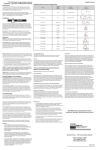
Table 4: Output Voltage Changes – 20% Load to Full Load
(100% Power Factor – Nominal Input Voltage)
Operating Temperature
Standard units are designed to operate in ambient temperatures of minus
20°C to plus 50°C. In operation, a temperature rise will occur whether or not
the transformer is serving load. Normally, this rise may fall anywhere in the
range of 45°C to 110°C, depending on the type and rating. In any case, the
maximum operating temperature at an ambient of 50°C is always within safe
operating limits for the class of insulating material used. (Special units can be
designed for lower heat rise or wider ambient temperature range.)
Transformer VA
%Change - Output Voltage
31-120
approximately 3%
121-150
approximately 2%
151-over
approximately 1%
Input Characteristics
Phase Shift
The phase difference that exists between input voltage and output voltage is in
the range of about 120° to 140° at full load. This phase difference varies with
the magnitude of the load and, to a lesser extent, with changes in line voltage.
External Magnetic Fields
In almost all applications, this effect may be disregarded. On critical
applications, care should be exercised in the orientation of the core with
respect to critical circuits, in order to minimize the effect of the field.
Output Wave Shape
In certain rare cases in which the transformer is connected to, or mounted
near, high gain audio frequency circuits, special attention may need to be
given to adequate physical spacing and/or orientation of the CVS transformer
to avoid interaction with the audio circuits. Sola/Hevi-Duty’s Technical Service
Department (800-377-4384) may be able to offer suggestions for such
problems.
Electrical Characteristics of Operation
Checking With Voltmeters
All checks on output voltages should be made with a true RMS voltmeter
such as a Fluke model 8020 A. Rectifier-type voltmeters will not give accurate
readings due to the small amount of harmonics present in CVS output.
Load Regulation
Changes in output voltage resulting from changes in resistive loads are usually
small - running one percent or less in the larger units. Table 4 shows average
values for output voltages.
The CVS transformers all include harmonic-neutralizing circuitry. These units
typically have less than 3% total harmonic distortion at full load and less than
4.5% at no load.
As the Sola/Hevi-Duty CVS transformer includes a resonant circuit that is fully
energized whether or not a load is present, the input current at no load or
light loads may run 50% or more of the full-load primary current. As a result,
the temperature of the unit may rise to near full-load levels, even at light or
nonexistent loads. Input power factor will average 90-100% at full load, but
may drop to approximately 75% at half load and 25% at no load. In any case,
it is always leading.
Effect of Load Power Factor
The median value of output voltage will vary from the nameplate rating of the
load if a power factor other than that for which the unit was designed is used.
Load regulation will also be relatively greater as the inductive load power
factor is decreased (see Figure 5). However, the resulting median values
of the output voltage will be regulated against supply line changes at any
reasonable load or power factor.
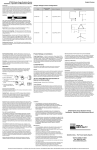
Figure 5: Median Output Voltage vs. Load Power Factor
Response Time
An important advantage of the Sola/Hevi-Duty principle of static magnetic
regulation is its exceedingly fast response time compared with other types of
AC regulators. Transient changes in supply voltage are usually corrected with
a Sola/Hevi-Duty CVS with 1 1/2 cycles or less, the output voltage will not
fluctuate more than a few percent during this interval.
Isolation
Since the input and output are separated not only electrically, but also
physically, by a magnetic shunt, the Sola/Hevi-Duty CVS has a stronger
isolating effect than a conventional transformer. This may often eliminate the
need for static shields.
Change in “Median” Output Voltage vs. Load Power Factor at various loads
11
12
Effect of Frequency
Servicing
Changes in the frequency of the supply voltage will be directly reflected in the
output voltage. A change of approximately 1.8% in the output voltage will occur
for every 1% change in input frequency in the same direction as the frequency
change.
Routine Maintenance
Effect of Temperature
The output voltage will show a small change as the unit warms up to stable
operating temperatures at a constant ambient temperature. This change may
be about 1 or 2% depending on the unit’s VA rating. At a stable operating
temperature, the output voltage will change slightly with varying ambient
temperature. This shift is approximately 1% for each 40°C of temperature
change.
Checklist on Factors Affecting Performance - continued
E. No Output Voltage At All
As the Sola/Hevi-Duty CV Transformer is a simple rugged device without
moving parts or manual adjustments, no servicing or maintenance is needed in
the ordinary sense. The percentage of possible poor performance or failure is
exceedingly low. In any case of apparent poor performance, the user is urged
to check the following points immediately:
2. Check continuity between input terminals, and also between
output terminals.
G. Transformer Operating Temperature
1. These transformers are designed to operate at high flux density,
and hence, relatively high temperatures (see Operating
Temperature). After connection to line for a half hour or so, the
exposed core structure may be too hot to touch with bare hand,
but this is normal and need give no concern. However, if there
is any indication of oil or compound leakage, unit should be
returned to factory (see below).
A. Nominal Voltage Too High
1. The load may be considerable less than full rating.
(See “Load Regulation”).
2. The load may have a leading power factor.
Note
B. Nominal Voltage Too Low
1. Load power factor may be lagging. (See Load Regulation).
2. Unit may be slightly overloaded. (See Current Limitation).
Manufacturing Tolerance
In case the transformer is operating but does not appear to have the correct
output, it is very helpful to apply the following test:
1. Disconnect the working load.
C. Does Not Regulate Closely
1. Unit may be slightly overloaded. (See Current Limitation).
The nominal output voltage of each stock Constant Voltage Transformer is
adjusted at the factory to within plus 2%, minus 0% of rated (nameplate) value
with rated, nominal voltage at rated frequency applied to the input, and with
full rated load at 100% power factor applied to the output. This adjustment is
made with the unit at substantially the same temperature as room ambient
temperature (25°C).
1. Check power source breakers or fuses.
Checklist on Factors Affecting Performance
Current Limitation
When the load is increased beyond the transformer’s rated value, a point is
reached where the output voltage suddenly collapses and will not regain its
normal value until the load is at least partially released. Under a direct short
circuit, the load current is limited to approximately 150-200% of the rated
full load value and the input wattage to less than 10% of normal. A CVS will
protect both itself and its load against damage from excessive fault currents.
Fusing of load circuits is not necessary.
13
2. Actual line voltage swings may be outside the rated coverage
of unit, particularly on the low side.
3. On varying loads, a certain amount of load regulation may be
mixed with the line voltage regulating action.
(See Load Regulation).
D. Output Voltage Very Low (20-60V)
1. Unsuspected or unplanned overloads of substantial size may
occur intermittently (motor-starting currents, solenoid inrush
currents, etc.). (See Current Limitation).
2. Connect a dummy load of lamps, heaters, or other resistive load
substantially equal to the full load rating of transformers, directly
across its output terminals.
3. Measure the output voltage of the CVS using a true RMS type
voltmeter directly across its output terminals.
This test will usually establish whether the apparent poor performance is
due to a fault in the CVS transformer or to some peculiarity of the working
load. Sola/Hevi-Duty’s Technical Service Department will then be in far better
position to give helpful service advice or suggest factory test or service as
indicated.
2. One or more capacitor units in the CVS transformer may be
defective. (See Field Replacement of Capacitors)
14
15
Factory Test and Inspection
Return Policy
If the field test suggested earlier indicated that the CVS transformer itself may
be faulty, a full report of the difficulty should be communicated to the place of
purchase, with a request for permission for return. The Authorized Sola/HeviDuty Distributor may then suggest further helpful field tests, or authorize return
for inspection at once. A Return Authorization Number will be issued. This
number must appear on the outside of the shipping container. Otherwise the
shipment will not be accepted.
Most instances of initial failure to operate properly can be remedied through
a telephone conversation between the user and Technical Service. If it is
determined that a product must be returned, contact your local Sola/Hevi-Duty
distributor for a Return Authorization. If the distributor is unknown, contact
Customer Service at (877) 999-7652 or [email protected]
for instructions.
Field Replacement of Capacitors
Capacitors used in all CVS transformers are of the highest commercial
grade available. Nevertheless, there is a certain small percentage of failure.
Sola/Hevi-Duty’s guarantee includes free replacement at the factory of any
capacitor unit that fails within one year from date of purchase. Older units can
be replaced at moderate charge.
It may be possible to test and identify defective capacitors in the field, and to
make field replacement with new units shipped from the factory. In all such
cases, factory advice and cooperation should be requested in advance.
Warranties
1.
2.
3.
4.
5.
Sola catalog number and/or model number.
Serial number.
Company name, address, phone number and contact person.
Proof of purchase from Distributor.
Description of problem.
For proper handling upon receipt at Sola/Hevi-Duty, the R.A.# must
be clearly placed in several locations on the outside of the package. Sola/HeviDuty is not responsible for damage on returned goods not packaged properly
or customer-abused units.
Sola/Hevi-Duty – The Power Quality Experts
Warranty begins at the date of manufacture and is according to the following
schedule:
Standard catalog transformer and single phase, power conditioning
products – 10 years plus an additional 2 years if online registration
(http://www.solaheviduty.com/support/Warranty.htm) is completed within
14 days after installation.
2.
Products manufactured to a purchaser’s specifications – 1 year.
16
Constant Voltage Sinusoidal Transformers
Operating and Service Manual
All returns to the Sola/Hevi-Duty factory must have a Return Authorization
(R.A.#). The following information required for a Return Authorization (R.A.#):
Sola/Hevi-Duty warrants its standard catalog products to be free from
defects in materials and workmanship and agrees to correct by repair or
replacement, at the option of Sola/Hevi-Duty, products that may fail in
service provided the product has been installed, operated and maintained in
accordance with accepted industry practice.
1.
16
Toll-Free (800) 377-4384
FAX: (800) 367-4384
www.solaheviduty.com
17
P/N 299-35206-01
REV. 03 6/03
Courtesy of Steven Engineering, Inc.-230 Ryan Way, South San Francisco, CA 94080-6370-Main Office: (650) 588-9200-Outside Local Area: (800) 258-9200-www.stevenengineering.com