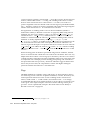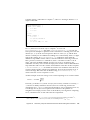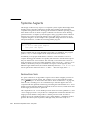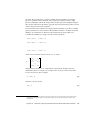
1
Numerical Computation Guide Sun™ ONE Studio 8 Sun Microsystems, Inc. 4150 Network Circle Santa Clara, CA 95054 U.S.A. 650-960-1300 Part No. 817-0932-10 May 2003, Revision A Send comments about this document to: [email protected] Copyright © 2003 Sun Microsystems, Inc., 4150 Network Circle, Santa Clara,California 95054, U.S.A. All rights reserved. U.S. Government Rights - Commercial software. Government users are subject to the Sun Microsystems, Inc. standard license agreement and applicable provisions of the FAR and its supplements. This distribution may include materials developed by third parties. Third-party software, including font technology, is copyrighted and licensed from Sun suppliers. Portions of this product are derived in part from Cray90, a product of Cray Research, Inc. libdwarf and libredblack are Copyright 2000 Silicon Graphics, Inc. and are available under the GNU Lesser General Public License from http://www.sgi.com. Parts of the product may be derived from Berkeley BSD systems, licensed from the University of California. UNIX is a registered trademark in the U.S. and in other countries, exclusively licensed through X/Open Company, Ltd. Sun, Sun Microsystems, the Sun logo, Java, Sun ONE Studio, the Solaris logo and the Sun ONE logo are trademarks or registered trademarks of Sun Microsystems, Inc. in the U.S. and other countries. Netscape and Netscape Navigator are trademarks or registered trademarks of Netscape Communications Corporation in the United States and other countries. All SPARC trademarks are used under license and are trademarks or registered trademarks of SPARC International, Inc. in the U.S. and other countries. Products bearing SPARC trademarks are based upon architecture developed by Sun Microsystems, Inc. Products covered by and information contained in this service manual are controlled by U.S. Export Control laws and may be subject to the export or import laws in other countries. Nuclear, missile, chemical biological weapons or nuclear maritime end uses or end users, whether direct or indirect, are strictly prohibited. Export or reexport to countries subject to U.S. embargo or to entities identified on U.S. export exclusion lists, including, but not limited to, the denied persons and specially designated nationals lists is strictly prohibited. DOCUMENTATION IS PROVIDED “AS IS” AND ALL EXPRESS OR IMPLIED CONDITIONS, REPRESENTATIONS AND WARRANTIES, INCLUDING ANY IMPLIED WARRANTY OF MERCHANTABILITY, FITNESS FOR A PARTICULAR PURPOSE OR NON-INFRINGEMENT, ARE DISCLAIMED, EXCEPT TO THE EXTENT THAT SUCH DISCLAIMERS ARE HELD TO BE LEGALLY INVALID. Copyright © 2003 Sun Microsystems, Inc., 4150 Network Circle, Santa Clara, California 95054, Etats-Unis. Tous droits reserves. Droits du gouvernement americain, utlisateurs gouvernmentaux logiciel commercial. Les utilisateurs gouvernmentaux sont soumis au contrat de licence standard de Sun Microsystems, Inc., ainsi qu aux dispositions en vigueur de la FAR (Federal Acquisition Regulations) et des supplements a celles-ci. Distribue par des licences qui en restreignent l’utilisation. Cette distribution peut comprendre des composants developpes par des tierces parties. Des parties de ce produit pourront etre derivees Cray CF90, un produit de Cray Inc. Des parties de ce produit pourront etre derivees des systemes Berkeley BSD licencies par l’Universite de Californie.UNIX est une marque deposee aux Etats-Unis et dans d’autres pays et licenciee exclusivement par X/Open Company, Ltd. libdwarf et libredblack sont déposent 2000 Silicon Graphics, Inc. et sont disponible sous le GNU Moins Général Public Permis de http://www.sgi.com. Sun, Sun Microsystems, le logo Sun, Java, Sun ONE Studio, le logo Solaris et le logo Sun ONE sont des marques de fabrique ou des marques deposees de Sun Microsystems, Inc. aux Etats-Unis et dans d’autres pays. Netscape et Netscape Navigator sont des marques de fabrique ou des marques déposées de Netscape Communications Corporation aux EtatsUnis et dans d’autres pays. Toutes les marques SPARC sont utilisees sous licence et sont des marques de fabrique ou des marques deposees de SPARC International, Inc. aux Etats-Unis et dans d’autres pays. Les produits protant les marques SPARC sont bases sur une architecture developpee par Sun Microsystems, Inc. Les produits qui font l’objet de ce manuel d’entretien et les informations qu’il contient sont regis par la legislation americaine en matiere de controle des exportations et peuvent etre soumis au droit d’autres pays dans le domaine des exportations et importations. Les utilisations finales, ou utilisateurs finaux, pour des armes nucleaires, des missiles, des armes biologiques et chimiques ou du nucleaire maritime, directement ou indirectement, sont strictement interdites. Les exportations ou reexportations vers des pays sous embargo des Etats-Unis, ou vers des entites figurant sur les listes d’exclusion d’exportation americaines, y compris, mais de maniere non exclusive, la liste de personnes qui font objet d’un ordre de ne pas participer, d’une facon directe ou indirecte, aux exportations des produits ou des services qui sont regi par la legislation americaine en matiere de controle des exportations et la liste de ressortissants specifiquement designes, sont rigoureusement interdites. LA DOCUMENTATION EST FOURNIE “EN L’ÉTAT” ET TOUTES AUTRES CONDITIONS, DECLARATIONS ET GARANTIES EXPRESSES OU TACITES SONT FORMELLEMENT EXCLUES, DANS LA MESURE AUTORISEE PAR LA LOI APPLICABLE, Y COMPRIS NOTAMMENT TOUTE GARANTIE IMPLICITE RELATIVE A LA QUALITE MARCHANDE, A L’APTITUDE A UNE UTILISATION PARTICULIERE OU A L’ABSENCE DE CONTREFAÇON. Please Recycle Contents Before You Begin 13 Who Should Use This Book 13 How This Book Is Organized Typographic Conventions Shell Prompts 13 14 15 Accessing Compiler Collection Tools and Man Pages Accessing Compiler Collection Documentation Accessing Related Solaris Documentation Resources for Developers Sun Welcomes Your Comments Introduction IEEE Arithmetic 20 20 21 23 IEEE Arithmetic Model 23 What Is IEEE Arithmetic? IEEE Formats 19 21 Floating-Point Environment 2. 18 20 Contacting Sun Technical Support 1. 16 23 25 Storage Formats 25 3 Single Format Double Format 25 28 Double-Extended Format (SPARC) Double-Extended Format (x86) 30 33 Ranges and Precisions in Decimal Representation Base Conversion in the Solaris Environment Underflow 36 40 41 Underflow Thresholds 41 How Does IEEE Arithmetic Treat Underflow? Why Gradual Underflow? 42 43 Error Properties of Gradual Underflow 43 Two Examples of Gradual Underflow Versus Store 0 Does Underflow Matter? 3. The Math Libraries 47 49 Standard Math Library 49 Additional Math Libraries Sun Math Library 50 50 Optimized Libraries 52 Vector Math Library (SPARC only) libm9x Math Library 53 54 Single, Double, and Long Double Precision IEEE Support Functions 56 57 ieee_functions(3m) and ieee_sun(3m) ieee_values(3m) ieee_flags(3m) 59 61 ieee_retrospective(3m) 63 nonstandard_arithmetic(3m) 65 C99 Floating Point Environment Functions 4 Numerical Computation Guide • May 2003 66 57 46 Exception Flag Functions Rounding Control 66 67 Environment Functions 67 Implementation Features of libm and libsunmath About the Algorithms 69 70 Argument Reduction for Trigonometric Functions 4. Data Conversion Routines 71 Random Number Facilities 71 Exceptions and Exception Handling What Is an Exception? 73 Notes for Table 4-1 76 Detecting Exceptions 70 73 77 77 ieee_flags(3m) C99 Exception Flag Functions Locating an Exception 79 81 Using the Debuggers to Locate an Exception 82 Using a Signal Handler to Locate an Exception 90 Using libm9x.so Exception Handling Extensions to Locate an Exception 96 Handling Exceptions A. Examples 103 119 IEEE Arithmetic 119 The Math Libraries 121 Random Number Generator 121 IEEE Recommended Functions IEEE Special Values 124 128 ieee_flags — Rounding Direction 130 C99 Floating Point Environment Functions 132 Contents 5 Exceptions and Exception Handling 137 ieee_flags — Accrued Exceptions 137 ieee_handler — Trapping Exceptions 140 ieee_handler — Abort on Exceptions 149 libm9x.so Exception Handling Features 149 Using libm9x.so With Fortran Programs 156 Miscellaneous 160 sigfpe — Trapping Integer Exceptions Calling Fortran From C 161 Useful Debugging Commands B. 165 SPARC Behavior and Implementation Floating-Point Hardware 160 169 169 Floating-Point Status Register and Queue Special Cases Requiring Software Support 172 174 fpversion(1) Function — Finding Information About the FPU C. x86 Behavior and Implementation D. What Every Computer Scientist Should Know About Floating-Point Arithmetic 183 Abstract 181 183 Introduction 184 Rounding Error 184 Floating-point Formats 185 Relative Error and Ulps 187 Guard Digits 188 Cancellation 190 Exactly Rounded Operations The IEEE Standard 6 179 198 Numerical Computation Guide • May 2003 195 Formats and Operations Special Quantities NaNs 199 204 205 Exceptions, Flags and Trap Handlers Systems Aspects 216 Instruction Sets 216 Languages and Compilers Exception Handling The Details 218 226 227 Rounding Error 228 Binary to Decimal Conversion Errors In Summation Summary 237 238 240 Acknowledgments References 240 241 Theorem 14 and Theorem 8 Theorem 14 Proof 211 243 243 243 Differences Among IEEE 754 Implementations Current IEEE 754 Implementations 247 249 Pitfalls in Computations on Extended-Based Systems 250 Programming Language Support for Extended Precision Conclusion E. 260 Standards Compliance SVID History 256 263 263 IEEE 754 History 264 SVID Future Directions SVID Implementation 264 265 Contents 7 General Notes on Exceptional Cases and libm Functions Notes on libm 268 LIA-1 Conformance F. References 268 273 Chapter 2: “IEEE Arithmetic” 273 Chapter 3: “The Math Libraries” 274 Chapter 4: “Exceptions and Signal Handling” 275 Appendix B: “SPARC Behavior and Implementation” Standards 276 Test Programs Glossary Index 8 276 277 291 Numerical Computation Guide • May 2003 275 267 Figures FIGURE 2-1 Single-Storage Format 26 FIGURE 2-2 Double-Storage Format 28 FIGURE 2-3 Double-Extended Format (SPARC) FIGURE 2-4 Double-Extended Format (x86) 34 FIGURE 2-5 Comparison of a Set of Numbers Defined by Digital and Binary Representation FIGURE 2-6 Number Line FIGURE B-1 SPARC Floating-Point Status Register 173 FIGURE D-1 Normalized Numbers When β = 2, p = 3, emin = -1, emax = 2 187 FIGURE D-2 Flush To Zero Compared With Gradual Underflow 31 37 44 210 9 10 Numerical Computation Guide • May 2003 Tables TABLE 2-1 IEEE Formats and Language Types 25 TABLE 2-2 Values Represented by Bit Patterns in IEEE Single Format 26 TABLE 2-3 Bit Patterns in Single-Storage Format and Their IEEE Values 27 TABLE 2-4 Values Represented by Bit Patterns in IEEE Double Format TABLE 2-5 Bit Patterns in Double-Storage Format and Their IEEE Values TABLE 2-6 Values Represented by Bit Patterns (SPARC) TABLE 2-7 Bit Patterns in Double-Extended Format (SPARC) TABLE 2-8 Values Represented by Bit Patterns (x86) 34 TABLE 2-9 Bit Patterns in Double-Extended Format and Their Values (x86) 36 TABLE 2-10 Range and Precision of Storage Formats 39 TABLE 2-11 Underflow Thresholds 41 TABLE 2-12 ulp(1) in Four Different Precisions TABLE 2-13 Gaps Be(tween Representable Single-Format Floating-Point Numbers TABLE 3-1 Contents of libm 50 TABLE 3-2 Contents of libsunmath TABLE 3-3 Contents of libmvec 54 TABLE 3-4 Contents of libm9x TABLE 3-5 Calling Single, Double, and Quadruple Functions TABLE 3-6 ieee_functions(3m) TABLE 3-8 Calling ieee_functions From Fortran 58 29 30 31 32 44 45 51 55 56 57 11 12 TABLE 3-9 Calling ieee_sun From Fortran 58 TABLE 3-7 ieee_sun(3m) TABLE 3-10 IEEE Values: Single Precision 59 TABLE 3-11 IEEE Values: Double Precision 59 TABLE 3-12 IEEE Values: Quadruple Precision (SPARC) 60 TABLE 3-14 Parameter Values for ieee_flags TABLE 3-13 IEEE Values: Double Extended Precision (x86) 61 TABLE 3-15 ieee_flags Input Values for the Rounding Direction TABLE 3-16 C99 Standard Exception Flag Functions TABLE 3-17 libm9x.so Floating Point Environment Functions 68 TABLE 3-18 Intervals for Single-Value Random Number Generators TABLE 4-1 IEEE Floating Point Exceptions TABLE 4-2 Unordered Comparisons TABLE 4-3 Exception Bits 79 TABLE 4-4 Types for Arithmetic Exceptions 93 TABLE 4-5 Exception Codes for fex_set_handling TABLE A-1 Some Debugging Commands (SPARC) TABLE A-2 Some Debugging Commands (x86) TABLE B-1 SPARC Floating-Point Options 170 TABLE B-2 Floating-Point Status Register Fields 173 TABLE B-3 Exception Handling Fields TABLE D-1 IEEE 754 Format Parameters 200 TABLE D-2 IEEE 754 Special Values 205 TABLE D-3 Operations That Produce a NaN TABLE D-4 Exceptions in IEEE 754* 212 TABLE E-1 Exceptional Cases and libm Functions TABLE E-2 LIA-1 Conformance - Notation 58 Numerical Computation Guide • May 2003 61 66 75 76 97 165 166 174 206 270 62 265 72 Before You Begin This manual describes the floating-point environment supported by software and hardware on SPARC® and x86 platforms running the Solaris™ operating environment. Although this manual discusses some general aspects of the SPARC and Intel architectures, it is primarily a reference manual designed to accompany Sun™ language products. Certain aspects of the IEEE Standard for Binary Floating-Point Arithmetic are discussed in this manual. To learn about IEEE arithmetic, see the 18-page Standard. See Appendix F for a brief bibliography on IEEE arithmetic. Who Should Use This Book This manual is written for those who develop, maintain, and port mathematical and scientific applications or benchmarks. Before using this manual, you should be familiar with the programming language used (Fortran, C, etc.), dbx (the sourcelevel debugger), and the operating system commands and concepts. How This Book Is Organized Chapter 1 introduces the floating-point environment. Chapter 2 describes the IEEE arithmetic model, IEEE formats, and underflow. Chapter 3 describes the mathematics libraries provided with the Sun™ Open Net Environment (Sun ONE) Studio compilers. 13 Chapter 4 describes exceptions and shows how to detect, locate, and handle them. Appendix A contains example programs. Appendix B describes the floating-point hardware options for SPARC workstations. Appendix C lists x86 and SPARC compatibility issues related to the floating-point units used in Intel systems. Appendix D is an edited reprint of a tutorial on floating-point arithmetic by David Goldberg. Appendix E discusses standards compliance. Appendix F includes a list of references and related documentation. Glossary contains a definition of terms. The examples in this manual are in C and Fortran, but the concepts apply to either compiler on a SPARC or Intel system. Typographic Conventions TABLE P-1 14 Typeface Conventions Typeface Meaning Examples AaBbCc123 The names of commands, files, and directories; on-screen computer output Edit your .login file. Use ls -a to list all files. % You have mail. AaBbCc123 What you type, when contrasted with on-screen computer output % su Password: AaBbCc123 Book titles, new words or terms, words to be emphasized Read Chapter 6 in the User’s Guide. These are called class options. You must be superuser to do this. AaBbCc123 Command-line placeholder text; replace with a real name or value To delete a file, type rm filename. Numerical Computation Guide • May 2003 TABLE P-2 Code Symbol Code Conventions Meaning Notation Code Example [] Brackets contain arguments that are optional. O[n] O4, O {} Braces contain a set of choices for a required option. d{y|n} dy | The “pipe” or “bar” symbol separates arguments, only one of which may be chosen. B{dynamic|static} Bstatic : The colon, like the comma, is sometimes used to separate arguments. Rdir[:dir] R/local/libs:/U/a … The ellipsis indicates omission in a series. xinline=f1[,…fn] xinline=alpha,dos Shell Prompts Shell Prompt C shell machine-name% C shell superuser machine-name# Bourne shell and Korn shell $ Superuser for Bourne shell and Korn shell # Before You Begin 15 Accessing Compiler Collection Tools and Man Pages The compiler collection components and man pages are not installed into the standard /usr/bin/ and /usr/share/man directories. To access the compilers and tools, you must have the compiler collection component directory in your PATH environment variable. To access the man pages, you must have the compiler collection man page directory in your MANPATH environment variable. For more information about the PATH variable, see the csh(1), sh(1), and ksh(1) man pages. For more information about the MANPATH variable, see the man(1) man page. For more information about setting your PATH variable and MANPATH variables to access this release, see the installation guide or your system administrator. Note – The information in this section assumes that your Sun ONE Studio Compiler Collection components are installed in the /opt directory. If your software is not installed in the /opt directory, ask your system administrator for the equivalent path on your system. Accessing the Compilers and Tools Use the steps below to determine whether you need to change your PATH variable to access the compilers and tools. ▼ To Determine Whether You Need to Set Your PATH Environment Variable 1. Display the current value of the PATH variable by typing the following at a command prompt. % echo $PATH 2. Review the output to find a string of paths that contain /opt/SUNWspro/bin/. If you find the path, your PATH variable is already set to access the compilers and tools. If you do not find the path, set your PATH environment variable by following the instructions in the next procedure. 16 Numerical Computation Guide • May 2003 ▼ To Set Your PATH Environment Variable to Enable Access to the Compilers and Tools 1. If you are using the C shell, edit your home .cshrc file. If you are using the Bourne shell or Korn shell, edit your home .profile file. 2. Add the following to your PATH environment variable. /opt/SUNWspro/bin Accessing the Man Pages Use the following steps to determine whether you need to change your MANPATH variable to access the man pages. ▼ To Determine Whether You Need to Set Your MANPATH Environment Variable 1. Request the dbx man page by typing the following at a command prompt. % man dbx 2. Review the output, if any. If the dbx(1) man page cannot be found or if the man page displayed is not for the current version of the software installed, follow the instructions in the next procedure for setting your MANPATH environment variable. ▼ To Set Your MANPATH Environment Variable to Enable Access to the Man Pages 1. If you are using the C shell, edit your home .cshrc file. If you are using the Bourne shell or Korn shell, edit your home .profile file. 2. Add the following to your MANPATH environment variable. /opt/SUNWspro/man Before You Begin 17 Accessing Compiler Collection Documentation You can access the documentation at the following locations: ■ The documentation is available from the documentation index that is installed with the software on your local system or network at file:/opt/SUNWspro/docs/index.html. If your software is not installed in the /opt directory, ask your system administrator for the equivalent path on your system. ■ Most manuals are available from the docs.sun.comsm web site. The following titles are available through your installed software only: ■ ■ ■ ■ ■ Standard C++ Library Class Reference Standard C++ Library User’s Guide Tools.h++ Class Library Reference Tools.h++ User’s Guide The release notes are available from the docs.sun.com web site. The docs.sun.com web site (http://docs.sun.com) enables you to read, print, and buy Sun Microsystems manuals through the Internet. If you cannot find a manual, see the documentation index that is installed with the software on your local system or network. Note – Sun is not responsible for the availability of third-party web sites mentioned in this document and does not endorse and is not responsible or liable for any content, advertising, products, or other materials on or available from such sites or resources. Sun will not be responsible or liable for any damage or loss caused or alleged to be caused by or in connection with use of or reliance on any such content, goods, or services available on or through any such sites or resources. Documentation in Accessible Formats The documentation is provided in accessible formats that are readable by assistive technologies for users with disabilities. You can find accessible versions of documentation as described in the following table. If your software is not installed in the /opt directory, ask your system administrator for the equivalent path on your system. 18 Numerical Computation Guide • May 2003 Type of Documentation Format and Location of Accessible Version Manuals (except third-party manuals) HTML at http://docs.sun.com Third-party manuals: • Standard C++ Library Class Reference • Standard C++ Library User’s Guide • Tools.h++ Class Library Reference • Tools.h++ User’s Guide HTML in the installed software through the documentation index at file:/opt/SUNWspro/docs/index.html Readmes and man pages HTML in the installed software through the documentation index at file:/opt/SUNWspro/docs/index.html Release notes HTML at http://docs.sun.com Accessing Related Solaris Documentation The following table describes related documentation that is available through the docs.sun.com web site. Document Collection Document Title Description Solaris Reference Manual Collection See the titles of man page sections. Provides information about the Solaris operating environment. Solaris Software Developer Collection Linker and Libraries Guide Describes the operations of the Solaris link-editor and runtime linker. Solaris Software Developer Collection Multithreaded Programming Guide Covers the POSIX and Solaris threads APIs, programming with synchronization objects, compiling multithreaded programs, and finding tools for multithreaded programs. Before You Begin 19 Resources for Developers Visit http://www.sun.com/developers/studio and click the Compiler Collection link to find these frequently updated resources: ■ Articles on programming techniques and best practices ■ A knowledge base of short programming tips ■ Documentation of compiler collection components, as well as corrections to the documentation that is installed with your software ■ Information on support levels ■ User forums ■ Downloadable code samples ■ New technology previews You can find additional resources for developers at http://www.sun.com/developers/. Contacting Sun Technical Support If you have technical questions about this product that are not answered in this document, go to: http://www.sun.com/service/contacting Sun Welcomes Your Comments Sun is interested in improving its documentation and welcomes your comments and suggestions. Email your comments to Sun at this address: [email protected] Please include the part number (817-0932-10) of your document in the subject line of your email. 20 Numerical Computation Guide • May 2003 CHAPTER 1 Introduction Sun’s floating-point environment on SPARC® and Intel systems enables you to develop robust, high-performance, portable numerical applications. The floatingpoint environment can also help investigate unusual behavior of numerical programs written by others. These systems implement the arithmetic model specified by IEEE Standard 754 for Binary Floating Point Arithmetic. This manual explains how to use the options and flexibility provided by the IEEE Standard on these systems. Floating-Point Environment The floating-point environment consists of data structures and operations made available to the applications programmer by hardware, system software, and software libraries that together implement IEEE Standard 754. IEEE Standard 754 makes it easier to write numerical applications. It is a solid, well-thought-out basis for computer arithmetic that advances the art of numerical programming. For example, the hardware provides storage formats corresponding to the IEEE data formats, operations on data in such formats, control over the rounding of results produced by these operations, status flags indicating the occurrence of IEEE numeric exceptions, and the IEEE-prescribed result when such an exception occurs in the absence of a user-defined handler for it. System software supports IEEE exception handling. The software libraries, including the math libraries, libm and libsunmath, implement functions such as exp(x) and sin(x) in a way that follows the spirit of IEEE Standard 754 with respect to the raising of exceptions. (When a floating-point arithmetic operation has no well-defined result, the system communicates this fact to the user by raising an exception.) The math libraries also provide function calls that handle special IEEE values like Inf (infinity) or NaN (Not a Number). 21 The three constituents of the floating-point environment interact in subtle ways, and those interactions are generally invisible to the applications programmer. The programmer sees only the computational mechanisms prescribed or recommended by the IEEE standard. In general, this manual guides programmers to make full and efficient use of the IEEE mechanisms so that they can write application software effectively. Many questions about floating-point arithmetic concern elementary operations on numbers. For example, ■ What is the result of an operation when the infinitely precise result is not representable in the computer system? ■ Are elementary operations like multiplication and addition commutative? Another class of questions is connected to exceptions and exception handling. For example, what happens when you: ■ ■ ■ Multiply two very large numbers? Divide by zero? Attempt to compute the square root of a negative number? In some other arithmetics, the first class of questions might not have the expected answers, or the exceptional cases in the second class are treated the same: the program aborts on the spot; in some very old machines, the computation proceeds, but with garbage. The IEEE Standard 754 ensures that operations yield the mathematically expected results with the expected properties. It also ensures that exceptional cases yield specified results, unless the user specifically makes other choices. In this manual, there are references to terms like NaN or subnormal number. The Glossary defines terms related to floating-point arithmetic. 22 Numerical Computation Guide • May 2003 CHAPTER 2 IEEE Arithmetic This chapter discusses the arithmetic model specified by the ANSI/IEEE Standard 754-1985 for Binary Floating-Point Arithmetic (“the IEEE standard” or “IEEE 754” for short). All SPARC® and x86 processors use IEEE arithmetic. All Sun compiler products support the features of IEEE arithmetic. IEEE Arithmetic Model This section describes the IEEE 754 specification. What Is IEEE Arithmetic? IEEE 754 specifies: ■ Two basic floating-point formats: single and double. The IEEE single format has a significand precision of 24 bits and occupies 32 bits overall. The IEEE double format has a significand precision of 53 bits and occupies 64 bits overall. ■ Two classes of extended floating-point formats: single extended and double extended. The standard does not prescribe the exact precision and size of these formats, but it does specify the minimum precision and size. For example, an IEEE double extended format must have a significand precision of at least 64 bits and occupy at least 79 bits overall. ■ Accuracy requirements on floating-point operations: add, subtract, multiply, divide, square root, remainder, round numbers in floating-point format to integer values, convert between different floating-point formats, convert between floating-point and integer formats, and compare. 23 The remainder and compare operations must be exact. Each of the other operations must deliver to its destination the exact result, unless there is no such result or that result does not fit in the destination’s format. In the latter case, the operation must minimally modify the exact result according to the rules of prescribed rounding modes, presented below, and deliver the result so modified to the operation’s destination. ■ Accuracy, monotonicity and identity requirements for conversions between decimal strings and binary floating-point numbers in either of the basic floatingpoint formats. For operands lying within specified ranges, these conversions must produce exact results, if possible, or minimally modify such exact results in accordance with the rules of the prescribed rounding modes. For operands not lying within the specified ranges, these conversions must produce results that differ from the exact result by no more than a specified tolerance that depends on the rounding mode. ■ Five types of IEEE floating-point exceptions, and the conditions for indicating to the user the occurrence of exceptions of these types. The five types of floating-point exceptions are invalid operation, division by zero, overflow, underflow, and inexact. ■ Four rounding directions: toward the nearest representable value, with “even” values preferred whenever there are two nearest representable values; toward negative infinity (down); toward positive infinity (up); and toward 0 (chop). ■ Rounding precision; for example, if a system delivers results in double extended format, the user should be able to specify that such results are to be rounded to the precision of either the single or double format. The IEEE standard also recommends support for user handling of exceptions. The features required by the IEEE standard make it possible to support interval arithmetic, the retrospective diagnosis of anomalies, efficient implementations of standard elementary functions like exp and cos, multiple precision arithmetic, and many other tools that are useful in numerical computation. IEEE 754 floating-point arithmetic offers users greater control over computation than does any other kind of floating-point arithmetic. The IEEE standard simplifies the task of writing numerically sophisticated, portable programs not only by imposing rigorous requirements on conforming implementations, but also by allowing such implementations to provide refinements and enhancements to the standard itself. 24 Numerical Computation Guide • May 2003 IEEE Formats This section describes how floating-point data is stored in memory. It summarizes the precisions and ranges of the different IEEE storage formats. Storage Formats A floating-point format is a data structure specifying the fields that comprise a floating-point numeral, the layout of those fields, and their arithmetic interpretation. A floating-point storage format specifies how a floating-point format is stored in memory. The IEEE standard defines the formats, but it leaves to implementors the choice of storage formats. Assembly language software sometimes relies on using the storage formats, but higher level languages usually deal only with the linguistic notions of floating-point data types. These types have different names in different high-level languages, and correspond to the IEEE formats as shown in TABLE 2-1. TABLE 2-1 IEEE Formats and Language Types IEEE Precision C, C++ Fortran (SPARC only) single float REAL or REAL*4 double double DOUBLE PRECISION or REAL*8 double extended long double REAL*16 IEEE 754 specifies exactly the single and double floating-point formats, and it defines a class of extended formats for each of these two basic formats. The long double and REAL*16 types shown in TABLE 2-1 refer to one of the class of double extended formats defined by the IEEE standard. The following sections describe in detail each of the storage formats used for the IEEE floating-point formats on SPARC and x86 platforms. Single Format The IEEE single format consists of three fields: a 23-bit fraction, f; an 8-bit biased exponent, e; and a 1-bit sign, s. These fields are stored contiguously in one 32-bit word, as shown in FIGURE 2-1. Bits 0:22 contain the 23-bit fraction, f, with bit 0 being the least significant bit of the fraction and bit 22 being the most significant; bits 23:30 Chapter 2 IEEE Arithmetic 25 contain the 8-bit biased exponent, e, with bit 23 being the least significant bit of the biased exponent and bit 30 being the most significant; and the highest-order bit 31 contains the sign bit, s. s e[30:23] 31 30 FIGURE 2-1 f[22:0] 23 22 0 Single-Storage Format TABLE 2-2 shows the correspondence between the values of the three constituent fields s, e and f, on the one hand, and the value represented by the single- format bit pattern on the other; u means don’t care, that is, the value of the indicated field is irrelevant to the determination of the value of the particular bit patterns in single format. TABLE 2-2 Values Represented by Bit Patterns in IEEE Single Format Single-Format Bit Pattern Value 0 < e < 255 (–1)s × 2e–127 × 1.f (normal numbers) e = 0; f ≠ 0 (at least one bit in f is nonzero) (–1)s × 2–126 × 0.f (subnormal numbers) e = 0; f = 0 (all bits in f are zero) (–1)s × 0.0 (signed zero) s = 0; e = 255; f = 0 (all bits in f are zero) +INF (positive infinity) s = 1; e = 255; f = 0 (all bits in f are zero) –INF (negative infinity) s = u; e = 255; f ≠ 0 (at least one bit in f is nonzero) NaN (Not-a-Number) Notice that when e < 255, the value assigned to the single format bit pattern is formed by inserting the binary radix point immediately to the left of the fraction’s most significant bit, and inserting an implicit bit immediately to the left of the binary point, thus representing in binary positional notation a mixed number (whole number plus fraction, wherein 0 ≤ Ò3fraction < 1). The mixed number thus formed is called the single-format significand. The implicit bit is so named because its value is not explicitly given in the single- format bit pattern, but is implied by the value of the biased exponent field. 26 Numerical Computation Guide • May 2003 For the single format, the difference between a normal number and a subnormal number is that the leading bit of the significand (the bit to left of the binary point) of a normal number is 1, whereas the leading bit of the significand of a subnormal number is 0. Single-format subnormal numbers were called single-format denormalized numbers in IEEE Standard 754. The 23-bit fraction combined with the implicit leading significand bit provides 24 bits of precision in single-format normal numbers. Examples of important bit patterns in the single-storage format are shown in TABLE 2-3. The maximum positive normal number is the largest finite number representable in IEEE single format. The minimum positive subnormal number is the smallest positive number representable in IEEE single format. The minimum positive normal number is often referred to as the underflow threshold. (The decimal values for the maximum and minimum normal and subnormal numbers are approximate; they are correct to the number of figures shown.) TABLE 2-3 Bit Patterns in Single-Storage Format and Their IEEE Values Common Name Bit Pattern (Hex) Decimal Value +0 00000000 0.0 –0 80000000 –0.0 1 3f800000 1.0 2 40000000 2.0 maximum normal number 7f7fffff 3.40282347e+38 minimum positive normal number 00800000 1.17549435e–38 maximum subnormal number 007fffff 1.17549421e–38 minimum positive subnormal number 00000001 1.40129846e–45 +∞ 7f800000 Infinity –∞ ff800000 –Infinity Not-a-Number 7fc00000 NaN A NaN (Not a Number) can be represented with any of the many bit patterns that satisfy the definition of a NaN. The hex value of the NaN shown in TABLE 2-3 is just one of the many bit patterns that can be used to represent a NaN. Chapter 2 IEEE Arithmetic 27 Double Format The IEEE double format consists of three fields: a 52-bit fraction, f; an 11-bit biased exponent, e; and a 1-bit sign, s. These fields are stored contiguously in two successively addressed 32-bit words, as shown in FIGURE 2-2. In the SPARC architecture, the higher address 32-bit word contains the least significant 32 bits of the fraction, while in the x86 architecture the lower address 32-bit word contains the least significant 32 bits of the fraction. If we denote f[31:0] the least significant 32 bits of the fraction, then bit 0 is the least significant bit of the entire fraction and bit 31 is the most significant of the 32 least significant fraction bits. In the other 32-bit word, bits 0:19 contain the 20 most significant bits of the fraction, f[51:32], with bit 0 being the least significant of these 20 most significant fraction bits, and bit 19 being the most significant bit of the entire fraction; bits 20:30 contain the 11-bit biased exponent, e, with bit 20 being the least significant bit of the biased exponent and bit 30 being the most significant; and the highest-order bit 31 contains the sign bit, s. FIGURE 2-2 numbers the bits as though the two contiguous 32-bit words were one 64-bit word in which bits 0:51 store the 52-bit fraction, f; bits 52:62 store the 11-bit biased exponent, e; and bit 63 stores the sign bit, s. s e[52:62] 63 62 f[51:32] 52 51 32 f[31:0] 31 FIGURE 2-2 0 Double-Storage Format The values of the bit patterns in these three fields determine the value represented by the overall bit pattern. 28 Numerical Computation Guide • May 2003 TABLE 2-4 shows the correspondence between the values of the bits in the three constituent fields, on the one hand, and the value represented by the double-format bit pattern on the other; u means don’t care, because the value of the indicated field is irrelevant to the determination of value for the particular bit pattern in double format. TABLE 2-4 Values Represented by Bit Patterns in IEEE Double Format Double-Format Bit Pattern Value 0 < e < 2047 (–1)s × 2e–1023 x 1.f (normal numbers) e = 0; f ≠ 0 (at least one bit in f is nonzero) (–1)s × 2–1022 x 0.f (subnormal numbers) e = 0; f = 0 (all bits in f are zero) (–1)s × 0.0 (signed zero) s = 0; e = 2047; f = 0 (all bits in f are zero) +INF (positive infinity) s = 1; e = 2047; f = 0 (all bits in f are zero) –INF (negative infinity) s = u; e = 2047; f ≠ 0 (at least one bit in f is nonzero) NaN (Not-a-Number) Notice that when e < 2047, the value assigned to the double-format bit pattern is formed by inserting the binary radix point immediately to the left of the fraction’s most significant bit, and inserting an implicit bit immediately to the left of the binary point. The number thus formed is called the significand. The implicit bit is so named because its value is not explicitly given in the double-format bit pattern, but is implied by the value of the biased exponent field. For the double format, the difference between a normal number and a subnormal number is that the leading bit of the significand (the bit to the left of the binary point) of a normal number is 1, whereas the leading bit of the significand of a subnormal number is 0. Double-format subnormal numbers were called doubleformat denormalized numbers in IEEE Standard 754. The 52-bit fraction combined with the implicit leading significand bit provides 53 bits of precision in double-format normal numbers. Examples of important bit patterns in the double-storage format are shown in TABLE 2-5. The bit patterns in the second column appear as two 8-digit hexadecimal numbers. For the SPARC architecture, the left one is the value of the lower addressed 32-bit word, and the right one is the value of the higher addressed 32-bit word, while for the x86 architecture, the left one is the higher addressed word, and the right one is the lower addressed word. The maximum positive normal number is the largest finite number representable in the IEEE double format. The minimum Chapter 2 IEEE Arithmetic 29 positive subnormal number is the smallest positive number representable in IEEE double format. The minimum positive normal number is often referred to as the underflow threshold. (The decimal values for the maximum and minimum normal and subnormal numbers are approximate; they are correct to the number of figures shown.) TABLE 2-5 Bit Patterns in Double-Storage Format and Their IEEE Values Common Name Bit Pattern (Hex) Decimal Value +0 00000000 00000000 0.0 –0 80000000 00000000 –0.0 1 3ff00000 00000000 1.0 2 40000000 00000000 2.0 max normal number 7fefffff ffffffff 1.7976931348623157e+308 min positive normal number 00100000 00000000 2.2250738585072014e–308 max subnormal number 000fffff ffffffff 2.2250738585072009e–308 min positive subnormal number 00000000 00000001 4.9406564584124654e–324 +∞ 7ff00000 00000000 Infinity –∞ fff00000 00000000 –Infinity Not-a-Number 7ff80000 00000000 NaN A NaN (Not a Number) can be represented by any of the many bit patterns that satisfy the definition of NaN. The hex value of the NaN shown in TABLE 2-5 is just one of the many bit patterns that can be used to represent a NaN. Double-Extended Format (SPARC) The SPARC floating-point environment’s quadruple-precision format conforms to the IEEE definition of double-extended format. The quadruple-precision format occupies four 32-bit words and consists of three fields: a 112-bit fraction, f; a 15-bit biased exponent, e; and a 1-bit sign, s. These are stored contiguously as shown in FIGURE 2-3. The highest addressed 32-bit word contains the least significant 32-bits of the fraction, denoted f[31:0]. The next two 32-bit words contain f[63:32] and f[95:64], respectively. Bits 0:15 of the next word contain the 16 most significant bits of the 30 Numerical Computation Guide • May 2003 fraction, f[111:96], with bit 0 being the least significant of these 16 bits, and bit 15 being the most significant bit of the entire fraction. Bits 16:30 contain the 15-bit biased exponent, e, with bit 16 being the least significant bit of the biased exponent and bit 30 being the most significant; and bit 31 contains the sign bit, s. FIGURE 2-3 numbers the bits as though the four contiguous 32-bit words were one 128-bit word in which bits 0:111 store the fraction, f; bits 112:126 store the 15-bit biased exponent, e; and bit 127 stores the sign bit, s. s e[126:112] 127 126 f[111:96] 112 111 96 f[95:64] 95 64 f[63:32] 63 32 f[31:0] 31 FIGURE 2-3 0 Double-Extended Format (SPARC) The values of the bit patterns in the three fields f, e, and s, determine the value represented by the overall bit pattern. TABLE 2-6 shows the correspondence between the values of the three constituent fields and the value represented by the bit pattern in quadruple-precision format. u means don’t care, because the value of the indicated field is irrelevant to the determination of values for the particular bit patterns. TABLE 2-6 Values Represented by Bit Patterns (SPARC) Double-Extended Bit Pattern (SPARC) Value 0 < e < 32767 (–1)s x 2e–16383 × 1.f (normal numbers) e = 0, f ≠ 0 (at least one bit in f is nonzero) (–1)s x 2–16382 × 0.f (subnormal numbers) e = 0, f = 0 (all bits in f are zero) (–1)s x 0.0 (signed zero) Chapter 2 IEEE Arithmetic 31 TABLE 2-6 Values Represented by Bit Patterns (SPARC) (Continued) Double-Extended Bit Pattern (SPARC) Value s = 0, e = 32767, f = 0 (all bits in f are zero) +INF (positive infinity) s = 1, e = 32767; f = 0 (all bits in f are zero) -INF (negative infinity) s = u, e = 32767, f ≠ 0 (at least one bit in f is nonzero) NaN (Not-a-Number) Examples of important bit patterns in the quadruple-precision double-extended storage format are shown in TABLE 2-7. The bit patterns in the second column appear as four 8-digit hexadecimal numbers. The left-most number is the value of the lowest addressed 32-bit word, and the right-most number is the value of the highest addressed 32-bit word. The maximum positive normal number is the largest finite number representable in the quadruple precision format. The minimum positive subnormal number is the smallest positive number representable in the quadruple precision format. The minimum positive normal number is often referred to as the underflow threshold. (The decimal values for the maximum and minimum normal and subnormal numbers are approximate; they are correct to the number of figures shown.) TABLE 2-7 Bit Patterns in Double-Extended Format (SPARC) Common Name Bit Pattern (SPARC) Decimal Value +0 00000000 00000000 00000000 00000000 0.0 –0 80000000 00000000 00000000 00000000 –0.0 1 3fff0000 00000000 00000000 00000000 1.0 2 40000000 00000000 00000000 00000000 2.0 max normal 7ffeffff ffffffff ffffffff ffffffff 1.1897314953572317650857593266280070e+4932 min normal 00010000 00000000 00000000 00000000 3.3621031431120935062626778173217526e–4932 max subnormal 0000ffff ffffffff ffffffff ffffffff 3.3621031431120935062626778173217520e–4932 min pos subnormal 00000000 00000000 00000000 00000001 6.4751751194380251109244389582276466e–4966 32 Numerical Computation Guide • May 2003 TABLE 2-7 Bit Patterns in Double-Extended Format (SPARC) (Continued) Common Name Bit Pattern (SPARC) Decimal Value +∞ 7fff0000 00000000 00000000 00000000 +∞ –∞ ffff0000 00000000 00000000 00000000 –∞ 7fff8000 00000000 00000000 00000000 NaN Not-aNumber The hex value of the NaN shown in TABLE 2-7 is just one of the many bit patterns that can be used to represent NaNs. Double-Extended Format (x86) This floating-point environment’s double-extended format conforms to the IEEE definition of double-extended formats. It consists of four fields: a 63-bit fraction, f; a 1-bit explicit leading significand bit, j; a 15-bit biased exponent, e; and a 1-bit sign, s. In the family of x86 architectures, these fields are stored contiguously in ten successively addressed 8-bit bytes. However, the UNIX System V Application Binary Interface Intel 386 Processor Supplement (Intel ABI) requires that double-extended parameters and results occupy three consecutively addressed 32-bit words in the stack, with the most significant 16 bits of the highest addressed word being unused, as shown in FIGURE 2-4. The lowest addressed 32-bit word contains the least significant 32 bits of the fraction, f[31:0], with bit 0 being the least significant bit of the entire fraction and bit 31 being the most significant of the 32 least significant fraction bits. In the middle addressed 32-bit word, bits 0:30 contain the 31 most significant bits of the fraction, f[62:32], with bit 0 being the least significant of these 31 most significant fraction bits, and bit 30 being the most significant bit of the entire fraction; bit 31 of this middle addressed 32-bit word contains the explicit leading significand bit, j. In the highest addressed 32-bit word, bits 0:14 contain the 15-bit biased exponent, e, with bit 0 being the least significant bit of the biased exponent and bit 14 being the most significant; and bit 15 contains the sign bit, s. Although the highest order 16 bits of this highest addressed 32-bit word are unused by the family of x86 architectures, their presence is essential for conformity to the Intel ABI, as indicated above. FIGURE 2-4 numbers the bits as though the three contiguous 32-bit words were one 96-bit word in which bits 0:62 store the 63-bit fraction, f; bit 63 stores the explicit leading significand bit, j; bits 64:78 store the 15-bit biased exponent, e; and bit 79 stores the sign bit, s. Chapter 2 IEEE Arithmetic 33 s 96 80 79 78 j 63 e[78:64] 64 f[62:32] 62 32 f[31:0] 31 FIGURE 2-4 0 Double-Extended Format (x86) The values of the bit patterns in the four fields f, j, e and s, determine the value represented by the overall bit pattern. TABLE 2-8 shows the correspondence between the counting number values of the four constituent field and the value represented by the bit pattern. u means don’t care, because the value of the indicated field is irrelevant to the determination of value for the particular bit patterns. TABLE 2-8 34 Values Represented by Bit Patterns (x86) Double-Extended Bit Pattern (x86) Value j = 0, 0 < e <32767 Unsupported j = 1, 0 < e < 32767 (–1)s x 2e–16383 x 1.f (normal numbers) j = 0, e = 0; f ≠ 0 (at least one bit in f is nonzero) (–1)s x 2–16382 x 0.f (subnormal numbers) j = 1, e = 0 (–1)s x 2–16382 x 1.f (pseudo-denormal numbers) j = 0, e = 0, f = 0 (all bits in f are zero) (–1)s x 0.0 (signed zero) j = 1; s = 0; e = 32767; f = 0 (all bits in f are zero) +INF (positive infinity) j = 1; s = 1; e = 32767; f = 0 (all bits in f are zero) –INF (negative infinity) j = 1; s = u; e = 32767; f = .1uuu — uu QNaN (quiet NaNs) j = 1; s = u; e = 32767; f = .0uuu — uu ≠ 0 (at least one of the u in f is nonzero) SNaN (signaling NaNs) Numerical Computation Guide • May 2003 Notice that bit patterns in double-extended format do not have an implicit leading significand bit. The leading significand bit is given explicitly as a separate field, j, in the double-extended format. However, when e ≠ 0, any bit pattern with j = 0 is unsupported in the sense that using such a bit pattern as an operand in floatingpoint operations provokes an invalid operation exception. The union of the disjoint fields j and f in the double extended format is called the significand. When e < 32767 and j = 1, or when e = 0 and j = 0, the significand is formed by inserting the binary radix point between the leading significand bit, j, and the fraction’s most significant bit. In the x86 double-extended format, a bit pattern whose leading significand bit j is 0 and whose biased exponent field e is also 0 represents a subnormal number, whereas a bit pattern whose leading significand bit j is 1 and whose biased exponent field e is nonzero represents a normal number. Because the leading significand bit is represented explicitly rather than being inferred from the value of the exponent, this format also admits bit patterns whose biased exponent is 0, like the subnormal numbers, but whose leading significand bit is 1. Each such bit pattern actually represents the same value as the corresponding bit pattern whose biased exponent field is 1, i.e., a normal number, so these bit patterns are called pseudo-denormals. (Subnormal numbers were called denormalized numbers in IEEE Standard 754.) Pseudo-denormals are merely an artifact of the x86 double-extended format’s encoding; they are implicitly converted to the corresponding normal numbers when they appear as operands, and they are never generated as results. Examples of important bit patterns in the double-extended storage format appear in TABLE 2-9. The bit patterns in the second column appear as one 4-digit hexadecimal counting number, which is the value of the 16 least significant bits of the highest addressed 32-bit word (recall that the most significant 16 bits of this highest addressed 32-bit word are unused, so their value is not shown), followed by two 8digit hexadecimal counting numbers, of which the left one is the value of the middle addressed 32-bit word, and the right one is the value of the lowest addressed 32-bit word. The maximum positive normal number is the largest finite number representable in the x86 double-extended format. The minimum positive subnormal number is the smallest positive number representable in the double-extended format. The minimum positive normal number is often referred to as the underflow threshold. (The decimal values for the maximum and minimum normal and subnormal numbers are approximate; they are correct to the number of figures shown.) Chapter 2 IEEE Arithmetic 35 TABLE 2-9 Bit Patterns in Double-Extended Format and Their Values (x86) Common Name Bit Pattern (x86) Decimal Value +0 0000 00000000 00000000 0.0 –0 8000 00000000 00000000 –0.0 1 3fff 80000000 00000000 1.0 2 4000 80000000 00000000 2.0 max normal 7ffe ffffffff ffffffff 1.18973149535723176505e+4932 min positive normal 0001 80000000 00000000 3.36210314311209350626e–4932 max subnormal 0000 7fffffff ffffffff 3.36210314311209350608e–4932 min positive subnormal 0000 00000000 00000001 3.64519953188247460253e–4951 +∞ 7fff 80000000 00000000 +∞ –∞ ffff 80000000 00000000 –∞ quiet NaN with greatest fraction 7fff ffffffff ffffffff QNaN quiet NaN with least fraction 7fff c0000000 00000000 QNaN signaling NaN with greatest fraction 7fff bfffffff ffffffff SNaN signaling NaN with least fraction 7fff 80000000 00000001 SNaN A NaN (Not a Number) can be represented by any of the many bit patterns that satisfy the definition of NaN. The hex values of the NaNs shown in TABLE 2-9 illustrate that the leading (most significant) bit of the fraction field determines whether a NaN is quiet (leading fraction bit = 1) or signaling (leading fraction bit = 0). Ranges and Precisions in Decimal Representation This section covers the notions of range and precision for a given storage format. It includes the ranges and precisions corresponding to the IEEE single and double formats and to the implementations of IEEE double-extended format on SPARC and x86 architectures. For concreteness, in defining the notions of range and precision we refer to the IEEE single format. The IEEE standard specifies that 32 bits be used to represent a floating point number in single format. Because there are only finitely many combinations of 32 zeroes and ones, only finitely many numbers can be represented by 32 bits. One natural question is: 36 Numerical Computation Guide • May 2003 What are the decimal representations of the largest and smallest positive numbers that can be represented in this particular format? Rephrase the question and introduce the notion of range: What is the range, in decimal notation, of numbers that can be represented by the IEEE single format? Taking into account the precise definition of IEEE single format, one can prove that the range of floating-point numbers that can be represented in IEEE single format (if restricted to positive normalized numbers) is as follows: 1.175... × (10-38) to 3.402... × (10+38) A second question refers to the precision (not to be confused with the accuracy or the number of significant digits) of the numbers represented in a given format. These notions are explained by looking at some pictures and examples. The IEEE standard for binary floating-point arithmetic specifies the set of numerical values representable in the single format. Remember that this set of numerical values is described as a set of binary floating-point numbers. The significand of the IEEE single format has 23 bits, which together with the implicit leading bit, yield 24 digits (bits) of (binary) precision. One obtains a different set of numerical values by marking the numbers: x = (x1.x2 x3...xq) × (10n) (representable by q decimal digits in the significand) on the number line. FIGURE 2-5 exemplifies this situation: Decimal Representation: 0 0 1 2 3 4 5 6 8 7 100 9 10 20 101 20 Binary Representation: 1/2 1 2 4 8 16 0 2 -1 20 21 22 23 24 0 FIGURE 2-5 Comparison of a Set of Numbers Defined by Digital and Binary Representation Chapter 2 IEEE Arithmetic 37 Notice that the two sets are different. Therefore, estimating the number of significant decimal digits corresponding to 24 significant binary digits, requires reformulating the problem. Reformulate the problem in terms of converting floating-point numbers between binary representations (the internal format used by the computer) and the decimal format (the format users are usually interested in). In fact, you may want to convert from decimal to binary and back to decimal, as well as convert from binary to decimal and back to binary. It is important to notice that because the sets of numbers are different, conversions are in general inexact. If done correctly, converting a number from one set to a number in the other set results in choosing one of the two neighboring numbers from the second set (which one specifically is a question related to rounding). Consider some examples. Suppose one is trying to represent a number with the following decimal representation in IEEE single format: x = x1.x2 x3... × 10n Because there are only finitely many real numbers that can be represented exactly in IEEE single format, and not all numbers of the above form are among them, in general it will be impossible to represent such numbers exactly. For example, let y = 838861.2, z = 1.3 and run the following Fortran program: 40 50 REAL Y, Z Y = 838861.2 Z = 1.3 WRITE(*,40) Y FORMAT("y: ",1PE18.11) WRITE(*,50) Z FORMAT("z: ",1PE18.11) The output from this program should be similar to: y: z: 8.38861187500E+05 1.29999995232E+00 The difference between the value 8.388612 × 10⁵ assigned to y and the value printed out is 0.000000125, which is seven decimal orders of magnitude smaller than y. The accuracy of representing y in IEEE single format is about 6 to 7 significant digits, or that y has about six significant digits if it is to be represented in IEEE single format. 38 Numerical Computation Guide • May 2003 Similarly, the difference between the value 1.3 assigned to z and the value printed out is 0.00000004768, which is eight decimal orders of magnitude smaller than z. The accuracy of representing z in IEEE single format is about 7 to 8 significant digits, or that z has about seven significant digits if it is to be represented in IEEE single format. Now formulate the question: Assume you convert a decimal floating point number a to its IEEE single format binary representation b, and then translate b back to a decimal number c; how many orders of magnitude are between a and a - c? Rephrase the question: What is the number of significant decimal digits of a in the IEEE single format representation, or how many decimal digits are to be trusted as accurate when one represents x in IEEE single format? The number of significant decimal digits is always between 6 and 9, that is, at least 6 digits, but not more than 9 digits are accurate (with the exception of cases when the conversions are exact, when infinitely many digits could be accurate). Conversely, if you convert a binary number in IEEE single format to a decimal number, and then convert it back to binary, generally, you need to use at least 9 decimal digits to ensure that after these two conversions you obtain the number you started from. The complete picture is given in TABLE 2-10: TABLE 2-10 Range and Precision of Storage Formats Format Significant Digits (Binary) Smallest Positive Normal Number Largest Positive Number Significant Digits (Decimal) single 24 1.175... 10-38 3.402... 10+38 6-9 double 53 2.225... 10-308 1.797... 10+308 15-17 10-4932 double extended (SPARC) 113 3.362... double extended (x86) 64 3.362... 10-4932 10+4932 33-36 1.189... 10+4932 18-21 1.189... Chapter 2 IEEE Arithmetic 39 Base Conversion in the Solaris Environment Base conversion is used by I/O routines, like printf and scanf in C, and read, write, and print in Fortran. For these functions you need conversions between numbers representations in bases 2 and 10: ■ Base conversion from base 10 to base 2 occurs when reading in a number in conventional decimal notation and storing it in internal binary format. ■ Base conversion from base 2 to base 10 occurs when printing an internal binary value as an ASCII string of decimal digits. In the Solaris environment, the fundamental routines for base conversion in all languages are contained in the standard C library, libc. These routines use tabledriven algorithms that yield correctly-rounded conversion between any input and output formats. In addition to their accuracy, table-driven algorithms reduce the worst-case times for correctly-rounded base conversion. The IEEE standard requires correct rounding for typical numbers whose magnitudes range from 10–44 to 10+44 but permits slightly incorrect rounding for larger exponents. (See section 5.6 of IEEE Standard 754.) The libc table-driven algorithms round correctly throughout the entire range of single, double, and double extended formats. In C, conversions between decimal strings and binary floating point values are always rounded correctly in accordance with IEEE 754: the converted result is the number representable in the result's format that is nearest to the original value in the direction specified by the current rounding mode. When the rounding mode is round-to-nearest and the original value lies exactly halfway between two representable numbers in the result format, the converted result is the one whose least significant digit is even. These rules apply to conversions of constants in source code performed by the compiler as well as to conversions of data performed by the program using standard library routines. In Fortran, conversions between decimal strings and binary floating point values are rounded correctly following the same rules as C by default. For I/O conversions, the “round-ties-to-even” rule in round-to-nearest mode can be overridden, either by using the ROUNDING= specifier in the program or by compiling with the -iorounding flag. See the Fortran User’s Guide and the f95(1) man page for more information. See Appendix F for references on base conversion. Particularly good references are Coonen’s thesis and Sterbenz’s book. 40 Numerical Computation Guide • May 2003 Underflow Underflow occurs, roughly speaking, when the result of an arithmetic operation is so small that it cannot be stored in its intended destination format without suffering a rounding error that is larger than usual. Underflow Thresholds TABLE 2-11 shows the underflow thresholds for single, double, and double-extended precision. TABLE 2-11 Underflow Thresholds Destination Precision Underflow Threshold single smallest normal number largest subnormal number 1.17549435e–38 1.17549421e–38 double smallest normal number largest subnormal number 2.2250738585072014e–308 2.2250738585072009e–308 double-extended (SPARC) smallest normal number largest subnormal number 3.3621031431120935062626778173217526e–4932 3.3621031431120935062626778173217520e–4932 double-extended (x86) smallest normal number largest subnormal number 3.36210314311209350626e–4932 3.36210314311209350590e–4932 The positive subnormal numbers are those numbers between the smallest normal number and zero. Subtracting two (positive) tiny numbers that are near the smallest normal number might produce a subnormal number. Or, dividing the smallest positive normal number by two produces a subnormal result. The presence of subnormal numbers provides greater precision to floating-point calculations that involve small numbers, although the subnormal numbers themselves have fewer bits of precision than normal numbers. Producing subnormal numbers (rather than returning the answer zero) when the mathematically correct result has magnitude less than the smallest positive normal number is known as gradual underflow. There are several other ways to deal with such underflow results. One way, common in the past, was to flush those results to zero. This method is known as Store 0 and was the default on most mainframes before the advent of the IEEE Standard. Chapter 2 IEEE Arithmetic 41 The mathematicians and computer designers who drafted IEEE Standard 754 considered several alternatives while balancing the desire for a mathematically robust solution with the need to create a standard that could be implemented efficiently. How Does IEEE Arithmetic Treat Underflow? IEEE Standard 754 chooses gradual underflow as the preferred method for dealing with underflow results. This method amounts to defining two representations for stored values, normal and subnormal. Recall that the IEEE format for a normal floating-point number is: ( – 1 ) s × ( 2 ( e – bias ) ) × 1. f where s is the sign bit, e is the biased exponent, and f is the fraction. Only s, e, and f need to be stored to fully specify the number. Because the implicit leading bit of the significand is defined to be 1 for normal numbers, it need not be stored. The smallest positive normal number that can be stored, then, has the negative exponent of greatest magnitude and a fraction of all zeros. Even smaller numbers can be accommodated by considering the leading bit to be zero rather than one. In the double-precision format, this effectively extends the minimum exponent from 10-308 to 10-324, because the fraction part is 52 bits long (roughly 16 decimal digits.) These are the subnormal numbers; returning a subnormal number (rather than flushing an underflowed result to zero) is gradual underflow. Clearly, the smaller a subnormal number, the fewer nonzero bits in its fraction; computations producing subnormal results do not enjoy the same bounds on relative roundoff error as computations on normal operands. However, the key fact about gradual underflow is that its use implies: ■ Underflowed results need never suffer a loss of accuracy any greater than that which results from ordinary roundoff error. ■ Addition, subtraction, comparison, and remainder are always exact when the result is very small. Recall that the IEEE format for a subnormal floating-point number is: ( – 1 ) s × ( 2 ( – bias + 1 ) ) × 0. f where s is the sign bit, the biased exponent e is zero, and f is the fraction. Note that the implicit power-of-two bias is one greater than the bias in the normal format, and the implicit leading bit of the fraction is zero. 42 Numerical Computation Guide • May 2003 Gradual underflow allows you to extend the lower range of representable numbers. It is not smallness that renders a value questionable, but its associated error. Algorithms exploiting subnormal numbers have smaller error bounds than other systems. The next section provides some mathematical justification for gradual underflow. Why Gradual Underflow? The purpose of subnormal numbers is not to avoid underflow/overflow entirely, as some other arithmetic models do. Rather, subnormal numbers eliminate underflow as a cause for concern for a variety of computations (typically, multiply followed by add). For a more detailed discussion, see Underflow and the Reliability of Numerical Software by James Demmel and Combatting the Effects of Underflow and Overflow in Determining Real Roots of Polynomials by S. Linnainmaa. The presence of subnormal numbers in the arithmetic means that untrapped underflow (which implies loss of accuracy) cannot occur on addition or subtraction. If x and y are within a factor of two, then x – y is error-free. This is critical to a number of algorithms that effectively increase the working precision at critical places in algorithms. In addition, gradual underflow means that errors due to underflow are no worse than usual roundoff error. This is a much stronger statement than can be made about any other method of handling underflow, and this fact is one of the best justifications for gradual underflow. Error Properties of Gradual Underflow Most of the time, floating-point results are rounded: computed result = true result + roundoff How large can the roundoff be? One convenient measure of its size is called a unit in the last place, abbreviated ulp. The least significant bit of the fraction of a floatingpoint number in its standard representation is its last place. The value represented by this bit (e.g., the absolute difference between the two numbers whose representations are identical except for this bit) is a unit in the last place of that number. If the computed result is obtained by rounding the true result to the nearest representable number, then clearly the roundoff error is no larger than half a unit in the last place of the computed result. In other words, in IEEE arithmetic with rounding mode to nearest, 0 ≤ |roundoff| ≤ 1/2 ulp of the computed result. Chapter 2 IEEE Arithmetic 43 Note that an ulp is a relative quantity. An ulp of a very large number is itself very large, while an ulp of a tiny number is itself tiny. This relationship can be made explicit by expressing an ulp as a function: ulp(x) denotes a unit in the last place of the floating-point number x. Moreover, an ulp of a floating-point number depends on the precision to which that number is represented. For example, TABLE 2-12 shows the values of ulp(1) in each of the four floating-point formats described above: TABLE 2-12 ulp(1) in Four Different Precisions Precision Value single ulp(1) = 2^-23 ~ 1.192093e-07 double ulp(1) = 2^-52 ~ 2.220446e-16 double extended (x86) ulp(1) = 2^-63 ~ 1.084202e-19 quadruple (SPARC) ulp(1) = 2^-112 ~ 1.925930e-34 Recall that only a finite set of numbers can be exactly represented in any computer arithmetic. As the magnitudes of numbers get smaller and approach zero, the gap between neighboring representable numbers narrows. Conversely, as the magnitude of numbers gets larger, the gap between neighboring representable numbers widens. For example, imagine you are using a binary arithmetic that has only 3 bits of precision. Then, between any two powers of 2, there are 23 = 8 representable numbers, as shown in FIGURE 2-6. 1/2 1 2 4 8 16 0 2 -1 20 21 22 23 24 0 FIGURE 2-6 Number Line The number line shows how the gap between numbers doubles from one exponent to the next. In the IEEE single format, the difference in magnitude between the two smallest positive subnormal numbers is approximately 10-45, whereas the difference in magnitude between the two largest finite numbers is approximately 1031! 44 Numerical Computation Guide • May 2003 In TABLE 2-13, nextafter(x,+∞) denotes the next representable number after x as you move along the number line towards +∞. TABLE 2-13 Gaps Be(tween Representable Single-Format Floating-Point Numbers x nextafter(x, +∞) Gap 0.0 1.4012985e–45 1.4012985e–45 1.1754944e–38 1.1754945e–38 1.4012985e–45 1.0 1.0000001 1.1920929e–07 2.0 2.0000002 2.3841858e–07 16.000000 16.000002 1.9073486e–06 128.00000 128.00002 1.5258789e–05 1.0000000e+20 1.0000001e+20 8.7960930e+12 9.9999997e+37 1.0000001e+38 1.0141205e+31 Any conventional set of representable floating-point numbers has the property that the worst effect of one inexact result is to introduce an error no worse than the distance to one of the representable neighbors of the computed result. When subnormal numbers are added to the representable set and gradual underflow is implemented, the worst effect of one inexact or underflowed result is to introduce an error no greater than the distance to one of the representable neighbors of the computed result. In particular, in the region between zero and the smallest normal number, the distance between any two neighboring numbers equals the distance between zero and the smallest subnormal number. The presence of subnormal numbers eliminates the possibility of introducing a roundoff error that is greater than the distance to the nearest representable number. Because no calculation incurs roundoff error greater than the distance to any of the representable neighbors of the computed result, many important properties of a robust arithmetic environment hold, including these three: ■ ■ ■ x≠y⇔x–y≠0 (x – y) + y ≈ x, to within a rounding error in the larger of x and y 1/(1/x) ≈ x, when x is a normalized number, implying 1/x ≠ 0 An alternative underflow scheme is Store 0, which flushes underflow results to zero. Store 0 violates the first and second properties whenever x – y underflows. Also, Store 0 violates the third property whenever 1/x underflows. Let λ represent the smallest positive normalized number, which is also known as the underflow threshold. Then the error properties of gradual underflow and Store 0 can be compared in terms of λ. Chapter 2 IEEE Arithmetic 45 1 2 gradual underflow: |error| < --- ulp in λ Store 0: |error| ≈ λ There is a significant difference between half a unit in the last place of λ, and λ itself. Two Examples of Gradual Underflow Versus Store 0 The following are two well-known mathematical examples. The first example is code that computes an inner product. sum = 0; for (i = 0; i < n; i++) { sum = sum + a[i] * y[i]; } return sum; With gradual underflow, the result is as accurate as roundoff allows. In Store 0, a small but nonzero sum could be delivered that looks plausible but is wrong in nearly every digit. However, in fairness, it must be admitted that to avoid just these sorts of problems, clever programmers scale their calculations if they are able to anticipate where minuteness might degrade accuracy. The second example, deriving a complex quotient, is not amenable to scaling: p+i⋅q a + i ⋅ b = ------------------- , assuming r ⁄ s ≤ 1 r+i⋅s ( p ⋅ (r ⁄ s) + q) + i(q ⋅ (r ⁄ s) – p) = ------------------------------------------------------------------------------s + r ⋅ (r ⁄ s) It can be shown that, despite roundoff, the computed complex result differs from the exact result by no more than what would have been the exact result if p + i ⋅ q and r + i ⋅ s each had been perturbed by no more than a few ulps. This error analysis holds in the face of underflows, except that when both a and b underflow, the error is bounded by a few ulps of a + i ⋅ b . Neither conclusion is true when underflows are flushed to zero. This algorithm for computing a complex quotient is robust, and amenable to error analysis, in the presence of gradual underflow. A similarly robust, easily analyzed, and efficient algorithm for computing the complex quotient in the face of Store 0 does not exist. In Store 0, the burden of worrying about low-level, complicated details shifts from the implementor of the floating-point environment to its users. 46 Numerical Computation Guide • May 2003 The class of problems that succeed in the presence of gradual underflow, but fail with Store 0, is larger than the fans of Store 0 may realize. Many frequently used numerical techniques fall in this class: ■ ■ ■ ■ ■ Linear equation solving Polynomial equation solving Numerical integration Convergence acceleration Complex division Does Underflow Matter? Despite these examples, it can be argued that underflow rarely matters, and so, why bother? However, this argument turns upon itself. In the absence of gradual underflow, user programs need to be sensitive to the implicit inaccuracy threshold. For example, in single precision, if underflow occurs in some parts of a calculation, and Store 0 is used to replace underflowed results with 0, then accuracy can be guaranteed only to around 10-31, not 10-38, the usual lower range for single-precision exponents. This means that programmers need to implement their own method of detecting when they are approaching this inaccuracy threshold, or else abandon the quest for a robust, stable implementation of their algorithm. Some algorithms can be scaled so that computations don’t take place in the constricted area near zero. However, scaling the algorithm and detecting the inaccuracy threshold can be difficult and time-consuming for each numerical program. Chapter 2 IEEE Arithmetic 47 48 Numerical Computation Guide • May 2003 CHAPTER 3 The Math Libraries This chapter describes the math libraries provided with the Solaris operating environment and Sun ONE Studio Compiler Collection. Besides listing each of the libraries along with its contents, this chapter discusses some of the features supported by the math libraries provided with the compiler collection, including IEEE supporting functions, random number generators, and functions that convert data between IEEE and non-IEEE formats. The contents of the libm and libsunmath libraries are also listed on the Intro(3M) man page. Standard Math Library The libm math library contains the functions required by the various standards to which the Solaris operating environment conforms. This library is bundled with the Solaris operating environment in two forms: libm.a, the static version, and libm.so, the shared version. The default directories for a standard installation of libm are: /usr/lib/libm.a /usr/lib/libm.so The default directories for standard installation of the header files for libm are: /usr/include/floatingpoint.h /usr/include/math.h /usr/include/sys/ieeefp.h 49 TABLE 3-1 lists the functions in libm. TABLE 3-1 Contents of libm Type Function Name Algebraic functions cbrt, hypot, sqrt Elementary transcendental functions asin, acos, atan, atan2, asinh, acosh, atanh, exp, expm1, pow, log, log1p, log10, sin, cos, tan, sinh, cosh, tanh Higher transcendental functions j0, j1, jn, y0, y1, yn, erf, erfc, gamma, lgamma, gamma_r, lgamma_r Integral rounding functions ceil, floor, rint IEEE standard recommended functions copysign, fmod, ilogb, nextafter, remainder, scalbn, fabs IEEE classification functions isnan Old style floating-point functions logb, scalb, significand Error handling routine (user-defined) matherr Note that the functions gamma_r and lgamma_r are reentrant versions of gamma and lgamma. See the ld(1) and compiler manual pages for more information about dynamic and static linking and the options and environment variables that determine which shared objects are loaded when a program is run. Additional Math Libraries Sun Math Library The library libsunmath is part of the libraries supplied with all Sun language products. The library libsunmath contains a set of functions that were incorporated in previous versions of libm from Sun. The default directories for a standard installation of libsunmath are: /opt/SUNWspro/prod/lib/libsunmath.a 50 Numerical Computation Guide • May 2003 /opt/SUNWspro/lib/libsunmath.so The default directories for standard installation of the header files for libsunmath are: /opt/SUNWspro/prod/include/cc/sunmath.h /opt/SUNWspro/prod/include/floatingpoint.h TABLE 3-2 lists the functions in libsunmath. For each mathematical function, the table gives only the name of the double precision version of the function as it would be called from a C program. TABLE 3-2 Contents of libsunmath Type Function Name Functions from TABLE 3-1 single and extended/quadruple precision available, except for matherr Elementary transcendental functions exp2, exp10, log2, sincos Trigonometric functions in degrees asind, acosd, atand, atan2d, sind, cosd, sincosd, tand Trigonometric functions scaled in π asinpi, acospi, atanpi, atan2pi, sinpi, cospi, sincospi, tanpi Trigonometric functions with double precision π argument reduction asinp, acosp, atanp, sinp, cosp, sincosp, tanp Financial functions annuity, compound Integral rounding functions aint, anint, irint, nint IEEE standard recommended functions signbit IEEE classification functions fp_class, isinf, isnormal, issubnormal, iszero Functions that supply useful IEEE values min_subnormal, max_subnormal, min_normal, max_normal, infinity, signaling_nan, quiet_nan Additive random number generators i_addran_, i_addrans_, i_init_addrans_, i_get_addrans_, i_set_addrans_, r_addran_, r_addrans_, r_init_addrans_, r_get_addrans_, r_set_addrans_, d_addran_, d_addrans_, d_init_addrans_, d_get_addrans_, d_set_addrans_, u_addrans_ Chapter 3 The Math Libraries 51 TABLE 3-2 Contents of libsunmath (Continued) Type Function Name Linear congruential random number generators i_lcran_, i_lcrans_, i_init_lcrans_, i_get_lcrans_, i_set_lcrans_, r_lcran_, r_lcrans_, d_lcran_, d_lcrans_, u_lcrans_ Multiply-with-carry random number generators i_mwcran_, i_mwcrans_, i_init_mwcrans_, i_get_mwcrans_, i_set_mwcrans, i_lmwcran_, i_lmwcrans_, i_llmwcran_, i_llmwcrans_, u_mwcran_, u_mwcrans_, u_lmwcran_, u_lmwcrans, u_llmwcran_, u_llmwcrans_, r_mwcran_, r_mwcrans_, d_mwcran_, d_mwcrans_, smwcran_ Random number shufflers i_shufrans_, r_shufrans_, d_shufrans_, u_shufrans_ Data conversion convert_external Control rounding mode and floating-point exception flags ieee_flags Floating-point trap handling ieee_handler,sigfpe Show status ieee_retrospective Enable/disable nonstandard arithmetic standard_arithmetic, nonstandard_arithmetic Optimized Libraries Optimized versions of some of the routines in libm are provided in the library libmopt. Optimized versions of some of the support routines in libc are provided in the library libcopt. Finally, on SPARC® systems, alternate forms of some libc support routines are provided in libcx. The default directories for a standard installation of libmopt, libcopt, and libcx are: /opt/SUNWspro/prod/lib/<arch>/libmopt.a /opt/SUNWspro/prod/lib/<arch>/libcopt.a /opt/SUNWspro/prod/lib/<arch>/libcx.a (SPARC only) /opt/SUNWspro/prod/lib/<arch>/libcx.so.1 (SPARC only) Here <arch> denotes one of the architecture-specific library directories. On SPARC, these directories include v7, v8, v8a, v8plus, v8plusa, v8plusb, v9, v9a, and v9b. On x86 platforms, the only directory provided is f80387. For a complete description of -xarch, see the Fortran, C, or C++ user’s guide. 52 Numerical Computation Guide • May 2003 The routines contained in libcopt are not intended to be called by the user directly. Instead, they replace support routines in libc that are used by the compiler. The routines contained in libmopt replace corresponding routines in libm. The libmopt versions are generally noticeably faster. Note that unlike the libm versions, which can be configured to provide any of ANSI/POSIX, SVID, X/Open, or IEEE-style treatment of exceptional cases, the libmopt routines only support IEEE-style handling of these cases. (See Appendix E.) To link with both libmopt and libcopt using cc, give the -lmopt and -lcopt options on the command line. (For best results, put -lmopt immediately before -lm and put -lcopt last.) To link with both libraries using any other compiler, specify the -xlibmopt flag anywhere on the command line. SPARC: Library libcx contains faster versions of the 128-bit quadruple precision floating point arithmetic support routines. These routines are not intended to be called directly by the user; instead, they are called by the compiler. The C++ compiler links with libcx automatically, but the C compiler does not automatically link with libcx. To use libcx with C programs, link with -lcx. A shared version of libcx, called libcx.so.1, is also provided. This version can be preloaded at run time by setting the environment variable LD_PRELOAD to the full path name of the libcx.so.1 file. For best performance, use the appropriate version of libcx.so.1 for your system’s architecture. For example, on an UltraSPARC system, assuming the library is installed in the default location, set LD_PRELOAD as follows: csh: setenv LD_PRELOAD /opt/SUNWspro/lib/v8plus/libcx.so.1 sh: LD_PRELOAD=/opt/SUNWspro/lib/v8plus/libcx.so.1 export LD_PRELOAD Vector Math Library (SPARC only) On SPARC platforms, the library libmvec provides routines that evaluate common mathematical functions for an entire vector of arguments. The default directory for a standard installation of libmvec is: /opt/SUNWspro/prod/lib/<arch>/libmvec.a /opt/SUNWspro/prod/lib/<arch>/libmvec_mt.a Chapter 3 The Math Libraries 53 Here <arch> denotes one of the architecture-specific library directories. On SPARC, these directories include v7, v8, v8a, v8plus, v8plusa, v8plusb, v9, v9a, and v9b. On x86 platforms, the only directory provided is f80387. TABLE 3-3 lists the functions in libmvec. TABLE 3-3 Contents of libmvec Type Function Name Algebraic functions vhypot_, vhypotf_, vc_abs_, vz_abs_, vsqrt_, vsqrtf_, vrsqrt_, vrsqrtf_ Exponential and related functions vexp_, vexpf_, vlog_, vlogf_, vpow_, vpowf_, vc_exp_, vz_exp_, vc_log_, vz_log_, vc_pow_, vz_pow_ Trigonometric functions vatan_, vatanf_, vatan2_, vatan2f_, vcos_, vcosf_, vsin_, vsinf_, vsincos_, vsincosf_ Note that libmvec_mt.a provides parallel versions of the vector functions that rely on multiprocessor parallelization. To use libmvec_mt.a, you must link with -xparallel. See the libmvec(3m) and clibmvec(3m) manual pages for more information. libm9x Math Library The libm9x math library contains some of the math and floating-point related functions specified in C99. In the compiler collection release, this library contains the <fenv.h> Floating-Point Environment functions as well as enhancements to support improved handling of floating-point exceptions. The default directory for a standard installation of libm9x is: /opt/SUNWspro/lib/libm9x.so The default directories for standard installation of the header files for libm9x are: /opt/SUNWspro/prod/include/cc/fenv.h /opt/SUNWspro/prod/include/cc/fenv96.h 54 Numerical Computation Guide • May 2003 TABLE 3-4 lists the functions in libm9x. (The precision control functions fegetprec and fesetprec are available only on x86 platforms.) TABLE 3-4 Contents of libm9x Type Function Name C99 standard floating point environment functions feclearexcept, fegetenv, fegetexceptflag, fegetround, feholdexcept, feraiseexcept, fesetenv, fesetexceptflag, fesetround, fetestexcept, feupdateenv Precision control (x86) fegetprec, fesetprec Exception handling and retrospective diagnostics fex_get_handling, fex_get_log, fex_get_log_depth, fex_getexcepthandler, fex_log_entry, fex_merge_flags, fex_set_handling, fex_set_log, fex_set_log_depth, fex_setexcepthandler Note that libm9x is provided as a shared library only. The cc compiler does not automatically search for libraries in the shared library installation directory when linking. Therefore, to link with libm9x using cc, you must enable both the static linker and the run-time linker to locate the library. You can enable the static linker to locate libm9x in one of three ways: ■ Specify -L/opt/SUNWspro/lib before -lm9x on the command line. ■ Give the full path name /opt/SUNWspro/lib/libm9x.so on the command line. ■ Add /opt/SUNWspro/lib to the list of directories specified by the environment variable LD_LIBRARY_PATH. You can enable the run-time linker to locate libm9x in one of three ways: ■ Specify -R/opt/SUNWspro/lib when linking. ■ Add /opt/SUNWspro/lib to the list of directories specified by the environment variable LD_RUN_PATH when linking. ■ Add /opt/SUNWspro/lib to the list of directories specified by the environment variable LD_LIBRARY_PATH at run time. Note – Adding /opt/SUNWspro/lib to the environment variable LD_LIBRARY_PATH can cause a program linked with the Sun Performance Library to use a different version of that library than the one best suited for the system on which the program is run. To use both libm9x and the Sun Performance Library in a program linked with cc, do not add /opt/SUNWspro/lib to LD_LIBRARY_PATH. Instead, just specify -xlic_lib=sunperf before -lm9x on the command line. Chapter 3 The Math Libraries 55 All other Sun ONE Studio Compiler Collection compilers automatically search the shared library installation directory. To link with libm9x using any of these compilers, simply specify -lm9x on the command line. (While libm9x is primarily intended to be used with C/C++ programs, it is possible to use it with Fortran programs; see Appendix A for an example.) Single, Double, and Long Double Precision Most numerical functions are available in single, double, and long-double precision. Examples of calling different precision versions from different languages are shown in TABLE 3-5. TABLE 3-5 Calling Single, Double, and Quadruple Functions Language Single Double Quadruple C, C++ #include <sunmath.h> float x,y,z; x = sinf(y); x = fmodf(y,z); x = max_normalf(); x = r_addran_(); #include <math.h> double x,y,z; x = sin(y); x = fmod(y,z); #include <sunmath.h> long double x,y,z; x = sinl(y); x = fmodl(y,z); x = max_normall(); REAL x,y,z x = sin(y) x = r_fmod(y,z) x = r_max_normal() x = r_addran() REAL*8 x,y,z x = sin(y) x = d_fmod(y,z) x = d_max_normal() x = d_addran() Fortran #include <sunmath.h> double x,y,z; x = max_normal(); x = d_addran_(); REAL*16 x,y,z x = sin(y) x = q_fmod(y,z) x = q_max_normal() In C, names of single-precision functions are formed by appending f to the doubleprecision name, and names of quadruple-precision functions are formed by adding l. Because Fortran calling conventions differ, libsunmath provides r_…, d_…, and q_… versions for single, double, and quadruple precision functions, respectively. Fortran intrinsic functions can be called by the generic name for all three precisions. Not all functions have q_… versions. Refer to math.h and sunmath.h for names and definitions of libm and libsunmath functions. 56 Numerical Computation Guide • May 2003 In Fortran programs, remember to declare r_… functions as real, d_… functions as double precision, and q_… functions as REAL*16. Otherwise, type mismatches might result. Note – The x86 edition of C supports long double. IEEE Support Functions This section describes the IEEE recommended functions, the functions that supply useful values, ieee_flags, ieee_retrospective, and standard_arithmetic and nonstandard_arithmetic. Refer to Chapter 4 for more information on the functions ieee_flags and ieee_handler. ieee_functions(3m) and ieee_sun(3m) The functions described by ieee_functions(3m) and ieee_sun(3m) provide capabilities either required by the IEEE standard or recommended in its appendix. These are implemented as efficient bit mask operations. TABLE 3-6 ieee_functions(3m) Function Description math.h Header file copysign(x,y) x with y’s sign bit fabs(x) Absolute value of x fmod(x, y) Remainder of x with respect to y ilogb(x) Base 2 unbiased exponent of x in integer format nextafter(x,y) Next representable number after x, in the direction y remainder(x,y) Remainder of x with respect to y scalbn(x,n) x × 2n Chapter 3 The Math Libraries 57 ieee_sun(3m) TABLE 3-7 Function Description sunmath.h Header file fp_class(x) Classification function isinf(x) Classification function isnormal(x) Classification function issubnormal(x) Classification function iszero(x) Classification function signbit(x) Classification function nonstandard_arithmetic(void) Toggle hardware standard_arithmetic(void) Toggle hardware ieee_retrospective(*f) The remainder(x,y) is the operation specified in IEEE Standard 754-1985. The difference between remainder(x,y) and fmod(x,y) is that the sign of the result returned by remainder(x,y) might not agree with the sign of either x or y, whereas fmod(x,y) always returns a result whose sign agrees with x. Both functions return exact results and do not generate inexact exceptions. TABLE 3-8 Calling ieee_functions From Fortran IEEE Function Single Precision Double Precision Quadruple Precision copysign(x,y) t=r_copysign(x,y) z=d_copysign(x,y) z=q_copysign(x,y) ilogb(x) i=ir_ilogb(x) i=id_ilogb(x) i=iq_ilogb(x) nextafter(x,y) t=r_nextafter(x,y) z=d_nextafter(x,y) z=q_nextafter(x,y) scalbn(x,n) t=r_scalbn(x,n) z=d_scalbn(x,n) z=q_scalbn(x,n) signbit(x) i=ir_signbit(x) i=id_signbit(x) i=iq_signbit(x) TABLE 3-9 Calling ieee_sun From Fortran IEEE Function Single Precision Double Precision Quadruple Precision signbit(x) i=ir_signbit(x) i=id_signbit(x) i=iq_signbit(x) Note – You must declare d_function as double precision and q_function as REAL*16 in the Fortran program that uses them. 58 Numerical Computation Guide • May 2003 ieee_values(3m) IEEE values like infinity, NaN, maximum and minimum positive floating-point numbers are provided by the functions described by the ieee_values(3m) man page. TABLE 3-10, TABLE 3-11, TABLE 3-12, and TABLE 3-12 show the decimal values and hexadecimal IEEE representations of the values provided by ieee_values(3m) functions. TABLE 3-10 IEEE Values: Single Precision IEEE value Decimal value hexadecimal representation C, C++ Fortran max normal 3.40282347e+38 r = max_normalf(); r = r_max_normal() 7f7fffff min normal 1.17549435e–38 00800000 max subnormal 1.17549421e–38 007fffff min subnormal 1.40129846e–45 00000001 ∞ r = min_normalf(); r = r_min_normal() r = max_subnormalf(); r = r_max_subnormal() r = min_subnormalf(); r = r_min_subnormal() 7f800000 r = infinityf(); r = r_infinity() quiet NaN NaN 7fffffff r = quiet_nanf(0); r = r_quiet_nan(0) signaling NaN NaN 7f800001 r = signaling_nanf(0); r = r_signaling_nan(0) TABLE 3-11 Infinity IEEE Values: Double Precision Decimal Value hexadecimal representation C, C++ Fortran max normal 1.7976931348623157e+308 7fefffff ffffffff d = max_normal(); d = d_max_normal() min normal 2.2250738585072014e–308 00100000 00000000 d = min_normal(); d = d_min_normal() max subnormal 2.2250738585072009e–308 000fffff ffffffff d = max_subnormal(); d = d_max_subnormal() min subnormal 4.9406564584124654e–324 00000000 00000001 d = min_subnormal(); d = d_min_subnormal() IEEE value Chapter 3 The Math Libraries 59 TABLE 3-11 IEEE Values: Double Precision (Continued) IEEE value ∞ quiet NaN Decimal Value hexadecimal representation C, C++ Fortran Infinity 7ff00000 00000000 d = infinity(); d = d_infinity() NaN d = quiet_nan(0); d = d_quiet_nan(0) 7fffffff ffffffff signaling NaN NaN 7ff00000 00000001 TABLE 3-12 d = signaling_nan(0); d = d_signaling_nan(0) IEEE Values: Quadruple Precision (SPARC) Decimal value hexadecimal representation C, C++ Fortran max normal 1.1897314953572317650857593266280070e+4932 7ffeffff ffffffff ffffffff ffffffff q = max_normall(); q = q_max_normal() min normal 3.3621031431120935062626778173217526e–4932 00010000 00000000 00000000 00000000 q = min_normall(); q = q_min_normal() max subnormal 3.3621031431120935062626778173217520e–4932 0000ffff ffffffff ffffffff ffffffff q = max_subnormall(); q = q_max_subnormal() min subnormal 6.4751751194380251109244389582276466e–4966 00000000 00000000 00000000 00000001 q = min_subnormall(); q = q_min_subnormal() Infinity 7fff0000 00000000 00000000 00000000 q = infinityl(); q = q_infinity() quiet NaN NaN 7fff8000 00000000 00000000 00000000 q = quiet_nanl(0); q = q_quiet_nan(0) signaling NaN NaN 7fff0000 00000000 00000000 00000001 q = signaling_nanl(0); q = q_signaling_nan(0) IEEE value ∞ 60 Numerical Computation Guide • May 2003 TABLE 3-13 IEEE Values: Double Extended Precision (x86) Decimal value hexadecimal representation (80 bits) IEEE value C, C++ max normal 1.18973149535723176505e+4932 7ffe ffffffff ffffffff x = max_normall(); min positive normal 3.36210314311209350626e–4932 0001 80000000 00000000 x = min_normall(); max subnormal 3.36210314311209350608e–4932 0000 7fffffff ffffffff x = max_subnormall(); min positive subnormal 1.82259976594123730126e–4951 0000 00000000 00000001 x = min_subnormall(); Infinity 7fff 80000000 00000000 x = infinityl(); quiet NaN NaN 7fff c0000000 00000000 x = q signaling NaN NaN 7fff 80000000 00000001 x = signaling_nanl(0); ∞ ieee_flags(3m) ieee_flags (3m) is the Sun interface to: ■ ■ ■ Query or set rounding direction mode Query or set rounding precision mode Examine, clear, or set accrued exception flags The syntax for a call to ieee_flags(3m) is: i = ieee_flags(action, mode, in, out); The ASCII strings that are the possible values for the parameters are shown in TABLE 3-14: TABLE 3-14 Parameter Values for ieee_flags Parameter C or C++ Type All Possible Values action char * get, set, clear, clearall Chapter 3 The Math Libraries 61 TABLE 3-14 Parameter Values for ieee_flags (Continued) Parameter C or C++ Type All Possible Values mode char * direction, precision, exception in char * nearest, tozero, negative, positive, extended, double, single, inexact, division, underflow, overflow, invalid, all, common out char ** nearest, tozero, negative, positive, extended, double, single, inexact, division, underflow, overflow, invalid, all, common The ieee_flags(3m) man page describes the parameters in complete detail. Some of the arithmetic features that can be modified by using ieee_flags are covered in the following paragraphs. Chapter 4 contains more information on ieee_flags and IEEE exception flags. When mode is direction, the specified action applies to the current rounding direction. The possible rounding directions are: round towards nearest, round towards zero, round towards +∞, or round towards −∞. The IEEE default rounding direction is round towards nearest. This means that when the mathematical result of an operation lies strictly between two adjacent representable numbers, the one nearest to the mathematical result is delivered. (If the mathematical result lies exactly halfway between the two nearest representable numbers, then the result delivered is the one whose least significant bit is zero. The round towards nearest mode is sometimes called round to nearest even to emphasize this.) Rounding towards zero is the way many pre-IEEE computers work, and corresponds mathematically to truncating the result. For example, if 2/3 is rounded to 6 decimal digits, the result is .666667 when the rounding mode is round towards nearest, but .666666 when the rounding mode is round towards zero. When using ieee_flags to examine, clear, or set the rounding direction, possible values for the four input parameters are shown in TABLE 3-15. TABLE 3-15 ieee_flags Input Values for the Rounding Direction Parameter Possible value (mode is direction) action get, set, clear, clearall in nearest, tozero, negative, positive out nearest, tozero, negative, positive When mode is precision, the specified action applies to the current rounding precision. On x86 platforms, the possible rounding precisions are: single, double, and extended. The default rounding precision is extended; in this mode, arithmetic 62 Numerical Computation Guide • May 2003 operations that deliver a result to a floating point register round their result to the full 64-bit precision of the extended double register format. When the rounding precision is single or double, arithmetic operations that deliver a result to a floating point register round their result to 24 or 53 significant bits, respectively. Although most programs produce results that are at least as accurate, if not more so, when extended rounding precision is used, some programs that require strict adherence to the semantics of IEEE arithmetic will not work correctly in extended rounding precision mode and must be run with the rounding precision set to single or double as appropriate. Rounding precision cannot be set on systems using SPARC processors. On these systems, calling ieee_flags with mode = precision has no effect on computation. Finally, when mode is exception, the specified action applies to the current IEEE exception flags. See Chapter 4 for more information about using ieee_flags to examine and control the IEEE exception flags. ieee_retrospective(3m) The libsunmath function ieee_retrospective prints information about unrequited exceptions and nonstandard IEEE modes. It reports: ■ ■ ■ ■ Outstanding exceptions. Enabled traps. If rounding direction or precision is set to other than the default. If nonstandard arithmetic is in effect. The necessary information is obtained from the hardware floating-point status register. ieee_retrospective prints information about exception flags that are raised, and exceptions for which a trap is enabled. These two distinct, if related, pieces of information should not be confused. If an exception flag is raised, then that exception occurred at some point during program execution. If a trap is enabled for an exception, then the exception may not have actually occurred (but if it had, a SIGFPE signal would have been delivered). The ieee_retrospective message is meant to alert you about exceptions that may need to be investigated (if the exception flag is raised), or to remind you that exceptions may have been handled by a signal handler (if the exception’s trap is enabled.) Chapter 4 discusses exceptions, signals, and traps, and shows how to investigate the cause of a raised exception. A program can explicitly call ieee_retrospective at any time. Fortran programs compiled with f95 in -f77 compatibility mode automatically call ieee_retrospective before they exit. C/C++ programs and Fortran programs compiled with f95 in the default mode do not automatically call ieee_retrospective. Chapter 3 The Math Libraries 63 Note, though, that the f95 compiler enables trapping on common exceptions by default, so unless a program either explicitly disables trapping or installs a SIGFPE handler, it will immediately abort when such an exception occurs. In -f77 compatibility mode, the compiler does not enable trapping, so when floating point exceptions occur, the program continues execution and reports those exceptions via the ieee_retrospective output on exit. The syntax for calling this function is: C, C++ ieee_retrospective(fp); Fortran call ieee_retrospective() For the C function, the argument fp specifies the file to which the output will be written. The Fortran function always prints output on stderr. The following example shows four of the six ieee_retrospective warning messages: Note: IEEE floating-point exception flags raised: Inexact; Underflow; Rounding direction toward zero IEEE floating-point exception traps enabled: overflow; See the Numerical Computation Guide, ieee_flags(3M), ieee_handler(3M), ieee_sun(3m) A warning message appears only if trapping is enabled or an exception was raised. You can suppress ieee_retrospective messages from Fortran programs by one of three methods. One approach is to clear all outstanding exceptions, disable traps, and restore round-to-nearest, extended precision, and standard modes before the program exits. To do this, call ieee_flags, ieee_handler, and standard_arithmetic as follows: character*8 out i = ieee_flags('clearall', '', '', out) call ieee_handler('clear', 'all', 0) call standard_arithmetic() Note – Clearing outstanding exceptions without investigating their cause is not recommended. 64 Numerical Computation Guide • May 2003 Another way to avoid seeing ieee_retrospective messages is to redirect stderr to a file. Of course, this method should not be used if the program sends output other than ieee_retrospective messages to stderr. The third approach is to include a dummy ieee_retrospective function in the program, for example: subroutine ieee_retrospective return end nonstandard_arithmetic(3m) As discussed in Chapter 2, IEEE arithmetic handles underflowed results using gradual underflow. On some SPARC systems, gradual underflow is often implemented partly with software emulation of the arithmetic. If many calculations underflow, this may cause performance degradation. To obtain some information about whether this is a case in a specific program, you can use ieee_retrospective or ieee_flags to determine if underflow exceptions occur, and check the amount of system time used by the program. If a program spends an unusually large amount of time in the operating system, and raises underflow exceptions, gradual underflow may be the cause. In this case, using non-IEEE arithmetic may speed up program execution. The function nonstandard_arithmetic causes underflowed results to be flushed to zero on those SPARC implementations that have a mode in hardware in which flushing to zero is faster. The trade-off for speed is accuracy, because the benefits of gradual underflow are lost. The function standard_arithmetic resets the hardware to use the default IEEE arithmetic. Both functions have no effect on implementations that provide only the default IEEE 754 style of arithmetic—SuperSPARC® is such an implementation. Chapter 3 The Math Libraries 65 C99 Floating Point Environment Functions This section describes the <fenv.h> floating point environment functions in C99. In the compiler collection release, these functions are available in the libm9x.so library. They provide many of the same capabilities as the ieee_flags function, but they use a more natural C interface, and because they are defined by C99, they may prove to be more portable in the future. Note – For consistent behavior, do not use both C99 floating point environment functions and exception handling extensions in libm9x.so and the ieee_flags and ieee_handler functions in libsunmath in the same program. Exception Flag Functions The fenv.h file defines macros for each of the five IEEE floating point exception flags: FE_INEXACT, FE_UNDERFLOW, FE_OVERFLOW, FE_DIVBYZERO, and FE_INVALID. In addition, the macro FE_ALL_EXCEPT is defined to be the bitwise “or” of all five flag macros. In the following descriptions, the excepts parameter may be a bitwise “or” of any of the five flag macros or the value FE_ALL_EXCEPT. For the fegetexceptflag and fesetexceptflag functions, the flagp parameter must be a pointer to an object of type fexcept_t. (This type is defined in fenv.h.) C99 defines the following exception flag functions: TABLE 3-16 66 C99 Standard Exception Flag Functions Function Action feclearexcept(excepts) clear specified flags fetestexcept(excepts) return settings of specified flags feraiseexcept(excepts) raise specified exceptions fegetexceptflag(flagp, excepts) save specified flags in *flagp fesetexceptflag(flagp, excepts) restore specified flags from *flagp Numerical Computation Guide • May 2003 The feclearexcept function clears the specified flags. The fetestexcept function returns a bitwise “or” of the macro values corresponding to the subset of flags specified by the excepts argument that are set. For example, if the only flags currently set are inexact, underflow, and division by zero, then i = fetestexcept(FE_INVALID | FE_DIVBYZERO); would set i to FE_DIVBYZERO. The feraiseexcept function causes a trap if any of the specified exceptions’ trap is enabled. (See Chapter 4 for more information on exception traps.) Otherwise, it merely sets the corresponding flags. The fegetexceptflag and fesetexceptflag functions provide a convenient way to temporarily save the state of certain flags and later restore them. In particular, the fesetexceptflag function does not cause a trap; it merely restores the values of the specified flags. Rounding Control The fenv.h file defines macros for each of the four IEEE rounding direction modes: FE_TONEAREST, FE_UPWARD (toward positive infinity), FE_DOWNWARD (toward negative infinity), and FE_TOWARDZERO. C99 defines two functions to control rounding direction modes: fesetround sets the current rounding direction to the direction specified by its argument (which must be one of the four macros above), and fegetround returns the value of the macro corresponding to the current rounding direction. On x86 platforms, the fenv.h file defines macros for each of three rounding precision modes: FE_FLTPREC (single precision), FE_DBLPREC (double precision), and FE_LDBLPREC (extended double precision). Although they are not part of C99, libm9x.so on x86 provides two functions to control the rounding precision mode: fesetprec sets the current rounding precision to the precision specified by its argument (which must be one of the three macros above), and fegetprec returns the value of the macro corresponding to the current rounding precision. Environment Functions The fenv.h file defines the data type fenv_t, which represents the entire floating point environment including exception flags, rounding control modes, exception handling modes, and, on SPARC, nonstandard mode. In the descriptions that follow, the envp parameter must be a pointer to an object of type fenv_t. Chapter 3 The Math Libraries 67 C99 defines four functions to manipulate the floating point environment. libm9x.so provides an additional function that may be useful in multi-threaded programs. These functions are summarized in the following table: TABLE 3-17 libm9x.so Floating Point Environment Functions Function Action fegetenv(envp) save environment in *envp fesetenv(envp) restore environment from *envp feholdexcept(envp) save environment in *envp and establish nonstop mode feupdateenv(envp) restore environment from *envp and raise exceptions fex_merge_flags(envp) “or” exception flags from *envp The fegetenv and fesetenv functions respectively save and restore the floating point environment. The argument to fesetenv may be either a pointer to an environment previously saved by a call to fegetenv or feholdexcept or the constant FE_DFL_ENV defined in fenv.h. The latter represents the default environment with all exception flags clear, rounding to nearest (and to extended double precision on x86), nonstop exception handling mode (i.e., traps disabled), and on SPARC, nonstandard mode disabled. The feholdexcept function saves the current environment and then clears all exception flags and establishes nonstop exception handling mode for all exceptions. The feupdateenv function restores a saved environment (which may be one saved by a call to fegetenv or feholdexcept or the constant FE_DFL_ENV), then raises those exceptions whose flags were set in the previous environment. If the restored environment has traps enabled for any of those exceptions, a trap occurs; otherwise 68 Numerical Computation Guide • May 2003 the flags are set. These two functions may be used in conjunction to make a subroutine call appear to be atomic with regard to exceptions, as the following code sample shows: #include <fenv.h> void myfunc(...) { fenv_t env; /* save the environment, clear flags, and disable traps */ feholdexcept(&env); /* do a computation that may incur exceptions */ ... /* check for spurious exceptions */ if (fetestexcept(...)) { /* handle them appropriately and clear their flags */ ... feclearexcept(...); } /* restore the environment and raise relevant exceptions */ feupdateenv(&env); } The fex_merge_flags function performs a logical OR of the exception flags from the saved environment into the current environment without provoking any traps. This function may be used in a multi-threaded program to preserve information in the parent thread about flags that were raised by a computation in a child thread. See Appendix A for an example showing the use of fex_merge_flags. Implementation Features of libm and libsunmath This section describes implementation features of libm and libsunmath: ■ Argument reduction using infinitely precise π, and trigonometric functions scaled in π. ■ Data conversion routines for converting floating-point data between IEEE and non-IEEE formats. ■ Random number generators. Chapter 3 The Math Libraries 69 About the Algorithms The elementary functions in libm and libsunmath on SPARC systems are implemented with an ever-changing combination of table-driven and polynomial/rational approximation algorithms. Some elementary functions in libm and libsunmath on x86 platforms are implemented using the elementary function kernel instructions provided in the x86 instruction set; other functions are implemented using the same table-driven or polynomial/rational approximation algorithms used on SPARC. Both the table-driven and polynomial/rational approximation algorithms for the common elementary functions in libm and the common single precision elementary functions in libsunmath deliver results that are accurate to within one unit in the last place (ulp). On SPARC, the common quadruple precision elementary functions in libsunmath deliver results that are accurate to within one ulp, except for the expm1l and log1pl functions, which deliver results accurate to within two ulps. (The common functions include the exponential, logarithm, and power functions and circular trigonometric functions of radian arguments. Other functions, such as the hyperbolic trig functions and higher transcendental functions, are less accurate.) These error bounds have been obtained by direct analysis of the algorithms. Users can also test the accuracy of these routines using BeEF, the Berkeley Elementary Function test programs, available from netlib in the ucbtest package (http://www.netlib.org/fp/ucbtest.tgz). Argument Reduction for Trigonometric Functions Trigonometric functions for radian arguments outside the range [–π/4,π/4] are usually computed by reducing the argument to the indicated range by subtracting integral multiples of π/2. Because π is not a machine-representable number, it must be approximated. The error in the final computed trigonometric function depends on the rounding errors in argument reduction (with an approximate π as well as the rounding), and approximation errors in computing the trigonometric function of the reduced argument. Even for fairly small arguments, the relative error in the final result might be dominated by the argument reduction error, while even for fairly large arguments, the error due to argument reduction may be no worse than the other errors. There is widespread misapprehension that trigonometric functions of all large arguments are inherently inaccurate, and all small arguments relatively accurate. This is based on the simple observation that large enough machine-representable numbers are separated by a distance greater than π. 70 Numerical Computation Guide • May 2003 There is no inherent boundary at which computed trigonometric function values suddenly become bad, nor are the inaccurate function values useless. Provided that the argument reduction is done consistently, the fact that the argument reduction is performed with an approximation to π is practically undetectable, because all essential identities and relationships are as well preserved for large arguments as for small. libm and libsunmath trigonometric functions use an “infinitely” precise π for argument reduction. The value 2/π is computed to 916 hexadecimal digits and stored in a lookup table to use during argument reduction. The group of functions sinpi, cospi, and tanpi (see TABLE 3-2) scales the input argument by π to avoid inaccuracies introduced by range reduction. Data Conversion Routines In libm and libsunmath, there is a flexible data conversion routine, convert_external, used to convert binary floating-point data between IEEE and non-IEEE formats. Formats supported include those used by SPARC (IEEE), IBM PC, VAX, IBM S/370, and Cray. Refer to the man page on convert_external(3m) for an example of taking data generated on a Cray, and using the function convert_external to convert the data into the IEEE format expected on SPARC systems. Random Number Facilities There are three facilities for generating uniform pseudo-random numbers in 32-bit integer, single precision floating point, and double precision floating point formats: ■ The functions described in the addrans(3m) manual page are based on a family of table-driven additive random number generators. ■ The functions described in the lcrans(3m) manual page are based on a linear congruential random number generator. ■ The functions described in the mwcrans(3m) manual page are based on multiplywith-carry random number generators. These functions also include generators that supply uniform pseudo-random numbers in 64-bit integer formats. In addition, the functions described on the shufrans(3m) manual page may be used in conjunction with any of these generators to shuffle an array of pseudorandom numbers, thereby providing even more randomness for applications that need it. (Note that there is no facility for shuffling arrays of 64-bit integers.) Chapter 3 The Math Libraries 71 Each of the random number facilities includes routines that generate one random number at a time (i.e., one per function call) as well as routines that generate an array of random numbers in a single call. The functions that generate one random number at a time deliver numbers that lie in the ranges shown in TABLE 3-18. TABLE 3-18 Intervals for Single-Value Random Number Generators Function Lower Bound Upper Bound i_addran_ -2147483648 2147483647 r_addran_ 0 0.9999999403953552246 d_addran_ 0 0.9999999999999998890 i_lcran_ 1 2147483646 r_lcran_ 4.656612873077392578E-10 1 d_lcran_ 4.656612875245796923E-10 0.9999999995343387127 i_mwcran_ 0 2147483647 u_mwcran_ 0 4294967295 i_llmwcran_ 0 9223372036854775807 u_llmwcran_ 0 18446744073709551615 r_mwcran_ 0 0.9999999403953552246 d_mwcran_ 0 0.9999999999999998890 The functions that generate an entire array of random numbers in a single call allow the user to specify the interval in which the generated numbers will lie. Appendix A gives several examples that show how to generate arrays of random numbers uniformly distributed over different intervals. Note that the addrans and mwcrans generators are generally more efficient than the lcrans generators, but their theory is not as refined. “Random Number Generators: Good Ones Are Hard To Find”, by S. Park and K. Miller, Communications of the ACM, October 1988, discusses the theoretical properties of linear congruential algorithms. Additive random number generators are discussed in Volume 2 of Knuth’s The Art of Computer Programming. 72 Numerical Computation Guide • May 2003 CHAPTER 4 Exceptions and Exception Handling This chapter describes IEEE floating point exceptions and shows how to detect, locate, and handle them. The floating point environment provided by the Sun ONE Studio Compiler Collection compilers and the Solaris operating environment on SPARC® and x86 platforms supports all of the exception handling facilities required by the IEEE standard as well as many of the recommended optional facilities. One objective of these facilities is explained in the IEEE 854 Standard (IEEE 854, page 18): ... to minimize for users the complications arising from exceptional conditions. The arithmetic system is intended to continue to function on a computation as long as possible, handling unusual situations with reasonable default responses, including setting appropriate flags. To achieve this objective, the standards specify default results for exceptional operations and require that an implementation provide status flags, which can be sensed, set, or cleared by a user, to indicate that exceptions have occurred. The standards also recommend that an implementation provide a means for a program to trap (i.e., interrupt normal control flow) when an exception occurs. The program can optionally supply a trap handler that handles the exception in an appropriate manner, for example by providing an alternate result for the exceptional operation and resuming execution. This chapter lists the exceptions defined by IEEE 754 along with their default results and describes the features of the floating point environment that support status flags, trapping, and exception handling. What Is an Exception? It is hard to define exceptions. To quote W. Kahan, 73 An arithmetic exception arises when an attempted atomic arithmetic operation has no result that would be acceptable universally. The meanings of atomic and acceptable vary with time and place. (See Handling Arithmetic Exceptions by W. Kahan.) For example, an exception arises when a program attempts to take the square root of a negative number. (This example is one case of an invalid operation exception.) When such an exception occurs, the system responds in one of two ways: ■ If the exception’s trap is disabled (the default case), the system records the fact that the exception occurred and continues executing the program using the default result specified by IEEE 754 for the excepting operation. ■ If the exception’s trap is enabled, the system generates a SIGFPE signal. If the program has installed a SIGFPE signal handler, the system transfers control to that handler; otherwise, the program aborts. IEEE 754 defines five basic types of floating point exceptions: invalid operation, division by zero, overflow, underflow and inexact. The first three (invalid, division, and overflow) are sometimes collectively called common exceptions. These exceptions can seldom be ignored when they occur. ieee_handler(3m) gives an easy way to trap on common exceptions only. The other two exceptions (underflow and inexact) are seen more often—in fact, most floating point operations incur the inexact exception—and they can usually, though not always, be safely ignored. 74 Numerical Computation Guide • May 2003 TABLE 4-1 condenses information found in IEEE Standard 754. It describes the five floating point exceptions and the default response of an IEEE arithmetic environment when these exceptions are raised. TABLE 4-1 IEEE Exception Invalid operation IEEE Floating Point Exceptions Default Result When Trap is Disabled Reason Why This Arises Example An operand is invalid for the operation about to be performed. 0×∞ 0⁄0 ∞⁄ ∞ x REM 0 Square root of negative operand Any operation with a signaling NaN operand Unordered comparison (see note 1) Invalid conversion (see note 2) Quiet NaN (On x86, this exception is also raised when the floating point stack underflows or overflows, though that is not part of the IEEE standard.) Division by zero An exact infinite result is produced by an operation on finite operands. x ⁄ 0 for finite, nonzero x log(0) Correctly signed infinity Overflow The correctly rounded result would be larger in magnitude than the largest finite number representable in the destination format (i.e., the exponent range is exceeded). Double precision: DBL_MAX + 1.0e294 exp(709.8) Depends on rounding mode (RM), and the sign of the intermediate result: RM+ – RN+∞ –∞ RZ +max –max R–+max –∞ R+ +∞ –max Either the exact result or the correctly rounded result would be smaller in magnitude than the smallest normal number representable in the destination format (see note 3). Double precision: nextafter(min_normal,-∞) nextafter(min_subnormal,-∞) DBL_MIN ⁄3.0 exp(-708.5) Underflow Single precision: (float)DBL_MAX FLT_MAX + 1.0e32 expf(88.8) Subnormal or zero Single precision: (float)DBL_MIN nextafterf(FLT_MIN, -∞) expf(-87.4) Chapter 4 Exceptions and Exception Handling 75 TABLE 4-1 IEEE Exception Inexact IEEE Floating Point Exceptions (Continued) Default Result When Trap is Disabled Reason Why This Arises Example The rounded result of a valid operation is different from the infinitely precise result. (Most floating point operations raise this exception.) 2.0 / 3.0 (float)1.12345678 log(1.1) DBL_MAX + DBL_MAX, when no overflow trap The result of the operation (rounded, overflowed, or underflowed) Notes for Table 4-1 1. Unordered comparison: Any pair of floating point values can be compared, even if they are not of the same format. Four mutually exclusive relations are possible: less than, greater than, equal, or unordered. Unordered means that at least one of the operands is a NaN (not a number). Every NaN compares “unordered” with everything, including itself. TABLE 4-2 shows which predicates cause the invalid operation exception when the relation is unordered. TABLE 4-2 Unordered Comparisons Predicates math Invalid Exception c, c++ f95 (if unordered) = == .EQ. no ≠ != .NE. no > > .GT. yes ≥ >= .GE. yes < < .LT. yes ≤ <= .LE. yes 2. Invalid conversion: Attempt to convert NaN or infinity to an integer, or integer overflow on conversion from floating point format. 3. The smallest normal numbers representable in the IEEE single, double, and extended formats are 2-126, 2-1022, and 2-16382, respectively. See Chapter 2 for a description of the IEEE floating point formats. 76 Numerical Computation Guide • May 2003 The x86 floating point environment provides another exception not mentioned in the IEEE standards: the denormal operand exception. This exception is raised whenever a floating point operation is performed on a subnormal number. Exceptions are prioritized in the following order: invalid (highest priority), overflow, division, underflow, inexact (lowest priority). On x86 platforms, the denormal operand exception has the lowest priority of all. The only combinations of standard exceptions that can occur simultaneously are overflow with inexact and underflow with inexact. On x86, the denormal operand exception can occur with any of the five standard exceptions. If trapping on overflow, underflow, and inexact is enabled, the overflow and underflow traps take precedence over the inexact trap; they all take precedence over a denormal operand trap on x86. Detecting Exceptions As required by the IEEE standard, the floating point environments on SPARC and x86 platforms provide status flags that record the occurrence of floating point exceptions. A program can test these flags to determine which exceptions have occurred. The flags can also be explicitly set and cleared. The ieee_flags function provides one way to access these flags. In programs written in C or C++, the C99 floating point environment functions in libm9x.so provide another. On SPARC, each exception has two flags associated with it, current and accrued. The current exception flags always indicate the exceptions raised by the last floating point instruction to complete execution. These flags are also accumulated (i.e., “or”-ed) into the accrued exception flags thereby providing a record of all untrapped exceptions that have occurred since the program began execution or since the accrued flags were last cleared by the program. (When a floating point instruction incurs a trapped exception, the current exception flag corresponding to the exception that caused the trap is set, but the accrued flags are unchanged.) Both the current and accrued exception flags are contained in the floating point status register, %fsr. On x86, the floating point status word (SW) provides flags for accrued exceptions as well as flags for the status of the floating point stack. ieee_flags(3m) The syntax for a call to ieee_flags(3m) is: i = ieee_flags(action, mode, in, out); Chapter 4 Exceptions and Exception Handling 77 A program can test, set, or clear the accrued exception status flags using the ieee_flags function by supplying the string "exception" as the second argument. For example, to clear the overflow exception flag from Fortran, write: character*8 out call ieee_flags('clear', 'exception', 'overflow', out) To determine whether an exception has occurred from C or C++, use: i = ieee_flags("get", "exception", in, out); When the action is "get", the string returned in out is: ■ "not available" — if information on exceptions is not available ■ "" (an empty string) — if there are no accrued exceptions or, in the case of x86, the denormal operand is the only accrued exception ■ the name of the exception named in the third argument, in, if that exception has occurred ■ otherwise, the name of the highest priority exception that has occurred. For example, in the Fortran call: character*8 out i = ieee_flags('get', 'exception', 'division', out) the string returned in out is "division" if the division-by-zero exception has occurred; otherwise it is the name of the highest priority exception that has occurred. Note that in is ignored unless it names a particular exception; for example, the argument "all" is ignored in the C call: i = ieee_flags("get", "exception", "all", out); Besides returning the name of an exception in out, ieee_flags returns an integer value that combines all of the exception flags currently raised. This value is the bitwise “or” of all the accrued exception flags, where each flag is represented by a single bit as shown in TABLE 4-3. The positions of the bits corresponding to each 78 Numerical Computation Guide • May 2003 exception are given by the fp_exception_type values defined in the file sys/ieeefp.h. (Note that these bit positions are machine-dependent and need not be contiguous.) TABLE 4-3 Exception Bits Exception Bit Position Accrued Exception Bit invalid fp_invalid i & (1 << fp_invalid) overflow fp_overflow i & (1 << fp_overflow) division fp_division i & (1 << fp_division) underflow fp_underflow i & (1 << fp_underflow) inexact fp_inexact i & (1 << fp_inexact) denormalized fp_denormalized i & (1 << fp_denormalized) (x86 only) This fragment of a C or C++ program shows one way to decode the return value. /* * * */ Decode integer that describes all accrued exceptions. fp_inexact etc. are defined in <sys/ieeefp.h> char *out; int invalid, division, overflow, underflow, inexact; code = ieee_flags("get", "exception", "", &out); printf ("out is %s, code is %d, in hex: 0x%08X\n", out, code, code); inexact = (code >> fp_inexact)& 0x1; division = (code >> fp_division)& 0x1; underflow = (code >> fp_underflow)& 0x1; overflow = (code >> fp_overflow)& 0x1; invalid = (code >> fp_invalid)& 0x1; printf("%d %d %d %d %d \n", invalid, division, overflow, underflow, inexact); C99 Exception Flag Functions C/C++ programs can test, set, and clear the floating point exception flags using the C99 floating point environment functions in libm9x.so. The header file fenv.h defines five macros corresponding to the five standard exceptions: FE_INEXACT, FE_UNDERFLOW, FE_OVERFLOW, FE_DIVBYZERO, and FE_INVALID. It also defines Chapter 4 Exceptions and Exception Handling 79 the macro FE_ALL_EXCEPT to be the bitwise “or” of all five exception macros. These macros can be combined to test or clear any subset of the exception flags or raise any combination of exceptions. The following examples show the use of these macros with several of the C99 floating point environment functions; see the feclearexcept(3M) manual page for more information. (Note: For consistent behavior, do not use both the C99 floating point environment functions and extensions in libm9x.so and the ieee_flags and ieee_handler functions in libsunmath in the same program.) To clear all five exception flags: feclearexcept(FE_ALL_EXCEPT); To test whether the invalid operation or division by zero flags have been raised: int i; i = fetestexcept(FE_INVALID | FE_DIVBYZERO); if (i & FE_INVALID) /* invalid flag was raised */ else if (i & FE_DIVBYZERO) /* division by zero flag was raised */ To simulate raising an overflow exception (note that this will provoke a trap if the overflow trap is enabled): feraiseexcept(FE_OVERFLOW); 80 Numerical Computation Guide • May 2003 The fegetexceptflag and fesetexceptflag functions provide a way to save and restore a subset of the flags. The next example shows one way to use these functions. fexcept_t flags; /* save the underflow, overflow, and inexact flags */ fegetexceptflag(&flags, FE_UNDERFLOW | FE_OVERFLOW | FE_INEXACT); /* clear these flags */ feclearexcept(FE_UNDERFLOW | FE_OVERFLOW | FE_INEXACT); /* do a computation that can underflow or overflow */ ... /* check for underflow or overflow */ if (fetestexcept(FE_UNDERFLOW | FE_OVERFLOW) != 0) { ... } /* restore the underflow, overflow, and inexact flags */ fesetexceptflag(&flags, FE_UNDERFLOW | FE_OVERFLOW, | FE_INEXACT); Locating an Exception Often, programmers do not write programs with exceptions in mind, so when an exception is detected, the first question asked is: Where did the exception occur? One way to locate where an exception occurs is to test the exception flags at various points throughout a program, but to isolate an exception precisely by this approach can require many tests and carry a significant overhead. An easier way to determine where an exception occurs is to enable its trap. When an exception whose trap is enabled occurs, the operating system notifies the program by sending a SIGFPE signal (see the signal(5) manual page). Thus, by enabling trapping for an exception, you can determine where the exception occurs either by running under a debugger and stopping on receipt of a SIGFPE signal or by establishing a SIGFPE handler that prints the address of the instruction where the exception occurred. Note that trapping must be enabled for an exception to generate a SIGFPE signal; when trapping is disabled and an exception occurs, the corresponding flag is set and execution continues with the default result specified in TABLE 4-1, but no signal is delivered. Chapter 4 Exceptions and Exception Handling 81 Using the Debuggers to Locate an Exception This section gives examples showing how to use dbx (source-level debugger) and adb (assembly-level debugger) to investigate the cause of a floating point exception and locate the instruction that raised it. Recall that in order to use the source-level debugging features of dbx, programs should be compiled with the –g flag. Refer to the Debugging a Program With dbx manual for more information. Consider the following C program: #include <stdio.h> #include <math.h> double sqrtm1(double x) { return sqrt(x) - 1.0; } int main(void) { double x, y; x = -4.2; y = sqrtm1(x); printf("%g %g\n", x, y); return 0; } Compiling and running this program produces: -4.2 NaN The appearance of a NaN in the output suggests that an invalid operation exception might have occurred. To determine whether this is the case, you can recompile with the -ftrap option to enable trapping on invalid operations and use either dbx or adb to run the program and stop when a SIGFPE signal is delivered. Alternatively, you can use adb or dbx without recompiling the program by linking with a startup routine that enables the invalid operation trap or by manually enabling the trap. 82 Numerical Computation Guide • May 2003 Using dbx to Locate the Instruction Causing an Exception The simplest way to locate the code that causes a floating point exception is to recompile with the -g and -ftrap flags and then use dbx to track down the location where the exception occurs. First, recompile the program as follows: example% cc -g -ftrap=invalid ex.c -lm Compiling with -g allows you to use the source-level debugging features of dbx. Specifying -ftrap=invalid causes the program to run with trapping enabled for invalid operation exceptions. Next, invoke dbx, issue the catch fpe command to stop when a SIGFPE is issued, and run the program. On SPARC, the result resembles this: example% dbx a.out Reading a.out ... etc. (dbx) catch fpe (dbx) run Running: a.out (process id 2532) signal FPE (invalid floating point operation) in __sqrt at 0xff36b3c4 0xff36b3c4: __sqrt+0x003c: be __sqrt+0x98 Current function is sqrtm1 6 return sqrt(x) - 1.0; (dbx) print x x = -4.2 (dbx) The output shows that the exception occurred in the sqrtm1 function as a result of attempting to take the square root of a negative number. Using adb to Locate the Instruction Causing an Exception You can also use adb to identify the cause of an exception, although adb can’t locate the source file and line number as dbx can. Again, the first step is to recompile with -ftrap: example% cc -ftrap=invalid ex.c -lm Chapter 4 Exceptions and Exception Handling 83 Now invoke adb and run the program. When an invalid operation exception occurs, adb stops at an instruction following the one that caused the exception. To find the instruction that caused the exception, disassemble several instructions and look for the last floating point instruction prior to the instruction at which adb has stopped. On SPARC, the result might resemble the following transcript. example% adb a.out :r SIGFPE: Arithmetic Exception (invalid floating point operation) stopped at: __sqrt+0x3c: be __sqrt+0x98 __sqrt+30?4i __sqrt+0x30: sethi %hi(0x7ff00000), %o0 and %i0, %o0, %o1 fsqrtd %f0, %f30 be __sqrt+0x98 <f0=F -4.2000000000000002e+00 The output shows that the exception was caused by an fsqrtd instruction. Examining the source register shows that the exception was a result of attempting to take the square root of a negative number. On x86, because instructions do not have a fixed length, finding the correct address from which to disassemble the code might involve some trial and error. In this example, the exception occurs close to the beginning of a function, so we can disassemble from there. (Note that this output assumes the program has been compiled with the -xlibmil flag.) The following might be a typical result. example% adb a.out :r SIGFPE: Arithmetic Exception (invalid floating point operation) stopped at: sqrtm1+0x16: fstpl -0x10(%ebp) [0xfffffff0] sqrtm1?12i sqrtm1: sqrtm1: pushl %ebp movl %esp,%ebp subl $0x10,%esp [0x10,-] movl 0xc(%ebp),%eax [0xc,-] pushl %eax movl 0x8(%ebp),%eax [8,-] 84 Numerical Computation Guide • May 2003 pushl fldl fsqrt addl fstpl fldl %eax (%esp,1) $0x8,%esp [8,-] -0x10(%ebp) [0xfffffff0] -0x10(%ebp) [0xfffffff0] $x 80387 chip is present. cw 0x137e sw 0x3800 cssel 0x17 ipoff 0x691 st[0] st[1] st[2] st[3] st[4] st[5] st[6] st[7] datasel 0x1f -4.2000000000000001776356839 +0.0 +0.0 +0.0 +0.0 +0.0 +0.0 +0.0 dataoff 0x0 VALID EMPTY EMPTY EMPTY EMPTY EMPTY EMPTY EMPTY The output reveals that the exception was caused by a fsqrt instruction; examination of the floating point registers reveals that the exception was a result of attempting to take the square root of a negative number. Enabling Traps Without Recompilation In the preceding examples, trapping on invalid operation exceptions was enabled by recompiling the main subprogram with the -ftrap flag. In some cases, recompiling the main program might not be possible, so you might need to resort to other means to enable trapping. There are several ways to do this. When you are using dbx, you can enable traps manually by directly modifying the floating point status register. On SPARC, this can be somewhat tricky because the operating system does not enable the floating point unit until the first time it is used within a program, at which point the floating point status register is reset with all traps disabled. Thus, you cannot manually enable trapping until after the program has executed at least one floating point instruction. In our example, the floating point unit has already been accessed by the time the sqrtm1 function is called, so we can set a breakpoint on entry to that function, enable trapping on invalid Chapter 4 Exceptions and Exception Handling 85 operation exceptions, instruct dbx to stop on the receipt of a SIGFPE signal, and continue execution. The steps are as follows (note the use of the assign command to modify the %fsr to enable trapping on invalid operation exceptions): example% dbx a.out Reading a.out ... etc. (dbx) stop in sqrtm1 dbx: warning: 'sqrtm1' has no debugger info -- will trigger on first instruction (2) stop in sqrtm1 (dbx) run Running: a.out (process id 23086) stopped in sqrtm1 at 0x106d8 0x000106d8: sqrtm1 : save %sp, -0x70, %sp (dbx) assign $fsr=0x08000000 dbx: warning: unknown language, 'ansic' assumed (dbx) catch fpe (dbx) cont signal FPE (invalid floating point operation) in __sqrt at 0xff36b3c4 0xff36b3c4: __sqrt+0x003c: be __sqrt+0x98 (dbx) On x86, the startup code that the compiler automatically links into every program initializes the floating point unit before transferring control to the main program. Thus, you can manually enable trapping at any time after the main program begins. The following example shows the steps involved: example% dbx a.out Reading a.out ... etc. (dbx) stop in main dbx: warning: 'main' has no debugger info -- will trigger on first instruction (2) stop in main (dbx) run Running: a.out (process id 25055) stopped in main at 0x80506b0 0x080506b0: main : pushl %ebp (dbx) assign $fctrl=0x137e dbx: warning: unknown language, 'ansic' assumed (dbx) catch fpe (dbx) cont signal FPE (invalid floating point operation) in sqrtm1 at 0x8050696 0x08050696: sqrtm1+0x0016: fstpl -16(%ebp) (dbx) 86 Numerical Computation Guide • May 2003 You can also enable trapping without recompiling the main program or using dbx by establishing an initialization routine that enables traps. (This might be useful, for example, if you want to abort the program when an exception occurs without running under a debugger.) There are two ways to establish such a routine. If the object files and libraries that comprise the program are available, you can enable trapping by relinking the program with an appropriate initialization routine. First, create a C source file similar to the following: #include <ieeefp.h> #pragma init (trapinvalid) void trapinvalid() { /* FP_X_INV et al are defined in ieeefp.h */ fpsetmask(FP_X_INV); } Now compile this file to create an object file and link the original program with this object file: example% cc -c init.c example% cc ex.o init.o -lm example% a.out Arithmetic Exception If relinking is not possible but the program has been dynamically linked, you can enable trapping by using the shared object preloading facility of the runtime linker. To do this on SPARC systems, create the same C source file as above, but compile as follows: example% cc -Kpic -G -ztext init.c -o init.so -lc Now to enable trapping, add the path name of the init.so object to the list of preloaded shared objects specified by the environment variable LD_PRELOAD, for example: example% env LD_PRELOAD=./init.so a.out Arithmetic Exception Chapter 4 Exceptions and Exception Handling 87 (See the Linker and Libraries Guide for more information about creating and preloading shared objects.) In principle, you can change the way any floating point control modes are initialized by preloading a shared object as described above. Note, though, that initialization routines in shared objects, whether preloaded or explicitly linked, are executed by the runtime linker before it passes control to the startup code that is part of the main executable. The startup code then establishes any nondefault modes selected via the -ftrap, -fround, -fns (SPARC), or -fprecision (x86) compiler flags, executes any initialization routines that are part of the main executable (including those that are statically linked), and finally passes control to the main program. Therefore, on SPARC (i) any floating point control modes established by initialization routines in shared objects, such as the traps enabled in the example above, will remain in effect throughout the execution of the program unless they are overridden; (ii) any nondefault modes selected via the compiler flags will override modes established by initialization routines in shared objects (but default modes selected via compiler flags will not override previously established modes); and (iii) any modes established either by initialization routines that are part of the main executable or by the main program itself will override both. On x86, the situation is complicated by the fact that the system kernel initializes the floating point hardware with some nondefault modes whenever a new process is begun, but the startup code automatically supplied by the compiler resets some of those modes to the default before passing control to the main program. Therefore, initialization routines in shared objects, unless they change the floating point control modes, run with trapping enabled for invalid operation, division by zero, and overflow exceptions and with the rounding precision set to round to 53 significant bits. Once the runtime linker passes control to the startup code, this code calls the routine __fpstart (found in the standard C library, libc), which disables all traps and sets the rounding precision to 64 significant bits. The startup code then establishes any nondefault modes selected by the -fround, -ftrap, or -fprecision flags before executing any statically linked initialization routines and passing control to the main program. As a consequence, in order to enable trapping (or change the rounding precision mode) on x86 platforms by preloading a shared object with an initialization routine, you must override the __fpstart routine so 88 Numerical Computation Guide • May 2003 that it does not reset the trap enable and rounding precision modes. The substitute __fpstart routine should still perform the rest of the initialization functions that the standard routine does; however, the following code shows one way to do this. #include <ieeefp.h> #include <sunmath.h> #include <sys/sysi86.h> #pragma init (trapinvalid) void trapinvalid() { /* FP_X_INV et al are defined in ieeefp.h */ fpsetmask(FP_X_INV); } extern int __fltrounds(), __flt_rounds; extern long _fp_hw; void __fpstart() { char *out; /* perform the same floating point initializations as the standard __fpstart() function defined by the System V ABI Intel processor supplement _but_ leave all trapping modes as is */ __flt_rounds = __fltrounds(); sysi86(SI86FPHW, &_fp_hw); _fp_hw &= 0xff; ieee_flags("set", "precision", "extended", &out); } Note that the __fpstart routine above calls ieee_flags, which is contained in libsunmath. Thus, in order to create a shared object from this code, you must use the -R and -L options to specify the location of the shared object libsunmath.so. This library is located in the compiler collection product installation area. Assuming you have installed the compiler collection in the default location, the steps for compiling the code above to create a shared object and preloading this shared object to enable trapping are as follows. example% cc -Kpic -G -ztext init.c -o init.so -R/opt/SUNWspro/lib -L/opt/SUNWspro/lib -lsunmath -lc example% env LD_PRELOAD=./init.so a.out Arithmetic Exception Chapter 4 Exceptions and Exception Handling 89 Using a Signal Handler to Locate an Exception The previous section presented several methods for enabling trapping at the outset of a program in order to locate the first occurrence of an exception. In contrast, you can isolate any particular occurrence of an exception by enabling trapping within the program itself. If you enable trapping but do not install a SIGFPE handler, the program will abort on the next occurrence of the trapped exception. Alternatively, if you install a SIGFPE handler, the next occurrence of the trapped exception will cause the system to transfer control to the handler, which can then print diagnostic information, such as the address of the instruction where the exception occurred, and either abort or resume execution. (In order to resume execution with any prospect for a meaningful outcome, the handler might need to supply a result for the exceptional operation as described in the next section.) You can use ieee_handler to simultaneously enable trapping on any of the five IEEE floating point exceptions and either request that the program abort when the specified exception occurs or establish a SIGFPE handler. You can also install a SIGFPE handler using one of the lower-level functions sigfpe(3), signal(3c), or sigaction(2); however, these functions do not enable trapping as ieee_handler does. (Remember that a floating point exception triggers a SIGFPE signal only when its trap is enabled.) ieee_handler (3m) The syntax of a call to ieee_handler is: i = ieee_handler(action, exception, handler) The two input parameters action and exception are strings. The third input parameter, handler, is of type sigfpe_handler_type, which is defined in floatingpoint.h. The three input parameters can take the following values: 90 Input Parameter C or C++ Type action char * get, set, clear exception char * invalid, division, overflow, underflow, inexact, all, common handler sigfpe_handler_type user-defined routine SIGFPE_DEFAULT SIGFPE_IGNORE SIGFPE_ABORT Numerical Computation Guide • May 2003 Possible Value When the requested action is "set", ieee_handler establishes the handling function specified by handler for the exceptions named by exception. The handling function can be SIGFPE_DEFAULT or SIGFPE_IGNORE, both of which select the default IEEE behavior, SIGFPE_ABORT, which causes the program to abort on the occurrence of any of the named exceptions, or the address of a user-supplied subroutine, which causes that subroutine to be invoked (with the parameters described in the sigaction(2) manual page for a signal handler installed with the SA_SIGINFO flag set) when any of the named exceptions occurs. If the handler is SIGFPE_DEFAULT or SIGFPE_IGNORE, ieee_handler also disables trapping on the specified exceptions; for any other handler, ieee_handler enables trapping. (On x86 platforms, the floating point hardware traps whenever an exception’s trap is enabled and its corresponding flag is raised. Therefore, to avoid spurious traps, a program should clear the flag for each specified exception before calling ieee_handler to enable trapping.) When the requested action is "clear", ieee_handler revokes whatever handling function is currently installed for the specified exception and disables its trap. (This is the same as "set"ting SIGFPE_DEFAULT.) The third parameter is ignored when action is "clear". For both the "set" and "clear" actions, ieee_handler returns 0 if the requested action is available and a nonzero value otherwise. When the requested action is "get", ieee_handler returns the address of the handler currently installed for the specified exception (or SIGFPE_DEFAULT, if no handler is installed). The following examples show a few code fragments illustrating the use of ieee_handler. This C code causes the program to abort on division by zero: #include <sunmath.h> /* uncomment the following line on x86 systems */ /* ieee_flags("clear", "exception", "division", NULL); */ if (ieee_handler("set", "division", SIGFPE_ABORT) != 0) printf("ieee trapping not supported here \n"); Here is the equivalent Fortran code: #include <floatingpoint.h> c uncomment the following line on x86 systems c ieee_flags('clear', 'exception', 'division', %val(0)) i = ieee_handler('set', 'division', SIGFPE_ABORT) if(i.ne.0) print *,'ieee trapping not supported here' Chapter 4 Exceptions and Exception Handling 91 This C fragment restores IEEE default exception handling for all exceptions: #include <sunmath.h> if (ieee_handler("clear", "all", 0) != 0) printf("could not clear exception handlers\n"); Here is the same action in Fortran: i = ieee_handler('clear', 'all', 0) if (i.ne.0) print *, 'could not clear exception handlers' Reporting an Exception From a Signal Handler When a SIGFPE handler installed via ieee_handler is invoked, the operating system provides additional information indicating the type of exception that occurred, the address of the instruction that caused it, and the contents of the machine’s integer and floating point registers. The handler can examine this information and print a message identifying the exception and the location at which it occurred. To access the information supplied by the system, declare the handler as follows. (The remainder of this chapter presents sample code in C; see Appendix A for examples of SIGFPE handlers in Fortran.) #include <siginfo.h> #include <ucontext.h> void handler(int sig, siginfo_t *sip, ucontext_t *uap) { ... } When the handler is invoked, the sig parameter contains the number of the signal that was sent. Signal numbers are defined in sys/signal.h; the SIGFPE signal number is 8. The sip parameter points to a structure that records additional information about the signal. For a SIGFPE signal, the relevant members of this structure are sip->si_code and sip->si_addr (see sys/siginfo.h). The significance of these members depends on the system and on what event triggered the SIGFPE signal. 92 Numerical Computation Guide • May 2003 The sip->si_code member is one of the SIGFPE signal types listed in TABLE 4-4. (The tokens shown are defined in sys/machsig.h.) TABLE 4-4 Types for Arithmetic Exceptions SIGFPE Type IEEE Type FPE_INTDIV FPE_INTOVF FPE_FLTRES inexact FPE_FLTDIV division FPE_FLTUND underflow FPE_FLTINV invalid FPE_FLTOVF overflow As the table shows, each type of IEEE floating point exception has a corresponding SIGFPE signal type. Integer division by zero (FPE_INTDIV) and integer overflow (FPE_INTOVF) are also included among the SIGFPE types, but because they are not IEEE floating point exceptions you cannot install handlers for them via ieee_handler. (You can install handlers for these SIGFPE types via sigfpe(3); note, though, that integer overflow is ignored by default on all SPARC and x86 platforms. Special instructions can cause the delivery of a SIGFPE signal of type FPE_INTOVF, but Sun compilers do not generate these instructions.) For a SIGFPE signal corresponding to an IEEE floating point exception, the sip->si_code member indicates which exception occurred on SPARC systems, while on x86 platforms it indicates the highest priority exception whose flag is raised (excluding the denormal operand flag). The sip->si_addr member holds the address of the instruction that caused the exception on SPARC systems, and on x86 platforms it holds the address of the instruction at which the trap was taken (usually the next floating point instruction following the one that caused the exception). Finally, the uap parameter points to a structure that records the state of the system at the time the trap was taken. The contents of this structure are system-dependent; see sys/reg.h for definitions of some of its members. Chapter 4 Exceptions and Exception Handling 93 Using the information provided by the operating system, we can write a SIGFPE handler that reports the type of exception that occurred and the address of the instruction that caused it. CODE EXAMPLE 4-1 shows such a handler. CODE EXAMPLE 4-1 #include #include #include #include #include SIGFPE Handler <stdio.h> <sys/ieeefp.h> <sunmath.h> <siginfo.h> <ucontext.h> void handler(int sig, siginfo_t *sip, ucontext_t *uap) { unsigned code, addr; #ifdef i386 unsigned sw; sw = uap->uc_mcontext.fpregs.fp_reg_set.fpchip_state.status & ~uap->uc_mcontext.fpregs.fp_reg_set.fpship_state.state[0]; if (sw & (1 << fp_invalid)) code = FPE_FLTINV; else if (sw & (1 << fp_division)) code = FPE_FLTDIV; else if (sw & (1 << fp_overflow)) code = FPE_FLTOVF; else if (sw & (1 << fp_underflow)) code = FPE_FLTUND; else if (sw & (1 << fp_inexact)) code = FPE_FLTRES; else code = 0; addr = uap->uc_mcontext.fpregs.fp_reg_set.fpchip_state. state[3]; #else code = sip->si_code; addr = (unsigned) sip->si_addr; #endif fprintf(stderr, "fp exception %x at address %x\n", code, addr); } 94 Numerical Computation Guide • May 2003 CODE EXAMPLE 4-1 int main() { double SIGFPE Handler (Continued) x; /* trap on common floating point exceptions */ if (ieee_handler("set", "common", handler) != 0) printf("Did not set exception handler\n"); /* cause an underflow exception (will not be reported) */ x = min_normal(); printf("min_normal = %g\n", x); x = x / 13.0; printf("min_normal / 13.0 = %g\n", x); /* cause an overflow exception (will be reported) */ x = max_normal(); printf("max_normal = %g\n", x); x = x * x; printf("max_normal * max_normal = %g\n", x); ieee_retrospective(stderr); return 0; } On SPARC systems, the output from this program resembles the following: min_normal = 2.22507e-308 min_normal / 13.0 = 1.7116e-309 max_normal = 1.79769e+308 fp exception 4 at address 10d0c max_normal * max_normal = 1.79769e+308 Note: IEEE floating-point exception flags raised: Inexact; Underflow; IEEE floating-point exception traps enabled: overflow; division by zero; invalid operation; See the Numerical Computation Guide, ieee_flags(3M), ieee_handler(3M) Chapter 4 Exceptions and Exception Handling 95 On x86 platforms, the operating system saves a copy of the accrued exception flags and then clears them before invoking a SIGFPE handler. Unless the handler takes steps to preserve them, the accrued flags are lost once the handler returns. Thus, the output from the preceding program does not indicate that an underflow exception was raised. min_normal = 2.22507e-308 min_normal / 13.0 = 1.7116e-309 max_normal = 1.79769e+308 fp exception 4 at address 8048fe6 max_normal * max_normal = 1.79769e+308 Note: IEEE floating-point exception traps enabled: overflow; division by zero; invalid operation; See the Numerical Computation Guide, ieee_handler(3M) In most cases, the instruction that causes the exception does not deliver the IEEE default result when trapping is enabled: in the preceding outputs, the value reported for max_normal * max_normal is not the default result for an operation that overflows (i.e., a correctly signed infinity). In general, a SIGFPE handler must supply a result for an operation that causes a trapped exception in order to continue the computation with meaningful values. See “Handling Exceptions” on page 103 for one way to do this. Using libm9x.so Exception Handling Extensions to Locate an Exception C/C++ programs can use the exception handling extensions to the C99 floating point environment functions in libm9x.so to locate exceptions in several ways. These extensions include functions that can establish handlers and simultaneously enable traps, just as ieee_handler does, but they provide more flexibility. They also support logging of retrospective diagnostic messages regarding floating point exceptions to a selected file. fex_set_handling(3m) The fex_set_handling function allows you to select one of several options, or modes, for handling each type of floating point exception. The syntax of a call to fex_set_handling is: ret = fex_set_handling(ex, mode, handler); 96 Numerical Computation Guide • May 2003 The ex argument specifies the set of exceptions to which the call applies. It must be a bitwise “or” of the values listed in the first column of TABLE 4-5. (These values are defined in fenv.h.) TABLE 4-5 Exception Codes for fex_set_handling Value Exception FEX_INEXACT inexact result FEX_UNDERFLOW underflow FEX_OVERFLOW overflow FEX_DIVBYZERO division by zero FEX_INV_ZDZ 0/0 invalid operation FEX_INV_IDI infinity/infinity invalid operation FEX_INV_ISI infinity-infinity invalid operation FEX_INV_ZMI 0*infinity invalid operation FEX_INV_SQRT square root of negative number FEX_INV_SNAN operation on signaling NaN FEX_INV_INT invalid integer conversion FEX_INV_CMP invalid unordered comparison For convenience, fenv.h also defines the following values: FEX_NONE (no exceptions), FEX_INVALID (all invalid operation exceptions), FEX_COMMON (overflow, division by zero, and all invalid operations), and FEX_ALL (all exceptions). The mode argument specifies the exception handling mode to be established for the indicated exceptions. There are five possible modes: ■ FEX_NONSTOP mode provides the IEEE 754 default nonstop behavior. This is equivalent to leaving the exception’s trap disabled. (Note that unlike ieee_handler, fex_set_handling allows you to establish nondefault handling for certain types of invalid operation exceptions and retain IEEE default handling for the rest.) ■ FEX_NOHANDLER mode is equivalent to enabling the exception’s trap without providing a handler. When an exception occurs, the system transfers control to a previously installed SIGFPE handler, if present, or aborts. ■ FEX_ABORT mode causes the program to call abort(3c) when the exception occurs. ■ FEX_SIGNAL installs the handling function specified by the handler argument for the indicated exceptions. When any of these exceptions occurs, the handler is invoked with the same arguments as if it had been installed by ieee_handler. Chapter 4 Exceptions and Exception Handling 97 ■ FEX_CUSTOM installs the handling function specified by handler for the indicated exceptions. Unlike FEX_SIGNAL mode, when an exception occurs, the handler is invoked with a simplified argument list. The arguments consist of an integer whose value is one of the values listed in TABLE 4-5 and a pointer to a structure that records additional information about the operation that caused the exception. The contents of this structure are described in the next section and in the fex_set_handling(3m) manual page. Note that the handler parameter is ignored if the specified mode is FEX_NONSTOP, FEX_NOHANDLER, or FEX_ABORT. fex_set_handling returns a nonzero value if the specified mode is established for the indicated exceptions, and returns zero otherwise. (In the examples below, the return value is ignored.) The following examples suggest ways to use fex_set_handling to locate certain types of exceptions. To abort on a 0/0 exception: fex_set_handling(FEX_INV_ZDZ, FEX_ABORT, NULL); To install a SIGFPE handler for overflow and division by zero: fex_set_handling(FEX_OVERFLOW | FEX_DIVBYZERO, FEX_SIGNAL, handler); In the previous example, the handler function could print the diagnostic information supplied via the sip parameter to a SIGFPE handler, as shown in the previous subsection. By contrast, the following example prints the information about the exception that is supplied to a handler installed in FEX_CUSTOM mode. (See the fex_set_handling(3m) manual page for more information.) CODE EXAMPLE 4-2 Printing Information Supplied to Handler Installed in FEX_CUSTOM Mode #include <fenv.h> void handler(int ex, fex_info_t *info) { switch (ex) { case FEX_OVERFLOW: printf("Overflow in "); break; case FEX_DIVBYZERO: printf("Division by zero in "); 98 Numerical Computation Guide • May 2003 CODE EXAMPLE 4-2 Printing Information Supplied to Handler Installed in FEX_CUSTOM Mode (Continued) break; default: printf("Invalid operation in "); } switch (info->op) { case fex_add: printf("floating point add\n"); break; case fex_sub: printf("floating point subtract\n"); break; case fex_mul: printf("floating point multiply\n"); break; case fex_div: printf("floating point divide\n"); break; case fex_sqrt: printf("floating point square root\n"); break; case fex_cnvt: printf("floating point conversion\n"); break; case fex_cmp: printf("floating point compare\n"); break; default: printf("unknown operation\n"); } switch (info->op1.type) { case fex_int: printf("operand 1: %d\n", info->op1.val.i); break; case fex_llong: printf("operand 1: %lld\n", info->op1.val.l); break; case fex_float: printf("operand 1: %g\n", info->op1.val.f); break; case fex_double: Chapter 4 Exceptions and Exception Handling 99 CODE EXAMPLE 4-2 Printing Information Supplied to Handler Installed in FEX_CUSTOM Mode (Continued) printf("operand 1: %g\n", info->op1.val.d); break; case fex_ldouble: printf("operand 1: %Lg\n", info->op1.val.q); break; } switch (info->op2.type) { case fex_int: printf("operand 2: %d\n", info->op2.val.i); break; case fex_llong: printf("operand 2: %lld\n", info->op2.val.l); break; case fex_float: printf("operand 2: %g\n", info->op2.val.f); break; case fex_double: printf("operand 2: %g\n", info->op2.val.d); break; case fex_ldouble: printf("operand 2: %Lg\n", info->op2.val.q); break; } } ... fex_set_handling(FEX_COMMON, FEX_CUSTOM, handler); The handler in the preceding example reports the type of exception that occurred, the type of operation that caused it, and the operands. It does not indicate where the exception occurred. To find out where the exception occurred, you can use retrospective diagnostics. Retrospective Diagnostics Another way to locate an exception using the libm9x.so exception handling extensions is to enable logging of retrospective diagnostic messages regarding floating point exceptions. When you enable logging of retrospective diagnostics, the system records information about certain exceptions. This information includes the type of exception, the address of the instruction that caused it, the manner in which it will be handled, and a stack trace similar to that produced by a debugger. (The 100 Numerical Computation Guide • May 2003 stack trace recorded with a retrospective diagnostic message contains only instruction addresses and function names; for additional debugging information such as line numbers, source file names, and argument values, you must use a debugger.) The log of retrospective diagnostics does not contain information about every single exception that occurs; if it did, a typical log would be huge, and it would be impossible to isolate unusual exceptions. Instead, the logging mechanism eliminates redundant messages. A message is considered redundant under either of two circumstances: ■ The same exception has been previously logged at the same location (i.e., with the same instruction address and stack trace), or ■ FEX_NONSTOP mode is in effect for the exception and its flag has been previously raised. In particular, in most programs, only the first occurrence of each type of exception will be logged. (When FEX_NONSTOP handling mode is in effect for an exception, clearing its flag via any of the C99 floating point environment functions allows the next occurrence of that exception to be logged, provided it does not occur at a location at which it was previously logged.) To enable logging, use the fex_set_log function to specify the file to which messages should be delivered. For example, to log messages to the standard error file, use: fex_set_log(stderr); CODE EXAMPLE 4-3 combines logging of retrospective diagnostics with the shared object preloading facility illustrated in the previous section. By creating the following C source file, compiling it to a shared object, preloading the shared object by supplying its path name in the LD_PRELOAD environment variable, and specifying the names of one or more exceptions (separated by commas) in the FTRAP environment variable, you can simultaneously abort the program on the specified exceptions and obtain retrospective diagnostic output showing where each exception occurs. CODE EXAMPLE 4-3 #include #include #include #include Combined Logging of Retrospective Diagnostics With Shared Object Preloading <stdio.h> <stdlib.h> <string.h> <fenv.h> Chapter 4 Exceptions and Exception Handling 101 CODE EXAMPLE 4-3 Combined Logging of Retrospective Diagnostics With Shared Object Preloading (Continued) static struct ftrap_string { const char *name; int value; } ftrap_table[] = { { "inexact", FEX_INEXACT }, { "division", FEX_DIVBYZERO }, { { { { "underflow", FEX_UNDERFLOW }, "overflow", FEX_OVERFLOW }, "invalid", FEX_INVALID }, NULL, 0 } }; #pragma init (set_ftrap) void set_ftrap() { struct ftrap_string *f; char *s, *s0; int ex = 0; if ((s = getenv("FTRAP")) == NULL) return; if ((s0 = strtok(s, ",")) == NULL) return; do { for (f = &trap_table[0]; f->name != NULL; f++) { if (!strcmp(s0, f->name)) ex |= f->value; } } while ((s0 = strtok(NULL, ",")) != NULL); fex_set_handling(ex, FEX_ABORT, NULL); fex_set_log(stderr); } 102 Numerical Computation Guide • May 2003 Using the preceding code with the example program given at the beginning of this section produces the following results on SPARC: example% cc -Kpic -G -ztext init.c -o init.so -R/opt/SUNWspro/lib -L/opt/SUNWspro/lib -lm9x -lc example% env FTRAP=invalid LD_PRELOAD=./init.so a.out Floating point invalid operation (sqrt) at 0x00010c24 sqrtm1_, abort 0x00010c30 sqrtm1_ 0x00010b48 MAIN_ 0x00010ccc main Abort The preceding output shows that the invalid operation exception was raised as a result of a square root operation in the routine sqrtm1. (As noted above, to enable trapping from an initialization routine in a shared object on x86 platforms, you must override the standard __fpstart routine.) Appendix A gives more examples showing typical log outputs. For general information, see the fex_set_log(3m) man page. Handling Exceptions Historically, most numerical software has been written without regard to exceptions (for a variety of reasons), and many programmers have become accustomed to environments in which exceptions cause a program to abort immediately. Now, some high-quality software packages such as LAPACK are being carefully designed to avoid exceptions such as division by zero and invalid operations and to scale their inputs aggressively to preclude overflow and potentially harmful underflow. Neither of these approaches to dealing with exceptions is appropriate in every situation. However, ignoring exceptions can pose problems when one person writes a program or subroutine that is intended to be used by someone else (perhaps someone who does not have access to the source code), and attempting to avoid all exceptions can require many defensive tests and branches and carry a significant cost (see Demmel and Li, “Faster Numerical Algorithms via Exception Handling,” IEEE Trans. Comput. 43 (1994), pp. 983–992.) The default exception response, status flags, and optional trapping facility of IEEE arithmetic are intended to provide a third alternative: continuing a computation in the presence of exceptions and either detecting them after the fact or intercepting and handling them as they occur. As described above, ieee_flags or the C99 floating point environment functions can be used to detect exceptions after the fact, and ieee_handler or fex_set_handling can be used to enable trapping and Chapter 4 Exceptions and Exception Handling 103 install a handler to intercept exceptions as they occur. In order to continue the computation, however, the IEEE standard recommends that a trap handler be able to provide a result for the operation that incurred an exception. A SIGFPE handler installed via ieee_handler or fex_set_handling in FEX_SIGNAL mode can accomplish this using the uap parameter supplied to a signal handler by the Solaris operating environment. An FEX_CUSTOM mode handler installed via fex_set_handling can provide a result using the info parameter supplied to such a handler. Recall that a SIGFPE signal handler can be declared in C as follows: #include <siginfo.h> #include <ucontext.h> void handler(int sig, siginfo_t *sip, ucontext_t *uap) { ... } When a SIGFPE signal handler is invoked as a result of a trapped floating point exception, the uap parameter points to a data structure that contains a copy of the machine’s integer and floating point registers as well as other system-dependent information describing the exception. If the signal handler returns normally, the saved data are restored and the program resumes execution at the point at which the trap was taken. Thus, by accessing and decoding the information in the data structure that describes the exception and possibly modifying the saved data, a SIGFPE handler can substitute a user-supplied value for the result of an exceptional operation and continue computation. An FEX_CUSTOM mode handler can be declared as follows: #include <fenv.h> void handler(int ex, fex_info_t *info) { ... } When a FEX_CUSTOM handler is invoked, the ex parameter indicates which type of exception occurred (it is one of the values listed in TABLE 4-5) and the info parameter points to a data structure that contains more information about the exception. Specifically, this structure contains a code representing the arithmetic operation that caused the exception and structures recording the operands, if they are available. It also contains a structure recording the default result that would have been substituted if the exception were not trapped and an integer value holding the 104 Numerical Computation Guide • May 2003 bitwise “or” of the exception flags that would have accrued. The handler can modify the latter members of the structure to substitute a different result or change the set of flags that are accrued. (Note that if the handler returns without modifying these data, the program will continue with the default untrapped result and flags just as if the exception were not trapped.) As an illustration, the following section shows how to substitute a scaled result for an operation that underflows or overflows. See Appendix A for further examples. Substituting IEEE Trapped Under/Overflow Results The IEEE standard recommends that when underflow and overflow are trapped, the system should provide a way for a trap handler to substitute an exponent-wrapped result, i.e., a value that agrees with what would have been the rounded result of the operation that underflowed or overflowed except that the exponent is wrapped around the end of its usual range, thereby effectively scaling the result by a power of two. The scale factor is chosen to map underflowed and overflowed results as nearly as possible to the middle of the exponent range so that subsequent computations will be less likely to underflow or overflow further. By keeping track of the number of underflows and overflows that occur, a program can scale the final result to compensate for the exponent wrapping. This under/overflow “counting mode” can be used to produce accurate results in computations that would otherwise exceed the range of the available floating point formats. (See P. Sterbenz, Floating-Point Computation.) On SPARC, when a floating point instruction incurs a trapped exception, the system leaves the destination register unchanged. Thus, in order to substitute the exponentwrapped result, an under/overflow handler must decode the instruction, examine the operand registers, and generate the scaled result itself. CODE EXAMPLE 4-4 shows a handler that performs these steps. (In order to use this handler with code compiled for UltraSPARC systems, compile the handler on a system running Solaris 2.6, Solaris 7, or Solaris 8 and define the preprocessor token V8PLUS.) CODE EXAMPLE 4-4 #include #include #include #include #include #include Substituting IEEE Trapped Under/Overflow Handler Results for SPARC Systems <stdio.h> <ieeefp.h> <math.h> <sunmath.h> <siginfo.h> <ucontext.h> #ifdef V8PLUS Chapter 4 Exceptions and Exception Handling 105 CODE EXAMPLE 4-4 Substituting IEEE Trapped Under/Overflow Handler Results for SPARC Systems (Continued) /* The upper 32 floating point registers are stored in an area pointed to by uap->uc_mcontext.xrs.xrs_prt. Note that this pointer is valid ONLY when uap->uc_mcontext.xrs.xrs_id == XRS_ID (defined in sys/procfs.h). */ #include <assert.h> #include <sys/procfs.h> #define FPxreg(x) ((prxregset_t*)uap->uc_mcontext.xrs.xrs_ptr) ->pr_un.pr_v8p.pr_xfr.pr_regs[(x)] #endif #define FPreg(x) uap->uc_mcontext.fpregs.fpu_fr.fpu_regs[(x)] /* * Supply the IEEE 754 default result for trapped under/overflow */ void ieee_trapped_default(int sig, siginfo_t *sip, ucontext_t *uap) { unsigned instr, opf, rs1, rs2, rd; long double qs1, qs2, qd, qscl; double ds1, ds2, dd, dscl; float fs1, fs2, fd, fscl; /* get the instruction that caused the exception */ instr = uap->uc_mcontext.fpregs.fpu_q->FQu.fpq.fpq_instr; /* extract the opcode and source and destination register numbers */ opf = (instr >> 5) & 0x1ff; rs1 = (instr >> 14) & 0x1f; rs2 = instr & 0x1f; rd = (instr >> 25) & 0x1f; /* get the operands */ switch (opf & 3) { case 1: /* single precision */ fs1 = *(float*)&FPreg(rs1); fs2 = *(float*)&FPreg(rs2); break; case 2: /* double precision */ #ifdef V8PLUS 106 Numerical Computation Guide • May 2003 Substituting IEEE Trapped Under/Overflow Handler Results for SPARC Systems (Continued) CODE EXAMPLE 4-4 if (rs1 & 1) { assert(uap->uc_mcontext.xrs.xrs_id == XRS_ID); ds1 = *(double*)&FPxreg(rs1 & 0x1e); } else ds1 = *(double*)&FPreg(rs1); if (rs2 & 1) { assert(uap->uc_mcontext.xrs.xrs_id == XRS_ID); ds2 = *(double*)&FPxreg(rs2 & 0x1e); } else ds2 = *(double*)&FPreg(rs2); #else ds1 = *(double*)&FPreg(rs1); ds2 = *(double*)&FPreg(rs2); #endif break; case 3: /* quad precision */ #ifdef V8PLUS if (rs1 & 1) { assert(uap->uc_mcontext.xrs.xrs_id qs1 = *(long double*)&FPxreg(rs1 & } else qs1 = *(long double*)&FPreg(rs1); if (rs2 & 1) { assert(uap->uc_mcontext.xrs.xrs_id qs2 = *(long double*)&FPxreg(rs2 & } else qs2 = *(long double*)&FPreg(rs2); #else qs1 = *(long double*)&FPreg(rs1); qs2 = *(long double*)&FPreg(rs2); #endif Chapter 4 == XRS_ID); 0x1e); == XRS_ID); 0x1e); Exceptions and Exception Handling 107 CODE EXAMPLE 4-4 Substituting IEEE Trapped Under/Overflow Handler Results for SPARC Systems (Continued) break; } /* set up scale factors */ if (sip->si_code == FPE_FLTOVF) { fscl = scalbnf(1.0f, -96); dscl = scalbn(1.0, -768); qscl = scalbnl(1.0, -12288); } else { fscl = scalbnf(1.0f, 96); dscl = scalbn(1.0, 768); qscl = scalbnl(1.0, 12288); } /* disable traps and generate the scaled result */ fpsetmask(0); switch (opf) { case 0x41: /* add single */ fd = fscl * (fscl * fs1 + fscl * fs2); break; case 0x42: /* add double */ dd = dscl * (dscl * ds1 + dscl * ds2); break; case 0x43: /* qd = qscl break; case 0x45: /* fd = fscl break; add quad */ * (qscl * qs1 + qscl * qs2); subtract single */ * (fscl * fs1 - fscl * fs2); case 0x46: /* subtract double */ dd = dscl * (dscl * ds1 - dscl * ds2); break; case 0x47: /* subtract quad */ qd = qscl * (qscl * qs1 - qscl * qs2); break; 108 Numerical Computation Guide • May 2003 CODE EXAMPLE 4-4 Substituting IEEE Trapped Under/Overflow Handler Results for SPARC Systems (Continued) case 0x49: /* multiply single */ fd = (fscl * fs1) * (fscl * fs2); break; case 0x4a: /* multiply double */ dd = (dscl * ds1) * (dscl * ds2); break; case 0x4b: /* multiply quad */ qd = (qscl * qs1) * (qscl * qs2); break; case 0x4d: /* divide single */ fd = (fscl * fs1) / (fs2 / fscl); break; case 0x4e: /* divide double */ dd = (dscl * ds1) / (ds2 / dscl); break; case 0x4f: /* divide quad */ qd = (qscl * qs1) / (qs2 / dscl); break; case 0xc6: /* convert double to single */ fd = (float) (fscl * (fscl * ds1)); break; case 0xc7: /* convert quad to single */ fd = (float) (fscl * (fscl * qs1)); break; case 0xcb: /* convert quad to double */ dd = (double) (dscl * (dscl * qs1)); break; } /* store the result in the destination */ if (opf & 0x80) { /* conversion operation */ if (opf == 0xcb) { /* convert quad to double */ Chapter 4 Exceptions and Exception Handling 109 CODE EXAMPLE 4-4 Substituting IEEE Trapped Under/Overflow Handler Results for SPARC Systems (Continued) #ifdef V8PLUS if (rd & 1) { assert(uap->uc_mcontext.xrs.xrs_id == XRS_ID); *(double*)&FPxreg(rd & 0x1e) = dd; } else *(double*)&FPreg(rd) = dd; #else *(double*)&FPreg(rd) = dd; #endif } else /* convert quad/double to single */ *(float*)&FPreg(rd) = fd; } else { /* arithmetic operation */ switch (opf & 3) { case 1: /* single precision */ *(float*)&FPreg(rd) = fd; break; case 2: /* double precision */ #ifdef V8PLUS if (rd & 1) { assert(uap->uc_mcontext.xrs.xrs_id == XRS_ID); *(double*)&FPxreg(rd & 0x1e) = dd; } else *(double*)&FPreg(rd) = dd; #else *(double*)&FPreg(rd) = dd; #endif break; case 3: /* quad precision */ #ifdef V8PLUS if (rd & 1) { assert(uap->uc_mcontext.xrs.xrs_id == XRS_ID); *(long double*)&FPxreg(rd & 0x1e) = qd; 110 Numerical Computation Guide • May 2003 CODE EXAMPLE 4-4 Substituting IEEE Trapped Under/Overflow Handler Results for SPARC Systems (Continued) } else *(long double*)&FPreg(rd & 0x1e) = qd; #else *(long double*)&FPreg(rd & 0x1e) = qd; #endif break; } } } int main() { volatile float volatile double a, b; x, y; ieee_handler("set", "underflow", ieee_trapped_default); ieee_handler("set", "overflow", ieee_trapped_default); a = b = 1.0e30f; a *= b; /* overflow; will be wrapped to a moderate number */ printf( "%g\n", a ); a /= b; printf( "%g\n", a ); a /= b; /* underflow; will wrap back */ printf( "%g\n", a ); x = y = x *= y; printf( x /= y; printf( x /= y; printf( 1.0e300; /* overflow; will be wrapped to a moderate number */ "%g\n", x ); "%g\n", x ); /* underflow; will wrap back */ "%g\n", x ); ieee_retrospective(stdout); return 0; } Chapter 4 Exceptions and Exception Handling 111 In this example, the variables a, b, x, and y have been declared volatile only to prevent the compiler from evaluating a * b, etc., at compile time. In typical usage, the volatile declarations would not be needed. The output from the preceding program is: 159.309 1.59309e-28 1 4.14884e+137 4.14884e-163 1 Note: IEEE floating-point exception traps enabled: underflow; overflow; See the Numerical Computation Guide, ieee_handler(3M) On x86, the floating point hardware provides the exponent-wrapped result when a floating point instruction incurs a trapped underflow or overflow and its destination is a register. When trapped underflow or overflow occurs on a floating point store instruction, however, the hardware traps without completing the store (and without popping the stack, if the store instruction is a store-and-pop). Thus, in order to implement counting mode, an under/overflow handler must generate the scaled result and fix up the stack when a trap occurs on a store instruction. CODE EXAMPLE 4-5 illustrates such a handler. CODE EXAMPLE 4-5 #include #include #include #include #include #include Substituting IEEE Trapped Under/Overflow Handler Results for x86 Systems <stdio.h> <ieeefp.h> <math.h> <sunmath.h> <siginfo.h> <ucontext.h> /* offsets into the saved fp environment */ #define CW 0 /* control word */ #define SW 1 /* status word */ #define TW 2 /* tag word */ #define OP 4 /* opcode */ #define EA 5 /* operand address */ 112 Numerical Computation Guide • May 2003 CODE EXAMPLE 4-5 Substituting IEEE Trapped Under/Overflow Handler Results for x86 Systems (Continued) #define FPenv(x) uap->uc_mcontext.fpregs.fp_reg_set. fpchip_state.state[(x)] #define FPreg(x) *(long double *)(10*(x)+(char*)&uap-> uc_mcontext.fpregs.fp_reg_set.fpchip_state.state[7]) /* * Supply the IEEE 754 default result for trapped under/overflow */ void ieee_trapped_default(int sig, siginfo_t *sip, ucontext_t *uap) { double dscl; float fscl; unsigned sw, op, top; int mask, e; /* preserve flags for untrapped exceptions */ sw = uap->uc_mcontext.fpregs.fp_reg_set.fpchip_state.status; FPenv(SW) |= (sw & (FPenv(CW) & 0x3f)); /* if the excepting instruction is a store, scale the stack top, store it, and pop the stack if need be */ fpsetmask(0); op = FPenv(OP) >> 16; switch (op & 0x7f8) { case 0x110: case 0x118: case 0x150: case 0x158: case 0x190: case 0x198: fscl = scalbnf(1.0f, (sip->si_code == FPE_FLTOVF)? -96 : 96); *(float *)FPenv(EA) = (FPreg(0) * fscl) * fscl; if (op & 8) { /* pop the stack */ FPreg(0) = FPreg(1); FPreg(1) = FPreg(2); FPreg(2) = FPreg(3); FPreg(3) = FPreg(4); FPreg(4) = FPreg(5); FPreg(5) = FPreg(6); Chapter 4 Exceptions and Exception Handling 113 CODE EXAMPLE 4-5 Substituting IEEE Trapped Under/Overflow Handler Results for x86 Systems (Continued) FPreg(6) = FPreg(7); top = (FPenv(SW) >> 10) & 0xe; FPenv(TW) |= (3 << top); top = (top + 2) & 0xe; FPenv(SW) = (FPenv(SW) & ~0x3800) | (top << 10); } break; case 0x510: case 0x518: case case case case 0x550: 0x558: 0x590: 0x598: dscl = scalbn(1.0, (sip->si_code == FPE_FLTOVF)? -768 : 768); *(double *)FPenv(EA) = (FPreg(0) * dscl) * dscl; if (op & 8) { /* pop the stack */ FPreg(0) = FPreg(1); FPreg(1) = FPreg(2); FPreg(2) = FPreg(3); FPreg(3) = FPreg(4); FPreg(4) = FPreg(5); FPreg(5) = FPreg(6); FPreg(6) = FPreg(7); top = (FPenv(SW) >> 10) & 0xe; FPenv(TW) |= (3 << top); top = (top + 2) & 0xe; FPenv(SW) = (FPenv(SW) & ~0x3800) | (top << 10); } break; } } int main() { volatile float volatile double a, b; x, y; ieee_handler("set", "underflow", ieee_trapped_default); 114 Numerical Computation Guide • May 2003 CODE EXAMPLE 4-5 Substituting IEEE Trapped Under/Overflow Handler Results for x86 Systems (Continued) ieee_handler("set", "overflow", ieee_trapped_default); a = b = 1.0e30f; a *= b; printf( "%g\n", a ); a /= b; printf( "%g\n", a ); a /= b; printf( "%g\n", a ); x = y = 1.0e300; x *= y; printf( "%g\n", x ); x /= y; printf( "%g\n", x ); x /= y; printf( "%g\n", x ); ieee_retrospective(stdout); return 0; } As on SPARC, the output from the preceding program on x86 is: 159.309 1.59309e-28 1 4.14884e+137 4.14884e-163 1 Note: IEEE floating-point exception traps enabled: underflow; overflow; See the Numerical Computation Guide, ieee_handler(3M) C/C++ programs can use the fex_set_handling function in libm9x.so to install a FEX_CUSTOM handler for underflow and overflow. On SPARC systems, the information supplied to such a handler always includes the operation that caused the exception and the operands, and this information is sufficient to allow the handler to compute the IEEE exponent-wrapped result, as shown above. On x86, the available information might not always indicate which particular operation caused the exception; when the exception is raised by one of the transcendental instructions, for example, the info->op parameter is set to fex_other. (See the fenv.h file for Chapter 4 Exceptions and Exception Handling 115 definitions.) Moreover, the x86 hardware delivers an exponent-wrapped result automatically, and this can overwrite one of the operands if the destination of the excepting instruction is a floating point register. Fortunately, the fex_set_handling feature provides a simple way for a handler installed in FEX_CUSTOM mode to substitute the IEEE exponent-wrapped result for an operation that underflows or overflows. When either of these exceptions is trapped, the handler can set info->res.type = fex_nodata; to indicate that the exponent-wrapped result should be delivered. Here is an example showing such a handler: #include <stdio.h> #include <fenv.h> void handler(int ex, fex_info_t *info) { info->res.type = fex_nodata; } int main() { volatile float a, b; volatile double x, y; fex_set_log(stderr); fex_set_handling(FEX_UNDERFLOW | FEX_OVERFLOW, FEX_CUSTOM, handler); a = b = 1.0e30f; a *= b; /* overflow; will be wrapped to a moderate number */ printf("%g\n", a); a /= b; printf("%g\n", a); a /= b; /* underflow; will wrap back */ printf("%g\n", a); x = y = 1.0e300; x *= y; /* overflow; will be wrapped to a moderate number */ printf("%g\n", x); x /= y; printf("%g\n", x); x /= y; /* underflow; will wrap back */ printf("%g\n", x); return 0; } 116 Numerical Computation Guide • May 2003 The output from the preceding program resembles the following: Floating point overflow at 0x00010924 main, handler: handler 0x00010928 main 159.309 1.59309e-28 Floating point underflow at 0x00010994 main, handler: handler 0x00010998 main 1 Floating point overflow at 0x000109e4 main, handler: handler 0x000109e8 main 4.14884e+137 4.14884e-163 Floating point underflow at 0x00010a4c main, handler: handler 0x00010a50 main 1 Chapter 4 Exceptions and Exception Handling 117 118 Numerical Computation Guide • May 2003 APPENDIX A Examples This appendix provides examples of how to accomplish some popular tasks. The examples are written either in Fortran or ANSI C, and many depend on the current versions of libm and libsunmath. These examples were tested with the current C and Fortran compilers in the Solaris operating environment. IEEE Arithmetic The following examples show one way you can examine the hexadecimal representations of floating-point numbers. Note that you can also use the debuggers to look at the hexadecimal representations of stored data. The following C program prints a double precision approximation to π and single precision infinity: CODE EXAMPLE A-1 Double Precision Example #include <math.h> #include <sunmath.h> int main() { union { float unsigned flt; un; double unsigned dbl; un[2]; } r; union { 119 CODE EXAMPLE A-1 Double Precision Example (Continued) } d; /* double precision */ d.dbl = M_PI; (void) printf("DP Approx pi = %08x %08x = %18.17e \n", d.un[0], d.un[1], d.dbl); /* single precision */ r.flt = infinityf(); (void) printf("Single Precision %8.7e : %08x \n", r.flt, r.un); return 0; } On SPARC®, the output of the preceding program looks like this: DP Approx pi = 400921fb 54442d18 = 3.14159265358979312e+00 Single Precision Infinity: 7f800000 The following Fortran program prints the smallest normal numbers in each format: CODE EXAMPLE A-2 Print Smallest Normal Numbers in Each Format program print_ieee_values c c the purpose of the implicit statements is to ensure c that the floatingpoint pseudo-intrinsic functions c are declared with the correct type c implicit real*16 (q) implicit double precision (d) implicit real (r) real*16 z double precision x real r c z = q_min_normal() write(*,7) z, z 120 Numerical Computation Guide • May 2003 CODE EXAMPLE A-2 Print Smallest Normal Numbers in Each Format (Continued) 7 format('min normal, quad: ',1pe47.37e4,/,' in hex ',z32.32) c x = d_min_normal() 14 write(*,14) x, x format('min normal, double: ',1pe23.16,' in hex ',z16.16) c 27 r = r_min_normal() write(*,27) r, r format('min normal, single: ',1pe14.7,' in hex ',z8.8) c end On SPARC, the corresponding output reads: min in min min normal, quad: 3.3621031431120935062626778173217526026D-4932 hex 00010000000000000000000000000000 normal, double: 2.2250738585072014-308 in hex 0010000000000000 normal, single: 1.1754944E-38 in hex 00800000 The Math Libraries This section shows examples that use functions from the math library. Random Number Generator The following example calls a random number generator to generate an array of numbers and uses a timing function to measure the time it takes to compute the EXP of the given numbers: CODE EXAMPLE A-3 Random Number Generator #ifdef DP #define GENERIC double precision Appendix A Examples 121 CODE EXAMPLE A-3 Random Number Generator (Continued) #else #define GENERIC real #endif #define SIZE 400000 program example c implicit GENERIC (a-h,o-z) GENERIC x(SIZE), y, lb, ub real tarray(2), u1, u2 c c compute EXP on random numbers in [-ln2/2,ln2/2] lb = -0.3465735903 ub = 0.3465735903 c c generate array of random numbers #ifdef DP call d_init_addrans() call d_addrans(x,SIZE,lb,ub) #else call r_init_addrans() call r_addrans(x,SIZE,lb,ub) #endif c c start the clock call dtime(tarray) u1 = tarray(1) c c compute exponentials do 16 i=1,SIZE y = exp(x(i)) continue 16 c c get the elapsed time call dtime(tarray) u2 = tarray(1) print *,'time used by EXP is ',u2-u1 print *,'last values for x and exp(x) are ',x(SIZE),y c call flush(6) end 122 Numerical Computation Guide • May 2003 To compile the preceding example, place the source code in a file with the suffix F (not f) so that the compiler will automatically invoke the preprocessor, and specify either -DSP or -DDP on the command line to select single or double precision. This example shows how to use d_addrans to generate blocks of random data uniformly distributed over a user-specified range: CODE EXAMPLE A-4 Using d_addrans /* * test SIZE*LOOPS random arguments to sin in the range * [0, threshold] where * threshold = 3E30000000000000 (3.72529029846191406e-09) */ #include <math.h> #include <sunmath.h> #define SIZE 10000 #define LOOPS 100 int main() { double x[SIZE], y[SIZE]; int i, j, n; double lb, ub; union { unsigned u[2]; double d; } upperbound; upperbound.u[0] = 0x3e300000; upperbound.u[1] = 0x00000000; /* initialize the random number generator */ d_init_addrans_(); /* test (SIZE * LOOPS) arguments to sin */ for (j = 0; j < LOOPS; j++) { /* * generate a vector, x, of length SIZE, * of random numbers to use as * input to the trig functions. Appendix A Examples 123 CODE EXAMPLE A-4 Using d_addrans (Continued) */ n = SIZE; ub = upperbound.d; lb = 0.0; d_addrans_(x, &n, &lb, &ub); for (i = 0; i < n; i++) y[i] = sin(x[i]); /* is sin(x) == x? It ought to, for tiny x. */ for (i = 0; i < n; i++) if (x[i] != y[i]) printf( " OOPS: %d sin(%18.17e)=%18.17e \n", i, x[i], y[i]); } printf(" comparison ended; no differences\n"); ieee_retrospective_(); return 0; } IEEE Recommended Functions This Fortran example uses some functions recommended by the IEEE standard: CODE EXAMPLE A-5 c c c c c c c c c c c c 124 IEEE Recommended Functions Demonstrate how to call 5 of the more interesting IEEE recommended functions from Fortran. These are implemented with "bit-twiddling", and so are as efficient as you could hope. The IEEE standard for floating-point arithmetic doesn't require these, but recommends that they be included in any IEEE programming environment. For example, to accomplish y = x * 2**n, since the hardware stores numbers in base 2, shift the exponent by n places. Numerical Computation Guide • May 2003 CODE EXAMPLE A-5 IEEE Recommended Functions (Continued) c c c c c c c c c c c c c c c c c c c c c c c Refer to ieee_functions(3m) libm_double(3f) libm_single(3f) The 5 functions demonstrated here are: ilogb(x): returns the base 2 unbiased exponent of x in integer format signbit(x): returns the sign bit, 0 or 1 copysign(x,y): returns x with y's sign bit nextafter(x,y): next representable number after x, in the direction y scalbn(x,n): x * 2**n function double precision single precision -------------------------------------------------------ilogb(x) i = id_ilogb(x) i = ir_ilogb(r) signbit(x) i = id_signbit(x) i = ir_signbit(r) copysign(x,y) x = d_copysign(x,y) r = r_copysign(r,s) nextafter(x,y) z = d_nextafter(x,y) r = r_nextafter(r,s) scalbn(x,n) x = d_scalbn(x,n) r = r_scalbn(r,n) program ieee_functions_demo implicit double precision (d) implicit real (r) double precision x, y, z, direction real r, s, t, r_direction integer i, scale print * print *, 'DOUBLE PRECISION EXAMPLES:' print * 1 2 x = 32.0d0 i = id_ilogb(x) write(*,1) x, i format(' The base 2 exponent of ', F4.1, ' is ', I2) x = -5.5d0 y = 12.4d0 z = d_copysign(x,y) write(*,2) x, y, z format(F5.1, ' was given the sign of ', F4.1, * ' and is now ', F4.1) Appendix A Examples 125 CODE EXAMPLE A-5 IEEE Recommended Functions (Continued) x = -5.5d0 i = id_signbit(x) print *, 'The sign bit of ', x, ' is ', i 3 4 5 x = d_min_subnormal() direction = -d_infinity() y = d_nextafter(x, direction) write(*,3) x format(' Starting from ', 1PE23.16E3, ', the next representable number ') write(*,4) direction, y format(' towards ', F4.1, ' is ', 1PE23.16E3) x = d_min_subnormal() direction = 1.0d0 y = d_nextafter(x, direction) write(*,3) x write(*,4) direction, y x = 2.0d0 scale = 3 y = d_scalbn(x, scale) write (*,5) x, scale, y format(' Scaling ', F4.1, ' by 2**', I1, ' is ', F4.1) print * print *, 'SINGLE PRECISION EXAMPLES:' print * r = 32.0 i = ir_ilogb(r) write (*,1) r, i r = -5.5 i = ir_signbit(r) print *, 'The sign bit of ', r, ' is ', i r = -5.5 s = 12.4 t = r_copysign(r,s) write (*,2) r, s, t r = r_min_subnormal() r_direction = -r_infinity() s = r_nextafter(r, r_direction) write(*,3) r 126 Numerical Computation Guide • May 2003 IEEE Recommended Functions (Continued) CODE EXAMPLE A-5 write(*,4) r_direction, s r = r_min_subnormal() r_direction = 1.0e0 s = r_nextafter(r, r_direction) write(*,3) r write(*,4) r_direction, s r = 2.0 scale = 3 s = r_scalbn(r, scale) write (*,5) r, scale, y print * end The output from this program is shown in CODE EXAMPLE A-6. CODE EXAMPLE A-6 Output of CODE EXAMPLE A-5 DOUBLE PRECISION EXAMPLES: The base 2 exponent of 32.0 is 5 -5.5 was given the sign of 12.4 and is now 5.5 The sign bit of -5.5 is 1 Starting from 4.9406564584124654E-324, the next representable number towards -Inf is 0.0000000000000000E+000 Starting from 4.9406564584124654E-324, the next representable number towards 1.0 is 9.8813129168249309E-324 Scaling 2.0 by 2**3 is 16.0 SINGLE PRECISION EXAMPLES: The base 2 exponent of 32.0 is 5 The sign bit of -5.5 is 1 -5.5 was given the sign of 12.4 and is now 5.5 Starting from 1.4012984643248171E-045, the next representable number towards -Inf is 0.0000000000000000E+000 Starting from 1.4012984643248171E-045, the next representable number towards 1.0 is 2.8025969286496341E-045 Scaling 2.0 by 2**3 is 16.0 Appendix A Examples 127 If using the f95 compiler with the -f77 compatibility option, the following additional messages are displayed. Note:IEEE floating-point exception flags raised: Inexact; Underflow; See the Numerical Computation Guide, ieee_flags(3M) IEEE Special Values This C program calls several of the ieee_values(3m) functions: #include <math.h> #include <sunmath.h> int main() { double float x; r; x = quiet_nan(0); printf("quiet NaN: %.16e = %08x %08x \n", x, ((int *) &x)[0], ((int *) &x)[1]); x = nextafter(max_subnormal(), 0.0); printf("nextafter(max_subnormal,0) = %.16e\n",x); printf(" = %08x %08x\n", ((int *) &x)[0], ((int *) &x)[1]); r = min_subnormalf(); printf("single precision min subnormal = %.8e = %08x\n", r, ((int *) &r)[0]); return 0; } Remember to specify both -lsunmath and -lm when linking. On SPARC, the output looks like this: quiet NaN: NaN = 7fffffff ffffffff nextafter(max_subnormal,0) = 2.2250738585072004e-308 = 000fffff fffffffe single precision min subnormal = 1.40129846e-45 = 00000001 128 Numerical Computation Guide • May 2003 Because the x86 architecture is “little-endian”, the output on x86 is slightly different (the high and low order words of the hexadecimal representations of the double precision numbers are reversed): quiet NaN: NaN = ffffffff 7fffffff nextafter(max_subnormal,0) = 2.2250738585072004e-308 = fffffffe 000fffff single precision min subnormal = 1.40129846e-45 = 00000001 Fortran programs that use ieee_values functions should take care to declare those functions’ types: program print_ieee_values c c the purpose of the implicit statements is to insure c that the floatingpoint pseudo-instrinsic c functions are declared with the correct type c implicit real*16 (q) implicit double precision (d) implicit real (r) real*16 z, zero, one double precision x real r c zero = 0.0 one = 1.0 z = q_nextafter(zero, one) x = d_infinity() r = r_max_normal() c print *, z print *, x print *, r c end On SPARC, the output reads as follows: 6.4751751194380251109244389582276466-4966 Inf 3.40282E+38 Appendix A Examples 129 ieee_flags — Rounding Direction The following example demonstrates how to set the rounding mode to round towards zero: #include <math.h> #include <sunmath.h> int main() { int double char i; x, y; *out_1, *out_2, *dummy; /* get prevailing rounding direction */ i = ieee_flags("get", "direction", "", &out_1); x = sqrt(.5); printf("With rounding direction %s, \n", out_1); printf("sqrt(.5) = 0x%08x 0x%08x = %16.15e\n", ((int *) &x)[0], ((int *) &x)[1], x); /* set rounding direction */ if (ieee_flags("set", "direction", "tozero", &dummy) != 0) printf("Not able to change rounding direction!\ n"); i = ieee_flags("get", "direction", "", &out_2); x = sqrt(.5); /* * restore original rounding direction before printf, since * printf is also affected by the current rounding direction */ if (ieee_flags("set", "direction", out_1, &dummy) != 0) printf("Not able to change rounding direction!\ n"); printf("\nWith rounding direction %s,\n", out_2); printf("sqrt(.5) = 0x%08x 0x%08x = %16.15e\n", ((int *) &x)[0], ((int *) &x)[1], x); return 0; } 130 Numerical Computation Guide • May 2003 (SPARC) The output of this short program shows the effects of rounding towards zero: demo% cc rounding_direction.c -lsunmath -lm demo% a.out With rounding direction nearest, sqrt(.5) = 0x3fe6a09e 0x667f3bcd = 7.071067811865476e-01 With rounding direction tozero, sqrt(.5) = 0x3fe6a09e 0x667f3bcc demo% = 7.071067811865475e-01 (x86) The output of this short program shows the effects of rounding towards zero: demo% cc rounding_direction.c -lsunmath -lm demo% a.out With rounding direction nearest, sqrt(.5) = 0x667f3bcd 0x3fe6a09e = 7.071067811865476e-01 With rounding direction tozero, sqrt(.5) = 0x667f3bcc 0x3fe6a09e demo% = 7.071067811865475e-01 To set rounding direction towards zero from a Fortran program: program ieee_flags_demo character*16 out i = ieee_flags('set', 'direction', 'tozero', out) if (i.ne.0) print *, 'not able to set rounding direction' i = ieee_flags('get', 'direction', '', out) print *, 'Rounding direction is: ', out end The output is as follows: demo% f95 ieee_flags_demo.f demo% a.out Rounding direction is: tozero Appendix A Examples 131 If the program is compiled using the f95 compiler with the -f77 compatibility option, the output includes the following additional messages. demo% f95 -f77 ieee_flags_demo.f ieee_flags_demo.f: MAIN ieee_flags_demo: demo% a.out Rounding direction is: tozero Note: Rounding direction toward zero See the Numerical Computation Guide, ieee_flags(3M) C99 Floating Point Environment Functions The next example illustrates the use of several of the C99 floating point environment functions. The norm function computes the Euclidean norm of a vector and uses the environment functions to handle underflow and overflow. The main program calls this function with vectors that are scaled to ensure that underflows and overflows occur, as the retrospective diagnostic output shows. CODE EXAMPLE A-7 #include #include #include #include C99 Floating Point Environment Functions <stdio.h> <math.h> <sunmath.h> <fenv.h> /* * Compute the euclidean norm of the vector x avoiding * premature underflow or overflow */ double norm(int n, double *x) { fenv_t env; double s, b, d, t; int i, f; /* save the environment, clear flags, and establish nonstop exception handling */ feholdexcept(&env); 132 Numerical Computation Guide • May 2003 CODE EXAMPLE A-7 C99 Floating Point Environment Functions (Continued) /* attempt to compute the dot product x.x */ d = 1.0; /* scale factor */ s = 0.0; for (i = 0; i < n; i++) s += x[i] * x[i]; /* check for underflow or overflow */ f = fetestexcept(FE_UNDERFLOW | FE_OVERFLOW); if (f & FE_OVERFLOW) { /* first attempt overflowed, try again scaling down */ feclearexcept(FE_OVERFLOW); b = scalbn(1.0, -640); d = 1.0 / b; s = 0.0; for (i = 0; i < n; i++) { t = b * x[i]; s += t * t; } } else if (f & FE_UNDERFLOW && s < scalbn(1.0, -970)) { /* first attempt underflowed, try again scaling up */ b = scalbn(1.0, 1022); d = 1.0 / b; s = 0.0; for (i = 0; i < n; i++) { t = b * x[i]; s += t * t; } } /* hide any underflows that have occurred so far */ feclearexcept(FE_UNDERFLOW); /* restore the environment, raising any other exceptions that have occurred */ feupdateenv(&env); /* take the square root and undo any scaling */ return d * sqrt(s); } Appendix A Examples 133 CODE EXAMPLE A-7 C99 Floating Point Environment Functions (Continued) int main() { double x[100], l, u; int n = 100; fex_set_log(stdout); l = 0.0; u = min_normal(); d_lcrans_(x, &n, &l, &u); printf("norm: %g\n", norm(n, x)); l = sqrt(max_normal()); u = l * 2.0; d_lcrans_(x, &n, &l, &u); printf("norm: %g\n", norm(n, x)); return 0; } On SPARC, compiling and running this program produces the following: demo% cc norm.c -R/opt/SUNWspro/lib -L/opt/SUNWspro/lib -lm9x -lsunmath -lm demo% a.out Floating point underflow at 0x000153a8 __d_lcrans_, nonstop mode 0x000153b4 __d_lcrans_ 0x00011594 main Floating point underflow at 0x00011244 norm, nonstop mode 0x00011248 norm 0x000115b4 main norm: 1.32533e-307 Floating point overflow at 0x00011244 norm, nonstop mode 0x00011248 norm 0x00011660 main norm: 2.02548e+155 CODE EXAMPLE A-8 shows the effect of the fesetprec function on x86. (This function is not available on SPARC.) The while loops attempt to determine the available precision by finding the largest power of two that rounds off entirely when it is added to one. As the first loop shows, this technique does not always work as 134 Numerical Computation Guide • May 2003 expected on architectures like x86 that evaluate all intermediate results in extended precision. Thus, the fesetprec function may be used to guarantee that all results will be rounded to the desired precision, as the second loop shows. fesetprec Function (x86) CODE EXAMPLE A-8 #include <math.h> #include <fenv.h> int main() { double x; x = 1.0; while (1.0 + x != 1.0) x *= 0.5; printf("%d significant bits\n", -ilogb(x)); fesetprec(FE_DBLPREC); x = 1.0; while (1.0 + x != 1.0) x *= 0.5; printf("%d significant bits\n", -ilogb(x)); return 0; } The output from this program on x86 systems is: 64 significant bits 53 significant bits Appendix A Examples 135 Finally, CODE EXAMPLE A-9 shows one way to use the environment functions in a multi-threaded program to propagate floating point modes from a parent thread to a child thread and recover exception flags raised in the child thread when it joins with the parent. (See the Solaris Multithreaded Programming Guide for more information on writing multi-threaded programs.) CODE EXAMPLE A-9 Using Environment Functions in Multi-Thread Program #include <thread.h> #include <fenv.h> fenv_t env; void child(void *p) { /* inherit the parent's environment on entry */ fesetenv(&env); ... /* save the child's environment before exit */ fegetenv(&env); } void parent() { thread_t tid; void *arg; ... /* save the parent's environment before creating the child */ fegetenv(&env); thr_create(NULL, NULL, child, arg, NULL, &tid); ... /* join with the child */ thr_join(tid, NULL, &arg); /* merge exception flags raised in the child into the parent's environment */ fex_merge_flags(&env); ... } 136 Numerical Computation Guide • May 2003 Exceptions and Exception Handling ieee_flags — Accrued Exceptions Generally, a user program examines or clears the accrued exception bits. CODE EXAMPLE A-10 is a C program that examines the accrued exception flags. CODE EXAMPLE A-10 Examining the Accrued Exception Flags #include <sunmath.h> #include <sys/ieeefp.h> int main() { int invalid; double char code, inexact, division, underflow, overflow, x; *out; /* cause an underflow exception */ x = max_subnormal() / 2.0; /* this statement insures that the previous */ /* statement is not optimized away */ printf("x = %g\n",x); /* find out which exceptions are raised */ code = ieee_flags("get", "exception", "", &out); /* decode the return value */ inexact = (code >> fp_inexact) underflow = (code >> fp_underflow) division = (code >> fp_division) overflow = (code >> fp_overflow) invalid = (code >> fp_invalid) & & & & & 0x1; 0x1; 0x1; 0x1; 0x1; Appendix A Examples 137 CODE EXAMPLE A-10 Examining the Accrued Exception Flags (Continued) /* "out" is the raised exception with the highest priority */ printf(" Highest priority exception is: %s\n", out); /* The value 1 means the exception is raised, */ /* 0 means it isn't. */ printf("%d %d %d %d %d\n", invalid, overflow, division, underflow, inexact); ieee_retrospective_(); return 0; } The output from running this program: demo% a.out x = 1.11254e-308 Highest priority exception is: underflow 0 0 0 1 1 Note:IEEE floating-point exception flags raised: Inexact; Underflow; See the Numerical Computation Guide, ieee_flags(3M) The same can be done from Fortran: CODE EXAMPLE A-11 Examining the Accrued Exception Flags – Fortran /* A Fortran example that: * causes an underflow exception * uses ieee_flags to determine which exceptions are raised * decodes the integer value returned by ieee_flags * clears all outstanding exceptions Remember to save this program in a file with the suffix .F, so that the c preprocessor is invoked to bring in the header file floatingpoint.h. */ #include <floatingpoint.h> 138 Numerical Computation Guide • May 2003 CODE EXAMPLE A-11 Examining the Accrued Exception Flags – Fortran (Continued) program decode_accrued_exceptions double precision x integer accrued, inx, div, under, over, inv character*16 out double precision d_max_subnormal c Cause an underflow exception x = d_max_subnormal() / 2.0 c Find out which exceptions are raised accrued = ieee_flags('get', 'exception', '', out) c Decode value returned by ieee_flags using bit-shift intrinsics inx = and(rshift(accrued, fp_inexact) , 1) under = and(rshift(accrued, fp_underflow), 1) div = and(rshift(accrued, fp_division) , 1) over = and(rshift(accrued, fp_overflow) , 1) inv = and(rshift(accrued, fp_invalid) , 1) c The exception with the highest priority is returned in "out" print *, "Highest priority exception is ", out c The value 1 means the exception is raised; 0 means it is not print *, inv, over, div, under, inx c Clear all outstanding exceptions i = ieee_flags('clear', 'exception', 'all', out) end The output is as follows: Highest priority exception is underflow 0 0 0 1 1 Appendix A Examples 139 While it is unusual for a user program to set exception flags, it can be done. This is demonstrated in the following C example. #include <sunmath.h> int main() { int char code; *out; if (ieee_flags("clear", "exception", "all", &out) != 0) printf("could not clear exceptions\n"); if (ieee_flags("set", "exception", "division", &out) != 0) printf("could not set exception\n"); code = ieee_flags("get", "exception", "", &out); printf("out is: %s , fp exception code is: %X \n", out, code); return 0; } On SPARC, the output from the preceding program is: out is: division , fp exception code is: 2 On x86, the output is: out is: division , fp exception code is: 4 ieee_handler — Trapping Exceptions Note – The examples below apply only to the Solaris operating environment. 140 Numerical Computation Guide • May 2003 Here is a Fortran program that installs a signal handler to locate an exception (for SPARC systems only): CODE EXAMPLE A-12 Trap on Underflow – SPARC program demo c declare signal handler function external fp_exc_hdl double precision d_min_normal double precision x c set up signal handler i = ieee_handler('set', 'common', fp_exc_hdl) if (i.ne.0) print *, 'ieee trapping not supported here' c cause an underflow exception (it will not be trapped) x = d_min_normal() / 13.0 print *, 'd_min_normal() / 13.0 = ', x c cause an overflow exception c the value printed out is unrelated to the result x = 1.0d300*1.0d300 print *, '1.0d300*1.0d300 = ', x end c c the floating-point exception handling function c integer function fp_exc_hdl(sig, sip, uap) integer sig, code, addr character label*16 c c The structure /siginfo/ is a translation of siginfo_t c from <sys/siginfo.h> c structure /fault/ integer address end structure structure /siginfo/ integer si_signo Appendix A Examples 141 CODE EXAMPLE A-12 Trap on Underflow – SPARC (Continued) integer si_code integer si_errno record /fault/ fault end structure record /siginfo/ sip c See <sys/machsig.h> for list of FPE codes c Figure out the name of the SIGFPE code = sip.si_code if (code.eq.3) label = 'division' if (code.eq.4) label = 'overflow' if (code.eq.5) label = 'underflow' if (code.eq.6) label = 'inexact' if (code.eq.7) label = 'invalid' addr = sip.fault.address c Print information about the signal that happened write (*,77) code, label, addr 77 format ('floating-point exception code ', i2, ',', * a17, ',', ' at address ', z8 ) end The output is: d_min_normal() / 13.0 = 1.7115952757748-309 floating-point exception code 4, overflow , at address 1131C 1.0d300*1.0d300 = 1.0000000000000+300 Note: IEEE floating-point exception flags raised: Inexact; Underflow; IEEE floating-point exception traps enabled: overflow; division by zero; invalid operation; See the Numerical Computation Guide, ieee_flags(3M), ieee_handler(3M) 142 Numerical Computation Guide • May 2003 (SPARC) Here is a more complex C example: CODE EXAMPLE A-13 Trap on Invalid, Division by 0, Overflow, Underflow, and Inexact – SPARC /* * Generate the 5 IEEE exceptions: invalid, division, * overflow, underflow and inexact. * * Trap on any floating point exception, print a message, * and continue. * * Note that you could also inquire about raised exceptions by * i = ieee("get","exception","",&out); * where out contains the name of the highest exception * raised, and i can be decoded to find out about all the * exceptions raised. */ #include #include #include #include <sunmath.h> <signal.h> <siginfo.h> <ucontext.h> extern void trap_all_fp_exc(int sig, siginfo_t *sip, ucontext_t *uap); int main() { double x, y, z; char *out; /* * Use ieee_handler to establish "trap_all_fp_exc" * as the signal handler to use whenever any floating * point exception occurs. */ if (ieee_handler("set", "all", trap_all_fp_exc) != 0) printf(" IEEE trapping not supported here.\n"); Appendix A Examples 143 CODE EXAMPLE A-13 Trap on Invalid, Division by 0, Overflow, Underflow, and Inexact – SPARC (Continued) /* disable trapping (uninteresting) inexact exceptions */ if (ieee_handler("set", "inexact", SIGFPE_IGNORE) != 0) printf("Trap handler for inexact not cleared.\n"); /* raise invalid */ if (ieee_flags("clear", "exception", "all", &out) != 0) printf(" could not clear exceptions\n"); printf("1. Invalid: signaling_nan(0) * 2.5\n"); x = signaling_nan(0); y = 2.5; z = x * y; /* raise division */ if (ieee_flags("clear", "exception", "all", &out) != 0) printf(" could not clear exceptions\n"); printf("2. Div0: 1.0 / 0.0\n"); x = 1.0; y = 0.0; z = x / y; /* raise overflow */ if (ieee_flags("clear", "exception", "all", &out) != 0) printf(" could not clear exceptions\n"); printf("3. Overflow: -max_normal() - 1.0e294\n"); x = -max_normal(); y = -1.0e294; z = x + y; /* raise underflow */ if (ieee_flags("clear", "exception", "all", &out) != 0) printf(" could not clear exceptions\n"); printf("4. Underflow: min_normal() * min_normal()\n"); x = min_normal(); y = x; z = x * y; /* enable trapping on inexact exception */ if (ieee_handler("set", "inexact", trap_all_fp_exc) != 0) printf("Could not set trap handler for inexact.\ n"); 144 Numerical Computation Guide • May 2003 CODE EXAMPLE A-13 Trap on Invalid, Division by 0, Overflow, Underflow, and Inexact – SPARC (Continued) /* raise inexact */ if (ieee_flags("clear", "exception", "all", &out) != 0) printf(" could not clear exceptions\n"); printf("5. Inexact: 2.0 / 3.0\n"); x = 2.0; y = 3.0; z = x / y; /* don't trap on inexact */ if (ieee_handler("set", "inexact", SIGFPE_IGNORE) != 0) printf(" could not reset inexact trap\n"); /* check that we're not trapping on inexact anymore */ if (ieee_flags("clear", "exception", "all", &out) != 0) printf(" could not clear exceptions\n"); printf("6. Inexact trapping disabled; 2.0 / 3.0\n"); x = 2.0; y = 3.0; z = x / y; /* find out if there are any outstanding exceptions */ ieee_retrospective_(); /* exit gracefully */ return 0; } void trap_all_fp_exc(int sig, siginfo_t *sip, ucontext_t *uap) { char *label = "undefined"; /* see /usr/include/sys/machsig.h for SIGFPE codes */ switch (sip->si_code) { case FPE_FLTRES: label = "inexact"; break; case FPE_FLTDIV: label = "division"; break; case FPE_FLTUND: label = "underflow"; break; case FPE_FLTINV: Appendix A Examples 145 CODE EXAMPLE A-13 Trap on Invalid, Division by 0, Overflow, Underflow, and Inexact – SPARC (Continued) label = "invalid"; break; case FPE_FLTOVF: label = "overflow"; break; } printf( " signal %d, sigfpe code %d: %s exception at address %x\n", sig, sip->si_code, label, sip>_data._fault._addr); } The output is similar to the following: 1. Invalid: signaling_nan(0) * 2.5 signal 8, sigfpe code 7: invalid exception at address 10da8 2. Div0: 1.0 / 0.0 signal 8, sigfpe code 3: division exception at address 10e44 3. Overflow: -max_normal() - 1.0e294 signal 8, sigfpe code 4: overflow exception at address 10ee8 4. Underflow: min_normal() * min_normal() signal 8, sigfpe code 5: underflow exception at address 10f80 5. Inexact: 2.0 / 3.0 signal 8, sigfpe code 6: inexact exception at address 1106c 6. Inexact trapping disabled; 2.0 / 3.0 Note: IEEE floating-point exception traps enabled: underflow; overflow; division by zero; invalid operation; See the Numerical Computation Guide, ieee_handler(3M) (SPARC) CODE EXAMPLE A-14 shows how you can use ieee_handler and the include files to modify the default result of certain exceptional situations: CODE EXAMPLE A-14 Modifying the Default Result of Exceptional Situations /* * Cause a division by zero exception and use the * signal handler to substitute MAXDOUBLE (or MAXFLOAT) * as the result. * 146 Numerical Computation Guide • May 2003 CODE EXAMPLE A-14 Modifying the Default Result of Exceptional Situations (Continued) * compile with the flag -Xa */ #include <values.h> #include <siginfo.h> #include <ucontext.h> void division_handler(int sig, siginfo_t *sip, ucontext_t *uap); int main() { double float char x, y, z; r, s, t; *out; /* * Use ieee_handler to establish division_handler as the * signal handler to use for the IEEE exception division. */ if (ieee_handler("set","division",division_handler)!=0) { printf(" IEEE trapping not supported here.\n"); } /* Cause a division-by-zero exception */ x = 1.0; y = 0.0; z = x / y; /* * Check to see that the user-supplied value, MAXDOUBLE, * is indeed substituted in place of the IEEE default * value, infinity. */ printf("double precision division: %g/%g = %g \n",x,y,z); /* Cause a division-by-zero exception */ r = 1.0; s = 0.0; t = r / s; /* * Check to see that the user-supplied value, MAXFLOAT, * is indeed substituted in place of the IEEE default Appendix A Examples 147 CODE EXAMPLE A-14 Modifying the Default Result of Exceptional Situations (Continued) * value, infinity. */ printf("single precision division: %g/%g = %g \n",r,s,t); ieee_retrospective_(); return 0; } void division_handler(int sig, siginfo_t *sip, ucontext_t *uap) { int inst; unsigned rd, mask, single_prec=0; float f_val = MAXFLOAT; double d_val = MAXDOUBLE; long *f_val_p = (long *) &f_val; /* Get instruction that caused exception. */ inst = uap->uc_mcontext.fpregs.fpu_q->FQu.fpq.fpq_instr; /* * Decode the destination register. Bits 29:25 encode the * destination register for any SPARC floating point * instruction. */ mask = 0x1f; rd = (mask & (inst >> 25)); /* * Is this a single precision or double precision * instruction? Bits 5:6 encode the precision of the * opcode; if bit 5 is 1, it's sp, else, dp. */ mask = 0x1; single_prec = (mask & (inst >> 5)); /* put user-defined value into destination register */ if (single_prec) { uap->uc_mcontext.fpregs.fpu_fr.fpu_regs[rd] = f_val_p[0]; } else { 148 Numerical Computation Guide • May 2003 CODE EXAMPLE A-14 Modifying the Default Result of Exceptional Situations (Continued) uap->uc_mcontext.fpregs.fpu_fr.fpu_dregs[rd/2] = d_val; } } As expected, the output is: double precision division: 1/0 = 1.79769e+308 single precision division: 1/0 = 3.40282e+38 Note: IEEE floating-point exception traps enabled: division by zero; See the Numerical Computation Guide, ieee_handler(3M) ieee_handler — Abort on Exceptions You can use ieee_handler to force a program to abort in case of certain floatingpoint exceptions: #include <floatingpoint.h> program abort c ieeer = ieee_handler('set', 'division', SIGFPE_ABORT) if (ieeer .ne. 0) print *, ' ieee trapping not supported' r = 14.2 s = 0.0 r = r/s c print *, 'you should not see this; system should abort' c end libm9x.so Exception Handling Features The following examples show how to use some of the exception handling features provided by libm9x.so. The first example is based on the following task: given a number x and coefficients a0, a1,..., aN, and b0, b1,..., bN-1, evaluate the function f(x) and its first derivative f’(x), where f is the continued fraction f(x) = a0 + b0/(x + a1 + b1/(x + ... /(x + aN-1 + bN-1/(x + aN))...)). Appendix A Examples 149 Computing f is straightforward in IEEE arithmetic: even if one of the intermediate divisions overflows or divides by zero, the default value specified by the standard (a correctly signed infinity) turns out to yield the correct result. Computing f’, on the other hand, can be more difficult because the simplest form for evaluating it can have removable singularities. If the computation encounters one of these singularities, it will attempt to evaluate one of the indeterminate forms 0/0, 0*infinity, or infinity/infinity, all of which raise invalid operation exceptions. W. Kahan has proposed a method for handling these exceptions via a feature called “presubstitution”. Presubstitution is an extension of the IEEE default response to exceptions that lets the user specify in advance the value to be substituted for the result of an exceptional operation. Using libm9x.so, a program can implement presubstitution easily by installing a handler in the FEX_CUSTOM exception handling mode. This mode allows the handler to supply any value for the result of an exceptional operation simply by storing that value in the data structure pointed to by the info parameter passed to the handler. Here is a sample program to compute the continued fraction and its derivative using presubstitution implemented with a FEX_CUSTOM handler. CODE EXAMPLE A-15 Computing the Continued Fraction and Its Derivative Using the FEX_CUSTOM Handler #include <stdio.h> #include <sunmath.h> #include <fenv.h> volatile double p; void handler(int ex, fex_info_t *info) { info->res.type = fex_double; if (ex == FEX_INV_ZMI) info->res.val.d = p; else info->res.val.d = infinity(); } /* * Evaluate the continued fraction given by coefficients a[j] and * b[j] at the point x; return the function value in *pf and the * derivative in *pf1 */ void continued_fraction(int N, double *a, double *b, double x, double *pf, double *pf1) { 150 Numerical Computation Guide • May 2003 CODE EXAMPLE A-15 Computing the Continued Fraction and Its Derivative Using the FEX_CUSTOM Handler (Continued) fex_handler_t volatile double double int oldhdl; /* for saving/restoring handlers */ t; f, f1, d, d1, q; j; fex_getexcepthandler(&oldhdl, FEX_DIVBYZERO | FEX_INVALID); fex_set_handling(FEX_DIVBYZERO, FEX_NONSTOP, NULL); fex_set_handling(FEX_INV_ZDZ | FEX_INV_IDI | FEX_INV_ZMI, FEX_CUSTOM, handler); f1 = 0.0; f = a[N]; for (j = N - 1; j >= 0; j--) { d = x + f; d1 = 1.0 + f1; q = b[j] / d; /* the following assignment to the volatile variable t is needed to maintain the correct sequencing between assignments to p and evaluation of f1 */ t = f1 = (-d1 / d) * q; p = b[j-1] * d1 / b[j]; f = a[j] + q; } fex_setexcepthandler(&oldhdl, FEX_DIVBYZERO | FEX_INVALID); *pf = f; *pf1 = f1; } /* For the following coefficients, x = -3, 1, 4, and 5 will all encounter intermediate exceptions */ double a[] = { -1.0, 2.0, -3.0, 4.0, -5.0 }; double b[] = { 2.0, 4.0, 6.0, 8.0 }; int main() { double int x, f, f1; i; Appendix A Examples 151 CODE EXAMPLE A-15 Computing the Continued Fraction and Its Derivative Using the FEX_CUSTOM Handler (Continued) feraiseexcept(FE_INEXACT); /* prevent logging of inexact */ fex_set_log(stdout); fex_set_handling(FEX_COMMON, FEX_ABORT, NULL); for (i = -5; i <= 5; i++) { x = i; continued_fraction(4, a, b, x, &f, &f1); printf("f(% g) = %12g, f’(% g) = %12g\n", x, f, x, f1); } return 0; } Several comments about the program are in order. On entry, the function continued_fraction saves the current exception handling modes for division by zero and all invalid operation exceptions. It then establishes nonstop exception handling for division by zero and a FEX_CUSTOM handler for the three indeterminate forms. This handler will substitute infinity for both 0/0 and infinity/infinity, but it will substitute the value of the global variable p for 0*infinity. Note that p must be recomputed each time through the loop that evaluates the function in order to supply the correct value to substitute for a subsequent 0*infinity invalid operation. Note also that p must be declared volatile to prevent the compiler from eliminating it, since it is not explicitly mentioned elsewhere in the loop. Finally, to prevent the compiler from moving the assignment to p above or below the computation that can incur the exception for which p provides the presubstitution value, the result of that computation is also assigned to a volatile variable (called t in the program). The final call to fex_setexcepthandler restores the original handling modes for division by zero and the invalid operations. The main program enables logging of retrospective diagnostics by calling the fex_set_log function. Before it does so, it raises the inexact flag; this has the effect of preventing the logging of inexact exceptions. (Recall that in FEX_NONSTOP mode, an exception is not logged if its flag is raised, as explained in the section “Retrospective Diagnostics” on page 100.) The main program also establishes FEX_ABORT mode for the common exceptions to ensure that any unusual exceptions not explicitly handled by continued_fraction will cause program termination. 152 Numerical Computation Guide • May 2003 Finally, the program evaluates a particular continued fraction at several different points. As the following sample output shows, the computation does indeed encounter intermediate exceptions: f(-5) = -1.59649, f’(-5) = -0.1818 f(-4) = -1.87302, f’(-4) = -0.428193 Floating point division by zero at 0x08048dbe continued_fraction, nonstop mode 0x08048dc1 continued_fraction 0x08048eda main Floating point invalid operation (inf/inf) at 0x08048dcf continued_fraction, handler: handler 0x08048dd2 continued_fraction 0x08048eda main Floating point invalid operation (0*inf) at 0x08048dd2 continued_fraction, handler: handler 0x08048dd8 continued_fraction 0x08048eda main f(-3) = -3, f’(-3) = -3.16667 f(-2) = -4.44089e-16, f’(-2) = -3.41667 f(-1) = -1.22222, f’(-1) = -0.444444 f( 0) = -1.33333, f’( 0) = 0.203704 f( 1) = -1, f’( 1) = 0.333333 f( 2) = -0.777778, f’( 2) = 0.12037 f( 3) = -0.714286, f’( 3) = 0.0272109 f( 4) = -0.666667, f’( 4) = 0.203704 f( 5) = -0.777778, f’( 5) = 0.0185185 (The exceptions that occur in the computation of f’(x) at x = 1, 4, and 5 do not result in retrospective diagnostic messages because they occur at the same site in the program as the exceptions that occur when x = –3.) The preceding program may not represent the most efficient way to handle the exceptions that can occur in the evaluation of a continued fraction and its derivative. One reason is that the presubstitution value must be recomputed in each iteration of the loop regardless of whether or not it is needed. In this case, the computation of the presubstitution value involves a floating point division, and on modern SPARC and x86 processors, floating point division is a relatively slow operation. Moreover, the loop itself already involves two divisions, and because most SPARC and x86 processors cannot overlap the execution of two different division operations, divisions are likely to be a bottleneck in the loop; adding another division would exacerbate the bottleneck. It is possible to rewrite the loop so that only one division is needed, and in particular, the computation of the presubstitution value need not involve a division. (To rewrite the loop in this way, one must precompute the ratios of adjacent elements of the coefficients in the b array.) This would remove the bottleneck of Appendix A Examples 153 multiple division operations, but it would not eliminate all of the arithmetic operations involved in the computation of the presubstitution value. Furthermore, the need to assign both the presubstitution value and the result of the operation to be presubstituted to volatile variables introduces additional memory operations that slow the program. While those assignments are necessary to prevent the compiler from reordering certain key operations, they effectively prevent the compiler from reordering other unrelated operations, too. Thus, handling the exceptions in this example via presubstitution requires additional memory operations and precludes some optimizations that might otherwise be possible. Can these exceptions be handled more efficiently? In the absence of special hardware support for fast presubstitution, the most efficient way to handle exceptions in this example may be to use flags, as the following version does: CODE EXAMPLE A-16 Using Flags to Handle Exceptions #include <stdio.h> #include <math.h> #include <fenv.h> /* * Evaluate the continued fraction given by coefficients a[j] and * b[j] at the point x; return the function value in *pf and the * derivative in *pf1 */ void continued_fraction(int N, double *a, double *b, double x, double *pf, double *pf1) { fex_handler_t oldhdl; fexcept_t oldinvflag; double f, f1, d, d1, pd1, q; int j; fex_getexcepthandler(&oldhdl, FEX_DIVBYZERO | FEX_INVALID); fegetexceptflag(&oldinvflag, FE_INVALID); fex_set_handling(FEX_DIVBYZERO | FEX_INV_ZDZ | FEX_INV_IDI | FEX_INV_ZMI, FEX_NONSTOP, NULL); feclearexcept(FE_INVALID); 154 Numerical Computation Guide • May 2003 CODE EXAMPLE A-16 Using Flags to Handle Exceptions (Continued) f1 = 0.0; f = a[N]; for (j = N - 1; j >= 0; j--) { d = x + f; d1 = 1.0 + f1; q = b[j] / d; f1 = (-d1 / d) * q; f = a[j] + q; } if (fetestexcept(FE_INVALID)) { /* recompute and test for NaN */ f1 = pd1 = 0.0; f = a[N]; for (j = N - 1; j >= 0; j--) { d = x + f; d1 = 1.0 + f1; q = b[j] / d; f1 = (-d1 / d) * q; if (isnan(f1)) f1 = b[j] * pd1 / b[j+1]; pd1 = d1; f = a[j] + q; } } fesetexceptflag(&oldinvflag, FE_INVALID); fex_setexcepthandler(&oldhdl, FEX_DIVBYZERO | FEX_INVALID); *pf = f; *pf1 = f1; } In this version, the first loop attempts the computation of f(x) and f’(x) in the default nonstop mode. If the invalid flag is raised, the second loop recomputes f(x) and f’(x) explicitly testing for the appearance of a NaN. Usually, no invalid operation exception occurs, so the program only executes the first loop. This loop has no references to volatile variables and no extra arithmetic operations, so it will run as fast as the compiler can make it go. The cost of this efficiency is the need to write a second loop nearly identical to the first to handle the case when an exception occurs. This trade-off is typical of the dilemmas that floating point exception handling can pose. Appendix A Examples 155 Using libm9x.so With Fortran Programs libm9x.so is primarily intended to be used from C/C++ programs, but by using the Sun Fortran language interoperability features, you can call some libm9x.so functions from Fortran programs as well. Note – For consistent behavior, do not use both the libm9x.so exception handling functions and the ieee_flags and ieee_handler functions in the same program. The following example shows a Fortran version of the program to evaluate a continued fraction and its derivative using presubstitution (SPARC only): CODE EXAMPLE A-17 Evaluating a Continued Fraction and Its Derivative Using Presubstitution – SPARC c c Presubstitution handler c subroutine handler(ex, info) structure /fex_numeric_t/ integer type union map integer i end map map integer*8 l end map map real f end map map real*8 d end map map real*16 q end map end union end structure 156 Numerical Computation Guide • May 2003 CODE EXAMPLE A-17 Evaluating a Continued Fraction and Its Derivative Using Presubstitution – SPARC (Continued) structure /fex_info_t/ integer op, flags record /fex_numeric_t/ op1, op2, res end structure integer ex record /fex_info_t/ info common /presub/ p double precision p, d_infinity volatile p c 4 = fex_double; see <fenv.h> for this and other constants info.res.type = 4 c x'80' = FEX_INV_ZMI if (loc(ex) .eq. x'80') then info.res.d = p else info.res.d = d_infinity() endif return end c c Evaluate the continued fraction given by coefficients a(j) and c b(j) at the point x; return the function value in f and the c derivative in f1 c subroutine continued_fraction(n, a, b, x, f, f1) integer double precision n a(*), b(*), x, f, f1 common /presub/ p integer j, oldhdl dimension oldhdl(24) double precision d, d1, q, p, t volatile p, t Appendix A Examples 157 CODE EXAMPLE A-17 Evaluating a Continued Fraction and Its Derivative Using Presubstitution – SPARC (Continued) external fex_getexcepthandler, fex_setexcepthandler external fex_set_handling, handler c$pragma c(fex_getexcepthandler, fex_setexcepthandler) c$pragma c(fex_set_handling) c x'ff2' = FEX_DIVBYZERO | FEX_INVALID call fex_getexcepthandler(oldhdl, %val(x'ff2')) c x'2' = FEX_DIVBYZERO, 0 = FEX_NONSTOP call fex_set_handling(%val(x'2'), %val(0), %val(0)) c x'b0' = FEX_INV_ZDZ | FEX_INV_IDI | FEX_INV_ZMI, 3 = FEX_CUSTOM call fex_set_handling(%val(x'b0'), %val(3), handler) f1 = 0.0d0 f = a(n+1) do j = n, 1, -1 d = x + f d1 = 1.0d0 + f1 q = b(j) / d f1 = (-d1 / d) * q c c c c the following assignment to the volatile variable t is needed to maintain the correct sequencing between assignments to p and evaluation of f1 t = f1 p = b(j-1) * d1 / b(j) f = a(j) + q end do call fex_setexcepthandler(oldhdl, %val(x'ff2')) return end 158 Numerical Computation Guide • May 2003 CODE EXAMPLE A-17 Evaluating a Continued Fraction and Its Derivative Using Presubstitution – SPARC (Continued) c Main program c program cf integer i double precision a, b, x, f, f1 dimension a(5), b(4) data a /-1.0d0, 2.0d0, -3.0d0, 4.0d0, -5.0d0/ data b /2.0d0, 4.0d0, 6.0d0, 8.0d0/ external fex_set_handling c$pragma c(fex_set_handling) c x'ffa' = FEX_COMMON, 1 = FEX_ABORT call fex_set_handling(%val(x'ffa'), %val(1), %val(0)) do i = -5, 5 x = dble(i) call continued_fraction(4, a, b, x, f, f1) write (*, 1) i, f, i, f1 end do 1 format('f(', I2, ') = ', G12.6, ', f’'(', I2, ') = ', G12.6) end The output from this program reads: f(-5) = -1.59649 , f’(-5) = -.181800 f(-4) = -1.87302 , f’(-4) = -.428193 f(-3) = -3.00000 , f’(-3) = -3.16667 f(-2) = -.444089E-15, f’(-2) = -3.41667 f(-1) = -1.22222 , f’(-1) = -.444444 f( 0) = -1.33333 , f’( 0) = 0.203704 f( 1) = -1.00000 , f’( 1) = 0.333333 f( 2) = -.777778 , f’( 2) = 0.120370 f( 3) = -.714286 , f’( 3) = 0.272109E-01 f( 4) = -.666667 , f’( 4) = 0.203704 f( 5) = -.777778 , f’( 5) = 0.185185E-01 Note: IEEE floating-point exception flags raised: Inexact; Division by Zero; Invalid Operation; IEEE floating-point exception traps enabled: overflow; division by zero; invalid operation; See the Numerical Computation Guide, ieee_flags(3M), ieee_handler(3M) Appendix A Examples 159 Miscellaneous sigfpe — Trapping Integer Exceptions The previous section showed examples of using ieee_handler. In general, when there is a choice between using ieee_handler or sigfpe, the former is recommended. Note – sigfpe is available only in the Solaris operating environment. (SPARC) There are instances, such as trapping integer arithmetic exceptions, when sigfpe is the handler to be used. CODE EXAMPLE A-18 traps on integer division by zero. CODE EXAMPLE A-18 Trapping Integer Exceptions /* Generate the integer division by zero exception */ #include <siginfo.h> #include <ucontext.h> #include <signal.h> void int_handler(int sig, siginfo_t *sip, ucontext_t *uap); int main() { int a, b, c; /* * Use sigfpe(3) to establish "int_handler" as the signal handler * to use on integer division by zero */ /* * Integer division-by-zero aborts unless a signal * handler for integer division by zero is set up */ sigfpe(FPE_INTDIV, int_handler); 160 Numerical Computation Guide • May 2003 CODE EXAMPLE A-18 Trapping Integer Exceptions (Continued) a = 4; b = 0; c = a / b; printf("%d / %d = %d\n\n", a, b, c); return 0; } void int_handler(int sig, siginfo_t *sip, ucontext_t *uap) { printf("Signal %d, code %d, at addr %x\n", sig, sip->si_code, sip->_data._fault._addr); /* * automatically for floating-point exceptions but not for * integer division by zero. */ uap->uc_mcontext.gregs[REG_PC] = uap->uc_mcontext.gregs[REG_nPC]; } Calling Fortran From C Here is a simple example of a C driver calling Fortran subroutines. Refer to the appropriate C and Fortran manuals for more information on working with C and Fortran. The following is the C driver (save it in a file named driver.c): CODE EXAMPLE A-19 Calling Fortran From C /* * a demo program that shows: * 1. how to call f95 subroutine from C, passing an array argument * 2. how to call single precision f95 function from C * 3. how to call double precision f95 function from C */ extern int extern float extern double demo_one_(double *); demo_two_(float *); demo_three_(double *); Appendix A Examples 161 CODE EXAMPLE A-19 int main() { double float double int Calling Fortran From C (Continued) array[3][4]; f, g; x, y; i, j; for (i = 0; i < 3; i++) for (j = 0; j < 4; j++) array[i][j] = i + 2*j; g = 1.5; y = g; /* pass an array to a fortran function (print the array) */ demo_one_(&array[0][0]); printf(" from the driver\n"); for (i = 0; i < 3; i++) { for (j = 0; j < 4; j++) printf(" array[%d][%d] = %e\n", i, j, array[i][j]); printf("\n"); } /* call a single precision fortran function */ f = demo_two_(&g); printf( " f = sin(g) from a single precision fortran function\n"); printf(" f, g: %8.7e, %8.7e\n", f, g); printf("\n"); /* call a double precision fortran function */ x = demo_three_(&y); printf( " x = sin(y) from a double precision fortran function\n"); printf(" x, y: %18.17e, %18.17e\n", x, y); ieee_retrospective_(); return 0; } 162 Numerical Computation Guide • May 2003 Save the Fortran subroutines in a file named drivee.f: 20 10 subroutine demo_one(array) double precision array(4,3) print *, 'from the fortran routine:' do 10 i =1,4 do 20 j = 1,3 print *, ' array[', i, '][', j, '] = ', array(i,j) continue print * continue return end real function demo_two(number) real number demo_two = sin(number) return end double precision function demo_three(number) double precision number demo_three = sin(number) return end Then, perform the compilation and linking: cc -c driver.c f95 -c drivee.f demo_one: demo_two: demo_three: f95 -o driver driver.o drivee.o Appendix A Examples 163 The output looks like this: from the fortran array[ 1 ][ 1 array[ 1 ][ 2 array[ 1 ][ 3 routine: ] = 0.0E+0 ] = 1.0 ] = 2.0 array[ 2 ][ 1 ] = array[ 2 ][ 2 ] = array[ 2 ][ 3 ] = 2.0 3.0 4.0 array[ 3 ][ 1 ] = array[ 3 ][ 2 ] = array[ 3 ][ 3 ] = 4.0 5.0 6.0 array[ 4 ][ 1 ] = array[ 4 ][ 2 ] = array[ 4 ][ 3 ] = 6.0 7.0 8.0 from the driver array[0][0] = array[0][1] = array[0][2] = array[0][3] = 0.000000e+00 2.000000e+00 4.000000e+00 6.000000e+00 array[1][0] array[1][1] array[1][2] array[1][3] = = = = 1.000000e+00 3.000000e+00 5.000000e+00 7.000000e+00 array[2][0] array[2][1] array[2][2] array[2][3] = = = = 2.000000e+00 4.000000e+00 6.000000e+00 8.000000e+00 f = sin(g) from a single precision fortran function f, g: 9.9749500e-01, 1.5000000e+00 x = sin(y) from a double precision fortran function x, y: 9.97494986604054446e-01, 1.50000000000000000e+00 164 Numerical Computation Guide • May 2003 Useful Debugging Commands TABLE A-1 shows examples of debugging commands for the SPARC architecture. TABLE A-1 Some Debugging Commands (SPARC) Action Set breakpoint at function at line number at absolute address at relative address dbx adb stop in myfunct stop at 29 myfunct:b 23a8:b main+0x40:b Run until breakpoint met run :r Examine source code list <pc,10?ia Examine a fp register IEEE single precision decimal equivalent (Hex) IEEE double precision decimal equivalent (Hex) print print print print print $f0 -fx $f0 $f0f1 -flx $f0f1 -flx $d0 <f0=X <f0=f <f0=X; <f1=X <f0=F Examine all fp registers regs -F $x for f0-f15 $X for f16-f31 Examine all registers regs $r; $x; $X Examine fp status register print -fx $fsr <fsr=X Put single precision 1.0 in f0 Put double prec 1.0 in f0/f1 assign $f0=1.0 assign $f0f1=1.0 3f800000>f0 3ff00000>f0; 0>f1 Continue execution cont :c Single step step (or next) :s Exit the debugger quit $q Appendix A Examples 165 TABLE A-2 shows examples of debugging commands for the x86 architecture. TABLE A-2 Some Debugging Commands (x86) Action Set breakpoint at function at line number at absolute address at relative address dbx adb stop in myfunct stop at 29 myfunct:b 23a8:b main+0x40:b Run until breakpoint met run :r Examine source code list <pc,10?ia Examine fp registers print $st0 ... print $st7 $x Examine all registers examine &$gs/19X $r Examine fp status register examine &$fstat/X <fstat=X or $x Continue execution cont :c Single step step (or next) :s Exit the debugger quit $q The following examples show two ways to set a breakpoint at the beginning of the code corresponding to a routine myfunction in adb. First you can say: myfunction:b Second, you can determine the absolute address that corresponds to the beginning of the piece of code corresponding to myfunction, and then set a break at that absolute address: myfunction=X 23a8 23a8:b The main subroutine in a Fortran program compiled with f95 is known as MAIN_ to adb. To set a breakpoint at MAIN_ in adb: MAIN_:b 166 Numerical Computation Guide • May 2003 When examining the contents of floating-point registers, the hex value shown by the dbx command regs -F is the base-16 representation, not the number’s decimal representation. For SPARC, the adb commands $x and $X display both the hexadecimal representation, and the decimal value. For x86, the adb command $x displays only the decimal value. For SPARC, the double precision values show the decimal value next to the odd-numbered register. Because the operating system disables the floating-point unit until it is first used by a process, you cannot modify the floating-point registers until they have been accessed by the program being debugged. (SPARC) When displaying floating point numbers, you should keep in mind that the size of registers is 32 bits, a single precision floating-point number occupies 32 bits (hence it fits in one register), and double precision floating-point numbers occupy 64 bits (therefore two registers are used to hold a double precision number). In the hexadecimal representation 32 bits correspond to 8-digit numbers. In the following snapshot of FPU registers displayed with adb, the display is organized as follows: <name of fpu register> <IEEE hex value> <single precision> <double precision> (SPARC) The third column holds the single precision decimal interpretation of the hexadecimal pattern shown in the second column. The fourth column interprets pairs of registers. For example, the fourth column of the f11 line interprets f10 and f11 as a 64-bit IEEE double precision number. (SPARC) Because f10 and f11 are used to hold a double precision value, the interpretation (on the f10 line) of the first 32 bits of that value, 7ff00000, as +NaN, is irrelevant. The interpretation of all 64 bits, 7ff00000 00000000, as +Infinity, happens to be the meaningful translation. Appendix A Examples 167 (SPARC) The adb command $x, that was used to display the first 16 floating-point data registers, also displayed fsr (the floating-point status register): $x fsr f0 f1 f2 f3 f4 f5 f6 f7 f8 f9 f10 f11 f12 f13 f14 f15 40020 400921fb 54442d18 2 0 40000000 0 3de0b460 0 3de0b460 0 7ff00000 0 ffffffff ffffffff ffffffff ffffffff +2.1426990e+00 +3.3702806e+12 +2.8025969e-45 +0.0000000e+00 +2.0000000e+00 +0.0000000e+00 +1.0971904e-01 +0.0000000e+00 +1.0971904e-01 +0.0000000e+00 +NaN +0.0000000e+00 -NaN -NaN -NaN -NaN +3.1415926535897931e+00 +4.2439915819305446e-314 +2.0000000000000000e+00 +1.2154188766544394e-10 +1.2154188766544394e-10 +Infinity -NaN -NaN (x86) The corresponding output on x86 looks like: $x 80387 chip is present. cw 0x137f sw 0x3920 cssel 0x17 ipoff 0x2d93 st[0] st[1] st[2] st[3] st[4] st[5] st[6] st[7] datasel 0x1f dataoff 0x5740 +3.24999988079071044921875 e-1 +5.6539133243479549034419688 e73 +2.0000000000000008881784197 +1.8073218308070440556016047 e-1 +7.9180300235748291015625 e-1 +4.201639036693904927233234 e-13 +4.201639036693904927233234 e-13 +2.7224999213218694649185636 Note – (x86) cw is the control word; sw is the status word. 168 Numerical Computation Guide • May 2003 VALID EMPTY EMPTY EMPTY EMPTY EMPTY EMPTY EMPTY APPENDIX B SPARC Behavior and Implementation This chapter discusses issues related to the floating-point units used in SPARC® workstations and describes a way to determine which code generation flags are best suited for a particular workstation. Floating-Point Hardware This section lists a number of SPARC floating-point units and describes the instruction sets and exception handling features they support. See the SPARC Architecture Manual Version 8 Appendix N, “SPARC IEEE 754 Implementation Recommendations”, and Version 9 Appendix B, “IEEE Std 754-1985 Requirements for SPARC-V9”, for brief descriptions of what happens when a floating-point trap is taken, the distinction between trapped and untrapped underflow, and recommended possible courses of action for SPARC implementations that provide a non-IEEE (nonstandard) arithmetic mode. TABLE B-1 lists the hardware floating-point implementations used by SPARC workstations. Many early SPARC systems have floating-point units derived from cores developed by TI or Weitek: ■ ■ TI family – includes the TI8847 and the TMS390C602A Weitek family – includes the 1164/1165, the 3170, and 3171 169 These two families of FPUs have been licensed to other workstation vendors, so chips from other semiconductor manufacturers may be found in some SPARC workstations. Some of these other chips are also shown in the table. TABLE B-1 SPARC Floating-Point Options Description or Processor Name FPU Appropriate for Machines Notes Optimum -xchip and -xarch Weitek 1164/1165based FPU or no FPU Kernel emulates floating-point instructions Obsolete Slow; not recommended -xchip=old -xarch=v7 TI 8847-based FPU TI 8847; controller from Fujitsu or LSI Sun-4™/1xx Sun-4/2xx Sun-4/3xx Sun-4/4xx SPARCstation® 1 (4/60) 1989 Most SPARCstation 1 workstations have Weitek 3170 -xchip=old -xarch=v7 Weitek 3170based FPU SPARCstation 1 (4/60) SPARCstation 1+ (4/65) 1989, 1990 -xchip=old -xarch=v7 TI 602a SPARCstation 2 (4/75) 1990 -xchip=old -xarch=v7 Weitek 3172based FPU SPARCstation SLC (4/20) SPARCstation IPC (4/40) 1990 -xchip=old -xarch=v7 Weitek 8601 or Fujitsu 86903 Integrated CPU and FPU SPARCstation IPX (4/50) SPARCstation ELC (4/25) 1991 IPX uses 40 MHz CPU/FPU; ELC uses 33 MHz -xchip=old -xarch=v7 Cypress 602 Resides on Mbus Module SPARCserver® 6xx 1991 -xchip=old -xarch=v7 TI TMS390S10 (STP1010) microSPARC®-I SPARCstation LX SPARCclassic 1992 No FsMULd in hardware -xchip=micro -xarch=v8a Fujitsu 86904 (STP1012) microSPARC-II SPARCstation 4 and 5 SPARCstation Voyager No FsMULd in hardware -xchip=micro2 -xarch=v8a TI TMS390Z50 (STP1020A) SuperSPARC®-I SPARCserver 6xx SPARCstation 10 SPARCstation 20 SPARCserver 1000 SPARCcenter 2000 170 Numerical Computation Guide • May 2003 -xchip=super -xarch=v8 TABLE B-1 SPARC Floating-Point Options (Continued) FPU Description or Processor Name STP1021A SuperSPARC-II SPARCserver 6xx SPARCstation 10 SPARCstation 20 SPARCserver 1000 SPARCcenter 2000 -xchip=super2 -xarch=v8 Ross RT620 hyperSPARC® SPARCstation 10/HSxx SPARCstation 20/HSxx -xchip=hyper -xarch=v8 Fujitsu 86907 TurboSPARC SPARCstation 4 and 5 -xchip=micro2 -xarch=v8 STP1030A UltraSPARC® I Ultra-1, Ultra-2 Ex000 V9+VIS -xchip=ultra -xarch=v8plusa STP1031 UltraSPARC II Ultra-2, E450 Ultra-30, Ultra-60, Ultra-80, Ex500 Ex000, E10000 V9+VIS -xchip=ultra2 -xarch=v8plusa SME1040 UltraSPARC IIi Ultra-5, Ultra-10 V9+VIS -xchip=ultra2i -xarch=v8plusa UltraSPARC IIe Sun Blade™ 100 V9+VIS -xchip=ultra2e -xarch=v8plusa UltraSPARC III Sun Blade 1000 Sun Blade 2000 V9+VIS II -xchip=ultra3 -xarch=v8plusb* Appropriate for Machines Notes Optimum -xchip and -xarch * Executables built with v8plusb will work only on UltraSPARC III systems. To run on any UltraSPARC (I,II,III) system, -xarch must be set to v8plusa. The last column in the preceding table shows the compiler flags to use to obtain the fastest code for each FPU. These flags control two independent attributes of code generation: the -xarch flag determines the instruction set the compiler may use, and the -xchip flag determines the assumptions the compiler will make about a processor’s performance characteristics in scheduling the code. Because all SPARC floating-point units implement at least the floating-point instruction set defined in the SPARC Architecture Manual Version 7, a program compiled with -xarch=v7 will run on any SPARC system, although it may not take full advantage of the features of later processors. Likewise, a program compiled with a particular -xchip value will run on any SPARC system that supports the instruction set specified with -xarch, but it may run more slowly on systems with processors other than the one specified. The floating-point units listed in the table preceding the microSPARC-I implement the floating-point instruction set defined in the SPARC Architecture Manual Version 7. Programs that must run on systems with these FPUs should be compiled with Appendix B SPARC Behavior and Implementation 171 -xarch=v7. The compilers make no special assumptions regarding the performance characteristics of these processors, so they all share the single -xchip option -xchip=old. (Not all of the systems listed in TABLE B-1 are still supported by the compilers; they are listed solely for historical purposes. Refer to the appropriate version of the Numerical Computation Guide for the code generation flags to use with compilers supporting these systems.) The microSPARC-I and microSPARC-II floating-point units implement the floatingpoint instruction set defined in the SPARC Architecture Manual Version 8 except for the FsMULd and quad precision instructions. Programs compiled with -xarch=v8 will run on systems with these processors, but because unimplemented floatingpoint instructions must be emulated by the system kernel, programs that use FsMULd extensively (such as Fortran programs that perform a lot of single precision complex arithmetic), may encounter severe performance degradation. To avoid this, compile programs for systems with these processors with -xarch=v8a. The SuperSPARC-I, SuperSPARC-II, hyperSPARC, and TurboSPARC floating-point units implement the floating-point instruction set defined in the SPARC Architecture Manual Version 8 except for the quad precision instructions. To get the best performance on systems with these processors, compile with -xarch=v8. The UltraSPARC I, UltraSPARC II, UltraSPARC IIe, UltraSPARC IIi, and UltraSPARC III floating-point units implement the floating-point instruction set defined in the SPARC Architecture Manual Version 9 except for the quad precision instructions; in particular, they provide 32 double precision floating-point registers. To allow the compiler to use these registers, compile with -xarch=v8plus (for programs that run under a 32-bit OS) or -xarch=v9 (for programs that run under a 64-bit OS). These processors also provide extensions to the standard instruction set. The additional instructions, known as the Visual Instruction Set or VIS, are rarely generated automatically by the compilers, but they may be used in assembly code. Therefore, to take full advantage of the instruction set these processors support, use -xarch=v8plusa (32-bit) or -xarch=v9a (64-bit). The -xarch and -xchip options can be specified simultaneously using the -xtarget macro option. (That is, the -xtarget flag simply expands to a suitable combination of -xarch, -xchip, and -xcache flags.) The default code generation option is -xtarget=generic. See the cc(1), CC(1), and f95(1) man pages and the compiler manuals for more information including a complete list of -xarch, -xchip, and -xtarget values. Additional -xarch information is provided in the Fortran User’s Guide, C User’s Guide, and C++ User’s Guide. Floating-Point Status Register and Queue All SPARC floating-point units, regardless of which version of the SPARC architecture they implement, provide a floating-point status register (FSR) that contains status and control bits associated with the FPU. All SPARC FPUs that 172 Numerical Computation Guide • May 2003 implement deferred floating-point traps provide a floating-point queue (FQ) that contains information about currently executing floating-point instructions. The FSR can be accessed by user software to detect floating-point exceptions that have occurred and to control rounding direction, trapping, and nonstandard arithmetic modes. The FQ is used by the operating system kernel to process floating-point traps and is normally invisible to user software. Software accesses the floating-point status register via STFSR and LDFSR instructions that store the FSR in memory and load it from memory, respectively. In SPARC assembly language, these instructions are written as follows: st ld %fsr, [addr] [addr], %fsr ! store FSR at specified address ! load FSR from specified address The inline template file libm.il located in the directory containing the libraries supplied with the compiler collection compilers contains examples showing the use of STFSR and LDFSR instructions. FIGURE B-1 shows the layout of bit fields in the floating-point status register. RD res 31:30 29:28 FIGURE B-1 TEM NS res ver ftt 27:23 22 19:17 16:14 21:20 qneres fcc 13 12 11:10 aexc cexc 9:5 4:0 SPARC Floating-Point Status Register In versions 7 and 8 of the SPARC architecture, the FSR occupies 32 bits as shown. In version 9, the FSR is extended to 64 bits, of which the lower 32 match the figure; the upper 32 are largely unused, containing only three additional floating point condition code fields. Here res refers to bits that are reserved, ver is a read-only field that identifies the version of the FPU, and ftt and qne are used by the system when it processes floating-point traps. The remaining fields are described in the following table. TABLE B-2 Floating-Point Status Register Fields Field Contains RM rounding direction mode TEM trap enable modes NS nonstandard mode Appendix B SPARC Behavior and Implementation 173 TABLE B-2 Floating-Point Status Register Fields Field Contains fcc floating point condition code aexc accrued exception flags cexc current exception flags The RM field holds two bits that specify the rounding direction for floating-point operations. The NS bit enables nonstandard arithmetic mode on SPARC FPUs that implement it; on others, this bit is ignored. The fcc field holds floating-point condition codes generated by floating-point compare instructions and used by branch and conditional move operations. Finally, the TEM, aexc, and cexc fields contain five bits that control trapping and record accrued and current exception flags for each of the five IEEE 754 floating-point exceptions. These fields are subdivided as shown in TABLE B-3. TABLE B-3 Exception Handling Fields Field Corresponding bits in register TEM, trap enable modes NVM 27 OFM 26 UFM 25 DZM 24 NXM 23 aexc, accrued exception flags nva 9 ofa 8 ufa 7 dza 6 nxa 5 cexc, current exception flags nvc 4 ofc 3 ufc 2 dzc 1 nxc 0 (The symbols NV, OF, UF, DZ, and NX above stand for the invalid operation, overflow, underflow, division-by-zero, and inexact exceptions respectively.) Special Cases Requiring Software Support In most cases, SPARC floating-point units execute instructions completely in hardware without requiring software support. There are four situations, however, when the hardware will not successfully complete a floating-point instruction: 174 ■ The floating-point unit is disabled. ■ The instruction is not implemented by the hardware (such as fsqrt[sd] on Weitek 1164/1165-based FPUs, fsmuld on microSPARC-I and microSPARC-II FPUs, or quad precision instructions on any SPARC FPU). ■ The hardware is unable to deliver the correct result for the instruction’s operands. Numerical Computation Guide • May 2003 ■ The instruction would cause an IEEE 754 floating-point exception and that exception’s trap is enabled. In each situation, the initial response is the same: the process “traps” to the system kernel, which determines the cause of the trap and takes the appropriate action. (The term “trap” refers to an interruption of the normal flow of control.) In the first three situations, the kernel emulates the trapping instruction in software. Note that the emulated instruction can also incur an exception whose trap is enabled. In the first three situations above, if the emulated instruction does not incur an IEEE floating-point exception whose trap is enabled, the kernel completes the instruction. If the instruction is a floating-point compare, the kernel updates the condition codes to reflect the result; if the instruction is an arithmetic operation, it delivers the appropriate result to the destination register. It also updates the current exception flags to reflect any (untrapped) exceptions raised by the instruction, and it “or”s those exceptions into the accrued exception flags. It then arranges to continue execution of the process at the point at which the trap was taken. When an instruction executed by hardware or emulated by the kernel software incurs an IEEE floating-point exception whose trap is enabled, the instruction is not completed. The destination register, floating point condition codes, and accrued exception flags are unchanged, the current exception flags are set to reflect the particular exception that caused the trap, and the kernel sends a SIGFPE signal to the process. The following pseudo-code summarizes the handling of floating-point traps. Note that the aexc field can normally only be cleared by software. FPop provokes a trap; if trap type is fp_disabled, unimplemented_FPop, or unfinished_FPop then emulate FPop; texc ¨ all IEEE exceptions generated by FPop; if (texc and TEM) = 0 then f[rd] ¨ fp_result; // if fpop is an arithmetic op fcc ¨ fcc_result; // if fpop is a compare cexc ¨ texc; aexc ¨ (aexc or texc); else cexc ¨ trapped IEEE exception generated by FPop; throw SIGFPE; A program will encounter severe performance degradation when many floatingpoint instructions must be emulated by the kernel. The relative frequency with which this happens can depend on several factors including, of course, the type of trap. Appendix B SPARC Behavior and Implementation 175 Under normal circumstances, the fp_disabled trap should occur only once per process. The system kernel disables the floating-point unit when a process is first started, so the first floating-point operation executed by the process will cause a trap. After processing the trap, the kernel enables the floating-point unit, and it remains enabled for the duration of the process. (It is possible to disable the floatingpoint unit for the entire system, but this is not recommended and is done only for kernel or hardware debugging purposes.) An unimplemented_FPop trap will obviously occur any time the floating-point unit encounters an instruction it does not implement. Since most current SPARC floating-point units implement at least the instruction set defined by the SPARC Architecture Manual Version 8 except for the quad precision instructions, and the compiler collection compilers do not generate quad precision instructions, this type of trap should not occur on most systems. As mentioned above, two notable exceptions are the microSPARC-I and microSPARC-II processors, which do not implement the FsMULd instruction. To avoid unimplemented_FPop traps on these processors, compile programs with the -xarch=v8a option. The remaining two trap types, unfinished_FPop and trapped IEEE exceptions, are usually associated with special computational situations involving NaNs, infinities, and subnormal numbers. IEEE Floating-Point Exceptions, NaNs, and Infinities When a floating-point instruction encounters an IEEE floating-point exception whose trap is enabled, the instruction is not completed; instead the system delivers a SIGFPE signal to the process. If the process has established a SIGFPE signal handler, that handler is invoked, and otherwise, the process aborts. Since trapping is most often enabled for the purpose of aborting the program when an exception occurs, either by invoking a signal handler that prints a message and terminates the program or by resorting to the system default behavior when no signal handler is installed, most programs do not incur many trapped IEEE floating-point exceptions. As described in Chapter 4, however, it is possible to arrange for a signal handler to supply a result for the trapping instruction and continue execution. Note that severe performance degradation can result if many floating-point exceptions are trapped and handled in this way. Most SPARC floating-point units will also trap on at least some cases involving infinite or NaN operands or IEEE floating-point exceptions even when trapping is disabled or an instruction would not cause an exception whose trap is enabled. This happens when the hardware does not support such special cases; instead it generates an unfinished_FPop trap and leaves the kernel emulation software to complete the instruction. Different SPARC FPUs vary as to the conditions that result in an unfinished_FPop trap: for example, most early SPARC FPUs as well as the hyperSPARC FPU trap on all IEEE floating-point exceptions regardless of whether trapping is enabled, while UltraSPARC FPUs can trap “pessimistically” when a 176 Numerical Computation Guide • May 2003 floating-point exception’s trap is enabled and the hardware is unable to determine whether or not an instruction would raise that exception. On the other hand, the SuperSPARC-I, SuperSPARC-II, TurboSPARC, microSPARC-I, and microSPARC-II FPUs handle all exceptional cases in hardware and never generate unfinished_FPop traps. Since most unfinished_FPop traps occur in conjunction with floating-point exceptions, a program can avoid incurring an excessive number of these traps by employing exception handling (i.e., testing the exception flags, trapping and substituting results, or aborting on exceptions). Of course, care must be taken to balance the cost of handling exceptions with that of allowing exceptions to result in unfinished_FPop traps. Subnormal Numbers and Nonstandard Arithmetic The most common situations in which some SPARC floating-point units will trap with an unfinished_FPop involve subnormal numbers. Many SPARC FPUs will trap whenever a floating-point operation involves subnormal operands or must generate a nonzero subnormal result (i.e., a result that incurs gradual underflow). Because underflow is somewhat rare but difficult to program around, and because the accuracy of underflowed intermediate results often has little effect on the overall accuracy of the final result of a computation, the SPARC architecture includes a nonstandard arithmetic mode that provides a way for a user to avoid the performance degradation associated with unfinished_FPop traps involving subnormal numbers. The SPARC architecture does not precisely define nonstandard arithmetic mode; it merely states that when this mode is enabled, processors that support it may produce results that do not conform to the IEEE 754 standard. However, all existing SPARC implementations that support this mode use it to disable gradual underflow, replacing all subnormal operands and results with zero. (There is one exception: Weitek 1164/1165 FPUs only flush subnormal results to zero in nonstandard mode, they do not treat subnormal operands as zero.) Not all SPARC implementations provide a nonstandard mode. Specifically, the SuperSPARC-I, SuperSPARC-II, TurboSPARC, microSPARC-I, and microSPARC-II floating-point units handle subnormal operands and generate subnormal results entirely in hardware, so they do not need to support nonstandard arithmetic. (Any attempt to enable nonstandard mode on these processors is ignored.) Therefore, gradual underflow incurs no performance loss on these processors. To determine whether gradual underflows are affecting the performance of a program, you should first determine whether underflows are occurring at all and then check how much system time is used by the program. To determine whether underflows are occurring, you can use the math library function ieee_retrospective() to see if the underflow exception flag is raised when the program exits. Fortran programs call ieee_retrospective() by default. C and Appendix B SPARC Behavior and Implementation 177 C++ programs need to call ieee_retrospective() explicitly prior to exit. If any underflows have occurred, ieee_retrospective() prints a message similar to the following: Note: IEEE floating-point exception flags raised: Inexact; Underflow; See the Numerical Computation Guide, ieee_flags(3M) If the program encounters underflows, you might want to determine how much system time the program is using by timing the program execution with the time command. demo% /bin/time myprog > myprog.output 305.3 real 32.4 user 271.9 sys If the system time (the third figure shown above) is unusually high, multiple underflows might be the cause. If so, and if the program does not depend on the accuracy of gradual underflow, you can enable nonstandard mode for better performance. There are two ways to do this. First, you can compile with the -fns flag (which is implied as part of the macros -fast and -fnonstd) to enable nonstandard mode at program startup. Second, the value-added math library libsunmath provides two functions to enable and disable nonstandard mode, respectively: calling nonstandard_arithmetic() enables nonstandard mode (if it is supported), while calling standard_arithmetic() restores IEEE behavior. The C and Fortran syntax for calling these functions is as follows: C, C++ nonstandard_arithmetic(); standard_arithmetic(); Fortran call nonstandard_arithmetic() call standard_arithmetic() Caution – Since nonstandard arithmetic mode defeats the accuracy benefits of gradual underflow, you should use it with caution. For more information about gradual underflow, see Chapter 2. 178 Numerical Computation Guide • May 2003 Nonstandard Arithmetic and Kernel Emulation On SPARC floating-point units that implement nonstandard mode, enabling this mode causes the hardware to treat subnormal operands as zero and flush subnormal results to zero. The kernel software that is used to emulate trapped floating-point instructions, however, does not implement nonstandard mode, in part because the effect of this mode is undefined and implementation-dependent and because the added cost of handling gradual underflow is negligible compared to the cost of emulating a floating-point operation in software. If a floating-point operation that would be affected by nonstandard mode is interrupted (for example, it has been issued but not completed when a context switch occurs or another floating-point instruction causes a trap), it will be emulated by kernel software using standard IEEE arithmetic. Thus, under unusual circumstances, a program running in nonstandard mode might produce slightly varying results depending on system load. This behavior has not been observed in practice. It would affect only those programs that are very sensitive to whether one particular operation out of millions is executed with gradual underflow or with abrupt underflow. fpversion(1) Function — Finding Information About the FPU The fpversion utility distributed with the compilers identifies the installed CPU and estimates the processor and system bus clock speeds. fpversion determines the CPU and FPU types by interpreting the identification information stored by the CPU and FPU. It estimates their clock speeds by timing a loop that executes simple instructions that run in a predictable amount of time. The loop is executed many times to increase the accuracy of the timing measurements. For this reason, fpversion is not instantaneous; it can take several seconds to run. fpversion also reports the best -xtarget code generation option to use for the host system. Appendix B SPARC Behavior and Implementation 179 On an Ultra 4 workstation, fpversion displays information similar to the following. (There may be variations due to differences in timing or machine configuration.) demo% fpversion A SPARC-based CPU is available. CPU’s clock rate appears to be approximately 461.1 MHz. Kernel says CPU’s clock rate is 480.0 MHz. Kernel says main memory’s clock rate is 120.0 MHz. Sun-4 floating-point controller version 0 found. An UltraSPARC chip is available. FPU's frequency appears to be approximately 492.7 MHz. Use “-xtarget=ultra2 -xcache=16/32/1:2048/64/1” codegeneration option. Hostid = hardware_host_id See the fpversion(1) manual page for more information. 180 Numerical Computation Guide • May 2003 APPENDIX C x86 Behavior and Implementation This appendix discusses x86 and SPARC compatibility issues related to the floatingpoint units used in x86 platforms. The hardware is 80386, 80486, and Pentium™ microprocessors from x86 and compatible microprocessors from other manufacturers. While great effort went into compatibility with the SPARC platform, several differences exist. On x86: ■ The floating-point registers are 80-bits wide. Because intermediate results of arithmetic computations can be in extended precision, computation results can differ. The -fstore flag minimizes these discrepancies. However, using the -fstore flag introduces a penalty in performance. ■ Each time a single or double precision floating-point number is loaded or stored, a conversion to or from double extended precision occurs. Thus loads and stores of floating-point numbers can cause exceptions. ■ Gradual underflow is implemented entirely in hardware. There is no nonstandard mode. ■ The fpversion utility is not provided. ■ The extended double format admits certain bit patterns that do not represent any floating point values (see TABLE 2-8). The hardware generally treats these “unsupported formats” like NaNs, but the math libraries are not consistent in their handling of such representations. Since these bit patterns are never generated by the hardware, they can only be created by invalid memory references (such as reading beyond the end of an array) or from explicit coercions of data in memory from one type to another (via C’s union construct, for example). Therefore, in most numerical programs, these bit patterns do not arise. 181 182 Numerical Computation Guide • May 2003 APPENDIX D What Every Computer Scientist Should Know About Floating-Point Arithmetic Note – This appendix is an edited reprint of the paper What Every Computer Scientist Should Know About Floating-Point Arithmetic, by David Goldberg, published in the March, 1991 issue of Computing Surveys. Copyright 1991, Association for Computing Machinery, Inc., reprinted by permission. Abstract Floating-point arithmetic is considered an esoteric subject by many people. This is rather surprising because floating-point is ubiquitous in computer systems. Almost every language has a floating-point datatype; computers from PCs to supercomputers have floating-point accelerators; most compilers will be called upon to compile floating-point algorithms from time to time; and virtually every operating system must respond to floating-point exceptions such as overflow. This paper presents a tutorial on those aspects of floating-point that have a direct impact on designers of computer systems. It begins with background on floating-point representation and rounding error, continues with a discussion of the IEEE floatingpoint standard, and concludes with numerous examples of how computer builders can better support floating-point. Categories and Subject Descriptors: (Primary) C.0 [Computer Systems Organization]: General — instruction set design; D.3.4 [Programming Languages]: Processors — compilers, optimization; G.1.0 [Numerical Analysis]: General — computer arithmetic, error analysis, numerical algorithms (Secondary) D.2.1 [Software Engineering]: Requirements/Specifications — languages; D.3.4 Programming Languages]: Formal Definitions and Theory — semantics; D.4.1 Operating Systems]: Process Management — synchronization. General Terms: Algorithms, Design, Languages 183 Additional Key Words and Phrases: Denormalized number, exception, floatingpoint, floating-point standard, gradual underflow, guard digit, NaN, overflow, relative error, rounding error, rounding mode, ulp, underflow. Introduction Builders of computer systems often need information about floating-point arithmetic. There are, however, remarkably few sources of detailed information about it. One of the few books on the subject, Floating-Point Computation by Pat Sterbenz, is long out of print. This paper is a tutorial on those aspects of floatingpoint arithmetic (floating-point hereafter) that have a direct connection to systems building. It consists of three loosely connected parts. The first section, “Rounding Error” on page 184, discusses the implications of using different rounding strategies for the basic operations of addition, subtraction, multiplication and division. It also contains background information on the two methods of measuring rounding error, ulps and relative error. The second part discusses the IEEE floating-point standard, which is becoming rapidly accepted by commercial hardware manufacturers. Included in the IEEE standard is the rounding method for basic operations. The discussion of the standard draws on the material in the section “Rounding Error” on page 184. The third part discusses the connections between floating-point and the design of various aspects of computer systems. Topics include instruction set design, optimizing compilers and exception handling. I have tried to avoid making statements about floating-point without also giving reasons why the statements are true, especially since the justifications involve nothing more complicated than elementary calculus. Those explanations that are not central to the main argument have been grouped into a section called “The Details,” so that they can be skipped if desired. In particular, the proofs of many of the theorems appear in this section. The end of each proof is marked with the ❚ symbol. When a proof is not included, the ❚ appears immediately following the statement of the theorem. Rounding Error Squeezing infinitely many real numbers into a finite number of bits requires an approximate representation. Although there are infinitely many integers, in most programs the result of integer computations can be stored in 32 bits. In contrast, given any fixed number of bits, most calculations with real numbers will produce quantities that cannot be exactly represented using that many bits. Therefore the result of a floating-point calculation must often be rounded in order to fit back into 184 Numerical Computation Guide • May 2003 its finite representation. This rounding error is the characteristic feature of floatingpoint computation. The section “Relative Error and Ulps” on page 187 describes how it is measured. Since most floating-point calculations have rounding error anyway, does it matter if the basic arithmetic operations introduce a little bit more rounding error than necessary? That question is a main theme throughout this section. The section “Guard Digits” on page 188 discusses guard digits, a means of reducing the error when subtracting two nearby numbers. Guard digits were considered sufficiently important by IBM that in 1968 it added a guard digit to the double precision format in the System/360 architecture (single precision already had a guard digit), and retrofitted all existing machines in the field. Two examples are given to illustrate the utility of guard digits. The IEEE standard goes further than just requiring the use of a guard digit. It gives an algorithm for addition, subtraction, multiplication, division and square root, and requires that implementations produce the same result as that algorithm. Thus, when a program is moved from one machine to another, the results of the basic operations will be the same in every bit if both machines support the IEEE standard. This greatly simplifies the porting of programs. Other uses of this precise specification are given in “Exactly Rounded Operations” on page 195. Floating-point Formats Several different representations of real numbers have been proposed, but by far the most widely used is the floating-point representation.1 Floating-point representations have a base β (which is always assumed to be even) and a precision p. If β = 10 and p = 3, then the number 0.1 is represented as 1.00 × 10⁻¹. If β = 2 and p = 24, then the decimal number 0.1 cannot be represented exactly, but is approximately 1.10011001100110011001101 × 2-4. In general, a floating-point number will be represented as ± d.dd… d × βe, where d.dd… d is called the significand2 and has p digits. More precisely ± d0 . d1 d2 … dp-1 × βe represents the number ± d 0 + d 1 β –1 + … + d p – 1 β – ( p – 1 ) β e ,( 0 ≤ d i < β ) . (1) 1. Examples of other representations are floating slash and signed logarithm [Matula and Kornerup 1985; Swartzlander and Alexopoulos 1975]. 2. This term was introduced by Forsythe and Moler [1967], and has generally replaced the older term mantissa. Appendix D What Every Computer Scientist Should Know About Floating-Point Arithmetic 185 The term floating-point number will be used to mean a real number that can be exactly represented in the format under discussion. Two other parameters associated with floating-point representations are the largest and smallest allowable exponents, emax and emin. Since there are βp possible significands, and emax – emin + 1 possible exponents, a floating-point number can be encoded in [ log 2 ( e max – e min + 1 ) ] + [ log 2 ( β p ) ] + 1 bits, where the final +1 is for the sign bit. The precise encoding is not important for now. There are two reasons why a real number might not be exactly representable as a floating-point number. The most common situation is illustrated by the decimal number 0.1. Although it has a finite decimal representation, in binary it has an infinite repeating representation. Thus when β = 2, the number 0.1 lies strictly between two floating-point numbers and is exactly representable by neither of them. A less common situation is that a real number is out of range, that is, its absolute value is larger than β × β emax or smaller than 1.0 × β emin . Most of this paper discusses issues due to the first reason. However, numbers that are out of range will be discussed in the sections “Infinity” on page 206 and “Denormalized Numbers” on page 209. Floating-point representations are not necessarily unique. For example, both 0.01 × 101 and 1.00 × 10⁻¹ represent 0.1. If the leading digit is nonzero (d0 ≠ 0 in equation (1) above), then the representation is said to be normalized. The floatingpoint number 1.00 × 10⁻¹ is normalized, while 0.01 × 101 is not. When β = 2, p = 3, emin = -1 and emax = 2 there are 16 normalized floating-point numbers, as shown in FIGURE D-1. The bold hash marks correspond to numbers whose significand is 1.00. Requiring that a floating-point representation be normalized makes the representation unique. Unfortunately, this restriction makes it impossible to represent zero! A natural way to represent 0 is with 1.0 × β emin – 1 , since this preserves the fact that the numerical ordering of nonnegative real numbers corresponds to the lexicographic ordering of their floating-point representations.1 When the exponent is stored in a k bit field, that means that only 2k - 1 values are available for use as exponents, since one must be reserved to represent 0. Note that the × in a floating-point number is part of the notation, and different from a floating-point multiply operation. The meaning of the × symbol should be clear from the context. For example, the expression (2.5 × 10-3) × (4.0 × 102) involves only a single floating-point multiplication. 1. This assumes the usual arrangement where the exponent is stored to the left of the significand. 186 Numerical Computation Guide • May 2003 0 0.5 1 FIGURE D-1 2 3 4 5 6 7 Normalized Numbers When β = 2, p = 3, emin = -1, emax = 2 Relative Error and Ulps Since rounding error is inherent in floating-point computation, it is important to have a way to measure this error. Consider the floating-point format with β = 10 and p = 3, which will be used throughout this section. If the result of a floating-point computation is 3.12 × 10⁻², and the answer when computed to infinite precision is .0314, it is clear that this is in error by 2 units in the last place. Similarly, if the real number .0314159 is represented as 3.14 × 10⁻², then it is in error by .159 units in the last place. In general, if the floating-point number d.d…d × βe is used to represent z, then it is in error by d.d…d − (z/βe)βp-1 units in the last place.1, 2 The term ulps will be used as shorthand for “units in the last place.” If the result of a calculation is the floating-point number nearest to the correct result, it still might be in error by as much as .5 ulp. Another way to measure the difference between a floating-point number and the real number it is approximating is relative error, which is simply the difference between the two numbers divided by the real number. For example the relative error committed when approximating 3.14159 by 3.14 × 100 is .00159/3.14159 ≈ .0005. To compute the relative error that corresponds to .5 ulp, observe that when a real number is approximated by the closest possible floating-point number d.dd...dd × βe, the error can be as large as 0.00...00β′ × βe, where β’ is the digit β/2, there are p units in the significand of the floating-point number, and p units of 0 in the significand of the error. This error is ((β/2)β-p) × βe. Since numbers of the form d.dd…dd × βe all have the same absolute error, but have values that range between βe and β × βe, the relative error ranges between ((β/2)β-p) × βe/βe and ((β/2)β-p) × βe/βe+1. That is, 1 –p 1 β –p --- β ≤ --- ulp ≤ --- β 2 2 2 (2) In particular, the relative error corresponding to .5 ulp can vary by a factor of β. This factor is called the wobble. Setting ε = (β/2)β-p to the largest of the bounds in (2) above, we can say that when a real number is rounded to the closest floating-point number, the relative error is always bounded by e, which is referred to as machine epsilon. e 1. Unless the number z is larger than β max +1 or smaller than β fashion will not be considered until further notice. e min . Numbers which are out of range in this 2. Let z’ be the floating-point number that approximates z. Then d.d…d - (z/βe)βp-1 is equivalent to z’-z/ulp(z’). A more accurate formula for measuring error is z’-z/ulp(z). – Ed. Appendix D What Every Computer Scientist Should Know About Floating-Point Arithmetic 187 In the example above, the relative error was .00159/3.14159 ≈ .0005. In order to avoid such small numbers, the relative error is normally written as a factor times ε, which in this case is ε = (β/2)β-p = 5(10)-3 = .005. Thus the relative error would be expressed as (.00159/3.14159)/.005) ε ≈ 0.1ε. To illustrate the difference between ulps and relative error, consider the real number x = 12.35. It is approximated by x̃ = 1.24 × 101. The error is 0.5 ulps, the relative error is 0.8ε. Next consider the computation 8 x̃ . The exact value is 8x = 98.8, while the computed value is 8 x̃ = 9.92 × 101. The error is now 4.0 ulps, but the relative error is still 0.8ε. The error measured in ulps is 8 times larger, even though the relative error is the same. In general, when the base is β, a fixed relative error expressed in ulps can wobble by a factor of up to β. And conversely, as equation (2) above shows, a fixed error of .5 ulps results in a relative error that can wobble by β. The most natural way to measure rounding error is in ulps. For example rounding to the nearest floating-point number corresponds to an error of less than or equal to .5 ulp. However, when analyzing the rounding error caused by various formulas, relative error is a better measure. A good illustration of this is the analysis in the section “Proof” on page 228. Since ε can overestimate the effect of rounding to the nearest floating-point number by the wobble factor of β, error estimates of formulas will be tighter on machines with a small β. When only the order of magnitude of rounding error is of interest, ulps and ε may be used interchangeably, since they differ by at most a factor of β. For example, when a floating-point number is in error by n ulps, that means that the number of contaminated digits is logβ n. If the relative error in a computation is nε, then contaminated digits ≈ logβ n. (3) Guard Digits One method of computing the difference between two floating-point numbers is to compute the difference exactly and then round it to the nearest floating-point number. This is very expensive if the operands differ greatly in size. Assuming p = 3, 2.15 × 10¹² – 1.25 × 10⁻⁵ would be calculated as x = 2.15 × 10¹² y = .0000000000000000125 × 1012 x – y = 2.1499999999999999875 × 10¹² which rounds to 2.15 × 10¹². Rather than using all these digits, floating-point hardware normally operates on a fixed number of digits. Suppose that the number of digits kept is p, and that when the smaller operand is shifted right, digits are simply discarded (as opposed to rounding). Then 2.15 × 10¹² – 1.25 × 10⁻⁵ becomes 188 Numerical Computation Guide • May 2003 x = 2.15 × 10¹² y = 0.00 × 10¹² x – y = 2.15 × 10¹² The answer is exactly the same as if the difference had been computed exactly and then rounded. Take another example: 10.1 – 9.93. This becomes x = 1.01 × 101 y = 0.99 × 101 x – y = .02 × 101 The correct answer is .17, so the computed difference is off by 30 ulps and is wrong in every digit! How bad can the error be? Theorem 1 Using a floating-point format with parameters β and p, and computing differences using p digits, the relative error of the result can be as large as β – 1. Proof A relative error of β - 1 in the expression x - y occurs when x = 1.00…0 and y = .ρρ…ρ, where ρ = β - 1. Here y has p digits (all equal to ρ). The exact difference is x - y = β-p. However, when computing the answer using only p digits, the rightmost digit of y gets shifted off, and so the computed difference is β-p+1. Thus the error is β-p – β-p+1 = β-p (β - 1), and the relative error is β-p(β – 1)/β-p = β – 1. ❚ When β=2, the relative error can be as large as the result, and when β=10, it can be 9 times larger. Or to put it another way, when β=2, equation (3) shows that the number of contaminated digits is log2(1/ε) = log2(2p) = p. That is, all of the p digits in the result are wrong! Suppose that one extra digit is added to guard against this situation (a guard digit). That is, the smaller number is truncated to p + 1 digits, and then the result of the subtraction is rounded to p digits. With a guard digit, the previous example becomes x = 1.010 × 101 y = 0.993 × 101 x – y = .017 × 101 and the answer is exact. With a single guard digit, the relative error of the result may be greater than ε, as in 110 – 8.59. x = 1.10 × 10² y = .085 × 102 x - y = 1.015 × 10² Appendix D What Every Computer Scientist Should Know About Floating-Point Arithmetic 189 This rounds to 102, compared with the correct answer of 101.41, for a relative error of .006, which is greater than ε = .005. In general, the relative error of the result can be only slightly larger than ε. More precisely, Theorem 2 If x and y are floating-point numbers in a format with parameters β and p, and if subtraction is done with p + 1 digits (i.e. one guard digit), then the relative rounding error in the result is less than 2ε. This theorem will be proven in “Rounding Error” on page 228. Addition is included in the above theorem since x and y can be positive or negative. Cancellation The last section can be summarized by saying that without a guard digit, the relative error committed when subtracting two nearby quantities can be very large. In other words, the evaluation of any expression containing a subtraction (or an addition of quantities with opposite signs) could result in a relative error so large that all the digits are meaningless (Theorem 1). When subtracting nearby quantities, the most significant digits in the operands match and cancel each other. There are two kinds of cancellation: catastrophic and benign. Catastrophic cancellation occurs when the operands are subject to rounding errors. For example in the quadratic formula, the expression b2 - 4ac occurs. The quantities b2 and 4ac are subject to rounding errors since they are the results of floating-point multiplications. Suppose that they are rounded to the nearest floating-point number, and so are accurate to within .5 ulp. When they are subtracted, cancellation can cause many of the accurate digits to disappear, leaving behind mainly digits contaminated by rounding error. Hence the difference might have an error of many ulps. For example, consider b = 3.34, a = 1.22, and c = 2.28. The exact value of b2 - 4ac is .0292. But b2 rounds to 11.2 and 4ac rounds to 11.1, hence the final answer is .1 which is an error by 70 ulps, even though 11.2 - 11.1 is exactly equal to .11. The subtraction did not introduce any error, but rather exposed the error introduced in the earlier multiplications. Benign cancellation occurs when subtracting exactly known quantities. If x and y have no rounding error, then by Theorem 2 if the subtraction is done with a guard digit, the difference x-y has a very small relative error (less than 2ε). 1. 700, not 70. Since .1 - .0292 = .0708, the error in terms of ulp(0.0292) is 708 ulps. – Ed. 190 Numerical Computation Guide • May 2003 A formula that exhibits catastrophic cancellation can sometimes be rearranged to eliminate the problem. Again consider the quadratic formula – b + b 2 – 4ac – b – b 2 – 4ac r 1 = ---------------------------------------, r 2 = -------------------------------------2a 2a (4) When b 2 » ac , then b 2 – 4ac does not involve a cancellation and b2 – 4ac ≈ b . But the other addition (subtraction) in one of the formulas will have a catastrophic cancellation. To avoid this, multiply the numerator and denominator of r1 by – b – b 2 – 4ac (and similarly for r2) to obtain 2c 2c r 1 = --------------------------------------, r 2 = --------------------------------------2 – b – b – 4ac – b + b 2 – 4ac (5) If b 2 » ac and b > 0, then computing r1 using formula (4) will involve a cancellation. Therefore, use formula (5) for computing r1 and (4) for r2. On the other hand, if b < 0, use (4) for computing r1 and (5) for r2. The expression x2 - y2 is another formula that exhibits catastrophic cancellation. It is more accurate to evaluate it as (x - y)(x + y).1 Unlike the quadratic formula, this improved form still has a subtraction, but it is a benign cancellation of quantities without rounding error, not a catastrophic one. By Theorem 2, the relative error in x – y is at most 2ε. The same is true of x + y. Multiplying two quantities with a small relative error results in a product with a small relative error (see the section “Rounding Error” on page 228). In order to avoid confusion between exact and computed values, the following notation is used. Whereas x – y denotes the exact difference of x and y, x y denotes the computed difference (i.e., with rounding error). Similarly ⊕, ⊗, and denote computed addition, multiplication, and division, respectively. All caps indicate the computed value of a function, as in LN(x) or SQRT(x). Lowercase functions and traditional mathematical notation denote their exact values as in ln(x) and x . Although (x y) ⊗ (x ⊕ y) is an excellent approximation to x2 – y2, the floatingpoint numbers x and y might themselves be approximations to some true quantities x̂ and ŷ . For example, x̂ and ŷ might be exactly known decimal numbers that 1. Although the expression (x – y)(x + y) does not cause a catastrophic cancellation, it is slightly less accurate than x2 – y2 if x » y or x « y . In this case, (x – y)(x + y) has three rounding errors, but x2 – y2 has only two since the rounding error committed when computing the smaller of x2 and y2 does not affect the final subtraction. Appendix D What Every Computer Scientist Should Know About Floating-Point Arithmetic 191 cannot be expressed exactly in binary. In this case, even though x y is a good approximation to x – y, it can have a huge relative error compared to the true expression x̂ – ŷ , and so the advantage of (x + y)(x – y) over x2 – y2 is not as dramatic. Since computing (x + y)(x - y) is about the same amount of work as computing x2 - y2, it is clearly the preferred form in this case. In general, however, replacing a catastrophic cancellation by a benign one is not worthwhile if the expense is large, because the input is often (but not always) an approximation. But eliminating a cancellation entirely (as in the quadratic formula) is worthwhile even if the data are not exact. Throughout this paper, it will be assumed that the floatingpoint inputs to an algorithm are exact and that the results are computed as accurately as possible. The expression x2 – y2 is more accurate when rewritten as (x – y)(x + y) because a catastrophic cancellation is replaced with a benign one. We next present more interesting examples of formulas exhibiting catastrophic cancellation that can be rewritten to exhibit only benign cancellation. The area of a triangle can be expressed directly in terms of the lengths of its sides a, b, and c as A = s ( s – a ) ( s – b ) ( s – c ), where s = ( a + b + c ) ⁄ 2 (6) (Suppose the triangle is very flat; that is, a ≈ b + c. Then s ≈ a, and the term (s - a) in formula (6) subtracts two nearby numbers, one of which may have rounding error. For example, if a = 9.0, b = c = 4.53, the correct value of s is 9.03 and A is 2.342.... Even though the computed value of s (9.05) is in error by only 2 ulps, the computed value of A is 3.04, an error of 70 ulps. There is a way to rewrite formula (6) so that it will return accurate results even for flat triangles [Kahan 1986]. It is (a + (b + c))(c – (a – b))(c + (a – b))(a + (b – c)) A = --------------------------------------------------------------------------------------------------------------------------------, a ≥ b ≥ c 4 (7) If a, b, and c do not satisfy a ≥ b ≥ c, rename them before applying (7). It is straightforward to check that the right-hand sides of (6) and (7) are algebraically identical. Using the values of a, b, and c above gives a computed area of 2.35, which is 1 ulp in error and much more accurate than the first formula. Although formula (7) is much more accurate than (6) for this example, it would be nice to know how well (7) performs in general. 192 Numerical Computation Guide • May 2003 Theorem 3 The rounding error incurred when using (7) to compute the area of a triangle is at most 11ε, provided that subtraction is performed with a guard digit, e ≤ .005, and that square roots are computed to within 1/2 ulp. The condition that e < .005 is met in virtually every actual floating-point system. For example when β = 2, p ≥ 8 ensures that e < .005, and when β = 10, p ≥ 3 is enough. In statements like Theorem 3 that discuss the relative error of an expression, it is understood that the expression is computed using floating-point arithmetic. In particular, the relative error is actually of the expression SQRT((a ⊕ (b ⊕ c)) ⊗ (c (a b)) ⊗ (c ⊕ (a b)) ⊗ (a ⊕ (b c))) 4 (8) Because of the cumbersome nature of (8), in the statement of theorems we will usually say the computed value of E rather than writing out E with circle notation. Error bounds are usually too pessimistic. In the numerical example given above, the computed value of (7) is 2.35, compared with a true value of 2.34216 for a relative error of 0.7ε, which is much less than 11ε. The main reason for computing error bounds is not to get precise bounds but rather to verify that the formula does not contain numerical problems. A final example of an expression that can be rewritten to use benign cancellation is (1 + x)n, where x « 1 . This expression arises in financial calculations. Consider depositing $100 every day into a bank account that earns an annual interest rate of 6%, compounded daily. If n = 365 and i = .06, the amount of money accumulated at the end of one year is ( 1 + i ⁄ n )n – 1 i⁄n 100 ------------------------------ dollars. If this is computed using β = 2 and p = 24, the result is $37615.45 compared to the exact answer of $37614.05, a discrepancy of $1.40. The reason for the problem is easy to see. The expression 1 + i/n involves adding 1 to .0001643836, so the low order bits of i/n are lost. This rounding error is amplified when 1 + i/n is raised to the nth power. The troublesome expression (1 + i/n)n can be rewritten as enln(1 + i/n), where now the problem is to compute ln(1 + x) for small x. One approach is to use the approximation ln(1 + x) ≈ x, in which case the payment becomes $37617.26, which is off by $3.21 and even less accurate than the obvious formula. But there is a way to compute ln(1 + x) very accurately, as Theorem 4 shows [Hewlett-Packard 1982]. This formula yields $37614.07, accurate to within two cents! Appendix D What Every Computer Scientist Should Know About Floating-Point Arithmetic 193 Theorem 4 assumes that LN(x) approximates ln(x) to within 1/2 ulp. The problem it solves is that when x is small, LN(1 ⊕ x) is not close to ln(1 + x) because 1 ⊕ x has lost the information in the low order bits of x. That is, the computed value of ln(1 + x) is not close to its actual value when x « 1 . Theorem 4 If ln(1 + x) is computed using the formula x ln ( 1 + x ) = x ln ( 1 + x ) ------------------------- (1 + x) – 1 for 1 ⊕ x = 1 for 1 ⊕ x ≠ 1 the relative error is at most 5ε when 0 ≤ x < 3/4, provided subtraction is performed with a guard digit, e < 0.1, and ln is computed to within 1/2 ulp. This formula will work for any value of x but is only interesting for x « 1 , which is where catastrophic cancellation occurs in the naive formula ln(1 + x). Although the formula may seem mysterious, there is a simple explanation for why it works. Write ln(1 + x) as ln ( 1 + x ) = xµ ( x ) . x --------------------- x The left hand factor can be computed exactly, but the right hand factor µ(x) = ln(1 + x)/x will suffer a large rounding error when adding 1 to x. However, µ is almost constant, since ln(1 + x) ≈ x. So changing x slightly will not introduce much error. In other words, if x̃ ≈ x , computing xµ ( x̃ ) will be a good approximation to xµ(x) = ln(1 + x). Is there a value for x̃ for which x̃ and x̃ + 1 can be computed accurately? There is; namely x̃ = (1 ⊕ x) 1, because then 1 + x̃ is exactly equal to 1 ⊕ x. The results of this section can be summarized by saying that a guard digit guarantees accuracy when nearby precisely known quantities are subtracted (benign cancellation). Sometimes a formula that gives inaccurate results can be rewritten to have much higher numerical accuracy by using benign cancellation; however, the procedure only works if subtraction is performed using a guard digit. The price of a guard digit is not high, because it merely requires making the adder one bit wider. For a 54 bit double precision adder, the additional cost is less than 2%. For this price, you gain the ability to run many algorithms such as formula (6) for computing the area of a triangle and the expression ln(1 + x). Although most modern computers have a guard digit, there are a few (such as Cray systems) that do not. 194 Numerical Computation Guide • May 2003 Exactly Rounded Operations When floating-point operations are done with a guard digit, they are not as accurate as if they were computed exactly then rounded to the nearest floating-point number. Operations performed in this manner will be called exactly rounded.1 The example immediately preceding Theorem 2 shows that a single guard digit will not always give exactly rounded results. The previous section gave several examples of algorithms that require a guard digit in order to work properly. This section gives examples of algorithms that require exact rounding. So far, the definition of rounding has not been given. Rounding is straightforward, with the exception of how to round halfway cases; for example, should 12.5 round to 12 or 13? One school of thought divides the 10 digits in half, letting {0, 1, 2, 3, 4} round down, and {5, 6, 7, 8, 9} round up; thus 12.5 would round to 13. This is how rounding works on Digital Equipment Corporation’s VAX computers. Another school of thought says that since numbers ending in 5 are halfway between two possible roundings, they should round down half the time and round up the other half. One way of obtaining this 50% behavior to require that the rounded result have its least significant digit be even. Thus 12.5 rounds to 12 rather than 13 because 2 is even. Which of these methods is best, round up or round to even? Reiser and Knuth [1975] offer the following reason for preferring round to even. Theorem 5 Let x and y be floating-point numbers, and define x0 = x, x1 = (x0 y) ⊕ y, …, xn = (xn-1 y) ⊕ y. If ⊕ and are exactly rounded using round to even, then either xn = x for all n or xn = x1 for all n ≥ 1. ❚ To clarify this result, consider β = 10, p = 3 and let x = 1.00, y = -.555. When rounding up, the sequence becomes x0 y = 1.56, x1 = 1.56 .555 = 1.01, x1 y = 1.01 ⊕ .555 = 1.57, and each successive value of xn increases by .01, until xn = 9.45 (n ≤ 845)2. Under round to even, xn is always 1.00. This example suggests that when using the round up rule, computations can gradually drift upward, whereas when using round to even the theorem says this cannot happen. Throughout the rest of this paper, round to even will be used. One application of exact rounding occurs in multiple precision arithmetic. There are two basic approaches to higher precision. One approach represents floating-point numbers using a very large significand, which is stored in an array of words, and codes the routines for manipulating these numbers in assembly language. The 1. Also commonly referred to as correctly rounded. – Ed. 2. When n = 845, xn= 9.45, xn + 0.555 = 10.0, and 10.0 - 0.555 = 9.45. Therefore, xn = x845 for n > 845. Appendix D What Every Computer Scientist Should Know About Floating-Point Arithmetic 195 second approach represents higher precision floating-point numbers as an array of ordinary floating-point numbers, where adding the elements of the array in infinite precision recovers the high precision floating-point number. It is this second approach that will be discussed here. The advantage of using an array of floatingpoint numbers is that it can be coded portably in a high level language, but it requires exactly rounded arithmetic. The key to multiplication in this system is representing a product xy as a sum, where each summand has the same precision as x and y. This can be done by splitting x and y. Writing x = xh + xl and y = yh + yl, the exact product is xy = xh yh + xh yl + xl yh + xl yl. If x and y have p bit significands, the summands will also have p bit significands provided that xl, xh, yh, yl can be represented using [p/2] bits. When p is even, it is easy to find a splitting. The number x0.x1 … xp - 1 can be written as the sum of x0.x1 … xp/2 - 1 and 0.0 … 0xp/2 … xp - 1. When p is odd, this simple splitting method will not work. An extra bit can, however, be gained by using negative numbers. For example, if β = 2, p = 5, and x = .10111, x can be split as xh = .11 and xl = -.00001. There is more than one way to split a number. A splitting method that is easy to compute is due to Dekker [1971], but it requires more than a single guard digit. Theorem 6 Let p be the floating-point precision, with the restriction that p is even when β > 2, and assume that floating-point operations are exactly rounded. Then if k = [p/2] is half the precision (rounded up) and m = βk + 1, x can be split as x = xh + xl, where xh = (m ⊗ x) (m ⊗ x x), xl = x xh, and each xi is representable using [p/2] bits of precision. To see how this theorem works in an example, let β = 10, p = 4, b = 3.476, a = 3.463, and c = 3.479. Then b2 – ac rounded to the nearest floating-point number is .03480, while b ⊗ b = 12.08, a ⊗ c = 12.05, and so the computed value of b2 – ac is .03. This is an error of 480 ulps. Using Theorem 6 to write b = 3.5 – .024, a = 3.5 - .037, and c = 3.5 - .021, b2 becomes 3.52 – 2 × 3.5 × .024 + .0242. Each summand is exact, so b2 = 12.25 – .168 + .000576, where the sum is left unevaluated at this point. Similarly, ac = 3.52 – (3.5 × .037 + 3.5 × .021) + .037 × .021 = 12.25 – .2030 +.000777. Finally, subtracting these two series term by term gives an estimate for b2 – ac of 0 ⊕ .0350 .000201 = .03480, which is identical to the exactly rounded result. To show that Theorem 6 really requires exact rounding, consider p = 3, β = 2, and x = 7. Then m = 5, mx = 35, and m ⊗ x = 32. If subtraction is performed with a single guard digit, then (m ⊗ x) x = 28. Therefore, xh = 4 and xl = 3, hence xl is not representable with [p/2] = 1 bit. 196 Numerical Computation Guide • May 2003 As a final example of exact rounding, consider dividing m by 10. The result is a floating-point number that will in general not be equal to m/10. When β = 2, multiplying m/10 by 10 will restore m, provided exact rounding is being used. Actually, a more general fact (due to Kahan) is true. The proof is ingenious, but readers not interested in such details can skip ahead to section “The IEEE Standard” on page 198. Theorem 7 When β = 2, if m and n are integers with |m| < 2p - 1 and n has the special form n = 2i + 2j, then (m n) ⊗ n = m, provided floating-point operations are exactly rounded. Proof Scaling by a power of two is harmless, since it changes only the exponent, not the significand. If q = m/n, then scale n so that 2p - 1 ≤ n < 2p and scale m so that 1/2 < q < 1. Thus, 2p - 2 < m < 2p. Since m has p significant bits, it has at most one bit to the right of the binary point. Changing the sign of m is harmless, so assume that q > 0. If q = m n, to prove the theorem requires showing that 1 nq – m ≤ --4 (9) That is because m has at most 1 bit right of the binary point, so n q will round to m. To deal with the halfway case when |n q - m| = 1/4, note that since the initial unscaled m had |m| < 2p - 1, its low-order bit was 0, so the low-order bit of the scaled m is also 0. Thus, halfway cases will round to m. Suppose that q = .q1q2 …, and let q̂ = .q1q2 … qp1. To estimate |n q - m|, first compute | q̂ - q| = |N/2p + 1 - m/n|, where N is an odd integer. Since n = 2i + 2j and 2p - 1 ≤ n < 2p, it must be that n = 2p - 1 + 2k for some k ≤ p - 2, and thus nN – 2 p + 1 m = ( 2 p – 1 – k + 1 )N – 2 p + 1 – k m . q̂ – q = --------------------------------------------------------------------------------------------------------------n2 p + 1 n2 p + 1 – k Appendix D What Every Computer Scientist Should Know About Floating-Point Arithmetic 197 The numerator is an integer, and since N is odd, it is in fact an odd integer. Thus, | q̂ - q| ≥ 1/(n2p + 1 - k). Assume q < q̂ (the case q > q̂ is similar).1 Then n q < m, and – p–1 1 |m-n q |= m-n q = n(q- q ) = n(q-( q̂ -2-p-1)) ≤ n 2 – ---------------------------- p + 1 – k n2 1 =(2p-1+2k)2-p-1–2-p-1+k = --4 This establishes (9) and proves the theorem.2 ❚ The theorem holds true for any base β, as long as 2i + 2j is replaced by βi + βj. As β gets larger, however, denominators of the form βi + βj are farther and farther apart. We are now in a position to answer the question, Does it matter if the basic arithmetic operations introduce a little more rounding error than necessary? The answer is that it does matter, because accurate basic operations enable us to prove that formulas are “correct” in the sense they have a small relative error. The section “Cancellation” on page 190 discussed several algorithms that require guard digits to produce correct results in this sense. If the input to those formulas are numbers representing imprecise measurements, however, the bounds of Theorems 3 and 4 become less interesting. The reason is that the benign cancellation x – y can become catastrophic if x and y are only approximations to some measured quantity. But accurate operations are useful even in the face of inexact data, because they enable us to establish exact relationships like those discussed in Theorems 6 and 7. These are useful even if every floating-point variable is only an approximation to some actual value. The IEEE Standard There are two different IEEE standards for floating-point computation. IEEE 754 is a binary standard that requires β = 2, p = 24 for single precision and p = 53 for double precision [IEEE 1987]. It also specifies the precise layout of bits in a single and double precision. IEEE 854 allows either β = 2 or β = 10 and unlike 754, does not specify how floating-point numbers are encoded into bits [Cody et al. 1984]. It does not require a particular value for p, but instead it specifies constraints on the allowable values of p for single and double precision. The term IEEE Standard will be used when discussing properties common to both standards. 1. Notice that in binary, q cannot equal q̂ . – Ed. 2. Left as an exercise to the reader: extend the proof to bases other than 2. – Ed. 198 Numerical Computation Guide • May 2003 This section provides a tour of the IEEE standard. Each subsection discusses one aspect of the standard and why it was included. It is not the purpose of this paper to argue that the IEEE standard is the best possible floating-point standard but rather to accept the standard as given and provide an introduction to its use. For full details consult the standards themselves [IEEE 1987; Cody et al. 1984]. Formats and Operations Base It is clear why IEEE 854 allows β = 10. Base ten is how humans exchange and think about numbers. Using β = 10 is especially appropriate for calculators, where the result of each operation is displayed by the calculator in decimal. There are several reasons why IEEE 854 requires that if the base is not 10, it must be 2. The section “Relative Error and Ulps” on page 187 mentioned one reason: the results of error analyses are much tighter when β is 2 because a rounding error of .5 ulp wobbles by a factor of β when computed as a relative error, and error analyses are almost always simpler when based on relative error. A related reason has to do with the effective precision for large bases. Consider β = 16, p = 1 compared to β = 2, p = 4. Both systems have 4 bits of significand. Consider the computation of 15/8. When β = 2, 15 is represented as 1.111 × 23, and 15/8 as 1.111 × 20. So 15/8 is exact. However, when β = 16, 15 is represented as F × 160, where F is the hexadecimal digit for 15. But 15/8 is represented as 1 × 160, which has only one bit correct. In general, base 16 can lose up to 3 bits, so that a precision of p hexadecimal digits can have an effective precision as low as 4p - 3 rather than 4p binary bits. Since large values of β have these problems, why did IBM choose β = 16 for its system/370? Only IBM knows for sure, but there are two possible reasons. The first is increased exponent range. Single precision on the system/370 has β = 16, p = 6. Hence the significand requires 24 bits. Since this must fit into 32 bits, this leaves 7 bits for the exponent and one for the sign bit. Thus the magnitude of representable numbers ranges from about 16 –2 6 to about 16 2 6 = 2 2 8 . To get a similar exponent range when β = 2 would require 9 bits of exponent, leaving only 22 bits for the significand. However, it was just pointed out that when β = 16, the effective precision can be as low as 4p - 3 = 21 bits. Even worse, when β = 2 it is possible to gain an extra bit of precision (as explained later in this section), so the β = 2 machine has 23 bits of precision to compare with a range of 21 - 24 bits for the β = 16 machine. Another possible explanation for choosing β = 16 has to do with shifting. When adding two floating-point numbers, if their exponents are different, one of the significands will have to be shifted to make the radix points line up, slowing down the operation. In the β = 16, p = 1 system, all the numbers between 1 and 15 have the 15 same exponent, and so no shifting is required when adding any of the ( 2 ) = 105 Appendix D What Every Computer Scientist Should Know About Floating-Point Arithmetic 199 possible pairs of distinct numbers from this set. However, in the β = 2, p = 4 system, these numbers have exponents ranging from 0 to 3, and shifting is required for 70 of the 105 pairs. In most modern hardware, the performance gained by avoiding a shift for a subset of operands is negligible, and so the small wobble of β = 2 makes it the preferable base. Another advantage of using β = 2 is that there is a way to gain an extra bit of significance.1 Since floating-point numbers are always normalized, the most significant bit of the significand is always 1, and there is no reason to waste a bit of storage representing it. Formats that use this trick are said to have a hidden bit. It was already pointed out in “Floating-point Formats” on page 185 that this requires a special convention for 0. The method given there was that an exponent of emin – 1 e –1 and a significand of all zeros represents not 1.0 × 2 min , but rather 0. IEEE 754 single precision is encoded in 32 bits using 1 bit for the sign, 8 bits for the exponent, and 23 bits for the significand. However, it uses a hidden bit, so the significand is 24 bits (p = 24), even though it is encoded using only 23 bits. Precision The IEEE standard defines four different precisions: single, double, single-extended, and double-extended. In IEEE 754, single and double precision correspond roughly to what most floating-point hardware provides. Single precision occupies a single 32 bit word, double precision two consecutive 32 bit words. Extended precision is a format that offers at least a little extra precision and exponent range (TABLE D-1). TABLE D-1 IEEE 754 Format Parameters Format Parameter Single Single-Extended Double DoubleExtended p 24 ≥ 32 53 ≥ 64 emax +127 ≥ 1023 +1023 > 16383 emin -126 ≤ -1022 -1022 ≤ -16382 Exponent width in bits 8 ≤ 11 11 ≥ 15 Format width in bits 32 ≥ 43 64 ≥ 79 1. This appears to have first been published by Goldberg [1967], although Knuth ([1981], page 211) attributes this idea to Konrad Zuse. 200 Numerical Computation Guide • May 2003 The IEEE standard only specifies a lower bound on how many extra bits extended precision provides. The minimum allowable double-extended format is sometimes referred to as 80-bit format, even though the table shows it using 79 bits. The reason is that hardware implementations of extended precision normally do not use a hidden bit, and so would use 80 rather than 79 bits.1 The standard puts the most emphasis on extended precision, making no recommendation concerning double precision, but strongly recommending that Implementations should support the extended format corresponding to the widest basic format supported, … One motivation for extended precision comes from calculators, which will often display 10 digits, but use 13 digits internally. By displaying only 10 of the 13 digits, the calculator appears to the user as a “black box” that computes exponentials, cosines, etc. to 10 digits of accuracy. For the calculator to compute functions like exp, log and cos to within 10 digits with reasonable efficiency, it needs a few extra digits to work with. It is not hard to find a simple rational expression that approximates log with an error of 500 units in the last place. Thus computing with 13 digits gives an answer correct to 10 digits. By keeping these extra 3 digits hidden, the calculator presents a simple model to the operator. Extended precision in the IEEE standard serves a similar function. It enables libraries to efficiently compute quantities to within about .5 ulp in single (or double) precision, giving the user of those libraries a simple model, namely that each primitive operation, be it a simple multiply or an invocation of log, returns a value accurate to within about .5 ulp. However, when using extended precision, it is important to make sure that its use is transparent to the user. For example, on a calculator, if the internal representation of a displayed value is not rounded to the same precision as the display, then the result of further operations will depend on the hidden digits and appear unpredictable to the user. To illustrate extended precision further, consider the problem of converting between IEEE 754 single precision and decimal. Ideally, single precision numbers will be printed with enough digits so that when the decimal number is read back in, the single precision number can be recovered. It turns out that 9 decimal digits are enough to recover a single precision binary number (see the section “Binary to Decimal Conversion” on page 237). When converting a decimal number back to its unique binary representation, a rounding error as small as 1 ulp is fatal, because it will give the wrong answer. Here is a situation where extended precision is vital for an efficient algorithm. When single-extended is available, a very straightforward method exists for converting a decimal number to a single precision binary one. First read in the 9 decimal digits as an integer N, ignoring the decimal point. From TABLE D-1, p ≥ 32, and since 109 < 232 ≈ 4.3 × 10⁹, N can be represented exactly in single-extended. Next find the appropriate power 10P necessary to scale N. This will be a combination of the exponent of the decimal number, together with the position 1. According to Kahan, extended precision has 64 bits of significand because that was the widest precision across which carry propagation could be done on the Intel 8087 without increasing the cycle time [Kahan 1988]. Appendix D What Every Computer Scientist Should Know About Floating-Point Arithmetic 201 of the (up until now) ignored decimal point. Compute 10|P|. If |P| ≤ 13, then this is also represented exactly, because 1013 = 213513, and 513 < 232. Finally multiply (or divide if p < 0) N and 10|P|. If this last operation is done exactly, then the closest binary number is recovered. The section “Binary to Decimal Conversion” on page 237 shows how to do the last multiply (or divide) exactly. Thus for |P| ≤ 13, the use of the single-extended format enables 9-digit decimal numbers to be converted to the closest binary number (i.e. exactly rounded). If |P| > 13, then single-extended is not enough for the above algorithm to always compute the exactly rounded binary equivalent, but Coonen [1984] shows that it is enough to guarantee that the conversion of binary to decimal and back will recover the original binary number. If double precision is supported, then the algorithm above would be run in double precision rather than single-extended, but to convert double precision to a 17-digit decimal number and back would require the double-extended format. Exponent Since the exponent can be positive or negative, some method must be chosen to represent its sign. Two common methods of representing signed numbers are sign/magnitude and two’s complement. Sign/magnitude is the system used for the sign of the significand in the IEEE formats: one bit is used to hold the sign, the rest of the bits represent the magnitude of the number. The two’s complement representation is often used in integer arithmetic. In this scheme, a number in the range [-2p–1, 2p–1 – 1] is represented by the smallest nonnegative number that is congruent to it modulo 2p. The IEEE binary standard does not use either of these methods to represent the exponent, but instead uses a biased representation. In the case of single precision, where the exponent is stored in 8 bits, the bias is 127 (for double precision it is 1023). What this means is that if k is the value of the exponent bits interpreted as an unsigned integer, then the exponent of the floating-point number is k – 127. This is often called the unbiased exponent to distinguish from the biased exponent k . Referring to TABLE D-1, single precision has emax = 127 and emin = -126. The reason for e having |emin| < emax is so that the reciprocal of the smallest number ( 1 ⁄ 2 min ) will not overflow. Although it is true that the reciprocal of the largest number will underflow, underflow is usually less serious than overflow. The section “Base” on page 199 explained that emin - 1 is used for representing 0, and “Special Quantities” on page 204 will introduce a use for emax + 1. In IEEE single precision, this means that the biased exponents range between emin – 1 = -127 and emax + 1 = 128, whereas the unbiased exponents range between 0 and 255, which are exactly the nonnegative numbers that can be represented using 8 bits. 202 Numerical Computation Guide • May 2003 Operations The IEEE standard requires that the result of addition, subtraction, multiplication and division be exactly rounded. That is, the result must be computed exactly and then rounded to the nearest floating-point number (using round to even). The section “Guard Digits” on page 188 pointed out that computing the exact difference or sum of two floating-point numbers can be very expensive when their exponents are substantially different. That section introduced guard digits, which provide a practical way of computing differences while guaranteeing that the relative error is small. However, computing with a single guard digit will not always give the same answer as computing the exact result and then rounding. By introducing a second guard digit and a third sticky bit, differences can be computed at only a little more cost than with a single guard digit, but the result is the same as if the difference were computed exactly and then rounded [Goldberg 1990]. Thus the standard can be implemented efficiently. One reason for completely specifying the results of arithmetic operations is to improve the portability of software. When a program is moved between two machines and both support IEEE arithmetic, then if any intermediate result differs, it must be because of software bugs, not from differences in arithmetic. Another advantage of precise specification is that it makes it easier to reason about floatingpoint. Proofs about floating-point are hard enough, without having to deal with multiple cases arising from multiple kinds of arithmetic. Just as integer programs can be proven to be correct, so can floating-point programs, although what is proven in that case is that the rounding error of the result satisfies certain bounds. Theorem 4 is an example of such a proof. These proofs are made much easier when the operations being reasoned about are precisely specified. Once an algorithm is proven to be correct for IEEE arithmetic, it will work correctly on any machine supporting the IEEE standard. Brown [1981] has proposed axioms for floating-point that include most of the existing floating-point hardware. However, proofs in this system cannot verify the algorithms of sections “Cancellation” on page 190 and “Exactly Rounded Operations” on page 195, which require features not present on all hardware. Furthermore, Brown’s axioms are more complex than simply defining operations to be performed exactly and then rounded. Thus proving theorems from Brown’s axioms is usually more difficult than proving them assuming operations are exactly rounded. There is not complete agreement on what operations a floating-point standard should cover. In addition to the basic operations +, -, × and /, the IEEE standard also specifies that square root, remainder, and conversion between integer and floatingpoint be correctly rounded. It also requires that conversion between internal formats and decimal be correctly rounded (except for very large numbers). Kulisch and Miranker [1986] have proposed adding inner product to the list of operations that are precisely specified. They note that when inner products are computed in IEEE arithmetic, the final answer can be quite wrong. For example sums are a special case of inner products, and the sum ((2 × 10-30 + 1030) – 1030) – 10-30 is exactly equal to Appendix D What Every Computer Scientist Should Know About Floating-Point Arithmetic 203 10-30, but on a machine with IEEE arithmetic the computed result will be -10-30. It is possible to compute inner products to within 1 ulp with less hardware than it takes to implement a fast multiplier [Kirchner and Kulish 1987].1 2 All the operations mentioned in the standard are required to be exactly rounded except conversion between decimal and binary. The reason is that efficient algorithms for exactly rounding all the operations are known, except conversion. For conversion, the best known efficient algorithms produce results that are slightly worse than exactly rounded ones [Coonen 1984]. The IEEE standard does not require transcendental functions to be exactly rounded because of the table maker’s dilemma. To illustrate, suppose you are making a table of the exponential function to 4 places. Then exp(1.626) = 5.0835. Should this be rounded to 5.083 or 5.084? If exp(1.626) is computed more carefully, it becomes 5.08350. And then 5.083500. And then 5.0835000. Since exp is transcendental, this could go on arbitrarily long before distinguishing whether exp(1.626) is 5.083500…0ddd or 5.0834999…9ddd. Thus it is not practical to specify that the precision of transcendental functions be the same as if they were computed to infinite precision and then rounded. Another approach would be to specify transcendental functions algorithmically. But there does not appear to be a single algorithm that works well across all hardware architectures. Rational approximation, CORDIC,3 and large tables are three different techniques that are used for computing transcendentals on contemporary machines. Each is appropriate for a different class of hardware, and at present no single algorithm works acceptably over the wide range of current hardware. Special Quantities On some floating-point hardware every bit pattern represents a valid floating-point number. The IBM System/370 is an example of this. On the other hand, the VAX™ reserves some bit patterns to represent special numbers called reserved operands. This idea goes back to the CDC 6600, which had bit patterns for the special quantities INDEFINITE and INFINITY. The IEEE standard continues in this tradition and has NaNs (Not a Number) and infinities. Without any special quantities, there is no good way to handle exceptional situations like taking the square root of a negative number, other than aborting computation. Under IBM System/370 FORTRAN, the default action in response to 1. Some arguments against including inner product as one of the basic operations are presented by Kahan and LeBlanc [1985]. 2. Kirchner writes: It is possible to compute inner products to within 1 ulp in hardware in one partial product per clock cycle. The additionally needed hardware compares to the multiplier array needed anyway for that speed. 3. CORDIC is an acronym for Coordinate Rotation Digital Computer and is a method of computing transcendental functions that uses mostly shifts and adds (i.e., very few multiplications and divisions) [Walther 1971]. It is the method additionally needed hardware compares to the multiplier array needed anyway for that speed. d used on both the Intel 8087 and the Motorola 68881. 204 Numerical Computation Guide • May 2003 computing the square root of a negative number like -4 results in the printing of an error message. Since every bit pattern represents a valid number, the return value of square root must be some floating-point number. In the case of System/370 FORTRAN, – 4 = 2 is returned. In IEEE arithmetic, a NaN is returned in this situation. The IEEE standard specifies the following special values (see TABLE D-2): ± 0, denormalized numbers, ±∞ and NaNs (there is more than one NaN, as explained in the next section). These special values are all encoded with exponents of either emax + 1 or emin – 1 (it was already pointed out that 0 has an exponent of emin – 1). TABLE D-2 IEEE 754 Special Values Exponent Fraction Represents e = emin - 1 f= 0 ±0 e = emin - 1 f≠0 e 0. f × 2 min emin ≤ e ≤ emax — 1.f × 2e e = emax + 1 f= 0 ∞ e = emax + 1 f≠0 NaN NaNs Traditionally, the computation of 0/0 or – 1 has been treated as an unrecoverable error which causes a computation to halt. However, there are examples where it makes sense for a computation to continue in such a situation. Consider a subroutine that finds the zeros of a function f, say zero(f). Traditionally, zero finders require the user to input an interval [a, b] on which the function is defined and over which the zero finder will search. That is, the subroutine is called as zero(f, a, b). A more useful zero finder would not require the user to input this extra information. This more general zero finder is especially appropriate for calculators, where it is natural to simply key in a function, and awkward to then have to specify the domain. However, it is easy to see why most zero finders require a domain. The zero finder does its work by probing the function f at various values. If it probed for a value outside the domain of f, the code for f might well compute 0/0 or – 1 , and the computation would halt, unnecessarily aborting the zero finding process. This problem can be avoided by introducing a special value called NaN, and specifying that the computation of expressions like 0/0 and – 1 produce NaN, rather than halting. A list of some of the situations that can cause a NaN are given in TABLE D-3. Then when zero(f) probes outside the domain of f, the code for f will return NaN, and the zero finder can continue. That is, zero(f) is not “punished” for making an incorrect guess. With this example in mind, it is easy to see what the result of combining a NaN with an ordinary floating-point number should be. Appendix D What Every Computer Scientist Should Know About Floating-Point Arithmetic 205 Suppose that the final statement of f is return(-b + sqrt(d))/(2*a). If d < 0, then f should return a NaN. Since d < 0, sqrt(d) is a NaN, and -b + sqrt(d) will be a NaN, if the sum of a NaN and any other number is a NaN. Similarly if one operand of a division operation is a NaN, the quotient should be a NaN. In general, whenever a NaN participates in a floating-point operation, the result is another NaN. TABLE D-3 Operation Operations That Produce a NaN NaN Produced By + ∞ + (- ∞) × 0×∞ / 0/0, ∞/∞ REM x REM 0, ∞ REM y x (when x < 0) Another approach to writing a zero solver that doesn’t require the user to input a domain is to use signals. The zero-finder could install a signal handler for floatingpoint exceptions. Then if f was evaluated outside its domain and raised an exception, control would be returned to the zero solver. The problem with this approach is that every language has a different method of handling signals (if it has a method at all), and so it has no hope of portability. In IEEE 754, NaNs are often represented as floating-point numbers with the exponent emax + 1 and nonzero significands. Implementations are free to put systemdependent information into the significand. Thus there is not a unique NaN, but rather a whole family of NaNs. When a NaN and an ordinary floating-point number are combined, the result should be the same as the NaN operand. Thus if the result of a long computation is a NaN, the system-dependent information in the significand will be the information that was generated when the first NaN in the computation was generated. Actually, there is a caveat to the last statement. If both operands are NaNs, then the result will be one of those NaNs, but it might not be the NaN that was generated first. Infinity Just as NaNs provide a way to continue a computation when expressions like 0/0 or – 1 are encountered, infinities provide a way to continue when an overflow occurs. This is much safer than simply returning the largest representable number. As an example, consider computing x 2 + y 2 , when β = 10, p = 3, and emax = 98. If x = 3 × 1070 and y = 4 × 1070, then x2 will overflow, and be replaced by 9.99 × 1098. Similarly y2, and x2 + y2 will each overflow in turn, and be replaced by 9.99 × 1098. So the final result will be 9.99 × 10 98 = 3.16 × 10 49 , which is drastically wrong: the 206 Numerical Computation Guide • May 2003 correct answer is 5 × 1070. In IEEE arithmetic, the result of x2 is ∞, as is y2, x2 + y2 and x 2 + y 2 . So the final result is ∞, which is safer than returning an ordinary floatingpoint number that is nowhere near the correct answer.1 The division of 0 by 0 results in a NaN. A nonzero number divided by 0, however, returns infinity: 1/0 = ∞, -1/0 = -∞. The reason for the distinction is this: if f(x) → 0 and g(x) → 0 as x approaches some limit, then f(x)/g(x) could have any value. For example, when f(x) = sin x and g(x) = x, then f(x)/g(x) → 1 as x → 0. But when f(x) = 1 - cos x, f(x)/g(x) → 0. When thinking of 0/0 as the limiting situation of a quotient of two very small numbers, 0/0 could represent anything. Thus in the IEEE standard, 0/0 results in a NaN. But when c > 0, f(x) → c, and g(x)→0, then f(x)/g(x) → ±∞, for any analytic functions f and g. If g(x) < 0 for small x, then f(x)/g(x) → -∞, otherwise the limit is +∞. So the IEEE standard defines c/0 = ±∞, as long as c ≠ 0. The sign of ∞ depends on the signs of c and 0 in the usual way, so that -10/0 = -∞, and -10/-0 = +∞. You can distinguish between getting ∞ because of overflow and getting ∞ because of division by zero by checking the status flags (which will be discussed in detail in section “Flags” on page 214). The overflow flag will be set in the first case, the division by zero flag in the second. The rule for determining the result of an operation that has infinity as an operand is simple: replace infinity with a finite number x and take the limit as x → ∞. Thus 3/∞ = 0, because lim 3 ⁄ x = 0 . x→∞ Similarly, 4 – ∞ = -∞, and ∞ = ∞. When the limit doesn’t exist, the result is a NaN, so ∞/∞ will be a NaN (TABLE D-3 has additional examples). This agrees with the reasoning used to conclude that 0/0 should be a NaN. When a subexpression evaluates to a NaN, the value of the entire expression is also a NaN. In the case of ±∞ however, the value of the expression might be an ordinary floating-point number because of rules like 1/∞ = 0. Here is a practical example that makes use of the rules for infinity arithmetic. Consider computing the function x/(x2 + 1). This is a bad formula, because not only will it overflow when x is larger e ⁄2 than ββ max , but infinity arithmetic will give the wrong answer because it will yield 0, rather than a number near 1/x. However, x/(x2 + 1) can be rewritten as 1/(x + x-1). This improved expression will not overflow prematurely and because of infinity arithmetic will have the correct value when x = 0: 1/(0 + 0-1) = 1/(0 + ∞) = 1/∞ = 0. Without infinity arithmetic, the expression 1/(x + x-1) requires a test for x = 0, which not only adds extra instructions, but may also disrupt a pipeline. This example illustrates a general fact, namely that infinity arithmetic often avoids the need for special case checking; however, formulas need to be carefully inspected to make sure they do not have spurious behavior at infinity (as x/(x2 + 1) did). 1. Fine point: Although the default in IEEE arithmetic is to round overflowed numbers to ∞, it is possible to change the default (see “Rounding Modes” on page 213) Appendix D What Every Computer Scientist Should Know About Floating-Point Arithmetic 207 Signed Zero Zero is represented by the exponent emin – 1 and a zero significand. Since the sign bit can take on two different values, there are two zeros, +0 and -0. If a distinction were made when comparing +0 and -0, simple tests like if (x = 0) would have very unpredictable behavior, depending on the sign of x. Thus the IEEE standard defines comparison so that +0 = -0, rather than -0 < +0. Although it would be possible always to ignore the sign of zero, the IEEE standard does not do so. When a multiplication or division involves a signed zero, the usual sign rules apply in computing the sign of the answer. Thus 3⋅(+0) = +0, and +0/-3 = -0. If zero did not have a sign, then the relation 1/(1/x) = x would fail to hold when x = ±∞. The reason is that 1/-∞ and 1/+∞ both result in 0, and 1/0 results in +∞, the sign information having been lost. One way to restore the identity 1/(1/x) = x is to only have one kind of infinity, however that would result in the disastrous consequence of losing the sign of an overflowed quantity. Another example of the use of signed zero concerns underflow and functions that have a discontinuity at 0, such as log. In IEEE arithmetic, it is natural to define log 0 = -∞ and log x to be a NaN when x < 0. Suppose that x represents a small negative number that has underflowed to zero. Thanks to signed zero, x will be negative, so log can return a NaN. However, if there were no signed zero, the log function could not distinguish an underflowed negative number from 0, and would therefore have to return -∞. Another example of a function with a discontinuity at zero is the signum function, which returns the sign of a number. Probably the most interesting use of signed zero occurs in complex arithmetic. To take a simple example, consider the equation 1 ⁄ z = 1 ⁄ ( z ) . This is certainly true when z ≥ 0. If z = -1, the obvious computation gives 1 ⁄ ( – 1 ) = – 1 = i and 1 ⁄ ( – 1 ) = 1 ⁄ i = – i . Thus, 1 ⁄ z ≠ 1 ⁄ ( z ) ! The problem can be traced to the fact that square root is multi-valued, and there is no way to select the values so that it is continuous in the entire complex plane. However, square root is continuous if a branch cut consisting of all negative real numbers is excluded from consideration. This leaves the problem of what to do for the negative real numbers, which are of the form -x + i0, where x > 0. Signed zero provides a perfect way to resolve this problem. Numbers of the form x + i(+0) have one sign ( i x ) and numbers of the form x + i(-0) on the other side of the branch cut have the other sign ( – i x ) . In fact, the natural formulas for computing will give these results. Back to 1 ⁄ z = 1 ⁄ ( z ) . If z =1 = -1 + i0, then 1/z = 1/(-1 + i0) = [(-1– i0)]/[(-1 + i0)(-1 – i0)] = (-1 –- i0)/((-1)2 – 02) = -1 + i(-0), and so 1 ⁄ z = – 1 + i ( – 0 ) = – i , while 1 ⁄ ( z ) = 1 ⁄ i = – i . Thus IEEE arithmetic preserves this identity for all z. Some more sophisticated examples are given by Kahan [1987]. Although distinguishing between +0 and -0 has advantages, it can occasionally be confusing. For example, signed zero destroys the relation 208 Numerical Computation Guide • May 2003 x = y ⇔ 1/x = 1/y, which is false when x = +0 and y = -0. However, the IEEE committee decided that the advantages of utilizing the sign of zero outweighed the disadvantages. Denormalized Numbers Consider normalized floating-point numbers with β = 10, p = 3, and emin = -98. The numbers x = 6.87 × 10-97 and y = 6.81 × 10-97 appear to be perfectly ordinary floatingpoint numbers, which are more than a factor of 10 larger than the smallest floatingpoint number 1.00 × 10-98. They have a strange property, however: x y = 0 even though x ≠ y! The reason is that x - y = .06 × 10 -97 = 6.0 × 10-99 is too small to be represented as a normalized number, and so must be flushed to zero. How important is it to preserve the property x=y⇔x-y=0? (10) It’s very easy to imagine writing the code fragment, if (x ≠ y) then z = 1/(x-y), and much later having a program fail due to a spurious division by zero. Tracking down bugs like this is frustrating and time consuming. On a more philosophical level, computer science textbooks often point out that even though it is currently impractical to prove large programs correct, designing programs with the idea of proving them often results in better code. For example, introducing invariants is quite useful, even if they aren’t going to be used as part of a proof. Floating-point code is just like any other code: it helps to have provable facts on which to depend. For example, when analyzing formula (6), it was very helpful to know that x/2 < y < 2x ⇒ x y = x - y. Similarly, knowing that (10) is true makes writing reliable floating-point code easier. If it is only true for most numbers, it cannot be used to prove anything. The IEEE standard uses denormalized1 numbers, which guarantee (10), as well as other useful relations. They are the most controversial part of the standard and probably accounted for the long delay in getting 754 approved. Most high performance hardware that claims to be IEEE compatible does not support denormalized numbers directly, but rather traps when consuming or producing denormals, and leaves it to software to simulate the IEEE standard.2 The idea behind denormalized numbers goes back to Goldberg [1967] and is very simple. When the exponent is emin, the significand does not have to be normalized, so that when β = 10, p = 3 and emin = -98, 1.00 × 10-98 is no longer the smallest floating-point number, because 0.98 × 10-98 is also a floating-point number. 1. They are called subnormal in 854, denormal in 754. 2. This is the cause of one of the most troublesome aspects of the standard. Programs that frequently underflow often run noticeably slower on hardware that uses software traps. Appendix D What Every Computer Scientist Should Know About Floating-Point Arithmetic 209 There is a small snag when β = 2 and a hidden bit is being used, since a number with an exponent of emin will always have a significand greater than or equal to 1.0 because of the implicit leading bit. The solution is similar to that used to represent 0, and is summarized in TABLE D-2. The exponent emin is used to represent denormals. More formally, if the bits in the significand field are b1, b2, …, bp -1, and the value of the exponent is e, then when e > emin - 1, the number being represented is 1.b1b2…bp × 2e whereas when e = emin - 1, the number being represented is 0.b1b2…bp - 1 × 2e + 1. 1 The +1 in the exponent is needed because denormals have an exponent of emin, not emin - 1. Recall the example of β = 10, p = 3, emin = -98, x = 6.87 × 10-97 and y = 6.81 × 10-97 presented at the beginning of this section. With denormals, x - y does not flush to zero but is instead represented by the denormalized number .6 × 10-98. This behavior is called gradual underflow. It is easy to verify that (10) always holds when using gradual underflow. 0 β emin β emin + 1 β emin + 2 β emin + 3 0 β emin β emin + 1 β emin + 2 β emin + 3 FIGURE D-2 Flush To Zero Compared With Gradual Underflow FIGURE D-2 illustrates denormalized numbers. The top number line in the figure shows normalized floating-point numbers. Notice the gap between 0 and the e smallest normalized number 1.0 × β min . If the result of a floating-point calculation falls into this gulf, it is flushed to zero. The bottom number line shows what happens when denormals are added to the set of floating-point numbers. The “gulf” is filled e in, and when the result of a calculation is less than 1.0 × β min , it is represented by the nearest denormal. When denormalized numbers are added to the number line, the spacing between adjacent floating-point numbers varies in a regular way: adjacent spacings are either the same length or differ by a factor of β. Without e e denormals, the spacing abruptly changes from β – p + 1 β min to β min , which is a factor of β p – 1 , rather than the orderly change by a factor of β. Because of this, many algorithms that can have large relative error for normalized numbers close to the underflow threshold are well-behaved in this range when gradual underflow is used. 210 Numerical Computation Guide • May 2003 Without gradual underflow, the simple expression x - y can have a very large relative error for normalized inputs, as was seen above for x = 6.87 × 10-97 and y = 6.81 × 10-97. Large relative errors can happen even without cancellation, as the following example shows [Demmel 1984]. Consider dividing two complex numbers, a + ib and c + id. The obvious formula a + ib ac + bd bc – ad -------------- = ------------------ + ------------------ ⋅ i c + id c2 + d 2 c2 + d 2 suffers from the problem that if either component of the denominator c + id is larger e ⁄2 than ββ max , the formula will overflow, even though the final result may be well within range. A better method of computing the quotients is to use Smith’s formula: a + b(d ⁄ c) b – a(d ⁄ c) --------------------------- + i -------------------------- c + d(d ⁄ c) c + d(d ⁄ c) a + ib -------------- = c + id + a(c ⁄ d ) – a + b(c ⁄ d ) b------------------------- d + c ( c ⁄ d )- + i ------------------------------d + c(c ⁄ d ) if ( d < c ) (11) if ( d ≥ c ) Applying Smith’s formula to (2 ⋅ 10-98 + i10-98)/(4 ⋅ 10-98 + i(2 ⋅ 10-98)) gives the correct answer of 0.5 with gradual underflow. It yields 0.4 with flush to zero, an error of 100 ulps. It is typical for denormalized numbers to guarantee error bounds for e arguments all the way down to 1.0 x β min . Exceptions, Flags and Trap Handlers When an exceptional condition like division by zero or overflow occurs in IEEE arithmetic, the default is to deliver a result and continue. Typical of the default results are NaN for 0/0 and – 1 , and ∞ for 1/0 and overflow. The preceding sections gave examples where proceeding from an exception with these default values was the reasonable thing to do. When any exception occurs, a status flag is also set. Implementations of the IEEE standard are required to provide users with a way to read and write the status flags. The flags are “sticky” in that once set, they remain set until explicitly cleared. Testing the flags is the only way to distinguish 1/0, which is a genuine infinity from an overflow. Sometimes continuing execution in the face of exception conditions is not appropriate. The section “Infinity” on page 206 gave the example of x/(x2 + 1). When e ⁄2 x > ββ max , the denominator is infinite, resulting in a final answer of 0, which is totally wrong. Although for this formula the problem can be solved by rewriting it as 1/(x + x-1), rewriting may not always solve the problem. The IEEE standard strongly recommends that implementations allow trap handlers to be installed. Then when an exception occurs, the trap handler is called instead of setting the flag. The Appendix D What Every Computer Scientist Should Know About Floating-Point Arithmetic 211 value returned by the trap handler will be used as the result of the operation. It is the responsibility of the trap handler to either clear or set the status flag; otherwise, the value of the flag is allowed to be undefined. The IEEE standard divides exceptions into 5 classes: overflow, underflow, division by zero, invalid operation and inexact. There is a separate status flag for each class of exception. The meaning of the first three exceptions is self-evident. Invalid operation covers the situations listed in TABLE D-3, and any comparison that involves a NaN. The default result of an operation that causes an invalid exception is to return a NaN, but the converse is not true. When one of the operands to an operation is a NaN, the result is a NaN but no invalid exception is raised unless the operation also satisfies one of the conditions in TABLE D-3.1 TABLE D-4 Exceptions in IEEE 754* Exception Result when traps disabled Argument to trap handler overflow ±∞ or ±xmax round(x2-α) underflow 0, ± 2 round(x2α) divide by zero ∞ operands invalid NaN operands inexact round(x) round(x) e min or denormal *x is the exact result of the operation, α = 192 for single precision, 1536 for double, and xmax = 1.11 …11 × 2 e max . The inexact exception is raised when the result of a floating-point operation is not exact. In the β = 10, p = 3 system, 3.5 ⊗ 4.2 = 14.7 is exact, but 3.5 ⊗ 4.3 = 15.0 is not exact (since 3.5 ⋅ 4.3 = 15.05), and raises an inexact exception. “Binary to Decimal Conversion” on page 237 discusses an algorithm that uses the inexact exception. A summary of the behavior of all five exceptions is given in TABLE D-4. There is an implementation issue connected with the fact that the inexact exception is raised so often. If floating-point hardware does not have flags of its own, but instead interrupts the operating system to signal a floating-point exception, the cost of inexact exceptions could be prohibitive. This cost can be avoided by having the status flags maintained by software. The first time an exception is raised, set the software flag for the appropriate class, and tell the floating-point hardware to mask off that class of exceptions. Then all further exceptions will run without interrupting the operating system. When a user resets that status flag, the hardware mask is reenabled. 1. No invalid exception is raised unless a “trapping” NaN is involved in the operation. See section 6.2 of IEEE Std 754-1985. – Ed. 212 Numerical Computation Guide • May 2003 Trap Handlers One obvious use for trap handlers is for backward compatibility. Old codes that expect to be aborted when exceptions occur can install a trap handler that aborts the process. This is especially useful for codes with a loop like do S until (x >= 100). Since comparing a NaN to a number with <, ≤, >, ≥, or = (but not ≠) always returns false, this code will go into an infinite loop if x ever becomes a NaN. There is a more interesting use for trap handlers that comes up when computing products such as Π in= 1 x i that could potentially overflow. One solution is to use logarithms, and compute exp ( Σ log x i ) instead. The problem with this approach is that it is less accurate, and that it costs more than the simple expression Π x i , even if there is no overflow. There is another solution using trap handlers called over/underflow counting that avoids both of these problems [Sterbenz 1974]. The idea is as follows. There is a global counter initialized to zero. Whenever the partial product p k = Π ik = 1 xi overflows for some k, the trap handler increments the counter by one and returns the overflowed quantity with the exponent wrapped around. In IEEE 754 single precision, emax = 127, so if pk = 1.45 × 2130, it will overflow and cause the trap handler to be called, which will wrap the exponent back into range, changing pk to 1.45 × 2-62 (see below). Similarly, if pk underflows, the counter would be decremented, and negative exponent would get wrapped around into a positive one. When all the multiplications are done, if the counter is zero then the final product is pn. If the counter is positive, the product overflowed, if the counter is negative, it underflowed. If none of the partial products are out of range, the trap handler is never called and the computation incurs no extra cost. Even if there are over/underflows, the calculation is more accurate than if it had been computed with logarithms, because each pk was computed from pk - 1 using a full precision multiply. Barnett [1987] discusses a formula where the full accuracy of over/underflow counting turned up an error in earlier tables of that formula. IEEE 754 specifies that when an overflow or underflow trap handler is called, it is passed the wrapped-around result as an argument. The definition of wrappedaround for overflow is that the result is computed as if to infinite precision, then divided by 2α, and then rounded to the relevant precision. For underflow, the result is multiplied by 2α. The exponent α is 192 for single precision and 1536 for double precision. This is why 1.45 x 2130 was transformed into 1.45 × 2-62 in the example above. Rounding Modes In the IEEE standard, rounding occurs whenever an operation has a result that is not exact, since (with the exception of binary decimal conversion) each operation is computed exactly and then rounded. By default, rounding means round toward nearest. The standard requires that three other rounding modes be provided, namely round toward 0, round toward +∞, and round toward -∞. When used with the Appendix D What Every Computer Scientist Should Know About Floating-Point Arithmetic 213 convert to integer operation, round toward -∞ causes the convert to become the floor function, while round toward +∞ is ceiling. The rounding mode affects overflow, because when round toward 0 or round toward -∞ is in effect, an overflow of positive magnitude causes the default result to be the largest representable number, not +∞. Similarly, overflows of negative magnitude will produce the largest negative number when round toward +∞ or round toward 0 is in effect. One application of rounding modes occurs in interval arithmetic (another is mentioned in “Binary to Decimal Conversion” on page 237). When using interval arithmetic, the sum of two numbers x and y is an interval [ z,z ] , where z is x ⊕ y rounded toward -∞, and z is x ⊕ y rounded toward +∞. The exact result of the addition is contained within the interval [ z,z ] . Without rounding modes, interval arithmetic is usually implemented by computing z = ( x ⊕ y ) ( 1 – ε ) and z = ( x ⊕ y ) ( 1 + ε ) , where ε is machine epsilon.1 This results in overestimates for the size of the intervals. Since the result of an operation in interval arithmetic is an interval, in general the input to an operation will also be an interval. If two intervals [ x,x ] , and [ y,y ] , are added, the result is [ z,z ] , where z is x ⊕ y with the rounding mode set to round toward -∞, and z is z ⊕ y with the rounding mode set to round toward +∞. When a floating-point calculation is performed using interval arithmetic, the final answer is an interval that contains the exact result of the calculation. This is not very helpful if the interval turns out to be large (as it often does), since the correct answer could be anywhere in that interval. Interval arithmetic makes more sense when used in conjunction with a multiple precision floating-point package. The calculation is first performed with some precision p. If interval arithmetic suggests that the final answer may be inaccurate, the computation is redone with higher and higher precisions until the final interval is a reasonable size. Flags The IEEE standard has a number of flags and modes. As discussed above, there is one status flag for each of the five exceptions: underflow, overflow, division by zero, invalid operation and inexact. There are four rounding modes: round toward nearest, round toward +∞, round toward 0, and round toward -∞. It is strongly recommended that there be an enable mode bit for each of the five exceptions. This section gives some simple examples of how these modes and flags can be put to good use. A more sophisticated example is discussed in the section “Binary to Decimal Conversion” on page 237. 1. 214 z may be greater than z if both x and y are negative. – Ed. Numerical Computation Guide • May 2003 Consider writing a subroutine to compute xn, where n is an integer. When n > 0, a simple routine like PositivePower(x,n) { while (n is even) { x = x*x n = n/2 } u = x while (true) { n = n/2 if (n==0) return u x = x*x if (n is odd) u = u*x } If n < 0, then a more accurate way to compute xn is not to call PositivePower(1/x, -n) but rather 1/PositivePower(x, -n), because the first expression multiplies n quantities each of which have a rounding error from the division (i.e., 1/x). In the second expression these are exact (i.e., x), and the final division commits just one additional rounding error. Unfortunately, these is a slight snag in this strategy. If PositivePower(x, -n) underflows, then either the underflow trap handler will be called, or else the underflow status flag will be set. This is incorrect, because if x-n underflows, then xn will either overflow or be in range.1 But since the IEEE standard gives the user access to all the flags, the subroutine can easily correct for this. It simply turns off the overflow and underflow trap enable bits and saves the overflow and underflow status bits. It then computes 1/PositivePower(x, -n). If neither the overflow nor underflow status bit is set, it restores them together with the trap enable bits. If one of the status bits is set, it restores the flags and redoes the calculation using PositivePower(1/x, -n), which causes the correct exceptions to occur. Another example of the use of flags occurs when computing arccos via the formula arccos x = 2 arctan 1–x ------------ . 1+x If arctan(∞) evaluates to π/2, then arccos(-1) will correctly evaluate to 2⋅arctan(∞) = π, because of infinity arithmetic. However, there is a small snag, because the computation of (1 – x)/(1 + x) will cause the divide by zero exception flag to be set, even though arccos(-1) is not exceptional. The solution to this problem is straightforward. Simply save the value of the divide by zero flag before computing arccos, and then restore its old value after the computation. 1. It can be in range because if x < 1, n < 0 and x-n is just a tiny bit smaller than the underflow threshold –e e then x n ≈ 2 min < 2 max , and so may not overflow, since in all IEEE precisions, -emin < emax. Appendix D 2 e min , What Every Computer Scientist Should Know About Floating-Point Arithmetic 215 Systems Aspects The design of almost every aspect of a computer system requires knowledge about floating-point. Computer architectures usually have floating-point instructions, compilers must generate those floating-point instructions, and the operating system must decide what to do when exception conditions are raised for those floatingpoint instructions. Computer system designers rarely get guidance from numerical analysis texts, which are typically aimed at users and writers of software, not at computer designers. As an example of how plausible design decisions can lead to unexpected behavior, consider the following BASIC program. q = 3.0/7.0 if q = 3.0/7.0 then print "Equal": else print "Not Equal" When compiled and run using Borland’s Turbo Basic on an IBM PC, the program prints Not Equal! This example will be analyzed in the next section Incidentally, some people think that the solution to such anomalies is never to compare floating-point numbers for equality, but instead to consider them equal if they are within some error bound E. This is hardly a cure-all because it raises as many questions as it answers. What should the value of E be? If x < 0 and y > 0 are within E, should they really be considered to be equal, even though they have different signs? Furthermore, the relation defined by this rule, a ~ b ⇔ |a – b| < E, is not an equivalence relation because a ~ b and b ~ c does not imply that a ~ c. Instruction Sets It is quite common for an algorithm to require a short burst of higher precision in order to produce accurate results. One example occurs in the quadratic formula ( – b ± b 2 – 4ac )/2a. As discussed in the section “Proof of Theorem 4” on page 234, when b2 ≈ 4ac, rounding error can contaminate up to half the digits in the roots computed with the quadratic formula. By performing the subcalculation of b2 - 4ac in double precision, half the double precision bits of the root are lost, which means that all the single precision bits are preserved. The computation of b2 – 4ac in double precision when each of the quantities a, b, and c are in single precision is easy if there is a multiplication instruction that takes two single precision numbers and produces a double precision result. In order to produce the exactly rounded product of two p-digit numbers, a multiplier needs to generate the entire 2p bits of product, although it may throw bits away as it 216 Numerical Computation Guide • May 2003 proceeds. Thus, hardware to compute a double precision product from single precision operands will normally be only a little more expensive than a single precision multiplier, and much cheaper than a double precision multiplier. Despite this, modern instruction sets tend to provide only instructions that produce a result of the same precision as the operands.1 If an instruction that combines two single precision operands to produce a double precision product was only useful for the quadratic formula, it wouldn’t be worth adding to an instruction set. However, this instruction has many other uses. Consider the problem of solving a system of linear equations, a11x1 + a12x2 + ⋅ ⋅ ⋅ + a1nxn= b1 a21x1 + a22x2 + ⋅ ⋅ ⋅ + a2nxn= b2 ⋅⋅⋅ an1x1 + an2x2 + ⋅ ⋅ ⋅+ annxn= bn which can be written in matrix form as Ax = b, where a 11 a 12 … a 1n A = a 21 a 22 … a 2 ( 1 )n … a n1 a n2 … a nn Suppose that a solution x(1) is computed by some method, perhaps Gaussian elimination. There is a simple way to improve the accuracy of the result called iterative improvement. First compute ξ = Ax(1) - b (12) and then solve the system Ay = ξ (13) 1. This is probably because designers like “orthogonal” instruction sets, where the precisions of a floating-point instruction are independent of the actual operation. Making a special case for multiplication destroys this orthogonality. Appendix D What Every Computer Scientist Should Know About Floating-Point Arithmetic 217 Note that if x(1) is an exact solution, then ξ is the zero vector, as is y. In general, the computation of ξ and y will incur rounding error, so Ay ≈ ξ ≈ Ax(1) - b = A(x(1) - x), where x is the (unknown) true solution. Then y ≈ x(1) - x, so an improved estimate for the solution is x(2) = x(1) – y (14) The three steps (12), (13), and (14) can be repeated, replacing x(1) with x(2), and x(2) with x(3). This argument that x(i + 1) is more accurate than x(i) is only informal. For more information, see [Golub and Van Loan 1989]. When performing iterative improvement, ξ is a vector whose elements are the difference of nearby inexact floating-point numbers, and so can suffer from catastrophic cancellation. Thus iterative improvement is not very useful unless ξ = Ax(1) - b is computed in double precision. Once again, this is a case of computing the product of two single precision numbers (A and x(1)), where the full double precision result is needed. To summarize, instructions that multiply two floating-point numbers and return a product with twice the precision of the operands make a useful addition to a floating-point instruction set. Some of the implications of this for compilers are discussed in the next section. Languages and Compilers The interaction of compilers and floating-point is discussed in Farnum [1988], and much of the discussion in this section is taken from that paper. Ambiguity Ideally, a language definition should define the semantics of the language precisely enough to prove statements about programs. While this is usually true for the integer part of a language, language definitions often have a large grey area when it comes to floating-point. Perhaps this is due to the fact that many language designers believe that nothing can be proven about floating-point, since it entails rounding error. If so, the previous sections have demonstrated the fallacy in this reasoning. This section discusses some common grey areas in language definitions, including suggestions about how to deal with them. Remarkably enough, some languages don’t clearly specify that if x is a floating-point variable (with say a value of 3.0/10.0), then every occurrence of (say) 10.0*x must have the same value. For example Ada, which is based on Brown’s model, seems to imply that floating-point arithmetic only has to satisfy Brown’s axioms, and 218 Numerical Computation Guide • May 2003 thus expressions can have one of many possible values. Thinking about floatingpoint in this fuzzy way stands in sharp contrast to the IEEE model, where the result of each floating-point operation is precisely defined. In the IEEE model, we can prove that (3.0/10.0)*10.0 evaluates to 3 (Theorem 7). In Brown’s model, we cannot. Another ambiguity in most language definitions concerns what happens on overflow, underflow and other exceptions. The IEEE standard precisely specifies the behavior of exceptions, and so languages that use the standard as a model can avoid any ambiguity on this point. Another grey area concerns the interpretation of parentheses. Due to roundoff errors, the associative laws of algebra do not necessarily hold for floating-point numbers. For example, the expression (x+y)+z has a totally different answer than x+(y+z) when x = 1030, y = -1030 and z = 1 (it is 1 in the former case, 0 in the latter). The importance of preserving parentheses cannot be overemphasized. The algorithms presented in theorems 3, 4 and 6 all depend on it. For example, in Theorem 6, the formula xh = mx - (mx - x) would reduce to xh = x if it weren’t for parentheses, thereby destroying the entire algorithm. A language definition that does not require parentheses to be honored is useless for floating-point calculations. Subexpression evaluation is imprecisely defined in many languages. Suppose that ds is double precision, but x and y are single precision. Then in the expression ds + x*y is the product performed in single or double precision? Another example: in x + m/n where m and n are integers, is the division an integer operation or a floating-point one? There are two ways to deal with this problem, neither of which is completely satisfactory. The first is to require that all variables in an expression have the same type. This is the simplest solution, but has some drawbacks. First of all, languages like Pascal that have subrange types allow mixing subrange variables with integer variables, so it is somewhat bizarre to prohibit mixing single and double precision variables. Another problem concerns constants. In the expression 0.1*x, most languages interpret 0.1 to be a single precision constant. Now suppose the programmer decides to change the declaration of all the floating-point variables from single to double precision. If 0.1 is still treated as a single precision constant, then there will be a compile time error. The programmer will have to hunt down and change every floating-point constant. The second approach is to allow mixed expressions, in which case rules for subexpression evaluation must be provided. There are a number of guiding examples. The original definition of C required that every floating-point expression be computed in double precision [Kernighan and Ritchie 1978]. This leads to anomalies like the example at the beginning of this section. The expression 3.0/7.0 is computed in double precision, but if q is a single-precision variable, the quotient is rounded to single precision for storage. Since 3/7 is a repeating binary fraction, its computed value in double precision is different from its stored value in single precision. Thus the comparison q = 3/7 fails. This suggests that computing every expression in the highest precision available is not a good rule. Appendix D What Every Computer Scientist Should Know About Floating-Point Arithmetic 219 Another guiding example is inner products. If the inner product has thousands of terms, the rounding error in the sum can become substantial. One way to reduce this rounding error is to accumulate the sums in double precision (this will be discussed in more detail in the section “Optimizers” on page 223). If d is a double precision variable, and x[] and y[] are single precision arrays, then the inner product loop will look like d = d + x[i]*y[i]. If the multiplication is done in single precision, than much of the advantage of double precision accumulation is lost, because the product is truncated to single precision just before being added to a double precision variable. A rule that covers both of the previous two examples is to compute an expression in the highest precision of any variable that occurs in that expression. Then q = 3.0/7.0 will be computed entirely in single precision1 and will have the boolean value true, whereas d = d + x[i]*y[i] will be computed in double precision, gaining the full advantage of double precision accumulation. However, this rule is too simplistic to cover all cases cleanly. If dx and dy are double precision variables, the expression y = x + single(dx-dy) contains a double precision variable, but performing the sum in double precision would be pointless, because both operands are single precision, as is the result. A more sophisticated subexpression evaluation rule is as follows. First assign each operation a tentative precision, which is the maximum of the precisions of its operands. This assignment has to be carried out from the leaves to the root of the expression tree. Then perform a second pass from the root to the leaves. In this pass, assign to each operation the maximum of the tentative precision and the precision expected by the parent. In the case of q = 3.0/7.0, every leaf is single precision, so all the operations are done in single precision. In the case of d = d + x[i]*y[i], the tentative precision of the multiply operation is single precision, but in the second pass it gets promoted to double precision, because its parent operation expects a double precision operand. And in y = x + single(dx-dy), the addition is done in single precision. Farnum [1988] presents evidence that this algorithm in not difficult to implement. The disadvantage of this rule is that the evaluation of a subexpression depends on the expression in which it is embedded. This can have some annoying consequences. For example, suppose you are debugging a program and want to know the value of a subexpression. You cannot simply type the subexpression to the debugger and ask it to be evaluated, because the value of the subexpression in the program depends on the expression it is embedded in. A final comment on subexpressions: since converting decimal constants to binary is an operation, the evaluation rule also affects the interpretation of decimal constants. This is especially important for constants like 0.1 which are not exactly representable in binary. 1. This assumes the common convention that 3.0 is a single-precision constant, while 3.0D0 is a double precision constant. 220 Numerical Computation Guide • May 2003 Another potential grey area occurs when a language includes exponentiation as one of its built-in operations. Unlike the basic arithmetic operations, the value of exponentiation is not always obvious [Kahan and Coonen 1982]. If ** is the exponentiation operator, then (-3)**3 certainly has the value -27. However, (-3.0)**3.0 is problematical. If the ** operator checks for integer powers, it would compute (-3.0)**3.0 as -3.03 = -27. On the other hand, if the formula xy = eylogx is used to define ** for real arguments, then depending on the log function, the result could be a NaN (using the natural definition of log(x) = NaN when x < 0). If the FORTRAN CLOG function is used however, then the answer will be -27, because the ANSI FORTRAN standard defines CLOG(-3.0) to be iπ + log 3 [ANSI 1978]. The programming language Ada avoids this problem by only defining exponentiation for integer powers, while ANSI FORTRAN prohibits raising a negative number to a real power. In fact, the FORTRAN standard says that Any arithmetic operation whose result is not mathematically defined is prohibited... Unfortunately, with the introduction of ±∞ by the IEEE standard, the meaning of not mathematically defined is no longer totally clear cut. One definition might be to use the method shown in section “Infinity” on page 206. For example, to determine the value of ab, consider non-constant analytic functions f and g with the property that f(x) → a and g(x) → b as x → 0. If f(x)g(x) always approaches the same limit, then this should be the value of ab. This definition would set 2∞ = ∞ which seems quite reasonable. In the case of 1.0∞, when f(x) = 1 and g(x) = 1/x the limit approaches 1, but when f(x) = 1 - x and g(x) = 1/x the limit is e-1. So 1.0∞, should be a NaN. In the case of 00, f(x)g(x) = eg(x)log f(x). Since f and g are analytic and take on the value 0 at 0, f(x) = a1x1 + a2x2 + … and g(x) = b1x1 + b2x2 + …. Thus limx → 0g(x) log f(x) = limx → 0x log(x(a1 + a2x + …)) = limx → 0x log(a1x) = 0. So f(x)g(x) → e0 = 1 for all f and g, which means that 00 = 1.1 2 Using this definition would unambiguously define the exponential function for all arguments, and in particular would define (-3.0)**3.0 to be -27. The IEEE Standard The section “The IEEE Standard” on page 198,” discussed many of the features of the IEEE standard. However, the IEEE standard says nothing about how these features are to be accessed from a programming language. Thus, there is usually a mismatch between floating-point hardware that supports the standard and programming languages like C, Pascal or FORTRAN. Some of the IEEE capabilities 1. The conclusion that 00 = 1 depends on the restriction that f be nonconstant. If this restriction is removed, then letting f be the identically 0 function gives 0 as a possible value for lim x → 0 f(x)g(x), and so 00 would have to be defined to be a NaN. 2. In the case of 00, plausibility arguments can be made, but the convincing argument is found in “Concrete Mathematics” by Graham, Knuth and Patashnik, and argues that 00 = 1 for the binomial theorem to work. – Ed. Appendix D What Every Computer Scientist Should Know About Floating-Point Arithmetic 221 can be accessed through a library of subroutine calls. For example the IEEE standard requires that square root be exactly rounded, and the square root function is often implemented directly in hardware. This functionality is easily accessed via a library square root routine. However, other aspects of the standard are not so easily implemented as subroutines. For example, most computer languages specify at most two floating-point types, while the IEEE standard has four different precisions (although the recommended configurations are single plus single-extended or single, double, and double-extended). Infinity provides another example. Constants to represent ±∞ could be supplied by a subroutine. But that might make them unusable in places that require constant expressions, such as the initializer of a constant variable. A more subtle situation is manipulating the state associated with a computation, where the state consists of the rounding modes, trap enable bits, trap handlers and exception flags. One approach is to provide subroutines for reading and writing the state. In addition, a single call that can atomically set a new value and return the old value is often useful. As the examples in the section “Flags” on page 214 show, a very common pattern of modifying IEEE state is to change it only within the scope of a block or subroutine. Thus the burden is on the programmer to find each exit from the block, and make sure the state is restored. Language support for setting the state precisely in the scope of a block would be very useful here. Modula-3 is one language that implements this idea for trap handlers [Nelson 1991]. There are a number of minor points that need to be considered when implementing the IEEE standard in a language. Since x - x = +0 for all x,1 (+0) - (+0) = +0. However, -(+0) = -0, thus -x should not be defined as 0 - x. The introduction of NaNs can be confusing, because a NaN is never equal to any other number (including another NaN), so x = x is no longer always true. In fact, the expression x ≠ x is the simplest way to test for a NaN if the IEEE recommended function Isnan is not provided. Furthermore, NaNs are unordered with respect to all other numbers, so x ≤ y cannot be defined as not x > y. Since the introduction of NaNs causes floating-point numbers to become partially ordered, a compare function that returns one of <, =, >, or unordered can make it easier for the programmer to deal with comparisons. Although the IEEE standard defines the basic floating-point operations to return a NaN if any operand is a NaN, this might not always be the best definition for compound operations. For example when computing the appropriate scale factor to use in plotting a graph, the maximum of a set of values must be computed. In this case it makes sense for the max operation to simply ignore NaNs. Finally, rounding can be a problem. The IEEE standard defines rounding very precisely, and it depends on the current value of the rounding modes. This sometimes conflicts with the definition of implicit rounding in type conversions or the explicit round function in languages. This means that programs which wish to 1. Unless the rounding mode is round toward -∞, in which case x - x = -0. 222 Numerical Computation Guide • May 2003 use IEEE rounding can’t use the natural language primitives, and conversely the language primitives will be inefficient to implement on the ever increasing number of IEEE machines. Optimizers Compiler texts tend to ignore the subject of floating-point. For example Aho et al. [1986] mentions replacing x/2.0 with x*0.5, leading the reader to assume that x/10.0 should be replaced by 0.1*x. However, these two expressions do not have the same semantics on a binary machine, because 0.1 cannot be represented exactly in binary. This textbook also suggests replacing x*y-x*z by x*(y-z), even though we have seen that these two expressions can have quite different values when y ≈ z. Although it does qualify the statement that any algebraic identity can be used when optimizing code by noting that optimizers should not violate the language definition, it leaves the impression that floating-point semantics are not very important. Whether or not the language standard specifies that parenthesis must be honored, (x+y)+z can have a totally different answer than x+(y+z), as discussed above. There is a problem closely related to preserving parentheses that is illustrated by the following code: eps = 1; do eps = 0.5*eps; while (eps + 1 > 1); This is designed to give an estimate for machine epsilon. If an optimizing compiler notices that eps + 1 > 1 ⇔ eps > 0, the program will be changed completely. Instead of computing the smallest number x such that 1 ⊕ x is still greater than x (x ≈ e ≈ e β – p ), it will compute the largest number x for which x/2 is rounded to 0 (x ≈ β min ). Avoiding this kind of “optimization” is so important that it is worth presenting one more very useful algorithm that is totally ruined by it. Many problems, such as numerical integration and the numerical solution of differential equations involve computing sums with many terms. Because each addition can potentially introduce an error as large as .5 ulp, a sum involving thousands of terms can have quite a bit of rounding error. A simple way to correct for this is to store the partial summand in a double precision variable and to perform each addition using double precision. If the calculation is being done in single precision, performing the sum in double precision is easy on most computer systems. However, if the calculation is already being done in double precision, doubling the precision is not so simple. One method that is sometimes advocated is to sort the numbers and add them from smallest to largest. However, there is a much more efficient method which dramatically improves the accuracy of sums, namely Appendix D What Every Computer Scientist Should Know About Floating-Point Arithmetic 223 Theorem 8 (Kahan Summation Formula) Suppose that Σ Nj = 1 x j is computed using the following algorithm S = X[1]; C = 0; for j = 2 to N { Y = X[j] - C; T = S + Y; C = (T - S) - Y; S = T; } Then the computed sum S is equal to Σx j ( 1 + δ j ) + O ( N ε 2 )Σ x j , where ( δ j ≤ 2ε ) . Using the naive formula Σx j , the computed sum is equal to Σx j ( 1 + δ j ) where |δj| < (n - j)e. Comparing this with the error in the Kahan summation formula shows a dramatic improvement. Each summand is perturbed by only 2e, instead of perturbations as large as ne in the simple formula. Details are in, “Errors In Summation” on page 238. An optimizer that believed floating-point arithmetic obeyed the laws of algebra would conclude that C = [T-S] - Y = [(S+Y)-S] - Y = 0, rendering the algorithm completely useless. These examples can be summarized by saying that optimizers should be extremely cautious when applying algebraic identities that hold for the mathematical real numbers to expressions involving floating-point variables. Another way that optimizers can change the semantics of floating-point code involves constants. In the expression 1.0E-40*x, there is an implicit decimal to binary conversion operation that converts the decimal number to a binary constant. Because this constant cannot be represented exactly in binary, the inexact exception should be raised. In addition, the underflow flag should to be set if the expression is evaluated in single precision. Since the constant is inexact, its exact conversion to binary depends on the current value of the IEEE rounding modes. Thus an optimizer that converts 1.0E-40 to binary at compile time would be changing the semantics of the program. However, constants like 27.5 which are exactly representable in the smallest available precision can be safely converted at compile time, since they are always exact, cannot raise any exception, and are unaffected by the rounding modes. Constants that are intended to be converted at compile time should be done with a constant declaration, such as const pi = 3.14159265. 224 Numerical Computation Guide • May 2003 Common subexpression elimination is another example of an optimization that can change floating-point semantics, as illustrated by the following code C = A*B; RndMode = Up D = A*B; Although A*B can appear to be a common subexpression, it is not because the rounding mode is different at the two evaluation sites. Three final examples: x = x cannot be replaced by the boolean constant true, because it fails when x is a NaN; -x = 0 - x fails for x = +0; and x < y is not the opposite of x ≥ y, because NaNs are neither greater than nor less than ordinary floating-point numbers. Despite these examples, there are useful optimizations that can be done on floatingpoint code. First of all, there are algebraic identities that are valid for floating-point numbers. Some examples in IEEE arithmetic are x + y = y + x, 2 × x = x + x, 1 × x = x, and 0.5 × x = x/2. However, even these simple identities can fail on a few machines such as CDC and Cray supercomputers. Instruction scheduling and in-line procedure substitution are two other potentially useful optimizations.1 As a final example, consider the expression dx = x*y, where x and y are single precision variables, and dx is double precision. On machines that have an instruction that multiplies two single precision numbers to produce a double precision number, dx = x*y can get mapped to that instruction, rather than compiled to a series of instructions that convert the operands to double and then perform a double to double precision multiply. Some compiler writers view restrictions which prohibit converting (x + y) + z to x + (y + z) as irrelevant, of interest only to programmers who use unportable tricks. Perhaps they have in mind that floating-point numbers model real numbers and should obey the same laws that real numbers do. The problem with real number semantics is that they are extremely expensive to implement. Every time two n bit numbers are multiplied, the product will have 2n bits. Every time two n bit numbers with widely spaced exponents are added, the number of bits in the sum is n + the space between the exponents. The sum could have up to (emax - emin) + n bits, or roughly 2⋅emax + n bits. An algorithm that involves thousands of operations (such as solving a linear system) will soon be operating on numbers with many significant bits, and be hopelessly slow. The implementation of library functions such as sin and cos is even more difficult, because the value of these transcendental functions aren’t rational numbers. Exact integer arithmetic is often provided by lisp systems and is handy for some problems. However, exact floating-point arithmetic is rarely useful. The fact is that there are useful algorithms (like the Kahan summation formula) that exploit the fact that (x + y) + z ≠ x + (y + z), and work whenever the bound 1. The VMS math libraries on the VAX use a weak form of in-line procedure substitution, in that they use the inexpensive jump to subroutine call rather than the slower CALLS and CALLG instructions. Appendix D What Every Computer Scientist Should Know About Floating-Point Arithmetic 225 a ⊕ b = (a + b)(1 + δ) holds (as well as similar bounds for –, × and /). Since these bounds hold for almost all commercial hardware, it would be foolish for numerical programmers to ignore such algorithms, and it would be irresponsible for compiler writers to destroy these algorithms by pretending that floating-point variables have real number semantics. Exception Handling The topics discussed up to now have primarily concerned systems implications of accuracy and precision. Trap handlers also raise some interesting systems issues. The IEEE standard strongly recommends that users be able to specify a trap handler for each of the five classes of exceptions, and the section “Trap Handlers” on page 213, gave some applications of user defined trap handlers. In the case of invalid operation and division by zero exceptions, the handler should be provided with the operands, otherwise, with the exactly rounded result. Depending on the programming language being used, the trap handler might be able to access other variables in the program as well. For all exceptions, the trap handler must be able to identify what operation was being performed and the precision of its destination. The IEEE standard assumes that operations are conceptually serial and that when an interrupt occurs, it is possible to identify the operation and its operands. On machines which have pipelining or multiple arithmetic units, when an exception occurs, it may not be enough to simply have the trap handler examine the program counter. Hardware support for identifying exactly which operation trapped may be necessary. Another problem is illustrated by the following program fragment. x z a d = = = = y*z; x*w; b + c; a/x; Suppose the second multiply raises an exception, and the trap handler wants to use the value of a. On hardware that can do an add and multiply in parallel, an optimizer would probably move the addition operation ahead of the second multiply, so that the add can proceed in parallel with the first multiply. Thus when the second multiply traps, a = b + c has already been executed, potentially changing the result of a. It would not be reasonable for a compiler to avoid this kind of optimization, because every floating-point operation can potentially trap, and thus virtually all instruction scheduling optimizations would be eliminated. This problem 226 Numerical Computation Guide • May 2003 can be avoided by prohibiting trap handlers from accessing any variables of the program directly. Instead, the handler can be given the operands or result as an argument. But there are still problems. In the fragment x = y*z; z = a + b; the two instructions might well be executed in parallel. If the multiply traps, its argument z could already have been overwritten by the addition, especially since addition is usually faster than multiply. Computer systems that support the IEEE standard must provide some way to save the value of z, either in hardware or by having the compiler avoid such a situation in the first place. W. Kahan has proposed using presubstitution instead of trap handlers to avoid these problems. In this method, the user specifies an exception and the value he wants to be used as the result when the exception occurs. As an example, suppose that in code for computing (sin x)/x, the user decides that x = 0 is so rare that it would improve performance to avoid a test for x = 0, and instead handle this case when a 0/0 trap occurs. Using IEEE trap handlers, the user would write a handler that returns a value of 1 and install it before computing sin x/x. Using presubstitution, the user would specify that when an invalid operation occurs, the value 1 should be used. Kahan calls this presubstitution, because the value to be used must be specified before the exception occurs. When using trap handlers, the value to be returned can be computed when the trap occurs. The advantage of presubstitution is that it has a straightforward hardware implementation.1 As soon as the type of exception has been determined, it can be used to index a table which contains the desired result of the operation. Although presubstitution has some attractive attributes, the widespread acceptance of the IEEE standard makes it unlikely to be widely implemented by hardware manufacturers. The Details A number of claims have been made in this paper concerning properties of floatingpoint arithmetic. We now proceed to show that floating-point is not black magic, but rather is a straightforward subject whose claims can be verified mathematically. This section is divided into three parts. The first part presents an introduction to error analysis, and provides the details for the section “Rounding Error” on page 184. The 1. The difficulty with presubstitution is that it requires either direct hardware implementation, or continuable floating-point traps if implemented in software. – Ed. Appendix D What Every Computer Scientist Should Know About Floating-Point Arithmetic 227 second part explores binary to decimal conversion, filling in some gaps from the section “The IEEE Standard” on page 198. The third part discusses the Kahan summation formula, which was used as an example in the section “Systems Aspects” on page 216. Rounding Error In the discussion of rounding error, it was stated that a single guard digit is enough to guarantee that addition and subtraction will always be accurate (Theorem 2). We now proceed to verify this fact. Theorem 2 has two parts, one for subtraction and one for addition. The part for subtraction is Theorem 9 If x and y are positive floating-point numbers in a format with parameters β and p, and if subtraction is done with p + 1 digits (i.e. one guard digit), then the relative rounding error in the result is less than 2 β --- + 1 β – p = 1 + --- e ≤ 2e. 2 β Proof Interchange x and y if necessary so that x > y. It is also harmless to scale x and y so that x is represented by x0.x1 … xp - 1 × β0. If y is represented as y0.y1 … yp-1, then the difference is exact. If y is represented as 0.y1 … yp, then the guard digit ensures that the computed difference will be the exact difference rounded to a floating-point number, so the rounding error is at most e. In general, let y = 0.0 … 0yk + 1 … yk + p and y be y truncated to p + 1 digits. Then y - y < (β - 1)(β-p - 1 + β-p - 2 + … + β-p - k). (15) From the definition of guard digit, the computed value of x - y is x - y rounded to be a floating-point number, that is, (x - y ) + δ, where the rounding error δ satisfies |δ| ≤ (β/2)β-p. 228 Numerical Computation Guide • May 2003 (16) The exact difference is x - y, so the error is (x - y) - (x - y + δ) = y - y + δ. There are three cases. If x - y ≥ 1 then the relative error is bounded by y–y+δ -------------------- ≤ β-p [(β − 1)(β−1 + … + β-k) + β/2] < β-p(1 + β/2). 1 Secondly, if x - y (17) < 1, then δ = 0. Since the smallest that x - y can be is k p > (β – 1)(β-1 + … + β-k), where ρ = β – 1, 1.0 – 0. 0…0 ρ…ρ in this case the relative error is bounded by y–y+δ ( β – 1 )β – p ( β – 1 + … + β – k ) ------------------------------------------------------------ < ----------------------------------------------------------------------- = β – p . ( β – 1 ) ( β –1 + … + β –k ) ( β – 1 ) ( β –1 + … + β –k ) (18) The final case is when x - y < 1 but x - y ≥ 1. The only way this could happen is if x - y = 1, in which case δ = 0. But if δ = 0, then (18) applies, so that again the relative error is bounded by β-p < β-p(1 + β/2). ❚ When β = 2, the bound is exactly 2e, and this bound is achieved for x= 1 + 22 - p and y = 21 - p - 21 - 2p in the limit as p → ∞. When adding numbers of the same sign, a guard digit is not necessary to achieve good accuracy, as the following result shows. Theorem 10 If x ≥ 0 and y ≥ 0, then the relative error in computing x + y is at most 2ε, even if no guard digits are used. Proof The algorithm for addition with k guard digits is similar to that for subtraction. If x ≥ y, shift y right until the radix points of x and y are aligned. Discard any digits shifted past the p + k position. Compute the sum of these two p + k digit numbers exactly. Then round to p digits. We will verify the theorem when no guard digits are used; the general case is similar. There is no loss of generality in assuming that x ≥ y ≥ 0 and that x is scaled to be of the form d.dd…d × β0. First, assume there is no carry out. Then the digits shifted off the end of y have a value less than β-p + 1, and the sum is at least 1, so the relative error is less than β-p+1/1 = 2e. If there is a carry out, then the error from shifting must be added to the rounding error of 1 – p+2 --- β . 2 Appendix D What Every Computer Scientist Should Know About Floating-Point Arithmetic 229 The sum is at least β, so the relative error is less than β – p + 1 + 1--- β – p + 2 ⁄ β = ( 1 + β ⁄ 2 )β – p ≤ 2ε. ❚ 2 It is obvious that combining these two theorems gives Theorem 2. Theorem 2 gives the relative error for performing one operation. Comparing the rounding error of x2 - y2 and (x + y) (x – y) requires knowing the relative error of multiple operations. The relative error of x y is δ1 = [(x y) – (x – y)] / (x – y), which satisfies |δ1| ≤ 2e. Or to write it another way x y = (x – y) (1 + δ1), |δ1| ≤ 2e (19) Similarly x ⊕ y = (x + y) (1 + δ2), |δ2| ≤ 2e (20) Assuming that multiplication is performed by computing the exact product and then rounding, the relative error is at most .5 ulp, so |δ3| ≤ e u ⊗ v = uv (1 + δ3), (21) for any floating-point numbers u and v. Putting these three equations together (letting u = x y and v = x ⊕ y) gives (x y) ⊗ (x ⊕ y) = (x - y) (1 + δ1) (x + y) (1 + δ2) (1 + δ3) (22) So the relative error incurred when computing (x - y) (x + y) is 2 2 ( x – y) ⊗ ( x + y) – ( x – y ) -------------------------------------------------------------------- = ( 1 + δ 1 ) ( 1 + δ 2 ) ( 1 + δ 3 ) – 1 2 2 (x – y ) (23) This relative error is equal to δ1 + δ2 + δ3 + δ1δ2 + δ1δ3 + δ2δ3 + δ1δ2δ3, which is bounded by 5ε + 8ε2. In other words, the maximum relative error is about 5 rounding errors (since e is a small number, e2 is almost negligible). A similar analysis of (x ⊗ x) (y ⊗ y) cannot result in a small value for the relative error, because when two nearby values of x and y are plugged into x2 - y2, the relative error will usually be quite large. Another way to see this is to try and duplicate the analysis that worked on (x y) ⊗ (x ⊕ y), yielding 230 Numerical Computation Guide • May 2003 (x ⊗ x) (y ⊗ y) = [x2(1 + δ1) - y2(1 + δ2)] (1 + δ3) = ((x2 - y2) (1 + δ1) + (δ1 - δ2)y2) (1 + δ3) When x and y are nearby, the error term (δ1 - δ2)y2 can be as large as the result x2 - y2. These computations formally justify our claim that (x – y) (x + y) is more accurate than x2 – y2. We next turn to an analysis of the formula for the area of a triangle. In order to estimate the maximum error that can occur when computing with (7), the following fact will be needed. Theorem 11 If subtraction is performed with a guard digit, and y/2 ≤ x ≤ 2y, then x - y is computed exactly. Proof Note that if x and y have the same exponent, then certainly x y is exact. Otherwise, from the condition of the theorem, the exponents can differ by at most 1. Scale and interchange x and y if necessary so that 0 ≤ y ≤ x, and x is represented as x0.x1 … xp - 1 and y as 0.y1 … yp. Then the algorithm for computing x y will compute x - y exactly and round to a floating-point number. If the difference is of the form 0.d1 … dp, the difference will already be p digits long, and no rounding is necessary. Since x ≤ 2y, x - y ≤ y, and since y is of the form 0.d1 … dp, so is x - y. ❚ When β > 2, the hypothesis of Theorem 11 cannot be replaced by y/β ≤ x ≤ βy; the stronger condition y/2 ≤ x ≤ 2y is still necessary. The analysis of the error in (x - y) (x + y), immediately following the proof of Theorem 10, used the fact that the relative error in the basic operations of addition and subtraction is small (namely equations (19) and (20)). This is the most common kind of error analysis. However, analyzing formula (7) requires something more, namely Theorem 11, as the following proof will show. Theorem 12 If subtraction uses a guard digit, and if a,b and c are the sides of a triangle (a ≥ b ≥ c), then the relative error in computing (a + (b + c))(c - (a - b))(c + (a - b))(a +(b - c)) is at most 16ε, provided e < .005. Appendix D What Every Computer Scientist Should Know About Floating-Point Arithmetic 231 Proof Let’s examine the factors one by one. From Theorem 10, b ⊕ c = (b + c) (1 + δ1), where δ1 is the relative error, and |δ1| ≤ 2ε. Then the value of the first factor is (a ⊕ (b ⊕ c)) = (a + (b ⊕ c)) (1 + δ2) = (a + (b + c) (1 + δ1))(1 + δ2), and thus (a + b + c) (1 - 2ε)2 ≤ [a + (b + c) (1 - 2ε)] ⋅ (1−2ε) ≤ a ⊕ (b ⊕ c) ≤ [a + (b + c) (1 + 2ε)] (1 + 2ε) ≤ (a + b + c) (1 + 2ε)2 This means that there is an η1 so that (a ⊕ (b ⊕ c)) = (a + b + c) (1 + η1)2, |η1| ≤ 2ε. (24) The next term involves the potentially catastrophic subtraction of c and a b, because a b may have rounding error. Because a, b and c are the sides of a triangle, a ≤ b+ c, and combining this with the ordering c ≤ b ≤ a gives a ≤ b + c ≤ 2b ≤ 2a. So a - b satisfies the conditions of Theorem 11. This means that a - b = a b is exact, hence c (a - b) is a harmless subtraction which can be estimated from Theorem 9 to be (c (a b)) = (c - (a - b)) (1 + η2), |η2| ≤ 2ε (25) The third term is the sum of two exact positive quantities, so (c ⊕ (a b)) = (c + (a - b)) (1 + η3), |η3| ≤ 2ε (26) Finally, the last term is (a ⊕ (b c)) = (a + (b - c)) (1 + η4)2, |η4| ≤ 2ε, (27) using both Theorem 9 and Theorem 10. If multiplication is assumed to be exactly rounded, so that x ⊗ y = xy(1 + ζ) with |ζ| ≤ ε, then combining (24), (25), (26) and (27) gives c)) (a ⊕ (b ⊕ c)) (c (a b)) (c ⊕ (a b)) (a ⊕ (b ≤(a + (b + c)) (c - (a - b)) (c + (a - b)) (a + (b - c)) E 232 Numerical Computation Guide • May 2003 where E = (1 + η1)2 (1 + η2) (1 + η3) (1 +η4)2 (1 + ζ1)(1 + ζ2) (1 + ζ3) An upper bound for E is (1 + 2ε)6(1 + ε)3, which expands out to 1 + 15ε + O(ε2). Some writers simply ignore the O(e2) term, but it is easy to account for it. Writing (1 + 2ε)6(1 + ε)3 = 1 + 15ε + εR(ε), R(ε) is a polynomial in e with positive coefficients, so it is an increasing function of ε. Since R(.005) = .505, R(ε) < 1 for all ε < .005, and hence E ≤ (1 + 2ε)6(1 + ε)3 < 1 + 16ε. To get a lower bound on E, note that 1 - 15ε - εR(ε) < E, and so when ε < .005, 1 - 16ε < (1 - 2ε)6(1 - ε)3. Combining these two bounds yields 1 - 16ε < E < 1 + 16ε. Thus the relative error is at most 16ε. ❚ Theorem 12 certainly shows that there is no catastrophic cancellation in formula (7). So although it is not necessary to show formula (7) is numerically stable, it is satisfying to have a bound for the entire formula, which is what Theorem 3 of “Cancellation” on page 190 gives. Proof of Theorem 3 Let q = (a + (b + c)) (c - (a - b)) (c + (a - b)) (a + (b - c)) and Q = (a ⊕ (b ⊕ c)) ⊗ (c (a b)) ⊗ (c ⊕ (a b)) ⊗ (a ⊕ (b c)). Then, Theorem 12 shows that Q = q(1 + δ), with δ ≤ 16ε. It is easy to check that 1 – 0.52 δ ≤ 1 – δ ≤ 1 + δ ≤ 1 + 0.52 δ (28) provided δ ≤ .04/(.52)2 ≈ .15, and since |δ| ≤ 16ε ≤ 16(.005) = .08, δ does satisfy the condition. Thus Q = q(1 + δ) = q ( 1 + δ1 ) , with |δ1|≤ .52|δ|≤ 8.5ε. If square roots are computed to within .5 ulp, then the error when computing Q is (1 + δ1)(1 + δ2), with |δ2|≤ ε. If β = 2, then there is no further error committed when dividing by 4. Otherwise, one more factor 1 + δ3 with |δ3| ≤ ε is necessary for the division, and using the method in the proof of Theorem 12, the final error bound of (1 +δ1) (1 + δ2) (1 + δ3) is dominated by 1 + δ4, with |δ4| ≤ 11ε. ❚ Appendix D What Every Computer Scientist Should Know About Floating-Point Arithmetic 233 To make the heuristic explanation immediately following the statement of Theorem 4 precise, the next theorem describes just how closely µ(x) approximates a constant. Theorem 13 If µ(x) = ln(1 + x)/x, then for 0 ≤ x ≤ 3--4- , |µ’(x)| ≤ 1--2- . 1 --2 ≤ µ(x) ≤ 1 and the derivative satisfies Proof Note that µ(x) = 1 - x/2 + x2/3 - … is an alternating series with decreasing terms, so for x ≤ 1, µ(x) ≥ 1 - x/2 ≥ 1/2. It is even easier to see that because the series for µ is alternating, µ(x) ≤ 1. The Taylor series of µ’(x) is also alternating, and if x ≤ 3--4- has decreasing terms, so - 1--2- ≤ µ’(x) ≤ - 1--2- + 2x/3, or - 1--2- ≤ µ’(x) ≤ 0, thus |µ’(x)| ≤ 1--2- . ❚ Proof of Theorem 4 Since the Taylor series for ln x2 x3 ln ( 1 + x ) = x – ------ + ------ – … 2 3 is an alternating series, 0 < x - ln(1 + x) < x2/2, the relative error incurred when approximating ln(1 + x) by x is bounded by x/2. If 1 ⊕ x = 1, then |x| < ε, so the relative error is bounded by ε/2. When 1 ⊕ x ≠ 1, define x̂ via 1 ⊕ x = 1 + x̂ . Then since 0 ≤ x < 1, (1 ⊕ x) 1 = x̂ . If division and logarithms are computed to within 1--2- ulp, then the computed value of the expression ln(1 + x)/((1 + x) - 1) is ln ( 1 ⊕ x ) ln ( 1 + x̂ ) ---------------------------- (1 + δ1) (1 + δ2) = ---------------------- (1 + δ1) (1 + δ2) = µ( x̂ ) (1 + δ1) (1 + δ2) (1 ⊕ x) 1 x̂ (29) where |δ1| ≤ ε and |δ2| ≤ ε. To estimate µ( x̂ ), use the mean value theorem, which says that µ( x̂ ) - µ(x) = ( x̂ - x)µ′(ξ) 234 Numerical Computation Guide • May 2003 (30) for some ξ between x and x̂ . From the definition of x̂ , it follows that | x̂ - x| ≤ ε, and combining this with Theorem 13 gives |µ( x̂ ) - µ(x)| ≤ ε/2, or |µ( x̂ )/µ(x) - 1| ≤ ε/(2|µ(x)|) ≤ ε which means that µ( x̂ ) = µ(x) (1 + δ3), with |δ3| ≤ ε. Finally, multiplying by x introduces a final δ4, so the computed value of x⋅ln(1 ⊕ x)/((1 ⊕ x) 1) is x ln ( 1 + x ) --------------------------- ( 1 + δ ) ( 1 + δ ) ( 1 + δ ) ( 1 + δ ), 1 2 3 4 (1 + x) – 1 δi ≤ ε It is easy to check that if ε < 0.1, then (1 + δ1) (1 + δ2) (1 + δ3) (1 + δ4) = 1 + δ, with |δ| ≤ 5ε. ❚ An interesting example of error analysis using formulas (19), (20), and (21) occurs in the quadratic formula ( – b ± b 2 – 4ac ) ⁄ 2a . The section “Cancellation” on page 190, explained how rewriting the equation will eliminate the potential cancellation caused by the ± operation. But there is another potential cancellation that can occur when computing d = b2 – 4ac. This one cannot be eliminated by a simple rearrangement of the formula. Roughly speaking, when b2 ≈ 4ac, rounding error can contaminate up to half the digits in the roots computed with the quadratic formula. Here is an informal proof (another approach to estimating the error in the quadratic formula appears in Kahan [1972]). If b2 ≈ 4ac, rounding error can contaminate up to half the digits in the roots computed with the quadratic formula ( – b ± b 2 – 4ac ) ⁄ 2a . Proof: Write (b ⊗ b) (4a ⊗ c) = (b2(1 + δ1) - 4ac(1 + δ2)) (1 + δ3), where |δi|≤ ε. 1 2 Using d = b – 4ac, this can be rewritten as (d(1 + δ1) – 4ac(δ2 – δ1)) (1 + δ3). To get an estimate for the size of this error, ignore second order terms in δi, in which case the absolute error is d(δ1 + δ3) – 4acδ4, where |δ4| = |δ1 – δ2| ≤ 2ε. Since d « 4ac , the first term d(δ1 + δ3) can be ignored. To estimate the second term, use the fact that ax2 + bx + c = a(x – r1) (x – r2), so ar1r2 = c. Since b2 ≈ 4ac, then r1 ≈ r2, so the second error term is 4acδ 4 ≈ 4a 2 r 1 δ 4 2 . Thus the computed value of d is d + 4a 2 r 12 δ 4 . The inequality p–q ≤ p2 – q2 ≤ p 2 + q 2 ≤ p + q, p ≥ q > 0 1. In this informal proof, assume that β = 2 so that multiplication by 4 is exact and doesn’t require a δi. Appendix D What Every Computer Scientist Should Know About Floating-Point Arithmetic 235 shows that d + 4a 2 r 12 δ 4 = d+E, where E ≤ 4a 2 r 12 δ 4 , so the absolute error in d ⁄ 2 a is about r 1 δ 4 . Since δ4 ≈ β-p, δ 4 ≈ β – p ⁄ 2 , and thus the absolute error of r 1 δ 4 destroys the bottom half of the bits of the roots r1 ≈ r2. In other words, since the calculation of the roots involves computing with ( d ) ⁄ ( 2a ) , and this expression does not have meaningful bits in the position corresponding to the lower order half of ri, then the lower order bits of ri cannot be meaningful. ❚ Finally, we turn to the proof of Theorem 6. It is based on the following fact, which is proven in the section “Theorem 14 and Theorem 8” on page 243. Theorem 14 Let 0 < k < p, and set m = βk + 1, and assume that floating-point operations are exactly rounded. Then (m ⊗ x) (m ⊗ x x) is exactly equal to x rounded to p – k significant digits. More precisely, x is rounded by taking the significand of x, imagining a radix point just left of the k least significant digits and rounding to an integer. Proof of Theorem 6 By Theorem 14, xh is x rounded to p – k = p ⁄ 2 places. If there is no carry out, then certainly xh can be represented with p ⁄ 2 significant digits. Suppose there is a carry-out. If x = x0.x1 … xp - 1 × βe, then rounding adds 1 to xp - k - 1, and the only way there can be a carry-out is if xp - k - 1 = β - 1, but then the low order digit of xh is 1 + xp - k- 1 = 0, and so again xh is representable in p ⁄ 2 digits. To deal with xl, scale x to be an integer satisfying βp - 1 ≤ x ≤ βp - 1. Let x = x h + x l where x h is the p - k high order digits of x, and x l is the k low order digits. There are three cases to consider. If x l < ( β ⁄ 2 )β k – 1 , then rounding x to p - k places is the same as chopping and x h = x h , and x l = x l . Since x l has at most k digits, if p is even, then x l has at most k = p ⁄ 2 = p ⁄ 2 digits. Otherwise, β = 2 and x 1 < 2 k – 1 is representable with k - 1 ≤ p ⁄ 2 significant bits. The second case is when x > ( β ⁄ 2 )β k – 1 , and then computing xh involves rounding up, so xh = x h + βk, and xl = x - xh = x - x h − βk = x l - βk. Once again, x l has at most k digits, so is representable with p/2 digits. Finally, if x l = (β/2)βk - 1, then xh = x h or x h + βk depending on whether there is a round up. So xl is either (β/2)βk - 1 or (β/2)βk - 1 - βk = -βk/2, both of which are represented with 1 digit. ❚ 236 Numerical Computation Guide • May 2003 Theorem 6 gives a way to express the product of two working precision numbers exactly as a sum. There is a companion formula for expressing a sum exactly. If |x| ≥ |y| then x + y = (x ⊕ y) + (x (x ⊕ y)) ⊕ y [Dekker 1971; Knuth 1981, Theorem C in section 4.2.2]. However, when using exactly rounded operations, this formula is only true for β = 2, and not for β = 10 as the example x = .99998, y = .99997 shows. Binary to Decimal Conversion Since single precision has p = 24, and 224 < 108, you might expect that converting a binary number to 8 decimal digits would be sufficient to recover the original binary number. However, this is not the case. Theorem 15 When a binary IEEE single precision number is converted to the closest eight digit decimal number, it is not always possible to uniquely recover the binary number from the decimal one. However, if nine decimal digits are used, then converting the decimal number to the closest binary number will recover the original floating-point number. Proof Binary single precision numbers lying in the half open interval [103, 210) = [1000, 1024) have 10 bits to the left of the binary point, and 14 bits to the right of the binary point. Thus there are (210 - 103)214 = 393,216 different binary numbers in that interval. If decimal numbers are represented with 8 digits, then there are (210 - 103)104 = 240,000 decimal numbers in the same interval. There is no way that 240,000 decimal numbers could represent 393,216 different binary numbers. So 8 decimal digits are not enough to uniquely represent each single precision binary number. To show that 9 digits are sufficient, it is enough to show that the spacing between binary numbers is always greater than the spacing between decimal numbers. This will ensure that for each decimal number N, the interval 1 2 1 2 [N - --- ulp, N + --- ulp] contains at most one binary number. Thus each binary number rounds to a unique decimal number which in turn rounds to a unique binary number. Appendix D What Every Computer Scientist Should Know About Floating-Point Arithmetic 237 To show that the spacing between binary numbers is always greater than the spacing between decimal numbers, consider an interval [10n, 10n + 1]. On this interval, the spacing between consecutive decimal numbers is 10(n + 1) - 9. On [10n, 2m], where m is the smallest integer so that 10n < 2m, the spacing of binary numbers is 2m - 24, and the spacing gets larger further on in the interval. Thus it is enough to check that 10(n + 1) - 9 < 2m - 24. But in fact, since 10n < 2m, then 10(n + 1) - 9 = 10n10-8 < 2m10-8 < 2m2-24. ❚ The same argument applied to double precision shows that 17 decimal digits are required to recover a double precision number. Binary-decimal conversion also provides another example of the use of flags. Recall from the section “Precision” on page 200, that to recover a binary number from its decimal expansion, the decimal to binary conversion must be computed exactly. That conversion is performed by multiplying the quantities N and 10|P| (which are both exact if p < 13) in single-extended precision and then rounding this to single precision (or dividing if p < 0; both cases are similar). Of course the computation of N ⋅ 10|P| cannot be exact; it is the combined operation round(N ⋅ 10|P|) that must be exact, where the rounding is from single-extended to single precision. To see why it might fail to be exact, take the simple case of β = 10, p = 2 for single, and p = 3 for single-extended. If the product is to be 12.51, then this would be rounded to 12.5 as part of the single-extended multiply operation. Rounding to single precision would give 12. But that answer is not correct, because rounding the product to single precision should give 13. The error is due to double rounding. By using the IEEE flags, double rounding can be avoided as follows. Save the current value of the inexact flag, and then reset it. Set the rounding mode to roundto-zero. Then perform the multiplication N ⋅ 10|P|. Store the new value of the inexact flag in ixflag, and restore the rounding mode and inexact flag. If ixflag is 0, then N ⋅ 10|P| is exact, so round(N ⋅ 10|P|) will be correct down to the last bit. If ixflag is 1, then some digits were truncated, since round-to-zero always truncates. The significand of the product will look like 1.b1…b22b23…b31. A double rounding error may occur if b23 …b31 = 10…0. A simple way to account for both cases is to perform a logical OR of ixflag with b31. Then round(N ⋅ 10|P|) will be computed correctly in all cases. Errors In Summation The section “Optimizers” on page 223, mentioned the problem of accurately computing very long sums. The simplest approach to improving accuracy is to double the precision. To get a rough estimate of how much doubling the precision improves the accuracy of a sum, let s1 = x1, s2 = s1 ⊕ x2…, si = si - 1 ⊕ xi. Then si = (1 + δi) (si - 1 + xi), where δi ≤ ε, and ignoring second order terms in δi gives n n n n n xj + x j δ k sn = xj 1 + δk = (31) j=1 j=1 k= j j = 1 k = j ∑ 238 ∑ Numerical Computation Guide • May 2003 ∑ ∑ ∑ The first equality of (31) shows that the computed value of Σx j is the same as if an exact summation was performed on perturbed values of xj. The first term x1 is perturbed by nε, the last term xn by only ε. The second equality in (31) shows that error term is bounded by nεΣ x j . Doubling the precision has the effect of squaring ε. If the sum is being done in an IEEE double precision format, 1/ε ≈ 1016, so that nε « 1 for any reasonable value of n. Thus, doubling the precision takes the maximum perturbation of nε and changes it to nε 2 « ε . Thus the 2ε error bound for the Kahan summation formula (Theorem 8) is not as good as using double precision, even though it is much better than single precision. For an intuitive explanation of why the Kahan summation formula works, consider the following diagram of the procedure. S + Yh Yl T T - S Yh - Yh Yl −Y l = C Each time a summand is added, there is a correction factor C which will be applied on the next loop. So first subtract the correction C computed in the previous loop from Xj, giving the corrected summand Y. Then add this summand to the running sum S. The low order bits of Y (namely Yl) are lost in the sum. Next compute the high order bits of Y by computing T - S. When Y is subtracted from this, the low order bits of Y will be recovered. These are the bits that were lost in the first sum in the diagram. They become the correction factor for the next loop. A formal proof of Theorem 8, taken from Knuth [1981] page 572, appears in the section “Theorem 14 and Theorem 8” on page 243.” Appendix D What Every Computer Scientist Should Know About Floating-Point Arithmetic 239 Summary It is not uncommon for computer system designers to neglect the parts of a system related to floating-point. This is probably due to the fact that floating-point is given very little (if any) attention in the computer science curriculum. This in turn has caused the apparently widespread belief that floating-point is not a quantifiable subject, and so there is little point in fussing over the details of hardware and software that deal with it. This paper has demonstrated that it is possible to reason rigorously about floatingpoint. For example, floating-point algorithms involving cancellation can be proven to have small relative errors if the underlying hardware has a guard digit, and there is an efficient algorithm for binary-decimal conversion that can be proven to be invertible, provided that extended precision is supported. The task of constructing reliable floating-point software is made much easier when the underlying computer system is supportive of floating-point. In addition to the two examples just mentioned (guard digits and extended precision), the section “Systems Aspects” on page 216 of this paper has examples ranging from instruction set design to compiler optimization illustrating how to better support floating-point. The increasing acceptance of the IEEE floating-point standard means that codes that utilize features of the standard are becoming ever more portable. The section “The IEEE Standard” on page 198, gave numerous examples illustrating how the features of the IEEE standard can be used in writing practical floating-point codes. Acknowledgments This article was inspired by a course given by W. Kahan at Sun Microsystems from May through July of 1988, which was very ably organized by David Hough of Sun. My hope is to enable others to learn about the interaction of floating-point and computer systems without having to get up in time to attend 8:00 a.m. lectures. Thanks are due to Kahan and many of my colleagues at Xerox PARC (especially John Gilbert) for reading drafts of this paper and providing many useful comments. Reviews from Paul Hilfinger and an anonymous referee also helped improve the presentation. 240 Numerical Computation Guide • May 2003 References Aho, Alfred V., Sethi, R., and Ullman J. D. 1986. Compilers: Principles, Techniques and Tools, Addison-Wesley, Reading, MA. ANSI 1978. American National Standard Programming Language FORTRAN, ANSI Standard X3.9-1978, American National Standards Institute, New York, NY. Barnett, David 1987. A Portable Floating-Point Environment, unpublished manuscript. Brown, W. S. 1981. A Simple but Realistic Model of Floating-Point Computation, ACM Trans. on Math. Software 7(4), pp. 445-480. Cody, W. J et. al. 1984. A Proposed Radix- and Word-length-independent Standard for Floating-point Arithmetic, IEEE Micro 4(4), pp. 86-100. Cody, W. J. 1988. Floating-Point Standards — Theory and Practice, in “Reliability in Computing: the role of interval methods in scientific computing”, ed. by Ramon E. Moore, pp. 99-107, Academic Press, Boston, MA. Coonen, Jerome 1984. Contributions to a Proposed Standard for Binary Floating-Point Arithmetic, PhD Thesis, Univ. of California, Berkeley. Dekker, T. J. 1971. A Floating-Point Technique for Extending the Available Precision, Numer. Math. 18(3), pp. 224-242. Demmel, James 1984. Underflow and the Reliability of Numerical Software, SIAM J. Sci. Stat. Comput. 5(4), pp. 887-919. Farnum, Charles 1988. Compiler Support for Floating-point Computation, SoftwarePractice and Experience, 18(7), pp. 701-709. Forsythe, G. E. and Moler, C. B. 1967. Computer Solution of Linear Algebraic Systems, Prentice-Hall, Englewood Cliffs, NJ. Goldberg, I. Bennett 1967. 27 Bits Are Not Enough for 8-Digit Accuracy, Comm. of the ACM. 10(2), pp 105-106. Goldberg, David 1990. Computer Arithmetic, in “Computer Architecture: A Quantitative Approach”, by David Patterson and John L. Hennessy, Appendix A, Morgan Kaufmann, Los Altos, CA. Golub, Gene H. and Van Loan, Charles F. 1989. Matrix Computations, 2nd edition, The Johns Hopkins University Press, Baltimore Maryland. Graham, Ronald L., Knuth, Donald E. and Patashnik, Oren. 1989. Concrete Mathematics, Addison-Wesley, Reading, MA, p.162. Appendix D What Every Computer Scientist Should Know About Floating-Point Arithmetic 241 Hewlett Packard 1982. HP-15C Advanced Functions Handbook. IEEE 1987. IEEE Standard 754-1985 for Binary Floating-point Arithmetic, IEEE, (1985). Reprinted in SIGPLAN 22(2) pp. 9-25. Kahan, W. 1972. A Survey Of Error Analysis, in Information Processing 71, Vol 2, pp. 1214 - 1239 (Ljubljana, Yugoslavia), North Holland, Amsterdam. Kahan, W. 1986. Calculating Area and Angle of a Needle-like Triangle, unpublished manuscript. Kahan, W. 1987. Branch Cuts for Complex Elementary Functions, in “The State of the Art in Numerical Analysis”, ed. by M.J.D. Powell and A. Iserles (Univ of Birmingham, England), Chapter 7, Oxford University Press, New York. Kahan, W. 1988. Unpublished lectures given at Sun Microsystems, Mountain View, CA. Kahan, W. and Coonen, Jerome T. 1982. The Near Orthogonality of Syntax, Semantics, and Diagnostics in Numerical Programming Environments, in “The Relationship Between Numerical Computation And Programming Languages”, ed. by J. K. Reid, pp. 103-115, North-Holland, Amsterdam. Kahan, W. and LeBlanc, E. 1985. Anomalies in the IBM Acrith Package, Proc. 7th IEEE Symposium on Computer Arithmetic (Urbana, Illinois), pp. 322-331. Kernighan, Brian W. and Ritchie, Dennis M. 1978. The C Programming Language, Prentice-Hall, Englewood Cliffs, NJ. Kirchner, R. and Kulisch, U. 1987. Arithmetic for Vector Processors, Proc. 8th IEEE Symposium on Computer Arithmetic (Como, Italy), pp. 256-269. Knuth, Donald E., 1981. The Art of Computer Programming, Volume II, Second Edition, Addison-Wesley, Reading, MA. Kulisch, U. W., and Miranker, W. L. 1986. The Arithmetic of the Digital Computer: A New Approach, SIAM Review 28(1), pp 1-36. Matula, D. W. and Kornerup, P. 1985. Finite Precision Rational Arithmetic: Slash Number Systems, IEEE Trans. on Comput. C-34(1), pp 3-18. Nelson, G. 1991. Systems Programming With Modula-3, Prentice-Hall, Englewood Cliffs, NJ. Reiser, John F. and Knuth, Donald E. 1975. Evading the Drift in Floating-point Addition, Information Processing Letters 3(3), pp 84-87. Sterbenz, Pat H. 1974. Floating-Point Computation, Prentice-Hall, Englewood Cliffs, NJ. Swartzlander, Earl E. and Alexopoulos, Aristides G. 1975. The Sign/Logarithm Number System, IEEE Trans. Comput. C-24(12), pp. 1238-1242. 242 Numerical Computation Guide • May 2003 Walther, J. S., 1971. A unified algorithm for elementary functions, Proceedings of the AFIP Spring Joint Computer Conf. 38, pp. 379-385. Theorem 14 and Theorem 8 This section contains two of the more technical proofs that were omitted from the text. Theorem 14 Let 0 < k < p, and set m = βk + 1, and assume that floating-point operations are exactly rounded. Then (m ⊗ x) (m ⊗ x x) is exactly equal to x rounded to p - k significant digits. More precisely, x is rounded by taking the significand of x, imagining a radix point just left of the k least significant digits, and rounding to an integer. Proof The proof breaks up into two cases, depending on whether or not the computation of mx = βkx + x has a carry-out or not. Assume there is no carry out. It is harmless to scale x so that it is an integer. Then the computation of mx = x + βkx looks like this: aa...aabb...bb +aa...aabb...bb zz...zzbb...bb where x has been partitioned into two parts. The low order k digits are marked b and the high order p - k digits are marked a. To compute m ⊗ x from mx involves rounding off the low order k digits (the ones marked with b) so m ⊗ x = mx - x mod(βk) + rβk The value of r is 1 if .bb...b is greater than (32) 1 --2 and 0 otherwise. More precisely r = 1 if a.bb...b rounds to a + 1, r = 0 otherwise. Appendix D What Every Computer Scientist Should Know About Floating-Point Arithmetic (33) 243 Next compute m ⊗ x – x = mx – x mod(βk) + rβk - x = βk(x + r) – x mod(βk). The picture below shows the computation of m ⊗ x - x rounded, that is, (m ⊗ x) x. The top line is βk(x + r), where B is the digit that results from adding r to the lowest order digit b. aa...aabb...bB00...00 -bb...bb zz... zzZ00...00 If .bb...b < 1--2- then r = 0, subtracting causes a borrow from the digit marked B, but the difference is rounded up, and so the net effect is that the rounded difference equals the top line, which is βkx. If .bb...b > 1--2- then r = 1, and 1 is subtracted from B because of the borrow, so the result is βkx. Finally consider the case .bb...b = 1--2- . If r = 0 then B is even, Z is odd, and the difference is rounded up, giving βkx. Similarly when r = 1, B is odd, Z is even, the difference is rounded down, so again the difference is βkx. To summarize (m ⊗ x) x = β kx Combining equations (32) and (34) gives (m ⊗ x) - (m ⊗ x The result of performing this computation is (34) x) = x – x mod(βk) + ρ⋅βk. r00...00 + aa...aabb...bb bb...bb aa...aA00...00 The rule for computing r, equation (33), is the same as the rule for rounding a... ab...b to p – k places. Thus computing mx – (mx – x) in floating-point arithmetic precision is exactly equal to rounding x to p – k places, in the case when x + βkx does not carry out. When x + βkx does carry out, then mx = βkx + x looks like this: aa...aabb...bb +aa...aabb...bb zz...zZbb...bb Thus, m ⊗ x = mx – x mod(βk) + wβk, where w = -Z if Z < β/2, but the exact value of w is unimportant. Next, m ⊗ x – x = βkx – x mod(βk) + wβk. In a picture aa...aabb...bb00...00 - bb... bb + w zz ... zZbb ...bb1 1. This is the sum if adding w does not generate carry out. Additional argument is needed for the special case where adding w does generate carry out. – Ed. 244 Numerical Computation Guide • May 2003 Rounding gives (m ⊗ x) x = βkx + wβk - rβk, where r = 1 if .bb...b > .bb...b = --12- and b0 = 1.1 Finally, 1 --2 or if (m ⊗ x) – (m ⊗ x x) = mx – x mod(βk) + wβk – (βkx + wβk – rβk) = x – x mod(βk) + rβk. And once again, r = 1 exactly when rounding a...ab...b to p - k places involves rounding up. Thus Theorem 14 is proven in all cases. ❚ Theorem 8 (Kahan Summation Formula) Suppose that Σ Nj = x 1 j is computed using the following algorithm S = C = for Y = X [1]; 0; j = 2 to N { X [j] - C; T = S + Y; C = (T - S) - Y; S = T; } Then the computed sum S is equal to S = Σ xj (1 + δj) + O(Nε2) Σ |xj|, where |δj| ≤ 2ε. Proof First recall how the error estimate for the simple formula Σ xi went. Introduce s1 = x1, si = (1 + δi) (si - 1 + xi). Then the computed sum is sn, which is a sum of terms, each of which is an xi multiplied by an expression involving δj’s. The exact coefficient of x1 is (1 + δ2)(1 + δ3) … (1 + δn), and so by renumbering, the coefficient of x2 must be (1 + δ3)(1 + δ4) … (1 + δn), and so on. The proof of Theorem 8 runs along exactly the same lines, only the coefficient of x1 is more complicated. In detail s0 = c0 = 0 and yk = xk ck - 1 = (xk - ck - 1) (1 + ηk) sk = sk - 1 ⊕≈ yk = (sk-1 + yk) (1 + σk) ck = (sk s k - 1) yk= [(sk - sk - 1) (1 + γk) - yk] (1 + δk) where all the Greek letters are bounded by ε. Although the coefficient of x1 in sk is the ultimate expression of interest, in turns out to be easier to compute the coefficient of x1 in sk - ck and ck. 1. Rounding gives βkx + wβk - rβk only if (βkx + wβk) keeps the form of βkx. – Ed. Appendix D What Every Computer Scientist Should Know About Floating-Point Arithmetic 245 When k = 1, c1 = (s1(1 + γ1) – y1) (1 + d1) = y1((1 + s1) (1 + γ1) – 1) (1 + d1) = x1(s1 +γ1 + s1g1) (1 + d1) (1 + h1) s1 – c1 = x1[(1 + s1) – (s1 + g1 + s1g1) (1 + d1)](1 + h1) = x1[1 – g1 – s1d1 – s1g1 – d1g1 – s1g1d1](1 + h1) Calling the coefficients of x1 in these expressions Ck and Sk respectively, then C1 = 2ε + O(ε2) S1 = + η1 – γ1 + 4ε2 + O(ε3) To get the general formula for Sk and Ck, expand the definitions of sk and ck, ignoring all terms involving xi with i > 1 to get sk = (sk – 1 + yk)(1 + σk) = [sk – 1 + (xk – ck – 1) (1 + ηk)](1 + σk) = [(sk – 1 – ck – 1) – ηkck – 1](1+σk) ck= [{sk – sk – 1}(1 + γk) – yk](1 + δk) = [{((sk – 1 – ck – 1) – ηkck – 1)(1 + σk) – sk – 1}(1 + γk) + ck – 1(1 + ηk)](1 + δk) = [{(sk – 1 – ck – 1)σk – ηkck–1(1 + σk) – ck – 1}(1 + γk) + ck – 1(1 + ηk)](1 + δk) = [(sk – 1 – ck – 1)σk(1 + γk) – ck – 1(γk + ηk(σk + γk + σkγk))](1 + δk), sk – ck= ((sk – 1 – ck – 1) – ηkck – 1) (1 + σk) – [(sk – 1 – ck – 1)σk(1 + γk) – ck – 1(γk + ηk(σk + γk + σkγk)](1 + δk) = (sk– 1 – ck – 1)((1 + σk) – σk(1 + γk)(1 + δk)) + ck – 1(-ηk(1 + σk) + (γk + ηk(σk + γk + σkγk)) (1 + δk)) = (s– 1 – ck – 1) (1 – σk(γk + δk + γkδk)) + ck – 1 – [ηk + γk + ηk(γk + σkγk) + (γk + ηk(σk + γk + σkγk))δk] Since Sk and Ck are only being computed up to order ε2, these formulas can be simplified to Ck= (σk + O(ε2))Sk – 1 + (-γk + O(ε2))Ck – 1 Sk= ((1 + 2ε2 + O(ε3))Sk – 1 + (2ε + Ο(ε2))Ck – 1 246 Numerical Computation Guide • May 2003 Using these formulas gives C2 = σ2 + O(ε2) S2 = 1 + η1 – γ1 + 10ε2 + O(ε3) and in general it is easy to check by induction that Ck = σk + O(ε2) Sk = 1 + η1 – γ1 + (4k+2)ε2 + O(ε3) Finally, what is wanted is the coefficient of x1 in sk. To get this value, let xn + 1 = 0, let all the Greek letters with subscripts of n + 1 equal 0, and compute sn + 1. Then sn + 1 = sn – cn, and the coefficient of x1 in sn is less than the coefficient in sn + 1, which is Sn = 1 + η1 – γ1 + (4n + 2)ε2 = (1 + 2ε + Ο(nε2)). ❚ Differences Among IEEE 754 Implementations Note – This section is not part of the published paper. It has been added to clarify certain points and correct possible misconceptions about the IEEE standard that the reader might infer from the paper. This material was not written by David Goldberg, but it appears here with his permission. The preceding paper has shown that floating-point arithmetic must be implemented carefully, since programmers may depend on its properties for the correctness and accuracy of their programs. In particular, the IEEE standard requires a careful implementation, and it is possible to write useful programs that work correctly and deliver accurate results only on systems that conform to the standard. The reader might be tempted to conclude that such programs should be portable to all IEEE systems. Indeed, portable software would be easier to write if the remark “When a program is moved between two machines and both support IEEE arithmetic, then if any intermediate result differs, it must be because of software bugs, not from differences in arithmetic,” were true. Unfortunately, the IEEE standard does not guarantee that the same program will deliver identical results on all conforming systems. Most programs will actually produce different results on different systems for a variety of reasons. For one, most Appendix D What Every Computer Scientist Should Know About Floating-Point Arithmetic 247 programs involve the conversion of numbers between decimal and binary formats, and the IEEE standard does not completely specify the accuracy with which such conversions must be performed. For another, many programs use elementary functions supplied by a system library, and the standard doesn’t specify these functions at all. Of course, most programmers know that these features lie beyond the scope of the IEEE standard. Many programmers may not realize that even a program that uses only the numeric formats and operations prescribed by the IEEE standard can compute different results on different systems. In fact, the authors of the standard intended to allow different implementations to obtain different results. Their intent is evident in the definition of the term destination in the IEEE 754 standard: “A destination may be either explicitly designated by the user or implicitly supplied by the system (for example, intermediate results in subexpressions or arguments for procedures). Some languages place the results of intermediate calculations in destinations beyond the user’s control. Nonetheless, this standard defines the result of an operation in terms of that destination’s format and the operands’ values.” (IEEE 754-1985, p. 7) In other words, the IEEE standard requires that each result be rounded correctly to the precision of the destination into which it will be placed, but the standard does not require that the precision of that destination be determined by a user’s program. Thus, different systems may deliver their results to destinations with different precisions, causing the same program to produce different results (sometimes dramatically so), even though those systems all conform to the standard. Several of the examples in the preceding paper depend on some knowledge of the way floating-point arithmetic is rounded. In order to rely on examples such as these, a programmer must be able to predict how a program will be interpreted, and in particular, on an IEEE system, what the precision of the destination of each arithmetic operation may be. Alas, the loophole in the IEEE standard’s definition of destination undermines the programmer’s ability to know how a program will be interpreted. Consequently, several of the examples given above, when implemented as apparently portable programs in a high-level language, may not work correctly on IEEE systems that normally deliver results to destinations with a different precision than the programmer expects. Other examples may work, but proving that they work may lie beyond the average programmer’s ability. In this section, we classify existing implementations of IEEE 754 arithmetic based on the precisions of the destination formats they normally use. We then review some examples from the paper to show that delivering results in a wider precision than a program expects can cause it to compute wrong results even though it is provably correct when the expected precision is used. We also revisit one of the proofs in the paper to illustrate the intellectual effort required to cope with unexpected precision even when it doesn’t invalidate our programs. These examples show that despite all that the IEEE standard prescribes, the differences it allows among different implementations can prevent us from writing portable, efficient numerical software whose behavior we can accurately predict. To develop such software, then, we must 248 Numerical Computation Guide • May 2003 first create programming languages and environments that limit the variability the IEEE standard permits and allow programmers to express the floating-point semantics upon which their programs depend. Current IEEE 754 Implementations Current implementations of IEEE 754 arithmetic can be divided into two groups distinguished by the degree to which they support different floating-point formats in hardware. Extended-based systems, exemplified by the Intel x86 family of processors, provide full support for an extended double precision format but only partial support for single and double precision: they provide instructions to load or store data in single and double precision, converting it on-the-fly to or from the extended double format, and they provide special modes (not the default) in which the results of arithmetic operations are rounded to single or double precision even though they are kept in registers in extended double format. (Motorola 68000 series processors round results to both the precision and range of the single or double formats in these modes. Intel x86 and compatible processors round results to the precision of the single or double formats but retain the same range as the extended double format.) Single/double systems, including most RISC processors, provide full support for single and double precision formats but no support for an IEEE-compliant extended double precision format. (The IBM POWER architecture provides only partial support for single precision, but for the purpose of this section, we classify it as a single/double system.) To see how a computation might behave differently on an extended-based system than on a single/double system, consider a C version of the example from “Systems Aspects” on page 216: int main() { double q; q = 3.0/7.0; if (q == 3.0/7.0) printf("Equal\n"); else printf("Not Equal\n"); return 0; } Here the constants 3.0 and 7.0 are interpreted as double precision floating-point numbers, and the expression 3.0/7.0 inherits the double data type. On a single/double system, the expression will be evaluated in double precision since that is the most efficient format to use. Thus, q will be assigned the value 3.0/7.0 rounded correctly to double precision. In the next line, the expression 3.0/7.0 will again be evaluated in double precision, and of course the result will be equal to the value just assigned to q, so the program will print “Equal” as expected. Appendix D What Every Computer Scientist Should Know About Floating-Point Arithmetic 249 On an extended-based system, even though the expression 3.0/7.0 has type double, the quotient will be computed in a register in extended double format, and thus in the default mode, it will be rounded to extended double precision. When the resulting value is assigned to the variable q, however, it may then be stored in memory, and since q is declared double, the value will be rounded to double precision. In the next line, the expression 3.0/7.0 may again be evaluated in extended precision yielding a result that differs from the double precision value stored in q, causing the program to print “Not equal”. Of course, other outcomes are possible, too: the compiler could decide to store and thus round the value of the expression 3.0/7.0 in the second line before comparing it with q, or it could keep q in a register in extended precision without storing it. An optimizing compiler might evaluate the expression 3.0/7.0 at compile time, perhaps in double precision or perhaps in extended double precision. (With one x86 compiler, the program prints “Equal” when compiled with optimization and “Not Equal” when compiled for debugging.) Finally, some compilers for extended-based systems automatically change the rounding precision mode to cause operations producing results in registers to round those results to single or double precision, albeit possibly with a wider range. Thus, on these systems, we can’t predict the behavior of the program simply by reading its source code and applying a basic understanding of IEEE 754 arithmetic. Neither can we accuse the hardware or the compiler of failing to provide an IEEE 754 compliant environment; the hardware has delivered a correctly rounded result to each destination, as it is required to do, and the compiler has assigned some intermediate results to destinations that are beyond the user’s control, as it is allowed to do. Pitfalls in Computations on Extended-Based Systems Conventional wisdom maintains that extended-based systems must produce results that are at least as accurate, if not more accurate than those delivered on single/double systems, since the former always provide at least as much precision and often more than the latter. Trivial examples such as the C program above as well as more subtle programs based on the examples discussed below show that this wisdom is naive at best: some apparently portable programs, which are indeed portable across single/double systems, deliver incorrect results on extended-based systems precisely because the compiler and hardware conspire to occasionally provide more precision than the program expects. Current programming languages make it difficult for a program to specify the precision it expects. As the section “Languages and Compilers” on “Languages and Compilers” on page 218 mentions, many programming languages don’t specify that each occurrence of an expression like 10.0*x in the same context should evaluate to the same value. Some languages, such as Ada, were influenced in this respect by variations among different arithmetics prior to the IEEE standard. More recently, 250 Numerical Computation Guide • May 2003 languages like ANSI C have been influenced by standard-conforming extendedbased systems. In fact, the ANSI C standard explicitly allows a compiler to evaluate a floating-point expression to a precision wider than that normally associated with its type. As a result, the value of the expression 10.0*x may vary in ways that depend on a variety of factors: whether the expression is immediately assigned to a variable or appears as a subexpression in a larger expression; whether the expression participates in a comparison; whether the expression is passed as an argument to a function, and if so, whether the argument is passed by value or by reference; the current precision mode; the level of optimization at which the program was compiled; the precision mode and expression evaluation method used by the compiler when the program was compiled; and so on. Language standards are not entirely to blame for the vagaries of expression evaluation. Extended-based systems run most efficiently when expressions are evaluated in extended precision registers whenever possible, yet values that must be stored are stored in the narrowest precision required. Constraining a language to require that 10.0*x evaluate to the same value everywhere would impose a performance penalty on those systems. Unfortunately, allowing those systems to evaluate 10.0*x differently in syntactically equivalent contexts imposes a penalty of its own on programmers of accurate numerical software by preventing them from relying on the syntax of their programs to express their intended semantics. Do real programs depend on the assumption that a given expression always evaluates to the same value? Recall the algorithm presented in Theorem 4 for computing ln(1 + x), written here in Fortran: real function log1p(x) real x if (1.0 + x .eq. 1.0) then log1p = x else log1p = log(1.0 + x) * x / ((1.0 + x) - 1.0) endif return On an extended-based system, a compiler may evaluate the expression 1.0 + x in the third line in extended precision and compare the result with 1.0. When the same expression is passed to the log function in the sixth line, however, the compiler may store its value in memory, rounding it to single precision. Thus, if x is not so small that 1.0 + x rounds to 1.0 in extended precision but small enough that 1.0 + x rounds to 1.0 in single precision, then the value returned by log1p(x) will be zero instead of x, and the relative error will be one—rather larger than 5ε. Similarly, suppose the rest of the expression in the sixth line, including the reoccurrence of the subexpression 1.0 + x, is evaluated in extended precision. In that case, if x is small but not quite small enough that 1.0 + x rounds to 1.0 in single precision, then the value returned by log1p(x) can exceed the correct value by nearly as much as x, Appendix D What Every Computer Scientist Should Know About Floating-Point Arithmetic 251 and again the relative error can approach one. For a concrete example, take x to be 2-24 + 2-47, so x is the smallest single precision number such that 1.0 + x rounds up to the next larger number, 1 + 2-23. Then log(1.0 + x) is approximately 2-23. Because the denominator in the expression in the sixth line is evaluated in extended precision, it is computed exactly and delivers x, so log1p(x) returns approximately 2-23, which is nearly twice as large as the exact value. (This actually happens with at least one compiler. When the preceding code is compiled by the Sun WorkShop Compilers 4.2.1 Fortran 77 compiler for x86 systems using the -O optimization flag, the generated code computes 1.0 + x exactly as described. As a result, the function delivers zero for log1p(1.0e-10) and 1.19209E-07 for log1p(5.97e-8).) For the algorithm of Theorem 4 to work correctly, the expression 1.0 + x must be evaluated the same way each time it appears; the algorithm can fail on extendedbased systems only when 1.0 + x is evaluated to extended double precision in one instance and to single or double precision in another. Of course, since log is a generic intrinsic function in Fortran, a compiler could evaluate the expression 1.0 + x in extended precision throughout, computing its logarithm in the same precision, but evidently we cannot assume that the compiler will do so. (One can also imagine a similar example involving a user-defined function. In that case, a compiler could still keep the argument in extended precision even though the function returns a single precision result, but few if any existing Fortran compilers do this, either.) We might therefore attempt to ensure that 1.0 + x is evaluated consistently by assigning it to a variable. Unfortunately, if we declare that variable real, we may still be foiled by a compiler that substitutes a value kept in a register in extended precision for one appearance of the variable and a value stored in memory in single precision for another. Instead, we would need to declare the variable with a type that corresponds to the extended precision format. Standard FORTRAN 77 does not provide a way to do this, and while Fortran 95 offers the SELECTED_REAL_KIND mechanism for describing various formats, it does not explicitly require implementations that evaluate expressions in extended precision to allow variables to be declared with that precision. In short, there is no portable way to write this program in standard Fortran that is guaranteed to prevent the expression 1.0 + x from being evaluated in a way that invalidates our proof. There are other examples that can malfunction on extended-based systems even when each subexpression is stored and thus rounded to the same precision. The cause is double-rounding. In the default precision mode, an extended-based system will initially round each result to extended double precision. If that result is then stored to double precision, it is rounded again. The combination of these two roundings can yield a value that is different than what would have been obtained by rounding the first result correctly to double precision. This can happen when the result as rounded to extended double precision is a “halfway case”, i.e., it lies exactly halfway between two double precision numbers, so the second rounding is determined by the round-ties-to-even rule. If this second rounding rounds in the same direction as the first, the net rounding error will exceed half a unit in the last place. (Note, though, that double-rounding only affects double precision computations. One can prove that the sum, difference, product, or quotient of two 252 Numerical Computation Guide • May 2003 p-bit numbers, or the square root of a p-bit number, rounded first to q bits and then to p bits gives the same value as if the result were rounded just once to p bits provided q ≥ 2p + 2. Thus, extended double precision is wide enough that single precision computations don’t suffer double-rounding.) Some algorithms that depend on correct rounding can fail with double-rounding. In fact, even some algorithms that don’t require correct rounding and work correctly on a variety of machines that don’t conform to IEEE 754 can fail with double-rounding. The most useful of these are the portable algorithms for performing simulated multiple precision arithmetic mentioned in the section “Theorem 5” on page 195. For example, the procedure described in Theorem 6 for splitting a floating-point number into high and low parts doesn’t work correctly in double-rounding arithmetic: try to split the double precision number 252 + 3 × 226 – 1 into two parts each with at most 26 bits. When each operation is rounded correctly to double precision, the high order part is 252 + 227 and the low order part is 226 – 1, but when each operation is rounded first to extended double precision and then to double precision, the procedure produces a high order part of 252 + 228 and a low order part of –226 – 1. The latter number occupies 27 bits, so its square can’t be computed exactly in double precision. Of course, it would still be possible to compute the square of this number in extended double precision, but the resulting algorithm would no longer be portable to single/double systems. Also, later steps in the multiple precision multiplication algorithm assume that all partial products have been computed in double precision. Handling a mixture of double and extended double variables correctly would make the implementation significantly more expensive. Likewise, portable algorithms for adding multiple precision numbers represented as arrays of double precision numbers can fail in double-rounding arithmetic. These algorithms typically rely on a technique similar to Kahan’s summation formula. As the informal explanation of the summation formula given the section “Errors In Summation” on page 238 suggests, if s and y are floating-point variables with |s| ≥ |y| and we compute: t = s + y; e = (s - t) + y; then in most arithmetics, e recovers exactly the roundoff error that occurred in computing t. This technique doesn’t work in double-rounded arithmetic, however: if s = 252 + 1 and y = 1/2 – 2-54, then s + y rounds first to 252 + 3/2 in extended double precision, and this value rounds to 252 + 2 in double precision by the roundties-to-even rule; thus the net rounding error in computing t is 1/2 + 2-54, which is not representable exactly in double precision and so can’t be computed exactly by the expression shown above. Here again, it would be possible to recover the roundoff error by computing the sum in extended double precision, but then a program would have to do extra work to reduce the final outputs back to double precision, and double-rounding could afflict this process, too. For this reason, Appendix D What Every Computer Scientist Should Know About Floating-Point Arithmetic 253 although portable programs for simulating multiple precision arithmetic by these methods work correctly and efficiently on a wide variety of machines, they do not work as advertised on extended-based systems. Finally, some algorithms that at first sight appear to depend on correct rounding may in fact work correctly with double-rounding. In these cases, the cost of coping with double-rounding lies not in the implementation but in the verification that the algorithm works as advertised. To illustrate, we prove the following variant of Theorem 7: Theorem 7’ If m and n are integers representable in IEEE 754 double precision with |m| < 252 and n has the special form n = 2i + 2j, then (m n) ⊗ n = m, provided both floating-point operations are either rounded correctly to double precision or rounded first to extended double precision and then to double precision. Proof Assume without loss that m > 0. Let q = m n. Scaling by powers of two, we can consider an equivalent setting in which 252 ≤ m < 253 and likewise for q, so that both m and q are integers whose least significant bits occupy the units place (i.e., ulp(m) = ulp(q) = 1). Before scaling, we assumed m < 252, so after scaling, m is an even integer. Also, because the scaled values of m and q satisfy m/2 < q < 2m, the corresponding value of n must have one of two forms depending on which of m or q is larger: if q < m, then evidently 1 < n < 2, and since n is a sum of two powers of two, n = 1 + 2-k for some k; similarly, if q > m, then 1/2 < n < 1, so n = 1/2 + 2-(k + 1). (As n is the sum of two powers of two, the closest possible value of n to one is n = 1 + 2-52. Because m/(1 + 2-52) is no larger than the next smaller double precision number less than m, we can’t have q = m.) Let e denote the rounding error in computing q, so that q = m/n + e, and the computed value q ⊗ n will be the (once or twice) rounded value of m + ne. Consider first the case in which each floating-point operation is rounded correctly to double precision. In this case, |e| < 1/2. If n has the form 1/2 + 2-(k + 1), then ne = nq – m is an integer multiple of 2-(k + 1) and |ne| < 1/4 + 2-(k + 2). This implies that |ne| ≤ 1/4. Recall that the difference between m and the next larger representable number is 1 and the difference between m and the next smaller representable number is either 1 if m > 252 or 1/2 if m = 252. Thus, as |ne| ≤ 1/4, m + ne will round to m. (Even if m = 252 and ne = –1/4, the product will round to m by the round-ties-to-even rule.) Similarly, if n has the form 1 + 2-k, then ne is an integer multiple of 2-k and |ne| < 1/2 + 2-(k + 1); this implies |ne| ≤ 1/2. We can’t have m = 252 in this case because m is strictly greater than q, so m differs from its nearest representable 254 Numerical Computation Guide • May 2003 neighbors by ±1. Thus, as |ne| ≤ 1/2, again m + ne will round to m. (Even if |ne| = 1/2, the product will round to m by the round-ties-to-even rule because m is even.) This completes the proof for correctly rounded arithmetic. In double-rounding arithmetic, it may still happen that q is the correctly rounded quotient (even though it was actually rounded twice), so |e| < 1/2 as above. In this case, we can appeal to the arguments of the previous paragraph provided we consider the fact that q ⊗ n will be rounded twice. To account for this, note that the IEEE standard requires that an extended double format carry at least 64 significant bits, so that the numbers m ± 1/2 and m ± 1/4 are exactly representable in extended double precision. Thus, if n has the form 1/2 + 2-(k + 1), so that |ne| ≤ 1/4, then rounding m + ne to extended double precision must produce a result that differs from m by at most 1/4, and as noted above, this value will round to m in double precision. Similarly, if n has the form 1 + 2-k, so that |ne| ≤ 1/2, then rounding m + ne to extended double precision must produce a result that differs from m by at most 1/2, and this value will round to m in double precision. (Recall that m > 252 in this case.) Finally, we are left to consider cases in which q is not the correctly rounded quotient due to double-rounding. In these cases, we have |e| < 1/2 + 2-(d + 1) in the worst case, where d is the number of extra bits in the extended double format. (All existing extended-based systems support an extended double format with exactly 64 significant bits; for this format, d = 64 – 53 = 11.) Because double-rounding only produces an incorrectly rounded result when the second rounding is determined by the round-ties-to-even rule, q must be an even integer. Thus if n has the form 1/2 + 2-(k + 1), then ne = nq – m is an integer multiple of 2-k, and |ne| < (1/2 + 2-(k + 1))(1/2 + 2-(d + 1)) = 1/4 + 2-(k + 2) + 2-(d + 2) + 2-(k + d + 2). If k ≤ d, this implies |ne| ≤ 1/4. If k > d, we have |ne| ≤ 1/4 + 2-(d + 2). In either case, the first rounding of the product will deliver a result that differs from m by at most 1/4, and by previous arguments, the second rounding will round to m. Similarly, if n has the form 1 + 2-k, then ne is an integer multiple of 2-(k – 1), and |ne| < 1/2 + 2-(k + 1) + 2-(d + 1) + 2-(k + d + 1). If k ≤ d, this implies |ne| ≤ 1/2. If k > d, we have |ne| ≤ 1/2 + 2-(d + 1). In either case, the first rounding of the product will deliver a result that differs from m by at most 1/2, and again by previous arguments, the second rounding will round to m. ❚ The preceding proof shows that the product can incur double-rounding only if the quotient does, and even then, it rounds to the correct result. The proof also shows that extending our reasoning to include the possibility of double-rounding can be challenging even for a program with only two floating-point operations. For a more Appendix D What Every Computer Scientist Should Know About Floating-Point Arithmetic 255 complicated program, it may be impossible to systematically account for the effects of double-rounding, not to mention more general combinations of double and extended double precision computations. Programming Language Support for Extended Precision The preceding examples should not be taken to suggest that extended precision per se is harmful. Many programs can benefit from extended precision when the programmer is able to use it selectively. Unfortunately, current programming languages do not provide sufficient means for a programmer to specify when and how extended precision should be used. To indicate what support is needed, we consider the ways in which we might want to manage the use of extended precision. In a portable program that uses double precision as its nominal working precision, there are five ways we might want to control the use of a wider precision: 1. Compile to produce the fastest code, using extended precision where possible on extended-based systems. Clearly most numerical software does not require more of the arithmetic than that the relative error in each operation is bounded by the “machine epsilon”. When data in memory are stored in double precision, the machine epsilon is usually taken to be the largest relative roundoff error in that precision, since the input data are (rightly or wrongly) assumed to have been rounded when they were entered and the results will likewise be rounded when they are stored. Thus, while computing some of the intermediate results in extended precision may yield a more accurate result, extended precision is not essential. In this case, we might prefer that the compiler use extended precision only when it will not appreciably slow the program and use double precision otherwise. 2. Use a format wider than double if it is reasonably fast and wide enough, otherwise resort to something else. Some computations can be performed more easily when extended precision is available, but they can also be carried out in double precision with only somewhat greater effort. Consider computing the Euclidean norm of a vector of double precision numbers. By computing the squares of the elements and accumulating their sum in an IEEE 754 extended double format with its wider exponent range, we can trivially avoid premature underflow or overflow for vectors of practical lengths. On extended-based systems, this is the fastest way to compute the norm. On single/double systems, an extended double format would have to be emulated in software (if one were supported at all), and such emulation would be much slower than simply using double precision, testing the exception flags to determine whether underflow or overflow occurred, and if so, repeating the computation with explicit scaling. Note that to support this use of extended precision, a language must provide both an indication of the widest available format that is reasonably fast, so that a 256 Numerical Computation Guide • May 2003 program can choose which method to use, and environmental parameters that indicate the precision and range of each format, so that the program can verify that the widest fast format is wide enough (e.g., that it has wider range than double). 3. Use a format wider than double even if it has to be emulated in software. For more complicated programs than the Euclidean norm example, the programmer may simply wish to avoid the need to write two versions of the program and instead rely on extended precision even if it is slow. Again, the language must provide environmental parameters so that the program can determine the range and precision of the widest available format. 4. Don’t use a wider precision; round results correctly to the precision of the double format, albeit possibly with extended range. For programs that are most easily written to depend on correctly rounded double precision arithmetic, including some of the examples mentioned above, a language must provide a way for the programmer to indicate that extended precision must not be used, even though intermediate results may be computed in registers with a wider exponent range than double. (Intermediate results computed in this way can still incur doublerounding if they underflow when stored to memory: if the result of an arithmetic operation is rounded first to 53 significant bits, then rounded again to fewer significant bits when it must be denormalized, the final result may differ from what would have been obtained by rounding just once to a denormalized number. Of course, this form of double-rounding is highly unlikely to affect any practical program adversely.) 5. Round results correctly to both the precision and range of the double format. This strict enforcement of double precision would be most useful for programs that test either numerical software or the arithmetic itself near the limits of both the range and precision of the double format. Such careful test programs tend to be difficult to write in a portable way; they become even more difficult (and error prone) when they must employ dummy subroutines and other tricks to force results to be rounded to a particular format. Thus, a programmer using an extended-based system to develop robust software that must be portable to all IEEE 754 implementations would quickly come to appreciate being able to emulate the arithmetic of single/double systems without extraordinary effort. No current language supports all five of these options. In fact, few languages have attempted to give the programmer the ability to control the use of extended precision at all. One notable exception is the ISO/IEC 9899:1999 Programming Languages - C standard, the latest revision to the C language, which is now in the final stages of standardization. The C99 standard allows an implementation to evaluate expressions in a format wider than that normally associated with their type, but the C99 standard recommends using one of only three expression evaluation methods. The three recommended methods are characterized by the extent to which expressions are “promoted” to wider formats, and the implementation is encouraged to identify Appendix D What Every Computer Scientist Should Know About Floating-Point Arithmetic 257 which method it uses by defining the preprocessor macro FLT_EVAL_METHOD: if FLT_EVAL_METHOD is 0, each expression is evaluated in a format that corresponds to its type; if FLT_EVAL_METHOD is 1, float expressions are promoted to the format that corresponds to double; and if FLT_EVAL_METHOD is 2, float and double expressions are promoted to the format that corresponds to long double. (An implementation is allowed to set FLT_EVAL_METHOD to –1 to indicate that the expression evaluation method is indeterminable.) The C99 standard also requires that the <math.h> header file define the types float_t and double_t, which are at least as wide as float and double, respectively, and are intended to match the types used to evaluate float and double expressions. For example, if FLT_EVAL_METHOD is 2, both float_t and double_t are long double. Finally, the C99 standard requires that the <float.h> header file define preprocessor macros that specify the range and precision of the formats corresponding to each floating-point type. The combination of features required or recommended by the C99 standard supports some of the five options listed above but not all. For example, if an implementation maps the long double type to an extended double format and defines FLT_EVAL_METHOD to be 2, the programmer can reasonably assume that extended precision is relatively fast, so programs like the Euclidean norm example can simply use intermediate variables of type long double (or double_t). On the other hand, the same implementation must keep anonymous expressions in extended precision even when they are stored in memory (e.g., when the compiler must spill floatingpoint registers), and it must store the results of expressions assigned to variables declared double to convert them to double precision even if they could have been kept in registers. Thus, neither the double nor the double_t type can be compiled to produce the fastest code on current extended-based hardware. Likewise, the C99 standard provides solutions to some of the problems illustrated by the examples in this section but not all. A C99 standard version of the log1p function is guaranteed to work correctly if the expression 1.0 + x is assigned to a variable (of any type) and that variable used throughout. A portable, efficient C99 standard program for splitting a double precision number into high and low parts, however, is more difficult: how can we split at the correct position and avoid doublerounding if we cannot guarantee that double expressions are rounded correctly to double precision? One solution is to use the double_t type to perform the splitting in double precision on single/double systems and in extended precision on extended-based systems, so that in either case the arithmetic will be correctly rounded. Theorem 14 says that we can split at any bit position provided we know the precision of the underlying arithmetic, and the FLT_EVAL_METHOD and environmental parameter macros should give us this information. 258 Numerical Computation Guide • May 2003 The following fragment shows one possible implementation: #include <math.h> #include <float.h> #if (FLT_EVAL_METHOD==2) #define PWR2 LDBL_MANT_DIG - (DBL_MANT_DIG/2) #elif ((FLT_EVAL_METHOD==1) || (FLT_EVAL_METHOD==0)) #define PWR2 DBL_MANT_DIG - (DBL_MANT_DIG/2) #else #error FLT_EVAL_METHOD unknown! #endif ... double x, xh, xl; double_t m; m = scalbn(1.0, PWR2) + 1.0; // 2**PWR2 + 1 xh = (m * x) - ((m * x) - x); xl = x - xh; Of course, to find this solution, the programmer must know that double expressions may be evaluated in extended precision, that the ensuing doublerounding problem can cause the algorithm to malfunction, and that extended precision may be used instead according to Theorem 14. A more obvious solution is simply to specify that each expression be rounded correctly to double precision. On extended-based systems, this merely requires changing the rounding precision mode, but unfortunately, the C99 standard does not provide a portable way to do this. (Early drafts of the Floating-Point C Edits, the working document that specified the changes to be made to the C90 standard to support floating-point, recommended that implementations on systems with rounding precision modes provide fegetprec and fesetprec functions to get and set the rounding precision, analogous to the fegetround and fesetround functions that get and set the rounding direction. This recommendation was removed before the changes were made to the C99 standard.) Coincidentally, the C99 standard’s approach to supporting portability among systems with different integer arithmetic capabilities suggests a better way to support different floating-point architectures. Each C99 standard implementation supplies an <stdint.h> header file that defines those integer types the implementation supports, named according to their sizes and efficiency: for example, int32_t is an integer type exactly 32 bits wide, int_fast16_t is the implementation’s fastest integer type at least 16 bits wide, and intmax_t is the widest integer type supported. One can imagine a similar scheme for floating-point types: for example, float53_t could name a floating-point type with exactly 53 bit precision but possibly wider range, float_fast24_t could name the Appendix D What Every Computer Scientist Should Know About Floating-Point Arithmetic 259 implementation’s fastest type with at least 24 bit precision, and floatmax_t could name the widest reasonably fast type supported. The fast types could allow compilers on extended-based systems to generate the fastest possible code subject only to the constraint that the values of named variables must not appear to change as a result of register spilling. The exact width types would cause compilers on extended-based systems to set the rounding precision mode to round to the specified precision, allowing wider range subject to the same constraint. Finally, double_t could name a type with both the precision and range of the IEEE 754 double format, providing strict double evaluation. Together with environmental parameter macros named accordingly, such a scheme would readily support all five options described above and allow programmers to indicate easily and unambiguously the floatingpoint semantics their programs require. Must language support for extended precision be so complicated? On single/double systems, four of the five options listed above coincide, and there is no need to differentiate fast and exact width types. Extended-based systems, however, pose difficult choices: they support neither pure double precision nor pure extended precision computation as efficiently as a mixture of the two, and different programs call for different mixtures. Moreover, the choice of when to use extended precision should not be left to compiler writers, who are often tempted by benchmarks (and sometimes told outright by numerical analysts) to regard floating-point arithmetic as “inherently inexact” and therefore neither deserving nor capable of the predictability of integer arithmetic. Instead, the choice must be presented to programmers, and they will require languages capable of expressing their selection. Conclusion The foregoing remarks are not intended to disparage extended-based systems but to expose several fallacies, the first being that all IEEE 754 systems must deliver identical results for the same program. We have focused on differences between extended-based systems and single/double systems, but there are further differences among systems within each of these families. For example, some single/double systems provide a single instruction to multiply two numbers and add a third with just one final rounding. This operation, called a fused multiply-add, can cause the same program to produce different results across different single/double systems, and, like extended precision, it can even cause the same program to produce different results on the same system depending on whether and when it is used. (A fused multiply-add can also foil the splitting process of Theorem 6, although it can be used in a non-portable way to perform multiple precision multiplication without the need for splitting.) Even though the IEEE standard didn’t anticipate such an operation, it nevertheless conforms: the intermediate product is delivered to a “destination” beyond the user’s control that is wide enough to hold it exactly, and the final sum is rounded correctly to fit its single or double precision destination. 260 Numerical Computation Guide • May 2003 The idea that IEEE 754 prescribes precisely the result a given program must deliver is nonetheless appealing. Many programmers like to believe that they can understand the behavior of a program and prove that it will work correctly without reference to the compiler that compiles it or the computer that runs it. In many ways, supporting this belief is a worthwhile goal for the designers of computer systems and programming languages. Unfortunately, when it comes to floatingpoint arithmetic, the goal is virtually impossible to achieve. The authors of the IEEE standards knew that, and they didn’t attempt to achieve it. As a result, despite nearly universal conformance to (most of) the IEEE 754 standard throughout the computer industry, programmers of portable software must continue to cope with unpredictable floating-point arithmetic. If programmers are to exploit the features of IEEE 754, they will need programming languages that make floating-point arithmetic predictable. The C99 standard improves predictability to some degree at the expense of requiring programmers to write multiple versions of their programs, one for each FLT_EVAL_METHOD. Whether future languages will choose instead to allow programmers to write a single program with syntax that unambiguously expresses the extent to which it depends on IEEE 754 semantics remains to be seen. Existing extended-based systems threaten that prospect by tempting us to assume that the compiler and the hardware can know better than the programmer how a computation should be performed on a given system. That assumption is the second fallacy: the accuracy required in a computed result depends not on the machine that produces it but only on the conclusions that will be drawn from it, and of the programmer, the compiler, and the hardware, at best only the programmer can know what those conclusions may be. Appendix D What Every Computer Scientist Should Know About Floating-Point Arithmetic 261 262 Numerical Computation Guide • May 2003 APPENDIX E Standards Compliance The compilers, header files, and libraries in the compiler collection compilers products for the Solaris environment support multiple standards: System V Interface Definition (SVID), Edition 3, X/Open and ANSI C. Accordingly, the mathematical library libm and related files have been modified so that C programs comply with the standards. Users’ programs are usually not affected, because the differences primarily involve exception handling. SVID History To understand the differences between exception handling according to SVID and the point of view represented by the IEEE Standard, it is necessary to review the circumstances under which both developed. Many of the ideas in SVID trace their origins to the early days of UNIX, when it was first implemented on mainframe computers. These early environments have in common that rational floating-point operations +, -, * and / are atomic machine instructions, while sqrt, conversion to integral value in floating-point format, and elementary transcendental functions are subroutines composed of many atomic machine instructions. Because these environments treat floating-point exceptions in varied ways, uniformity could only be imposed by checking arguments and results in software before and after each atomic floating-point instruction. Because this has too great an impact on performance, SVID does not specify the effect of floating-point exceptions such as division by zero or overflow. Operations implemented by subroutines are slow compared to single atomic floating-point instructions; extra error checking of arguments and results has little performance impact; so such checking is required by the SVID. When exceptions are detected, default results are specified, errno is set to EDOM for improper operands, or ERANGE for results that overflow or underflow, and the function matherr() is called with a record containing details of the exception. This costs little on the 263 machines for which UNIX was originally developed, but the value is correspondingly small because the far more common exceptions in the basic operations +, -, * and / are completely unspecified. IEEE 754 History The IEEE Standard explicitly states that compatibility with previous implementations was not a goal. Instead, an exception handling scheme was developed with efficiency and users’ requirements in mind. This scheme is uniform across the simple rational operations (+, -, * and /), and more complicated operations such as remainder, square root, and conversion between formats. Although the Standard does not specify transcendental functions, the framers of the Standard anticipated that the same exception handling scheme would be applied to elementary transcendental functions in conforming systems. Elements of IEEE exception handling include suitable default results and interruption of computation only when requested in advance. SVID Future Directions The current SVID, (“Edition 3” or “SVR4”), identifies certain directions for future development. One of these is compatibility with the IEEE Standard. In particular a future version of the SVID replaces references to HUGE, intended to be a large finite number, with HUGE_VAL, which is infinity on IEEE systems. HUGE_VAL, for instance, is returned as the result of floating-point overflows. The values returned by libm functions for input arguments that raise exceptions are those in the IEEE column in TABLE E-1. In addition, errno no longer needs to be set. 264 Numerical Computation Guide • May 2003 SVID Implementation The following libm functions provide operand or result checking corresponding to SVID. The sqrt function is the only function that does not conform to SVID when called from a C program that uses the libm in-line expansion templates through -xlibmil, because this causes the hardware instruction for square root, fsqrt[sd], to be used in place of a function call. TABLE E-1 Exceptional Cases and libm Functions Function errno error message SVID X/Open IEEE * acos(|x|>1) EDOM DOMAIN 0.0 0.0 NaN acosh(x<1) EDOM DOMAIN NaN NaN NaN asin(|x|>1) EDOM DOMAIN 0.0 0.0 NaN atan2((+-0,+-0) EDOM DOMAIN 0.0 0.0 +-0.0,+-pi atanh(|x|>1) EDOM DOMAIN NaN NaN NaN atanh(+-1) EDOM/ERANGE SING +-HUGE (EDOM) +-HUGE_VAL (ERANGE) +-infinity cosh overflow ERANGE - HUGE HUGE_VAL infinity exp overflow ERANGE - HUGE HUGE_VAL infinity exp underflow ERANGE - 0.0 0.0 0.0 fmod(x,0) EDOM DOMAIN x NaN NaN gamma(0 or -integer) EDOM SING HUGE HUGE_VAL infinity gamma overflow ERANGE - HUGE HUGE_VAL infinity hypot overflow ERANGE - HUGE HUGE_VAL infinity j0(|x| > X_TLOSS) ERANGE TLOSS 0.0 0.0 correct answer j1(|x| > X_TLOSS) ERANGE TLOSS 0.0 0.0 correct answer jn(|x| > X_TLOSS) ERANGE TLOSS 0.0 0.0 correct answer lgamma(0 or -integer) EDOM SING HUGE HUGE_VAL infinity lgamma overflow ERANGE - HUGE HUGE_VAL infinity * Setting -xc99=lib forces the IEEE 754 style return values for exceptional behavior (i.e. raising exceptions rather than setting errno). Appendix E Standards Compliance 265 TABLE E-1 Exceptional Cases and libm Functions (Continued) Function errno error message log(0) EDOM/ERANGE log(x<0) SVID X/Open IEEE * SING -HUGE (EDOM) -HUGE_VAL (ERANGE) -infinity EDOM DOMAIN -HUGE -HUGE_VAL NaN log10(0) EDOM/ERANGE SING -HUGE (EDOM) -HUGE_VAL (ERANGE) -infinity log10(x<0) EDOM DOMAIN -HUGE -HUGE_VAL NaN log1p(-1) EDOM/ERANGE SING -HUGE (EDOM) -HUGE_VAL (ERANGE) -infinity log1p(x<-1) EDOM DOMAIN NaN NaN NaN pow(0,0) EDOM DOMAIN 0.0 1.0 (no error) 1.0 (no error) pow(NaN,0) EDOM DOMAIN NaN NaN 1.0 (no error) pow(0,neg) EDOM DOMAIN 0.0 -HUGE_VAL +-infinity pow(neg, non-integer) EDOM DOMAIN 0.0 NaN NaN pow overflow ERANGE - +-HUGE +-HUGE_VAL +-infinity pow underflow ERANGE - +-0.0 +-0.0 +-0.0 remainder(x,0) EDOM DOMAIN NaN NaN NaN scalb overflow ERANGE - +-HUGE_VAL +-HUGE_VAL +-infinity scalb underflow ERANGE - +-0.0 +-0.0 +-0.0 sinh overflow ERANGE - +-HUGE +-HUGE_VAL +-infinity sqrt(x<0) EDOM DOMAIN 0.0 NaN NaN y0(0) EDOM DOMAIN -HUGE -HUGE_VAL -infinity y0(x<0) EDOM DOMAIN -HUGE -HUGE_VAL NaN y0(x > X_TLOSS) ERANGE TLOSS 0.0 0.0 correct answer y1(0) EDOM DOMAIN -HUGE -HUGE_VAL -infinity y1(x<0) EDOM DOMAIN -HUGE -HUGE_VAL NaN y1(x > X_TLOSS) ERANGE TLOSS 0.0 0.0 correct answer yn(n,0) EDOM DOMAIN -HUGE -HUGE_VAL -infinity yn(n,x<0) EDOM DOMAIN -HUGE -HUGE_VAL NaN yn(n, x> X_TLOSS) ERANGE TLOSS 0.0 0.0 correct answer * Setting -xc99=lib forces the IEEE 754 style return values for exceptional behavior (i.e. raising exceptions rather than setting errno). 266 Numerical Computation Guide • May 2003 General Notes on Exceptional Cases and libm Functions TABLE E-1 lists all the libm functions affected by the standards. The value X_TLOSS is defined in <values.h>. SVID requires <math.h> to define HUGE as MAXFLOAT, which is approximately 3.4e+38. HUGE_VAL is defined as infinity in libc. errno is a global variable accessible to C and C++ programs. <errno.h> defines 120 or so possible values for errno; the two used by the math library are EDOM for domain errors and ERANGE for range errors. See intro(3) and perror(3). ■ In setting -xc99=lib, libm functions act as if -xlibmieee has been specified with respect to exceptional cases. I.E. "Forces IEEE 754 style return values for math routines in exceptional cases." It also implies that none of the library behavior implied by -Xs, -Xt, -Xa, or -Xc as documented under General Notes would be in effect. Note – Please be aware that standard system libraries as provided by Solaris in /usr/lib do not yet conform to the 1999 ISO/IEC C standard. Until that time, —xc99=lib can not be set. ■ The ANSI C compiler switches -Xt, -Xa, -Xc, -Xs, among other things, control the level of standards compliance that is enforced by the compiler. Refer to cc(1) for a description of these switches. ■ As far as libm is concerned, -Xt and -Xa cause SVID and X/Open behavior, respectively. -Xc corresponds to strict ANSI C behavior. An additional switch -<x>libmieee, when specified, returns values in the spirit of IEEE 754. The default behavior for libm and libsunmath is to be SVID-compliant on Solaris 2.6, Solaris 7, and Solaris 8. ■ For strict ANSI C (-Xc), errno is set always, matherr() is not called, and the X/Open value is returned. ■ For SVID (-Xt or -Xs), the function matherr() is called with information about the exception. This includes the value that is the default SVID return value. A user-supplied matherr() could alter the return value; see matherr(3m). If there is no user-supplied matherr(), libm sets errno, possibly prints a message to standard error, and returns the value listed in the SVID column of TABLE E-1. ■ For X/Open (-Xa), the behavior is the same as for the SVID, in that matherr() is invoked and errno set accordingly. However, no error message is written to standard error, and the X/Open return values are the same as IEEE return values in many cases. Appendix E Standards Compliance 267 ■ For the purposes of libm exception handling, -Xs behaves the same as -Xt. That is, programs compiled with -Xs use the SVID compliant versions of the libm functions listed in TABLE E-1. ■ For efficiency, programs compiled with inline hardware floating-point do not do the extra checking required to set EDOM or call matherr()if sqrt encounters a negative argument. NaN is returned for the function value in situations where EDOM might otherwise be set. Thus, C programs that replace sqrt() function calls with fsqrt[sd] instructions conform to the IEEE Floating-Point Standard, but may no longer conform to the error handling requirements of the System V Interface Definition. Notes on libm SVID specifies two floating-point exceptions, PLOSS (partial loss of significance) and TLOSS (total loss of significance). Unlike sqrt(-1), these have no inherent mathematical meaning, and unlike exp(+-10000), these do not reflect inherent limitations of a floating-point storage format. PLOSS and TLOSS reflect instead limitations of particular algorithms for fmod and for trigonometric functions that suffer abrupt declines in accuracy at definite boundaries. Like most IEEE implementations, the libm algorithms do not suffer such abrupt declines, and so do not signal PLOSS. To satisfy the dictates of SVID compliance, the Bessel functions do signal TLOSS for large input arguments, although accurate results can be safely calculated. The implementations of sin, cos, and tan treat the essential singularity at infinity like other essential singularities by returning a NaN and setting EDOM for infinite arguments. Likewise SVID specifies that fmod(x,y) is be zero if x/y overflows, but the libm implementation of fmod, derived from the IEEE remainder function, does not compute x/y explicitly and hence always delivers an exact result. LIA-1 Conformance In this section, LIA-1 refers to ISO/IEC 10967-1:1994 Information Technology Language Independent Arithmetic - Part 1: Integer and floating-point arithmetic. 268 Numerical Computation Guide • May 2003 The C and Fortran 95 compilers (cc and f95) contained in the compiler collection compilers release conform to LIA-1 in the following senses (paragraph letters correspond to those in LIA-1 section 8): a. TYPES (LIA 5.1): The LIA-1 conformant types are C int and Fortran INTEGER. Other types may conform as well, but they are not specified here. Further specifications for specific languages await language bindings to LIA-1 from the cognizant language standards organizations. b. PARAMETERS (LIA 5.1): #include <values.h> /* defines MAXINT */ #define TRUE 1 #define FALSE 0 #define BOUNDED TRUE #define MODULO TRUE #define MAXINT 2147483647 #define MININT -2147483648 logical bounded, modulo integer maxint, minint parameter (bounded = .TRUE.) parameter (modulo = .TRUE.) parameter (maxint = 2147483647) parameter (minint = -2147483648) d. DIV/REM/MOD (LIA 5.1.3): C / and %, and Fortran / and mod(), provide DIVtI(x,y) and REMtI(x,y). Also, modaI(x,y) is available with this code: int modaI(int x, int y) { int t = x % y; if (y < 0 && t > 0) t -= y; else if (y > 0 && t < 0) t += y; return t; } or this: integer function modaI(x, y) integer x, y, t t = mod(x, y) Appendix E Standards Compliance 269 if (y .lt. 0 .and. t .gt. 0) t = t - y if (y .gt. 0 .and. t .lt. 0) t = t + y modaI = t return end i. NOTATION (LIA 5.1.3): The following table shows the notation by which the LIA integer operations may be realized. TABLE E-2 LIA-1 Conformance - Notation LIA C Fortran if different addI(x,y) x+y subI(x,y) x-y mulI(x,y) x*y divtI(x,y) x/y remtI(x,y) x%y modaI(x,y) see above negI(x) -x absI(x) #include <stdlib.h> abs(x) abs(x) signI(x) #define signI(x) (x > 0 ? 1 : (x < 0 ? -1 : 0)) see below eqI(x,y) x==y x.eq.y neqI(x,y) x!=y x.ne.y lssI(x,y) x<y x.lt.y leqI(x,y) x<=y x.le.y gtrI(x,y) x>y x.gt.y geqI(x,y) x>=y x.ge.y mod(x,y) The following code shows the Fortran notation for signI(x). integer function signi(x) integer x, t if (x .gt. 0) t=1 if (x .lt. 0) t=-1 if (x .eq. 0) t=0 return 270 Numerical Computation Guide • May 2003 end j. EXPRESSION EVALUATION: By default, when no optimization is specified, expressions are evaluated in int (C) or INTEGER (Fortran) precision. Parentheses are respected. The order of evaluation of associative unparenthesized expressions such as a + b + c or a * b * c is not specified. k. METHOD OF OBTAINING PARAMETERS: Include the definitions above in the source code. n. NOTIFICATION: Integer exceptions are x/0 and x%0 or mod(x,0). By default, these exceptions generate SIGFPE. When no signal handler is specified for SIGFPE, the process terminates and dumps memory. o. SELECTION MECHANISM: signal(3) or signal(3F) may be used to enable user exception handling for SIGFPE. Appendix E Standards Compliance 271 272 Numerical Computation Guide • May 2003 APPENDIX F References The following manual provides more information about SPARC® floating-point hardware: SPARC Architecture Manual, Version 9, PTR Prentice Hall, New Jersey, 1994. The remaining references are organized by chapter. Information on obtaining Standards documents and test programs is included at the end. Chapter 2: “IEEE Arithmetic” Cody et al., “A Proposed Radix- and Word-length-independent Standard for Floating-Point Arithmetic,” IEEE Computer, August 1984. Coonen, J.T., “An Implementation Guide to a Proposed Standard for Floating Point Arithmetic”, Computer, Vol. 13, No. 1, Jan. 1980, pp 68-79. Demmel, J., “Underflow and the Reliability of Numerical Software”, SIAM J. Scientific Statistical Computing, Volume 5 (1984), 887-919. Hough, D., “Applications of the Proposed IEEE 754 Standard for Floating-Point Arithmetic”, Computer, Vol. 13, No. 1, Jan. 1980, pp 70-74. Kahan, W., and Coonen, J.T., “The Near Orthogonality of Syntax, Semantics, and Diagnostics in Numerical Programming Environments”, published in The Relationship between Numerical Computation and Programming Languages, Reid, J.K., (editor), North-Holland Publishing Company, 1982. Kahan, W., “Implementation of Algorithms”, Computer Science Technical Report No. 20, University of California, Berkeley CA, 1973. Available from National Technical Information Service, NTIS Document No. AD–769 124 (339 pages), 1-703-487-4650 (ordinary orders) or 1-800-336-4700 (rush orders.) 273 Karpinski, R., “Paranoia: a Floating-Point Benchmark”, Byte, February 1985. Knuth, D.E., The Art of Computer Programming, Vol.2: Semi-Numerical Algorithms, Addison-Wesley, Reading, Mass, 1969, p 195. Linnainmaa, S., “Combatting the effects of Underflow and Overflow in Determining Real Roots of Polynomials”, SIGNUM Newsletter 16, (1981), 11-16. Rump, S.M., “How Reliable are Results of Computers?”, translation of “Wie zuverlassig sind die Ergebnisse unserer Rechenanlagen?”, Jahrbuch Uberblicke Mathematik 1983, pp 163-168, C Bibliographisches Institut AG 1984. Sterbenz, P, Floating-Point Computation, Prentice-Hall, Englewood Cliffs, NJ, 1974. (Out of print; most university libraries have copies.) Stevenson, D. et al., Cody, W., Hough, D. Coonen, J., various papers proposing and analyzing a draft standard for binary floating-point arithmetic, IEEE Computer, March 1981. The Proposed IEEE Floating-Point Standard, special issue of the ACM SIGNUM Newsletter, October 1979. Chapter 3: “The Math Libraries” Cody, William J. and Waite, William, Software Manual for the Elementary Functions, Prentice-Hall, Inc., Englewood Cliffs, New Jersey, 07632, 1980. Coonen, J.T., Contributions to a Proposed Standard for Binary Floating-Point Arithmetic, PhD Dissertation, University of California, Berkeley, 1984. Tang, Peter Ping Tak, Some Software Implementations of the Functions Sin and Cos, Technical Report ANL-90/3, Mathematics and Computer Science Division, Argonne National Laboratory, Argonne, Illinois, February 1990. Tang, Peter Ping Tak, Table-driven Implementations of the Exponential Function EXPM1 in IEEE Floating-Point Arithmetic, Preprint MCS-P125-0290, Mathematics and Computer Science Division, Argonne National Laboratory, Argonne, Illinois, February, 1990. Tang, Peter Ping Tak, Table-driven Implementation of the Exponential Function in IEEE Floating-Point Arithmetic, ACM Transactions on Mathematical Software, Vol. 15, No. 2, June 1989, pp 144-157 communication, July 18, 1988. 274 Numerical Computation Guide • May 2003 Tang, Peter Ping Tak, Table-driven Implementation of the Logarithm Function in IEEE Floating-Point Arithmetic, preprint MCS-P55-0289, Mathematics and Computer Science Division, Argonne National Laboratory, Argonne, Illinois, February 1989 (to appear in ACM Trans. on Math. Soft.) Park, Stephen K. and Miller, Keith W., “Random Number Generators: Good Ones Are Hard To Find”, Communications of the ACM, Vol. 31, No. 10, October 1988, pp 1192 - 1201. Chapter 4: “Exceptions and Signal Handling” Coonen, J.T, “Underflow and the Denormalized Numbers”, Computer, 14, No. 3, March 1981, pp 75-87. Demmel, J., and X. Li, “Faster Numerical Algorithms via Exception Handling”, IEEE Trans. Comput. Vol. 48, No. 8, August 1994, pp 983-992. Kahan, W., “A Survey of Error Analysis”, Information Processing 71, North-Holland, Amsterdam, 1972, pp 1214-1239. Appendix B: “SPARC Behavior and Implementation” The following manufacturer’s documentation provides more information about the floating-point hardware and main processor chips. It is organized by system architecture. Texas Instruments, SN74ACT8800 Family, 32-Bit CMOS Processor Building Blocks: Date Manual, 1st edition, Texas Instruments Incorporated, 1988. Weitek, WTL 3170 Floating Point Coprocessor: Preliminary Data, 1988, published by Weitek Corporation, 1060 E. Arques Avenue, Sunnyvale, CA 94086. Weitek, WTL 1164/WTL 1165 64-bit IEEE Floating Point Multiplier/Divider and ALU: Preliminary Data, 1986, published by Weitek Corporation, 1060 E. Arques Avenue, Sunnyvale, CA 94086. Appendix F References 275 Standards American National Standard for Information Systems, ISO/IEC 9899:1990 Programming Languages - C, American National Standards Institute, 1430 Broadway, New York, NY 10018. American National Standard for Information Systems ISO/IEC 9899:1999 Programming Languages - C, American National Standards Institute, 1430 Broadway, New York, NY 10018. IEEE Standard for Binary Floating-Point Arithmetic, ANSI/IEEE Std 754-1985 (IEEE 754), published by the Institute of Electrical and Electronics Engineers, Inc, 345 East 47th Street, New York, NY 10017, 1985. IEEE Standard Glossary of Mathematics of Computing Terminology, ANSI/IEEE Std 10841986, published by the Institute of Electrical and Electronics Engineers, Inc, 345 East 47th Street, New York, NY 10017, 1986. IEEE Standard Portable Operating System Interface for Computer Environments (POSIX), IEEE Std 1003.1-1988, The Institute of Electrical and Electronics Engineers, Inc., 345 East 47th Street, New York, NY 10017. System V Application Binary Interface (ABI), AT&T (1-800-432-6600), 1989. SPARC System V ABI Supplement (SPARC ABI), AT&T (1-800-432-6600), 1990. System V Interface Definition, 3rd edition, (SVID89, or SVID Issue 3), Volumes I–IV, Part number 320-135, AT&T (1-800-432-6600), 1989. X/OPEN Portability Guide, Set of 7 Volumes, Prentice-Hall, Inc., Englewood Cliffs, New Jersey 07632, 1989. Test Programs A number of test programs for floating-point arithmetic and math libraries are available from Netlib in the ucbtest package. These programs include versions of Paranoia, Z. Alex Liu's Berkeley Elementary Function test program, the IEEE test vectors, and programs based on number-theoretic methods developed by Prof. W. Kahan that generate hard test cases for correctly rounded multiplication, division, and square root. ucbtest is located at http://www.netlib.org/fp/ucbtest.tgz. 276 Numerical Computation Guide • May 2003 Glossary This glossary describes computer floating-point arithmetic terms. It also describes terms and acronyms associated with parallel processing. This symbol, “||”, appended to a term designates it as associated with parallel processing. accuracy A measure of how well one number approximates another. For example, the accuracy of a computed result often reflects the extent to which errors in the computation cause it to differ from the mathematically exact result. Accuracy can be expressed in terms of significant digits (e.g., “The result is accurate to six digits”) or more generally in terms of the preservation of relevant mathematical properties (e.g., “The result has the correct algebraic sign”). array processing|| associativity|| asynchronous control|| barrier|| A number of processors working simultaneously, each handling one element of the array, so that a single operation can apply to all elements of the array in parallel. See cache, direct mapped cache, fully associative cache, set associative cache. Computer control behavior where a specific operation is begun upon receipt of an indication (signal) that a particular event has occurred. Asynchronous control relies on synchronization mechanisms called locks to coordinate processors. See also mutual exclusion, mutex lock, semaphore lock, single-lock strategy, spin lock. A synchronization mechanism for coordinating tasks even when data accesses are not involved. A barrier is analogous to a gate. Processors or threads operating in parallel reach the gate at different times, but none can pass through until all processors reach the gate. For example, suppose at the end of each day, all bank tellers are required to tally the amount of money that was deposited, and the amount that was withdrawn. These totals are then reported to the bank vice president, who must check the grand totals to verify debits equal credits. The tellers operate at their own speeds; that is, they finish totaling their transactions at different times. The barrier mechanism prevents 277 tellers from leaving for home before the grand total is checked. If debits do not equal credits, all tellers must return to their desks to find the error. The barrier is removed after the vice president obtains a satisfactory grand total. biased exponent binade The sum of the base-2 exponent and a constant (bias) chosen to make the stored exponent’s range non-negative. For example, the exponent of 2-100 is stored in IEEE single precision format as (-100) + (single precision bias of 127) = 27. The interval between any two consecutive powers of two. blocked state|| A thread is waiting for a resource or data; such as, return data from a pending disk read, or waiting for another thread to unlock a resource. bound threads|| For Solaris threads, a thread permanently assigned to a particular LWP is called a bound thread. Bound threads can be scheduled on a real-time basis in strict priority with respect to all other active threads in the system, not only within a process. An LWP is an entity that can be scheduled with the same default scheduling priority as any UNIX process. cache|| Small, fast, hardware-controlled memory that acts as a buffer between a processor and main memory. Cache contains a copy of the most recently used memory locations—addresses and contents—of instructions and data. Every address reference goes first to cache. If the desired instruction or data is not in cache, a cache miss occurs. The contents are fetched across the bus from main memory into the CPU register specified in the instruction being executed and a copy is also written to cache. It is likely that the same location will be used again soon, and, if so, the address is found in cache, resulting in a cache hit. If a write to that address occurs, the hardware not only writes to cache, but can also generate a write-through to main memory. See also associativity, circuit switching, direct mapped cache, fully associative cache, MBus, packet switching, set associative cache, write-back, write-through, XDBus. cache locality|| A program does not access all of its code or data at once with equal probability. Having recently accessed information in cache increases the probability of finding information locally without having to access memory. The principle of locality states that programs access a relatively small portion of their address space at any instant of time. There are two different types of locality: temporal and spatial. Temporal locality (locality in time) is the tendency to reuse recently accessed items. For example, most programs contain loops, so that instructions and data are likely to be accessed repeatedly. Temporal locality retains recently accessed items closer to the processor in cache rather than requiring a memory access. See also cache, competitive-caching, false sharing, write-invalidate, write-update. Spatial locality (locality in space) is the tendency to reference items whose addresses are close to other recently accessed items. For example, accesses to elements of an array or record show a natural spatial locality. Caching takes 278 Numerical Computation Guide • May 2003 advantage of spatial locality by moving blocks (multiple contiguous words) from memory into cache and closer to the processor. See also cache, competitivecaching, false sharing, write-invalidate, write-update. chaining A hardware feature of some pipeline architectures that allows the result of an operation to be used immediately as an operand for a second operation, simultaneously with the writing of the result to its destination register. The total cycle time of two chained operations is less than the sum of the standalone cycle times for the instructions. For example, the TI 8847 supports chaining of consecutive fadd, fsub, and fmul (of the same precision). Chained faddd/fmuld requires 12 cycles, while consecutive unchained faddd/fmuld requires 17 cycles. circuit switching|| A mechanism for caches to communicate with each other as well as with main memory. A dedicated connection (circuit) is established between caches or between cache and main memory. While a circuit is in place no other traffic can travel over the bus. coherence|| common exceptions competitivecaching|| concurrency|| concurrent processes|| condition variable|| In systems with multiple caches, the mechanism that ensures that all processors see the same image of memory at all times. The three floating point exceptions overflow, invalid, and division are collectively referred to as the common exceptions for the purposes of ieee_flags(3m) and ieee_handler(3m). They are called common exceptions because they are commonly trapped as errors. Competitive-caching maintains cache coherence by using a hybrid of writeinvalidate and write-update. Competitive-caching uses a counter to age shared data. Shared data is purged from cache based on a least-recently-used (LRU) algorithm. This can cause shared data to become private data again, thus eliminating the need for the cache coherency protocol to access memory (via backplane bandwidth) to keep multiple copies synchronized. See also cache, cache locality, false sharing, write-invalidate, write-update. The execution of two or more active threads or processes in parallel. On a uniprocessor apparent concurrence is accomplished by rapidly switching between threads. On a multiprocessor system true parallel execution can be achieved. See also asynchronous control, multiprocessor system, thread. Processes that execute in parallel in multiple processors or asynchronously on a single processor. Concurrent processes can interact with each other, and one process can suspend execution pending receipt of information from another process or the occurrence of an external event. See also process, sequential processes. For Solaris threads, a condition variable enables threads to atomically block until a condition is satisfied. The condition is tested under the protection of a mutex lock. When the condition is false, a thread blocks on a condition variable and atomically releases the mutex waiting for the condition to change. When Glossary 279 another thread changes the condition, it can signal the associated condition variable to cause one or more waiting threads to wake up, reacquire the mutex, and re-evaluate the condition. Condition variables can be used to synchronize threads in this process and other processes if the variable is allocated in memory that is writable and shared among the cooperating processes and have been initialized for this behavior. 280 context switch In multitasking operating systems, such as the SunOS™ operating system, processes run for a fixed time quantum. At the end of the time quantum, the CPU receives a signal from the timer, interrupts the currently running process, and prepares to run a new process. The CPU saves the registers for the old process, and then loads the registers for the new process. Switching from the old process state to the new is known as a context switch. Time spent switching contexts is system overhead; the time required depends on the number of registers, and on whether there are special instructions to save the registers associated with a process. control flow model|| The von Neumann model of a computer. This model specifies flow of control; that is, which instruction is executed at each step of a program. All Sun workstations are instances of the von Neumann model. See also data flow model, demand-driven dataflow. critical region|| An indivisible section of code that can only be executed by one thread at a time and is not interruptible by other threads; such as, code that accesses a shared variable. See also mutual exclusion, mutex lock, semaphore lock, single-lock strategy, spin lock. critical resource|| A resource that can only be in use by at most one thread at any given time. Where several asynchronous threads are required to coordinate their access to a critical resource, they do so by synchronization mechanisms. See also mutual exclusion, mutex lock, semaphore lock, single-lock strategy, spin lock. data flow model|| This computer model specifies what happens to data, and ignores instruction order. That is, computations move forward by nature of availability of data values instead of the availability of instructions. See also control flow model, demand-driven dataflow. data race|| In multithreading, a situation where two or more threads simultaneously access a shared resource. The results are indeterminate depending on the order in which the threads accessed the resource. This situation, called a data race, can produce different results when a program is run repeatedly with the same input. See also mutual exclusion, mutex lock, semaphore lock, single-lock strategy, spin lock. deadlock|| A situation that can arise when two (or more) separately active processes compete for resources. Suppose that process P requires resources X and Y and requests their use in that order at the same time that process Q requires resources Y and X and asks for them in that order. If process P has acquired resource X and simultaneously process Q has acquired resource Y, then neither process can proceed—each process requires a resource that has been allocated to the other process. Numerical Computation Guide • May 2003 default result demand-driven dataflow|| The value that is delivered as the result of a floating-point operation that caused an exception. A task is enabled for execution by a processor when its results are required by another task that is also enabled; such as, a graph reduction model. A graph reduction program consists of reducible expressions that are replaced by their computed values as the computation progresses through time. Most of the time, the reductions are done in parallel—nothing prevents parallel reductions except the availability of data from previous reductions. See also control flow model, data flow model. denormalized number Older nomenclature for subnormal number. direct mapped cache|| distributed memory architecture|| A direct mapped cache is a one-way set associative cache. That is, each cache entry holds one block and forms a single set with one element. See also cache, cache locality, false sharing, fully associative cache, set associative cache, writeinvalidate, write-update. A combination of local memory and processors at each node of the interconnect network topology. Each processor can directly access only a portion of the total memory of the system. Message passing is used to communicate between any two processors, and there is no global, shared memory. Therefore, when a data structure must be shared, the program issues send/receive messages to the process that owns that structure. See also interprocess communication, message passing. double precision Using two words to represent a number in order to keep or increase precision. On SPARC® workstations, double precision is the 64-bit IEEE double precision. exception An arithmetic exception arises when an attempted atomic arithmetic operation has no result that is acceptable universally. The meanings of atomic and acceptable vary with time and place. exponent The component of a floating-point number that signifies the integer power to which the base is raised in determining the value of the represented number. false sharing|| A condition that occurs in cache when two unrelated data accessed independently by two threads reside in the same block. This block can end up ’ping-ponging’ between caches for no valid reason. Recognizing such a case and rearranging the data structure to eliminate the false sharing greatly increases cache performance. See also cache, cache locality. Glossary 281 floating-point number system fully associative cache|| gradual underflow A system for representing a subset of real numbers in which the spacing between representable numbers is not a fixed, absolute constant. Such a system is characterized by a base, a sign, a significand, and an exponent (usually biased). The value of the number is the signed product of its significand and the base raised to the power of the unbiased exponent. A fully associative cache with m entries is an m-way set associative cache. That is, it has a single set with m blocks. A cache entry can reside in any of the m blocks within that set. See also cache, cache locality, direct mapped cache, false sharing, set associative cache, write-invalidate, write-update. When a floating-point operation underflows, return a subnormal number instead of 0. This method of handling underflow minimizes the loss of accuracy in floating-point calculations on small numbers. hidden bits Extra bits used by hardware to ensure correct rounding, not accessible by software. For example, IEEE double precision operations use three hidden bits to compute a 56-bit result that is then rounded to 53 bits. IEEE Standard 754 The standard for binary floating-point arithmetic developed by the Institute of Electrical and Electronics Engineers, published in 1985. in-line template A fragment of assembly language code that is substituted for the function call it defines, during the inlining pass of compiler collection compilers. Used (for example) by the math library in in-line template files (libm.il) in order to access hardware implementations of trigonometric functions and other elementary functions from C programs. interconnection network topology|| Interconnection topology describes how the processors are connected. All networks consist of switches whose links go to processor-memory nodes and to other switches. There are four generic forms of topology: star, ring, bus, and fully-connected network. Star topology consists of a single hub processor with the other processors directly connected to the single hub, the non-hub processors are not directly connected to each other. In ring topology all processors are on a ring and communication is generally in one direction around the ring. Bus topology is noncyclic, with all nodes connected; consequently, traffic travels in both directions, and some form of arbitration is needed to determine which processor can use the bus at any particular time. In a fully-connected (crossbar) network, every processor has a bidirectional link to every other processor. Commercially-available parallel processors use multistage network topologies. A multistage network topology is characterized by 2-dimensional grid, and boolean n-cube. 282 Numerical Computation Guide • May 2003 interprocess communication|| IPC|| light-weight process|| Message passing among active processes. See also circuit switching, distributed memory architecture, MBus, message passing, packet switching, shared memory, XDBus. See interprocess communication. Solaris threads are implemented as a user-level library, using the kernel’s threads of control, that are called light-weight processes (LWPs). In the Solaris environment, a process is a collection of LWPs that share memory. Each LWP has the scheduling priority of a UNIX process and shares the resources of that process. LWPs coordinate their access to the shared memory by using synchronization mechanisms such as locks. An LWP can be thought of as a virtual CPU that executes code or system calls. The threads library schedules threads on a pool of LWPs in the process, in much the same way as the kernel schedules LWPs on a pool of processors. Each LWP is independently dispatched by the kernel, performs independent system calls, incurs independent page faults, and runs in parallel on a multiprocessor system. The LWPs are scheduled by the kernel onto the available CPU resources according to their scheduling class and priority. lock|| A mechanism for enforcing a policy for serializing access to shared data. A thread or process uses a particular lock in order to gain access to shared memory protected by that lock. The locking and unlocking of data is voluntary in the sense that only the programmer knows what must be locked. See also data race, mutual exclusion, mutex lock, semaphore lock, single-lock strategy, spin lock. LWP|| See light-weight process. MBus|| MBus is a bus specification for a processor/memory/IO interconnect. It is licensed by SPARC International to several silicon vendors who produce interoperating CPU modules, IO interfaces and memory controllers. MBus is a circuit-switched protocol combining read requests and response on a single bus. MBus level I defines uniprocessor signals; MBus level II defines multiprocessor extensions for the write-invalidate cache coherence mechanism. memory|| A medium that can retain information for subsequent retrieval. The term is most frequently used for referring to a computer’s internal storage that can be directly addressed by machine instructions. See also cache, distributed memory, shared memory. message passing|| In the distributed memory architecture, a mechanism for processes to communicate with each other. There is no shared data structure in which they deposit messages. Message passing allows a process to send data to another process and for the intended recipient to synchronize with the arrival of the data. MIMD|| See Multiple Instruction Multiple Data, shared memory. Glossary 283 mt-safe|| Multiple Instruction Multiple Data|| multiple read single write|| multiprocessor|| multiprocessor bus|| multiprocessor system|| multitasking|| 284 In the Solaris environment, function calls inside libraries are either mt-safe or not mt-safe; mt-safe code is also called “re-entrant” code. That is, several threads can simultaneously call a given function in a module and it is up to the function code to handle this. The assumption is that data shared between threads is only accessed by module functions. If mutable global data is available to clients of a module, appropriate locks must also be made visible in the interface. Furthermore, the module function cannot be made re-entrant unless the clients are assumed to use the locks consistently and at appropriate times. See also single-lock strategy. System model where many processors can be simultaneously executing different instructions on different data. Furthermore, these processors operate in a largely autonomous manner as if they are separate computers. They have no central controller, and they typically do not operate in lock-step fashion. Most real world banks run this way. Tellers do not consult with one another, nor do they perform each step of every transaction at the same time. Instead, they work on their own, until a data access conflict occurs. Processing of transactions occurs without concern for timing or customer order. But customers A and B must be explicitly prevented from simultaneously accessing the joint AB account balance. MIMD relies on synchronization mechanisms called locks to coordinate access to shared resources. See also mutual exclusion, mutex lock, semaphore lock, single-lock strategy, spin lock. In a concurrent environment, the first process to access data for writing has exclusive access to it, making concurrent write access or simultaneous read and write access impossible. However, the data can be read by multiple readers. See multiprocessor system. In a shared memory multiprocessor machine each CPU and cache module are connected together via a bus that also includes memory and IO connections. The bus enforces a cache coherency protocol. See also cache, coherence, Mbus, XDBus. A system in which more than one processor can be active at any given time. While the processors are actively executing separate processes, they run completely asynchronously. However, synchronization between processors is essential when they access critical system resources or critical regions of system code. See also critical region, critical resource, multithreading, uniprocessor system. In a uniprocessor system, a large number of threads appear to be running in parallel. This is accomplished by rapidly switching between threads. Numerical Computation Guide • May 2003 multithreading|| mutex lock|| mutual exclusion|| Applications that can have more than one thread or processor active at one time. Multithreaded applications can run in both uniprocessor systems and multiprocessor systems. See also bound thread, mt-safe, single-lock strategy, thread, unbound thread, uniprocessor. Synchronization variable to implement the mutual exclusion mechanism. See also condition variable, mutual exclusion. In a concurrent environment, the ability of a thread to update a critical resource without accesses from competing threads. See also critical region, critical resource. NaN Stands for Not a Number. A symbolic entity that is encoded in floating-point format. normal number In IEEE arithmetic, a number with a biased exponent that is neither zero nor maximal (all 1’s), representing a subset of the normal range of real numbers with a bounded small relative error. packet switching|| In the shared memory architecture, a mechanism for caches to communicate with each other as well as with main memory. In packet switching, traffic is divided into small segments called packets that are multiplexed onto the bus. A packet carries identification that enables cache and memory hardware to determine whether the packet is destined for it or to send the packet on to its ultimate destination. Packet switching allows bus traffic to be multiplexed and unordered (not sequenced) packets to be put on the bus. The unordered packets are reassembled at the destination (cache or main memory). See also cache, shared memory. paradigm|| A model of the world that is used to formulate a computer solution to a problem. Paradigms provide a context in which to understand and solve a realworld problem. Because a paradigm is a model, it abstracts the details of the problem from the reality, and in doing so, makes the problem easier to solve. Like all abstractions, however, the model can be inaccurate because it only approximates the real world. See also Multiple Instruction Multiple Data, Single Instruction Multiple Data, Single Instruction Single Data, Single Program Multiple Data. parallel processing|| parallelism|| pipeline|| In a multiprocessor system, true parallel execution is achieved where a large number of threads or processes can be active at one time. See also concurrence, multiprocessor system, multithreading, uniprocessor. See concurrent processes, multithreading. If the total function applied to the data can be divided into distinct processing phases, different portions of data can flow along from phase to phase; such as a compiler with phases for lexical analysis, parsing, type checking, code generation and so on. As soon as the first program or module has passed the lexical analysis phase, it can be passed on to the parsing phase while the lexical analyzer starts on the second program or module. See also array processing, vector processing. Glossary 285 pipelining A hardware feature where operations are reduced to multiple stages, each of which takes (typically) one cycle to complete. The pipeline is filled when new operations can be issued each cycle. If there are no dependencies among instructions in the pipe, new results can be delivered each cycle. Chaining implies pipelining of dependent instructions. If dependent instructions cannot be chained, when the hardware does not support chaining of those particular instructions, then the pipeline stalls. precision A quantitative measure of the density of representable numbers. For example, in a binary floating point format that has a precision of 53 significant bits, there are 253 representable numbers between any two adjacent powers of two (within the range of normal numbers). Do not confuse precision with accuracy, which expresses how closely one number approximates another. process|| A unit of activity characterized by a single sequential thread of execution, a current state, and an associated set of system resources. quiet NaN radix round roundoff error semaphore lock|| semaphore|| sequential processes|| 286 A NaN (not a number) that propagates through almost every arithmetic operation without raising new exceptions. The base number of any system of numbers. For example, 2 is the radix of a binary system, and 10 is the radix of the decimal system of numeration. SPARC workstations use radix-2 arithmetic; IEEE Std 754 is a radix-2 arithmetic standard. Inexact results must be rounded up or down to obtain representable values. When a result is rounded up, it is increased to the next representable value. When rounded down, it is reduced to the preceding representable value. The error introduced when a real number is rounded to a machinerepresentable number. Most floating-point calculations incur roundoff error. For any one floating-point operation, IEEE Std 754 specifies that the result shall not incur more than one rounding error. Synchronization mechanism for controlling access to critical resources by cooperating asynchronous threads. See also semaphore. A special-purpose data type introduced by E. W. Dijkstra that coordinates access to a particular resource or set of shared resources. A semaphore has an integer value (that cannot become negative) with two operations allowed on it. The signal (V or up) operation increases the value by one, and in general indicates that a resource has become free. The wait (P or down) operation decreases the value by one, when that can be done without the value going negative, and in general indicates that a free resource is about to start being used. See also semaphore lock. Processes that execute in such a manner that one must finish before the next begins. See also concurrent processes, process. Numerical Computation Guide • May 2003 set associative cache|| In a set associative cache, there are a fixed number of locations (at least two) where each block can be placed. A set associative cache with n locations for a block is called an n-way set associative cache. An n-way set associative cache consists of more than one set, each of which consists of n blocks. A block can be placed in any location (element) of that set. Increasing the associativity level (number of blocks in a set) increases the cache hit rate. See also cache, cache locality, false sharing, write-invalidate, write-update. shared memory architecture|| In a bus-connected multiprocessor system, processes or threads communicate through a global memory shared by all processors. This shared data segment is placed in the address space of the cooperating processes between their private data and stack segments. Subsequent tasks spawned by fork() copy all but the shared data segment in their address space. Shared memory requires program language extensions and library routines to support the model. signaling NaN A NaN (not a number) that raises the invalid operation exception whenever it appears as an operand. significand The component of a floating-point number that is multiplied by a signed power of the base to determine the value of the number. In a normalized number, the significand consists of a single nonzero digit to the left of the radix point and a fraction to the right. SIMD|| Single Instruction Multiple Data|| Single Instruction Single Data|| single precision Single Program Multiple Data|| See Single Instruction Multiple Data. System model where there are many processing elements, but they are designed to execute the same instruction at the same time; that is, one program counter is used to sequence through a single copy of the program. SIMD is especially useful for solving problems that have lots of data that needs to be updated on a wholesale basis; such as numerical calculations that are regular. Many scientific and engineering applications (such as, image processing, particle simulation, and finite element methods) naturally fall into the SIMD paradigm. See also array processing, pipeline, vector processing. The conventional uniprocessor model, with a single processor fetching and executing a sequence of instructions that operate on the data items specified within them. This is the original von Neumann model of the operation of a computer. Using one computer word to represent a number. A form of asynchronous parallelism where simultaneous processing of different data occurs without lock-step coordination. In SPMD, processors can execute different instructions at the same time; such as, different branches of an if-then-else statement. Glossary 287 single-lock strategy|| SISD|| snooping|| In the single-lock strategy, a thread acquires a single, application-wide mutex lock whenever any thread in the application is running and releases the lock before the thread blocks. The single-lock strategy requires cooperation from all modules and libraries in the system to synchronize on the single lock. Because only one thread can be accessing shared data at any given time, each thread has a consistent view of memory. This strategy is quite effective in a uniprocessor, provided shared memory is put into a consistent state before the lock is released and that the lock is released often enough to allow other threads to run. Furthermore, in uniprocessor systems, concurrency is diminished if the lock is not dropped during most I/O operations. The singlelock strategy cannot be applied in a multiprocessor system. See Single Instruction Single Data. The most popular protocol for maintaining cache coherency is called snooping. Cache controllers monitor or snoop on the bus to determine whether or not the cache contains a copy of a shared block. For reads, multiple copies can reside in the cache of different processors, but because the processors need the most recent copy, all processors must get new values after a write. See also cache, competitive-caching, false sharing, writeinvalidate, write-update. For writes, a processor must have exclusive access to write to cache. Writes to unshared blocks do not cause bus traffic. The consequence of a write to shared data is either to invalidate all other copies or to update the shared copies with the value being written. See also cache, competitive-caching, false sharing, writeinvalidate, write-update. spin lock|| SPMD|| stderr Store 0 subnormal number 288 Threads use a spin lock to test a lock variable over and over until some other task releases the lock. That is, the waiting thread spins on the lock until the lock is cleared. Then, the waiting thread sets the lock while inside the critical region. After work in the critical region is complete, the thread clears the spin lock so another thread can enter the critical region. The difference between a spin lock and a mutex is that an attempt to get a mutex held by someone else will block and release the LWP; a spin lock does not release the LWP. See also mutex lock. See Single Program Multiple Data. Standard Error is the Unix file pointer to standard error output. This file is opened when a program is started. Flushing the underflowed result of an arithmetic operation to zero. In IEEE arithmetic, a nonzero floating point number with a biased exponent of zero. The subnormal numbers are those between zero and the smallest normal number. Numerical Computation Guide • May 2003 thread|| topology|| two’s complement ulp ulp(x) A flow of control within a single UNIX process address space. Solaris threads provide a light-weight form of concurrent task, allowing multiple threads of control in a common user-address space, with minimal scheduling and communication overhead. Threads share the same address space, file descriptors (when one thread opens a file, the other threads can read it), data structures, and operating system state. A thread has a program counter and a stack to keep track of local variables and return addresses. Threads interact through the use of shared data and thread synchronization operations. See also bound thread, light-weight processes, multithreading, unbound thread. See interconnection network topology. The radix complement of a binary numeral, formed by subtracting each digit from 1, then adding 1 to the least significant digit and executing any required carries. For example, the two’s complement of 1101 is 0011. Stands for unit in last place. In binary formats, the least significant bit of the significand, bit 0, is the unit in the last place. Stands for ulp of x truncated in working format. unbound threads|| For Solaris threads, threads scheduled onto a pool of LWPs are called unbound threads. The threads library invokes and assigns LWPs to execute runnable threads. If the thread becomes blocked on a synchronization mechanism (such as a mutex lock) the state of the thread is saved in process memory. The threads library then assigns another thread to the LWP. See also bound thread, multithreading, thread. underflow A condition that occurs when the result of a floating-point arithmetic operation is so small that it cannot be represented as a normal number in the destination floating-point format with only normal roundoff. uniprocessor system|| vector processing|| word wrapped number A uniprocessor system has only one processor active at any given time. This single processor can run multithreaded applications as well as the conventional single instruction single data model. See also multithreading, single instruction single data, single-lock strategy. Processing of sequences of data in a uniform manner, a common occurrence in manipulation of matrices (whose elements are vectors) or other arrays of data. This orderly progression of data can capitalize on the use of pipeline processing. See also array processing, pipeline. An ordered set of characters that are stored, addressed, transmitted and operated on as a single entity within a given computer. In the context of SPARC workstations, a word is 32 bits. In IEEE arithmetic, a number created from a value that otherwise overflows or underflows by adding a fixed offset to its exponent to position the wrapped value in the normal number range. Wrapped results are not currently produced on SPARC workstations. Glossary 289 290 write-back|| Write policy for maintaining coherency between cache and main memory. Write-back (also called copy back or store in) writes only to the block in local cache. Writes occur at the speed of cache memory. The modified cache block is written to main memory only when the corresponding memory address is referenced by another processor. The processor can write within a cache block multiple times and writes it to main memory only when referenced. Because every write does not go to memory, write-back reduces demands on bus bandwidth. See also cache, coherence, write-through. write-invalidate|| Maintains cache coherence by reading from local caches until a write occurs. To change the value of a variable the writing processor first invalidates all copies in other caches. The writing processor is then free to update its local copy until another processor asks for the variable. The writing processor issues an invalidation signal over the bus and all caches check to see if they have a copy; if so, they must invalidate the block containing the word. This scheme allows multiple readers, but only a single writer. Write-invalidate use the bus only on the first write to invalidate the other copies; subsequent local writes do not result in bus traffic, thus reducing demands on bus bandwidth. See also cache, cache locality, coherence, false sharing, write-update. write-through|| Write policy for maintaining coherency between cache and main memory. Write-through (also called store through) writes to main memory as well as to the block in local cache. Write-through has the advantage that main memory has the most current copy of the data. See also cache, coherence, write-back. write-update|| Write-update, also known as write-broadcast, maintains cache coherence by immediately updating all copies of a shared variable in all caches. This is a form of write-through because all writes go over the bus to update copies of shared data. Write-update has the advantage of making new values appear in cache sooner, which can reduce latency. See also cache, cache locality, coherence, false sharing, write-invalidate. XDBus|| The XDBus specification uses low-impedance GTL (Gunning Transceiver Logic) transceiver signalling to drive longer backplanes at higher clock rates. XDBus supports a large number of CPUs with multiple interleaved memory banks for increased throughput. XDBus uses a packet switched protocol with split requests and responses for more efficient bus utilization. XDBus also defines an interleaving scheme so that one, two or four separate bus data paths can be used as a single backplane for increased throughput. XDBus supports write-invalidate, write-update and competitive-caching coherency schemes, and has several congestion control mechanisms. See also cache, coherence, competitive-caching, write-invalidate, write-update. Numerical Computation Guide • May 2003 Index A abort on exception C example, 149 accessible documentation, 18 accuracy, 268 floating-point operations, 23 significant digits (number of), 37 threshold, 47 adb, 82 addrans random number utilities, 71 argument reduction trigonometric functions, 70 conversions between decimal strings and binary floating-point numbers, 24 convert_external binary floating-point, 71 data conversion, 71 D base conversion base 10 to base 2, 40 base 2 to base 10, 40 formatted I/O, 40 Bessel functions, 268 data types relation to IEEE formats, 25 dbx, 82 decimal representation maximum positive normal number, 37 minimum positive normal number, 37 precision, 36 ranges, 36 documentation index, 18 documentation, accessing, 18 to ?? double-precision representation C example, 119 FORTRAN example, 120 C E C driver example, call FORTRAN subroutines from C, 161 clock speed, 179 compilers, accessing, 16 conversion between number sets, 38 errno.h define values for errno, 267 examine the accrued exception bits C example, 137 examine the accrued exception flags C example, 138 B 291 F -fast, 178 floating-point exceptions list, 24 rounding direction, 24 rounding precision, 24 tutorial, 183 floating-point accuracy decimal strings and binary floating-point numbers, 23 floating-point exceptions, 21 abort on exceptions, 149 accrued exception bits, 137 common exceptions, 74 default result, 75 definition, 73 flags, 77 accrued, 77 current, 77 ieee_functions, 58 ieee_retrospective, 63 list of exceptions, 74 priority, 77 trap precedence, 77 floating-point options, 170 floating-point queue (FQ), 173 floating-point status register (FSR), 168, 172 floatingpoint.h define handler types C and C++, 90 flush to zero (see Store 0), 41 fmod, 268 -fnonstd, 178 G generate an array of numbers FORTRAN example, 121 Goldberg paper, 183 abstract, 183 acknowledgments, 240 details, 227 IEEE standard, 198 IEEE standards, 195 introduction, 184 references, 241 292 Numerical Computation Guide • May 2003 rounding error, 184 summary, 240 systems aspects, 216 gradual underflow error properties, 43 H HUGE compatibility with IEEE standard, 264 HUGE_VAL compatibility with IEEE standard, 264 I IEEE double extended format biased exponent x86 architecture, 33 bit-field assignment x86 architecture, 33 fraction x86 architecture, 33 Inf SPARC architecture, 32 x86 architecture, 34 NaN x86 architecture, 36 normal number SPARC architecture, 31 x86 architecture, 34 quadruple precision SPARC architecture, 30 sign bit x86 architecture, 33 significand explicit leading bit (x86 architecture), 33 subnormal number SPARC architecture, 31 x86 architecture, 34 IEEE double format biased exponent, 28 bit patterns and equivalent values, 29 bit-field assignment, 28 denormalized number, 29 fraction, 28 storage on SPARC, 28 storage on x86, 28 implicit bit, 29 Inf, infinity, 29 NaN, not a number, 30 normal number, 29 precision, 29 sign bit, 28 significand, 29 subnormal number, 29 IEEE formats relation to language data types, 25 IEEE single format biased exponent, 25 biased exponent,implicit bit, 26 bit assignments, 25 bit patterns and equivalent values, 27 bit-field assignment, 25 denormalized number, 27 fraction, 25 Inf,positive infinity, 26 mixed number, significand, 26 NaN, not a number, 27 normal number maximum positive, 27 normal number bit pattern, 26 precision, normal number, 27 sign bit, 26 subnormal number bit pattern, 26 IEEE Standard 754 double extended format, 23 double format, 23 single format, 23 ieee_flags accrued exception flag, 61 examine accrued exception bits-C example, 137 rounding direction, 61 rounding precision, 61, 62 set exception flags-C example, 140 truncate rounding, 62 ieee_functions bit mask operations, 57 floating-point exceptions, 58 ieee_handler abort on exception FORTRAN example, 149 trap on exception C example, 140 ieee_handler, 90 example, calling sequence, 83 trap on common exceptions, 74 ieee_retrospective check underflow exception flag, 178 floating-point exceptions, 63 floating-point status register (FSR), 63 getting information about nonstandard IEEE modes, 63 getting information about outstanding exceptions, 63 nonstandard_arithmetic in effect, 63 precision, 63 rounding, 63 suppress exception messages, 64 ieee_sun IEEE classification functions, 57 ieee_values quadruple-precision values, 59 representing floating-point values, 59 representing Inf, 59 representing NaN, 59 representing normal number, 59 single-precision values, 59 ieee_values functions C example, 128 Inf, 21, 265 default result of divide by zero, 75 L lcrans random number utilities, 71 libm default directories-executables, 49 default directories-header files, 49 list of functions, 50 standard installation, 49 SVID compliance, 265 libm functions double precision, 56 quadruple precision, 56 single precision, 56 libmil (see also in-line templates), 265 Index 293 libsunmath default directories-executables, 50 default directories-header files, 50 list of functions, 51 standard installation, 50 M man pages, accessing, 16 MANPATH environment variable, setting, 17 MAXFLOAT, 267 N NaN, 21, 33, 265, 268 nonstandard_arithmetic gradual underflow, 65 turn off IEEE gradual underflow, 178 underflow, 65 normal number maximum positive, 27 minimum positive, 41, 45 number line binary representation, 37 decimal representation, 37 powers of 2, 44 O operating system math library libm.a, 49 libm.so, 49 P PATH environment variable, setting, 17 pi infinitely precise value, 71 Q quiet NaN default result of invalid operation, 75 294 Numerical Computation Guide • May 2003 R random number generators, 121 random number utilities shufrans, 71 represent double-precision value C example, 120 FORTRAN example, 121 represent single-precision value C example, 120 rounding direction, 24 C example, 130 rounding precision, 24 roundoff error accuracy loss of, 42 S set exception flags C example, 140 shell prompts, 15 shufrans shuffle pseudo-random numbers, 71 single format, 25 single precision representation C example, 119 square root instruction, 174, 265 standard_arithmetic turn on IEEE behavior, 178 Store 0, 41 flush underflow results, 45, 46 subnormal number, 45 floating-point calculations, 41 SVID behavior of libm -Xt compiler option, 267 SVID exceptions errno set to EDOM improper operands, 263 errno set to ERANGE overflow or underflow, 263 matherr, 263 PLOSS, 268 TLOSS, 268 System V Interface Definition (SVID), 263 T trap abort on exception, 149 ieee_retrospective, 63 trap on exception C example, 140, 143 trap on floating-point exceptions C example, 140 trigonometric functions argument reduction, 70 tutorial, floating-point, 183 typographic conventions, 14 U underflow floating-point calculations, 41 gradual, 41 nonstandard_arithmetic, 65 threshold, 45 underflow thresholds double extended precision, 41 double precision, 41 single precision, 41 unit in last place (ulp), 70 unordered comparison floating-point values, 76 NaN, 76 V values.h define error messages, 267 X X/Open behavior of libm -Xa compiler option, 267 X_TLOSS, 267 -Xa, 267 -Xc, 267 -Xs, 267 -Xt, 267 Index 295 296 Numerical Computation Guide • May 2003