1
Section 1 - Safety
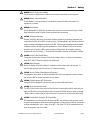
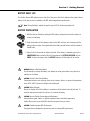
WARNING: Electric Shock and Fire Hazard
Do not connect any telephones or unauthorized connectors to the socket on this equipment.
WARNING: Battery is Not Rechargeable
Do not attempt to recharge the battery. Any attempt to recharge the battery may result in an
explosion or fire hazard.
WARNING: Shock Hazard
Do not disassemble the AED! Failure to observe this warning can result in personal injury or death.
Refer maintenance issues to Cardiac Science authorized service personnel.
CAUTION: Temperature Extremes
Exposing the AED to extreme environmental conditions outside of its operating parameters may
compromise the ability of the AED to function properly. The RescueReady® daily self-test verifies the
impact of extreme environmental conditions on the AED. If the daily self-test determines environmental
conditions outside of the AED’s operating parameters, a “Service Required” alert will be issued to
prompt the user to move the AED to environmental conditions within the acceptable operating
parameters at once. See Section 7 – Technical Data, Parameters, Operation and Standby Conditions.
CAUTION: Lithium Sulfur Dioxide Battery
Pressurized contents: never recharge, short circuit, puncture, deform, or expose to temperatures
above 65°C (149°F). Remove the battery when discharged.
CAUTION: Battery Disposal
Recycle or dispose of the lithium battery in accordance with all federal, state and local laws. To
avoid fire and explosion hazard, do not burn or incinerate the battery.
CAUTION: Use only Cardiac Science Approved Equipment
Using batteries, pads, cables, or optional equipment other than those approved by Cardiac Science
may cause the AED to function improperly during a rescue.
CAUTION: Possible Improper AED Performance
Using pads that are damaged or expired may result in improper AED performance.
CAUTION: Serial Communication Cable
The AED will not function during a rescue when the serial communication cable is connected to its
serial port. When the serial communication cable is connected to the AED during a rescue, the prompt
“Remove Cable to Continue Rescue” will be heard until you remove the serial communication cable.
CAUTION: Possible Radio Frequency (RF) Susceptibility
RF susceptibility from cellular phones, CB radios and FM 2-way radio may cause incorrect rhythm
recognition and subsequent shock advisory. When attempting a rescue using the AED, do not operate
wireless radiotelephones within 1 meter of the AED – turn power OFF to the radiotelephone and
other like equipment near the incident.
© 2006 Cardiac Science Corp. All rights reserved.
112-2025-305 Rev A
page 9