1
Tabela de Conteúdo
6.1
6.2
6.3
6.4
Alcance e vazão de esguichos tronco cônico
Esguichos Automáticos Masterstream
Perda por atrito do Monitor Monsoon
Laminadores de fluxo
6.4.1 Laminadores de fluxo com esguichos tronco cônico
6.4.2 Laminadores de fluxo com esguichos combinados
7.0 Aprovação FM (Factory Mutual)
8.0 Inspeção e Manutenção
8.1 Lubricação
9.0 Solução de Problemas
10.0
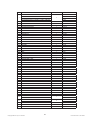
Typhoon Desenhos e Listas de Partes
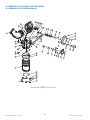
10.1 Desenhos Typhoon Manual
10.2 Desenhos Typhoon RC
10.3 Caixa de Controle do Monitor
10.4 Motor Sub-montagem
11.0 Garantia
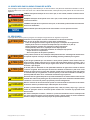
1.0 Significado das palavras e sinais de alerta
2.0 Segurança
3.0 Informações Gerais
3.1 Especificações Mecânicas
3.2 Identificação de partes e Modelos
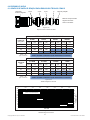
3.3 Conexões de Entrada e Saída
3.4 Dimensões Gerais
4.0 Instalação
4.1 Requerimentos estruturais para montagem do monitor
4.2 Montagem da conexão de entrada e limites de movimento
4.2.1 Inlet fitting of Extend-A-Gun Installation
4.2.2 Instalação de fixações no Extend-A-Gun
4.2.3 Limitadores de trajeto da Elevação
4.3 Instalação do Esguicho
4.4 Ponto de instalação de manômetro
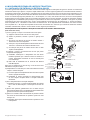
4.5 Instruções de instalação da alavanca de manuseio
4.6 Dreno
5.0 Operação
5.1 Controle de Rotação Horizontal
5.2 Controle de Elevação
5.3 Modelo Tiller Bar(Leme)
5.4 Posição Recomendada de Repouso
5.5 knobs de movimento manual
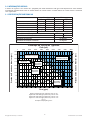
6.0 Vazões e Pressões
PERIGO
PERSONAL RESPONSIBILITY CODE
The member companies of FEMSA that provide emergency response
equipment and services want responders to know and understand the
following:
1. Firefighting and Emergency Response are inherently dangerous activities
requiring proper training in their hazards and the use of extreme caution
at all times.
2. It is your responsibility to read and understand any user’s instructions,
including purpose and limitations, provided with any piece of equipment
you may be called upon to use.
3. It is your responsibility to know that you have been properly trained in
Firefighting and /or Emergency Response and in the use, precautions, and
care of any equipment you may be called upon to use.
4. It is your responsibility to be in proper physical condition and to maintain
the personal skill level required to operate any equipment you may be
called upon to use.
5. It is your responsibility to know that your equipment is in operable
condition and has been maintained in accordance with the manufacturer’s
instructions.
6. Failure to follow these guidelines may result in death, burns or other
severe injury.
FEMSA
©Copyright Task Force Tips, Inc. 2004-2011
Fire and Emergency Manufacturers and Service Association
P.O. Box 147, Lynnfield, MA 01940 • www.FEMSA.org
2
LIY-050 December 15, 2011 Rev00