1
FRENI
PERFORMANCE
PERFORMANCE
Manuale d’uso e manutenzione pag 2
Manual of maintenance and use pag 3
Manuel d’utilisation et d’entretien pag 4
Gebrauchs- und Wartungsanleitung pag 5
Manual de uso y mantenimiento pag 6
FRENI PERFORMANCE
agendo sulla vite di registrazione della tensione del cavo (E) (Fig.
2); se ciò non fosse sufficiente, allentare la vite fermacavo (D) (Fig.
2), aumentare la tensione del cavo e rifissarlo stringendo la vite
fermacavo (D) (Fig. 2) a 5 Nm.
Assicurarsi di fissare sufficientemente il cavo, senza danneggiarlo,
in modo che non si allenti durante l’utilizzo dei freni poiché un cavo
allentato o danneggiato potrebbe provocare il malfunzionamento
del sistema frenante e causare incidenti, lesioni gravi o mortali.
Vi ringraziamo per avere acquistato i freni Performance, un prodotto che vi garantirà sicurezza e funzionalità nel tempo.
Prima di procedere all’utilizzo dei freni, leggete attentamente le
istruzioni di seguito riportate, e conservatele in luogo sicuro per
future consultazioni.
La Fac Michelin S.p.A. si riserva di modificare il contenuto del presente manuale senza preavviso.
La versione aggiornata sarà eventualmente disponibile se www.
miche.it. Sul sito troverete inoltre informazioni sugli altri prodotti
MICHE e SUPERTYPE.
• Per la serie freni Performance dotata di pattini tradizionali ovvero
non dotati di regolazione orbitale, regolare i pattini in modo che
siano centrati in altezza rispetto alla superficie frenante del cerchio.
Una volta centrati, avvitare i pattini con una vite a brugola da 5 mm
(H) (Fig. 4) fino a 8 Nm.
Fate molta attenzione che il verso delle scanalature del pattino sia
orientato nel verso opposto alla rotazione delle ruote. Assicurarsi
della corretta chiusura della vite di fissaggio poiché un suo allentamento potrebbe causare incidenti, lesioni gravi o mortali.
ATTREZZI
Per la serie freni Performance, le operazioni di montaggio al telaio,
registrazione e manutenzione devono essere effettuate con le seguenti chiavi (non sono presenti all’interno della confezione):
• Chiave a brugola da 2-5 mm
• Chiave dinamometrica
SOSTITUZIONE DEI PATTINI
ATTENZIONE!
Se avete dubbi sulla vostra capacità di effettuare tali operazioni, rivolgetevi a personale specializzato.
a) Sostituire sempre entrambi i pattini.
b) Rimuovere le viti fermapattino (H) (Fig.4) dal pattino destro e dal
pattino sinistro con una chiave a brugola da 5mm.
c) Riavvitare il pattino di sostituzione con una chiave a brugola da 5
mm facendo molta attenzione al verso delle scanalature che devono essere orientate nel verso opposto alla rotazione delle ruote.
Assicurarsi della corretta chiusura della vite di fissaggio poiché un
suo allentamento potrebbe causare la fuoriuscita del pattino ed
essere causa di incidenti, lesioni gravi o mortali.
Prima di qualsiasi operazione di manutenzione sui freni, indossate sempre guanti e occhiali protettivi.
INSTALLAZIONE DEL FRENO (Immagini pag. 8)
• Assicurarsi, prima di procedere al posizionamento del freno, che
i pattini siano adatti al cerchio che si utilizzerà.
MANUTENZIONE DEI FRENI
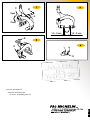
• Applicare il freno sul telaio o sulla forcella ed avvitare il dado a
brugola (B) (Fig. 1) con una chiave da 5 mm, effettuando, manualmente, un primo centraggio del freno rispetto alla ruota. Una volta
effettuato il centraggio, chiudere la leva di sgancio (C) (Fig. 1).
Assicurarsi sempre nella fase di installazione del freno che la vite
centrale del freno abbia almeno 6-7 filetti in presa nella bussola
filettata. Un numero inferiore di filetti in presa potrebbe causare
durante l’utilizzo, per effetto della rottura della vite centrale, il distaccamento del freno dal telaio e causare incidenti, lesioni gravi
o mortali.
• Verificate periodicamente lo stato di usura dei pattini e sostituiteli
sia quando la superficie frenante è in prossimità della fine della scanalatura sia quando la loro potenza frenante risulta insufficiente.
• Verificate periodicamente che i pattini distino 1,5-2 mm dalla superficie del cerchio. Se così non fosse registrare la distanza agendo
sulla vite di registrazione della tensione del cavo (E) (Fig. 2); se ciò
non fosse sufficiente allentate la vite fermacavo (D) Fig. 2), regolate
la distanza dei pattini dal cerchio, ritensionate il cavo e fissatelo
stringendo la vite fermacavo (D) Fig. 2).
Assicurarsi di fissare sufficientemente il cavo con la chiave a brugola a 5 Nm, senza danneggiarlo, in modo che non si allenti durante
l’utilizzo dei freni poiché un cavo allentato o danneggiato potrebbe
provocare il malfunzionamento del sistema frenante e causare incidenti, lesioni gravi o mortali.
• Fissare il cavo stringendo la vite fermacavo (D) (Fig. 2) ad una
coppia di 5 Nm con una brugola da 5 mm. Nel caso in cui ci sia
dello spazio eccessivo tra pattino e cerchio in entrambi i lati, eseguire la registrazione mediante la vite di registrazione della tensione
del cavo (E) (Fig. 2).
Assicurarsi del corretto fissaggio del cavo, dato che un suo allentamento o danneggiamento può provocare il malfunzionamento del
freno ed essere causa di incidenti, lesioni gravi o mortali.
CONSIGLI UTILI PER UN CORRETTO FUNZIONAMENTO DEI FRENI
• I freni sono dotati di una vite di registrazione (A) (Fig. 1) per la
correzione del centraggio del freno rispetto alla ruota, per mezzo di
una chiave a brugola da 2 mm.
• Fate verificare periodicamente le coppie di serraggio delle viti di
bloccaggio del freno, di bloccaggio dei pattini e del cavo da un
personale specializzato.
• L’utilizzo della bicicletta sotto la pioggia può causare un maggiore
accumulo di sabbia/sporco sui pattini freno, con conseguente danneggiamento dei cerchi anche nel corso di una sola uscita.
• Per mantenere sempre efficienti i pattini e non usurare la superficie frenante dei cerchi, vi consigliamo di controllare costantemente
e di asportare immediatamente corpi estranei che possono depositarsi sui pattini stessi.
• Fissare il freno al telaio stringendo il dado (B) (Fig. 1) con la chiave
dinamometrica a 10 Nm.
Assicurarsi della corretta chiusura del dado poiché un suo allentamento durante l’utilizzo, può provocare il malfunzionamento del
freno e causare incidenti, lesioni gravi o mortali.
REGISTRAZIONE E FISSAGGIO DEI PATTINI
• Verificare periodicamente che i pattini distino 1,5-2 mm dalla superficie del cerchio (Fig. 3). Se cosi non fosse, registrare la distanza
2
ITALIANO
PERFORMANCE BRAKES
Thank you for purchasing Performance brakes, a product that offers both safety and functionality over time.
Before proceeding with using the brakes, please read carefully the
following instruction and store them in a safe place for eventually
reusing.
Fac Michelin S.p.A. reserves to modify the content of this manual
without notice. The update version will always be available www.
miche.it.
On our website you will also find information on the other MICHE
and SUPERTYPE products.
TOOLS
increase the cable tension and tighten the cable clamp screw back
down (D) (Pic. 2) with a torque of 5 Nm.
Check that the cable is firmly fixed in place, without damaging it,
so that it does not work loose when the brakes are used, as if it is
loose or damaged it could mean the brakes would no longer work
and cause accidents and serious or mortal injuries.
• On Performance brakes that have traditional brake pads, i.e. without orbital adjustment, regulate the brake pads so that they are
centred in height with respect to the braking surface of the rims.
Screwing the pads with a 5 mm Allen screw (H) (Pic. 4), with a
torque up to 8 Nm. Pay special attention that the direction of the
grooves in the brake pad is opposite to the rotation direction of
the wheels.
Check that the fixing screws are firmly tightened, as if they work
loose they could cause serious and even mortal accidents.
(Picture pag.8)
Performance set of brakes can be mounted onto the frame, regulated and maintained with the following spanners (not included in
the pack):
• 2-5 mm Allen spanner
• Torque wrench
CHANGING THE BRAKE PADS
a) Always change both brake pads together.
b) Remove the brake pad screws (H) (Pic. 4) from the right and left
brake pads using a 5 mm Allen spanner.
c) Screw down the replacement brake pad with a 5 mm Allen
spanner, paying special attention that the direction of the grooves
on the brake pad are in the opposite direction to the rotation of
the wheels.
Check that the fixing screws are firmly fixed, because if they work
loose the brake pad could fall out and cause serious and even
mortal accidents.
WARNING!
If you have any doubt whatsoever regarding your servicerepair ability, please take your bicycle to a qualified repair
shop.
Before any maintenance operations on your brakes, always
wear gloves and protection glasses.
INSTALLING THE BRAKE
• Before positioning the brake, check that the brake pads are suitable for the rim
MAINTAINING THE BRAKES
• Fit the brake onto the frame or fork, and tighten the Allen nut (B)
(Pic. 1) using a 5 mm spanner, and then manually centre the brake
with respect to the wheel. Once the brake is centred, close the
release lever (C) (Pic. 1).
During installation, always check that the centre screw on the brake enters the threaded bushing by at least 6-7 threads. Less screwed threads could cause the centre screw to break when the bike
is being used and therefore cause the brake to detach from the
frame and cause accidents and serious or even mortal injuries.
• Periodically check the brake pads for signs of wear, and replace
them when the braking surface is near to the end of the grooves or
when their braking power is not sufficient.
• Periodically check that brake pads are 1.5-2 mm from the surface of the rim. If they are not, regulate the distance by turning the
regulation screw on the cable tension (E) (Pic. 2). If that is not sufficient, loosen the cable clamp screw (D) (Pic. 2), increase the cable
tension and tighten the cable clamp screw back down (D) (Pic. 2).
Check that the cable is firmly fixed in place with an Allen spanner
with a torque of 5 Nm, without damaging it, so that it does not
work loose when the brakes are used, as if it is loose or damaged it
could mean the brakes would no longer work and cause accidents
and serious or mortal injuries.
• Fix the cable by tightening the cable clamp screw (D) (Pic. 2)
with a torque of 5 Nm using a 5 mm Allen spanner. If there is too
much space between the pad and rim on both sides, regulate it by
turning the regulation screw for cable tension (E) (Pic. 2).
Check the cable is correctly fixed in place, as if it is loose or damaged it could mean the brakes would no longer work and cause
accidents and serious or mortal injuries.
• The brakes are fitted with a regulation screw (A) (Pic. 1) for correcting the centring of the brake with the wheel, using a 2 mm
Allen spanner.
USEFUL TIPS TO ENSURE THE BRAKES
WORK CORRECTLY
• Periodically have the tightening torque on the brake fixing screws,
the pad fixing and the cable fixing checked by a specialised operator.
• Fix the brake to the frame by tightening the nut (B) (Pic. 1) using
the torque wrench with a torque of 10 Nm.
Check that the nut is firmly tightened down because if it works use
when the bike is being used, it could mean the brakes would no
longer work and cause accidents and serious or mortal injuries.
• If the brakes are used under the rain, sand or dirt could build
up on the brake pads, which could damage the rims even on one
single outing.
• To keep the pads efficient and prevent wear to the braking surface on the rims, we advice checking them frequently and immediately removing any foreign bodies that deposit on the pads.
REGULATING AND FIXING THE BRAKE PADS
• Periodically check that the brake pads are 1.5-2 mm away from
the surface of the rim (Pic. 3). If they are not, regulate the distance
by turning the regulation screw on the cable tension (E) (Pic. 2).
If that is not sufficient, loosen the cable clamp screw (D) (Pic. 2),
3
ENGLISH
FREINS PERFORMANCE
la distance en agissant sur la vis de réglage de tension du câble (E)
(Fig. 2), si cela n’était pas suffisant tourner la vis du serre câble (D)
(Fig. 2), augmenter la tension du câble et le refixer en serrant la vis
de serre câble. (D) (Fig. 2) a 5 Nm.
S’assurer de la correcte fixation du câble, vu que son usure et son
endommagement peut provoquer un mauvais fonctionnement du
frein et être une cause d’accident ou de graves lésions.
Nous vous remercions d’avoir fait l’acquisition de freins Performance, ce produit vous garantira une sécurité et une fonctionnalité
dans le temps.
Avant de procéder à l’utilisation des freins, lisez attentivement les
instructions ci-après et conservez les dans un lieu sûr pour de futures consultations.
Fac Michelin S.p.A se rèserve le droit de modifier le contenu du
présent manuel sans préavis.
La version ajournée sera éventuellement disponible sur le site www.
miche.it. Sur le site vous trouverez même des autres informations
sur les produits MICHE et SUPERTYPE
• Pour les freins Performance équipés de patins traditionnels ou
bien non équipés de réglage orbital, régler les patins de manière
qu’ils soient centrés en hauteur par rapport à la surface de freinage
de la jante. Le blocage de patins traditionnels visser les patins avec
une clé 6 pans de 5mm (H) (Fig. 5) à 8 Nm.
Soyez très attentifs à ce que les cannelures du patin soient orientées à l’opposé du sens de rotation de la roue.
S’assurer du bon serrage de la vis de fixation car son usure et son
endommagement peut provoquer un mauvais fonctionnement du
frein et être une cause d’accident ou de graves lésions.
OUTIL
Pour les freins Performance, les opérations de montage au cadre,
le réglage et l’entretien peuvent être effectués avec les clés suivantes (non inclus dans l‘emballage) :
• Clé 6 pans de 2-5mm
• Clé dynamométrique
CHANGEMENT DES PATINS
ATTENTION!
Si vous n’êtes pas sûrs de votre capacité à effectuer ces operations, adressez-vous à du personnel qualifié.
a) Changer toujours les deux patins.
b) Retirer les vis du support patin (H) (Fig. 5) du patin droit et du
patin gauche avec une clé 6 pans de 5mm.
c) Revisser le patin de remplacement avec une clé 6 pans de 5mm
en faisant très attention à ce que le sens des cannelures soient
orientées vers le côté opposé à la rotation de la roue.
S’assurer du bon serrage de la vis de fixation car son desserrage
pourrait causer la sortie du patin du porte patin et être la cause
d’accidents et de lésions graves ou mortelles.
Avant toute intervention d’entretien sur les freins, munissezvous toujours de gants et de lunettes de sécurité.
INSTALLATION DU FREIN
(Images pag. 8)
• S’assurer avant de commencer que les patins soient adaptés à
la jante qui sera utilisée.
• Appliquer le frein sur le cadre ou sur la fourche et visser l’écrou
hexagonal (B) (Fig. 1) avec une clé de 5mm, en effectuant, manuellement, un premier centrage du frein par rapport à la roue. Une fois
effectué le centrage, serrer le levier de blocage (C) (Fig. 1).
S’assurer toujours pendant la phase d’installation du frein que la
vis centrale du frein ait au moins 6-7 filet en prise dans la vis creuse
héxagonale. Un nombre inférieur de filets en prise pourrait causer
lors de l’utilisation la rupture de la vis entraînant la perte du frein du
cadre et causer de graves blessures graves ou mortelles.
ENTRETIEN DES FREINS
• Vérifier périodiquement l’état des patins et les substituer soit lorsque la superficie de freinage est proche de la fin de la cannelure
soit lorsque leur puissance de freinage devient insuffisante.
• Vérifier périodiquement que les patins sont éloignés de 1,5 2mm de la surface de la jante. Si ce n’est pas le cas régler la
distance en agissant sur la vis de réglage de la tension du câble
(E) (Fig. 2); si cela n’était pas suffisant dévisser la vis de serrage
du câble (D) (Fig. 2), régler la distance entre les patins et la jante
en retendant le câble et en le fixant en serrant la vis de serrage du
câble (D) (Fig. 2).
S’assurer de fixer suffisamment le câble avec la clé 6 pans à 5 Nm,
sans l’endommager, de manière à ce qu’il ne s’écrase pas durant
l’utilisation du frein car un câble écrasé ou endommagé pourrait
provoquer un disfonctionnement du système de freinage et causer
des incidents et des lésions graves ou mortelles.
• Fixer le câble en serrant le serre câble (D) (Fig. 2) à un couple de
serrage de 5 Nm avec une clé de 5mm.
Dans l’éventualité ou il y a un espace excessif entre le patin et
chaque coté de la jante effectuer le réglage par le biais de la vis de
réglage de la tension du câble (E) (Fig. 2).
S’assurer de la correcte fixation du câble, vu que son usure et son
endommagement peut provoquer un mauvais fonctionnement du
frein et être une cause d’accident ou de graves lésions ou mortelles.
CONSEILS UTILES POUR UN BON
FONCTIONNEMENT DES FREINS
• Les freins Race et Performance sont équipés d’une vis de réglage (A) (Fig. 1) pour corriger le centrage du frein par rapport à la roue
par le biais d’une clé 6 pans de 2mm.
• Faites vérifier périodiquement les couples de serrage des vis de
blocage du frein, de blocage des patins et du câble par une personne qualifiée.
• L’utilisation du vélo par temps de pluie peut causer une plus
grande accumulation de sable et de saletés sur les patins de frein
avec comme conséquence un endommagement des jantes même
sur une seule sortie.
• Pour maintenir toujours l’efficacité des patins et ne pas user la
surface de freinage des jantes, nous vous conseillons de contrôler constamment et d’ôter immédiatement tout corps étranger qui
peuvent se trouver sur les patins.
• Fixer le frein au cadre en serrant l’écrou (B) (Fig. 1) avec la clé
dynamométrique à 10 Nm.
S’assurer du bon serrage de l’écrou parce que mauvais état lors
de l’utilisation peut provoquer un mauvais fonctionnement du frein
et causer des accidents, des lésions graves ou m
RÉGLAGE ET FIXATION DES PATINS
• Vérifier périodiquement que les patins soient distants de 1,5 2mm de la surface de la jante (Fig. 3) Si ce n’est pas le cas régler
4
FRANÇAIS
BREMSEN PERFORMANCE
EINSTELLUNG UND FIXIERUNG
DER BEMSGUMMI
Wir bedanken uns, dass Sie die BremsenserienPerformance erworben haben, ein Produkt, dass Ihnen funktionalität und sicherheit garantiert.
Lesen Sie vor dem Gebrauch der Bremsenserien die nachstehenden Anweisungen aufmerksam durch und bewahren Sie diese für ein
späteres Nachschlagen an einem sicheren Ort auf.
Die Fac Michelin S.p.A. behält sich das Recht vor, den Inhalt des
beiliegenden Handbuchs ohne vorherige Bekanntmchung zu ändern.
Die jeweils dem aktuellsten Stand entsprechende Ausgabe finden Sie
unter www.miche.it.
Unsere Web-Site erhält außerdem Informationen überweitere MICHE
und SUPERTYPE produkte.
• Periodisch den Bremsgummiabstand von 1,5 – 2 mm zu der Felgenoberfläche (Bild 3) überprüfen. Sollte der Abstand größer sein, regulieren
Sie diesen an der Stellschraube der Kabelklemmschraube (E Bild 2);
sollte es noch immer nicht genügend sein, lösen Sie die Kabelklemmschraube, erhöhen Sie die Spannung am Kabel und fixieren Sie wieder
die Kabelklemmschraube (D Bild 2) mit 5 Nm gleich 3,7 lb.ft.
Vergewissern Sie sich, dass das Kabel, ohne es zu beschädigen, ausreichend fixiert ist, damit es sich bei der Fahrt nicht lockert, ein beschädigtes oder gelockertes Kabel kann zur Fehlfunktion des Bremssystems führen und schwere oder tödliche Unfelle verursachen.
WERKZEUGE
(Bild Seite 8)
Für die Bremsenserie Performance, müssen für Montagearbeiten
am Rahmen, zur Regulierung und für Wartungsarbeiten folgenden
Schlüsselarten verwendet werden (diese sind nicht in Lieferumfang
enthalten):
• Sechskantschlüssel 2-5 mm
• Drehmomentschlüssel
• Die Performance Bremsen verfügen über traditionelle Bremsschuhe,
die eine horizontale Einstellung am Verschleißindikator an der Felge
erlauben. Bei den Performance Bremsen ohne Bremsschuhe, die
Bremsgummis mit einer 5 mm Inbusschraube mit bis zu 8 Nm gleich
6 lb.ft. festschrauben. Achten Sie darauf, dass die Rillen des Bremsgummis sich gegen die Laufrichtung des Laufrades richten.
Vergewissern Sie sich, dass die Befestigungsschraube richtig verschlossen ist, da ein Lösen dieser Schraube zu schweren oder tödlichen
Unfällen führen kann.
ACHTUNG!
Sollten sie an Ihren Fähigkeiten zweifeln, diese Arbeiten Korrekt
durchzuführen, so wenden Sie sich bitte an Ihren Fachhändler.
BREMSGUMMIWECHSEL
Während der Durchführung von Wartungsarbeiten aller Art, sollten Sie immer Schutzhandschuhe und eine Schutzbrille tragen.
a) Immer beide Bremsgummis auswechseln.
b) Die Bremsgummischrauben (H Bild 5), von beiden Bremsgummis,
mit einem 5 mm Inbusschlüssel entfernen.
c) Achten Sie darauf, dass beim festschrauben der Ersatzgummis mit
einem 5 mm Inbusschlüssel, die Rillen des
Bremsgummis sich gegen die Laufrichtung des Laufrades richten.
Vergewissern Sie sich, dass die Schrauben richtig festgezogen sind,
da ein Lockern des Bremsgummis zu schweren oder tödlichen Unfällen führen kann
EINBAU DER BREMSE
• Bevor Sie die Bremse einbauen, vergewissern Sie sich, dass Sie
die richtigen Bremsgummis haben: Karbonbremsgummi für Karbonfelgen, Aluminiumbremsgummi für Aluminiumfelgen.
• Die Bremse an den Rahmen oder an die Gabel anbringen und die
Inbusschraube (B Bild 1) mit einem 5 mm Schlüssel zuschrauben,
dabei manuell die erste Zentrierung der Bremse zum Laufrad durchführen. Nach der Einstellung der Bremse den Schnellspannhebel
schließen.
Vergewissern Sie sich, dass die Befestigungsschraube mit mindesten 6-7 Gewindedrehungen mit dem Bolzen festgeschraubt wird.
Weniger Drehungen könnten den Bruch der Befestigungsschraube
verursachen und das Lösen der Bremsen vom Rahmen zu schweren
oder tödlichen Unfällen führen.
WARTUNG DER BREMSEN
• Periodisch den Verschleiß der Bremsgummis überprüfen und ersetzten Sie diese sollte die Rillen fast nicht mehr sichtbar sein oder die
Bremswirkung nachlassen.
• Periodisch den Bremsgummiabstand von 1,5 – 2 mm zu der Felgenoberfläche überprüfen. Sollte der Abstand nicht richtig sein, regulieren Sie diesen an der Stellschraube der Kabelklemmschraube (E
Bild 2); sollte es noch immer nicht genügend sein, lösen Sie die Kabelklemmschraube (D Bild 2), erhöhen Sie die Spannung am Kabel
und fixieren Sie wieder die Kabelklemmschraube (D Bild 2)
Vergewissern Sie sich, dass das Kabel, ohne es zu beschädigen,
ausreichend mit einem Inbusschlüssel mit 5 Nm gleich 3.7lb.fit fixiert
ist, damit es sich bei der Fahrt nicht lockert, ein beschädigtes oder
gelockertes Kabel kann zur Fehlfunktion des Bremssystems führen
und schwere oder tödliche Unfelle verursachen.
• Das Kabel fixieren indem Sie die Kabelklemmschraube (D Bild 2),
mit einem Drehmoment von 5 Nm gleich 3.7 lb.fit. mit einem Inbusschlüssel 5 mm, festziehen. Sollte der Abstand zwischen Bremsgummi und Felge auf beiden Seiten sehr groß sein, mit den Drehen an der
Stellschraube die Kabelspannung regulieren.
Vergewissern Sie sich, dass das Kabel korrekt montiert wurde, da
ein Lockern oder Schaden am Kabel zur schlechter Funktion der
Bremse führen und der Grund für schweren oder tödlichen Unfällen
sein kann.
NÜTZLICHE RATSCHLÄGE ZUR KORREKTEN
FUNKTION DER BREMSEN
• Die Bremsen haben eine Regulierungsschraube (A Bild 1), die eine
Einstellung der Bremse zum Laufrad, mit einem 2 mm Inbusschlüssel, ermöglicht.
• Lassen Sie durch einen Spezialisten periodisch die Festigkeit der
Bremsschrauben, der Bremsgummischrauben und der Kabelklemmschrauben kontrollieren.
• Bei einer Fahrt durch Regen kann sich eine größere Menge an Sand/
Dreck an den Bremsgummis ansammeln und die Felgen, schon nach
einer Fahrt, beschädigen.
• Um die Effizienz der Bremsgummis zu erhalten und den Verschleißindikator der Felge nicht abzunutzen, empfehlen wir Ihnen die
Bremsgummis ständig zur überprüfen und sofort Fremdkörper von
diesen zu entfernen.
• Die Bremse am Rahmen mit der Mutter (B Bild 1) mit einem Drehmomentschlüssel 10 Nm gleich 7.4 lb.ft, festschrauben.
Vergewissern Sie sich, dass die Mutter richtig festgezogen wurde, da
eine Lockerung während der Fahrt die Funktionen beeinträchtigen
kann und der Grund für schweren oder tödlichen Unfällen sein kann.
5
DEUTCH
FRENOS PERFORMANCE
Les agradecemos por haber comprado los frenos Performance, un
producto que les garantizará seguridad y funcionalidad en el tiempo. Antes de utilizar los frenos, lean atentamente las instrucciones
indicadas a continuación, y consérvenlas en un lugar seguro para
futuras consultas.
Fac Michelin S.p.A. se reserva el derecho a modificel contenido
del presente manual sin previo aviso. La versión actualizada estará
disponible en la web www.miche.it.
En la web, además, encontrareis información sobre otros productos MICHE y SUPERTYPE.
HERRAMIENTAS
del cable (D) (Fig. 2), aumentar la tensión del cable y volver a fijarlo
apretando el tornillo de sujeción del cable (D) (Fig. 2) a 5 Nm.
Asegurarse de fijar correctamente el cable, sin dañarlo, de manera que no se afloje durante el uso de los frenos porque un cable
aflojado o dañado podría provocar el mal funcionamiento del sistema de frenado y causar accidentes, lesiones graves o mortales.
• Para la serie de frenos Performance dotada de zapatas tradicionales, es decir, no dotadas de regulación orbital, regular las zapatas de manera que estén centradas en altura respecto a la superficie de frenado de la llanta. Por el bloqueo des zapatas, atornillar las
zapatas con un tornillo Allen de 5 mm (H) (Fig.4) hasta 8 Nm.
Prestar mucha atención a que el sentido de las ranuras de la zapata esté dirigido en el sentido opuesto a la rotación de las ruedas.
Asegurarse de que el tornillo de fijación esté correctamente apretado ya que si se afloja podría causar accidentes, lesiones graves
o mortales.
(Imagenes pag. 9)
Para la series de frenos Performance las operaciones de montaje
en el cuadro, regulación y mantenimiento pueden ser efectuadas
con las siguientes llaves (no incluidas):
• Llave Allen de 2-5 mm
• Llave dinamométrica
SUSTITUCIÓN DE LAS ZAPATAS
¡ATENCIÓN!
Si tiene dudas sobre su capacidad de realizar tales operaciones, diríjase a un mecánico especializado.
a) Sustituir siempre ambas zapatas.
b) Retirar los tornillos de sujeción de la zapata (H) (Fig. 4) de la zapata derecha y de la zapata izquierda con una llave Allen de 5 mm.
c) Atornillar nuevamente la zapata sustituida con una llave Allen
de 5 mm prestando mucha atención al sentido de las ranuras que
deben ser orientadas en el sentido opuesto a la rotación de las
ruedas.
Asegurarse de que el tornillo de fijación esté correctamente apretado porque si se afloja podría dejar salir la zapata y causar accidentes, lesiones graves o mortales.
Antes de cualquier operación de mantenimiento de los frenos,
siempre usar guantes y gafas de protección.
INSTALACIÓN DEL FRENO
• Antes de colocar el freno, asegurarse de que las zapatas sean
adecuadas para la llanta que se utilizará.
MANTENIMIENTO DE LOS FRENOS
• Aplicar el freno en el cuadro o en la horquilla y atornillar la tuerca
Allen (B) (Fig. 1) con una llave de 5 mm, efectuando, manualmente,
un primer centrado del freno respecto a la rueda. Una vez efectuado el centrado, cerrar la palanca de desenganche (C) (Fig. 1).
En la fase de instalación del freno asegurarse siempre de que al menos 6-7 roscas del tornillo central del freno se introduzcan en la arandela roscada. Un número inferior de roscas introducidas podría causar
que el freno se separe del cuadro durante el uso, debido a la rotura del
tornillo central, y causar accidentes, lesiones graves o mortales.
• Fijar el cable apretando el tornillo de sujeción del cable (D) (Fig. 2)
con un par de 5 Nm con una Allen de 5 mm. En caso de que haya
demasiado espacio entre zapata y llanta en ambos lados, efectuar
la regulación de la tensión del cable (E) (Fig. 2) mediante el tornillo
de regulación.
Comprobar la correcta fijación del cable, puesto que si se afloja o
se daña puede causar el malfuncionamiento del freno y ser causa
de accidentes, lesiones graves o mortales.
• Comprobar periódicamente el estado de desgaste de las zapatas y sustituirlas tanto cuando la superficie de frenado se
acerca al límite de la ranura como cuando su potencia de frenado
resulta insuficiente.
• Comprobar periódicamente que las zapatas estén a 1,5-2 mm de la
superficie de la llanta. En caso contrario, regular la distancia actuando sobre el tornillo de regulación de la tensión del cable (E) (Fig. 2); si
no fuera suficiente, aflojar el tornillo de sujeción del cable (D) (Fig. 2),
regular la distancia de las zapatas de la llanta, volver a tensar el cable
y fijarlo apretando el tornillo de sujeción del cable (D) (Fig. 2).
Asegurarse de fijar correctamente el cable con la llave Allen a 5
Nm, sin dañarlo, de manera que no se afloje durante el uso de
los frenos ya que un cable aflojado o dañado podría provocar el
mal funcionamiento del sistema de frenado y causar accidentes,
lesiones graves o mortales.
• Todos las frenos están dotados de un tornillo de regulación (A)
(Fig. 1) para el ajuste del centrado del freno respecto a la rueda,
por medio de una llave Allen de 2 mm.
CONSEJOS ÚTILES PARA UN CORRECTO
FUNCIONAMIENTO DE LOS FRENOS.
• Fijar el freno al cuadro apretando la tuerca (B) (Fig. 1) con la llave
dinamométrica de 10 Nm.
Asegurarse de que la tuerca esté apretada correctamente ya que
si se afloja durante el uso, puede provocar el malfuncionamiento
del freno y causar accidentes, lesiones graves o mortales.
• Hacer comprobar periódicamente los pares de apriete de los tornillos de bloqueo del freno, de bloqueo de las zapatas y del cable
por personal especializado.
• El uso de la bicicleta debajo de la lluvia puede causar una mayor
acumulación de arena/suciedad en las zapatas del freno, con los
consiguientes daños en las llantas, incluso durante una sola salida.
• Para mantener siempre eficientes las zapatas y no desgastar la
superficie de frenado de las llantas, les recomendamos controlar
constantemente y eliminar inmediatamente los cuerpos extraños
que pueden depositarse en las zapatas.
REGULACIÓN Y FIJACIÓN DE LAS ZAPATAS
• Comprobar periódicamente que las zapatas estén a 1,5-2 mm
de la superficie de la llanta (Fig. 3). En caso contrario, regular la
distancia actuando sobre el tornillo de regulación de la tensión del
cable (E) (Fig. 2 ); si no fuera suficiente, aflojar el tornillo de sujeción
6
ESPAÑOL
description détaillée de l’anomalie détectée.
Toute éventuelle restitution du produit doit être préalablement autorisée par le fabricant
et complétée uniquement par le revendeur ; les restitutions non remplies par le revendeur
ne sauraient être acceptées par FAC MICHELIN S.p.A.
EXCLUSIONS-La présente garantie ne s’applique pas aux cas de négligences et/ou utilisations inappropriées du produit, à l’usure normale de celui-ci ou au non respect des
instructions d’installation, d’utilisation ou d’entretien du produit, aux réparations effectuées en utilisant des pièces de rechange non conformes aux spécifications indiquées
dans le manuel ou non fournies par FAC MICHELIN S.p.A. et à toutes les circonstances
ne pouvant être directement attribuées à FAC MICHELIN S.p.A.
La FAC MICHELIN S.p.A. vi ringrazia per aver scelto di acquistare un prodotto MICHE e
vi consiglia di leggere attentamente quanto riportato di seguito in quanto parte integrante
delle istruzioni e di conservarlo in luogo sicuro per future consultazioni. Per eventuali
approfondimenti riguardanti i prodotti MICHE, SUPERTYPE e la loro garanzia, vi consigliamo di visitare il nostro sito all’indirizzo www.miche.it.
GARANZIA - Qualora un prodotto MICHE o un qualsivoglia suo componente dovesse
risultare difettoso nel materiale o nella lavorazione, il prodotto o componente in questione
verrà gratuitamente riparato o sostituito dalla FAC MICHELIN S.p.A., restando comunque
a discrezione della FAC MICHELIN S.p.A. stessa, la scelta di quale dei due rimedi attivare.
I diritti derivanti dalla presente garanzia vengono riconosciuti unicamente all’acquirente
originario del prodotto MICHE e per acquisiti avvenuti nel territorio nazionale; tali diritti
non sono quindi cedibili a terzi che avessero ulteriormente acquisito il prodotto dall’originario acquirente.
PERIODO DI VALIDITA’ DELLA GARANZIA - Il termine di validità per la sostituzione di parti
difettose è fissato in 2 anni dalla data di acquisto al dettaglio.
PROCEDURA - Verranno accettate le sole denunce di difetti - da presentarsi direttamente
al rivenditore presso il quale è intervenuto l’acquisto - compiute non oltre il periodo di
garanzia (farà fede la data di acquisto riportata sullo scontrino) e, comunque, entro i 30
giorni dall’individuazione del difetto stesso. La denuncia deve essere sempre accompagnata da una dettagliata descrizione del difetto riscontrato.
L’eventuale reso del prodotto deve essere preventivamente autorizzato dalla Casa produttrice e comunque venir compiuto unicamente dal rivenditore; non potranno quindi
venir accettati da FAC MICHELIN S.p.A. resi che non fossero compiuti per il tramite
del rivenditore.
ESCLUSIONI-La presente garanzia non opera in tutti i casi di negligenza e/o uso improprio del prodotto, normale usura, mancata osservanza delle istruzioni di installazione, uso
e manutenzione del prodotto, riparazioni compiute utilizzando ricambi non conformi alle
specifiche indicate nel Manuale o non forniti da FAC MICHELIN S.p.A., oltre che in tutti
i casi dovuti a circostanze che, comunque, non possono farsi direttamente risalire alla
FAC MICHELIN S.p.A..
FAC MICHELIN S.p.A. se réserve le droit de modifier la production sans avis préalable
et à tout moment.
Die FAC MICHELIN AG bedankt sich bei Ihnen für die Wahl eines MICHE Produktes und
rät, die im folgenden dargestellten Sachverhalte aufmerksam zu lesen, da Sie Teil der
Anleitung darstellen. Bewahren Sie diese an einem sicheren Ort auf, um Sie zu jedem
späteren Zeitpunkt einsehen zu können.
Besuchen Sie unsere Homepage unter www.miche.it um mehr über die Produkte
MICHE,SUPERTYPE und deren Garantie zu erfahren.
GARANTIE - Sollte ein MICHE Produkt oder eines seiner Bestandteile einen Materialdefekt oder Fehler in der Verarbeitung aufweisen, so wird das betroffene Produkt oder
die Komponente durch die FAC MICHELIN AG kostenlos repariert oder ersetzt, wobei
die Entscheidung welche der beiden Alternativen zum Tragen kommt, der FAC MICHELIN AG obliegt. Die sich aus dieser Gewährleistung ergebenden Rechte werden ausschließlich dem Originalerwerber des MICHE-Produkts für einen Erwerb auf nationalen
Hoheitsgebiet anerkannt. Diese Rechte sind nicht an Dritte abtretbar, die das Produkt
vom ursprünglichen Käufer erwerben.
GÜLTIGKEITSDAUER-Die Garantie gilt für 2 Jahre ab Kaufdatum.
VORGEHENSWEISE-Es wird nur denjenigen Reklamationen folgegeleistet – diese sind
unmittelbar beim Händler vorzubringen, bei dem das betroffene Teil erworben wurde, die
den Abdeckungszeitraum der Garantie nicht überschreiten (maßgebend ist das Erwerbsdatum auf dem Kassenzettel) und die in jedem Fall innerhalb von 30 Tagen nach Feststellung des Fehlers übermittelt wurden. Die Reklamation muss stets mit einer detaillierten
Beschreibung des aufgetretenen Defektes einhergehen. Eine eventuelle Warenrückgabe
ist vorsorglich von der Herstellerfirma zu genehmigen und ist grundsätzlich ausschließlich
dem Händler gestattet. Es werden von FAC MICHELIN S.p.A. demnach keine Warenrückgaben angenommen, die nicht über den Händler erfolgen.
AUSNAHMEN-Die vorliegende Garantie hat keine Wirksamkeit bei nachlässiger und/
oder unsachgerechter Verwendung des Produktes, normalen Abnutzungserscheinungen, Nichtbeachtung der Montageanleitung sowie Gebrauchs – und Wartungsanleitung,
Reparaturen mit nicht konformen Ersatzteilen, die nicht den Erläuterungen in der Anleitung entsprechen und nicht von FAC MICHELIN AG geliefert wurden, darüber hinaus
besteht keine Haftung in den Fällen, in denen die Umstände nicht unmittelbar auf die FAC
MICHELIN AG zurückzuführen sind.
La FAC MICHELIN S.p.A si riserva la facoltà di apportare modifiche alla produzione in
qualsiasi momento e senza preavviso.
FAC MICHELIN S.p.A. would like to thank you for purchasing a MICHE product. Please
read carefully the information provided below included in the instructions and keep them
in a safe place to refer back to them whenever needed.
For more details on the MICHE and SUPERTYPE products and their warranties, please
visit our site at www.miche.it.
WARRANTY - Should a MICHE product or any of its components contain defects, whether material or produced during the manufacturing process, such product or component shall be repaired or replaced free of charge by FAC MICHELIN S.p.A., at its option.
The rights deriving from this warranty shall be acknowledged in favour of the original
purchaser of the MICHE product within the boundaries of the national territory; Said
rights are not transferable to third parties having acquired the product from the original
purchaser.
VALIDITY TERM - The validity term for replacing the defected parts is 2 years from the
date of retail purchase.
PROCEDURE - Defect reclamations –to present directly before the retailer having conducted the transaction– shall be accepted only if filled in during the warranty period of the
product (as attested by the selling date appearing on the ticket) and within 30 days as of
the identification of such defect. Reclamations shall always be accompanied by a detailed
description of the defect detected.
Any return shall be previously authorized by the manufacturer and filled in by the retailer.
FAC MICHELIN S.p.A. shall not accept returns not duly filled in by the retailer.
EXCLUSION - This warranty shall not apply in cases of negligence and/or inadequate use
of the product, normal wear, non-compliance with the installation, use, and maintenance
instructions, as well as repairs conducted using spare parts that fail to meet the specifications detailed in the Manual or not supplied by FAC MICHELIN S.p.A., as well as any
other situation not directly imputable to FAC MICHELIN S.p.A.
Die FAC MICHELIN AG behält sich vor, zu jedem beliebigen Zeitpunkt und ohne Vorankündigung, Veränderungen an der Produktherstellung durchzuführen.
FAC MICHELIN S.p.A. le agradece por haber elegido un producto MICHE y le aconseja
leer atentamente lo siguiente dado que es parte integrante de las instrucciones, como así
también conservarlo en un lugar seguro para futuras consultas.
Para mayor información sobre los productos MICHE, SUPERTYPE y la garantía correspondiente, le aconsejamos visitar nuestro sitio de Internet www.miche.it.
GARANTIA - Si un producto MICHE o alguno de sus componentes presenta defectos
de material o elaboración, el producto o componente en cuestión será reparado o sustituido gratuitamente por FAC MICHELIN S.p.A., quedando a consideración de FAC
MICHELIN S.p.A., la elección de cuál de las dos soluciones implementar. Los derechos
derivados de la presente garantía se reconocen únicamente al comprador original del
producto MICHE y para compras efectuadas en el territorio nacional. Por lo tanto, estos
derechos no pueden cederse a terceros que adquieran posteriormente el producto al
comprador original.
PERIODO DE VALIDEZ - El término de validez para la sustitución de partes defectuosas
se fija en 2 años a partir de la fecha de compra al por menor.
PROCEDIMIENTO - Sólo se aceptarán las denuncias de defectos - presentadas directamente al revendedor al cual se realizó la compra – realizadas dentro del periodo de
garantía (lo certificará la fecha de compra presente en el recibo) y de los 30 días desde
la detección del defecto. La denuncia siempre debe estar acompañada por una descripción detallada del defecto detectado. La eventual devolución del producto debe
ser autorizada previamente por el Fabricante y de todas maneras la debe realizar el
revendedor. Por lo tanto, FAC MICHELIN S.p.A. no podrá aceptar devoluciones que no
se realicen a través del revendedor.
EXEPCIONES-La presente granantía no opera en todos los casos de negligencia y/o uso
inapropiado del producto, desgaste normal, desobediencia de las instrucciones de instalación, uso y mantenimiento del producto, reparaciones realizadas utilizando repuestos
no conformes a las especificaciones indicadas en el Manual o no suministrados por FAC
MICHELIN S.p.A., además de todos los casos debido a circunstancias que no puedan
atribuirse directamente a FAC MICHELIN S.p.A..
FAC MICHELIN S.p.A. reserves the right to make changes to the production at any moment and without prior notification.
FAC MICHELIN S.p.A. vous remercie d’avoir acquis un produit MICHE et vous recommande de lire attentivement les informations suivantes faisant partie des instructions et
de les conserver dans un lieu sûr pour pouvoir les consulter ultérieurement.
Pour plus d’informations concernant les produits MICHE, SUPERTYPE et leur garantie,
nous vous prions de visiter notre site à l’adresse suivante : www.miche.it.
GARANTIE - En cas d’anomalies d’un produit MICHE ou d’un de ses composants, aussi
bien matérielles que survenues au moment de la fabrication, le produit ou composant
en question sera gratuitement réparé ou remplacé par FAC MICHELIN S.p.A., à sa discrétion.
Les droits dérivés de cette garantie ne sont reconnus qu’en faveur de l’acheteur originel
du produit MICHE et ne s’appliquent qu’aux acquisitions survenues au sein du territoire
national. Lesdits droits ne peuvent en aucun cas être transférés à des tiers ayant acquis
postérieurement le produit auprès de l’acheteur originel.
PERIODE DE GARANTIE-Le terme de validité pour la substitution des parties défectueuses est fixé à 2 ans après la date d’achat au détail.
PROCEDURE-Les réclamations pour anomalies (à produire directement auprès du revendeur ayant vendu le produit) ne seront acceptées qu’au cours de la période de validité
de la garantie (la date d’achat figurant sur le ticket fera foi) et dans les 30 jours suivant
l’identification de l’anomalie en question. La réclamation devra être accompagnée d’une
FAC MICHELIN S.p.A. se reserva el derecho de aportar modificaciones a la producción
en cualquier momento y sin previo aviso.
7
C
B
Open
A
Close
1.5 - 2 mm
1.5 - 2 mm
E
D
H
10 • 001
www.miche.it
www.miche.eu
www.supertype.it