1
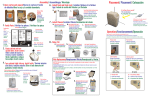
How Your
Humidifier Works
Once the wick becomes
saturated, air is drawn in,
passes through the wick
and moisture is absorbed
into the air.
All evaporation occurs in
the humidifier so any
residue remains in the
wick. This natural process
of evaporation creates no
white dust like some other
humidifiers.
Dry air is drawn into the
humidifier though the back
and moisturized as it
passes through the
evaporative wick. It is then
fanned out into the room.
Description
*Output per 24 hrs
Capacity of Unit
Sq. ft. coverage
Fan Speeds
Replacement Wick
Automatic Humidistat
Controls
ETL Listed
Volts
Hertz
Watts
EP9 Series / EP9R†
9 + gallons
3.5 gallons
2000-2800 *
Variable (9)
No. 1043
Yes
Digital († w/ Remote)
Yes
120
60
70
IMPORTANT:
Water damage may result
if condensation starts to
form on windows or walls.
Humidity SET point should
be lowered until
condensation no longer
forms. We recommend
room humidity levels do
not exceed 50%.
* Output based on 8’
ceiling. Coverage may
vary due to tight or
average construction.
Notes On Location:
Do NOT position the unit directly in front of a hot air duct or radiator. Do NOT place
on soft carpet.
Direct air flow away from thermostat and hot air registers, and position humidifier
next to an inside wall. Unit should not be placed where cold air from outside walls or
warm air from a hot air register blows directly on it.
Place the humidifier on a level place at least 2 inches away from the wall or curtains
Position the humidifier where the most humidity is needed or where the most air will
be circulated throughout the house such as near a cold air return. If the unit is
positioned close to a window, condensation may form on the window pane. If this
occurs the unit should be repositioned in another location.
3