1
ENGLISH
Observe these instructions and keep them
located near the battery for future
reference. Work on the battery should only
be carried out by qualified personnel.
Do not smoke or introduce sparks in the
vicinity of the battery. Explosion and fire
hazards are present.
While working on batteries wear protective
eye-glassing and clothing. Observe
accident protection rules.
Any acid splashes on the skin or in the eyes
must be flushed with plenty of water
immediately. Then seek medical
assistance. Spillages on clothing should be
rinsed out with water.
General
Mastervolt AGM batteries are immediate ready for use.
Installation
• Prior to installation check battery for mechanical
damages and firmly tightened terminals.
• Recommended torque for screw connections: 14.7 to
19.6 Nm / 130 to 170 InLbs (Model 55Ah: 11 to 14.7
Nm / 97 to 130 InLbs).
• Installation angle of the battery: 180º. Installation in
upright position is recommended.
• Keep >1cm />0.5 inch space between the batteries.
• Keep away from heat sources.
• Allowed operating temperature: –20 to 55ºC / –4 to
131ºF; Nominal operating temperature: 5 to 35ºC / 41
to 95ºF. Recommended at 25ºC/ 77ºF. The battery life
is halved for every 10ºC of rise in temperature. Lower
temperatures will reduce the available capacity
• Under overcharging conditions lead acid batteries can
vent an explosive mixture of hydrogen gas. If
contained, assure adequate ventilation.
• Clear the terminals before connection.
• During installation all loads and chargers must be
switched off.
• For best possible connection, direct mounting of the
cable lug to the battery post is recommended.
Therefore the battery pole adapter should be removed
first. See figure 6.
• Use properly sized and reliable cable lugs and battery
terminals. Tighten all connections firmly.
• Connect the battery with correct polarity. The
position of the battery poles may differ from
previous installed batteries!
• Connect the minus cable last of all.
• Use protective battery terminal insulators.
• Batteries in series or parallel must be of the same
brand, type, capacity and state of charge. Do not mix
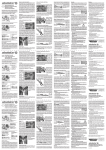
old and new batteries. See figure 1 to 5 if batteries
must be connected in parallel or in series.
Explosion and fire hazard. Do not short
circuit, use insulated tools.
Electrolyte is strongly corrosive. Under
normal conditions contact with electrolyte is
impossible. If the housing is damaged the
electrolyte can be available.
Batteries are heavy. Ensure adequate
mounting security and always use suitable
handling equipment for transportation.
Metal parts of the battery are always alive.
Do not place tools or other items on the
battery. Do not wear any metallic items
such as watches, bracelets, et cetera.
Charging
Use only chargers with IUoUo characteristic.
Voltage settings: float charge 13.80V @ 25ºC / 77ºF;
absorption charge 14.25V @ 25ºC / 77ºF (max 5 hrs).
Temperature compensated charging is recommended
(–30mV/ºC or –17mV/ºF).
Maximum charge current: 30% of rated capacity @ C10.
Incomplete charges may damage the batteries. Therefore
the batteries must be charged to the full 100% regularly,
at least every month.
Discharge
Avoid deep discharges. Regular discharges beyond 50%
of the nominal capacity are not recommended as they
might shorten the lifetime of the battery.
Recharge the battery immediately after a discharge.
Never discharge below the final discharge voltage. The
final discharge voltage is related to the discharge current.
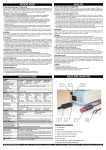
See table “Final discharge voltage”.
Maintenance
Check batteries and connections on a regular base, at
least every three months. Defects such as loose or
corroded connections must be corrected immediately.
Keep battery in charged condition.
Elevated environmental temperatures increase the selfdischarge rate of the batteries. See “Battery storage”
Batteries should be recharged when the open circuit
voltage drops below 12.3 Volt.
Keep the battery dry and clean. Use only a wet soft cloth
to clean the battery. Never use any additives, acids
and/or scourers.
Do not open the battery. Never add acid or distilled water.
Disposal of batteries
Spent batteries are harmful to health and the
environment. Therefore batteries may not be
mixed with domestic or industrial waste but
must be collected and recycled separately.
Contact your supplier for recollection and
recycling of batteries or contact an
authorized waste management company.