1
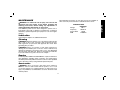
with the guard. Wire wheel or brush may expand in diameter
due to work and centrifugal forces.
Additional Safety Warnings for Grinders
• An extension cord must have adequate wire size (AWG
or American Wire Gauge) for safety. The smaller the gauge
number of the wire, the greater the capacity of the cable, that
is 16 gauge has more capacity than 18 gauge. An undersized
cord will cause a drop in line voltage resulting in loss of power
and overheating. When using more than one extension to
make up the total length, be sure each individual extension
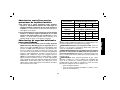
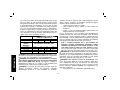
contains at least the minimum wire size. The following table
shows the correct size to use depending on cord length and
nameplate ampere rating. If in doubt, use the next heavier
gauge. The smaller the gauge number, the heavier the cord.
Voltage (Volts)
Total length of cord in meters (m)
120 - 127V
0-7
7 - 15
15 - 30
30 - 50
220 - 240V
0 - 15
15 - 30
30 - 60
60 - 100
Rated Ampere
range
Minimal cross-sectional area of the
cord in meters (mm2 )
0 - 6A
1.0
1.5
1.5
2.5
6 - 10A
1.0
1.5
2.5
4.0
10 - 12A
1.5
1.5
2.5
4.0
12 - 16A
2.5
4.0
Not Recommended
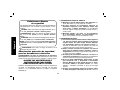
WARNING: Always use eye protection. All users and bystanders
must wear eye protection that conforms to ANSI Z87.1.
WARNING: Always wear proper personal hearing protection
that conforms to ANSI S12.6 (S3.19) during use. Under some
conditions and duration of use, noise from this product may
contribute to hearing loss.
7
English
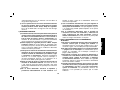
WARNING: Some dust created by power sanding, sawing,
grinding, drilling, and other construction activities contains chemicals
known to cause cancer, birth defects or other reproductive harm.
Some examples of these chemicals are:
• lead from lead-based paints,
• crystalline silica from bricks and cement and other masonry
products, and
• arsenic and chromium from chemically-treated lumber
(CCA).
Your risk from these exposures varies, depending on how often you
do this type of work. To reduce your exposure to these chemicals:
work in a well ventilated area, and work with approved safety
equipment, such as those dust masks that are specially designed
to filter out microscopic particles.
• Avoid prolonged contact with dust from power sanding,
sawing, grinding, drilling, and other construction activities.
Wear protective clothing and wash exposed areas with
soap and water. Allowing dust to get into your mouth, eyes, or
lay on the skin may promote absorption of harmful chemicals.
WARNING: Use of this tool can generate and/or disburse dust,
which may cause serious and permanent respiratory or other injury.
Always use NIOSH/OSHA approved respiratory protection
appropriate for the dust exposure. Direct particles away from face
and body.
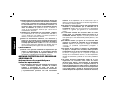
WARNING: ALWAYS USE SAFETY GLASSES. Everyday
eyeglasses are NOT safety glasses. Also use face or dust mask if
cutting operation is dusty. All users and bystanders MUST ALWAYS
wear certified safety equipment:
• ANSI Z87.1 eye protection (CAN/CSA Z94.3),
• ANSI S12.6 (S3.19) hearing protection,
• NIOSH/OSHA/MSHA respiratory protection.