1
EC DECLARATION OF CONFORMITY
The Company PENTAIR WATER ITALY s.r.l. declares, under its own responsibility, that the below mentioned electropumps
are compliant with the relevant Health and Safety standards, specified in directives 98/37, 2004/108/CE, 2000/14 and
subsequent amendments.
PENTAIR WATER ITALY s.r.l.
via Masaccio, 13
56010 Lugnano - Pisa - ITALY
Tel. 050/71.61.11 - Fax 050/70.31.37
ART.
HYDROBLASTER 5.5 HP
HARMONIZED STANDARDS:
EN 292-1U.2
Annex V 2000/14/EC
EN ISO 14982
Lugnano (Pisa) 01/10/2006
06
Ing. Vittorio Brundu
PLANT MANAGER
SAFETY PRECAUTIONS
WARNING - If correctly used, the pump is easy
to handle and efficient tool; if used improperly
or without the due precautions it could become
a dangerous tool. For pleasant and safe
work,always strictly comply with the safety
rules that follow and throughout this manual.
1 - Keep this manual on hand and consult it before
each use of the tool.
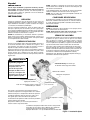
2 - Refuel only with the engine off and away from
open flames (Fig. 1). Do not smoke while refuelling (Fig. 1). Take care not to spill or splash
fuel on the muffler. After refuelling, move the
engine pump to a different area before restarting (Fig. 2). Don’t remove the fuel tank cap
when the engine is still warm or running.
3 - Before starting the engine, check the throttle
for ease of movement.
4 - Never start the machine without priming water
in the pump. It will cause serious damages to
the engine parts as well as the withdrawal of
the guarantee.
5 - Don’t use the engine pump near people or animals (Fig. 3).
6 - Do not use the pump set close to cables or
electrical equipment (Fig. 4).
7 - A strainer should always be used on the suction hose, to prevent debris from entering the
pump body, and causing possible damage to
the impeller.
8 - The pumps of this range have been designed
to pump water. Do not use the pump to convey
inflammable products, chemical substances, or
food products. Liquids containing abrasive
solids in suspension will damage the seal and
the rotating parts of the pumps.
9 - Take the cap off the spark plug each time
maintenance, cleaning or repair work is carried
out.
10 - Do not check the spark plug (for spark) while
holding the plug near the cylinder hole, to avoid
11 12 13 14 -
15 -
16 -
17 18 -
19 -
20 21 22 -
23 -
2
igniting the fuel vapors evaporating from the
cylinder.
Be sure to check bolts and other fasteners to see
if any of them have become loose or missing.
Keep the running (or still hot) pump away from
any inflammable material.
Be careful with the muffler or other hot engine
parts.
During transportation close the fuel cock and
the fuel tank cap. Empty the fuel tank during
transportation on long distances or rough
roads.
Only use the pump in well-ventilated places, do
not operate the pump in explosive or flammable atmospheres or in closed environments
(Fig. 5).
Check the pump each day to ensure that each
device, whether for safety or otherwise, is functional.
Always follow the manufacturer’s instructions
for the maintenance operations.
Never use a damaged, modified, or improperly
repaired or assembled pump. Do not remove,
damage or deactivate any of the safety
devices.
Never carry out operations or repairs on your
own that are other than routine maintenance.
Call specialised and authorised workshops
only.
Never use fuel for (mixture) cleaning operations.
Keep the pump set in a dry place, raised off the
ground and with the tanks empty.
If your pump is no longer usable, dispose of it
properly without damaging the environment by
handing it in to your local.Dealer who will
arrange for its correct disposal.
But take it to your dealer who will dispose of it
properly. Always call your dealer for any clarification or priority action.