1
J.M. Castel et al. / Small Ruminant Research 47 (2003) 133–143
135
breeds are dairy, in particular the Malagueña breed,
and systems are less dependent on grazing. Finally,
zone 3, situated in the Sierra Norte of Cádiz, presents
intermediate characteristics of intensification; the
breeds are mixed and milk-producing. Farms of zones
1 and 3 belong to local cooperatives, and those of
zone 2 belong to the Malagueña Pure Breed Association. Membership in any type of association was
considered a priority when choosing the study areas,
because it guaranteed greater cooperation.
A questionnaire was designed, based on the one
used by Falagán (1988). This comprised 216 items,
grouped into the following sections: socio-economy,
line of production, animal basis, land basis, infrastructure, installations and machinery, herd composition, reproductive and feeding management, hygiene,
production, and commercialization.
The questionnaires were completed between February 1998 and March 1999, needing visits of approximately 2–3 h to each of the 89 goat farmers. Surveyed
farmers were chosen at random: 28 for the first zone,
21 for the second, and 40 for the third, representing
20% of the farmers for each zone.
of perceptual maps. The quantitative variables were
first converted into qualitative ones, introducing cuts
in them. Taking the 73 variables as qualitative, their
corresponding modalities were quantified, those most
separated from the others being the ones that discriminate most between the units under study.
Using the first 2 components (those with the greatest
correlation and the largest number of variables) 34 of
the initial 73 variables were selected, 11 of them are
quantitative, and the other 23, qualitative.
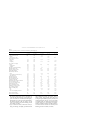
A hierarchical cluster analysis by the method of
Ward, using the squared Euclidean distance, classifies
the farms into five different types.
2.2. Information treatment and statistical
processing
3. Results
The field data were introduced into an Excel matrix
after checking for missing and abnormal data. Subsequent statistical treatment was performed using the
programs Excel and SPSS (SPSS, 1999).
2.2.1. Variable review and selection for type analysis
and classification
Of the total items, only 73 were used. The selection
was made taking into account previous works (Castel
et al., 1999, 2000; Mena et al., 1999) and removing
variables which were not answered in all cases, those
presenting little variability in their response, and those
not supplying relevant zootechnical information.
2.2.2. Multivariate statistical technique application
Multiple correspondence analysis was applied to
the set of 73 variables. This is a technique of interdependence used for dimension reduction in the
case of qualitative variables (Benzécri, 1992), similar
to principal component analysis between quantitative variables, and which enables the visualization
2.2.3. Analysis of variance and contingency tables
Comparison between the five types of different
quantitative variables was performed using ANOVA.
In the case of analysis of degree and sense of the
relationship between qualitative variables, the corresponding contingency tables were constructed and
the statistics calculated were used as basis for the
Chi-squared distribution.
3.1. About the nature of variables and their
influence on different farm type establishments
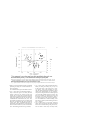
The multiple correspondence analysis yielded two
principal components. The first, corresponding to
the abscissa, includes a large number of variables,
which in order of importance (the squared correlation coefficients range between 73 and 21%) are
the following: study area (Sierra Norte of Seville,
Sierra Norte of Cádiz, and Málaga province); main
activity (the main activity is, or is in part, or is not,
goat farming); the supply of electricity and water,
productive capacity of the goats—dairy (Malagueña
and Murciana–Granadina breeds), mixed (Payoya and
Florida), and meat-producing (Serrana and Blanca
Andaluza); grazing area for the animals; type of business; use of artificial nursing (with commercial milk
substitute feeds); and use of machine-milking. The
second component, corresponding to the ordinate,
includes, in order of importance (the squared correlation coefficients range between 71 and 21%), the
following variables: study area, productive capacity