1
4.Remove adjusting keys and wrenches before turning the tool on. A wrench or a key that
is left attached to a rotating part of the tool increases the risk of personal injury.
5. Do not over reach. Keep proper footing and balance at all times. Proper footing and
balance enables better control of the tool in unexpected situations.
6.Use safety equipment. Always wear heavy-duty gloves, hearing and eye protection. Prolonged
exposure to high intensity noise can cause hearing loss. A dust mask, non-skid safety shoes
and a hard hat may be required in certain situations.
7.Use clamps or other practical ways to secure and support the work piece to a
stable platform. Holding the work piece by hand or against your body is unstable and may
lead to loss of control and injury.
Tool use and care
1. Do not force the tool, use the correct tool for the application. The correct tool will do
the job better and safer when it is used as intended.
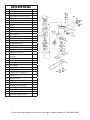
2. Do not use the tool if the Valve Lever (28) does not turn the tool on or off. Any tool that cannot
be controlled with the ON/OFF switch is dangerous and must be repaired.
3. Disconnect the tool from the air source before making any adjustments, changing accessories
or storing the tool. Such preventive safety measures reduce the risk of starting the tool unintentionally.
Turn off and detach the air supply, safely discharge any residual air pressure, and release the throttle
and/or turn the switch to its OFF positions before leaving the work area.
4.Store idle tools out of reach of children and other untrained persons. Tools are dangerous
in the hands of untrained users.
5.Maintain the tool with care. A properly maintained tool reduces the risk of binding
and is easier to control.
6. Check for misalignment or binding of moving parts, broken parts and any other condition
that affects the tool's operation. If damaged, have the tool serviced before using. Poorly
maintained tools cause many accidents.
7.Use only accessories that are recommended by the manufacturer for your model.
Accessories that may be suitable for one tool may become hazardous when used with another tool.
Service
1. Tool service must be performed by qualified repair personnel only. Service or maintenance
performed by unqualified personnel could result in a risk of injury.
2.When servicing a tool, use only identical replacement parts. Follow instructions in the
Maintenance section of this manual.
3.Use only the lubricants supplied with the tool or specified by the manufacturer.
Air source
1.Never connect to an air source that is capable of exceeding 200 PSI. Over pressurizing the tool
may cause bursting, abnormal operation, breakage of the tool or serious injury to persons. Use
only clean, dry, regulated compressed air at the rated range as marked on the tool. Always verify
prior to using the tool that the air source has been adjusted to the rated air pressure or within the
rated air-pressure range.
2.Never use oxygen, carbon dioxide combustible gases or any bottled gas as an air source
for the tool. Such gases are capable of explosion and serious injury to persons.
Specific safety instructions
1.Use only with accessories rated to handle the forces exerted by this tool during operation.
Other accessories not designed for the forces generated may break and explode.
2.Attach all accessories properly to the tool before connecting the air supply. A loose accessory
may detach or break during operation.
3.Read and follow the instruction manual for the air compressor used to power this tool.
4. Install an in-line shutoff valve to allow immediate control over the air supply in an
emergency or if a hose ruptures.
5. Do not put the tool down until it has come to a complete stop. Moving parts can grab the
surface and pull the tool out of your control.
For any technical questions, please call 1-800-665-8685
3