1
Handylectric™
MAINTENANCE
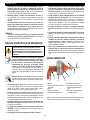
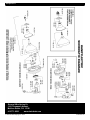
TO REMOVE MOTOR
1.
2.
To keep your machine operating smoothly, it is essential that all bearings and bushings be lubricated. Oiling moving parts is particularly
important where machine comes in contact with sand, grit and other
abrasive material.
3.
4.
DISCONNECT MACHINE FROM POWER SOURCE BEFORE PERFORMING MAINTENANCE ON MACHINE!
5.
CABLE MAINTENENCE
To get maximum service from your cables,
be sure that they are clean and well oiled.
This not only
provides running lubrication but greatly extends the life of the
cables as well. Some users
periodically pour oil directly into the drum. Then,
as the drum turns, the cables get complete
lubrication. Our SNAKE OIL is ideally
suited for this purpose, since it not only
lubricates the cables, it deodorizes them
as well.
6.
7.
Pull the cable out of the drum.
Loosen the three screws that hold the drum front and back together.
Pull the drum front off of the machine.
Loosen the two set screws in the beveled collar and remove both
the collar and the felt washer.
Slide a flat head screw driver into the Hub Spindle and unscrew
the Left Hand locking screw from the drive shaft by turning it
clockwise.
Unscrew the Hub Spindle from the Right Hand Drive Shaft by
rotating the drum back counter-clockwise. Note: The Hub Spindle, Hub, and Drum Back remain as one unit. The thrust bearing
will slide freely.
Reverse these instructions to re-assemble.
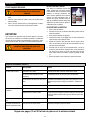
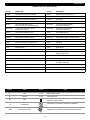
TROUBLE SHOOTING GUIDE (TABLE 3)
Problem
Probable Cause
Solution
Cable kinks or breaks.
Operator forcing the cable.
Do not force the cable. Let the cutter do the work.
Too much slack between machine and drain. Do not allow more than six inches between machine and drain.
Cable used in wrong size drain line.
A cable that is too large or too small in diameter for a line is more
likely to kink. (Consult Table 1—Cable Applications.)
Cable exposed to acid
Clean and oil cables regularly.
Operator forcing the cable.
Do not force the cable. Let the cutter do the work.
Machine run in reverse.
Do not run machine in reverse to retract cable from drain.
Use reverse only if cable is caught in line.
Motor does not run.
Trigger in neutral (off) position.
Switch Trigger to either Forward or Reverse.
Motor turns in one direction
but not other.
Reverse switch failure.
Replace reverse switch.
Cable tangles in drum.
6