1
IMPORTANT:
Yourdishwasher
isdesigned
tousea liquidrinse
aid.Theuseofrinseaidsgreatly
improves
dryingbyallowing
watertodrainfromthedishes
afterthefinalrinse.
Theyalso
prevent
waterfromforming
droplets
thatcandryasspotsor
streaks.
Donotuseasolidorbar-type
rinseaid.
To adjust the setting
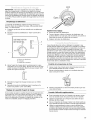
1. Remove the dispenser knob.
2. Turn the arrow adjuster inside the dispenser to the desired
setting by either using your fingers or inserting a flat-blade
screwdriver into the center of the arrow and turning.
3. Replace the dispenser knob.
Filling the dispenser
The rinse aid dispenser holds 5 oz (150 mL) of rinse aid. Under
normal conditions, this will last for about 1 to 3 months.
1.
2.
Make sure the dishwasher door is fully open.
Turn the dispenser knob to "Open" and lift it out.
USERnNSEAnDFOR
Hot water dissolves and activates the dishwashing detergent. Hot
water also dissolves grease on dishes and helps glasses dry spotfree. Is the water temperature too low? For best dishwashing
results, water should be 120°F (49°C) as it enters the dishwasher.
Loads may not wash as well if the water temperature is too low.
Water that is too hot can make some soils harder to remove and
cause certain detergent ingredients not to function. If your water
heater is located far from the dishwasher, it may be necessary to
run the hot water at the faucet closest to the dishwasher to
minimize the amount of cold water in the water line.
BETTER
DRYnNG
Lock
To check water temperature
Open[c__
A
1.
Run hot water at the faucet closest to your dishwasher for at
least 1 minute.
2.
Place a candy or meat thermometer
3.
Check the temperature on the thermometer
running into the cup.
in a glass measuring cup.
..............
A. Dispenserknob
B. Indicator
C. Indicatorwindow
3.
Pour rinse aid into the opening until the indicator points to
"Full." Take care not to overfill. (When the rinse aid indicator
drops to the "Add" level, add more rinse aid.)
Additional
4.
5.
Clean up any spilled rinse aid with a damp cloth.
Place the knob back into the opening and turn to the "Lock"
position.
To save water and energy and time, do not rinse dishes before
putting them into the dishwasher.
•
Choose the cycle that describes the most difficult soil in your
dish load.
•
Do not worry about mixed loads. Any item that is dishwasher
safe can be washed using any cycle.
•
Use a delay feature (on some models) to run your dishwasher
during off-peak hours. Local utilities recommend avoiding
heavy usage of energy at certain times of day.
•
During the summer, run your dishwasher at night. This
reduces daytime heat buildup in the kitchen.
•
Use the heated dry option for best drying performance.
Always use rinse aid.
•
Use cycles or options that add extra heat to the wash or rinse
portion of the cycle for better performance.
•
Run your dishwasher with full loads. Run a rinse cycle after
meals until the dishwasher is full.
•
If your home is equipped with a water softener, you may want
to avoid starting the dishwasher during the regeneration of the
softener, since this may contribute to poor wash performance.
Rinse aid setting
The amount of rinse aid released into the final rinse can be
adjusted. For most water conditions, the factory setting of 2 will
give good results. If you have hard water or notice rings or calcium
spots on your glasses or dishes, try a higher setting.
Lock
Open
tips
•
Full
Add
efficiency
as the water is