1
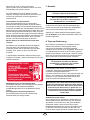
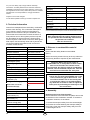
! Close the insert door during usage
See separate usage and maintenance manual
Warning!
In order to avoid injuries, please be aware that the
surfaface may become hot during operation.be hot and
that extra care need to be taken to avoid skin burn.
After longer periods without use, the appliance may
need a better air supply than normally. Open vents or
keep a window ajar while lightening the fire.
Lighting a fire
Kindling wood
Finely chopped (diameter of 3-5cm)
Length: 25-30cm
Ca. amount pr lighting : 2 kg
Ashes
The ashes should be removed at regular intervals.
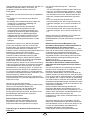
Be aware that the ashes can contain hot ember even
several days after the fire is finished. Use a container
of non-combustible material to remove the ashes. It is
recommended to leave a layer of ashes in the bottom
as this further insulates the burn chamber. Take care
with the Thermotte plates when the ashes are removed,
particularly when using an ash shovel, so as not to
damage them.
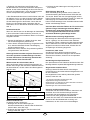
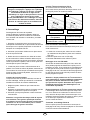
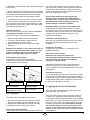
Place the air vent control in ignition mode (B). Insert
small, dry pieces of wood, ignite and ensure the flames
have taken proper hold of the wood. When the flames
are stable and the chimney is warm, pull the air control
out of the ignition mode and regulate the fire normally.
When there is a glowing layer of ash, new wood logs
can be inserted. Pull the hot ember to the front of the
combustion chamber when inserting new logs so that
the wood is ignited from the front. The fire should burn
with bright and lively flames.
Reload size
Chopped wood (diametre of 6-9cm)
Length: 25-50cm
Normal load size. 1,8kg /h
(Max load size: 3kg/h)
Using the insert with low combustion effect and firing
around the clock increase pollution as well as the risk
for a fire in the chimney. Never allow the insert or flue
to become glowing red. Turn off the air vent control
should this happen. Regulation of the air vent control
takes some experience, but after a little while a natural
rhythm for the fire will be found.
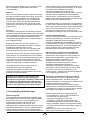
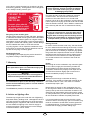
IMPORTANT! Always remember to open the air
vent control before new wood logs are inserted
into a hot burn chamber. Let the flames get a
good grip on the wood before the air control
setting is reduced.
When the draught in the chimney is low and
the vent is closed, the gas from the firewood
can be ignited with a bang. This can cause
damage to the product as well as the immediate
environment.
6. Maintenance
Cleaning and inspection
The insert should be inspected thoroughly and cleaned
at least once per season (possibly in combination
with the sweeping of the chimney and chimney pipes).
Ensure that all joints are tight and that the gaskets are
rightly positioned. Exchange any gaskets that are worn
or deformed.
24
Remember that the insert must always be cold when
inspected.
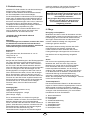
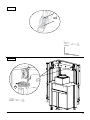
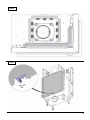
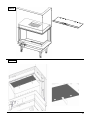
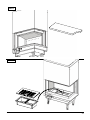
Thermotte™
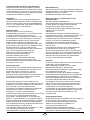
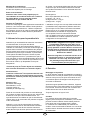
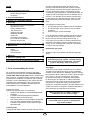
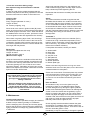
These insulating plates in the burn chamber (FIG 7)
contribute to a high combustion temperature, which
leads to cleaner combustion of the wood and a higher
rate of efficiency. Any fissures in the plates will not
reduce their insulation efficiency.
If new plates are needed, contact your dealer.
A. Smoke baffle
B. Back plate
C. Front plate
D. Ash pan cover
E. Side plate left
F. Side plate right
G. Bottom plate left
H. Bottom plate right
Please note: Wood logs that are too long can cause
additional strain and crack the plates, due to the tension
created between the side plates.
Please also note that the Thermotte plates may release
coloured dust when touched. Avoid touching any cast
iron parts with dust on your fingers. Any visible dust
on cast iron can be brushed off with the glove that is
included.
Door and Glass
Should there be any soot on the glass it may be
necessary to clean it. Use dedicated glass cleaner,
as other detergents may damage the glass. (NB! Be
careful, even dedicated glass cleaner can damage the
varnish on the door frame and the gaskets). A good
advice for cleaning the glass is to use a damp cloth or
kitchen roll paper and apply some ash from the burn
chamber. Rub around the ash on the glass and finish off
with a piece of clean and damp kitchen roll paper.
NB! Only clean when the glass is cold.
Check regularly that the transition between the glass
and the door is completely tight. Possibly tighten the
screws that hold the glass in place - but not too hard, as
this can cause the glass to crack.
Periodically, it may be necessary to change the gaskets
GB