1
operation
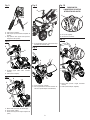
nRemove the nozzle by placing hand over nozzle then
pulling back the quick-connect collar. Place nozzle in the
nozzle storage area on the top of the machine.
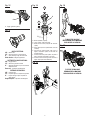
n Select the right nozzle for the job:
• Use medium pressure nozzle (green) for items such as
a car or boat.
• Use higher pressure nozzle for jobs such as stripping
paint and degreasing the driveway. When using these
nozzles, test a small area first to avoid surface damage.
n Start at the top of the area to be rinsed and work down,
overlapping the strokes.
MOVING the pressure washer
See Figure 16.
NOTE: Never lift or carry this product using the moving
handle.
nTurn the pressure washer off.
nTilt the machine toward you until it balances on the wheels
then roll the machine to the desired position.
MAINTENANCE
WARNING:
When servicing, use only identical replacement parts.
Use of any other parts may create a hazard or cause
product damage.
WARNING:
Always wear safety goggles or safety glasses with side
shields during power tool operation or when blowing
dust. If operation is dusty, also wear a dust mask.
WARNING:
Before inspecting, cleaning or servicing the machine, shut
off engine, wait for all moving parts to stop, and disconnect spark plug wire and move it away from spark plug.
Failure to follow these instructions can result in serious
personal injury or property damage.
GENERAL MAINTENANCE
Avoid using solvents when cleaning plastic parts. Most
plastics are susceptible to damage from various types of
commercial solvents and may be damaged by their use. Use
clean cloths to remove dirt, dust, oil, grease, etc.
WARNING:
Do not at any time let brake fluids, gasoline, petroleumbased products, penetrating oils, etc., come in contact
with plastic parts. Chemicals can damage, weaken or
destroy plastic which may result in serious personal
injury.
Only the parts shown on the parts list are intended to be
repaired or replaced by the customer. All other parts should
be replaced at an authorized service center.
Before running the engine, perform the following preoperation steps:
nCheck that all bolts, nuts, etc., are securely tightened.
nMake sure the air filter is clean.
nCheck both the engine lubricant level and the fuel tank
level; refill as needed.
nInspect the work area for hazards.
nIf there is excessive noise or vibration, stop the unit
immediately.
Page 12 — English