1
70550670ME400x297:ME RCP 400x297
23/03/10
10:53
Page 1
LOT
Laboratoires pharmaceutiques VYGON 95440 Ecouen - FRANCE - Tél. : +33 1 39 92 63 63 - Fax : +33 1 39 90 29 37 - E-mail : [email protected]
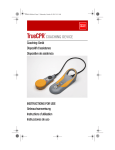
SYSTÈME DE RÉANIMATION
CARDIO PULMONAIRE
(RCP) DE BOUSSIGNAC
BOUSSIGNAC CARDIO
PULMONARY RESUSCITATION
SYSTEM (CPR)
DAS BOUSSIGNAC HERZLUNGEN-WIEDERBELEBUNGSSYSTEM
SISTEMA DE REANIMACIÓN
CARDIO-PULMONAR (RCP)
DE BOUSSIGNAC
SISTEMA DI RIANIMAZIONE
CARDIOPOLMONARE (RCP)
BOUSSIGNAC
CARDIO-PULMONAAL
REANIMATIESYSTEEM (CPR)
VAN BOUSSIGNAC
SISTEMA DE REANIMAÇÃO
CÁRDIO-PULMONAR (RCP)
DE BOUSSIGNAC
HJÄRT- OCH LUNGRÄDDNINGSSYSTEM (HLR) FRÅN
BOUSSIGNAC
MODE D’EMPLOI
INSTRUCTIONS FOR USE
GEBRAUCHSANLEITUNG
INSTRUCCIONES DE USO
ISTRUZIONI PER L’USO
BESCHRIJVING VAN HET SYSTEEM
MODO DE EMPREGO
BESKRIVING AV SYSTEMET
ATTENTION
LORS DE LA RCP EN INSUFFLATION CONTINUE
NE JAMAIS UTILISER D’AMBU OU DE VENTILATEUR ET LAISSER LA SONDE A L’AIR LIBRE.
(l’insufflation continue en oxygène associée à
des compressions thoraciques assure la ventilation).
WHEN USING CONTINUOUS INSUFFLATION OF
OXYGEN THROUGH THE SIDE PORT OF THE
BOUSSIGNAC SYSTEM ALWAYS LEAVE THE
PROXIMAL END OF THE TUBE OPEN TO AIR
AND NEVER CONNECT IT TO ANY FORM OF
AMBU-TYPE RESUSCITATOR OR TO A VENTILATOR.
(The combination of continuous insufflation of
oxygen and the chest compression of cardiac
massage generates adequate ventilation).
BEI DER HERZ-LUNGEN-WIEDERBELEBUNG
(HLW) MIT EINEM KONTINUIERLICHEN FLOW
ÜBER DIE SEITLICHEN KANÄLE DARF DAS PROXIMALE ENDE DES TUBUS NICHT AN EINE
BEATMUNGSMASCHINE ANGESCHLOSSEN
WERDEN; SONDERN MUSS IMMER FREI BLEIBEN (die kontinuierliche Insufflation von
Sauerstoff, verbunden mit Thoraxkompressionen
gewährleistet die Ventilation).
DURANTE LA RCP EN INSUFLACION CONTINUA, NUNCA UTILIZAR INSUFLADOR NI VENTILADOR Y DEJAR LA SONDA AL AIRE LIBRE
(la insuflación continua con oxígeno, asociada a
las compresiones torácicos, permiten la ventilación).
DURANTE LA RCP CON INSUFFLAZIONE CONTINUA, EVITARE RIGOROSAMENTE L’USO DEL
PALLONE AMBU O DEL VENTILATORE E LASCIARE APERTA L’ESTREMITA’ PROSSIMALE DELLA
SONDA
(la ventilazione è assicurata dall’insufflazione
continua con ossigeno associata a compressioni
toraciche).
TIJDENS DE CPR MET VOORTDURENDE INSUFFLATIE NOOIT EEN INSUFFLATOR OF EEN VENTILATOR GEBRUIKEN EN DE SONDE IN DE VRIJE
LUCHT LATEN
(de continue insufflatie met zuurstof, geassocieerd met samendrukkingen van de thorax verzekert de ventilatie).
Quando se utiliza o sistema RCP em insuflação
contínua não se deve usar nunca um Ambu ou
um respirador. Deixar a sonda ao ar livre
(a insuflação contínua de oxigénio associada a
compressões torácicas garante a ventilação).
VID KONTINUERLIG INSUFFLATION I HLR-SYSTEMET FÅR INSUFFLATIONSAPPARAT ELLER
RESPIRATOR ALDRIG ANVÄNDAS. SONDEN SKA
VARA FRI.
(Kontinuerlig insufflation med syre förenat med
kompression av bröstkorgen säkerställer ventilationen.)
DESCONECTAR LA SONDA (TUBO VERDE) DE
LA FUENTE DE OXIGENO Y VENTILAR DE
MANERA CLASICA.
SCOLLEGARE LA SONDA (TUBO VERDE) DAL
SISTEMA DI EROGAZIONE DI OSSIGENO E VENTILARE SECONDO LA TECNICA TRADIZIONALE.
DE SONDE (GROENE TUBE) LOSKOPPELEN VAN
DE ZUURSTOFBRON EN VENTILEREN OP DE
KLASSIEKE MANIER.
TA LOSS SONDEN FRÅN SYREKÄLLAN (GRÖNT
RÖR) OCH VENTILERA PÅ TRADITIONELLT SÄTT.
7 : Interrumpir el masaje.
8 : Desconectar el sistema RCP Boussignac de la
fuente de oxígeno (desconectar el tubo
verde).
9 : Conectar de manera clásica el Sistema de
RCP Boussignac en el ventilador.
7 : Interrompere il massaggio.
8 : Scollegare il Sistema RCP Boussignac dal sistema di erogazione dell’ossigeno (scollegare
il tubo verde).
9 : Collegare il Sistema RCP Boussignac al ventilatore secondo la tecnica tradizionale.
7: De massage stopzetten.
8: Het CPR-systeem van Boussignac loskoppelen van de zuurstofbron (de groene tube loskoppelen).
9: Op de klassieke manier het CPR-systeem van
Boussignac op de ventilator aansluiten.
QUANDO A ACTIVIDADE CARDÍACA SE RESTABELECE DEVE-SE DESCONECTAR (TUBO VERDE)
DA FONTE DE OXIGÉNIO E VENTILAR DE
MANEIRA CLÁSSICA.
Wenn ein neuer Herzstillstand eintritt:
Si se produce un nuevo paro:
1 : Beatmungsbeutel oder-maschine dekonnektieren
2 : Den grünen Schlauch direkt an eine
Sauerstoffquelle anschließen.
3 : Den Sauerstoff auf 15L/Min öffnen.
4 : Gegebenenfalls die zusätzlichen Kanäle zum
Einspritzen von Adrenalin benutzen.
(Medikamentenaustritt erfolgt auf Höhe der
Carina tracheae)
5 : KONTINUIERLICHE HERZMASSAGE, MIT 100
KOMPRESSIONEN PRO MINUTE DURCHFÜHREN
In caso di un successivo arresto cardiaco:
Indien een nieuwe stilstand zich voordoet:
1 : Desconectar el ventilador
2 : Conectar el tubo verde directamente a una
fuente de oxígeno
3 : Abrir el paso del oxígeno a 15L/Min
4 : Si es necesario, utilizar canales suplementarios para inyectar directamente la adrenalina
a nivel del repliegue interbronquial.
5 : REALIZAR MASAJES CONTINUOS CON 100
PRESIONES POR MINUTO
1 : Scollegare il ventilatore
2 : Collegare il tubo verde direttamente al sistema di erogazione dell’ossigeno
3 :Aprire l’ossigeno a 15L/min.
4 : Se necessario, ricorrere a canali supplementari per iniettare direttamente l’adrenalina
all’altezza della carena.
5 : PRATICARE UN MASSAGGIO CONTINUO
CON 100 COMPRESSIONI AL MINUTO
1: De ventilator loskoppelen
2: De groene tube rechtstreeks aansluiten op
een zuurstofbron
3: De zuurstof openen aan 15L/Min
4: Indien nodig bijkomende kanalen gebruiken
om de adrenaline rechtstreeks ter hoogte van
de carina in te spuiten.
5: CONTINUE MASSEREN MET 100 SLAGEN
PER MINUUT
La re-utilización de este dispositivo puede cambiar sus características mecánicas, biológicas o
químicas que pueden provocar el fallo del
dispositivo, reacciones alérgicas o infecciones
bacterianas.
Il riutilizzo di questo dispositivo potrebbe alterarne le caratteristiche meccaniche o biologiche
e potrebbe causare malfunzionamenti, reazioni
allergiche o infezioni batteriche.
Hergebruik kan de mechanische en of biologische eigenschappen van dit product veranderen.
Het kan juist gebruik negatief beïnvloeden en
allergische of bacteriële infecties tot gevolg hebben.
SI REPRISE DE L’ACTIVITE CARDIAQUE
ATTENTION
DEBRANCHER LA SONDE (TUBE VERT) DE LA
SOURCE D’OXYGENE ET VENTILER DE MANIERE
CLASSIQUE.
7 : Stopper le massage.
8 : Déconnecter le système RCP Boussignac de
la source d’oxygène (déconnecter le tube
vert) et l’obturer grâce au bouchon.
9 : Connecter de manière classique le Système
de RCP Boussignac sur le ventilateur.
Si un nouvel arrêt survient :
1 : Déconnecter le ventilateur
2 : Retirer le bouchon du tube vert et le connecter
directement sur une source d’oxygène.
3 : Ouvrir l’oxygène à 15L/Min
4: Si nécessaire se servir des canaux supplémentaires pour injecter directement l’adrénaline
au niveau de la carène.
5: MASSER EN CONTINU A 100 COUPS PAR
MINUTE
La réutilisation de ce dispositif peut modifier ses
caractéristiques mécaniques ou biologiques et
peut entraîner une défaillance du dispositif et
exposer à des réactions allergiques ou à des
infections bactériennes.
DISCONNECT THE OXYGEN SUPPLY FROM THE
BOUSSIGNAC TUBE (green tube), CONNECT THE
PROXIMAL END OF THE TUBE TO THE VENTILATOR CIRCUIT AND VENTILATE NORMALLY.
7. Stop the massage.
8. Disconnect the oxygen supply from the
Boussignac system and close the green tube
with the obturator.
9. Connect the proximal end of the Boussignac
system to the ventilator circuit in the normal
way and ventilate in the conventional
manner.
If another cardiac arrest occurs:
1. Disconnect the ventilator.
2. Remove the obturator and connect the oxygen supply to the green oxygen system.
3. Set the oxygen at 15 litres/minute.
4. If necessary, adrenalin can be administered
via one of the two additional channels and
delivered directly from the tip of the tube to
the carina.
5. MASSAGE CONTINUOUSLY AT 100
COMPRESSIONS/MINUTE.
Re-use of this device may change its mechanical
or biological features and may cause device failure, allergic reactions or bacterial infections.
BEI WIEDEREINTRETEN DER HERZTÄTIGKEIT, IST
DIE SONDE (GRÜNER SCHLAUCH) VON DER
SAUERSTOFFQUELLE ZU DEKONNEKTIEREN
UND AUF DIE ÜBLICHE ART MITTELS BEUTEL
ODER BEATMUNGSMASCHINE ZU VENTILIEREN.
7 : Herzmassage einstellen.
8 : Den Boussignac HLW-Tubus von der
Sauerstoffquelle dekonnektieren (grünen
Schlauch abklemmen)
9 : Den Boussignac HLW-Tubus auf übliche Art
an den Beatmungsbeutel oder eine
Beatmungsmaschine anschließen.
Wiederverwendung dieses Produktes kann zu einer
Veränderung seiner mechanischen oder biologischen
Eigenschaften führen. Dies kann Produktversagen,
allergische Reaktionen oder bakterielle Infektionen
verursachen.
7 : Parar a massagem.
8 : Desligar o sistema RCP Boussignac da fonte
de oxigénio (desconectar o tubo verde).
9 : Ligar de maneira clássica o Sistema de RCP
Boussignac ao respirador.
SE OCORRER NOVAMENTE UMA PARAGEM
CARDÍACA:
1 : Desligar o respirador
2 : Ligar o tubo verde directamente a uma fonte
de oxigénio
3 : Abrir o oxigénio ao débito de 15L/Minuto
4 : Se necessário utilizar canais suplementares
para injectar a adrenalina directamente na
Carina da parte inferior da traqueia.
5 : Massajar continuamente ao ritmo de 100
compressões/minuto.
A reutilização deste dispositivo poderá modificar
as suas características mecânicas ou biológicas
o que poderá causar deficiência do mesmo,
reacções alérgicas ou infecções bacterianas.
7 : Avbryt massagen.
8 : Ta loss HLR-systemet från Boussignac från
syrekällan (ta loss det gröna röret).
9 : Koppla HLR-systemet från Boussignac till
respiratorn.
Om hjärtverksamheten upphör igen:
1 : Koppla från respiratorn.
2 : Anslut det gröna röret direkt till en syrekälla.
3 : Öppna syret till 15l/min
4 : Använd vid behov de extra kanalerna för att
direkt injicera adrenalin i nivå med carinan.
5: MASSERA OAVBRUTET MED 100 STÖTAR
PER MINUT.
Att återanvända denna produkt kan förändra
dess mekaniska och biologiska egenskaper och
medföra försämrad funktion, allergiska reaktioner eller bakteriella infektioner.
BIBLIOGRAPHIE / BIBLIOGRAPHY / LITERATURVERZEICHNIS / BIBLIOGRAFÍA / BIBLIOGRAFIA / BIBLIOGRAFIE / BIBLIOGRAFIA / BIBLIOGRAFI
F. BRUNET, C. VEZINET, M. MONCHI, L.M. JOLY, F.
BELLENFANT, A. CARIOU, G. BOUSSIGNAC, J.F.
DHAINAUT.
MICU Cochin University hospital, Paris, France.
Boussignac endotracheal tube and CPAP ventilation
system Europaischer - Anesthesiekongres - Juin
1998
SAÏSSY JM(1), BOUSSIGNAC G(1), CHEFTEL E(2),
ROUVIN B(1), BARGUES L(1), MICHEL A(2)
(1): DAR, HIA Bégin, Saint-Mandé (2): Service médical, BSPP, Paris
L'insufflation continue d'oxygène permet une
meilleurs oxygénation tissulaire que la ventilation
manuelle au cours de l'arrêt cardiorespiratoire
SFAR Vol 17 N8 - 1998 - Communications affichées
LEVECQUE JP(1), BOUSSIGNAC G(1), CHEFTEL E(2),
FONTAINE D(2), ROUVIN B(2), BARGUES L(1),
MICHEL A(2), SAÏSSY JM(1), (1): DAR, HIA Bégin,
Saint-Mandé (2): Service médical, BSPP, Paris
L'insufflation continue d'oxygène avec massage cardiaque externe (ICO-MCE) au cours de l'arrêt cardiorespiratoire (ACR) SRLF - Janvier 1999 -
Communications affichées
DANIEL ISABEY, GEORGES BOUSSIGNAC, AND
ALAIN HARF
Unité de recherches de Physiologie Respiratoire,
Institut national de la Santé et de la Recherche
Médical U296, Faculté de Médecine, 94010 Créteil,
France
Effect of air entrainment on airway pressure during
endotracheal gas injection
0161-7567/89 $1,50 Copyright © 1989 the
American Physiological Society
LAURENT BROCHARD, GEORGES BOUSSIGNAC,
SERGE ADNOT, CATHERINE BERTRAND, DANIEL
ISABEY, and ALAIN HARF
Efficacy of Cardiopulmonary Resuscitation Using
Intratracheal Insufflation
Am I Respir Crit Care Med Vol 154, pp 1323-1329,
1996
CLAUDE DANAN, GILLES DASSIEU, JEAN-CLAUDE
JAMAUD, and LAURENT BROCHARD
Efficacy of Dead-Space Washout in Mechanically
Ventilated Premature Newborns
Am I Respir Crit Care Med Vol 153, pp 1571-1576,
1996
G. DASSIEU, L. BROCHARD, E.AGUDZE, J. PATKAÏ, J.C. JANAUD, C. DANAN
Continuous tracheal gas insufflation enables a volume reduction strategy in hyaline membrane disease:
technical aspects and clinical results.
Intensive care Med (1998) 24; 1076-1082 ©
Springer-Verlag 1998
G. BOUSSIGNAC, C. BERTRAND, P. HUGUENARD et
B. TEISSERE
Efficiency of a new endotracheal set up allowing a
constant additional gas flow Urgences Médicales
1989
LAURENT BROCHARD, GEORGES BOUSSIGNAC,
JEAN-LUC DUBOIS-RANDE, ALAIN HARF, CATHERINE BERTRAND, HERBERT GERSHWIND
Cardiopulmonary Resuscitation Withour a Ventilator
Using a Novel Endotracheal Tube in a Human
Anaesthesiology 72.399,1990
CARLI P., LAMBERT V. - Conduite à tenir devant un
arrêt circulatoire survenant sur la voie publique,
Réanimation et médecine d'urgence. - Expression
scientifique française, 1988, 382-384
KOUWENHOVEN, W. B., J. R. JUDE, AND G. S. KNICKERBOCKER. 1960.
Closed-chest cardiac massage, J.A.M.A. 173:10641067.
NIEMANN, J. T., J. P. ROSBOROUGH, R. A. NISKANEN, C. ALFERNESS, AND J.
M. CRILEY, 1985, Mechanical "cough" cardiopulmonary resuscitation during cardiac arrest in dogs,
Am. J. Cardiol. 55:199-204.
LEHNERT, B. E., G. OBERDORSTER, AND A. S. SLUTSKY, 1982.
Constant-flow ventilation of apneic dogs. J. Appl.
Physiol. 53:483-489.
WEBSTER, P., A. S. MENON, AND A. S. SLUTSKY,
1986. Constant-flow ventilation in pigs. J. Appl.
Physiol. 61:2238-2242.
BROCHARD, L., G. MION, D. ISABEY, C. BERTRAND,
A. A. MESSASI, J. MANCEBO, G. BOUSSIGNAC, N.
VASILE, F. LEMAIRE, AND A. HARF. 1991.
Constant-flow insufflation prevents arterial oxygen
desaturation during endotracheal suctioning. Am.
Rev. Respir. Dis. 144:395-400.
NAHUM, A., W. C. BURKE, S. A. RAVENSCRAFT, T. W.
MARCY, A. B. ADAMS,
P. S. CROOKE, AND J. J. MARINI, 1992. Lung mechanics and gas exchange during pressure-control ventilation in dogs. Am. Rev. Respir. Dis. 146:965-973.
NAKOS, G., S. ZAKINTHINOS, A. KOTANIDOU, H.
TSAGARIS, AND C. ROUSSOS,
1994. Tracheal gas insufflation reduces the tidal
volume while Paco, is maintained constant. Intensive
Care Med. 20:407-413.
ISABEY, D., G. BOUSSIGNAC, AND A. HARF, 1989.
Effect of air entrainment on airway pressure during
endotracheal gas injection. J. Appl. Physiol.
67:771-779.
EMERGENCY CARDIAC CARE COMMITTEE AND
SUBCOMMITTEES-AMERICAN HEART ASSOCIATION, Guidelines for cardiopulmonary resuscitation
and emergency cardiac care, 1992. Part.
2.Adult basic life support. J.A.M.A. 268:2184-2198.
HARF, A., C. BERTRAND, AND H. K. CHANG, 1984.
Ventilation by high-frequency oscillation of thorax or
at trachea in rats. J. Appl. Physiol. 56:155-160.
PINSKY, M. R., W. R. SUMMER, R. A. WISE, S. PERMUTT, AND B.
BROMBERGER-BARNEA, 1983. Augmentation of
cardiac function by elevation of intrathoracic pressure. J. Appl. Physiol. 54:950-955.
PIQUET, J., L. BROCHARD, D. ISABEY, H. DE CREMOUX, H. K. CHANG, J.
BIGNON, AND A. HARF, 1987. High frequency chest
wall oscillation in patients with chronic air-flow obstruction. Am. Rev. Respir. Dis. 136:1355-1359.
BROCHARD, L., G. MION, D. ISABEY, C. BERTRAND,
A. A. MESSADI, J. L.
MANCEBO, G. BOUSSIGNAC, N.VASILE, F. LEMAIRE,
AND A. HARF, 1991.
Constant flow insufflation prevents arterial oxygen
desaturation during endotracheal suctioning. Am.
Rev. Respir. Dis. 144:395-400.
ROUBY, J. J., P. LEGER, M. ARTHAUD, C. DEVILLIERS,
A. CABROL, I. GANDJBAKCH, C. CABROL, AND P.
VIARS. 1989. Respiratory effects of the Jarvik-7 artificial heart. J. Appl. Physiol. 66:1984-1989.
GUDIPATI, C. V., M. H. WEIL, J. BISERA, H. G. DESHMUKH, AND E. C. RACKOW, 1988.
Expired carbon dioxide: a noninvasive monitor of
cardiopulmonary resuscitation. Circulation 77:234239.
MARINI JJ:Tracheal gas insufflation:A useful adjunct
to ventilation? Thorax 1994; 49:735-737.
RIOU B., JANNIERE D., CARLI P.
Réanimation cardiopulmonaire extrahospitalière Editions techniques - Encycl. Méd. Chir. (ParisFrance), Anesthésie-Réanimation, 36-725-A-10,
1995, 13p.
TRANG, T., G. BOUSSIGNAC, J. C. MERCIER, AND F.
BEAUFILS, 1987.
Limitation of hypoxia after tracheal sustion using a
newly designed endotracheal tube (abstract).
Intensive Care Med. 13:100.
ISABEY, D., G. BOUSSIGNAC, AND A. HARF, 1989.
Effect of air entrainment on airway pressure during
endotracheal gas injection. J. Appl. Physiol.
67:771-779.
Revised 02/2010
70550670
70550670ME400x297:ME RCP 400x297
23/03/10
10:53
Page 2
SYSTÈME DE RÉANIMATION
CARDIO PULMONAIRE
(RCP) DE BOUSSIGNAC
BOUSSIGNAC CARDIO
PULMONARY RESUSCITATION
SYSTEM (CPR)
DESCRIPTION DU SYSTÈME
PRODUCT DESCRIPTION
Le système RCP de Boussignac se compose
d’une sonde endotrachéale spéciale qui possède
certaines caractéristiques :
- 8 canaux extrudés dans la paroi : 400-500
microns
- 5 canaux réunis par une chambre annulaire
pour amener les gaz directement à la proximité
de la carène
- 2 canaux pour :
- Injecter l’adrénaline directement au niveau de
la carène.
- 1 dernier canal est utilisé pour gonfler le ballonnet de manière classique
Le principe de fonctionnement est simple, comparable à celui des turbines d’un réacteur (sans
chaleur) : Les molécules d’oxygène sont accélérées à la vitesse sonique, grâce aux micro canalicules, et percutent un déflecteur qui les renvoie
vers la colonne centrale.
L’entre-chocage des molécules génère une «
turbulence » transformant ainsi la vitesse en
pression.
Les diamètres internes et externes ainsi que la
longueur sont identiques aux sondes classiques.
Par ailleurs, l’extrémité proximale du système
RCP Boussignac peut être connectée aux ventilateurs de manière classique.
MODE D’EMPLOI
ATTENTION
LORS DE LA RCP EN INSUFFLATION CONTINUE
NE JAMAIS UTILISER D’AMBU OU DE VENTILATEUR ET LAISSER LA SONDE A L’AIR LIBRE
(l’insufflation continue en oxygène associée à des
compressions thoraciques assure la ventilation).
SI REPRISE DE L’ACTIVITE CARDIAQUE
DEBRANCHER LA SONDE (TUBE VERT) DE LA
SOURCE D’OXYGENE ET VENTILER DE MANIERE
CLASSIQUE.
Une fois le diagnostic d’arrêt cardio-respiratoire
posé, choisir la taille adéquate du Système RCP
de Boussignac (taille indiquée sur le conditionnement, les dimensions sont identiques aux
sondes endotrachéales classiques).
Vérifier l’intégrité du conditionnement
Ouvrir le sachet pelable du coté de la languette
de pelabilité.
Gonfler le ballonnet pour vérifier l’étanchéité de
celui ci puis le dégonfler.
1 :Connecter le tube vert directement sur une
source à oxygène
2 :Ouvrir l’oxygène à 15L/Min
3 :Intuber le patient en présence d’oxygène
(L’intubation endo-trachéale est pratiquée de
manière classique)
4 :Gonfler le ballonnet
5 :Si nécessaire se servir des canaux supplémentaires pour injecter directement l’adrénaline au
niveau de la carène.
6:MASSER EN CONTINU A 100 COUPS PAR
MINUTE
The Boussignac CPR system consists of a special
endotracheal tube which has eight channels
moulded into the wall of the tube. Each channel
has a diameter of 400-500 microns and runs
the length of the tube.
Of the eight channels: - Five channels deliver continuous oxygen. They
are fed by an oxygen inlet port which links the
five channels.
- Two channels are for injecting adrenalin.
- One channel inflates the tracheal cuff in the
conventional manner.
The Boussignac CPR System also has a pre-attached oxygen tube which is coloured green.
The principle on which the Boussignac CPR tube
works is similar to that of a jet engine. The oxygen molecules are accelerated at the speed of
sound because of the micro-channels and they
strike a deflector which directs and centralises
their flow from the endotracheal tube.
The impact between the molecules generates
turbulence which transforms their speed into
pressure.
In all other respects the Boussignac CPR endotracheal tube resembles a conventional endotracheal tube. The overall length, internal and
external diameter are the same as a conventional endotracheal tube and the proximal end of
the tube connects in the normal way to a ventilator circuit.
INSTRUCTIONS FOR USE
CAUTION
WHEN USING CONTINUOUS INSUFFLATION OF
OXYGEN THROUGH THE SIDE PORT OF THE
BOUSSIGNAC TUBE ALWAYS LEAVE THE PROXIMAL END OF THE TUBE OPEN TO AIR AND
NEVER CONNECT IT TO ANY FORM OF AMBUTYPE RESUSCITATOR OR TO A VENTILATOR.
(The combination of continuous insufflation of
oxygen and the chest compression of cardiac
massage generates adequate ventilation).
IF CARDIAC ACTIVITY IS RESUMED DISCONNECT THE OXYGEN SUPPLY FROM THE
BOUSSIGNAC TUBE (green tube), CONNECT THE
PROXIMAL END OF THE TUBE TO THE VENTILATOR CIRCUIT AND VENTILATE NORMALLY.
Once cardiac arrest has been diagnosed, select
the appropriate size of Boussignac CPR system
(the size is shown on the packaging and is the
same as for conventional endotracheal tubes).
Check that the packaging is intact and undamaged. Open the peel pack. Inflate the tracheal
cuff to check patency and then deflate it.
1. Connect the oxygen supply to the green
oxygen tube.
2. Set the oxygen supply to 15 litres/minute.
3. With oxygen being delivered through the
tube, intubate the patient in the conventional
way.
4. Inflate the cuff to seal the trachea.
5. If necessary, adrenalin can be administered
via one of the two additional channels and
delivered directly from the tip of the tube to
the carina.
6. MASSAGE CONTINUOUSLY AT 100
COMPRESSIONS/MINUTE.
DAS BOUSSIGNAC HERZLUNGEN-WIEDERBELEBUNGSSYSTEM
SISTEMA DE REANIMACIÓN
CARDIO-PULMONAR (RCP)
DE BOUSSIGNAC
SISTEMA DI RIANIMAZIONE
CARDIOPOLMONARE (RCP)
BOUSSIGNAC
CARDIO-PULMONAAL
REANIMATIESYSTEEM (CPR)
VAN BOUSSIGNAC
SISTEMA DE REANIMAÇÃO
CÁRDIO-PULMONAR (RCP)
DE BOUSSIGNAC
HJÄRT- OCH LUNGRÄDDNINGSSYSTEM (HLR) FRÅN
BOUSSIGNAC
BESCHREIBUNG DES SYSTEMS
DESCRIPCIÓN DEL SISTEMA
DESCRIZIONE DEL SISTEMA
BESCHRIJVING VAN HET SYSTEEM
DESCRIÇÃO DO SISTEMA
BESKRIVING AV SYSTEMET
El sistema RCP de Boussignac se compone de
una sonda endotraqueal especial, con unas
determinadas características:
Il sistema RCP Boussignac è composto da una
speciale sonda endotracheale con le seguenti
caratteristiche:
Das Boussignac HLW-System besteht aus einem
speziellen Endotrachealtubus. In die Wandung
dieses Tubus sind acht Kanäle eingelassen, jeder
mit einem Durchmesser von 400-500 µm. Die
Kanäle verlaufen über die gesamte Länge des
Tubus.
Von diesen acht Kanälen:
- Liefern fünf Kanäle einen kontinuierlichen
Sauerstoffflow. Diese werden von einer
Gaskammer am Ansatz des Tubus versorgt,
welche in die fünf Kanäle mündet.
- Können zwei Kanäle für die endotracheale
Gabe von Adrenalin verwendet werden.
- Wird ein Kanal wird für das Aufblasen des Cuff
verwendet.
Weiterhin verfügt das Boussignac HLW-System
über einen vorkonnektierten grünen
Sauerstoffschlauch am Ansatz des Tubus.
Das Funktionsprinzip ist einfach und mit dem
physikalischen Prinzip einer Turbine zu vergleichen. Die Sauerstoffmoleküle werden dank der
fünf Mikrokanäle in der Tubuswandung auf
Schallgeschwindigkeit beschleunigt. Am Ende
des Tubus werden diese ins Zentrum des Tubus
geleitet, wo sie miteinander kollidieren. Der
Zusammenstoß der Moleküle löst eine
„Turbulenz“ aus, wodurch die Geschwindigkeit
der Moleküle in einen Druck umgewandelt wird.
Die Abmessungen des Tubus sind dabei mit
denen der üblichen Tuben identisch.
Weiterhin kann der proximale Ansatz des
Boussignac HLW-Tubus an jede herkömmliche
Beatmungsmaschine angeschlossen werden.
GEBRAUCHSANLEITUNG
ACHTUNG
BEI DER HERZ-LUNGEN-WIEDERBELEBUNG
(HLW) MIT EINEM KONTINUIERLICHEN FLOW
ÜBER DIE SEITLICHEN KANÄLE DARF DAS PROXIMALE ENDE DES TUBUS NICHT AN EINE
BEATMUNGSMASCHINE ANGESCHLOSSEN
WERDEN; SONDERN MUSS IMMER FREI BLEIBEN (die kontinuierliche Insufflation von
Sauerstoff, verbunden mit Thoraxkompressionen
gewährleistet die Ventilation).
BEI WIEDEREINTRETEN DER HERZTÄTIGKEIT, IST
DIE SONDE (GRÜNER SCHLAUCH) VON DER
SAUERSTOFFQUELLE ZU DEKONNEKTIEREN
UND AUF DIE ÜBLICHE ART MITTELS BEUTEL
ODER BEATMUNGSMASCHINE ZU VENTILIEREN.
Sobald die Diagnose Herz-Atemstillstands gestellt ist, ist die entsprechende Größe des
Boussignac HLW-Tubus zu wählen (Größe ist auf
der Verpackung angegeben, die Größen sind mit
denen, der üblichen Endotrachealtuben identisch).
Überprüfen, ob die Verpackung unbeschädigt
ist.
Den Beutel auf der Seite der Abziehlasche öffnen.
Den Ballon durch aufblasen, auf seine
Dichtigkeit überprüfen und die Luft wieder auslassen.
1 : Den grünen Schlauch direkt an eine
Sauerstoffquelle anschließen.
2 : Sauerstoffflow auf 15 l/min einstellen.
3 : Den Patienten intubieren (Die endotracheale
Intubation erfolgt auf übliche Art).
4 : Den Ballon blocken.
5 : Gegebenenfalls die zusätzlichen Kanäle zum
Einspritzen von Adrenalin benutzen.
(Medikamentenaustritt erfolgt auf Höhe der
Carina tracheae)
6 : KONTINUIERLICHE HERZMASSAGE, MIT 100
KOMPRESSIONEN PRO MINUTE DURCHFÜHREN
- 8 canales extrudidos en la pared: 400-500
micrones
- 5 canales unidos por una cámara anular para
llevar los gases directamente cerca del repliegue interbronquial (carina)
- 2 canales para:
- Inyectar la adrenalina directamente a nivel del
repliegue interbronquial.
- 1 último canal utilizado para inflar el globo de
manera clásica
El principio es simple, comparable al de las turbinas de un reactor (sin calor). Las moléculas de
oxígeno son aceleradas a la velocidad del sonido gracias a micro-canalículas, y percuten en un
deflector, que los envía a su vez hacia la columna central.
El choque entre las moléculas genera así una «
turbulencia » que transforma la velocidad en
presión.
Los diámetros internos y externos, así como la
longitud, son idénticos a los de las sondas clásicas. Además, el extremo proximal del sistema
RCP Boussignac puede ser conectado a los ventiladores de manera clásica.
INSTRUCCIONES DE USO
ATENCION
DURANTE LA RCP EN INSUFLACION CONTINUA, NUNCA UTILIZAR INSUFLADOR NI VENTILADOR Y DEJAR LA SONDA AL AIRE LIBRE (la
insuflación continua con oxígeno, asociada a las
compresiones torácicos, permiten la ventilación).
SI SE RECUPERA LA ACTIVIDAD CARDIACA,
DESCONECTAR LA SONDA (TUBO VERDE) DE
LA FUENTE DE OXIGENO Y VENTILAR DE
MANERA CLASICA.
Una vez hecho el diagnóstico de paro cardiorrespiratorio, elegir el tamaño adecuado de
Sistema RCP de Boussignac (tamaño indicado
en el acondicionamiento: las dimensiones son
idénticas a las de las sondas endotraqueales
clásicas).
Verificar que el acondicionamiento esté intacto.
Abrir la bolsa pelable por el lado de la lengüeta
que indica desde dónde pelar.
Inflar el globo para verificar la estanqueidad del
mismo, y después desinflarlo.
1 : Conectar el tubo verde directamente a una
fuente de oxígeno
2 : Abrir el paso de oxígeno a 15L/Min
3 : Intubar al paciente en presencia de oxígeno
(la intubación endotraqueal se practica de
manera clásica).
4 : Inflar el globo
5 : Si es necesario, utilizar los canales suplementarios para inyectar directamente adrenalina
a nivel del repliegue interbronquial.
6 : REALIZAR MASAJES CONTINUOS DE 100
PRESIONES POR MINUTO
- 8 canali estrusi nella parete: 400-500 micron
- 5 canali raggruppati tramite una camera anulare per il trasporto dei gas direttamente in
prossimità della carena
- 2 canali per iniettare l’adrenalina direttamente
all’altezza della carena.
- 1 ultimo canale viene utilizzato per gonfiare il
palloncino tracheale secondo la tecnica tradizionale
Il sistema di Boussignac (RCP) ha anche un tubo
per l’ossigeno pre-inserito colorato di verde.
Il principio di funzionamento è semplice, simile
a quello delle turbine di un reattore (ma senza
emissione di calore): le molecole di ossigeno
vengono accelerate alla velocità del suono, grazie ai microcanali, e vanno a colpire un deflettore che le convoglia verso il condotto centrale.
L’urto reciproco delle molecole genera una “turbolenza” che trasforma la velocità in pressione.
I diametri interni ed esterni, come anche la lunghezza, sono identici a quelli delle sonde tradizionali. Anche il collegamento dell’estremità
prossimale del sistema RCP Boussignac ai ventilatori, avviene secondo la tecnica tradizionale.
ISTRUZIONI PER L’USO
ATTENZIONE
DURANTE LA RCP CON INSUFFLAZIONE CONTINUA, EVITARE RIGOROSAMENTE L’USO DEL
PALLONE AMBU O DEL VENTILATORE E LASCIARE APERTA L’ESTREMITA’ PROSSIMALE DELLA
SONDA (la ventilazione è assicurata dall’insufflazione continua con ossigeno, associata a
compressioni toraciche).
IN CASO DI RIPRESA DELL’ATTIVITÀ CARDIACA,
SCOLLEGARE LA SONDA (TUBO VERDE) DAL
SISTEMA DI EROGAZIONE DI OSSIGENO E VENTILARE SECONDO LA TECNICA TRADIZIONALE.
Una volta confermata la diagnosi di arresto cardiorespiratorio, scegliere la misura adeguata del
Sistema RCP Boussignac (la misura è riportata
sulla confezione esterna; le dimensioni sono
identiche a quelle delle sonde endotracheali tradizionali).
Verificare l’integrità della confezione.
Aprire la busta a strappo, tirando l’apposita linguetta.
Gonfiare il palloncino per verificarne la tenuta,
quindi sgonfiarlo.
1 : Collegare il tubo verde direttamente ad un
sistema di erogazione di ossigeno
2 : Aprire l’ossigeno a 15L/min.
3 : Intubare il paziente in presenza di ossigeno
(l’intubazione endotracheale viene eseguita
con la tecnica tradizionale)
4 : Gonfiare il palloncino
5 : Se necessario, ricorrere a canali supplementari per iniettare direttamente l’adrenalina
all’altezza della carena.
6 : PRATICARE UN MASSAGGIO CONTINUO
CON 100 COMPRESSIONI AL MINUTO
Het CPR-systeem van Boussignac bestaat uit
een endotracheale sonde in de luchtpijp met
speciale eigenschappen :
- 8 in de wand geëxtrudeerde kanalen: 400-500
microns
- 5 kanalen verenigd door een ringvormige
kamer om de gassen rechtstreeks in de nabijheid van de carina te brengen:
- 2 kanalen ten behoeve van het rechtstreeks
inspuiten van de adrenaline rechtstreeks in te
spuiten ter hoogte van de carina.
- 1 laatste kanaal wordt gebruikt ter insufflatie
van de balloncuff op de klassieke wijze op te
blazen
Het werkingsprincipe is eenvoudig en vergelijkbaar met dat van de turbines van een reactor
(zonder hitte): de zuurstofmoleculen worden
versneld tot de geluidssnelheid, dankzij de
microkanaaltjes, en botsen op een deflector die
ze terugstuurt naar de centrale kolom.
Het tegen elkaar botsen van de moleculen
veroorzaakt een « turbulentie » die de snelheid
zo omzet in druk.
De interne en externe diameter, en ook de lengte, zijn dezelfde als die van de klassieke sonden.
Het proximale uiteinde van het CPR-systeem van
Boussignac kan trouwens op de klassieke
manier aangesloten worden op de ventilatoren.
GEBRUIKSAANWIJZING
OPGELET
TIJDENS DE CPR MET VOORTDURENDE INSUFFLATIE NOOIT EEN INSUFFLATOR OF EEN VENTILATOR GEBRUIKEN EN DE SONDE IN DE VRIJE
LUCHT LATEN (de continue insufflatie met
zuurstof, geassocieerd met samendrukkingen
van de thorax verzekert de ventilatie).
INDIEN HERNEMING VAN DE HARTACTIVITEIT
DE SONDE AFKOPPELEN (GROENE TUBE) VAN
DE ZUURSTOFBRON EN OP DE KLASSIEKE
MANIER VENTILEREN.
Eens de diagnose van cardio-respiratorische
stilstand gesteld, de juiste maat van het CPRsysteem van Boussignac kiezen (maat aangeduid op de verpakking, de afmetingen zijn
dezelfde als die van de klassieke luchtpijpsondes).
De ongeschonden toestand van de verpakking
controleren.
Het peelpack zakje openen aan de zijde waar
het lipje eraf getrokken kan worden.
De cuff opblazen om zijn waterdichtheid te
controleren en daarna opnieuw laten leeglopen.
1: De groene tube rechtstreeks aansluiten op
een zuurstofbron
2: De zuurstof openen aan 15L/Min
3: De tube in de patiënt brengen in aanwezigheid van zuurstof (Het inbrengen in de
luchtpijp gebeurt op de klassieke manier)
4: Het ballonnetje opblazen
5: Indien nodig bijkomende kanalen gebruiken
om de adrenaline rechtstreeks ter hoogte van
de carina in te spuiten.
6: CONTINU HARTMASSAGE MET 100 SLAGEN
PER MINUUT
O sistema RCP de Boussignac é composto por
uma sonda endotraqueal especial com 8 canais
extrusados na parede da sonda e cada canal
com 400-500 microns de diâmetro.
HLR-systemet från Boussignac består av en särskild endotrakeal sond som har följande utmärkande egenskaper:
Dos 8 canais:
- 5 canais reunidos numa câmara em forma de
anel, servem para fornecer oxigénio em continuo directamente até à carina situada na parte
inferior da traqueia.
- 2 canais para injectar a adrenalina directamente na carina.
- 1 canal para encher o balão (cuff) conforme
maneira clássica.
- 8 kanaler extruderade i väggen: 400-500
mikron
- 5 kanaler som sammanförs i en ringformig
kammare för att föra gasen direkt intill carinan
- 2 kanaler för
- injektion av adrenalin direkt i nivå med carinan
O princípio de funcionamento é simples, comparável ao das turbinas de um reactor – as moléculas de oxigénio são aceleradas à velocidade
sónica, através dos micro-canais e percutam um
deflector que as reenvia para a coluna central.
Funktionsprincipen är enkel och kan jämföras
med turbiner i en reaktor (utan värme):
Syremolekylerna accelereras upp till ljudhastigheten tack vare små canalicules, och slår emot
en skyddskiva som skickar tillbaka dem mot
mitten.
Molekylernas hopstötning orsakar en « turbulens » som omvandlar hastigheten till tryck.
Sondens interna och externa diametrarna liksom
längd är desamma som för traditionella sonder.
För övrigt kan HLR-systemets proximala ända
anslutas till respiratorer på traditionellt sätt.
O impacto das moléculas gera uma «turbulência» que transforma a velocidade em pressão.
Os diâmetros internos, externos, o comprimento
e todos os outros aspectos da sonda CPR
Boussignac, são idênticos aos das sondas clássicas. A extremidade proximal é conectável de
forma normal a um ventilador.
- 1 sista kanal används för att vidga ballongen
på traditionellt vis
MODO DE EMPREGO
BRUKSANVISNING
Quando se utiliza o sistema RCP em insuflação
contínua não se deve usar nunca um Ambu ou
um respirador. Deixar a sonda ao ar livre (a
insuflação contínua de oxigénio associada a
compressões torácicas garante a ventilação).
VID KONTINUERLIG INSUFFLATION I HLR-SYSTEMET FÅR INSUFFLATIONSAPPARAT ELLER
RESPIRATOR ALDRIG ANVÄNDAS. SONDEN SKA
VARA FRI. (Kontinuerlig insufflation med syre
förenat med kompression av bröstkorgen
säkerställer ventilationen.)
Quando a actividade cardíaca se restabelece
deve-se desconectar (tubo verde) da fonte de
oxigénio e ventilar de maneira clássica.
Uma vez diagnosticada a paragem cardiorespiratória, escolher o tamanho conveniente do
Sistema RCP de Boussignac (tamanho indicado
na embalagem, as dimensões são idênticas às
das sondas endotraqueais clássicas).
Verificar a integridade da embalagem.
Abrir a embalagem.
Encher o balão para verificar a sua estanticidade e esvaziá-lo logo em seguida.
1 : Ligar o tubo verde directamente a uma fonte
de oxigénio
2 : Abrir o oxigénio ao débito de 15L/Minuto
3 : Entubar o paciente em presença de oxigénio
(A intubação endotraqueal é praticada de
maneira clássica)
4.: Encher o balão
5 : Se necessário utilizar canais suplementares
para injectar directamente a adrenalina na
carina da parte inferior da traqueia.
6 : Massajar continuamente ao ritmo de 100
compressões/minuto.
TA LOSS SONDEN FRÅN SYREKÄLLAN (GRÖNT
RÖR) OM HJÄRTVERKSAMHETEN KOMMER
IGÅNG IGEN OCH VENTILERA PÅ TRADITIONELLT SÄTT.
När diagnosen hjärt- och lungstillestånd har
ställts, välj ett HLR-system från Boussignac i
lämplig storlek (storleken anges på förpackningen, måtten är desamma som för traditionella
endotrakeala sonder).
Kontrollera att förpackningen är oskadd.
Öppna påsen från sidan med öppningsremsan.
Blås upp ballongen för att kontrollera att den är
tät och släpp sedan ut luften.
1 : Anslut det gröna röret direkt till en syrekälla.
2 : Öppna syret till 15l/min
3 : Intubera patienten och ge syre. (Den endotrakeala intubationen genomförs på traditionellt sätt.)
4 : Blås upp ballongen.
5 : Använd vid behov de extra kanalerna för att
direkt injicera adrenalin i nivå med carinan.
6: MASSERA OAVBRUTET MED 100 STÖTAR
PER MINUT.