1
Theme 2
Session 1
INTRODUCTION
L’ART DE BÂTIR
ASSESSING THE ART OF BUILDING
Vice-présidente
Vice-Chair
Florence Babics
Architecte du Patrimoine, Professeur à l’Ecole de Chaillot, Paris (ICOMOS France)
Conservation Architect, Professor at the Ecole de Chaillot, Paris (ICOMOS France)
[email protected]
Bonjour Mesdames et bonjour Messieurs,
Merci d’être là avec nous ce matin, si nombreux, pour cette première matinée de la Session « Le développement ou le retour à l’Art de bâtir ».
L’objectif général de ce colloque scientifique est d’identifier en quoi le Patrimoine peut apporter le cadre et
les outils pour dessiner, orienter, et construire le développement des sociétés de demain. « le mot développement… étant entendu ici moins en terme de croissance économique, que de moyen d’accéder à une existence
intellectuelle, affective, morale et spirituelle satisfaisante », selon la déclaration de l’UNESCO (2001)
Alors qu’allons chercher, et qu’allons-nous trouver dans cet « Art de bâtir » ?
Au travers des exposés qui nous seront faits ce matin plusieurs séries de questions seront abordées autour
de ce sujet :
L’étude du patrimoine bâti nous révèle en effet, comment, avec des matériaux durables d’origine régionale,
avec une conception et une implantation dictées par les conditions locales, en utilisant des savoir-faire établis
et transmis par la tradition, les bâtisseurs anciens ont inventé des solutions originales et produit des bâtiments
répondant à leurs besoins, parfaite ment intégrés dans leur contexte urbain et paysager, et capables d’assurer
leur fonction, souvent pour plusieurs siècles.
Quels enseignements peut-on en tirer pour définir et concevoir un art d’aménager, de bâtir et d’habiter moderne, respectueux de l’environnement et conforme aux exigences actuelles de développement durable ?
Autrement dit : Comment les acquis du passé peuvent-ils devenir un atout pour le futur ?
Dans ce cadre là, les premiers orateurs ce matin nous parleront de l’indispensable transmission des savoirs
et des savoir faire, en Europe et dans le Monde, par des systèmes d’apprentissage qui permettent d’inculquer
à la fois les techniques et les valeurs liées au patrimoine.
Démonstration sera faite ensuite que les techniques millénaires des murets en pierre sèche qui ont façonné
tant de paysages sur la planète, apportent une réponse extrêmement riche à des besoins totalement actuels
et à des préoccupations futures.
Il sera exposé également comment l’architecture la plus vernaculaire peut ouvrir des portes vers des recherches structurelles et architecturales contemporaines, permettant en même temps de renouer avec une
image identitaire.
Et comment une restauration bien menée, au-delà de la seule conservation d’un patrimoine rare et fragile, peut permettre de recréer de l’activité économique localement et d’avoir un impact social fort sur les
habitants.
240
LE PATRIMOINE, MOTEUR DE DÉVELOPPEMENT
HERITAGE, DRIVER OF DEVELOPMENT
Theme 2
L’ART DE BÂTIR
ASSESSING THE ART OF BUILDING
INTRODUCTION
Session 1
Car « L’art de bâtir » ne peut pas se résumer à des questions de savoir-faire, de matériaux, et de mise en
œuvre traditionnels. Il comporte des dimensions multiples qui touchent notamment à l’organisation du territoire, au contexte économique ambiant, et à sa composante éminemment sociale ; ces caractéristiques
déterminent un « Art d’habiter » riche et complexe.
Comprendre et prendre en compte ces différentes dimensions, c’est disposer de plusieurs leviers pour agir
sur la revitalisation du patrimoine, et augmenter ses chances de pérennisation par le développement qu’il
peut générer localement.
Alors, comment appréhender la pluralité de ces dimensions et les intégrer dans les projets de sauvegarde
du patrimoine ?
Un exposé sur les maisons à patio du pourtour de la Méditerranée analysera l’imbrication des différentes
échelles et composantes urbaines, architecturales et techniques de ce patrimoine, et montrera l’actualité
des problématiques qu’il soulève.
Ces thèmes seront également soulevés lors de l’exposé d’une expérience majeure menée à grande échelle et
avec succès en Thaïlande, grâce notamment à un contexte social et politique local favorable.
Et a contrario nous verrons combien, à une échelle plus locale au Mozambique, le patrimoine est menacé dès
lors qu’il est perçu comme socialement dévalorisant et que le tissu social ou les filières locales d’approvisionnement de matériaux sont désorganisés.
Je laisse donc la place aux orateurs.
241
LE PATRIMOINE, MOTEUR DE DÉVELOPPEMENT
HERITAGE, DRIVER OF DEVELOPMENT
Theme 2
Session 1
ARTISANAT, METIERS ET COMPAGNONNAGE
La transmission des savoirs, de l’oralité à l’écrit :
Le rôle des marchés, traités et encyclopédies
Gabriel-François David
Architecte, chargé de mission formation professionnelle
CAPEB Artisanat du bâtiment
France
Résumé. L’artisanat du bâtiment en Europe est issu d’une grande filiation ayant à cœur de transmettre leurs
savoirs et savoir-faire en même temps qu’une culture du métier. Avec l’apparition des Académies et des
Encyclopédies au XVIIIème siècle en Europe, la question de la transmission des techniques et des arts s’est
posée afin de passer d’une tradition orale de la transmission des compétences à une transmission formelle.
La fin des corporations et l’éclatement successif du compagnonnage n’ont toutefois pas empêché de
perpétuer ce souci de transmettre l’art de bien bâtir.
Une rupture brutale survenue avec les deux guerres mondiales a fait perdre le fil de la transmission des
connaissances à des générations de professionnels.
L’apparition des grands courants de pensée en Europe, notamment au XIXème siècle, en faveur de la
restauration du patrimoine bâti garant de l’éducation des citoyens milite le plus souvent pour l’éducation
aux arts et métiers.
Dans le bassin méditerranéen, peu de rupture dans la transmission des savoir-faire dits traditionnels ne
s’opère avant la dernière partie du XXème siècle. Dans certains pays de l’Europe centrale, c’est la chute du
mur de Berlin qui date le début d’une perte trop rapide de la transmission de savoir-faire traditionnels.
En Asie, les grands sites emblématiques ont été construits avec un savoir-faire qui continue d’être honorés
par les métiers.
Aujourd’hui, l’accessibilité, la performance énergétique et parasismique du bâti sont recherchées notamment
dans le bâti ancien .Les décideurs locaux réinventent les circuits courts associant des producteurs locaux
de matériaux bio-sourcés et des artisans ou entreprises du patrimoine qui doivent apprendre à travailler en
symbiose entre corps d’état et en respect des exigences du bâti.
Les diplômes et titres de formation initiale ou continue sont révisés pour intégrer ces nouvelles exigences
et attentes.
Des initiatives en France associant associations et architectes du patrimoine, Fédérations du bâtiment et
ministères visent à sensibiliser le grand public et les entreprises.
Des initiatives sont prises au niveau européen pour la transmission des compétences et la reconnaissance
des formateurs.
Les métiers de la construction et de la restauration du patrimoine retrouvent une image et une attractivité
nouvelle pour les jeunes aspirés par le souci du développement durable et de l’habitat sain.
Le savoir et sa transmission sont eux-mêmes patrimoine immatériel.
Préambule
L
’ art de bâtir et la transmission des savoir et savoirfaire sont du ressort essentiellement oral sur une
grande durée .Les sources écrites concernant l’acte
de bâtir sont, de par l’histoire de l’écrit puis de l’imprimerie , rares dans les temps anciens pour devenir
plus nombreux à partir du XVII è siècle puis systématiques à compter du XIX è siècle tout comme les
traités qui apparaissent rares au XVII è siècles et les
cours de technologie nombreux à compter du XIX è
puis du XX è siècle.
Les chercheurs travaillent donc à partir des archives
des écoles, essais de métreurs , ingénieurs ou artisans, archives du CNAM (conservatoire nationale des
arts et métiers), des Compagnons (trois mouvances),
des ports, des archives militaires, de la SNCF, de la
Chambre des bâtiments, du Conseil des bâtiments
civils, des Académies, pièces de marché dans les
agences d’architecte , bureaux d’étude, services des
villes, entreprises, archives de l’institut de la propriété industrielle, catalogues de fabricants…
La transmission des savoirs et savoir-faire restent au
cœur de la tradition de l’artisanat et des métiers de
242
LE PATRIMOINE, MOTEUR DE DÉVELOPPEMENT
HERITAGE, DRIVER OF DEVELOPMENT
Theme 2
Session 1
bâtisseurs ou de restaurateurs.
Artisanat, métiers et campagnonnage
L’artisan homme de métier
L’artisan est très tôt assimilé au métier.
L’histoire de l’artisanat se confond avec celle du travail. Art et artisanat ont avancé de pair. L’homme en
transmettant la fabrication dès la préhistoire du «
bi-face » relie l’activité manuelle à l’activité intellectuelle. L’homme de Néenderthal perfectionne l’habitat en construisant des huttes.
Libéré de sa condition d’esclave chez les hébreux,
les grecs ou les romains, l’artisan ou le compagnon
témoigne de son indépendance et de son itinérance
(la boucle d’oreille appelé aussi joint).
En latin, l’artisan vient de « ars », « artis » et les règles
de l’art relèvent du métier. En grec, l’artisan vient de
tecne, le technicien.
« L’homme est intelligent avec ses mains » déclarait
Aristote.
L’artisan fabrique (faber), produit quelque chose qui
n’existait pas.
Cela à partir d’une matière et cette fonction de démiurge (cf. Platon sur l’exemple du lit dans Le banquet) lui vient du fait qu’il sait à l’avance ce qu’il va
fabriquer .C’est une différence avec l’artiste qui crée
en avançant ou qui se contente de reproduire un objet existant.
Si le technicien est plus savant, intellectuel, l’artisan incarne l’essence, la pratique sur un territoire. Il
y aura continuité et accélération à travers le temps
en matière de patrimoine (tradition) et de modernité
(innovation).
Le sacré fait le plus souvent partie de la culture ouvrière. C’est l’homme lui-même qui se construit en
unifiant la main et la pensée.
« La main est la fenêtre ouverte sur l’esprit ». Kant
Les métiers de la construction et de la restauration
dans la société
Les différentes organisations des métiers : artisanat,
corporations, collèges, jurandes, confréries, charités,
fraternités, compagnonnage, syndicats, vont tour à
tour porter les valeurs du métier indépendant et de
la transmission des savoir, savoir faire et pratiques.
La maîtrise du métier permet d’entreprendre, la
culture du métier permet de transmettre le savoir
faire et le tour de main.
Libéré de sa condition d’esclave chez les hébreux,
les grecs ou les romains, l’artisan ou le compagnon
témoigne de son indépendance et de son itinérance
(la boucle d’oreille appelé aussi joint).
Le rapport aux valeurs du travail va évoluer. « Le travail n’a pas une valeur morale en soi, mais l’amour
du travail bien fait au service de la vie, sont au cœur
des valeurs morales de l’artisanat » André Comte
Sponville.
Et au cœur du souci de transmission au sein du compagnonnage et des corporations.
Cette transmission du savoir et des apprentissages se
fera dans le temps (par voie orale puis par le biais des
écrits et autres traités) et dans l’espace (par le voyage
et la migration).
« Voyez le Panthéon ; Voyez les Tuileries; Le Louvre et
l’Odéon; Le Palais de l’Industrie; De tous ces monuments ; La France est orgueilleuse; Elle doit ces ornements; Aux maçons de la Creuse. »
(extrait de La chanson des maçons de la Creuse)
Les maçons limousinant en différentes régions de
France venaient du limousin au centre de la France
et le « lambardus » italien (le maçon) a migré vers le
dauphinois et l’ensemble des provinces d’Italie.
Le roi d’Anjou déjà faisait venir à Naples des artisans
de France et en Sicile des musulmans et des artisans
de Trieste.
Artisan ou ouvrier compagnon, les valeurs portent
sur l’œuvre matérielle, l’œuvre professionnelle,
l’œuvre culturelle.
Ainsi le patrimoine artisanal, s’il peut s’exprimer dans
ses outils, ses ateliers, ses chefs d’œuvre de réception compagnonnique, s’exprime surtout dans ses
constructions, et dans la valeur immatérielle de la
connaissance et de la culture du métier transmises de
génération en génération.
L’appartenance à un corps de métier fait l’objet de
fêtes et de cérémonies qui lui sont propres.
S’organiser en corporations de métiers
Les métiers se sont très tôt organisés ou ont été protégés grâce à deux grands pouvoirs : les pouvoirs publics et le pouvoir ecclésiastique voire aristocratique.
Dès le VIIè siècle avant JC, le roi Numa organise les
métiers et attribue les honneurs.
L’organisation en en collèges fera toutefois plus tard
243
LE PATRIMOINE, MOTEUR DE DÉVELOPPEMENT
HERITAGE, DRIVER OF DEVELOPMENT
Theme 2
Artisanat, métiers et campagnonnage
Session 1
l’objet de nombreuses remises en question, partout
en Europe. Rendre obligatoire le respect des statuts
des collèges de métiers permettait la reconnaissance
pour accéder aux commandes notamment avec la
mise en place hiérarchisée des jurandes.
Dès le Bas Empire, les métiers sont donc encadrés.
Les collèges obtiennent le monopole de la profession.
La tradition compagnonnique ouvrière marquera
plus tard son désir d’indépendance par rapport à ce
monopole.
Au Moyen âge se développent corporations, guildes
et autres hanses.
Dès le XII è siècle, s’organisait la corporation du
bâtiment avec les charpentiers et les maçons. Les
organisations sont structurées en maîtres (patron),
apprentis et valets (ouvriers).
L’âme ouvrière est consciente du travail, de la nécessité de perpétuer l’histoire et les évolutions des
métiers, de la reconnaissance des pairs, de la transmission des valeurs, de la réalisation de soi par la
qualité du travail. La préoccupation de l’ouvrage bien
fait relève d’une conception artisanale du travail.
Une conviction demeure : le travail bien fait assurera
toujours une supériorité à toute technique aussi moderne soit elle.
« Une foi pressante porte le plus souvent les bâtisseurs. Cet enthousiasme sacré qui transporte des
populations entières, qui conduit à travers les campagnes de longues théories de pèlerins constructeurs
et les plie pendant dix ans, vingt ans, toute leur vie,
à leur rude tâche de charpentiers, de maçons, de
tailleurs de pierre, tâche à peine rémunérée, cet enthousiasme nous est attesté par l'histoire. » Etienne
Martin Saint-Léon
Charles VII en 1351 renforcera les corporations en
reconnaissant leur statut et en instituant les corps de
métiers. Parallèlement, la franc-maçonnerie s’organise en 1459, empruntant les signes et symboles de
l’histoire des métiers aux compagnons (Salomon,
Hiram…)
Louis XI organisera les métiers « jurés » et les métiers
« réglés ».
Une hiérarchie des métiers de bâtisseurs de dégage
Les charpentiers avaient régné sans partage jusqu’au
XI è siècle. Ils doivent peu à peu laisser place aux
maçons qui vont dissimuler les charpentes par des
voûtes de pierre.
S’instaurent alors une hiérarchie des métiers : les
maçons et plâtriers ont des privilèges refusés aux tailleurs de pierre et « mortelliers » (qui fabriquent le
mortier des maçons et tailleurs de pierre) .Chez les
compagnons les charpentiers et les maçons sont les
métiers premiers.
Des prémices d’organisation des chantiers existent
avec Vilard de Honnecourt en 1230 qui publia « le
Carnet » de son chantier de la cathédrale de Reims. Il
y écrit : « Vous trouverez conseils de construction de
la maçonnerie, des engins de charpenterie…». Attentif à l’évolution technologique, jamais il ne se déclare
architecte .Ses reproductions sont parfois erronées,
mais ce travail est un véritable mémoire de chantier pour des ouvrages qui prendront 50 ans à être
construits.
Fin XIVè , Conrad Kyeser , ingénieur du roi Sigismond,
publie « De bellifortis » sur les machines à édifier
sophistiquées.
En 1449, « De machini libri » de Mariano Taccola sur
l’art des machines à édifier et construire sera publié
puis diffusé.
En 1485 avec traduction française en 1553, parait «
De re aedificatoria » d’Alberti .Puis en 1554, « l’Arcittetura » de Catano. En 1562, « les Règles des cinq
ordres d’architecture de Vignole ». En 1564, « les
règles générales d’architecture » de Bullant .En 1570,
« les quatre livres de l’architecture » de Palladio. En
1554, les « Regole generali di archittetura (Serlio traduit en français en 1545.En 1509, « Divine proportione » de Luca Pacioli. En 1640, « brouillon project
pour une méthode universelle pour la coupe des
pierres » de Desargues, géomètre. En 1684, Vitruve
traduit par Claude Perrault.
Protéger les métiers
Si François I er publie en 1539 une ordonnance interdisant la contrainte de gens de métiers, François II
rétablira les lettres de maîtrise permettant d’entrer
dans un corps de métier. Au milieu du XVI è siècle, les
jurandes et les corporations veulent préserver leurs
prérogatives alors que le pouvoir va bientôt être donné aux concepteurs plutôt qu’aux appareilleurs ou
aux exécutants de chantier.
Louis XIII accordera la maîtrise aux ouvriers ayant
travaillé 6 ans dans les colonies. Sous Louis XIV le
nombre de corporations va quasiment doubler sur
Paris.
Colbert est le précurseur de normes comme système
institutionnalisé de fabrication et de construction.
Sous Louis XV, le courant des économistes va dénoncer le privilège des métiers.
Sous louis XVI après le renvoi de Turgot, les corporations sont rétablies. En 1791, est institué un droit
d’exercer le métier sous forme de patente.
L’acquisition et la transmission des savoirs devient un
enjeu de pérennité du métier et d’accès aux marchés
244
LE PATRIMOINE, MOTEUR DE DÉVELOPPEMENT
HERITAGE, DRIVER OF DEVELOPMENT
Theme 2
Artisanat, métiers et campagnonnage
Session 1
de construction .Avec les voyages des concepteurs et
des ouvriers itinérants à travers l’Europe et notamment en Italie, avec le développement de l’imprimerie, les théories, la connaissance se diffusent en
même temps que se structure l’organisation des
grands chantiers. Un nouveau rapport à la production
et à l’innovation technique notamment en matière
d’échafaudage et de machinerie s’instaure.
Le voyage comme source d’apprentissage, de maîtrise et d’enrichissement du métier
Le voyage, longtemps obligatoire pour devenir Compagnon, permet d’acquérir une connaissance des
technologies et méthodes mobilisées selon les régions, les styles, les matériaux disponibles. Il permet
également de diffuser les nouveaux styles .Il n’est pas
rare qu’à la même époque , au même endroit, deux
constructions de styles différents ( roman et gothique
par exemple) du fait de la maîtrise différente , technique et économique , des bâtisseurs locaux.
D’autres réseaux permettent aux innovations
constructives et stylistiques de voyager : le réseau
des abbayes cisterciennes et celui des abbayes bénédictines. Le plan idéal carolingien (bibliothèque de
l’abbaye de St Gall en Suisse) dessin de l’organisation
d’une abbaye, en se diffusant au sein du réseau des
moines, accompagne l’organisation des travaux réalisés tant par les religieux que par les maçons et charpentiers locaux qui se forment à cette occasion.
Les migrations de travailleurs, appelés à se sédentariser grâce au développement des villes et de la
création de leurs foyers familiaux, selon les périodes
d’essor ou de repli économique, ont contribué à la
propagation de techniques et de vocabulaire nouveaux ? Par exemple, la lave est une pierre utilisée
en couverture (en Champagne, Bourgogne, Franche
Comté, Auvergne), de calcaire, son nom vient plus
de l’italien (laisser glisser l’eau) que des noms de carrière d’extraction (non métamorphiques).La moise
est d’abord un lien dans les échafaudages avant de
devenir plus tard une mesure dans les marchés.
Le savoir-faire des hommes de métiers issu de l’expérience et d’un long apprentissage
Les grecs ont caractérisé l’intelligence et le savoir
de l’homme de métier par la notion de Métis : «
Une forme d’intelligence et de pensée, un mode de
collecte et un mode de connaître, elle implique un
ensemble complexe mais très cohérent d’attitude
mentale de comportement intellectuel qui combine le
flair, la sagacité, la prévision, la souplesse d’esprit, la
feinte, la débrouillardise, la tension vigilante, le sens
de l’opportunité, des habilité diverses, une expérience
longuement acquise. Elle s’applique à des réalités fugaces, mouvantes, déconcertantes et ambiguës qui ne
se prêtent ni à la mesure précise ni au calcul exacte
ni au raisonnement rigoureux » : selon Détienne et
Vernant*.
Cette intelligence de la ruse se double d’une passion
pour son métier. Pour l’artisan ou le compagnon, le
savoir-faire est la saveur du métier**.
Pour tout homme de chantier dans le cadre du compagnonnage comme dans celui du travail au pied du
mur, il est fortement important de s’inscrire dans la
communauté de travail garant de l’acquisition des
savoir.
Ainsi appartenir à une communauté n’est pas
seulement garant d’accès au travail et à sa juste
rémunération.
« S'il arrive quelque compagnon en ville désirant travailler, s'adressant à la première boutique où il y aura
des compagnons signez sur ledit « rolle », l'un d'eux
sera obligé de le conduire au « rôleur » et le « rôleur
» sera tenu de le mener au capitaine pour l'interroger avant de l'embaucher et, à faute de cela faire,
payer la somme de dix sols » cité par Etienne Martin
Saint-Léon.
Au fil du temps, on assiste à la régression partielle du
percevoir senti (l’intelligence de la main). La maîtrise
du geste, la sollicitation des sens sont une dimension
de savoir-faire moins sollicitée au profit (détriment)
d’une importance croissante des échanges et de l’expérimentation de nouvelles solutions techniques ?
Celles-ci ont conduit à développer des savoir-faire ou
des dimensions de savoir-faire de type : comprendre
l’architecte ou l’ingénieur, travailler en équipe, dialoguer avec le client,utiliser de nouveaux produits et de
nouveaux matériels à bon escient.
Au fil du temps les bâtiments ont été détruits, réutilisés, agrandis, des ouvrages ont été déposés, des
matériaux réutilisés. Déconstruire est formateur pour
les ouvriers et compagnons.
« L’homme de métier a pris le soin d’apprendre à se
* (Marcel Detienne et Jean Pierre Vernant : « Les ruses
de l'intelligence : La mètis des Grecs », Paris, Flammarion, coll. "Champs Essai", 2009. « La mètis des Grecs
- ou intelligence de la ruse - s'exerçait sur des plans
très divers mais toujours à des fins pratiques : savoirfaire de l'artisan… le savoir conjectural et la connaissance oblique des habiles et des prudents furent
rejetés du côté du non-savoir » …
** « Mon métier de couvreur en ardoises, c’est mon
patrimoine » Daniel Esnault Couvreur. Compagnon.
Loire Atlantique .France -2009
245
LE PATRIMOINE, MOTEUR DE DÉVELOPPEMENT
HERITAGE, DRIVER OF DEVELOPMENT
Theme 2
Artisanat, métiers et campagnonnage
Session 1
réapproprier un savoir traditionnel, une technique traditionnelle en allant consulter des ouvrages, en allant
voir des gens de métier, en discutant avec eux pour
savoir comment est-ce qu’ils font , en les regardant
faire et puis ensuite en s’essayant à faire et en jugeant
son résultat ». P Kalck du Cereq.
En cela, pour les métiers de la construction et de la
restauration, l’artisan ou le compagnon mobilise
douze dimensions du savoir-faire tel que l’a catégorisé
Paul Kalck*. La sensibilité varie selon les corps d’état.
Paul Kalck**
« Tout homme crée sans le savoir comme il respire
.Mais l’artiste se sent créer. Son acte engage tout son
être. Sa peine bien-aimée le fortifie. » Paul Valéry
Se rapprocher des autres corps d’état, des ingénieurs, des architectes …
Par ailleurs, pourtant, des traités d’architecture et
des relevés (de chantier, de partie d’ouvrage, d’assemblage, d’engins de levage…) circulent à partir de
1537.Sebastiano Serlio, Andrea Palladio, John Nash
sont successivement traduits en français, flamand,
espagnol, allemand et anglais.***
Du fait de la langue et des patois, pouvaient persister des rivalités entre les compagnons du sud de la
France (langue d’Oc) et ceux du Nord (langue d’oïl).
L’apprentissage d’un art mécanique se fait le plus
souvent de façon orale sur les chantiers et à l’atelier
avec la langue régionale.
Il convient alors de communiquer sur chantier par
gestuelle. Les « oeuvriers », malgré le bruit du chantier, pour ce comprendre, montraient leur coude ; leur
pied, leur paume, leur pouce…en indiquant le nombre
de fois ou la hauteur, la longueur ou la profondeur.
* Percevoir - sentir : une intelligence du geste ; un savoir du corps; une agilité reposant sur la mobilisation
des sens. ; Composer avec le matériau et la situation : connaître la matière, ses qualités, ses faiblesses ;
assurer une utilisation optimale des matières naturelles, hétérogènes. ; Ajuster-corriger : intervenir au cours
du processus de fabrication ; maîtriser les aléas grâce à une formalisation de la pratique. ; Créer, aménager
ses outils : appréhender les détails qui font la performance d’un instrument, concevoir des améliorations.
; Faire un travail soigné, avoir une démarche esthétique : tendre vers la perfection, un sens esthétique. ;
Coopérer, travailler en équipe : coproduire, se coordonner spontanément avec d’autres, en favorisant les
travaux de chacun. ; Appréhender la situation : avoir une vue d’ensemble de l’ouvrage. Appréhender l’objet
et son contexte de façon à conformer son action et ne pas le dénaturer ; Se représenter le déroulement de
l’opération : anticiper le déroulement de l’action pour ajuster au mieux son intervention. ; Dialoguer avec
le client : comprendre les attentes du client, lui apporter les informations utiles. ; Dialoguer avec les autres
professionnels : comprendre les préoccupations des métiers connexes, échanger ; exprimer son point de vue
; Perfectionner, innover : évoluer, être en recherche de progrès, apprendre en permanence. Paul Kalck
** Couvreurs : Le toucher, c'est important. Notre main est habituée à reconnaître le manche de marteau, la
cisaille. C'est aussi important pour détecter l'humidité ; parfois on ne peut pas voir et on est obligé de passer la
main pour sentir si c'est humide… L’ouïe est utile pour informer sur la qualité des tuiles que l’on sonne ou pour
juger si le fer à souder est assez chaud. Le corps transmet des informations qui aident à se déplacer sans casser
les tuiles ou avertissent de la défaillance d’un appui.
Plâtriers : Notre finalité, c'est d'avoir un produit propre et fini … C'est une question d'appréciation. Ce n'est
pas une question de temps. C'est une question de faire son travail comme il faut et c'est le sens de l'autocritique… Nous, on a le sens de l'harmonie et du coup d'œil. Qu'on fasse un ouvrage en plaques de plâtre, en plâtre
traditionnel, en staff, on doit "contenter l'œil". A la limite, ce ne serait pas très grave que ce soit tordu, mais à
partir du moment où ça paraît droit, c'est ce qui compte. Il faut savoir doser. Quand on fabrique du plâtre, prêt
à l'emploi, ça ne se fait pas au dosage calculé, on le fait à l'œil. C'est une des premières difficultés d'un jeune
apprenti : savoir bien doser son plâtre. Ensuite, le deuxième savoir, c'est maîtriser la matière. Parce qu'on a une
matière qui a un temps d'utilisation restreint.
Tailleurs de pierre : Les vibrations sont assimilées par le corps et donnent énormément d'informations.
Mais c'est vrai que cela devient vite inconscient puisque c'est une habitude. Selon l'évolution dans le métier, la
position par rapport au volume va être complètement différente. C'est dur au début, souvent tu as ton ciseau
devant et tu pousses comme ça, et puis la position va changer avec l’apprentissage. Paul Kalck
*** En 1485 avec traduction française en 1553, parait « De re aedificatoria » d’Alberti .Puis en 1554, « l’Arcittetura » de Catano. En 1562, « les Règles des cinq ordres d’architecture de Vignole ». En 1564, « les règles
générales d’architecture » de Bullant .En 1570, « les quatre livres de l’architecture » de Palladio. En 1554, les
« Regole generali di archittetura (Serlio traduit en français en 1545.En 1509, « Divine proportione » de Luca
246
LE PATRIMOINE, MOTEUR DE DÉVELOPPEMENT
HERITAGE, DRIVER OF DEVELOPMENT
Theme 2
Artisanat, métiers et campagnonnage
Session 1
Les tailleurs de pierre pouvaient aussi repérer les dimensions, les relever sur une ardoise une plaque de
bois sec au charbon de bois (coudée, empan, paume ;
pouce etc…).Ces mesures se retrouvaient sur la canne
du compagnon maître d’œuvre.
En 1452, des loges de métiers par cités sont organisées à Strasbourg puis en Angleterre.
A l’origine de la franc-maçonnerie, très tôt les loges
de métiers et les loges franc-maçonnes n’ont plus
rien à voir entre elles même si elles revendiquent
les mêmes sources d’inspiration fondatrice. Seuls les
rites de réception peuvent encore garder des similitudes tout en revêtant des sens différents*
Des artisans enfreignent la répartition médiévale des
savoirs : Philibert de l’Orme** et Jean Bullant qui ont
fait le voyage en Italie et édité des traités.
La multiplication des traités et manuels à destination des hommes de l’art
L’accès à la lecture et à l’écriture longtemps avait nécessité de connaître le latin.
Avec De l’Orme, la diffusion du célèbre système de
charpente conduisit à une normalisation, un processus réglé de l’activité du projet. Elle permit de faire
travailler nombre de maîtres de toutes corporations
sur la base de marchés, plans et exécutions, détails de
modénature....
Des complémentarités s’instaurent entre maîtres
artisans et théoriciens, arts libéraux et arts mécaniques, théorie et pratique …
De l’Orme cherche à « montrer la manière de couper le bois, tailler les pierres pour la maçonnerie, et
ordonner une infinité de choses qui gisent en grandes
expériences et s’apprennent avec longueur de temps
» ; des techniques « auxquelles si l’homme n’est bien
naît,et apte à les comprendre, comme aussi à adroitement accommoder, jamais in n’en verra l’honneur ».
Ainsi donc, les traités sont bien au service de l’apprentissage et de l’innovation.
Mais aussi au service de la reconnaissance du statut
social de l’artisan : « Celui qui sait dextrement commander et promptement ordonner ce qui est requis,
montrer certain et évident signe qu’il entend très
bien son état » (P De L’Orme).
La stéréotomie va se diffuser au XVII è siècle .Mais les
architectes sont encore considérés comme « des faiseurs de dessins ». L’importance accordée par Saint
Benoît au travail manuel continue d’imprégner les
esprits.
En fait est apparu avec les grands chantiers, le besoin
de rationalité économique et d’une organisation hiérarchisée des tâches.
Le pouvoir donné peu à peu au concepteur sur l’exécutant au milieu du XVI è siècle détonne face aux corporations et jurandes qui défendent leurs prérogatives.
Les frères de l’Orme rencontreront même de façon
sanglante les rivalités avec un brodeur, un peintre et
un troisième compagnon.
Avec l’influence des Lumières et après le désir monarchique de rationaliser les connaissances scientifiques
des princes, vint le souci d’éduquer un ensemble de
corps intermédiaires puis le plus grand nombre. Les
Nations européennes ne manquèrent pas de copier
entre elles, les Académies des sciences, des beaux
arts, des arts mécaniques…Des manufactures royales
sont créées visant à la formation et le développement
de savoir-faire de haute technicité.
Des écoles prestigieuses se créent pour se doter d’ingénieurs aux côtés des architectes voyers et autres
maîtres d’œuvre (Ponts et chaussée, les Mines,
l’Ecole de Mézières).
Des ouvrages, traités et encyclopédies sont publiés
.Destinés à projeter les grands chantiers, ils visent
aussi à diffuser l’innovation et à faire le point sur
l’état de l’art (des arts mécaniques pour bien bâtir
notamment).
Avec la Révolution, apparaît la conscience du patrimoine comme mémoire d’une Nation et pédagogie
d’un peuple qui doit assumer une première rupture
avec la noblesse puis une seconde avec le clergé.
Des précurseurs de la prise en compte du patrimoine
qu’il faille ou non le restaurer, qu’il faille l’interpréter ou le restituer le plus fidèlement possible, vont
* « Puisqu’il en est ainsi, au nom des trois fondateurs du compagnonnage, Salomon, Jacques et Soubise, sous
les auspices du conseil supérieur de l’Union Compagnonnique et par les pouvoirs qui m’ont été conférés , je les (
les mystérieux travaux) déclare ouverts ». Etienne Martin Saint-Léon_ Le compagnonnage et la Franc –maçonnerie. Edit Maison de vie.
** « Le célèbre devis de Philibert de l'Orme pour la galerie de Chenonceaux (27 juillet 1557) le montre héritier
d'une grande tradition des maîtres français attentifs aux problèmes techniques :« toutes les pierres seront
appliquées en botisse, et les autres toujours en lieson comme il faut, taillés à vives arrestes de longueur de
trois piedz et la moindre d'un pied et demy, conduict par assiette bien à niveau et avec petits commissures bien
fichez de mortier et abrevées comme il faut, conduites applomb comme telle œuvre le requiert ».par Jean-Marie PÉROUSE DE MONTCLOS .La charpente à la Philibert de l’Orme. Réflexions sur les fortunes des techniques
en architecture.
247
LE PATRIMOINE, MOTEUR DE DÉVELOPPEMENT
HERITAGE, DRIVER OF DEVELOPMENT
Theme 2
Artisanat, métiers et campagnonnage
Session 1
opposer quelques théoriciens comme Ruskin*, Boito
ou Viollet Le Duc. Mais tous clameront l’importance
de recourir aux artisans, aux métiers d’arts et aux
artistes et la nécessité de créer un corpus de connaissance afin de bien conserver et restaurer et de garantir la transmission des savoir et savoir faire issus de
leurs anciens.
La tradition de transmettre perdure
Les rixes existeront encore nombreuses et violentes
entre différentes mouvances du compagnonnage
jusqu’au milieu du XIX è siècle.
Malgré les différentes scissions successives au sein
des compagnons, entre « devoirants » et « gavots »,
entre « devoir » et « liberté », malgré une période de
clandestinité, les valets (ouvriers) et apprentis de leur
métier recherchent autonomie et solidarité, perfection de l’exercice d’un art mécanique.
Ils perpétuent toujours la tradition de la formation,
de la promotion sociale, notamment par les cours du
soir et du samedi après le travail.
Ces valeurs on les retrouve aussi aujourd’hui chez
les apprenants du Conservatoire des Arts et Métiers.
L’apprentissage aux métiers et valeurs du bâtiment,
on les retrouve également chez les milliers d’artisans
Maîtres d’apprentissage et chez les salariés Maîtres
d’Apprentissage Confirmés et chez les seniors
tuteurs**.
“ Nous n’admirons pas les prodiges qui se font chaque
jour sous nos yeux, non pas qu’ils soient moins admirables, mais parce que l’habitude leur ôte leur prix…
»” écrivait, à propos de la chaux, Saint Augustin (chap.
4, livre XXI).
* A propos de Ruskin : « La maçonnerie gothique est
une grammaire « flamboyante », une forme en engendrant une autre, tantôt par la volonté du maçon, tantôt par le pur effet du hasard. Il y a une relation intime
sur le fait de résoudre des problèmes et d’en découvrir
un. Un ouvrier « flamboyant » est prêt à risquer de perdre le contrôle de son travail. Abandonner le contrôle,
au moins temporairement, donne à Ruskin la recette du bon artisanat et la manière dont il doit être enseigné »
Richard Sennett Ce que sait la main La culture de l’artisanat Albin Michel
** «Je me suis toujours intéressé à l’ancien, ce qui surprenait souvent mes collègues au risque de passer pour
un arriéré. Pendant dix-huit ans, j’ai réuni des informations que j’ai répertoriées, dessinées et photographiées
.J’ai complété mes recherches avec des livres sur l’architecture et sur l’Histoire de l’Art .
Je suis devenu consultant pour les architectes et formateur pour les artisans .Détailler les styles de menuiseries
et les époques en insistant sur la nécessité de les respecter. Je veux communiquer aux artisans des informations
sur l’histoire de la menuiserie et ma seule chance c’est que je suis un artisan comme eux .Je parle de ce que je
connais bien et je suis capable de mettre en pratique ce que je dis. »
décrivait, avant son décès, Jean-Louis Roger, artisan formateur en restauration des menuiseries anciennes
_Maine et Loire
« Maintenant, après cette formation à la restauration des menuiseries du XV è siècle, quand je marche dans la
rue, je vois les menuiseries anciennes différemment ; j’ai affiné mon regard et je prends davantage conscience
du travail qui a été fait autrefois. » nous confie Patrice Alzon, menuisier d’Indre et Loire, stagiaire de Jean Louis
Roger.
« Mon intérêt pour le patrimoine ne se limite pas à une démarche nostalgique de retour vers le passé. Il faut
sonder les secrets de ce passé, à la poursuite des techniques oubliées ou négligées en vue de leur redonner le
rôle de premier plan qu’elles avaient acquis parce qu’elles étaient les mieux adaptées au climat et à la vie de
la région. En plus du travail bien fait, il y a là une accroche avec notre époque qui recherche un contact perdu
avec la nature » nous explique Robert Fierret, artisan maçon , formateur à la construction ou restauration des
murs de pierre sèche dans l’Hérault.
« Le rapport au matériau fascine les tailleurs de pierre en formation et le travail respectueux des caractéristiques techniques et esthétiques des chantiers n’empêche pas le recours maîtrisé à plus de mécanisation, faisant ainsi appel autant à la réflexion qu’à la main »
nous précise Denis Le Gall, responsable de la maison des Compagnons du Devoir de Saumur (49).
« Je fais en sorte qu’une équipe suive un chantier dans sa globalité. C’est plus valorisant. J’ai la chance d’avoir
un métier où l’on peut s’épanouir : je me dois de transmettre ce que l’on m’a appris… »
nous dit André Cottenceau , artisan tailleur de pierre dans le Maine et Loire.
« Certaines carrières de pierre ou gisements de sable ne sont plus accessibles.
248
LE PATRIMOINE, MOTEUR DE DÉVELOPPEMENT
HERITAGE, DRIVER OF DEVELOPMENT
Theme 2
Artisanat, métiers et campagnonnage
Session 1
Nous devons choisir des matériaux aux caractéristiques les plus proches possible des matériaux initiaux et les
compléter avec d’autres en privilégiant toujours les ressources locales »
nous dit André Cottenceau , artisan tailleur de pierre _Maine et Loire
Nous réalisons des hourdis en plancher à base de quenouilles de châtaignier sur les planchers anciens
(du XVe au XIXe siècle) avec chape de terre et enduit de terre en sous face .Afin d’améliorer l’isolation thermique, nous pouvons appliquer des enduits de terre plus épais qu’à l’origine sur les parois nord et est. Nous
envisageons ainsi un bâti de l’avenir, prolongement du bâti ancien. Les particuliers recherchent des maisons
où il fait bon vivre, avec des matériaux qui ne soient pas polluants et qui consomment peu d’énergie » précise
Denis Malejac, maçon tailleur de pierre en Ile et Vilaine.
« Pour la restauration des ferronneries du XVIII ème (fers doux) ou pour la réalisation de clous de menuiserie
(pour les ouvertures des XV, XVI et XVI èmes siècles), il n’est pas question d’utiliser des matériaux et procédés
modernes, nous devons réaliser les assemblages comme autrefois, à la forge, au martinet, et avec un outillage
ancien parce qu’adapté » nous explique Florent Belon, ferronnier dans le Maine et Loire.
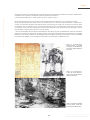
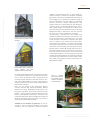
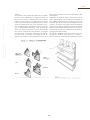
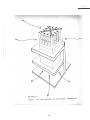
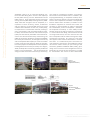
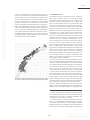
Photo n° 1 : _Le plan de St Gall_
Représentation monastère
carolingien_ vers 825 Reichenaue
pour St Gall_ Biblioth Abbaye St
Gall Suisse
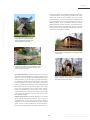
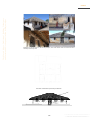
Photo n° 2 : La construction de
la tente de réunion Miniature
psautier doré vers 900_Biblioth
Abbaye St Gall Suisse
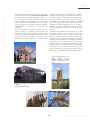
Photo n° 3 : Extraction manutention
pierres en carrière_ France. Carte
postale ancienne. Editeur inconnu
249
LE PATRIMOINE, MOTEUR DE DÉVELOPPEMENT
HERITAGE, DRIVER OF DEVELOPMENT
Theme 2
Artisanat, métiers et campagnonnage
Session 1
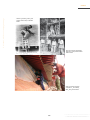
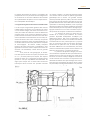
Photo N° 4_Couvreur_France_Carte
postale ancienne.Lévy et Neurdein
Editeur
Photo N°5 Maçons Echafaudage_
XIXè France_Carte postale ancienne
Editeur inconnu
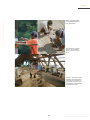
Photo N° 6 Peintres et peintre
restaurateurs _Cité interdite_
Pékin_ Chine_ Photo G David
250
LE PATRIMOINE, MOTEUR DE DÉVELOPPEMENT
HERITAGE, DRIVER OF DEVELOPMENT
Theme 2
Artisanat, métiers et campagnonnage
Session 1
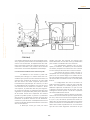
Photo N °7 Implantation guide.
construction BA et bambou .Sri
Lanka. Photo G David
Photo N°8 Paveurs caladeurs
Alcoutim_ Baixo Guadiana_
Algarve_ Portugal_ Photo G
David
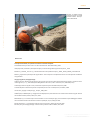
Photo N° 9 Charpentiers. Greffe
d’une pièce neuve de charpente en
restauration du patrimoine. Bac
professionnel intervention sur le
patrimoine bâti_ Arsenal Citadelle
Vauban Besançon. France
251
LE PATRIMOINE, MOTEUR DE DÉVELOPPEMENT
HERITAGE, DRIVER OF DEVELOPMENT
Theme 2
Session 1
Artisanat, métiers et campagnonnage
Photo N ° 10 Tailleur de Pierre.
Assisage de pierres en corniche
Citadelle Vauban. Besançon.
France. Photo G David
References
L’entreprise artisanale, un système ouvert dans un monde complexe :
Sennett Richard Ce que sait la main. La culture de l’artisanat. Albin Michel Edit_2008
Tallis (Raymond) The Hand: A philosophical Inquiry In Human Being. Edinburgh University Press _2003
Boutillier S_ David M_ Fournier C_ Traité de l’artisanat et de la petite entreprise_ SEMA_ APCM_CAPEB_ Educaweb Edit
Mélèse J_Approches systémiques des organisations. Vers l’entreprise à complexité humaine. Les classiques EO. Les éditions
d’organisation.
Voyage, migration, compagnonnage :
Grégoire de Tours, Historiarum libri decem, éd. B. Krusch et W. Levison, Monumenta Germaniae historica, Scriptores rerum
merovingicarum, t. r-, 1, 1937-1951 (rééd. 1962) (Histoire des Francs, trad. R. Latouche, Paris, 1963-1965,2 vol.)
Guenée (B.) et Lehoux (F.) éd. et trad., Les Entrées royales françaises de 1328 à 1515, Paris, 1968.
Le Guide du pèlerin de Saint-Jacques-de-Compostelle, éd. et trad. J. Vielliard, Paris, 1re édition, 1938.
Verdon Jean_Voyager au Moyen Age_ Tempus_1998_2007
ANDRÉ (J.-M.) et BASLEZ (M.-F.), Voyager dans l'Antiquité, Paris, 1993. Assistance et assistés. Actes du 97e Congrès national
des sociétés savantes, Nantes, 1972, Paris, 1979.
BAUTIER (R.-H.), « La route française et son évolution au cours du Moyen Age », dans Académie royale de Belgique. Bulletin
de la Classe des Lettres et des Sciences morales et politiques, 73/1-2, 1987, p.70-104.
Martin Saint-Léon E _Le compagnonnage et la franc maçonnerie_ Maison de Vie Edit_2010
Bernard (Jean), Le Compagnonnage : rencontre de la jeunesse et de la tradition, PUF, 1972
252
LE PATRIMOINE, MOTEUR DE DÉVELOPPEMENT
HERITAGE, DRIVER OF DEVELOPMENT
Theme 2
Session 1
Artisanat, métiers et campagnonnage
Etienne Martin Saint-Léon. Le Compagnonnage, son histoire, ses coutumes, ses règlements et ses rites, Imprimerie du Compagnonnage, 1977.
Bastard Laurent_ Images des Compagnons du tour de France _Jean Cyrille Godefroy Edit. France
Roche Daniel Les circulations dans l’Europe moderne XVIIè _XVIIIè siècles Pluriel Editions. France
L'Ouvriers du temps passé par M. Hauser, Paris, Alcan, (1898)
MORNET (E.), « Le voyage d'étude des jeunes nobles danois du XIV< siècle à la Réforme », dans Journal des savants, 1983,
p.298-318.
VERGER (J.), « La mobilité étudiante au Moyen Age », dans Educations médiévales. L'enfance, l'école, l'Eglise en Occident ("VI
e_ XVe siècles), dir. J. Verger, n° spécial de la revue Histoire de l'Education, 50, 1991, p. 65-90.
George Sand, Le Compagnon du Tour de France
Briquet (Jean), Agricol Perdiguier, Compagnon du Tour de France et Représentant du Peuple, 1955
Archéologie, ethnologie, histoire, théories :
ARISTOTE, Poétique, Le livre de poche, trad., pour la trad. fr. 1990,
DESCARTES (R.), Discours de la méthode (1637) dans Oeuvres et lettres, Gallimard, coll. Bibliothèque de la Pléiade, Paris, 1953.
Ruskin John La Couronne d’Olivier Sauvage_ Les sept lampes de l’architecture. Trad G Elwall_H Laurens Edit. Paris_1930
ERLANDE-BRANDENBURG (A.). - Quand les cathédrales étaient peintes. Collection "Découvertes Gallimard", Paris, 1993
VILLARD DE HONNECOURT. -Carnet de ... (XIIIe s.), Introduction et commentaires de ERLAN- DE-BRANDENBURG (A.), PERNOUD (R.), GIMPEL (J.) et BECHMANN (R.),, Stock, 1986.
BECHMANN (R.).- Villard de Honnecourt : la pensée technique au Xllle s. et sa communication Picard, 1991.
RICHÉ (P.), La Vie quotidienne dans l'Empire carolingien, Paris, 1973.
Pierre Abelard ,à l’aube des universités Jolivet J Habrias H _Actes conférence internationale Univ Nantes octobre 2001_France
Esquieu Y _Pesez JM Cent maisons médiévales en France (du XI è au XVIè siècle) Un corpus et une esquisse Monographie du
CRA 20_CNRS Edit France 1998
Jacq Ch_ Le message initiatique des cathédrales_ La maison de vie Edit
HEIDEGGER (M.), Acheminement vers la parole. Gallimard, coll. TEL, trad., 1959, pour la fr. 1976.
CHOAY Françoise L’urbanisme, utopies et réalités. Une anthologie. Points. Essais. France
CHOAY (F.), La règle et le modèle, Seuil, Paris, 1980.
BACHELARD (G.), Poétique de l'espace, Paris, 1re éd., 1957
FOUCAULT (M.), Les mots et les choses, Gallimard, Paris, 1966.
BAUDRILLARD (J.), Le système des objets, Gallimard, coll. TEL, Paris, 1968.
LEFEBVRE (H.), La production de l'espace, Anthropos, Paris, (1ère éd.1974),1986.
VIOLLET-LE-DUC (E.). Dictionnaire raisonné de l'architecture française du XIe au XVIe s. Paris, B. Bance et A. Morel, 18541868,10 vol
PANOFSKY (E.), La perpective comme forme symbolique. Et autres essais. Minuit, trad., 1927, pour la Fr. 1975.
LA RONCIÈRE (Ch.-M. de), CONTAMINE (ph.), DELORT (R.), ROUCHE (M.), L'Europe au Moyen Age, Paris, 1969-1977,3 vol.
Minorités et régulations sociales en Méditerranée médiévale_Histoire_Boissellier S_Clément F_Tolan J_PUR
Icher François La société médiévale Codes,rituels et symboles _points Histoire
253
LE PATRIMOINE, MOTEUR DE DÉVELOPPEMENT
HERITAGE, DRIVER OF DEVELOPMENT
Theme 2
Session 1
L’Europe des Anjou.Aventure des princes angevins du XIIè au XVè siècle_Samogy Editions d’Art 2001
Artisanat, métiers et campagnonnage
Favier Jean La France Médiévale_Fayard Edit
Heitz Carol_La France pré-romane_Archéologie et architecture religieuse_du haut Moyen Age du IV è à l’an mil_Errances
Edit
Duby Georges L’art et la société_Moyen Âge XXè s_Quarto Gallimard Edit
Le Goff Jacques Un autre Moyen Âge _ Quarto Gallimard Edit
Guenée Bernard Histoire et culture historique dans l’occident médiéval Coll Historique Aubier Edit
Traités, manuels :
CHOISY (A.). L'art de bâtir chez les Romains. Paris, Béranger, 1872,
Suger, Libellus de consecratione ecclesiae et translasione corporis sancti Dionysii ... (Recueil des historiens de la France, XIV,
313).
Luchaire, Les Communes françaises à l'époque des Capétiens directs – (préface sur l’affranchissement des communes)
Andrea Palladio, 1 Quattro libri dell'architectura, Venise, 1570
Sebastiano Serlio, Tutte l'opere d'architectura, Venise 1619
John McAndrew, Venetian Architecture of the early Renaissance, Cambridge, Mass. et Londres, 1980
L'abbé Grandidier (Essais historique et topographique sur l'église cathédrale de Strasbourg, Strasbourg, 1752),
COLDSTREAM (N.). - Les artisans du Moyen Age. Les maçons et sculpteurs. Edit. française Brépols, s.l., 1992, édit originale
Medieval Craftsmen. Masons and Sculptors, Londres, 1991.
François Cointeraux, La bonne et unique méthode de faire les toits des bastimens , Paris, 1806.
Diderot, Alembert 1751-1780 : DIDEROT (D.) et ALEMBERT (J. Le Rond D'). - Encyclopédie ou Dictionnaire raisonné des
Sciences, des Arts et des Métiers. Paris, Briasson, 1751-1780,21 vol. d'articles et 12 vol. de planches. - L'Art de la charpenterie,
Recueil de planches sur les Sciences, les Arts Libéraux et les
Arts Méchaniques avec leur explication, Inter-Livres, Grimbergen, s.d.
Emy 1869 : EMY (A. R.). - Traité de l'art de la charpenterie. Deuxième édit. suivie d'éléments de charpenterie métallique, et
précédée d'une notice sur l'Exposition Universelle de 1867 (Section des bois) par L. A. Barre. Paris, Dunod Edit, 1869-1870
Philibert de l’Orme : les neuf livres du Premier tome de l'architecture (1567).
Potier Philippe : Philibert de l’Orme Figures de la pensée constructive. Edit Parenthèses 1996 France
Grosjean J-P : Le nombre d’or : 1,618 _ Mode d’emploi en design et esthétique industrielle Edit H Vial France
MORTET (V.). - Recueils de textes relatifs à l'histoire de l'architecture et à la condition des architectes en France
au Moyen-Age. XIe-XIIe siècles. Paris, 1911.
ADAM (J.-M.), La description, PUF, coll. Que sais-je?, Paris, 1993.
KAHN (J.-CI.), Les Moines messagers. La religion, le pouvoir et la science saisis par les rouleaux des morts XIe_Xlle siècles, Paris,
1987.
MAZAHERI (A.), La Vie quotidienne des musulmans au Moyen Age. Xe au XIIIe siècle, Paris, 1951.
Carvais R_ Guillerme A_ Négre V _ Sacarovitch J_ Edifices et Artifices : Histoires constructives. Edit. Picard 2010.
Bernardi Philippe_ Bâtir au Moyen Âge_ CRS Editions 2011
Cassagnes Brouquet Sophie_ Les métiers au Moyen Âge _ Histoire_ Ouest France
DARA _L’Echafaudage dans le chantier médiéval. Alpara_Lyon_. Documents d’Archéologie en Rhône Alpes1996
254
LE PATRIMOINE, MOTEUR DE DÉVELOPPEMENT
HERITAGE, DRIVER OF DEVELOPMENT
Theme 2
Session 1
Artisanat, métiers et campagnonnage
Chastel A _ Guillaume J _Les chantiers de la Renaissance_De Architectura_ Tours _Picard Edit
KRAFT (J.-CH.). - Plans, coupes et élévations de diverses productions de l'art de la charpente exécutées tant en
France que dans les pays étrangers. Paris, Levrault, Scoell et Cie, Strasbourg, Levrault et Cie, An XIII. (1805),
La maison paysanne en Bretagne _2500 ans d’habitat rural. Tonnerre Noêl Yves _Coop breiz Edit _2008
Cesare Brandi _ Théorie de la restauration_INP_ Editions du patrimoine_1977_2007
Gauthier JL Stéréotomie_ Etude des Arcs voûtes et escaliers_ Ecole nationale supérieure des beaux-arts
J.M. Pérouse de Montclos, L'architecture à la française, Paris, 1982.
Henri Focillon, Les pierres de France, Paris, H. Laurens, 1919
Architetture di terra in Italia _ Bertagnin Mauro_Culture costruttive_Edicom (I)
Correia Mariana Taipa no Alentejo_Argumentum Edi (P)
Arquitectura popular em Portugal ( 3 tomes) Associacio Architectos portugeses.(P)
Klein Alain Echanges transdisciplinaires sur les constructions en terre crue_2003
Klein Alain _Les constructions en terre massive, pisé et bauge_Edit de l’espérou_2007
Noël 1968 : NOEL (P.). - Technologie de la pierre de taille. Dictionnaire des termes couramment employés dans l'extraction,
l'emploi et la conservation de la pierre de taille. Paris, Société de Diffusion des Techniques du Bâtiment et des Travaux Publics,
2 vol., 1968
FABRE (Y.). - Théorie des charpentes donnant des règles pratiques pour la construction des fermes et autres appareils en bois
ou en fonte. Paris, Eug. Lacroix Edit,1872.
Henri Deneux, «L'évolution des charpentes du Xl' au XVllI' siècle »
BOUDON (P.), sous la dir de, De l'architecture à l'épistémologie. La question de l'échelle, PUF, Paris, 1991.
BARBEROT (E). - Traité Pratique de charpente. 1 e édit. 1911, 2 e édit. augm. par L. Griveaud, 1395 dessins, Paris, Liège, Librairie Polytechnique Ch. Béranger, 1952.
BARRAL I ALTET (X.) -Artistes, artisans et production artistique au Moyen Age. Vol. 1 - Les hommes, 1983, vol. II - Commande
et travail, 1987, vol. III- Fabrication et consommation de l'œuvre, 1990. Actes du colloque international, C.N.R.S., Université
de Rennes II, 2-6 Mai 1983, Picard, Paris, 1983, 1987, 1990.
A.Ch. Quatremère de Quincy, Histoire de la vie et des ouvrages des plus célèbres architectes du XI è à la fin du XVIII è siècle,
Paris, 1830
J.F. Blondel, Discours sur la nécessité de l'étude de l'architecture, Paris, 1754,
Mémoires pour servir à l'histoire des maisons royales et bastimens de France 1681, André Félibien des Avaux
Encyclopédie des Compagnons du Devoir 1983 - Encyclopédie des Métiers - L'art du couvreur. Paris, Librairie du
Compagnonnage, 1983.
Encyclopédie des Compagnons du Devoir - Encyclopédie des Métiers - Echafaudages et les étaiements. Paris, Librairie du
Compagnonnage
Evolution des fenêtres du XV è au XX è siècle Compagnons menuisiers du Devoir Patrimoine et Tour de France Librairie du
compagnonnage1989 Paris
Taille de pierre Technologie Aladenise appareilleur Librairie du compagnonnage 1982 réédit 1988 Paris
GUILLAUME (J.), Bernardi (Ph) - Les chantiers de la Renaissance. Actes des Colloques tenus à Tours en 1983-1984,
Université de Tours, Centres d'Etudes Supérieures de la Renaissance. Collection De architectura, Picard, 1991.
LUCOTTE. - L'Art de la maçonnerie (description des Arts et Métiers). 1783, Slaskine Reprints, Genève, 1984.
Patrimoine immatériel, apprentissages, qualification :
Le patrimoine culturel immatériel_ Premières expériences France_ Internationale de l’imaginaire_ Babel Ed 2011
255
LE PATRIMOINE, MOTEUR DE DÉVELOPPEMENT
HERITAGE, DRIVER OF DEVELOPMENT
Theme 2
Session 1
Artisanat, métiers et campagnonnage
Barthélémy J _ Mouilleseaux JP_ Les jeunes et le patrimoine architectural_ Une réflexion internationale sur l’éducation et la
formation initiale. UNESCO 1989_ Edit Mardaga.
Kalck Paul_ Pollard Julie _Emploi et formation dans la restauration du patrimoine architectural : la couverture_ Céreq Edit
Marseille _2005
Kalck Paul_ Pillemont Jacques _Pollard Julie_ La restauration du patrimoine architectural Activités des entreprises et offre de
formation_ Maçonnerie_ Menuiserie_ Plomberie chauffage_ Vitrail_ Céreq Marseille
Kalck Paul _ Pillemont J_La contribution des architectes à la structuration d’un champ professionnel de conservation du
patrimoine architectural_ Céreq_ Marseille
Corps et Machines à l’âge industriel _Histoire_Guignard L_raggi P_ ThéveninE_ P U Rennes France
L’adulte apprenant :
Endreewski E _Lemoigne JL et coll. Systémique et cognition. Alfcet Systèmes_Dunod Edit.
Hampden Turner Charles _Atlas de notre cerveau_ Les grandes voies du psychisme et de la cognition_Les éditions d’Organisation_ France
Morin Edgar Lemoigne Jean Louis_ L’intelligence de la complexité. Cognition et formation. L’Harmattan Edit .France
Knowsle Malcom_L’apprenant adulte _Vers un nouvel art de la Formation. Les éditions d’organisation
Trocmé Fabre Hélène_J’apprends donc je suis_ Les éditions d’organisation
Deforge Yves_ De l’éducation technologique à la culture technique_ Collection pédagogie_ ESF Edit.
Godelier M _L’idéel et le matériel_ Livre de poche_Biblio_Essai
Lerbet Georges _Bio cognition , Formation et Alternance_ Alternances Développements L’Harmattan Edit
SAUVAGEOT (A.), Voir et savoirs. Esquisse d'une sociologie du regard, PUF, Paris, 1994.
SIMONDON (G.), Du mode d'existence des objets techniques, Aubier- Montaigne, Paris, 1969.
256
LE PATRIMOINE, MOTEUR DE DÉVELOPPEMENT
HERITAGE, DRIVER OF DEVELOPMENT
Theme 2
Session 1
ESCUELA TALLER
A trainer's perspective
David Mason
Associate Instructor and Programme Consultant, Escuela Taller
Intramuros, Manila, Philippines
[email protected]
Abstract. Cultural heritage preservation, while embracing many advances in technology, has fundamentally
depended on the continuity of ancient crafts and workshop industries. Worldwide, these are being eroded:
declining investment in vocational training; social fragmentation and urbanisation producing an ever more
fragile, uprooted workforce; community-based manual production reduced to “souvenirs” for tourists.
Carpentry, masonry, and other building crafts embody systems of learning that inculcate both skills and
values essential to the vital future of cultural heritage places. They must be safeguarded but also steered
towards genuine economic development and social opportunity. In the built heritage sector, training courses
for conservation professionals far outweigh the number of accredited programmes for building craftworkers.
This paper will use a case study, the Escuela Taller Intramuros craft school in Manila, as a means of examining
the broader picture of human development and heritage preservation through craft training.
Culture and human development
S
ome of the strongest economic arguments in favour
of heritage preservation point to the interdependency of workshop crafts, growth and preservation: the
impact of labour-intensive, manual practices on job
creation; manual arts helping diversify rural production and provide or upgrade housing or infrastructure; authentic crafts seen as cultural and material
assets for heritage tourism.
But there are systemic threats. For many developing
countries, recent economic growth has not, or only
modestly, translated into poverty reduction (Fosu
2010), while social fragmentation and urbanisation
produce an ever more precarious labour market. The
looming population explosion threatens to undermine what progress has been made (UN DESA 2004).
Between 1995 and 2005 job prospects for youth declined everywhere, and rising youth unemployment
is an acute concern (ILO 2010). The informal labour
sector has been booming for example in India (Jha
2009), where a massive casual workforce with severe
income insecurity, weak labor controls, strains on rural employment, and a depressed market for entrepreneurship and self-employment present ominous
signs. Even before the recession, the United Nations
World Youth Report claimed that young people were
increasingly forced into the informal sector out of
economic necessity (UN DESA 2003). Population
growth in megacities like Manila, Jakarta, Kolkata and
Mumbai, at more than 2% per annum, continues to
draw mainly young, unskilled or semi-skilled workers
into a hostile job market.
For most people, what we call human development
– “expanding choices” and “building human capabilities” (Alkire 2010) – means jobs, education, housing, security. Culture, on the other hand, has been
called “not a means to material progress, (but) the
end aim of “development” seen as the flourishing of
human existence in all its forms” (World Commission
on Culture and Development 1995). Without disavowing the importance of crafts as significant forms
of cultural expression, are we ready and able to envisage a bigger role for craftworkers as producers in
the developing economy? Are we hampered by a fear
that commodification and exploitation of heritage
resources, in a globalised world dominated by tourism and its capacity to “take over and organise much
contemporary social and cultural experience” (Urry
1995), debases cultural integrity and impairs the
virtue of the “hand-made”? What upstream efforts
are needed to unlock development potential in areas
where traditional skills are in short supply or inadequately harnessed? What skills are we talking about,
and what products ?
Skills as means, not ends
It has been suggested that poor development of
“skills” is one of a number of constraints to growth
(Adams 2011). By skills development I mean a “comprehensive approach (...) to integrate young women
and men in the labour market, including relevant
and quality skills training, labour market information,
career guidance and employment services, recognition of prior learning, incorporating entrepreneurship
257
LE PATRIMOINE, MOTEUR DE DÉVELOPPEMENT
HERITAGE, DRIVER OF DEVELOPMENT
Theme 2
Escuela Taller : A trainer's perspective
Session 1
with training and effective skills forecasting” (ILO
n.d.). Technical and vocational education are more
effective when focused on skills closely linked to
market demand, and for the socially disadvantaged
training and other sources of skills are more effective where they build on a foundation of good quality
basic education (Adams 2011). In Colombia in 2003,
59.9% of working youth lacked full primary education;
in the Philippines, 35% (ILO 2010). Where job growth
has been limited, as it has been in many developing
countries in spite of GDP, the demand for technical
and vocational education has been weak, with young
people pressed into low paid, low skilled work in the
non-organised labour sector. The high cost of formal
education is a contributory factor (Canlas & Pardalis
2009).
All of which poses a difficult challenge: while striving
to preserve and safeguard traditional crafts in the developing world as ends in themselves, we must work
equally hard – or harder – to expand the means available to craftworkers to operate profitably as specialist suppliers, operatives and entrepreneurs. We must
help governments and industry embrace vocational
skills, on-the-job learning and enterprise within our
sector even as we advocate stronger legal protection
for cultural heritage.
This means confronting the realities that create imbalanced outcomes in terms of social equality: target
workers with a generally weak overall level of general
education; production units (small businesses) with
a tendency to informalisation (traditional apprenticeships), with inadequate social protection and high
income insecurity; high levels of youth unemployment and inadequate business training that hamper
growth in the crafts sector; and a still poor record in
access to work for women and the poorest.
The Escuela Taller Intramuros, in Manila, was established in 2009 as a partnership program of AECID,
the Philippine National Commission for Culture and
the Arts (NCCA), Department for Social Welfare and
Development (DSWD) and Technical Education & Skills Development Authority (TESDA), with the City of
Manila and Intramuros Administration local government offices.
The School follows the objectives and principles
established by the AECID Cultural Heritage Program
worldwide :
¾¾ 1. Contributing to heritage preservation as
an aspect of social memory
¾¾ 2. Encouraging the use and exploitation of
heritage places as dynamic agents of economic
development
¾¾ 3. Building specialist technical capacity
in all areas of heritage conservation and
management
¾¾ 4. Strengthening local heritage institutions
¾¾ 5. Mutual enrichment through joint work
involving cultural and technical exchange
These objectives provide the framework of action for
all Escuelas Taller :
¾¾ 1. training focused on traditional and heritage
building crafts (masonry, carpentry and metalworks
are the most widely represented workshop disciplines)
¾¾ 2. encouraging access for students (age
16-24) from underprivileged communities,
especially those who have not completed full
secondary education.
¾¾ 3. Encouraging equal participation of
women students
¾¾ 4. Cooperative partnership/co-financing
with local institutions
Escuelas Taller
The Escuelas Taller (“Workshop Schools”) were created in Spain in the 1980s as an initiative of the Instituto Nacional de Empleo (INEM). Their goal was to help
the young into work by training them in skills relevant
to construction and heritage preservation – sectors
acutely short of manpower at that time. Their success
led to an exporting of the concept as a program of the
Agencia Española de Cooperación Internacional por
el Desarollo (AECID), which opened the first school
in Latin America in 1991 (Leon, Nicaragua). Twenty
years on, there are now approximately 40 Escuelas
Taller, including in Tetuán, Morocco (2008), Manila,
Philippines (2009), Hebron, Palestinian Territories
(2010) and across Central and South America.
In Manila, the students chiefly come from a squatter community in a compound known as BASECO, a
shanty town on the shore of Manila Bay comprising
some 5,500 families. Many are migrants from Visayas
or incomers settled here as a result of Manila slum
clearance. Around 70% of youths in BASECO do not
finish high school and over 60% of families survive on
5000 Pesos ($116) a month or less. Work is limited:
market porters, deep-sea metal retrievers, garbage
collectors, tricycle drivers...
A total of 75 youngsters were chosen for the first
batch of students at Escuela Taller Intramuros, selected from interviews and an aptitude test. Aged
258
LE PATRIMOINE, MOTEUR DE DÉVELOPPEMENT
HERITAGE, DRIVER OF DEVELOPMENT
Theme 2
Escuela Taller : A trainer's perspective
Session 1
between 17 and 24, 77% were male and 23% female.
Only 35 (47%) had completed High School. At the end
of the 2-year cycle, 27% had dropped out or been
expelled from the program.
One feature of the Escuela Taller system is the allowance paid to students (approx. $1/day). AECID invested 300'000 Euros in the Escuela in the first year, of
which roughly 35% is spent on student maintenance.
The Intramuros Administration has provided a site
for the school and input into restoration projects at
numerous sites in the old city under the Administration's jurisdiction. They include parts of the Casa
Manila, a reconstructed traditional townhouse in
the Barrio San Luis complex, and a stretch of the city
wall inside Fort Santiago. In 2011 students began a
project to restore the semi-ruined Sala de Armas (or
“Almacenes Reales”), which will be the Fort Santiago
Visitor Center. TESDA supplied assistance in formulating and accrediting the level 1 craft modules for the 6
workshop programs (Carpentry, Masonry, Electrical,
Plumbing, Woodworks, Painting & Finishing). There
are as yet no systems for establishing standards for
craft practice in heritage preservation, and the refinement and the curriculum content and compliance
with the basic principles of conservation practice has
been the responsibility of the School's director, faculty staff and consultant.
The Escuela Taller Intramuros congratulated its first
batch of 55 graduates in August 2010. Of these only
42 have to date provided information on their status.
Of these, 28 (51%) are currently known to be working
in jobs directly relevant to their workshop specialisations (Note: this provisional figure compares well
with other AECID Escuelas Taller after two cycles or
less. See Ministerio de Asuntes Exteriores 2003).
12.8% have been hired by private contractors; 31%
are employed on restoration schemes enabled by Escuela Taller Intramuros and local partners (including
a handful retained as graduate-assistants to help run
the second 2-year cycle); and 7.2% are working as
journeyman woodworkers and finishers.
The figures show that such a programme can train
capable craftworkers, but that without mechanisms
to facilitate their entry into the labour market the
craftworkers face challenges converting their skills
into relevant jobs. Escuela Taller Intramuros is working to set up a foundation as a platform for future
development, and looking into cooperatives and
other schemes that could assist individuals to capitalise on their knowledge, confidence and skills. Our
current student batch includes a number of students
from the provinces, sponsored by local governments
hoping to strengthen capacity for maintaining and repairing some of their historic built assets. The school
will soon leave behind the Spanish model and aims to
become a leading institution for training and also for
advocacy, advice and strategic development of the
built heritage sector nationally.
I will conclude by setting out some thematic areas
that I see as specially relevant to the school's future
course, and to the spectrum of skills and aptitudes
that schools like ours, while closely focused on building human resources for the management and
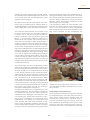
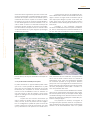
© Escuela Taller Intramuros
maintenance of heritage places, should see as relevant and indeed essential to development on a broader social level.
Disadvantage and empowerment
A training programme that aims to improve livelihoods
for marginalised, poor and under-resourced communities cannot succeed unless it develops tools and
resources that can help learners, especially youth, in
formal or informal learning environments, overcome
their educational disadvantage. At the Escuela Taller
Intramuros, this means improving literacy, numeracy,
and various “soft” skills – “learning environments and
259
LE PATRIMOINE, MOTEUR DE DÉVELOPPEMENT
HERITAGE, DRIVER OF DEVELOPMENT
Theme 2
Escuela Taller : A trainer's perspective
Session 1
outcomes that bring positive changes to people’s attitudes as well as strengthening their knowledge and
skills.” (WHC 2010)
Vocational training should be a foundation for opportunity and fulfilment in the workplace, a vehicle
for the human potential and ingenuity that artisans
and craftworkers, as well as designers and engineers,
might profitably impart to the overall goals of economic and social growth. A feature of conservation
practice is its basis in an open system of knowledge
where observation, reflexion, trial and adaptation
work in synthesis to correct imperfections and failures in a material or structure. This system draws on
the dialogue between designer and constructor that
is the essence of making. We often hear about how
restoration initiatives help to train local craftsmen in
traditional arts, ergo how such interventions impact
materially on the preservation of traditional cultural
practices and places. We know less about where this
training leads them in terms of unlocking creative
solutions to a range of modern challenges – technical, commercial, environmental. How are the skills
acquired retained or expanded? What are the wider
impacts on community development and income ?
What are the risks and how worthwhile the investment ?
Escuela Taller Intramuros has encouraged more able
students to obtain TESDA certification in two trades,
such as masonry and plumbing. Under the present
mandate, resources don't extend to follow-up actions
to help graduates improve and diversify. Bright young
craftworkers would benefit from training pathways
that offer real scope to become more motivated and
accomplished members of the workforce: heritage
restoration requires skilled handworkers but also
site foremen, trainers, entrepreneurs. Why not even
think in terms of integrating what we think of as graduate-level competencies into their apprenticeship
(building economics, preventive conservation, disaster preparedness) ?
Demand and supply
Demand for cultural heritage is a difficult thing to
measure. We have often been called on to provide
skills for renovation projects already up and running
where demand is present but expertise lacking. Some
of the strongest demand has come from the Catholic church. But demand is not uniform and increasing
supply through training alone is not sufficient. Unless
we want to “ghetto-ise” traditional building crafts in
“historic cities” or world heritage centres, we should
have a better idea of what jobs our trainees will do
after graduation. We need a sound grasp of what part
the heritage sector might eventually play in a local
economy, what other sectors of the industrial or creative economies are relevant to the skills learned, and
what other strategies we can devise to embed the
manual arts more sustainably within the future socioeconomic fabric of developing cities and regions.
A basic premise of the Escuela Taller system is that
supply (labour) is created through a partnership model in which local partners provide access to sites or
projects where expertise can be honed and tested,
with direct preservation benefits. To some degree,
the physical presence of a school, rather than a project-centred scheme, has added value. Press coverage, exhibitions, interpretation panels and site work
in historic areas can have positive knock-on effects on
the demand side. A school is an entity around which
a fragmented and incoherent demand begins to coalesce, as we have observed in Manila.
But sustainable solutions require a strategic approach to skills training. Philippine experience has
shown that education targeting those outside the
formal public schools system, led by local government, community organisations and NGOs with their
diverse spectrum of objectives and beneficiaries, has
lacked coordination (Di Grapello, Tan and Tandon
2010). Our experience bears this out. Research input
nationally and regionally, aimed at auditing relevant
skills, identifying competency gaps, assessing markets, improving training strategy and coverage, and
incorporating appropriate training into national/local
cultural and environmental policies, is needed. On
a broader level, structural failures in coordination
between overlapping cultural agencies in government, each with their own values and approaches,
are a serious constraint. No-one can operate in an
environment where there is no effective consultation
on standards and policies between different actors
working in the heritage sector.
Heritage in construction
The conditions needed to integrate graduates like
those of Escuela Taller into local labour markets are
also poor. A major challenge is to incentivise specialist training in the construction sector, which has
embraced the economics of scale and low-skilled
casual labour like no other. While industrialisation is
still at a fairly low level, there are opportunities for
governments to build capacity within the SMEs who
should be the mainstay of historic building repair and
maintenance. We have experimented with using local
contractors to improve work flow on project sites.
260
LE PATRIMOINE, MOTEUR DE DÉVELOPPEMENT
HERITAGE, DRIVER OF DEVELOPMENT
Theme 2
Escuela Taller : A trainer's perspective
Session 1
But it is not easy to measure the amount or quality of
knowledge transfer, and supervision and site management become complicated for our small staff. The
student-trainee model works best when programmes
and packages can be more flexibly handled, and outcomes fine-tuned, as in the restoration of our own
school site, part of the 18th-century fortified walls of
Intramuros.
A training partner is key to the Escuela Taller model.
In the Philippines, the TESDA “NC II” certificate is
based on industry-standard competencies for different trades. TESDA, our key government partner,
offers a range of decentralised programmes (school-,
enterprise- and community-based). The premise is
that NC II certification in masonry, electrical, plumbing etc. prepares our students for actual jobs. But
certification is only partly relevant to the practice of
heritage preservation. To meet heritage needs, training has to combine a competency framework recognised for local industrial development with a new
set of specialist skills devised according to heritage
requirements. We are fortunate to have a partner
who shares our concern and is strongly motivated to
work with the School to formulate training modules
relevant to traditional building technology. Negotiating these is a priority for the coming year. Not only
skills but mechanisms for objective assessment, and
relevant standards of accomplishment, will have to
be devised and strenuously advocated from the top
down.
My view is that traditional craft skills should be seen as
an adjunct to conventional trades (welding, concrete
work, sheet metal work, carpentry). We cannot risk
artisans being marginalised by virtue of practising
“niche” skills. Escuelas Taller try to compress both
conventional and traditional construction training
into one programme. An improved model might have
youths subsidised to attend a conventional trade
school for primary skills. A stronger convergence at
this level between sustainable building and building
rehabilitation, given the synergies between appropriate technology and traditional technology, might
be beneficial. Wider business interests could be better served by such a strategy, and our sector might
benefit in turn from Philippine government pledges
to stimulate the education and skills sector, construction sector and green economy through public investment. Subsequent higher level certification in craft
practice and/or sustainable construction could be
developed as a voluntary sector initiative with NGO
involvement. For some trades, workshops and businesses with an established record in producing traditional craftwork of the highest standard could be
the nucleus of such a scheme, with youngsters “apprenticed” on completing their primary vocational
training. Our programme has developed productive
relationships with leading makers like award-winning
woodcarver Willy Layug. More efforts will be needed
to identify, orientate and recompense the workshops
and studios capable of fulfilling this role. Building
craft traditions could be more visibly celebrated: nationally, with support from the tourism, construction
and creative industries, and regionally, in the manner of the UNESCO crafts prize or ASEAN Awards for
Young Artisans.
Realising business potential
Many Escuela Taller schools have introduced enterprise training. As well as craft history, technology,
technical and freehand drawing and restoration, training programmes for young artisans must be somehow connected to small business counselling and
entrepreneurship for the more aspiring graduates,
as well as micro-credit and related services. Escuelas Taller are not resourced to provide integrated
business services. But AECID and the governments
of Central America have developed mechanisms to
assist aspiring young workers to become integrated
into the local labour market through business training, orientation and micro-finance (such as the Programa de Formación Ocupacional e Inserción Laboral
(FOIL), an initiative of the Central American Integration Partnership).
NGOs in the crafts sector are increasingly involved in
strategic support for micro-enterprise, market-readiness advice and resources in the creative sectors
(Aid for Artisans, ArtisanConnect, Craftlink). Trade
fairs, networks and improved links between heritage,
craft and appropriate technology organisations could
enhance business prospects and facilitate access to
dynamic markets. This could help us map future skills
shortages and threats to small producers, and open
up marketing and product development opportunities directly relevant to heritage assets. When the last
small brickworks in Pasig City closed down after Typhoon Ondoy in 2010 Manila all but lost a centuriesold tradition and sourcing special-sized handmade
bricks for repair work is now a problem.
Conclusion
The Escuela Taller concept is not just a training initiative: it combines a trade, complementary education,
job-experience, and a wage for students who may not
otherwise attain the levels of education needed to
work even in semi-skilled industry or services. In urban communities like BASECO, where the schoolroom
261
LE PATRIMOINE, MOTEUR DE DÉVELOPPEMENT
HERITAGE, DRIVER OF DEVELOPMENT
Theme 2
Escuela Taller : A trainer's perspective
Session 1
is a poor preparation for reality, it provides economic relief. For local government and institutions it delivers
tangible benefits to heritage places that would otherwise languish in disrepair. Our experience shows that
workshop schools can be significant institutional players for heritage in development. But it also underlines
the wider challenges faced in valorising traditional crafts as industries and fashioning a viable “heritage sector” within economies struggling with their MDG development targets.
References
Adams, Arvil V. 2011. The Role of Skills Development in Overcoming Social Disadvantage, Background Paper
commissioned for the Education for All Global Monitoring Report: 3. UNESCO. Available at http://www.unesco.
org/new/.../HQ/.../gmr2012-ED-EFA-MRT-PI-04.pdf Accessed 28 October 2011
Alkire, Sabina. 2010. Human Development: Definitions, Critiques and Related Concepts, Human Development Research Paper 2010/01, UNDP. Available at http://hdr.undp.org/en/reports/global/hdr2010/papers/
HDRP_2010_01.pdf) Accessed October 28 2011
Canlas, Mark E L and Pardalis, Maria Cristina R. 2009. Youth Employment in the Philippines, ILO Asia-Pacific
Working Paper Series: 2-3. Manila: ILO, December 2009.
Di Grapello, E, Tan, H, and Tandon, P Skills for the Labor Market in the Philippines, Directions in Development
Series: 184-86. World Bank: Washington DC.
Fosu, Augustin K. 2010. Growth, Inequality and Poverty Reduction in Developing Countries: recent global evidence, Background Paper for the Global Development Outlook: Shifting Wealth: implications for Development, Paris: OECD Development Centre. Available at www.oecd.org/dataoecd/30/0/44773119.pdf Accessed
October 28 2011
ILO n.d. From the ILO website: http://www.ilo.org/skills/areas/skills-for-youth-employment/lang--en/index.
htm Accessed November 2 2011
ILO (International Labour Organisation). 2010. Global Employment trends for youth, Special Issue on the Impact of the Global Economic Crisis on Youth, Geneva: International Labour Office, August 2010.
Jha, Praveen. 2009. The wellbeing of labour in the contemporary Indian economy: what's active labour market policy got to do with it? ILO Employment Sector, Employment Working Paper n. 9, Geneva: International
Labour Office
Ministerio de Asuntes Exteriores. 2003. Escuelas Taller in Iberoamerica, Madrid: AECID. Collated figures are
published by AECID periodically. http://www.aecid.es/
UN DESA (United Nations, Dept. of Economic and Social Affairs). 2003. World Youth Report: 68. New York:
United Nations.
UN DESA (United Nations, Dept. of Economic and Social Affairs). 2004. World Population to 2300, New York:
United Nations
Urry, John. 1995. Consuming Places: 148. London: Routledge.
World Commission on Culture and Development. 1995. World Commission on Culture and Development: Our
creative diversity. Available at http://unesdoc.unesco.org/images/0010/001055/105586e.pdf Accessed 2 November 2011
WHC (World Heritage Committee). 2010. Progress Report on the Global Training Strategy (including category
2 Centers), Paris: World Heritage Committee WHC-10/34.COM/9C
262
LE PATRIMOINE, MOTEUR DE DÉVELOPPEMENT
HERITAGE, DRIVER OF DEVELOPMENT
Theme 2
Session 1
MAINTIEN DES PAYSAGES DE PIERRE SECHE, PRATIQUE DURABLE POUR
NOS TERRITOIRES
Claire Cornu
Chambre de Métiers et de l’Artisanat de Vaucluse (CMA 84)
Avignon, FRANCE
[email protected]
Résumé. Patrimoine paysager, patrimoine culturel immatériel : C’est bien parce qu’aujourd’hui nous prenons
conscience de la fragilité de notre planète que nous sommes interpellés par ces maçonneries de pierre sèche.
Désormais, l’objectif de performance donne de l’intelligence au local pour une réponse globale. En France
un noyau de professionnel s’est soudé pour prouver combien la pierre sèche ancestrale est aussi innovante
pour les générations futures
La pierre “tout venant” bâtie à sec : un matériau
recyclable et de proximité.
E
n ayant recours à des matériaux de cueillette,
l’homme a su faire preuve d’ingéniosité et d’adaptabilité pour répondre à ses besoins. Ainsi, partout où la
pierre est présente à travers le monde, cette dextérité
de l’œil et de la main pour assembler, en calant sans
liant, des pierres tout venant, s’est diffusé oralement
à travers les siècles. Ce savoir-faire bien particulier
s’est forgé entre hommes de métier de la maçonnerie
comme entre paysans. Quelque soit le type de pierre,
calcaire, granit, schiste, ces maçonneries sont bâties
sur les mêmes principes de base et les modèles diffèrent davantage par la forme de la pierre à disposition que par l’ouvrage à construire. La technique s’est
affinée par empirisme. L’homme a épierré ses champs
pour pouvoir les travailler, a collecté les pierres puis
les a rassemblé en clapiers, les réemployant ensuite
pour installer et accompagner abri ou habitat, niveler
les collines pour produire des banquettes cultivables,
clôturer ses parcelles pour les protéger et canaliser
aussi bien l’eau que les troupeaux.
Cependant en France, les guerres ont emportées les
hommes et l’industrie a répondu aux besoins de reconstructions si prégnants alors, par l’apport d’autres
systèmes constructifs. L’exode rural a vidé les collines et les montagnes, les machines agricoles et de
terrassement ont bouleversé les comportements en
délaissant les terrasses, en concassant les enclos et
en supprimant les haies champêtres au profit de la
plaine mono cultivée. Il s’est, de fait, opéré une brutale modification de la connaissance dans toutes
les filières, celles du bâtiment, de l’agronomie et de
l’agriculture. Le constat est redoutable: disparition
des savoirs, méconnaissance des valeurs, méfiance
de la technique, pertes irrémédiables des ouvrages,
voire discrédibilité des praticiens résistant. Toutefois,
à chaque fois qu’un paysage se referme, que le long
des routes des murs s’écroulent et sont remplacés
par du béton, de l’enrochement ou du gabion, cette
évolution est ressentie avec un mélange de nostalgie
et d’absurdité. Car, en effet, décréter qu’un mur en
pierre sèche n’est pas solide est absurde. Le béton
n’est pas éternel non plus. Sa longévité depend de sa
surveillance et de la qualité de sa maintenance.
Recaler une pierre de couronnement ou réparer une
brèche dans un mur en pierre sèche, n’est-il pas plus
simple que d’être constraint de démolir complètement un mur en béton affecté par l’âge, transporter
ses gravats en décharge avec toutes les interrogations quant à leur devenir ? Heliporter seulement des
hommes sur un site d’altitude pour bâtir un mur anti
éboulis ou restaurer un sentier de randonnée, n’est-il
pas moins coûteux que d’héliporter en plus, toute la
journée, moult bétonnières?
“La pierre sèche : un bon ciment pour lier les hommes !”
(Jean-Claude MOREL)
C’est ainsi que certains ont réagit, isolément, bravant
les railleries des inconditionnels du parpaing, ils ont
perduré la tradition et ont bâti la pierre à sec, laissant leurs empreintes par chez eux. Il a suffit de les
repérer, d’obtenir leur confiance et de les fédérer en
animer une passerelle entre Provence et Cévennes.
Au depart de l’action, aucun ne se connaissait. Le
Parc National des Cévennes, en proposant un voyage
d’étude à Majorque (îles Baléares, Espagne), a enclenché une première rencontre entre professionnels. Ils
y ont découvert le fantastique travail accompli par
FODESMA et le Consell Insular de Mallorca depuis
1968: formations en chantiers-école et développement local d’un tourisme éthno-culturel (en opposition avec celui généré par l’héliotropisme). La réaction
263
LE PATRIMOINE, MOTEUR DE DÉVELOPPEMENT
HERITAGE, DRIVER OF DEVELOPMENT
Theme 2
Maintien des paysages de pierre sèche, pratique
durable pour nos territoires
Session 1
Chemin à Caylus, Tarn & Garonne, France.
Chemin à Moustier Sainte Marie, Var, France.
264
LE PATRIMOINE, MOTEUR DE DÉVELOPPEMENT
HERITAGE, DRIVER OF DEVELOPMENT
Theme 2
Maintien des paysages de pierre sèche, pratique
durable pour nos territoires
Session 1
des français fut immédiate. D’autres rencontres ont
suivies, l’espace d’un week end, en Vaucluse ou en Cévennes, confirmant le partage d’une même idéologie.
La seule idée du bonheur qu’ils auraient à contempler
ces murs toujours debout lorsqu’ils n’auraient plus
l’âge de manipuler des pierres, a stimulé fortement
leur détermination d’agir!
Indéniablement, il s’agit là d’un patrimoine de valeurs
et de cultures à transmettre. Composée d’une poignée de praticiens militants, artisans, responsables
de chantiers d’insertion, associations de sauvegarde
du patrimoine, cette mobilisation a mutualisé passions, compétences, énergies et, en quelques années,
a construit la reconnaissance de la pierre sèche en
prouvant scientifiquement combien, et comment,
elle s’avère pertinente pour les générations futures.
La notion de développement durable apparue fin
2003 a soutenu leurs convictions. La confrontation des pratiques des uns et des autres, validée
par l’expérimentation scientifique de deux thèses
de doctorat d’ingénieurs, a apporté la crédibilité
qui manquait. Depuis, petit à petit, à force d’une
campagne de sensibilisation systématique, la pierre
sèche interpelle, voire devient une évidence ! Car, si
la révolution industrielle a bouleversé nos modes de
vie et de consommer, nous vivons aujourd’hui une
nouvelle révolution qui nous contraint à réviser en
profondeur l’ensemble de nos comportements faces
aux ressources naturelles de notre planète et à l’enjeu des bouleversements de son climat.
Les ouvrages en pierre sèche : une fonction
environnementale.
C’est en 1998 que Martine GUITON, ingénieur écologue, fait le constat que l’abandon des enclos, dans
les hauteurs de Nîmes dans le Gard, et des terrasses,
en amont de Vaison la Romaine en Vaucluse, ont démultiplié les dégâts et provoqué la mort, lors des inondations exceptionnelles respectives d’octobre1989 et
de septembre1992. Elle souligne que les maçonneries
en pierre sèche nivellent les collines, freine l’eau et
lui permet de s’infiltrer dans le sol. En février 2003,
après plusieurs années de sécheresse, de violentes
pluies affectent les îles Cyclades en Grèce. Là, également, l’eau ruisselante s’est engouffrée dans les
nombreuses brèches des terrasses abandonnées, a
détruit ce qu’il restait de murs, et ira jusqu’à racler le
sol mettant la roche mère presque à nue dans certains
endroits. Pour que la terre ne tombe plus à la mer
et que les paysages soient conservés, dans l’année,
le gouvernement grec mis en place des subventions
aux propriétaires pour le maintien des maçonneries
en pierre sèche.
Terrasses, soutènement, soubassements, enclos,
clôtures, rampes d’accès, chemins, routes, seuils de
torrent, berges de rivières, ce système constructif ancestral ne relève plus seulement du pittoresque. Car,
pour autant qu’elles soient correctement bâties, ces
maçonneries réunissent plusieurs qualités. Elles sont
fiables, souples, résistantes, parfaitement drainantes
comme aucun autre système de maçonnerie. D’une
part, ces caractéristiques sont essentielles pour jouer
un rôle de prévention des risques naturels: la rareté
de l’eau ou l’excès en pluies ruisselantes et dévastatrices, sont devenues une préoccupation majeure.
D’autre part, l’épaisseur de ces maçonneries, les anfractuosités, le maintien de l’humidité et l’inertie de
la pierre, créent un écosystème. Lequel est à la fois
une véritable niche propice à une biodiversité favorable à la culture biologique et vecteur de maintien
de corridors écologiques, mais encore, cette chaleur
du soleil captée durant le jour sur l’adret des versants,
est restituée durant la nuit. Ce microclimat favorise la
qualité gustative des productions agricoles.
La pierre sèche: un patrimoine paysager.
L’UNESCO a gratifié les paysages de terrasses viticoles
des Cinque Terre en Italie, du Haut Douro au Portugal et du Lavaux dans le Canton de Vaud en Suisse.
Quoique plus modestes, bien d’autres paysages
façonnés par la pierre sèche participent à l’identité
d’un territoire. De multiples initiatives locales en Europe se manifestent en faveur de la conservation de
ce patrimoine. Ses atouts sont prouvés et plébiscités
par nombre de régions et pays qui reconnaissent, officiellement et transversalement, ses valeurs paysagères, environnementales, indispensables à la qualité
de nos productions agricoles et de notre cadre de vie.
En France, construire en pierre sèche c’est être conforme :
●● 1. à la Charte de l’environnement de 2005 qui élève
au rang des principes fondamentaux le droit à un
environnement équilibré et favorable à une écologie
humaniste qui n’oppose pas l’homme à la nature.
●● 2. aux Directives paysagères de la loi paysage
de 1993 qui ancrent les projets territoriaux et leur
gestion sur les éléments concrets qui caractérisent
les paysages.
La pierre sèche: un savoir-faire qui valorise l’homme.
Pour les métiers du bâtiment et du jardin, cette technique accompagne le bâti, sublime la végétation,
est porteuse de sens et valorise le savoir faire. Dans
les territoires ayant une tradition lithique, pour les
265
LE PATRIMOINE, MOTEUR DE DÉVELOPPEMENT
HERITAGE, DRIVER OF DEVELOPMENT
Theme 2
Maintien des paysages de pierre sèche, pratique
durable pour nos territoires
Session 1
Pour la gestion de l’eau: un béal à Murs, Vaucluse, France.
agriculteurs, les forestiers, les agents d’entretien de
l’espace des collectivités locales et territoriales, renouer avec ces pratiques, c’est contribuer à une autre
gestion du terroir : entretenir un paysage équilibré,
en résonance avec le Grenelle de l'Environnement,
dans un esprit de marketing territorial.
Il suffit que ces paysages de pierre sèche soient cultivés et bien entretenus à l’année pour qu’ils expriment
l’image de la qualité totale : celle du pays, celle des
hommes, celle des productions. C’est pourquoi, progressivement, l’agriculture tend à utiliser leur image
pour attirer le consommateur friand de produits sains
et authentiques faisant appel à la main de l’homme.
Hélas, cette récupération se contente, encore trop
souvent, d’ouvrages de décor : le ciment est caché
derrière les pierres ou un double mur est bâti, la
pierre “sèche” n’est qu’un parement. Une fois de
plus, la rupture des savoir-faire en est la cause.
Au-delà de l’offense faite au paysage, partout où
la suppression des terrasses s’est opérée au profit
de talus, où le concassage des maillages lithiques
(dont la fonction est similaire aux haies champêtres)
a été systématisé, ces transformations menacent la
biodiversité. Partout où les catastrophes naturelles
ont sévi, l’analyse des dégâts a diagnostiqué
l’abandon de ce système constructif et mis à jour
notre faiblesse, face à l’intelligence des anciens qui
savaient inventer des aménagements simples et
efficaces avec des matériaux de proximité, naturels
et recyclables, pour combattre l’érosion des sols et
optimiser la gestion de l’eau.
La pierre sèche: une technique traditionnelle fiable.
Le recours à une technique conventionnelle n'est,
ni utile pour la fiabilité de l'ouvrage, ni souhaitable
pour une démarche environnementale. Pourtant, les
détracteurs de la pierre sèche persistent, doutent de
sa durabilité et surestiment son coût pour justifier
leur confort de fonctionnement. La force de l’habitude pèse lourd. Le corps des cantonniers qui, hier,
bâtissaient et entretenaient nos routes de collines
et de montagne a été supprimé. Les budgets routiers colossaux fonctionnent à coût d’investissement
mais négligent le coût de maintenance. Autre frein au
développement de la pierre sèche : les collectivités
fonctionnent par services dans lesquels le principe
de transversalité n’est pas encore appliqué. Quoique,
sous l’angle de l’analyse du cycle de vie des matériaux
et du coût global, la pierre sèche présente une réelle
266
LE PATRIMOINE, MOTEUR DE DÉVELOPPEMENT
HERITAGE, DRIVER OF DEVELOPMENT
Theme 2
Maintien des paysages de pierre sèche, pratique
durable pour nos territoires
Session 1
Enclos à moutons, Angleterre.
Vignoble en terrasses, Haut Douro, Portugal.
267
LE PATRIMOINE, MOTEUR DE DÉVELOPPEMENT
HERITAGE, DRIVER OF DEVELOPMENT
Theme 2
Maintien des paysages de pierre sèche, pratique
durable pour nos territoires
Session 1
Accompagnement du Prieuré de Ganagobie, Alpes de Haute Provence, France.
pertinence économique. Développer le marché de la
pierre sèche c’est offrir de l’emploi non industrialisable et non délocalisable, redonner sa noblesse au
savoir-faire et agir durablement pour les territoires.
Il est souhaitable désormais de repositionner
l’homme et son territoire au cœur du dispositif de
l’acte de restaurer, de construire et d’aménager.
L’homme et les matériaux extraits ou produits
localement, constituent les ressources les plus
cohérentes pour demain. Cette logique s’appliquait
autrefois. Elle a quelque peu été bouleversée par la
standardisation des matériaux et des techniques.
Cependant, aujourd’hui, la notion de circuits courts
rencontre un écho favorable ...
La pierre sèche:
professionnelle.
naissance
d’une
filière
C’est sur ces convictions qu’est née notre démarche
de filière nationale professionnelle engagée depuis
2000 pour le métier de bâtisseur en pierre sèche (ou
murailler). La Chambre de Métiers et de l’Artisanat
de Vaucluse a rebondi sur les résultats techniques de
tests d’un soutènement routier issu du programme
européen REPPIS à Bonnieux, Vaucluse, saisissant tout l’intérêt de cette “niche” de marché pour
l’artisanat et d’une “cause” à défendre pour l’avenir.
Pour autant, tout restait à faire : concevoir une stratégie et construire un réseau sur lequel l’appuyer. La
technique de pierre sèche n’avait alors aucun écrit,
elle relevait d’une transmission orale. Sans écrit,
aucune certification, donc aucune garantie. A fortiori, aucune possibilité d’assurance professionnelle
pour la maîtrise d’ouvrage comme pour la maîtrise
d’oeuvre et donc, aucune ouverture du marché. Dès
lors, elle a activement contribué à l’émergence d’une
filière par la mobilisation des détenteurs de ce savoir
avec l’établissement d’un réseau d’artisans avec
les scientifiques du Laboratoire Géomatériaux de
l’ENTPE de Lyon.
Ensembles, ils ont produit les éléments essentiels à
son essor :
●● 1. 2008 : Les règles de l’art avec abaques de calculs de
dimensionnement pour minimiser volume de pierres
et temps de travail afin d’en réduire les coûts tout en
garantissant la stabilité: « Guide de bonnes pratiques de
construction de murs de soutènement en pierre sèche
». Travail suivi par le Laboratoire Géomatériaux de l’Ecole
Nationale des Travaux Publics de l’Etat (ENTPE) de Lyon,
depuis 1997.
268
LE PATRIMOINE, MOTEUR DE DÉVELOPPEMENT
HERITAGE, DRIVER OF DEVELOPMENT
Theme 2
Maintien des paysages de pierre sèche, pratique
durable pour nos territoires
Session 1
Oignons doux des Cévennes, France : Appelation d’origine controlée (AOC)
●● 2. 2009 : Un argumentaire qui démontre la pertinence
de la pierre sèche sur les autres systèmes constructifs
(béton, gabion): « Murs de soutènements : comparaison
environnementale et financière de différentes technologies»
par le Laboratoire Tribologie et Dynamique des Systèmes de
l’Ecole Centrale de Lyon, engagé depuis 2007.
●● 3. 4 mars 2010 : Un référentiel de formation pour
les praticiens et une grille d’évaluation pour un diplôme
national: Certificat de Qualification Professionnelle (CQP) «
Ouvrier professionnel en pierre sèche » homologué par la
Commission Paritaire Nationale de l'Emploi du Bâtiment et
Travaux Public (CPNE-BTP) détenu par l’association “Artisans
Bâtisseurs en Pierres Sèches” des Cévennes (ABPS).
●● 4. 2011 : Un référentiel de formation pour les concepteurs
(ingénieurs, architectes, paysagistes) à disposition.
Ensemble, ils prolongent l’aventure humaine avec :
●● 1. PEDRA, un programme de recherche pour
répondre à la question de la maintenance du
patrimoine en maçonnerie sèche ou faiblement
liée. Cet ensemble recoupe les digues à la mer (dont
la tenue a été fortement sollicitée par la tempête
Xynthia, sur la côte Atlantique française en 2010), les
murs de soutènement en pierre sèche, les murs de
certains bâtiments historiques, les ponts, barrages
en enrochements avec perré, tous les ouvrages d’art
faiblement maçonnés. Il est piloté par le LTDS l’Ecole
Centrale de Lyon.
●● 2. Une candidature au label Patrimoine culturel
immaterial de l’UNESCO pour laquelle la Chambre
de Métiers et de l’Artisanat de Vaucluse fait appel au
rassemblement et à la cohésion de tous les acteurs. Au
delà des professionnels français, toutes les volontés
sont bienvenues. Il s’agit de donner du corps à cette
candidature que nous souhaitons internationale. La
Société scientifique internationale pluridisciplinaire
pour l’étude de la pierre sèche (SPS), coordinatrice
des Congrès internationaux de la pierre sèche depuis
plus de 20 ans, a été sollicitée.
Partenariat étroit:
●● Laboratoires scientifiques : Jean-Claude MOREL
enseignant-chercheur au Laboratoire Géomatériaux
(LGM) de l’Ecole Nationale des Travaux Publics de l’Etat
de Lyon (ENTPE), Eric VINCENS enseignant-chercheur
269
LE PATRIMOINE, MOTEUR DE DÉVELOPPEMENT
HERITAGE, DRIVER OF DEVELOPMENT
Theme 2
Maintien des paysages de pierre sèche, pratique
durable pour nos territoires
Session 1
Création de terrasses pour accompagner un
vieux mas dans le Gard, France, 2007.
au Laboratoire Tribologie et Dynamique des Systèmes
(LTDS) de l’Ecole Centrale de Lyon (ECL).
●● Associations de professionnels : «Muraillers de
Provence » Président Paul ARNAULT, « Artisans
Bâtisseurs en Pierres Sèches » (ABPS) des Cévennes
Président Marc DOMBRE, « Confrérie des bâtisseurs
en pierre sèche » (CCBPS) du Gard Président Maurice
ROUSTAN.
●● Institutionnels : Didier LECUYER Chargé de mission
au Parc National des Cévennes, Claire CORNU Chargée
de développement économique à la Chambre de
Métiers et de l’Artisanat de Vaucluse
●● 1998 "Ruissellement & risques majeurs" de
Martine GUITON, Laboratoire du Conseil général des
ponts & chausses (LCPC).
●● 2004 “Etude des murs de soutènement en
maçonnerie de pierre sèche", thèse de Doctorat de
Boris VILLEMUS, ENTPE de lyon.
●● 2009 “Mécanique des murs de soutènement en
pierre sèche : modélisation par le calcul à la rupture
et expérimentation échelle 1” , thèse de Doctorat
de Anne-Sophie COLAS, ENTPE de Lyon et Ecole
Centrale de Lyon.
●● 1997-1999 REPPIS (réseau européen des pays
de la pierre sèche) programme européen FEDER
Mandataire : Parc Naturel Régional du Luberon
avec l’appui technique de l’APARE et de l’Agence
Paysages.
●● 2004-2006 TERRISC (terrasses et risques naturels)
programme européen InterREG. Mandataire :
Consell de Mallorca, Departament de Medi Ambient
i Natura.
270
LE PATRIMOINE, MOTEUR DE DÉVELOPPEMENT
HERITAGE, DRIVER OF DEVELOPMENT
Theme 2
Maintien des paysages de pierre sèche, pratique
durable pour nos territoires
Session 1
Le Guide de bonnes pratiques de construction de murs de soutènements en pierre sèche, 2008.
Mise au point de la grille d’évaluation du CQP entre les trois associations de professionnels
271
LE PATRIMOINE, MOTEUR DE DÉVELOPPEMENT
HERITAGE, DRIVER OF DEVELOPMENT
Theme 2
Maintien des paysages de pierre sèche, pratique
durable pour nos territoires
Session 1
PEDRA: Soutènement experimental à Saint Saturnin les Apt, Vaucluse, France, Muraillers de Provence et ENTPE, 2011.
PEDRA: Reconstruction du pont de Chaldecoste, Lozère, France, ABPS et SETRA, 2011. (Photo ABPS)
272
LE PATRIMOINE, MOTEUR DE DÉVELOPPEMENT
HERITAGE, DRIVER OF DEVELOPMENT
Theme 2
Maintien des paysages de pierre sèche, pratique
durable pour nos territoires
Session 1
Soutènement du talus de la ligne TGV Méditerrannée à Tavel, Gard, France, 1998.
References
• 1998 "Ruissellement & risques majeurs" de Martine GUITON, Laboratoire du Conseil général des ponts &
chausses (LCPC).
• 2004 “Etude des murs de soutènement en maçonnerie de pierre sèche", thèse de Doctorat de Boris VILLEMUS, ENTPE de lyon.
• 2009 “Mécanique des murs de soutènement en pierre sèche : modélisation par le calcul à la rupture et
expérimentation échelle 1” , thèse de Doctorat de Anne-Sophie COLAS, ENTPE de Lyon et Ecole Centrale de
Lyon.
• 1997-1999 REPPIS (réseau européen des pays de la pierre sèche) programme européen FEDER Mandataire :
Parc Naturel Régional du Luberon avec l’appui technique de l’APARE et de l’Agence Paysages.
• 2004-2006 TERRISC (terrasses et risques naturels) programme européen InterREG. Mandataire : Consell de
Mallorca, Departament de Medi Ambient i Natura.
273
LE PATRIMOINE, MOTEUR DE DÉVELOPPEMENT
HERITAGE, DRIVER OF DEVELOPMENT
Theme 2
Session 1
CULTURE OF WOOD : YESTERDAY & TODAY
Olga Sevan
Russian Institute for Culture Research
Moscow, Russia
E-mail: [email protected]
Abstract. 2011 year is declared an International year of Wood. The report «culture of wood» touches upon
the issues of a large context: worldwide wood symbolic, its protection, forest fires, rational use, the wooden building etc. Various solutions and diametrically opposite attitudes of architects towards the wooden
architecture monuments are presented – from its restoration, - in case of open air museums or `in situ`, as
in case of accurate copying of historical monuments in new sites – and to the kitsch-like use of the image
and details of famous monuments («à la russe»). The refusal to resort to traditions and at the same time
the new non-trivial and modern approaches to the wooden buildings construction, its structures, design
and décor are also subjects of interest and research. However the approaches of those architects involved
both in traditional and modern building technologies deserve a special attention. Such examples become
essential for the experts in the course of discussion and finding solutions of use of wood in a modern architecture and methods of conservation and development of urban and rural wooden build-up areas in Russia
and other countries.
T
he year 2011 is acknowledged an International year
of wood. This date as well as the 21st of March, as
the Day of Wood, was fixed by UNO in 1971. Today
the forests occupy about one third of the Earth’s
territory and play a significant part in the forming of
the people’s life, the atmosphere and the planet’s climate, yet it’s still a place of habitat for many animals.
But its surface is steadily declining due to the cause
of: fires, pests, adverse weather conditions and many
other causes, related with human activity.
This year such a topic was discussed during the Berlinale (Germany), where among others - the book called
«Holy Wood» was presented. The authors formulate
its message as: We do not protect the trees, the trees
protect us. Yet its very name is not accidental. Apart
from the direct connection with the film industry in
respect to this event such a name implies polemics
with American Hollywood, which most of the time is
very far from the ideas of nature protection.
“Wasteful extravagance, excess, superabundance,
wealth, stars and plastic, artificiality, falsity. This modern symbol of horn of plenty sucks in all the myths.
... However it uses the image of tree «as a basis of
life, a giver of energy… and provides the foundation
for nothing less than one of the most successful films
of all times, James Cameron “Avatar”. “Holy Wood”
project – is a new trend and standard-setting attempt
of a real practice of industrial use of wood as well as
its cultural presentation. While Hollywood is trying to
take on the world, “the peace prevails in Holy wood.”
(Berndl et al 2011). And besides an “alive” installation
in Berlin’s park “Holy Wood” offered some virtual
excursions across various countries.
The trees are ecological building material and
274
LE PATRIMOINE, MOTEUR DE DÉVELOPPEMENT
HERITAGE, DRIVER OF DEVELOPMENT
Theme 2
Culture of Wood : Yesterday and Today
Session 1
traditional element of culture in many countries,
including Russia, where fires are raging while unique
monuments of the wooden architecture are disappearing for all to see. This is why it’s a proper time to
consider “wood as an object of culture”, its symbolism and role in historical and actual development of
different countries.
A large number of monuments are preserved all
around the world in Open air museums: “scansens”
or “in situ”. In Europe they number over 2090 (Czajkowski 1991), in Russia nearly 40. One of the most
famous and largest is a museum «Malye Korely»
near Arkhangelsk (Sevan 2011). Such museums were
considered institutes, destined to prepare specialists
in the field of vernacular architecture, preservation
and search of new models and specimen of regional
architecture. It is also concerns the milieu of historical settlements, correlated with the construction of
modern wooden architecture.
As early as the beginning of the XX century in young
Russia during the period of the constructivism, they
began to project and build modern wooden constructions. A project by architect I. Melnikov won in the
competition and was presented during the International fair of decorative arts in Paris, 1925. 2-floored
glazed building of timber framework is diagonally cut
by wide wooden steps upstairs. The stairway is spanned by two rows of inclined and crossing plates. "Red
exhibition hall" is an "anti-palace" according to the
architect which was performed in the spirit of a revolutionary ideology of the time. Le Corbusier used to
say that it was the only hall of exhibition to see.
Figure 1. Project of USSR’s exhibition hall – a symbol
of the wooden constructivism in architecture.
Architect I. Melnikov, 1924
New settlement “Sokol” with wooden dwelling
houses started to build near the Moscow during the
period 1923 (today it is a part of the city). There are
famous Russian architects (A. Shusev, brothers of
Vesniny, N. Markovnikov etc) took part in this project
and presented different new and modern variants of
vernacular architecture for artists and intellectual
people, using the patterns and models of local buildings from different regions of the country. “Sokol”
was included to the Federal List of the monuments of
city planning in 1979.
Looking at such unique objects, we have one question of combination and incorporation of new objects
into historical context of towns and villages. This
question was once covered by the international project «Cultural development in Europe and regional
architecture». The project enlisted European as well
as Russian experts. The topics included the principles
of preservation and development of the environment
of historical settlements, as well as the ways of formation of such environment. All the materials of discussions, seminars (Machat 1993) and conferences
(Sevan 1994) were published.
However the question - how to build in historical
centers of the cities and how to preserve the «genius
loci» and how should modern wooden architecture
be introduced in the environment context, was and
still is open-ended. And I am not sure that we could
offer any concrete examples and methods of such
architecture. But we can trace a way to follow, pursuing the assigned task. In any case the potential of
modern wooden architecture is worth analyzing as
an important factor of social, cultural and economical
development of the country.
But the idea of preservation and development of the
wooden towns, so widespread throughout the Northern Europe 30 years ago, has not won the support
in our country. There are few examples of such cities
(Tomsk, Irkutsk, some small towns like Yelabuga and
Gorodets), where such approach struggles through.
Even here we can see a distinctive game and reproduction of details of historical wooden patterns and
images.
Analysis and various approaches towards modern
wooden architecture deserve a closer examination.
Today its shapes are quite diverse: reproductions of
the wooden buildings, cathedrals and chapels, touristic villages “à la ruses”. The same can be said about
big commercial and touristic complexes, set in the
cities, in the nearby dwelling houses, totally oriented
towards the sales. There are some unique examples
of private buildings, built at the “dawn of perestroika”, that did not stand the test of time (Fig.2). New
wooden buildings, put in place by Russian architects
are hard to see because they are usually built for
275
LE PATRIMOINE, MOTEUR DE DÉVELOPPEMENT
HERITAGE, DRIVER OF DEVELOPMENT
Theme 2
Culture of Wood : Yesterday and Today
Session 1
Figure 2. 13-floored wooden house with
no lift – the symbol of modern Russian
architecture by today disassembled.
Arkhangelsk. N. Sutyagin. Photo А.
Lozhkin, 1998.
of the last 10 years. There were buildings of Russian
architects, unfamiliar to the world for the time being.
The point of this project – was a comparison and
confrontation of the ancient and modern wooden
architecture, traditional – innovative, restored or
neglected. The very fact of search of the analogues
proves the necessity of understanding why the question of such association and comparison rose today,
for instance, in Russian architecture and the world
culture in whole.
The monuments chosen for the book – are the palaces of emperors, nobility and merchants that kept
the cities down and others. As for the present day
buildings – the architecture of the last decade is far
more democratic and stylistically young. The very
destination of objects as well as its functions and
dwellers – are different. In our country the modern
wooden architecture began to develop starting from
2000 years, unfortunately coming to a stop in the
beginning of the XX century. It’s in search of new patterns and constructions and technologies, by the time
private persons and hidden from views behind high
fences.
These issues gotten obvious today in the field of work
with wood were partly dealt with during the international exhibition held in Moscow in 2011 “Will Pryce.
Parallels. Wooden architecture: yesterday, today and
everywhere”. The experience of research and travels
of the English architect was illustrated in the book
Figure 4. Wooden houses of the
XVII – XVIII c. and indoor stairways
in the street of the old part of a
town - UNESCO World Heritage list.
Norway, Bryggen at Bergen.
Figure 3. Commercial and artisanal complex is in the town
of Gorodets: imitation of traditional forms of Russian
architecture. Photo А. Ivanov, 2008
«Architecture in woodе» (Pryce 2005) and the very
book became the basis of the presented exposition.
Many of the monuments mentioned in it are preserved in open air museums or became in the List of
World heritage UNESCO sites. Among the items featured were wooden monuments, built during the past
10 centuries in different countries of the world and
in parallels we could see the modern constructions
Figure 5. “Dwelling house –Telescope” and indoor stairways.
Russia, Moscow region, resort “Pirogovo”. Architects: T.
Kuzembayev, D. Kondrashov. Photo I. Ivanov, 2004
276
LE PATRIMOINE, MOTEUR DE DÉVELOPPEMENT
HERITAGE, DRIVER OF DEVELOPMENT
Theme 2
Culture of Wood : Yesterday and Today
Session 1
Figure 6. Timber-framing of dwelling
house. Amiens, France, 15th c. Photo:
Will Pryce
traditions, but develops theirs, at times with grotesque. Architect is studies and analyses traditional
log-houses, bath-houses and different constructions,
but changing it in his projects. He adds the outgo of
the logs, sometimes over two meters or underlines
them in contrast to modern polycarbonate. Thus
wooden surfaces are protected from the dampness,
and there goes a comfortable loggia before the façade. These facades are realized in an utterly compact way, with only strict window crosses or openings
between the logs in a bath-house. Thus it is not just a
log-cabin as it is, but its artistic idea, its image.
“In our country, – says Belousov, – the culture of the
wooden architecture formed over the centuries, yet,
its social environment is completely lost, so it`s hard
to talk about the succession. I wouldn’t refer what
I do to or label it as the revival of the Russian wooden architecture traditions; it is rather a technologic
and modern approach to the material that I consider
uncommon and interesting. Working with the wood
literally means a handicraft through the lenses of today. What weighs with me is that the houses I built
would be personal and possess some picturesque
and evoking emotions. I am also trying to do my best
to keep them linked with the surrounding landscape,
so that the skies will be seen from the indoors, that`s
why I often use big glassy surfaces, translucent roofing» (Malinin 2010).
Figure 7. Timber-framing of dwelling
house. Chateau-Thierry, Champagne,
France.
Architect:
Eric
Pace
Architects. Photo: Eric Pace, 2004
of countrywide disappearance of unique monuments
of the wooden architecture. The naturally risen question is: if the monuments of XVII – beginning of the
XX centuries will disappear, what will remain as models and creative patterns of search and projects? In
what way not only historical, but also modern Russian
identity will manifest ?
Here are the names of the well-known Russian
masters of these days: Alexander Brodsky, Nikolay
Belousov and Totan Kuzembayev, Evgeny Asse, Yuri
Grigoryan and others. One can also recall the worldfamous – Thomas Herzog, Hermann Kaufmann, Sami
Rintala, Imre Makovecz and others, featured in the
mentioned exposition. But we suggest the analysis of
the Russian wooden architecture to be carried out in
following directions (Malinin 2010).
Figure 8.
Dwelling
house and bath-house.
Russia, Moscow region.
Architects N. Belousov,
V. Belousov, 2009
Tradition as an example of grotesque can be observed in works of Nikolay Belousov and others
architects. This line originates in national carpentry
277
LE PATRIMOINE, MOTEUR DE DÉVELOPPEMENT
HERITAGE, DRIVER OF DEVELOPMENT
Theme 2
Culture of Wood : Yesterday and Today
Session 1
invariably metaphoric. Brodsky aesthetics ideally fits
in the aspirations of the growing «creative class»: the
beauty can be born out of simple, poor, even recyclable materials. «The same ideology is embodied not
only in the objects of art, but also within the realm of
dwelling house...Thus, for example, House in Tarusa
(2005) looks like a stack of boxes, covered with temporary shed (hovel): three-floored wooden capacity
is placed under semitransparent plastic roof with selfsupporting piles» (Malinin 2010).
Figure 9. Supporting structure put up with
crib (grillage), XIX c. windmill from Mezen`
region in “Malye Korely” museum. Russia,
Arkhangelsk. Photo O. Sevan, 2005
Figure 11. “Scate house”. Moscow region., “Pirogovo”
resort. Architects: T. Kuzembayev, D. Kondrashov, Photo
I.Ivanov, 2004
Figure 10.
Supporting structure put up with
grillage of the passage from the bath house to the
summerhouse. Russia, Kuznetsovo, Moscow region.
Architect N. Belousov, 2005
Lyric expressionism is associated with the names of
architects Totan Kuzembayev, Svetlana Golovina and
others. On the one hand they are guided by Russian
avant-garde (Fig. 1), on the other – by new technological capabilities of the wood. It seems like their houses
are flying (above the lands and waters), walls and
roofs are bending and growing round, distinguished
by unusual red color or familiar shingles. That is why
every such construction has its own name: «skatehouse», «boat-house» or «telescope-house». Dininghall windows open a view of the nearby landscapes,
and a spacious glazed terrace reminds of the ship`s
deck (Malinin 2010).
Poticizing the trivial. Alexander Brodsky is in charge
of this trend, although the wood is not a crucial or
constitutive for him, as every his project is deeper
and wider than any stylistic direction. His works stand
apart, and he’s calling himself an «artist-architect».
Any of his buildings looks «unserious», but after all is
Figure 12. “Dwelling house – Telescope”. Russia. Moscow
region, “Pirogovo” resort.Architects: T. Kuzembayev, D.
Kondrashov. Photot I.Ivanov, 2004
278
LE PATRIMOINE, MOTEUR DE DÉVELOPPEMENT
HERITAGE, DRIVER OF DEVELOPMENT
Theme 2
Culture of Wood : Yesterday and Today
Session 1
Along with the above mentioned trends the expert
can note the presence of a European minimalist line
in «modern Russian wooden building». Which is a
group of architects: Evgeniy Asse and his followers:
bureau «Panacom», «Group DNA» and others. Their
works – ascetic restrained houses, as a rule devoid
of any decorations and meant to teach the Russian
house-builders to appreciate the simplicity and
rationality.
There are examples of new approaches to the carpentry education of modern architects with the
wood treatment as a unique building material. These
are lectures, survey trips and sketching of the monuments and towns and villages` environment, joint
workshops of restorers, scientists and modern wood
designers. Without that it is impossible to introduce
the young architects into the context of the historical environment, to understand and to fill deeply the
«spirit of the place», just as above mentioned during
the ICOMOS in Canada (Sevan 2008). In addition
this means getting acquainted with modern works
of architects in their workshops. This is not only a
designing, but also a manual work with the material
on Land-art projects in towns and rural areas of the
country.
Exhibition we mentioned in the beginning, as well
as modern projects, make us think hard and raise
important questions. Can we imagine not just any
particular modernity features on their own, but try to
place them in the cultural environment, some specific
contexts? Is there a place for intersections in wooden
architecture - not just parallels, but the intersection
into the wooden architecture of yesterday, today
and tomorrow…? Can we talk about the particularly
concerning not only historical monuments, but also
today’s buildings and - what will be chosen among
them to get onto UNESCO world heritage` list later ?
Figure 14. Lifeguards tower. “City
festival – Archfarm”. Group of
architects “Children of Iofan”.
Architect S. Lipgart. Moscow region,
2011
Figure 13. Country house in Tarusa, Kaluga region, Russia. Architects
А. Brodsky,
N. Коrbut. Photo Y.Palmin, 2006
279
LE PATRIMOINE, MOTEUR DE DÉVELOPPEMENT
HERITAGE, DRIVER OF DEVELOPMENT
Theme 2
Session 1
Culture of Wood : Yesterday and Today
References
Ludwig Berndl, Soren Harms, Jost Kaiser, Bruno Pischel, Cord Riechelmann. 2011 «Holy Wood», ENTEGA
Internet. Available from http://www.ecovast.ru/novosti.htm
Czajkowski J. 1991. 100 years of the open-air museums // On the way to the museum of the XXI century.
Culture preserves. Moscow, 1991. pp. 10-27
Sevan Olga. 2011 Museum of the Wooden Architecture «Malye Korely». The history, methods of projecting,
actual state. // Progress-Tradition, Moscow
Historische Culturlanshafnen. 1993 ICOMOS // Deutschland, (Main editor Machat, C.)
Historical towns and villages in the process of urbanization. (Papers of international Conference) 1994. Russian
Institute for Culture Research, Ministry of Culture of RF. Moscow
Internet. Available from http://www.ricur.ru/page.php?r=141
Pryce, Will. 2005 Building in wood // Rizzoli International Publication, Inc. New York,
Internet. Available from http://www.archiwood.ru/
Internet. Available from http://www.ecovast.ru/zodchestvo.htm
Malinin, N. 2010 Modern Russian wooden architecture: main tendencies and trends. In collected articles:
Culture of wood – Wood in culture // Russian Institute for Culture Research, Russian ECOVAST and others.
Moscow, pp.74-77
Malinin, N. Ibid.
Malinin, N. 2010 Country house // Новое деревянное (New wooden architecture) 1999-2009. Moscow
Malinin, N. Ibid.
Sevan, Olga 2008. Open Air Museums as Safeguarding and Transmitting the Spirit of Place
// Spirit of the Place: Between the Intangible and the Tangible. ICOMOS, Quebec City, Canada, 2008, 10 p.
280
LE PATRIMOINE, MOTEUR DE DÉVELOPPEMENT
HERITAGE, DRIVER OF DEVELOPMENT
Theme 2
Session 1
LA FERME DES PLANONS DANS L’AIN
Etudes et restauration d’un patrimoine vernaculaire fragile
Eric Pallot
[email protected]
R
éalisée dans les années 1995, la restauration de la ferme des Planons, classée Monument Historique en
1938 et sise à St Cyr-sur-Menthon dans le département de l’Ain, fût l’occasion d’intervenir sur un patrimoine
vernaculaire rare et fragile, celui d’un ensemble de bâtiments édifiés des XVIème et XIXème siècles en pan de
bois, torchis de terre et briques.
Cette opération, par une étude préalable minutieuse et l’observation d’ouvrages similaires, permit de redécouvrir des techniques de construction traditionnelles mais aussi par une intervention minimaliste de privilégier la conservation maximale des ouvrages en place et l’emploi de matériaux anciens. Elle permit, également,
d’intervenir sur le paysage environnant afin de rétablir les dispositions bocagères originelles.
Intégrée dans une opération plus vaste de création d’un musée des pays de l’Ain, cette opération a limité, dans
les bâtiments de la ferme, les impacts prévisibles d’un musée ouvert au public par la construction en parallèle
et à proximité d’un musée de site dissimulé.
L’intervention proposée évoquera ce projet, l’impact qu’il a eu sur les processus de restauration et le paysage
et l’intérêt que cette opération patrimoniale suscita pour la région.
References
Eric PALLOT, Restauration de la ferme des Planons, Saint-Cyr-sur-Menthon, Ain, Monumental, 10-11, 1995, p.
172-183.
281
Theme 2
Session 1
LES MAISONS À PATIO
Continuités historiques, adaptations bioclimatiques et morphologies urbaines
Samir Abdulac
Vice-président d’ICOMOS France
[email protected]
Abstract. Il est difficile de ne retenir qu’un seul fil conducteur quand on aborde le thème des maisons à
patio, tant il y a d’interaction entre la géographie, le climat, l’histoire, la culture, l’architecture et l’urbanisme.
Cet exposé prendra en compte l’ensemble géographique constitué par les espaces méditerranéen et
européen, sans ignorer l’existence de bien d’autres exemples en Asie et en Amérique tant du nord que du
sud.
Des développements éclaireront les qualités climatiques et bioclimatiques des maisons du sud de la
Méditerranée qui ont l’avantage d’être encore visitables. L’évocation de l’habitat dit « bioclimatique »
contemporain viendra en contrepoint à la fin.
Les dispositifs architecturaux et l’organisation spatiale des maison à patio traditionnelles seront évoquée
sans s’attarder sur les particularités de chaque région. La taudification des quartiers historiques met à mal
le modèle traditionnel. La tradition survit encore dans certains quartiers informels dus à l’exode rural. Des
architectures « savantes » liées au foisonnement de la création architecturale du 20e siècle sont apparues
en Europe d’abord, puis rapidement ensuite au Maghreb grâce à quelques architectes européens.
La morphologie urbaine explique de nombreux aspects architecturaux et climatiques, de l’habitat tant
traditionnel que contemporain. Elle contribue à l’équilibre et à l’écologie du modèle. Les ensembles
contemporains n’ont toutefois pas su assurer la même complexité ni les mêmes avantages climatiques que
les quartiers anciens.
Le modèle de la maison à patio, est en effet l’un des deux grands modèles d’habitat urbain connus dans
l’histoire. Il s’est maintenu au fil du temps. Il s’est affiné, sophistiqué, et continue même à être d’actualité.
Il s’agit d’un modèle d’habitat universel, répandu dans une diversité de régions géographiques, de climats,
de sociétés et de cultures et dont les aspects de continuité historique restent étonnants.
Ce patrimoine aux aspects tangibles et intangibles continue de vivre, et d’être une source d’inspiration pour
contribuer, dans un esprit de développement durable, à notre adaptation au monde d’aujourd’hui et de
demain
Ainsi, une bonne compréhension du modèle des maisons à patio pourrait améliorer la réhabilitation des
villes historiques et même servir de référence appropriée pour l’adaptation bioclimatique de l’habitat à
l’heure des économies d’énergie et du développement durable.
Introduction
1. Les origines de la maison à patio
D
es vestiges d’espaces centraux ouverts ont été relevé il y a déjà près de 6.000 ans en Mésopotamie, On
en trouvera également dans l’Egypte pharaonique,
comme dans la vallée de l’Indus et jusqu’en Chine. On
peut raisonnablement penser à une polygénèse, c’est
à dire à des inventions séparées indépendantes les
unes des autres.
Les maisons grecques assez simples deviendront plus amples et sophistiquées à l’époque
hellénistique avec deux modèles, dits à pastas et à
prostas. Aristote parlera de leur ensoleillement. On
en trouve à Olynthe et plus tardivement à Délos.
Bien qu’elle n’aient peut-être pas constitué le modèle
dominant dans la capitale Rome, l’empire romain
adoptera ces maisons avec deux sortes d’espaces
découverts, l’atrium et le péristyle. Elles sont mentionnées dans l’œuvre de Vitruve. De telles maisons
sont bien conservées à Pompéi, mais il en existe à Volubilis au sud, à Palmyre à l’est et même dans le nord
de l’Angleterre. En France, leur présence est constatée à Glanum, à Vaison-la-Romaine et à Vienne par
exemple.
Notre connaissance des maisons antiques
282
Theme 2
Les maisons à patio, modèles d’architectures
bioclimatiques
Session 1
reste néanmoins fragmentaire pour des raisons inhérentes à l’archéologie. Il semble toutefois que l’effondrement de l’empire romain ait été néfaste pour la
continuité des maisons à patio au nord de la Méditerranée et, sans que l’on sache par quelles filiations,
se sont développés de nouveaux modèles à l’est, au
sud et même à l’ouest. La continuité historique de
beaucoup de villes arabes ne rend pas la reconstitution des maillons manquants facile. La ville de Fustat
au 8e et 9e siècles est un jalon singulier qui témoigne
d’influences persanes.
Comme nous le verrons, les modèles de maisons traditionnelles arabes sont très différents d’une
région à l’autre. La langue arabe n’a d’ailleurs pas de
mot unique pour désigner le patio : wast el dar, ard
el diar, hoch, fanaa, etc. Ceci laisserait donc penser à
des modèles s’étant développé séparément sur une
base locale.
L’Espagne a non seulement longtemps
conservé la tradition des maisons à patio en Andalousie, elle l’a même exporté au Nouveau Monde. Il en
est ainsi des villes nouvelles de La Paz en Bolivie, de
Lima au Pérou, de Tunja en Colombie ou de Quito en
Ecuador.
haut, autrement dit vers l’extérieur. Le rayonnement
du sol vers le zénith renforce alors le la baisse de
température. Ainsi, l’été, une température agréable
est conservée pendant un long moment, d’autant
plus que la cour est protégée de l’ensoleillement une
bonne partie de la journée grâce aux ombres portées
des murs périphériques. Enfin l’effet « cuvette » assure une protection des vents.
Les anciennes maisons de Matmata creusées
dans le sol en représentent l’archétype le plus simple.
Des vues de patios situés par exemple à Rabat, Alger
ou Mahdia témoignent au delà de certaines ressemblances de traitements stylistiques et décoratifs particuliers à chaque région.
Les proportion en hauteur, en longueur et
en largeur du patio peuvent renforcer ses particularités climatiques permanentes en assurant davantage
d’ombre ou de d’ensoleillement selon un rythme
2. Les particularités climatiques du patio.
Le patio caractérise un type d’habitat plutôt urbain
que rural. Il serait possible de différencier le patio
de la cour par une position plus centrale, par un rôle
fonctionnel plus complexe et surtout socialement
comme un lieu d’habitation et de vie familiale. La
cour est surtout un lieu de passage. Il arrive qu’en
anglais on distingue ainsi Courtyard House de House
with a courtyard.
Le patio est une sorte de microcosme qui
met la maison en relation avec la nature, le ciel, le
soleil, l’air frais, la terre et parfois l’eau et la végétation. La configuration spatiale du patio en forme de
cuvette génère une sorte de microclimat. L’air frais
qui s’y rassemble la nuit repousse l’air chaud vers le
283
Theme 2
Les maisons à patio, modèles d’architectures
bioclimatiques
Session 1
journalier ou saisonnier. Il arrive que les étages supérieurs disposent de plus larges fenêtres que le rezde-chaussée. Le sol même du patio peut comporter
suivant les cas des proportions variables de minéral,
de végétal et d’eau dont les contributions en termes
d’humidité d’évaporation et d’ombre ne sont pas
négligeables.
L’installation de velums correspond à une
tradition qui a traversé les siècles et permet de moduler l’ensoleillement avec souplesse. Si le patio est
haut et étroit, la présence d’un grillage en partie supérieur permet d’éviter un garde corps qui limiterait
l’ensoleillement. Au besoin, des tissus peuvent être
disposés dessus.
3. Le climat méditerranéen et les facteurs de confort
Nous avons choisi de nous limiter en un premier
temps au bassin méditerranéen dont les conditions
climatiques pourraient sembler a priori homogènes
pour les « cuvettes » que nous considérons.
En fait, les données climatiques y restent
relativement contrastées. Ainsi les jours d’ensoleillement annuels sont de l’ordre de 70 jours à Alger,
Boursa et Rome contre près de 140 à Athènes, Fès
ou Tunis et de 200 à Damas et Marrakech. Les maximums de température sont élevés à Alep et au Caire.
Les amplitudes thermiques sont relativement faibles
à Alger et prononcées à Damas où elles imposent une
adaptation à la fois aux conditions d’hiver et d’été.
Les pluies sont beaucoup plus abondantes à Athènes,
Rome et même Alger qu’au Caire ou Ghardaïa par
exemple. Il va de soi enfin que l’humidité est bien
plus élevée en bordure de mer, comme à Alger ou
Mahdia que dans les villes de l’intérieur comme Alep
ou Damas.
Enfin, rappelons que le confort thermique
d’un endroit est défini par la température et l’humidité relative. Des abaques précisent même scientifiquement des zones de confort. Cette zone peut être
élargie par des interventions sur la masse thermique,
la ventilation, l’évaporation ou leur combinaison. Il
va de soi qu’un accroissement ou une réduction de
l’ensoleillement direct va également jouer.
4. Les dispositifs d’amélioration du confort
climatique
Nous avons déjà vu que les caractéristiques d’un patio
peuvent être très diverses. Sa conception architecturale traditionnelle des patios témoigne généralement
d’une sorte de sagesse, d’un savoir faire accumulé au
fil des siècles par la société et les constructeurs d’une
ville ou d’une région donnée. Ils s’expriment d’ailleurs
non seulement au niveau du patio lui-même, mais
aussi dans ses rapports avec les espaces adjacents
auxquels il est lié.
Un premier dispositif architectural spécifique est celui du bassin, élément essentiel de la composition du patio, que l’on retrouve aussi parfois à
l’intérieur de la maison. Le bassin d’une maison du
Caire ou de Damas comporte une épaisseur d’eau
réduite. Trois raisons peuvent l’expliquer : le souhait
de mettre en valeur la mosaïque décorative bien sûr,
mais aussi la possibilité de réduire la consommation
d’eau et surtout la circulation de l’eau favorise son
évaporation, et ainsi entraîne le rafraîchissement de
la température ambiante. Sur un silsabil l’eau coule
verticalement en faible épaisseur. Dans certains palais, comme à Grenade, l’eau effectue un circuit reliant les pièces entourant le patio à un bassin central.
Le simple geste d’asperger le sol dans un climat chaud et sec, et dans la plus simple des maisons,
apporte un effet de confort bioclimatique. Là aussi de
simples tonnelles avec des plantes grimpantes sont
susceptibles d’apporter de l’ombre et de la fraicheur.
Elles peuvent être parfois disposées aussi en toiture,
tels des jardins suspendus.
La présence d’espaces intermédiaires entre le patio
et les pièces arrière est fréquente, surtout dans les
grandes demeures. Ceux-ci ont l’avantage de protéger du rayonnement direct du soleil. Un iwan par
exemple, est une sorte de pièce couverte, ouverte
par un côté sur le patio. Orientés au Nord, les iwans
restent toute la journée à l’ombre. Les talars d’Irak
témoignent également de l’influence iranienne.
Les dispositifs développés au Caire sont différents
puisque l’on trouve un takhtabosh ouvert au niveau
du sol et un maqaad, sorte de loggia à l’étage.
Au palais Azem de Damas, une galerie orientée au
sud semble jouer un rôle de brise soleil. Quant à aux
maisons des pays du Maghreb, en raison d’un climat
davantage pluvieux, elles sont souvent pourvues de
galeries permettant une circulation latérale abritée le long du patio. Les grandes demeures en possèdent sur les quatre côtés et même à l’étage. Ces
galeries deviennent un élément fort de composition
architecturale.
De très grandes maisons marocaines peuvent disposer à la fois d’un wast al dar central et minéral et d’un
riyadh plus grand, latéral et plutôt végétal.
Les pièces bordant le patio sont souvent hautes, ce
qui amène l’air chaud de monter, pendant que l’air
frais du patio continue de rentrer. Des lucarnes disposées en partie supérieure lui permettent de s’évacuer.
Des pans de bois à clair voie, en lattis ou bois tourné,
assurent en abondante ventilation entre pièces ou en
contact avec l’extérieur, tout en atténuant la lumière
et en préservant l’intimité. Les mashrabiyeh et les
mashrafiyeh ont des rôles et des dimensions différentes. Des jarres de terre cuite peuvent y être disposées à la fois pour refroidir l’eau contenue et l’air
284
Theme 2
Les maisons à patio, modèles d’architectures
bioclimatiques
Session 1
entrant.
Des capteurs d’air peuvent être disposes en relation
avec les pièces principales. Le malqaf du Caire est
tourné vers le nord, la direction de la mer. Le batinj
d’Alep est plus petit et il est généralement orienté
selon la direction des vents dominants. L’air circule
ensuite à l’intérieur du mur, qui se rafraîchit, et ressort à chaque étage, traversant alors des jarres d’eau
qui le rafraichissent davantage. Dans les pays du
Golfe, ces capteurs prennent la forme d’une haute
tour à vent, traversée de murs obliques, qui permet
de ramener l’air à l’intérieur, quelle que soit la direction des vents. La hauteur du captage permet de
réduire la poussière. Le côté opposé de la tour peut
aspirer l’air chaud de la pièce en profitant d’un effet
de cheminée.
L’utilisation de fenêtres vitrées, parfois très rapprochées permet enfin, avec une bonne orientation au
sud, d’utiliser l’effet de serre en hiver quand l’air est
froid mais que les journées sont ensoleillées. Comme
à Damas, ces pièces sont plutôt situées à l’étage et
donnent sur le patio ou l’extérieur. Les terrasses comportent même traditionnellement parfois un édicule
nommé tayyara (avion) et vitré de tous les côtés, où
s’isolait le maître de maison.
Au sud de la Méditerranée, la fraicheur du sol encourage une position assise basse, en « tailleur ».
Celle-ci limite les meubles fixes et détermine même
285
Les maisons à patio, modèles d’architectures
bioclimatiques
Theme 2
Session 1
286
Theme 2
Session 1
Les maisons à patio, modèles d’architectures
bioclimatiques
la hauteur des fenêtres et parfois la conception des
perspectives. Au nord, la recherche d’un éloignement
du sol favorise au contraire l’utilisation des meubles
et la spécialisation des pièces. C’est un important facteur d’adaptation bioclimatique.
5. L’organisation générale de la maison traditionnelle
Il va de soi que l’organisation générale des maisons
traditionnelles correspond à un mode de vie centré
sur une famille élargie, elle-même vivant d’une manière peu visible de l’extérieur. D’autres distinctions
peuvent entrer en jeu comme la distinction entre la
partie réservée aux visiteurs hommes et le reste de la
maison (Selamlik et Haramlik dans l’orient arabe, Andarouni et Birouni dans l’aire iranienne). Ces parties
tendent à s’organiser autour de patios différents. La
circulation interne entre elles peut devenir complexe
et s’accompagner de couloirs coudés, d’espaces
tampon, de seuils et de portes. La distinction peut
également concerner certains espaces de service ou
réservés à la domesticité, surtout dans les grandes
demeures.
D’un point de vue typologique, le vocabulaire des espaces comme les le patio, les pièces dites
en « T », d’autres pièces plus simples, des espaces
galeries ou Iwan, etc. s’organisent en fonction d’une
syntaxe. Il n’est pas trop difficile d’en déchiffrer les
règles pour chaque ville. Le hasard des successions
historiques donne souvent aux parcelles urbaines
un contour irrégulier. Le patio agit néanmoins dans
une certaine mesure comme un pôle d’organisation
géométrique de la maison. Les grandes maisons
peuvent posséder plusieurs patios, celui de la famille
(plus grand), celui des invités et celui des services. Les
grandes demeures des 17e et 18e siècles ont été plus
rapidement et davantage étudiées, mais le passage
des maisons aisées aux maisons modestes commence
à être abordé et peut correspondre à des règles typologiques similaires ou non. Nous n’essaierons pas ici
de reprendre les analyses architecturales existantes.
La maîtrise du climat au niveau de l’ensemble de la maison peut mobiliser de concert
plusieurs dispositifs d’adaptation climatique précédemment décrits. Elle peut correspondre à des
logiques générales comme la circulation horizontale
et verticale de l’air. Ainsi, même quand il n’y a pas de
vent, un courant d’air peut se créer dans des pièces
situées entre un patio et la rue, ou entre des patios
de tailles différentes. Cet enchaînement peut donc
associer l’ensemble des espaces ouverts intérieurs et
extérieurs d’une maison, y compris les toitures.
La présence de plusieurs étages peut amener les habitants à profiter de leurs particularités respectives. Ainsi les sous-sols servent à la sieste et les
terrasses aux soirées à Alep et Bagdad. A Damas les
rez-de-chaussée sont construits en maçonnerie avec
des fenêtres réduites alors que les étages sont à ossature bois (avec remplissage de briques, dont l’inertie
est plus faible) avec de grandes fenêtres. Les premiers
287
Theme 2
Les maisons à patio, modèles d’architectures
bioclimatiques
Session 1
sont utilisés plutôt l’été et les seconds plutôt l’hiver.
Ainsi, quand les particularités microclimatiques d’une
maison sont accentuées, les déplacement des habitants entre elles suivant des rythmes journaliers ou
saisonniers contribue à leur confort. Nous sommes
bien là dans une forme d’adaptation bioclimatique.
6. L’urbanisme traditionnel des maisons à patio
La réflexion sur les maisons à patio individuelles peut s’élargir à la manière dont elles s’assemblent pour passer ensuite à l’échelle urbaine. Les
maisons sont accolées de manière à ce que le bâti
des îlots forme une masse compacte pour limiter
l’ensoleillement périphérique de chacune, et donc
le réchauffement de l’ensemble, alors que les cours
sont tournées vers un extérieur « intérieur ». Grâce
aux impasses, la profondeur des îlots peut augmenter. Grâce aux impasses, la profondeur des îlots peut
augmenter. La proportion des patios peut y atteindre
de 20 à 30 % environ de la superficie. Les maisons
grandes ou petites (riches ou pauvres ?) cohabitent
dans les îlots, les premières trouvant une place plus
facilement en position centrale. Lors de l’établissement de son plan directeur en 1968, Michel Ecochard
notait une densité de 300 à 700 habitants à l’hectare
dans le vieux Damas.
A Dubaï par contre, qui n’est pas moins
chaude mais bien plus humide, les maisons sont
toutes détachées les unes des autres, probablement
pour faciliter la ventilation des murs externes.
Les équipements collectifs, tels les mosquées, les madrasas , les hôpitaux, les caravansérails
ou wakalas, disposent eux-mêmes de cours internes
et s’inscrivent pareillement dans la texture urbaine.
Une texture de maison à patio n’est pas incompatible avec une topographie variée, comme on
peut le voir à la casbah d’Alger ou la médina de Fès.
Les vues à partir des terrasses y ont même beaucoup
de charme. Mais la tradition en fait un monde plutôt
féminin.
La configuration des rues est souvent irrégulière avec des impasses, ce qui les met à l’abri des
vents. Leur étroitesse et l’ombre générée par les
bâtiments adjacents contribuent à ce que l’air frais
y demeure une bonne partie de la journée. Les rues
n’atteignent souvent que 10 à 15 % de la superficie
des villes traditionnelles du sud.
Dans plusieurs villes les plantes grimpantes,
mises en terre et entretenues par les riverains ornent
les murs, créent une sorte de voute végétale. Quand
il n’y en a pas, des vélums peuvent être tendus audessus de rues commerciales. Des pièces sont même
parfois construites en encorbellement ou même audessus d’une voûte enjambant la rue. Il arrive même
que des rues soient largement recouvertes et que
288
Theme 2
Les maisons à patio, modèles d’architectures
bioclimatiques
Session 1
l’air et la lumière n’y pénètrent que par d’étroites
cheminées comme à Jorf Draa au Maroc, Touggourt
en Algérie ou Ghadamès en Libye.
Il est rares que les villes islamiques traditionnelles reçoivent comportent des aménagements
d’espaces publics avec des cours et des galeries périphériques. Pourtant des villes planifiées antiques
telles Olynthe et Pompéi et même plus tard des villes
d’Amérique du sud sont basées sur un aménagement
en damier et comportent un aménagement bien formalisé des places. Les équipements urbains sont tournés vers l’extérieur. La problématique des fondateurs
de viles était de rechercher les orientations les plus
favorables vis à vis du soleil et des vents dominants.
7. De nouveaux usages dénaturent les anciennes
maisons à patio
Depuis le milieu du 20e siècle, de nombreuses familles aisées ont quitté les médinas pour s’installer
dans les nouveaux quartiers conçus d’une manière
occidentale. Les rares personnes qui sont restées
sont aujourd’hui âgées. Une immigration rurale massive a densifié les quartiers historiques. Là ou vivait
une famille bourgeoise élargie, s’entassent plusieurs
familles. En effet, celles où résidait une seule famille
bourgeoise étendue sont partagées aujourd’hui entre
plusieurs ménages défavorisés mais aux nombreux
enfants. Les maisons sont divisées horizontalement
et parfois verticalement. Même les caves prennent
preneurs et des tissus, sinon des murets peuvent couper les patios.
Plus la demeure est grande, plus les subdivisions sont nombreuses. Les bâtiments restent généralement en indivision et sont loués pour des prix
modiques et les propriétaires cessent d’entreprendre
des travaux. Les occupants prennent en charge
les réparations indispensables, y compris celles de
l’étanchéité de la toiture. Les installations sanitaires
et de cuisine sont à leur charge. Pourtant certains des
occupants de la Casbah préfèrent accélérer la ruine
des maisons qu’ils occupent afin de bénéficier d’un
relogement ailleurs de la part de l’Etat. Dans cette situation, les habitants ne peuvent bénéficier des avantages des maisons à patio et celles-ci se dégradent
progressivement.
Les cours de plusieurs demeures traditionnelles de la Casbah d’Alger ont été recouverts de verrières. L’avantage est d’offrir une protection contre la
pluie sans pour autant réduire l’ensoleillement. Les
inconvénients sont d’ordre acoustique (réverbération
des sons) et même occasionnellement thermique
(lors des grandes chaleurs). De telles dispositions
existent également ailleurs comme à Sidi Bou Saïd.
Certaines maisons anciennes ont été
sauvées par une transformation en musées, mais
ceux-ci restent proportionnellement rares. D’autres
font l’objet d’interminables restaurations. Quelques
unes ont été transformées en équipement collectifs,
tels des dispensaires ou des centres sociaux. Les établissements scolaires qui y ont été installés n’ont pas
fait preuve d’un grand respect pour le patrimoine
dans lequel ils étaient hébergés.
La « gentrification » demeure marginale.
Le phénomène des « riyadh » acquis par une clientèle étrangère s’est répandu, particulièrement à
Marrakech. Celui des restaurants s’est multiplié,
particulièrement à Damas. Dans les deux cas, les
transformations apportées contribuent généralement à dénaturer l’authenticité des édifices concernés et affectent la vie des riverains.
Enfin, la construction dans le voisinage de
nouveaux bâtiments, plus élevés, empêche le fonctionnement traditionnel du tissu ancien, tant du point
de vue climatique (ventilation) que social (les vues
plongeantes sur les cours réduisent l’intimité des
habitants).
8. Le maintien des patios dans la construction populaire du sud
Une production populaire de maisons à
cour intérieure (ou qui en sont plus ou moins dérivées) se poursuit dans beaucoup de pays de tradition
islamique de l’aire méditerranéenne. Leurs habitants
sont constitués de familles aux ressources plutôt
modestes, érigeant un habitat vernaculaire contemporain, indépendant des interventions de tout maître
d’ouvrage privé ou institutionnel et même de celles
de maîtres d’œuvre savants (ayant reçu une formation de type universitaire).
Cette population généralement composée
d’immigrants ruraux est installée dans des zones
périurbaines appelées suivant les contextes et les
circonstances: habitat «spontané», «informel», «illégal», “bidonville”, etc. Mêmes les maisons faites de
matériaux de récupération s’y “durcifient” plus ou
moins vite !
Dans cette production, la variété des éléments constitutifs de la maison se réduit, de même
que s’appauvrissent les règles typologiques qui caractérisaient l’habitat traditionnel . D’ailleurs l’apparition de réglementaires, l’accroissement rapide des
coûts fonciers et l’importance de la pression démographique poussent fortement à l’abandon de la cour.
La construction d’un petit immeuble d’appartements
superposés n’est-elle pas, en effet, plus rentable
que celle d’une simple maison, qu’elle soit «à cour»
ou non. Ainsi la dimension qualitative des cours résiste difficilement aux nouvelles servitudes de la vie
289
Theme 2
Les maisons à patio, modèles d’architectures
bioclimatiques
Session 1
contemporaine.
Du Machrek au Maghreb, un avatar du patio
traditionnel survit dans de nombreux appartements
contemporains conçus sans architectes. Il s’agit de
pièces centrales n’ayant aucun contact direct avec
l’extérieur. Ainsi le sofa des petits immeubles résidentiels de Damas a-t-il pris la suite des ard ed diar
. Au Maroc, le m’rah remplace également le oust ed
dar, comme lieu de vie Il arrive alors que des douaïas
(ouvertures carrées remplies de pavés de verre) disposées au centre de chaque plancher, permettent
d’éclairer le m’rah de chaque étage-appartement .
Des halls allongés deviennent même des m’rah après
quelques transformations . Ces espaces familiaux,
architecturalement centrés, ne sont pas dépourvus
d’avantages climatiques . Ils sont adaptés aux nouveaux types de logements extravertis ainsi qu’aux tissus urbains inspirés par l’occident.
Quand elles ne disposent que de moyens
réduits, les familles habitent des constructions spontanées, se contentant au mieux chacune d’une seule
cour. La forme de la cour dépend de la configuration
et de la taille de la parcelle, de même que de l’état
d’avancement de la construction. Les cours contemporaines restent en fait le plus souvent rectangulaires.
L’inachèvement des travaux ou une moins grande rigueur conceptuelle peut même donner aux patios des
formes en L ou des contours à la géométrie incertaine.
Ceci tranche fortement avec la tradition maghrébine
des patios carrés. Etant donné les dimensions limitées
des maisons, il arrive que les cours bordent directement des murs mitoyens ou extérieurs le long d’un ou
de deux côtés.
L’habitat spontané témoigne généralement
d’une réalisation par étapes successives au cours
desquelles les pièces s’ajoutent progressivement aux
autres, d’abord en rez-de-chaussée et ultérieurement
en étage. L’utilisation des pièces n’est pas non plus
exempte d’une certaine flexibilité.
Ainsi, à Tunis la kugina peut être au départ
une simple pièce peu différenciée des autres avant
son aménagement ultérieur en cuisine moderne plus
fonctionnelle avec évier et carrelage. Le bit qaad ou
pièce de séjour peut se confondre avec la chambre
des grands parents, tandis qu’après leur décès, c’est
un bit noum ou chambre à coucher (celle des parents)
qui peut désormais prendre le rôle de pièce principale.
Contrairement à ce que l’on trouvait au cours
des années 1960 dans certains bidonvilles de la région
parisienne , les pièces sont disposées sur une seule
profondeur autour de la cour.
Les espaces intermédiaires autour du patio
se limitent désormais surtout à des auvents, des coursives ou des pergolas. Avec l’utilisation de béton armé
dans les dalles, des poteaux et des colonnes sont
moins nécessaires.
La pression foncière peut amener les
constructions à s’élever en hauteur autour d’un vide
central. Afin toutefois de préserver l’intimité de
l’étage inférieur vis-à-vis des familles habitant les niveaux supérieurs, différentes solutions ont été pratiquées. En Egypte, le patio ne devient plus qu’un puits
de lumière sur lequel n’ouvrent que des pièces de
service. Au Maroc, le patio disparait physiquement,
mais son rôle d’éclairage est conservé par l’insertion
de pavés de verre dans les planchers superposés .
La communication entre le patio et l’extérieur s’effectue généralement par un couloir droit,
couvert ou non, souvent bordé par le WC (placé tout
contre le mur extérieur) et parfois par la cuisine. Les
différentes pièces ouvrent directement sur la cour qui
a ainsi un rôle distributif direct. Quand il y a un étage,
c’est sa galerie qui joue ce rôle distributif.
La tendance dans la composition des façades
extérieures est d’imiter le style des villas aisées, que
ce soit pour les éléments décoratifs ou fonctionnels
(fenêtres plus grandes par exemple). Comme dans la
tradition toutefois, les ouvertures en rez-de-chaussée restent réduites ou masquées.
9. Le maintien des patios dans les ensembles modernes au sud
La production savante est par contre liée
à l’existence d’une maîtrise d’ouvrage publique ou
para publique fournissant à la petite bourgeoisie des
logements locatifs ou accessibles à la propriété. Cette
production reste assez marginale, car elle est moins
le résultat d’une demande que d’une offre occasionnelle, dans l’élaboration de laquelle quelques architectes jouent un rôle décisif.
Les aménagements de type “habitat embryonnaire” ou “trame sanitaire améliorée” (comportant la construction d’un premier noyau de la maison)
se situent dans une position intermédiaire, puisqu’ils
combinent un premier aménagement savant avec
une poursuite de réalisation spontanée.
La promotion privée semble par contre se
désintéresser dans son ensemble de ce type d’habitat
qui n’est guère recherché par la bourgeoisie moyenne
ou grande, celle-ci ayant adopté le mode de vie en
appartement ou mieux encore en villa.
Bien que le recours à l’habitat «à cour» se
justifie par d’évidentes raisons, tant historiques, que
sociologiques ou climatiques, l’influence d’architectes étrangers a paradoxalement un rôle majeur
dans la production savante. En raison de la profonde
rupture avec la tradition, due aussi bien à des raisons
culturelles qu’à des contraintes de réalisation, les
maisons «à cour» ont perdu leur position autrefois
290
Theme 2
Les maisons à patio, modèles d’architectures
bioclimatiques
Session 1
dominante en milieu urbain.
La production populaire d’habitat “à cour”
dépasse quantitativement très largement la production savante. Les quartiers spontanés réunissent en
effet des dizaines de milliers d’habitations autour des
grandes villes .
La réalisation de maisons «à cour» reste
cependant comparativement plus fréquente au Maghreb que dans les autres parties du monde arabe,
bien qu’elle y soit désormais en déclin aussi.
Le cas du Maroc :
La réalisation contemporaine d’ensembles de maisons «à cour» groupées y est à la fois plus ancienne
et plus souvent pratiquée que dans d’autres pays
arabes. Peut-être faut-il y voir l’un des effets de la
politique de Lyautey de respect des traditions nationales et de développement séparé des villes “musulmanes” et “européennes”. Albert Laprade avait (avec
les architectes Biron et Cadet) été chargé dès 1917
de réaliser la cité des Habous à Casablanca en tant
que «nouvelle ville indigène» pour les populations
pauvres . Au bout d’une quinzaine d’années, la cité
comportera 257 maisons. Ce programme déjà important sera de surcroît équilibré par la présence de
nombreux équipements.
La conception du quartier comporte nombre
d’aspects positifs par la variété de ses activités et le
traitement diversifié de ses espaces publics. Imitant
Pastichant les formes traditionnelles jusqu’au niveau
des détails son architecture a néanmoins été assez
coûteuse. Le maintien du statut public du quartier
Habous a certainement contribué à en préserver l’aspect original.
Toujours à Casablanca, les quartiers de Koréa et de Ain Chok ont ensuite été réalisés par l’Etat
en combinant des principes traditionnels et contemporains d’architecture, mais à un coût bien moindre
qu’au quartier Habous. La «nouvelle médina» lancée
à l’origine par H. Prost, A. Laprade et leurs contemporains se transforma par contre rapidement du fait de
la multiplication d’adjonctions en hauteur, édifiées en
l’absence de contrôle de la part des pouvoirs publics.
C’est en 1946 que Michel Ecochard arriva au
Maroc. Il y créa peu après le Service de l’Urbanisme
et de l’Architecture, avec notamment l’ambitieux objectif de résorber les bidonvilles qui commençaient à
proliférer autour de Casablanca . Les nouveaux quartiers préconisés par Ecochard étaient conçus chacun
pour une population de 6 à 9000 habitants. Leur
«tissu cellulaire» devait assurer un habitat «évolutif».
Une «trame horizontale» définissait des parcelles à
peu près égales de 8m x 8m. Ecochard aura le temps
de lancer la réalisation de milliers de logements de
ce modèle, avant d’être renvoyé en 1954, suite à une
cabale menée par des spéculateurs du Protectorat.
Les quartiers qu’il aura réalisés connaîtront des sorts
très différents, la densité et les conditions de salubrité demeurant nettement plus satisfaisantes dans
ceux dont l’Etat avait conservé la propriété, dissuadant ainsi les surélévations ainsi que la couverture
des cours. Dans le quartier de Takadoum, à la périphérie de Rabat, l’habitation est dans le meilleur des
cas reconstruite au premier étage au-dessus d’une
boutique .
Au moment de l’Indépendance, les nouvelles
générations marocaines ont par contre le sentiment
que ce type d’habitat est démodé, inapproprié et
même coûteux. Elles s’en détournent donc. Celui-ci
ne tarde cependant pas à refaire surface dès le début
des années 1960 avec la réalisation de milliers d’habitations sur “trames sanitaires améliorées” (TSA) en
différentes parties du pays . Les TSA ont l’avantage
d’être adaptées aux ressources initiales de leurs habitants et de permettre des extensions successives en
fonction de l’amélioration de leurs moyens. Les proportions de parcelles allongées ne facilitent cependant pas le maintien des cours prévues, comme on
le verra dans l’habitat embryonnaire de Jebel Raîssi
près de Rabat .
La reconstruction d’Agadir dans les années
soixante constitue une autre occasion d’utiliser des
modèles de maisons «à cour» groupées, aussi bien
dans le cadre d’une cité ouvrière de 500 logements
confiée à J.-P. Ichter, que dans celui d’un groupe de
17 «villas à cours-jardins», d’inspiration certainement
plus nordique, dues à J.-F. Zevaco. Ces dernières recevront d’ailleurs le Prix Aga Khan d’Architecture en
1980 .
Entre 1977 et 1980, Gerald Hanning devait
établir pour l’IAURIF le plan d’aménagement de trois
cités nouvelles situées en périphérie d’Agadir et destinées à recevoir au total plus de 200.000 habitants .
Celle d’Agadir Sud-Est comprend ainsi près de 2.000
lots pour «habitations économiques unifamiliales»
sur un total de 5.000. La structuration et la composition des lotissements urbains s’inspire des textures
traditionnelles et devrait engendrer une «véritable
ville». Les simulations d’occupations des lots font ressortir la possibilité d’insérer des patios. Les premiers
résultats ne semblent cependant pas correspondre
aux attentes initiales.
Des modèles d’habitat verticaux comportant des patios en étage avaient par ailleurs été
conçus par l’équipe de l’ATBAT (W. Bodiansky, G. Candilis et Sh. Woods) peu avant l’indépendance Leurs
immeubles de type «Sémiramis» ou «à nids d’abeille»
ont apparemment eu peu de postérité sur place.
Si au Maroc, Laprade et, dans une moindre
mesure, Ecochard avaient encore des références
291
Theme 2
Les maisons à patio, modèles d’architectures
bioclimatiques
Session 1
traditionnelles à l’esprit, ce n’était déjà plus le cas
de Zevaco, probablement davantage inspiré par des
modèles nord européens, ni de l’équipe de l’ATBAT
certainement motivée par des démarches plus modernistes. Les dernières propositions de Hanning
marquent enfin la tentative d’un nouveau retour
aux références traditionnelles, mais cette fois basé
sur une appréciation plus approfondie à la fois des
formes et des activités urbaines ainsi que des processus de réalisation.
Le cas de l’Algérie :
L’Algérie a connu plus tôt une forme de colonisation
plus sévère que dans les pays voisins; C’est peut-être
pourquoi les projets d’ensembles de maisons à patio
y sont plus limités et plus tardifs.
La «Cité indigène de Sainte Corinne» installée sur la colline d’Ouchaya à Alger et due aux architectes Guérineau et Bastelica date de 1937 . 240
logements y furent construits sur les 816 qu’elle devait grouper sur 8 hectares. Un logement à l’étage s’y
superposait à deux logements au rez-de- chaussée.
Les pièces étaient relativement petites (10 à 12 m2)
par rapport au patio (20 m2, dont un tiers couvert).
Les sanitaires et une fontaine étaient situés dans la
cour. Une certaine ambiance traditionnelle était restituée. Une seconde tranche fut encore réalisée sur
place, vingt ans plus tard, par le même Bastelica.
La Cité Scala réalisée en 1935, près du ravin
de la Femme Sauvage, témoigne également d’une
inspiration basée sur des sources populaires locales.
Elle est probablement due à Lathuillière .
La cité de «recasement» située à Alger au
Climat de France, et due à l’architecte Socard en 1951
correspond bien aux caractéristiques de ce type de
réalisations : des logements minuscules avec point
d’eau et WC extérieurs .
Jusqu’au début des années 1950 les logements collectifs, et en particulier ceux destinés à la
population algérienne, restèrent rares et réduits.
Les grand projets de construction précédant l’Indépendance permirent notamment la réalisation de
quelques immeubles «à patio» suspendus, pareils à
ceux de l’ATBAT au Maroc, comme dans les environs
de Blida.
Dans le cadre de la reconstruction d’Orléansville (renommée El Asnam puis Ech-Cheliff aujourd’hui), Jean Bossu situait des logements à patio
desservis par des «rues» en plein air, dans la partie
supérieure de son quartier «Reparatus», une sorte de
mégastructure sur pilotis réalisée de 1955 à 1962 .
Au cours des années 1960, André Ravereau
tentait d’intégrer à la texture urbaine de la petite ville
de Sidi-Abbas au M’zab , une vingtaine de logements,
en les organisant autour d’espaces piétonniers pavés.
Une approche, rappelant celles de l’ATBAT,
s’est fait jour plus récemment années à travers de
récents projets de deux frères égyptiens établi en
Algérie, Abderrahmane et Hani El Miniawy, pour
M’sila (50 unités en 1974-1977), El Oued (400 unités
en 1977-78) ou encore à Biskra ou Ouled Jellal, avec
toutefois un souci plus marqué d’enracinement dans
la réalité du pays, ses matériaux et ses traditions urbaines et architecturales .
En 1979 Emile Aillaud établissait un grand
projet de 1400 logements à Skikda en réadaptant le
modèle de maison en L avec lequel il avait déjà eu
l’occasion de se familiariser en France.
Les quelques projets de rénovation ou de réhabilitation de maisons traditionnelles réalisés à Alger par
l’Atelier de la Casbah vers 1983-1984 restent encore
pour le moment relativement ponctuels.
Ces diverses tentatives sont malheureusement restées marginales du fait de l’industrialisation massive
des logements collectifs à l’européenne et parfois par
la préfabrication à grande échelle de maisons individuelles importées comme à Ech-Cheliff .
Le cas de la Tunisie :
Au lendemain des hostilités de la seconde guerre
mondiale, la Tunisie était sinistrée. Le problème de
l’immigration rurale en milieu urbain venait s’ajouter à celui de la reconstruction. Une nouvelle administration inspirée du modèle marocain de Lyautey,
nommait Bernard Zehrfuss architecte en chef du
gouvernement tunisien. Zehrfuss fut pendant 4 ans
assisté d’une équipe d’architectes recrutés sur place
ou venus d’Algérie, du Maroc ou de France. Citons
parmi eux: Jean Drieux La Rochelle, Paul Herbé, Jason
Kyriacopoulos, Jean Le Couteur, Jacques Marmey et
Lu Van Nhieu.
Leur production architecturale oscillait
entre deux tendances: celle du mouvement moderne
et celle du retour aux traditions du pays . Cette dernière s’est surtout illustrée dans des projets dits
«transitoires»: recasement de population tunisienne
et petits équipements publics.
Zehrfuss et Kyriapoulos mirent au point le
modèle de la maison «minima» qui servira de référence à d’autres réalisations. Autour d’une cour centrale, carrée ou rectangulaire, étaient disposées des
pièces longues et étroites. Leur distribution s’effectuait, soit centralement par le patio, soit à la périphérie par les pièces adjacentes. Comme autrefois, les
services étaient situés prés de l’entrée. La possibilité
d’ajouter successivement de nouvelles pièces à une
cellule de base donnait un caractère évolutif. Parmi
les réalisations d’une certaine importance, il convient
de mentionner:
- La «cité des musulmans» à Tunis (100 maisons et
292
Theme 2
Les maisons à patio, modèles d’architectures
bioclimatiques
Session 1
équipements collectifs), de l’architecte Glorieux.
- La «cité des Andalous» à Bizerte (33 logements), de
l’architecte Le Couteur.
- un groupe de 7 maisons à Tebourba, de l’architecte
Dianoux.
Plusieurs résidences individuelles à cour intérieure
auxquelles collabora - d’une manière ou d’une autre
- Jacques Marmey furent par ailleurs réalisées entre
1945 et les années 1950 à Sidi Bou Saïd.
La construction de la cité Ibn Khaldoun en
périphérie de Tunis décidée en 1968-69 représente
l’un des plus importants projets d’habitation après
l’indépendance. D’une capacité de 5000 logements
ce quartier était destiné au relogement des populations des «gourbivilles». Conçu par la SCET-Tunisie et
réalisée par la SNIT (Société Nationale Immobilière
de Tunisie), il était structuré en «unités» et «centres»
de voisinage découpés par de larges avenues . La
référence à la tradition «arabo-islamique» devait s’y
concrétiser par des rues piétonnes et des patios (ou
tout au moins des espaces privatifs découverts attenants aux logements).
Un autre projet, celui de la rénovation du
quartier de la Hafsia dans la Médina de Tunis , fut
entre 1970 et 1973 précédé d’études pluridisciplinaires, avec notamment la participation d’Arno Heinz,
alors expert de l’UNESCO et de Jellal Abdelkafi, alors
directeur de l’A.S.M. La première tranche de ce projet
exécutée entre 1973 et 1977 par l’architecte Wassim
Ben Mahmoud comportait notamment 95 logements
et un souk d’une centaine de boutiques. Pour la première fois dans le monde arabe, une rénovation urbaine tentait de redonner à la ville traditionnelle sa
cohérence perdue en essayant de s’inspirer de certains traits des maisons urbaines traditionnelles et de
reconstituer la continuité d’anciens axes de circulation. Seules les plus grandes unités d’habitation disposaient cependant d’un patio central. En raison de
son intérêt, la réalisation de ce quartier a reçu le Prix
Aga Khan d’Architecture en 1983 .
La seconde tranche du projet de la Hafsia ,
également dû à l’A.S.M. de Tunis fait preuve d’une
volonté encore plus affirmée d’intégration dans le
tissu urbain et social environnant. Les maisons à patio
y reçoivent en particulier des dispositions contemporaines en I, L et U et s’insèrent dans des îlots contenant également des boutiques (en périphérie) et de
petits équipements collectifs (au centre).
Ces différents projets restent quand même
apparemment exceptionnels en Tunisie qui, en tout
état de cause, dispose de moyens bien plus réduits
que les deux états du Maghreb précédemment
décrits.
Le cas du Proche-Orient :
On aurait pu croire que moins directement et moins
longtemps soumis au contact direct avec l’occident, le
Proche-Orient saurait mieux préserver l’ensemble de
ses éléments d’authenticité. Il s’avère que la rupture
architecturale y parait paradoxalement davantage
consommée encore avec la tradition des maisons à
patio qu’en Tunisie ou au Maroc.
C’est peut-être qu’une l’empreinte culturelle
étrangère paraît d’autant moins menaçante dans
l’habitat qu’elle n’a pas été associée à une colonisation de peuplement. Quant à la religion, elle semble,
même pour les fondamentalistes, davantage associée au mode de vie et à l’accoutrement qu’au cadre
construit.
Il n’est dans ce contexte guère surprenant
que la maison «à cour» soit l’objet d’un certain ostracisme dans les constructions réalisées en milieu
urbain, même en Egypte, patrie de Hassan Fathy.
Rappelons que celui-ci n’a eu qu’exceptionnellement
l’occasion de réaliser des habitations en nombre important, comme dans le village du nouveau Gourna à
la fin de années 1940 . Hassan Fathy et son élève Abdel Wahid el Wakil ont surtout eu ensuite l’occasion
de réaliser des villas individuelles pour des familles
fortunées .
La presse architecturale ne permet qu’assez
rarement de relever certains projets, comme celui
de Kisho Kurokawa pour la ville nouvelle d’As-Sarir
en Libye ou de John Warren en 1982 pour la rénovation du quartier d’Al Kadhimieh à Bagdad . Ce dernier exemple tente d’adapter à la vie contemporaine
le modèle des maisons qui préexistaient autrefois au
même endroit. Le problème du stationnement automobile est notamment résolu en leur réservant un
niveau de parking en sous-sol. Par contre, à As-Sarir
les garages sont individuellement intégrés en rez-dechaussée dans l’enveloppe des maisons. Malgré l’importance de ses circulations périphériques, le «patio»
semble un peu marginalisé. Des jeux de terrasse fournissent un complément d’espace en plein air.
Malgré un rythme de construction frénétique et un développement sans précédent de l’urbanisation, les pays pétroliers de la péninsule arabique
ont massivement mis aussi à l’honneur les modèles
occidentaux d’habitat tournés vers l’extérieur. L’utilisation à grande échelle de la climatisation et le prix
modique de l’énergie n’incite guère à l’économie. Une
partie importante des logements urbains réalisés y
est d’ailleurs destinée à une population étrangère.
La cité du personnel du Ministère des Affaires Etrangères a été réalisée au tout début des
années 1980 dans le nouveau quartier diplomatique
de la capitale saoudienne Riyadh. Conçu pour 3 600
habitants, par Speerplan , cet ensemble est constitué
293
Theme 2
Session 1
de groupements de densités variables, dont certains,
les plus denses, comportent des maisons à plusieurs
cours de tailles variables, situées en rez-de-chaussée
ou à l’étage.
Les maisons à patio, modèles d’architectures
bioclimatiques
10. Les patios dans l’habitat moderne du nord
Un intérêt pour les maisons «à patio» réapparaît en Europe au tout début du XXe siècle : Tony
Garnier en présente une dans sa “Cité industrielle”
qui est en fait une grande villa composée autour d’un
atrium de type toscan (sans colonnes) comportant
un impluvium au centre et une galerie couverte sans
points d’appui en périphérie. Mise à part une chambre
à coucher principale, six autres chambres sont superposées sur les deux étages d’une aile de la maison,
n’ayant aucun rapport, ni visuel ni fonctionnel, avec
l’atrium. Conçue entre 1914 et 1917 probablement,
cette maison «à atrium» servira de référence aux villas que Garnier construira à l’Ile-Barbe-Saint Rambert
(1909), pour lui-même et à Saint Didier (1923) .
En France même on rencontre quelques
projets de villas «à patio» comme celle de P. Bailly ,
dans laquelle un couloir entoure un atrium doté d’un
impluvium.
Avec des styles architecturaux très différents les architectes britanniques Edwin Lutyens
, James Forbes et John Tate, Baillie Scott et Charles
Voysey réalisèrent également vers la même époque
de grandes maisons «à patio» . Signalons encore à
titre d’exemple la maison d’Oiva Kallio et celle d’Alvar
Aalto réalisées respectivement en 1925 et en 1953 en
Finlande. En 1923 l’artiste Georg Muche conçoit en
association avec Walter Gropius une maison à espace
centrale pour l’exposition du Bauhaus à Weimar :
toutes les pièces (sauf la salle de bain et les sanitaires)
y entourent un large séjour couvert sur plan carré
éclairé latéralement par une ouverture en façade .
L’idée de maisons «à patio» contemporaines
groupées émerge justement dans l’Allemagne de
Weimar comme l’une des solutions architecturales
possibles et spécifiques du problème de l’habitat du
plus grand nombre.
Mais ce n’est qu’à partir des années 1950
et 1960 que ces solutions furent utilisées dans les
logements collectifs d’autres pays d’Europe du Nord
comme l’Angleterre ou le Danemark. Chacune des
réalisations n’y compte pourtant que très exceptionnellement plus d’une centaine de logements à la fois.
Contrairement à toute attente, l’Europe du
Sud (l’Italie, l’Espagne, le Portugal la Grèce et même
la France comme nous le verrons plus loin) reste
comparativement encore plus réticente vis à vis de
ce type d’habitat dont auraient dû le rapprocher
de communes racines latines. Ceci confirme bien la
coupure existant entre les types européens contemporains et les types méditerranéens antiques, médiévaux ou vernaculaires.
Tous les exemples connus en Europe relèvent
de l’intervention d’une maîtrise d’œuvre savante.
Aucun intérêt réel ne semble se manifester dans les
secteurs du logement échappant à l’intervention des
architectes. Nous n’évoquerons pas la problématique
de l’accès et du stationnement automobile dans les
projets contemporains. Ce n’est pas que la question
ne soit pas importante, bien au contraire, mais elle
nécessiterait trop de digressions.
L’Allemagne de Weimar :
La genèse de l’élaboration des modèles les
plus fréquents de maisons à patio contemporaines
groupées commence à être reconstituée, notamment grâce au remarquable travail de Duncan Macintosh qui a établi que la conception de ces modèles
était entièrement moderne et qu’elle ne tentait ni
de prolonger des traditions plus anciennes ni de s’en
inspirer.
Dans le cadre des réflexions sur la réalisation
de logements pour le plus grand nombre qui se développèrent dans l’Allemagne de l’Entre Deux Guerres,
la solution d’un habitat à forte densité, mais de faible
hauteur, partageait l’intérêt des milieux architecturaux avec celle d’un habitat de grande hauteur, ce que
l’on a un peu tendance à oublier aujourd’hui. Ludwig
Hilberseimer avait notamment prouvé que les groupements de maisons «à patio» étaient susceptibles
d’atteindre d’importantes densités, surtout s’ils pouvaient être distribués par des accès piétonniers. Il
devait lui-même atteindre 324 personnes par hectare
avec ses logements de type E. Hilberseimer pensait
que des logements bas avec jardins convenaient particulièrement aux familles avec enfants, alors que les
immeubles s’adaptaient davantage aux couples sans
enfants et aux personnes seules. C’est pourquoi il
défendait le principe de ménager des choix d’habitat
dans ses articles et il essayait d’inclure des mélanges
de bâtiments hauts et bas dans ses propres projets.
Les premiers projets de groupements de
maisons «à patio» en Allemagne sont composés, vers
1928-29, de bandes linéaires droites, mais très vite,
Hannes Meyer propose une disposition plus originale,
en zigzag avec ses maisons de type B à Dessau-Törten. Pour le concours des maisons des enseignants
de l’école des syndicats à Bernau, Hannes Meyer
propose tout d’abord, en 1927, une solution d’habitations en bande, chacune comportant un bâti allongé
se retournant par un local fermé et bas. Après avoir
gagné le concours en 1928, il perfectionne ce plan
pour en faire celui d’une vraie maison en L. En raison
de la pente du terrain, l’entrée était cependant située
294
Theme 2
Les maisons à patio, modèles d’architectures
bioclimatiques
Session 1
au niveau supérieur à celui de la cour.
Un étudiant du Bauhaus, Ernest Göhl,
conçoit en 1929 pour Dessau-Törten des maisons en
L à un étage dont toutes les pièces ouvrent sur un
patio, avec cependant le défaut de privilégier les relations d’une salle de bain et d’une blanchisserie avec
lui, au détriment du séjour qui doit alors paradoxalement ouvrir sur la rue.
Un plan de Hilberseimer datant de la même
année situe par contre l’entrée, les sanitaires et la cuisine dans l’angle mort du L afin de mieux dégager
les ouvertures du séjour et des chambres
sur le patio. En 1931, sa maison en L de type E comporte la nette séparation d’une aile de jour et d’une
aile de nuit. Ce plan permet même une réalisation par
phases successives. C’est donc à Hilberseimer que revient le mérite d’avoir, fort rapidement, mis au point
les traits essentiels du modèle le plus répandu, celui
de la maison en L. Son enseignement au Bauhaus et
ses nombreux articles ont, par ailleurs, largement
contribué à diffuser ce modèle.
Hilberseimer avait été aussi le premier à
démontrer que des maisons à patio pouvaient ne
pas être plus chères à construire que des habitations
courantes de plus d’un étage et que si elles étaient
groupées leurs coûts pouvaient même être réduits
par une limitation des pénétrations de la voirie automobile. Par contre, dès cette époque, la revue Der
Baumeister avait prédit que les frais de chauffage de
ces maisons seraient plus élevés en raison de la plus
grande importance de leurs surfaces extérieures.
L’Angleterre des années 1950-1960 :
Les groupements de maisons «à patio» se
sont répandus dans l’Europe du Nord après la seconde guerre mondiale et particulièrement en Allemagne, en Scandinavie et en Grande-Bretagne. Dans
ce dernier pays, les publications de Walter Segal durant les années 1940 et en particulier son livre Home
and Environnement suscitèrent un grand intérêt
pour cette forme d’habitat et contribuèrent au transfert de nombre de conceptions allemandes d’avant la
Dernière Guerre.
Ce n’est pourtant que dans les années 1950
que les premières réalisations commencèrent à se
répandre, c’est à ce moment qu’ont été construits
les logements de Frank Perry à Leith Fort, Édimbourg
(1956) . De nombreuses municipalités britanniques
entreprennent alors la réalisation d’ensembles de
maisons à patio dans le cadre de leurs programmes
d’habitat social. L’implantation de ces projets fut
variée puisqu’elle se situe près de Londres (comme à
Brentwood, Crawley ou Croydon), dans des villes de
province (comme à Newcastle-Upon-Tyne) ou encore
dans des villes nouvelles (comme à Harlow ou Milton
Keynes). Les revues d’architecture des années 1960
et 1970 en ont abondamment rendu compte .
Les réalisations comportent de quelques
dizaines à quelques centaines de logements, mais il
arrive fréquemment qu’au sein de l’une d’entre elles
des maisons à patio soient mélangées à des maisons
ordinaires ou à des immeubles collectifs. Ainsi, celle
de R.-H. Harper pour Blakelaw à Newcastle-UponTyne comprend 362 logements dont 40% de maisons
«à patio» avec un plan masse où alternent des bandes
d’habitat bas et élevé .
L’ensemble contemporain de maisons à patio le plus remarquable par la qualité de sa composition générale reste certainement celui réalisé par
l’architecte Michaël Neylan à Bishopsfield vers 1960,
dans le cadre de la ville nouvelle de Harlow. Dans ce
cas, le site d’une colline est mis en valeur et accentué par l’implantation d’immeubles collectifs à trois
niveaux disposés en arc de cercle autour du sommet
de celle-ci, alors que les maisons à un étage et les
cheminements convergent vers la place qui y a été
aménagée .
Dans ces ensembles britanniques, la densité
est de l’ordre de 100 à 200 personnes par hectare et
les maisons «à patio» correspondent à des modèles
relativement uniformes comportant tout au plus
de légères variations. Leurs assemblages sont assez
réguliers et peuvent comporter des regroupements
par deux ou quatre unités. Le modèle de maisons «à
patio» le plus répandu reste celui de la maison en
L, au point qu’en 1971 le National Building Agency
publiant un guide pour la conception des logements
à un seul étage consacrait près d’un tiers de celui-ci
à l’examen détaillé d’un large éventail de variantes
formelles et dimensionnelles de “courtyard houses”,
en fait de modèles de maisons en L. Il est vrai qu’une
certaine ignorance des potentialités de ce modèle
avait conduit les architectes à réinventer maintes fois
des solutions similaires et que certaines conceptions
étaient parfois même moins judicieuses que celle
d’exemples allemands d’Avant-Guerre.
Le Danemark :
Les maisons de Jörn Utzon à Helsingfors
et Fredensborg construites en 1956 avec leurs toits
en pente vers le «patio» auraient probablement influencé le projet de Neylan à Bishopsfield . C’est à Albertslund, près de Copenhague, qu’a été réalisé, vers
1963, l’un des plus importants ensembles de maisons
à patio, puisqu’il comprend près d’un millier d’unités.
Les maisons «à patio» sont populaires au
Danemark et certains organismes de logements collectifs les construisent avec des structures modulées
en bois permettant de déplacer les cloisons intérieures en fonction des souhaits des utilisateurs. Ces
295
Theme 2
Les maisons à patio, modèles d’architectures
bioclimatiques
Session 1
structures sont indifféremment employées dans les
maisons «à patio» ou à jardin contigu.
Le Portugal :
Alvaro Siza élabore, à partir de 1977 , avec
la participation active d’une centaine de familles, un
projet de 1.200 habitations uni familiales dont la plupart sont «à patio» dans le quartier de Malagueira
à Evora. Les maîtres d’ouvrages des logements sont
une coopérative (407), une association d’habitants
(100), le Fundo Fomento (393 habitations en promotion directe, 300 à l’initiative privée). Dès 1982,
100 habitations étaient achevées et 596 en cours de
réalisation.
L’élément morphologique de base est constituée par un mur rectiligne qui supporte de nombreux
réseaux (eau, gaz, électricité, téléphone et télévision)
auquel s’adossent les maisons de 12 m de profondeur.
Deux modèles d’habitations sont utilisés : le «type A»,
«à patio» sur rue et le «type B» «à patio» en fond de
296
Theme 2
Les maisons à patio, modèles d’architectures
bioclimatiques
Session 1
parcelle. Chacun d’eux dispose d’une capacité d’évolution et peut comprendre des étages. Une seule de
ces pièces, la cuisine (ou une chambre pour les deux
pièces), ouvre sur la rue, les autres sont ouvertes sur
les terrasses et le «patio». L’architecte assure que ces
logements «ne sont pas issus d’un modèle particulier», et «qu’ils sont une synthèse des modes de vie
traditionnels portugais, urbains et périurbains» .
La composition du quartier comprend un
patchwork de trames urbaines comportant plusieurs dizaines d’unités chacune. Ces ensembles aux
d’orientations différentes comportent des séries de
rues parallèles d’une largeur de 6m, dont les intersections sont perpendiculaires ou non.
11. Les patios dans l’habitat moderne
français
Les « précurseurs » des années 1960 :
Les premières réalisations françaises comprennent le programme Atrium du quartier des
Chatillons à Reims (Fays, architecte) dont une partie
aurait commencé à être édifiée en 1962 . Il est également possible de citer les 23 maisons de Pélussin,
près de Saint-Etienne, (Blaire, Combaz et Pison, architectes, avec la collaboration de Robert Joly), conçues
en 1961-62 et réalisées en 1964-65.
Dans un certain climat d’engouement,
nombre de groupements de maisons à patio sont
conçus et construits au cours de la seconde moitié
des années 1960. Citons notamment les quelques
exemplaires de la «maison européenne» de JeanPierre Watel, édifiées à «Villagexpo» en 1966 . Cellesci faisaient suite à plusieurs études et constructions
entreprises dans le nord par le même architecte.
Evoquons encore la Résidence des Cigognes (Gogois,
Ghislain et Le Van Kim, architectes) à Valenciennes,
conçue en 1964-65 et achevée en 1967 par Auguste
Arsac .
Leur retour en France ayant été relativement
tardif, les architectes ayant eu l’expérience d’autres
pays méditerranéens commencent par éprouver des
difficultés à concrétiser leurs idées. Roland Simounet
verra ses propositions initiales à Bois d’Arcy profondément modifiées par la suppression de ses “patios”
lors de leur réalisation en 1967 . Quant à Georges
Candilis et à Alexis Josic, c’est essentiellement des
approches théoriques destinées au Midi que «l’Architecture d’Aujourd’hui» leur publie en 1967 et 1968 .
Ce qui frappe alors c’est l’originalité de leurs assemblages de maisons basées sur des imbrications géométriques susceptibles d’être multipliées.
Les «classiques» du début des années 1970 :
Le début des années 1970 connaît un net
mûrissement des solutions architecturales pratiquées. C’est alors la période «classique» des maisons
à patio contemporaines en France. A cette période
appartient l’ensemble des Chardons à Bures-Orsay
(J.-P. Watel, architecte) dont les travaux s’achèvent
en 1974. Emile Aillaud réalise plus de 200 maisons à la
Grande Borne à Grigny , tout près de ses immeubles
courbes bien davantage connus. Il produira, en 1979,
encore un projet à Chanteloup comportant le même
modèle de maisons en L. Tout en réalisant à peu près
en même temps un habitat de loisirs avec patios dans
le Languedoc-Roussillon, Georges Candilis achève,
vers 1973, 89 logements dans le quartier des Mûriers
de la ZUP du Mirail à Toulouse .
Le post modernisme et le régionalisme aujourd’hui :
Avec la seconde partie des années 1970,
les sensibilités évoluent et des problématiques nouvelles, comme l’urbanité, le post-modernisme ou
les références régionales, apparaissent sur la scène
architecturale. Les programmes comportant des maisons à patio se raréfient et ne se poursuivent plus que
dans certains contextes exceptionnels.
Jean Watel a prévu par exemple, dans la ville
nouvelle de Villeneuve d’Ascq, 65 logements à «Château I» en R+1 couverts d’une toiture à deux pentes et
recevant un parement extérieur de briques dans un
certain esprit flamand. Les murs de clôture périphériques ont, par contre, disparu ne laissant ainsi subsister que de simples maisons en L sur les pelouses . A
Cergy-Pontoise, les architectes J et E Karczewski, Skinazi et Czerwinski avaient prévu pour l’îlot des Jouannés, un mélange de maisons de style «postmoderne»
avec jardins avant et arrière . Certaines d’entre elles,
bien qu’assez allongées en plan, étaient à patio et en
L, avec un premier étage le long de la rue. L’assemblage des maisons se distinguait par la souplesse et la
diversité des orientations des bâtiments et des murs
de clôture. Signalons enfin le projet de Hubert Godet
proposant un «habitat méditerranéen soleil», «favorisant l’intégration des immigrée». Celui-ci fut retenu
au PAN 4 du Plan Construction en mai 1975.
Depuis le début des années 1980 les projets
deviennent de plus en plus rares. Parmi ceux qui ont
été publiés relevons celui de Pierre-François Moguet
et de son équipe destiné à promouvoir une nouvelle
forme de lotissement dans un contexte méridional .
Un projet Europan du belge Lucas Swinnen doit prochainement être construit à Plaisir. Ses 32 maisons
individuelles seront réunies par les espaces intermédiaires et communautaires de “patios communs” .
Quant aux réalisations, le fait en serait devenu assez
confidentiel.
297
Theme 2
Les maisons à patio, modèles d’architectures
bioclimatiques
Session 1
L’importance des programmes :
Les programmes réalisés sont d’importances assez variées. Au Havre, trois maisons de 4
ou 5 pièces ont été réalisées sur un terrain étroit en
forte pente par l’architecte J. Lamy . De nombreux ensembles comprennent plutôt une vingtaine (comme à
Angers, Saint-Etienne, Valenciennes, etc...) ou encore
une cinquantaine d’unités (comme ceux de PouillacHauteville et de Bouliac à Bordeaux, des Chardons
à Bures-Orsay, etc...) Quelques-uns seulement dépassent une centaine d’unités. C’est ainsi que nous
en trouvons :
116 à Goussainville
126 à Arles - «Les Flamants»
178 à Pessac - «Madran»
206 à Grigny - «La Grande Borne»
Quand le programme d’un ensemble donné
comporte un nombre élevé de logements, les maisons
à patio tendent à être associées avec d’autres types
d’habitat comme les immeubles d’appartements,
même si ce n’est pas toujours le même architecte qui
est chargé des différents projets. Les projets comportant des mélanges spatialement cohérents comme
celui de la ZAC de La Rousse (Rives de l’Etang de
Berre) sont cependant rares . Comme dans d’autres
pays enfin, de nombreux systèmes constructifs sont
utilisés, allant des procédés dits «traditionnels» à la
préfabrication légère ou lourde.
Les spécificités françaises :
Les noms de quelques architectes comme
Candilis, Josic, Fays ou Watel, reviennent souvent
quand on passe en revue les réalisations françaises
de maisons à patio. Les deux premiers ont tenté d’élaborer des démarches de
composition qui se sont ensuite concrétisées, notamment dans les assemblages de maisons,
par des solutions intellectuellement séduisantes, alliant la rigueur de la géométrie à l’élégance des imbrications. C’est peut-être chez eux qu’il faut chercher
les solutions françaises les plus originales, bien que
celles-ci n’aient malheureusement pas été l’objet de
processus d’optimisation continues, méthodiques et
pluridisciplinaires comme dans d’autres pays, dotés
d’un secteur public de l’architecture.
L’originalité, l’intimité, la sécurité et le
contact direct avec la nature semblent être des motifs de satisfaction pour les habitants. Même si elles
ont plutôt satisfait leurs rares utilisateurs, il y a lieu
de penser que les maisons à patio ne correspondent
toujours pas, en France, à une demande spécifique
du public. Ce courant insuffisamment pensé et pratiqué n’aurait-il eu, à un moment donné, que l’attrait
de la nouveauté pour des architectes s’inspirant individuellement, à l’origine, de réalisations étrangères,
elles-mêmes plus souvent nordiques que méditerranéennes ?
Architecture des modèles européens et français :
A quelques exceptions près, la plupart des
modèles européens et français présentés ne comprennent qu’un seul patio. Dans ces exceptions
relevons le modèle J. de Roland Rainer à Gardenstadt Puchenau II où une sorte d’avant-cour est liée
à l’entrée et à la chambre principale, tandis que le
séjour ouvre sur le patio à proprement parler. Les
maisons de Bures-Orsay dues à Jean Pierre Watel
comprennent également une sorte de jardin de devant clos sur lequel ouvrent largement le séjour et
une «chambre-salon».
Les surfaces construites de la maison,
peuvent en principe se répartir autour du patio le
long d’un, deux, trois ou quatre côtés, selon des dispositions dites en I, en L, en U ou en O. Cette dernière
n’est guère usuelle en Europe. En effet, avec la taille
de la plupart des logements contemporains, plus le
patio est entouré de côtés couverts, plus il tend à être
de dimensions réduites. C’est pourquoi quand plusieurs modèles de maisons dus au même architecte
coexistent dans un même ensemble, le choix d’une
disposition du bâti autour du patio dépend surtout
des dimensions des habitations.
Chacun des côtés du patio reçoit normalement une ou plusieurs pièces, à quelques exceptions
près comme les maisons de type B d’Hannes Meyer
où le séjour était réparti sur deux côtés à la fois. Cette
disposition permettant d’individualiser un coin repas
spécifique se retrouve encore à Brentwood avec
Colin St John Collins. Ses résultats paraissent toutefois moins heureux à Toulouse-le-Mirail avec Candilis pour ce qu’est des rapports intérieur-extérieur
comme pour la différenciation des espaces intérieurs.
Dans la plupart des modèles en L, chacune
des fonctions jour et nuit trouve logiquement place
dans l’une des deux ailes de la maison, en réservant l’angle mort à des locaux de service. C’est là la
forme optimum désormais «classique» de ce modèle.
Seuls des cas assez particuliers ou même archaïques
placent le séjour dans cet angle ou bien encore disposent des chambres de part et d’autre du séjour.
Dans beaucoup de maisons en U, un couloir
bordé du côté extérieur de locaux secondaires (cuisines, sanitaires, rangements, escalier, etc...), longe
le patio suivant la direction de l’axe longitudinale de
la maison. A Villeneuve d’Ascq l’entrée se fait exceptionnellement directement dans un hall occupant
tout un côté du patio.
La plupart des réalisations ne comportent
qu’un rez-de-chaussée. Il existe cependant des
exceptions comme les logements «de type B» de
298
Theme 2
Les maisons à patio, modèles d’architectures
bioclimatiques
Session 1
Hannes Meyer, à Cergy-Pontoise (îlot Joannés) ou à
Villeneuve d’Asq (le «Triolo», le «château», le «hameau 6»). Généralement l’escalier est lié à un couloir et beaucoup plus rarement au séjour. Certaines
solutions anglaises ont également permis des superpositions de maisons ne comportant chacune qu’un
seul niveau comme à Brentwood ou des solutions de
superpositions complexes comme à Harlow.
Les surfaces de patio varient facilement
de 16 à 120 m2, alors que les surfaces construites
restent de dimensions comparables ( F 3 ou F 4 surtout). Les patios des modèles en L peuvent en particulier atteindre de grandes dimensions quand la surface
construite au sol est bien inférieure à celle de la parcelle. Dans ce cas la forme du patio cesse d’avoir une
géométrie simple. C’est le cas de l’îlot des Joannés où
la cour à l’air de déborder par rapport au bâti disposé
en L.
Suivant les architectes, les traditions locales
et les goûts particuliers des occupants ultérieurs,
les patios sont traités avec des surfaces minérales,
végétales ou mixtes. Les bassins d’eau ne sont plus
prévus, ce qui n’est guère surprenant sous les climats
souvent humides et froids d’Europe. A part quelques
exceptions maladroites ou archaïques les séjours et
les chambres sont axés sur le patio. Il y a pourtant
désormais rarement superposition entre ces axes et
les axes de symétrie du patio lui-même.
Les espaces “intermédiaires”, couverts mais
non clos, représentent désormais un luxe dans les
maisons à patio groupées étant donné la prise en
compte des coûts de construction au mètre carré. Il
s’en trouve cependant ponctuellement dans le quartier de Bishopsfield à Harlow (une sorte de poche
d’entrée latéral) ainsi que dans les modèles J et N de
Gartenstadt Puchenau II (coins repas en plein air).
Il faut bien constater qu’en comparaison les
maisons à patio contemporaines subissent un certain appauvrissement dans leurs relations spatiales
internes, surtout celles disposant de plans en L ou a
fortiori en I.
Patio et circulation :
Le rôle distributif du patio tend à devenir nul.
Il est parfois directement lié à l’entrée de la maison
comme nous l’avons vu à Bordeaux ou à Villeneuve
d’Ascq. Mais il lui arrive aussi de n’être accessible
que par le séjour, les chambres qui la bordent n’étant
souvent munies que de fenêtres de son côté. Tout au
plus peut-il alors ne commander aussi que l’accès à
d’éventuelles réserves de jardinage.
Etant donné les intempéries et les conditions
modernes de confort, l’accès aux chambres s’effectue
dans les solutions en L par un couloir éloigné du patio
(pour ne pas faire écran) et parfois assez compliqué,
comme c’est le cas à Pélussin (Saint-Etienne), mais le
modèle devient tout à fait bâtard quand un couloir
central, plus court certes, distribue le côté d’une maison en L situé entre le patio et la rue, ce qui amène
l’une des deux rangées de pièces distribuées à ne
pouvoir s’ouvrir que sur la rue, comme à Marseille,
Reims ou Valenciennes, ce qui est paradoxal pour une
maison à patio. Nous avons vu que dans les solutions
en U par contre, il arrive qu’un couloir soit tangent au
patio.
A la limite, un même plan de maison peut
fonctionner, que la clôture séparant le patio de l’extérieur soit haute, basse ou inexistante, donc que la
maison dispose réellement d’un patio ou d’un simple
jardin privatif latéral. C’est l’une des ambiguïtés de ces
modèles où le patio n’a plus qu’un rôle secondaire.
L’un des traits principaux des maisons traditionnelles était en effet que l’espace du patio se
trouvait totalement impliqué dans le fonctionnement général de la maison, en particulier en ce qui
concerne les circulations principales. Les modèles
contemporains voient au contraire diminuer le rôle
fonctionnel du patio et accroître son aspect d’espace
«décoratif». Le patio devient un espace autonome,
pas véritablement intégré à la maison qui s’organise
indépendamment de lui.
Ainsi, dans la plupart des cas, les maisons à
patio contemporaines sont-elles seulement des maisons avec un patio, ou parfois plus précisément des
maisons avec un jardin clos. Rappelons que dans les
maisons à cour traditionnelles occidentales, l’organisation de l’habitation demeure tout à fait indépendante de la cour, même si elle s’effectue en référence
à elle.
Rapports avec l’extérieur :
Les maisons à patio présentent généralement la volumétrie simple des constructions à un seul
étage, souvent réalisées avec une terrasse. Certaines
d’entre elles correspondant à des modèles en L sont
cependant parfois pourvues de toits en pente inclinés
vers le patio comme l’îlot des Jouannés de Cergy-Pontoise et le Hameau 6 de Villeneuve d’Ascq. D’autres
solutions combinent des toits à double pente sur
l’une des ailes avec des toits à une seule pente (ou en
terrasse) sur les autres, comme à Angers, Bordeaux
(Pessac-Madiran), Marseille, Reims, Saint-Etienne
(Pelussin), etc...
Il semble que ces solutions de toitures
à pente soient particulières à l’hexagone et permettent de surmonter les préventions des maîtres
d’ouvrage et des habitants grâce à des volumétries
plus familières. Il s’agirait en sorte d’une «francisation» du modèle. De telles précautions n’ont pas paru
indispensables dans d’autres pays occidentaux plus
299
Theme 2
Session 1
autarcique et indifférent à l’espace public urbain, la
Les maisons à patio, modèles d’architectures
bioclimatiques
pluvieux.
On pourrait dire que par son aspect
300
Les maisons à patio, modèles d’architectures
bioclimatiques
Theme 2
Session 1
301
Theme 2
Les maisons à patio, modèles d’architectures
bioclimatiques
Session 1
maison à patio se rapproche beaucoup des grands
types architecturaux modernes. Ce n’est peut-être
pas un hasard si, après des siècles d’abandon en
occident, ce type d’habitat est inopinément réapparu à l’époque contemporaine. Les densités susceptibles d’être atteintes par cet habitat « horizontal
» lui confèrent un caractère « durable ». C’est aussi
le type de maison individuelle qui concilie au mieux
une volonté de groupement collectif tout en garantissant une indépendance poussée de la «cellule». Par
contre, les contiguïtés ainsi réalisées n’impliquent aucune «urbanité» véritable, peu mise en scène urbaine
et négligent la complexité des interactions propres
aux rues occidentales traditionnelles.
12. L’habitat bioclimatique et solaire récent
Des exemples encore plus récents de maisons ou même de quartiers « durables, « bioclimatiques » ou « solaires », à travers le monde, viennent
confirmer l’actualité et l’intérêt porté à ce modèle architectural. Rappelons qu’il existe de nombreux projets et réalisations de maisons individuelles isolées
comprenant en leur centre un patio surmonté d’une
couverture transparente fixe ou mobile.
Les maisons à patio bioclimatiques et solaires groupées en France :
Parmi les projets lauréats dès la première
phase (1980) du concours des 5000 maisons solaires
en France , relevons, notamment trois modèles
agréés comportant des maisons à patio groupées.
- Le projet Aubea, Architectes et thermiciens
: la SCPA - Claux-Pesso et Raoust. Le modèle Aubea
Evolution (agréé en 1ère phase) est celui d’une maison d’aspect relativement traditionnel de 100 m2
de surface habitable, organisée autour d’un volume
central largement vitré regroupant l’entrée et les dégagements. Les apports solaires pour le chauffage seraient de 380 KWh et couvriraient 34 % des besoins.
Le modèle Aubea Extension constitue une
variante «à patio» central couvert par une verrière.
- Le projet Palombe Solaire. Architecte M.
Robert, thermicien : BETOM.
Ce modèle est basé sur le principe d’un
plan carré comportant un «patio» central couvert
par une verrière. La « serre-patio » est utilisée pour
le préchauffage de l’air neuf en serre sur une ventilation mécanique contrôlée à double flux avec récupérateur. Les apports solaires sont évalués à 5900
KWh et reviendraient à 42% des besoins de ce logement de 101m2 de surface habitable. En raison de
la conception architecturale, toutes les possibilités
d’orientation de l’entrée existent. Les groupements
s’effectuent en bandes continues.
- Le projet Patio. Architectes : J.-P. Cazals et
Massip, thermicien : Société TETA. C’est un modèle
de maison de plain-pied organisée sur un plan carré
autour d’un «patio» couvert par une verrière à quatre
pentes. Le «patio»-serre occultable par un velum intérieur permet une récupération de l’énergie solaire
et un préchauffage de l’air neuf. Les apports solaires
sont évalués à 4800 KWh et correspondraient à 47%
des besoins. Un ensemble de variantes permet des
regroupements denses de maisons de ce modèle,
avec des accès diversement orientés.
Relevons par ailleurs, parmi les projets de la
seconde phase du même concours des 5000 maisons
solaires, celui de Lipa et Serge Goldstein :
- Le projet Sol Solaire. Architectes : Lipa et
Serge Goldstein, thermicien : Cabinet : René Cuilhé. Il
s’agit d’un modèle de maisons construites en rez-dechaussée. Celles-ci ont un plan en L ou en U autour
d’un grand «patio» de près de 100 m2 comportant
des différences de niveau. Le séjour orienté au sud
est lui-même précédé d’une serre d’à peu près 50 m2.
Celle-ci est occultable la nuit par un volet roulant. Le
chauffage de l’eau chaude sanitaire est facilité par 4
m2 de capteurs inclinés à 45° et placés en toiture. Les
apports solaires réalisés grâce à la serre sont évalués
à 3160 KWh et correspondraient à 25 % des besoins
de chauffage. Quant aux capteurs, ils fourniraient
54% de l’eau chaude sanitaire.
La densité urbaine pourrait atteindre une
trentaine de maisons à l’hectare. Les terrasses devenant «jardin privatif», et les façades étant bordées
de talus pouvant être «modelés, arrosés, taillés, tondus», les architectes se proposaient «d’offrir au soleil
une cité-jardin, un sol solaire, un paysage».
A l’étranger :
L’ensemble de Gartenstadt Puchenau II en
Autriche, réalisé entre 1978 et 1982 par l’Atelier de
Roland Rainer, comprend plusieurs centaines de logements y compris de nombreuses maisons «à patio»
dont l’ensoleillement et l’orientation vis-à-vis des
vents ont reçu une attention particulière. Une série
de ces maisons a été équipée de capteurs solaires installés en terrasses . Ceux-ci ne sont pas uniquement
utilisés pour l’eau chaude sanitaire, mais aussi en appoint avec différents autres systèmes de chauffage.
Cette expérience permettra de mieux évaluer l’importance de certains facteurs comme l’orientations
et l’occultation de grandes surfaces vitrées, ainsi que
la complémentarité de divers systèmes de chauffage
(par le sol, par convecteur ou par air pulsé) avec le
captage solaire.
Un village solaire devant être réalisé à Ain
Henach près de M’Sila en Algérie, a été élaboré
à la fin des années 70 par le CNRS algérien avec la
302
Theme 2
Les maisons à patio, modèles d’architectures
bioclimatiques
Session 1
collaboration de l’Université des Nations Unies . Ce
village, conçu pour 1500 habitants, s’inspire de l’architecture traditionnelle nubienne, sinon arabe, à
la manière de Hassan Fathy. Tous ses besoins énergétiques devaient en principe être couverts grâce à
l’énergie solaire et à d’autres énergies renouvelables.
Les principes d’adaptation bioclimatiques au chaud et
au froid seraient combinés au moyen de capteurs à
eau et de panneaux photovoltaïques disposés sur la
toiture inclinée vers le Sud, ainsi que de capteurs à
vent, eux-mêmes orientés au Nord.
Plus récemment, l’émirat d’Abou Dhabi avait
prévu la construction de Masdar, une « éco-ville »
de 90.000 habitants dans laquelle de grands espaces
intérieurs rappelant les patios étaient prévus au sein
des ensembles d’habitation, alors que des sortes
d‘encorbellements entre immeubles parallèles permettaient de garder les piétons à l’ombre comme les
rues d’autrefois.
L’adaptation de techniques bioclimatiques
et solaires à l’habitat «à patio» n’a pas entraîné de
bouleversements dans l’organisation et la distribution internes des modèles architecturaux. Par contre
les réalisations se caractérisent souvent par un plus
grand hermétisme vis à vis de l’extérieur et une enveloppe générale plus compacte. Le patio a par contre
bien davantage l’occasion d’être effectivement utilisé
comme un lieu de vie, comme une pièce supplémentaire. L’adaptation sur le plan technique de couvertures mobiles est désormais susceptible d’affecter à
cet espace essentiel qu’est le «patio» des propriétés
variables, suivant les saisons, sur le plan de l’architecture, du climat et du vécu.
13. Quelques conclusions
L’habitat des maisons à patio est en quelque
sorte issu d’une rencontre entre besoins humains, sociaux et culturels avec des solutions architecturales,
urbaines, climatiques et environnementales.
Il est néanmoins possible de se pencher sur
l’aspect patrimonial de ce type d’habitat, non seulement pour ses valeurs tangibles, mais aussi pour la
valeur de patrimoine intangible que revêt son modèle
architectural et urbain.
Le modèle de la maison à patio, est en effet
l’un des deux grands modèles d’habitat urbain connus
dans l’histoire. Il s’est maintenu au fil du temps. Il
s’est affiné, sophistiqué, et continue même à être
d’actualité.
Il s’agit d’un type d’habitat universel répandu dans une diversité de régions géographiques, de
climats, de sociétés et de cultures et dont les aspects
de continuité historique restent étonnants.
Ce patrimoine tangible et intangible continue de vivre, et d’être une source d’inspiration pour
contribuer, dans un esprit de développement durable, à notre adaptation au monde d’aujourd’hui et
de demain.
On ne peut manquer de conclure qu’il y a
encore beaucoup à apprendre des formes traditionnelles de l’habitat à patio. L’habitat à patio du XXe
siècle deviendra bientôt un sujet d’étude. Dans les
deux cas des recherches pluridisciplinaires méritent
d’être menées ou approfondies.
En tant que professionnels du patrimoine et dans le
cadre de ce symposium sur « le patrimoine en tant
que moteur de développement », il conviendrait
d’être particulièrement attentifs à :
o
Trouver des solutions de réhabilitation sociales, fonctionnelles, architecturales et climatiques
mieux adaptées aux conditions prévalant actuellement dans l’habitat historique à patio.
o
S’inspirer des modèles architecturaux et climatiques traditionnels dans des rénovations ponctuelles de quartiers historiques à patios ou encore lors
de la réalisation d’ensembles nouveaux à proximité.
o
S’inspirer des qualités de l’habitat à patio
dans le développement d’une architecture et d’un urbanisme durables à l’heure où la maîtrise de l’énergie
prend une place croissante.
Remerciements
Notre contribution est dans une large mesure basée
sur un précédent travail de recherche architecturale
CORDA. Le rapport final portait les références suivantes :
S. ABDULAC, A. BORIE, C. CHAULIAGUET, M. HERROU, P. PINON. G.E.F.A.U. Maisons à patio. Ministère
de l’environnement et du cadre de vie, contrat n°
78.72.007.00.202.75.01, novembre 1979.
Même s’il n’a pas été publié, un certain effort personnel de mise à jour des informations recueillies, s’est
bien poursuivi depuis.
Le travail entrepris avec mes collègues avait été pour
moi intellectuellement très enrichissant. Bien que nos
axes d’intérêt aient évolué depuis, les contributions
d’Alain Borie et de Pierre Pinon auraient certainement pu rééquilibrer, en termes d’analyses architecturales et historiques, de nombreux manques de la
présente contribution.
303
Theme 2
Session 1
Les maisons à patio, modèles d’architectures
bioclimatiques
References
- Brian EDWARDS, Magda SIBLEY, Mohamad HAKMI and Peter LAND (editors), Courtyard Housing. Past Present
and Future. Taylor and Francis, Abigdon, Oxon, UK, 2006.
Groupe de recherches et d’études sur le Proche-Orient, L’habitat traditionnel dans les pays musulmans autour
de la Méditerranée, tomes I et II. Institut français d’archéologie orientale (IFAO), Le Caire, 1988.
- Duncan MACINTOSH, The Modern Courtyard House, Lund Humphries, Londres, UK, 1973
- Nasser RABBAT (editor), The Courtyard House. From Cultural Reference to Universal Relevance. Ashgate
Publishing Ltd, Farnham (Surrey), UK, 2009.
- Friedrich RAGETTE, Traditional Domestic Architecture of the Arab Region. Editions Axel Menges, Shargah,
E.A.U., 2006.
- André RAVEREAU, L’atelier du désert. Editions Parenthèses, Marseille, France, 2003.
- John S. REYNOLDS, Courtyards Aesthetic, Social and Thermal Delight. John Wiley & sons, inc. New York, USA,
2002.
-S. ABDULAC et F. DEBBI, De Doum à Jebel Raïssi. L’expérience du premier projet de développement urbain à
Rabat. Harvard University Graduate School of Design, Cambridge, Décembre 1990 (Rapport).
-Typologie de l’habitat populaire et modes d’habiter à Tunis, Bulletin d’informatios Architecturales, Supplément N°75, mars 1983.
-S. ABDULAC et P. PINON, Maisons En Pays Islamiques: Modèles d’architecture climatique, L’Architecture d’Aujourd’hui, N°167, Mai-Juin 1973: pp 14-15
-S. SANTELLI et B. TOURNET, Evolution et ambiguîté de la maison arabe contemporaine au maghreb: Etude de
cas à Rabat et Tunis, Les Cahiers de la Recherche Architecturale, N°20-21, 1987: pp48-45.
-D. PINSON et M. ZAKRANI, Maroc: l’espace centré et le passage de la maison médinale à l’immeuble urbain,
Les Cahiers de la Recherche Architecturale, N°20-21, 1987: pp104-111.
-S. ABDULAC et P. PINON, op. cit.
-Typologie de l’habitat populaire et modes d’habiter, op.cit.
-I.HERPIN et S.SANTELLI, Bidonvilles à Nanterre, UP8-IERAU, Paris, 1973.
S.SANTELLI et B.TOURNET, Evolution et ambigüité de la maison arabe contemporaine au Maghreb: étude de
cas à Rabat et Tunis, in Espace centré, Les Cahiers de la Recherche Architecturale, N°20/21, Ed. Parenthèses,
Marseille, 1987: pp48-55.
-S. ABDULAC et F. DEBBI, op. cit.
-Brian TAYLOR, Discontinuité planifiée: Villes coloniales modernes au Maroc, Les Cahiers de la Recherche
Architecturale, N°9, 1982.
-Alfred WELLS, Low-cost housing in Casablanca, Architectural Association Quarterly, Vol.1, N°1, Octobre 1969:
pp 44-53
-Alfred WELLS, ibid.
-Michel ECOCHARD, Casablanca, Le roman d’une ville, Ed. de Paris, 1955.
-S. ABDULAC et F. DEBBI, op. cit., p8.
-Deux expériences d’habitat minimum évolutif au Maroc, A+U, N°2, 1964: pp13-16.
-S. ABDULAC et F. DEBBI, op. cit. : p 38.
-Architecture and Community. Architecture in the Islamic World today, Aperture, NewYork, 1983: pp 89-96.
-Trois cités nouvelles autour d’Agadir, Les Cahiers de l’IAURIF, N°73, Septembre 1984: pp 88-106.
-CANDILIS. JOSIC. WOODS, Une décennie d’architecture et d’urbanisme, Ed. Eyrolles, Paris, 1968 :pp 24-33
- J.J.DELUZ, L’urbanisme et l’architecture d’Alger. Aperçu critique, Ed. Mardaga, Liège, 1988: p40.
- J.J.DELUZ, op.cit.
- J;J;DELUZ, op.cit.
-La Construction Moderne, N°5, 1962: pp 30-39.
-Techniques et Architecture, N°329, Février-Mars 1980: p 77.
-Techniques et Architecture, op.cit.: pp 88-98.
-S.ABDULAC, The use of prefabrication in the reconstruction of Ech-Cheliff (Al Asnam), Algeria, in- Large Housing Projects, The Aga Khan Program for Islamic Architecture at Harvard and MIT, Cambridge (Mass.), 1985.
-Marc BREITMAN, Rationalisme, tradition. Tunisie 1943-1947. Jacques Marmey, Ed. Mardaga, Paris, 1986.
-Lotfi BELHADJ, Utilisation de modèles urbains traditionnels dans une ville nouvelle, in L’habitat arabe
304
Theme 2
Les maisons à patio, modèles d’architectures
bioclimatiques
Session 1
contemporain dans les cultures islamiques. The Aga Khan `program for Islamic Architecture at Harvard and
MIT, Cambridge (Mass), 1987: pp 129-134.
-Jellal ABDELKAFI, La Médina de Tunis, Presses du CNRS, Paris, 1989: pp 190-196.
-Architecture and Continuity. Bulding in the Islamic World today. Aperture, New York, 1985.
-Mimar, N°17,1985: pp 63-65.
-J.M.Richards, I.Serageldin et D.Rastofer, Hassan Fathy, Concept Media Architectual Press, Singapour, 1985.
-Mimar N°1, 1981: pp 48-55
-Techniques et Architecture, N°345, Décembre 1982-Janvier 1983: pp 123-125
-J.WARREN et R.WORSKETT, Conservation and Redevelopment of the Kadhimiyeh Area in Baghdad, in Adaptive Reuse, The Aga Khan Program for Islamic Architecture, at Harvard and MIT, Cambridge (Mass), 1982: pp
32-46.
-Mimar, N°11, 1984: pp 64-69
-Tony GARNIER, Une Cité Industrielle, étude pour la construction des villes, Paris 1917, pp 130-131.
-Pierre PINON, Monuments Historiques et cat. Tony Garnier à paraître.
-J. Badovici, La maison d’aujourd’hui , Paris 1925, pl. 29.
-Orchards (1897-1899), Overstrand Hall (1899), Deanery Garden (1901).
Cf. P. Inskip, Edwin Lutyens , London 1979.
-Duncan MACINTOSH, The Modern Courtyard House, Lund Humphries, Londres, 1973, pp 21-23
-Duncan MACINTOSH, op.cit., pp 22-25
-Duncan MACINTOSH, op.cit.
-Duncan MACINTOSH, op.cit., pp 30-32
-Der Baumeister, Août 1932, pp 292-293
-Walter SEGAL, Home and Environment, Leonard Hill, Londres, 1948.
-Duncan MACINTOSH, op.cit., pp 38-39
-Architectural Design, N°9, Sept. 1966 par exemple.
-ibid, p 412
-Cahiers de l’IAURP, vol.36-37, s.d., fiche N°54
-Single Story Housing. Design Guide, The National Building Agency, Londres, 1971.
-Duncan MACINTOSH, op.cit., p 26
-La Modernité, un projet inachevé, Ed. du Moniteur, Paris, 1982
-ibid
-Exemples de maisons à patio en milieu urbain, UNIL-Eyrolles, Paris, 1972.
-L’Architecture d’Aujourd’hui, N°136, Février-Mars 1968, pp XLV-XLVIII
-Ibid, p 29
-Ibid, p 18
-L’Architecture d’Aujourd’hui, N°130, Février-Mars 1967
-L’Architecture d’Aujourd’hui, N°136, Février-Mars 1968
-Cahiers de l’IAURP, Vol 36-37, Paris, s.d.
-Ibid
-Ibid
-L’Architecture d’Aujourd’hui, N°203, Juin 1979
-Techniques et Architecture, N°316, Nov.-Déc. 1977
-Architecture Actualité, N°28, Sept.-Octob. 1988
-Europan 3: Chez soi en ville, urbaniser les quartiers d’habitat. Europan-France, Paris-La Défense, Février
1993, p23
-Exemples de maisons à patio en milieu urbains, op.cit.
-Ibid
-Cahiers de l’IAURP, Vol 36-37, op.cit.
-Techniques et Architecture, N°302, Déc.1974-Janv. 1975
-J-P. Franca et J-P. Baillon, 5000 maisons solaires, Ed. du Moniteur, Paris, 1983.
-Techniques et Architecture, N°341, avril-mai 1982: pp 92-94.
-Al Ilm wal Teknologia, N°0, 1980.
305
Theme 2
Session 1
THE IMPACTS OF THE ENHANCING VALUE OF TRADITIONAL
ARCHITECTURE ON REGIONAL DEVELOPMENT
Siriwan Silapacharanan
Faculty of Architecture, Chulalongkorn University
Bangkok, Thailand
[email protected]
Jean-Jacques Dupuy
General Secretary, Association des Amis d’Angkor
Paris, France
[email protected]
Abstract. The conservation and enhancement project of traditional architecture in Amphawa and the
regeneration plan for its floating market could serve as model for at least 20 communities in Thailand.
Amphawa used to have once a very large floating market surrounded by orchards and coconut plantations.
Since 1970 the development of the road network has changed the modes of transport and caused the gradual
disappearance of this floating market related to regional food production. With this phenomenon, market
gardening areas were abandoned while many inhabitants left. Many houses were abandoned. Despite this
depression, Amphawa managed to retain its strong cultural identity thanks to the architecture of its pile
dwellings, attached or isolated, mostly made from teak and set on the river, which created a remarkable
urban landscape.
The residents, with the support of NGOs, have undertaken a project for the conservation of traditional
houses and the regeneration of the floating market, which resulted in a newfound interest from the tourist
for Amphawa: tourism figures rose to 1 million per year at present. The tangible and intangible heritage
(performing arts, culinary arts and traditional confectionery) has helped revive crafts and enhanced the
inhabited environment while generating an extra source of income for locals, thus bringing expatriates back
to the area.
The example of Amphawa therefore constitutes par excellence a lesson learned example of great relevance,
the success of which can serve as an operational reference regarding regional development.
Introduction
“Cultural heritage” is a term usually used to refer
to a city’s resources to be used for tourism development and as economic driving force at the regional
level, leading to the improvement of the socio-economic conditions of its neighboring towns or cities.
Thus, the conservation and development of cultural heritage results in the restoration of such built
environment as public buildings, housing and public
areas, and the socio-economic improvement of cities
such as the case of and Izmir in Tunisia (Güntü E. et
el, 2011). Moreover, the conservation of cultural heritage helps add value to the culture and many indicators have been devised to assess various aspects of
the cultural heritage such as social cost benefit analysis, planning balance sheet analysis, community impact assessment and others (Riganti P. and Nijkamp,
P., 2011).
“Floating market” means the meeting place or central
place in the junction of water network where boats
carrying goods to be exchanged or sold. There are
floating markets in river channels downstream and
lakes in the South-east Asia, for example, Ywama in
Inle Lake (Myanma), Cai Rang, Phung Hiep and Cai Be
in Vietnam, Don Manora, Thaka, Damneon Saduak,
Wat Sai in Thailand. The floating market is a special
type of cultural landscape of water-based communities that attract international tourists in this region.
This article presents another case namely “Amphawa”; a water-based community; 80 kilometer
west of Bangkok, Thailand, a small municipality of
about 5,000 population and the area of 2.5 km2. The
Faculty of Architecture has been working for 10 years
with various organizations on conservation and revitalization of the cultural heritage.
306
LE PATRIMOINE, MOTEUR DE DÉVELOPPEMENT
HERITAGE, DRIVER OF DEVELOPMENT
Theme 2
The Impacts of the Enhancing Value of Traditional
Architecture on Regional Development
Session 1
Amphawa used to be an important floating market of the Mae Klong River since the late Ayuthaya
Period (18th century) and the Rattanakosin Period
(19th century). Since Amphawa was the birth place
of King Rama II (1809-1824) and King Rama V (18681910) made two incognito visits to Amphawa, it is
important in terms of history, culture, architecture
and arts. (Figure 1) In the late 20th century, the road
network was undertaken in that area; consequently,
its importance as a market was lessened, resulting in
more out-migration and more deteriorating houses.
In 2003, the Thailand Cultural Environment Project
(TCEP) was launched by the Office of the Natural Resources and Environmental Policy and Planning, the
Office of the Danish Academic Assistance (DANIDA),
the Faculty of Architecture, Chulalongkorn University
and the Amphawa Municipality to conserve wooden
houses along the canal (Figure 2). With the introduction of this project and the operation of the Amphawa
Floating Market from Friday to Sunday since August,
2004, the Amphawa community gradually establishes
itself as a tourist attraction. The conserved houses
along the canal have been used as shops, homestays,
case study for architecture students, and information center to accommodate visitors. In addition, Ms.
Prayong Nakhawarang, an Amphawa resident, donated her row-houses and her orchard on the Amphawa
Canal to the Chaipattana Foundation. Consequently,
Princess Maha Chakri Sirindhorn; President of the
foundation supported to renovate the houses and
put them on tourism display in order to participate
the revitalization process of Amphawa ; therefore,
the Amphawa community is more widely known.
Another factor that helps promote this community
is a movie called ‘Hom Rong’, which features the life
of Luang Pradit Pairoh; the Thai musician who was
born in Amphawa and the media coverage also helps
promote this community. As a result, it is one of the
most popular cultural tourist destinations in Thailand
since then. It is evidenced by more and more tourists visiting this community. Since 2008, there were
more than 1 million visitors per year coming to this
community (National Statistical Office, 2011), generating more income for Samut Songkhram Province.
Eventually, the success of this community is a model
for conservation and revival of other water-based
Figure 1
Scenery of the
Amphawa Community
Amphawa canal
Thai house on stilts
Chaipattana’s project
Figure 2
The Restoration of
Traditional
Architecture
Before restoration
During restoration
After restoration
307
LE PATRIMOINE, MOTEUR DE DÉVELOPPEMENT
HERITAGE, DRIVER OF DEVELOPMENT
Theme 2
Session 1
The Impacts of the Enhancing Value of Traditional
Architecture on Regional Development
communities nation-wide especially those in the Central Region.
Conservation Process of Traditional Architecture
To carry out the Thailand Cultural Environment Project (TCEP) 2003 – 2004, the project operators organized various activities including monthly meetings
with representatives from the Amphawa Municipality, the related government agencies and the locals to
identify problems, possibilities and needs of solving
the problems. In addition, we have jointly mapped
out the development vision of Amphawa Municipality
as follows:
Amphawa is a municipality of history, culture, arts
and eco-tourism which retains its unique water-based
community and its cultural heritage based on King
Bhumibol Adulyadej’s Sufficiency Economy Development concept.’
The TCEP comprises such subprojects as awareness
raising project, survey of cultural heritage project and
demonstration project for architectural conservation
whose principle of 50% matching funds between the
DANIDA and the building owners is applied.
Most of the 350 buildings lining the Amphawa Canal
are wooden row-houses, vernacular houses, traditional Thai houses and concrete row-houses, 17 of
which were received 50% financially support for restoration by the TCEP during 2003-2004. In 2008, the
project was granted the UNESCO Asia-Pacific Heritage Awards. The committee praised that:
“The restoration of the traditional Amphawa Canal
Community has successfully achieved public-private
cooperation in the safeguarding of heritage structures in Thailand. With co-funding from the local
government and Denmark, the project has benefited
from the active support of the local residents and
homeowners and the guidance of Chulalongkorn University. The project has conserved numerous historic
buildings of local significance and retained the traditional canal-side urban morphology, which is under
threat around the country. The project demonstrates
a recognition of the cultural significance of Amphawa
and an appreciation of both the architectural and
living heritage of the historic canal community”
From 2008 to 2010, more than 80 buildings were
renovated by their owners and have been used as
shops selling souvenirs and food and beverages as
well as home-stays. According to the 2010 survey,
out of 39 buildings in the Amphawa Municipality area
which are used as accommodation for tourists, 27
are home-stays and 12 are resorts and most of them
are in fruit orchards (Wilawan Phamornsuwan, 2010).
Before 2003, there was only one place for tourists to
stay in this province. The religious institutes such as
Amphawanjetiyaram Temple, Phrayayat Temple and
Phumarin Kudithong Temple are renovated and King
Rama II Memorial Park is also restored to serve tourism purposes.
Since visitors would like to stay overnight here after
watching fireflies at night, the house owners have
adapted their houses to home-stays, accounting
for 70% of the accommodation for visitors available
in Amphawa. Furthermore, the local administrations and the residents help promote this kind of
accommodation.
Heritage and Tourism Development
The management of the tourism in Amphawa stems
from the TCEP meetings. The residents agreed that
the Amphawa Floating Market should be revived
since it used to be the biggest market of the Mae
Klong River and the Amphawa community abounds
with fruit trees such as pomelo, lychee and coconut
and also aquatic and marine animals such as Mae
Klong mackerel. It can be concluded that this community is equipped with raw and fresh materials to
be sold at lower prices. Moreover, the residents are
good at cooking. Thus, it is ideal to hold a floating
market selling food and fruit during weekends and
holidays. The residents paddle their boats laden
with food, fruits or flowers from their garden and
sell them to visitors. They carry only small amount
of what they are going to sell. This is a small business
and the residents are happy to do so. This is in line
with the Sufficiency Economy concept. This concept is
fundamental to empower and building resilience for
communities introduced by King Bhumibol Adulyadej
(Chaipattana Foundation, 2011).
The Amphawa Municipality together with the residents organizes the Amphawa Floating Market, an afternoon market while the Damneon Saduak Floating
Market in Ratchaburi Province is a morning market
which is internationally known. The afternoon market provides some benefits that the vendors can have
time in the morning to prepare what they are going
to sell in the afternoon. Since there are many rivers
and canals meet in the Amphawa areas, visitors can
take a boat trip to go sightseeing, pay respect to the
Lord Buddha image at many temples along the water
network, visit orchards and watch fireflies which can
be seen from the rainy season to winter.
308
LE PATRIMOINE, MOTEUR DE DÉVELOPPEMENT
HERITAGE, DRIVER OF DEVELOPMENT
Theme 2
Session 1
The Impacts of the Enhancing Value of Traditional
Architecture on Regional Development
Economic Impacts
the implementation of the TCEP project, the Gross
Province Product has increased mostly because of
the following sectors: financial services, agriculture,
industrial products and construction, which correspond to the increasing number of tourists. (the National Socio-economic Development Board, 2011) In
2003, 127,120 tourists visited the King Rama II Park,
during which the project was not launched but in
2009, there were 272,828 visitors. The figure proved
that after the implementation of the TCEP project,
the figure was doubled. (The King Rama II Memorial
Foundation under the Royal Patronage, 2010).
The conservation of the buildings and the revival of
the floating market have resulted in a better living
condition for locals. Some can pay off their debts
while some earn more income by taking tourists for
sightseeing, others by selling food and sweets and
handicraft such as the Benjarong five-colored ceramics, products from coconut shell. These are small-scaled businesses which the residents learn to perform.
Because of such activities, more local products have
been developed and there is more employment. The
tourism also brings about more consumption of agricultural goods and marine and other aquatic animals
in Amphawa. Such agricultural goods are coconut,
pomelo, lychee, mango, rose apple, sapodilla and longan. As a result, they can fetch higher prices and their
Figure 4 Cultural revitalization
Figure 3 Socio-economic Revitalization in Amphawa
Mask dance
Floating market
Seafood on boat
Fruits on boat
breeds have been improved for quality yields.
Thai music
In 2007, 558,326 visitors came to Amphawa, 132,307
of whom stayed overnight and 426,019 were day trippers. Most of them were Thai and it was estimated
that they spent almost 600 million baht in 2009 (Office of Education Council, 2010). Their expenditure
went to products and souvenirs, food and beverages,
transportation and accommodation within the province. (Figure 3)
As for accommodation, after the development of the
Amphawa community, many types of them are available. Since the revival of the floating market in 2004,
the accommodation had increased from 18 places
with 218 rooms to 150 places with 1,620 rooms in
2009 due to the boat trip to watch fireflies in the evening (Department of Tourism, 2011).
Furthermore, in 2003, the average income per head
in Samut Songkhram Province was 10,219 baht a year,
which was quite low, but in 2009, it rose to 14,363
baht a year, an increase by about 7% per year. After
Puppet show
Social and Cultural Impacts
The project witnessed the revival of local ageold traditions and the conservation of indigenous
culture such as the floating of a string of tiny baskets
made of banana stalk, the giving of alms to monks
traveling by boats, the revival of traditional cookery,
the performance of traditional Thai music, the
show of Khon masked dance, puppet show and the
development of local handicraft.
309
LE PATRIMOINE, MOTEUR DE DÉVELOPPEMENT
HERITAGE, DRIVER OF DEVELOPMENT
Theme 2
Session 1
The Impacts of the Enhancing Value of Traditional
Architecture on Regional Development
Model of community conservation
The success of TCEP conservation project in Amphawa became a model that can attract many groups
of communities all over the country coming to visit
and learn this experience on site. After the study
trip a number of them adapted this model to their
communities.
All in all, it can be said that the Amphawa market sets
from other areas offer the landlords more incentives
and some of them decided to sell their houses or rent
them at higher fees. The current renters, therefore,
have to move out since they cannot afford higher rental fees. On the contrary, those who are allowed to
rent row-houses owned by the Chaipattana Foundation still pay reasonable rental fees.
Figure 5 Floating markets and canalside market revitalization
Bang Noi market
Ayothaya floating market
the trend for community conservation and regeneration especially old markets and old floating markets
on the riverside or canalside as well as new private
floating markets or designed old markets in other
provinces nationwide. According to the preliminary
survey, after the revival of the Amphawa Floating
Market in August 2004, 20 markets (old markets on
the river banks, old floating markets and new floating
markets) have been developed until now. They are
Bann Mai Market, Chachoengsao Province, Khlong
Lad Plee Market, Ratchaburi Province, Bang Plee
Floating Market, Samut Prakarn Province, Bang Khla
Floating Market, Chachoengsao Province, Khlong Hae
Market, Songkhla Province, Bang Noi Floating Market
and Bang Nok Khwag Market, Samut Songkhram Province and Nakorn Neung Khet Market, Chachoengsao
Province, etc.
The introduction of the TCEP project and related project can produce more jobs and number of those
who moved out has come to resettle down in the
community. Many family members who still work in
Bangkok or other big cities also return home during
weekend to help their family to run their small-scale
business.
As for properties, the tourism development affects
those who rent houses on the canal because investors
Rangsit floating market
Conclusion
The conservation and revitalization of the Amphawa
Community was an ongoing process implemented by
the Faculty of Architecture, Chulalongkorn University,
the Amphawa Municipality and other related agencies. The project results in dramatic changes in the
community. Once a small secluded community, the
Amphawa community is an important cultural tourist
attraction. Not only the community itself but also
its region experiences physical, economic, social and
cultural changes.
In short, it can be said that this is a successful process
even though some problems arise and its success is
considered a model for the conservation of old communities in Thailand. The authors strongly confirm
that the value-added cultural heritage resulting from
its conservation process causes changes in not only
the physical and socio-economic aspects at the community level but also the development at the regional
level. 310
LE PATRIMOINE, MOTEUR DE DÉVELOPPEMENT
HERITAGE, DRIVER OF DEVELOPMENT
Theme 2
Session 1
The Impacts of the Enhancing Value of Traditional
Architecture on Regional Development
References
Chaipattana Foundation. “Self-sufficiency.” Available from http://www.chaipat.or.th; accessed 12 March 2011.
Department of Tourism. Available from http://www.tourismthailand.org/; accessed 17 July 2011.
Faculty of Architecture. Nakhara: Journal of Oriental Design and Planning volume 3, special edition on
Amphawa,
Chulalongkorn University, 2007.
Güntü, E., Pirnir, I., and Yağci K. “Preserving Cultural Heritage and Possible Impacts on Regional Development;
case of
Izmir” Available from http://regional-studies-assoc.ac.uk; accessed 15 August 2011.
National Statistical Office. “Visitor Statistics”. Available from http://www.nso.go.th; accessed 12 March 2011.
Office of Education Council. Sectoral Innovative System for Learning-based and Creative Economy: Case Studies in Creative Tourism, Bangkok, 2010.
Riganti, P. and Nikamp, P. “Valuing Cultural Heritage Benefits to Urban and Regional Development” Available
from http://ideas.respec.org; accessed 15 August 2011.
Siriwan Silapacharanan and Wannasilpa Peerapun. Amphawa: Community-based Tourism Management, Paper
presented in the AAHM 2009 Conference, December 1-3, 2009. Institute of Tourism and Hospitality: Macao.
The King Rama II Memorial Foundation under the Royal Patronage, Visitor Statistics, 2011.
The National Socio-economic Development Board, Gross Provincial Product of Samut Songkhram Province,
Available from http://www.nesdb.go.th; accessed 4 May 2011.
Wilawan Phamornsuwan. Guidelines for Communities-based Tourism Management: A Case Study of Traditional Water-based Communities in Amphawa Municipality and Surrounding Areas, Samut Songkhram Province,
2010.
311
LE PATRIMOINE, MOTEUR DE DÉVELOPPEMENT
HERITAGE, DRIVER OF DEVELOPMENT
Theme 2
Session 1
THE MACUTI HOUSE, TRADITIONAL BUILDING TECHNIQUES AND
SUSTAINABLE DEVELOPMENT IN ILHA DE MOÇAMBIQUE
Silje Erøy Sollien
Royal Danish Academy of Fine Arts, School of Architecture
Copenhagen Denmark
[email protected]
http://macuti.wordpress.com
Abstract. This paper is part of the initial phase of PhD research focusing on conservation of the macuti architecture in the World Heritage City of Ilha de Moçambique. It questions how initiatives to preserve traditional
ways of building in this area, of which parts could be described as an urban slum, may reflect a sustainable
return to the art of building. Implied is that preservation of this way of building may have a value in the form
of strengthening cultural identity and possible environmental and socio-economic advantages. However, in
order to overcome negative associations with colonial subordination, poverty and low social status, such initiatives need to be part of a wider programme of strengthening cultural and social capital among the population, avoiding division into tangible and intangible heritage management, and include broad ecological and
socio-economic considerations.
1. Introduction
I
lha de Moçambique is a small UNESCO World Heritage island city on the African Indian Ocean Coast.
The city is divided into the colonial settlement founded after the landing of Vasco da Gama on his way to
India, and the southern part first settled in the second
half of the 19th century as a bairro indígena or native
quarters for freed slaves and other local people. The
two parts are known by the most characteristic building materials in the areas, "the stone and lime wash
town" and "the macuti town", referring to the coconut palm leaf material originally covering the roofs* .
Recently the listing criteria for the island have been
proposed revised to reflect an increasing awareness
of new aspects of local Indian Ocean culture based on
Muslim social organization of the area, and generally
related to a cultural mix resulting from more than
1000 years of long distance trade along the East African coast.
To balance the conventional way of focussing on the
colonial monuments when talking about heritage in
Ilha, in the first criteria for the World Heritage listing
has been specified "the traditional architecture of the
Macuti", as well as the "unique blend of architectural
styles" due to its situation in the middle of the trading
route from India to Europe as stated in the original
listing document** (ICOMOS, 1991; GACIM, 2010).
At the same time emphasis is placed on the divided
* In 1878 a line was drawn, north of which construction of plant material roofs was prohibited. The area
is also known as Ponta da Ilha, "the tip of Ilha". The colonial population was divided into indígenas (natives)
and colonial citizens of two classes. A different set
of laws applied to the citizens and the natives. From
the end of the 1930s, the indígena could become an
assimilated citizen of 3rd class by abandoning native
customs and adopting European ways like eating at a
table and sleeping in a bed. It was difficult for indígenas to build in permanent materials, as a complicated
process of applications and paying of taxes had to be
completed, in practice making it impossible. The macuti house is thus strongly associated with the status
of indígena.
** "incredible architectural unity" resulting "from
uninterrupted use of the same building techniques
with the same materials and the same decorative
principles" was also part of the justification of the
312
LE PATRIMOINE, MOTEUR DE DÉVELOPPEMENT
HERITAGE, DRIVER OF DEVELOPMENT
Theme 2
The Macuti House, Traditional Building Techniques
and Sustainable Development in Ilha de Moçambique
Session 1
nature of the heritage as well as pointing out the value of an architecture still generally associated with
colonial oppression and currently with poverty and
environmental problems.* This paper is based on preliminary findings from the initial phase of PhD field
research** focusing on conservation of the macuti
house. It questions how attempts to preserve the traditional way of building in this part of Ilha de Moçambique, also defined as a postcolonial slum, may reflect
a return to the art of building. Implied in this question
is that preservation of traditional architecture and associated building techniques, has a value, in the form
of strengthening a cultural identity as well as possible
environmental and social qualities.
Illustration 1: Map of Ilha de Mozambique from 1982, showing the
two urban systems and the densely populated island (Aarhus, 1985)
2. The Macuti House
The macuti house has a Swahili type plan related to
other Indian Ocean cultures, and include building
techniques originally brought by Arab traders from
the north (Carrilho, 2005; Bruschi et al, 2005). The
square or rectangular house has a central space that
ensures cross ventilation, from which four bedrooms
are accessed. The generous hipped roof canopy, held
up by two main posts of ca 2,5 m height, allows ventilation and covers the walls against the burning sun
and heavy rains. Many houses have old electrical
installations and elaborately carved furniture. The
stucco and painted facade facing the street often
includes a bench or veranda, which become part of
the street space, an important meeting place, a living
room moving out into the street. The house reflects
the mix of cultures and traditions in Ilha, combining
Arab and African building techniques, and at times
Indian craftsmanship, with European linear street
organization and decorative elements inspired by the
houses in the northern part of the island. The Aarhus
report calls the house type "semi-urban", reflecting
the building traditions on the mainland but with special decorative features, modern installations and
often a more spacious layout in the city of Ilha de
Moçambique (Aarhus, 1985:147).
The main frame of the houses has traditionally been
built with mangrove poles (siki) and bamboo, the walls
of the more solid houses filled in by a curtain of vertical mangrove sticks (laca laca) tightly bound together
at the centre of the wall. This particular more solid
wall is found on Ilha, not in the rural areas around.
The construction is filled with stones, earth and sand
in a pau a pique construction, the more solid version
with large amounts of stone and lime approaching a
coral stone double wall construction with laca laca
in the middle. A plant extract called murrapa* was
earlier added for extra strength and waterproofing,
a technique that has been attempted reintroduced in
some restoration projects in the previous decade.
Since the 1950s, and especially since the end of teh
1970s, houses have increasingly been constructed in
cement blocks and fibrocement or corrugated iron
universal value of Ilha from 1991.
* I would argue that the original formulation covered
the macuti house perfectly and this particular change
unneccessary, as there is a continuum between the
architectures of the two parts of Ilha.
** The PhD project runs from 2011 until the end of
2013, is a collaboration between the Royal Academy School of Architecture in Copenhagen, Eduardo
Mondlane University in Maputo and the Gabinete da
Conservação da Ilha de Moçambique, funded by the
313
LE PATRIMOINE, MOTEUR DE DÉVELOPPEMENT
HERITAGE, DRIVER OF DEVELOPMENT
Theme 2
The Macuti House, Traditional Building Techniques
and Sustainable Development in Ilha de Moçambique
Session 1
Illustration 2: Macuti houses in Ilha de Moçambique, some with cement walls and macarasse leaves
instead of macuti roof cover
Illustration 3: Macuti house plan and front elevation
314
LE PATRIMOINE, MOTEUR DE DÉVELOPPEMENT
HERITAGE, DRIVER OF DEVELOPMENT
Theme 2
The Macuti House, Traditional Building Techniques
and Sustainable Development in Ilha de Moçambique
Session 1
sheet roofs, which today are by far the most common building materials found in the southern part of Ilha.**
Walls and roofs are changed, often one wall at a time, or you change the roof without changing the walls. This
results in a hybrid between the traditional macuti house and the current ubiquitous Mozambican housing
style seen from Maputo to Lichinga, the "house of three slopes" or what Luís Lage calls the "windmill house"
where different parts of the roof slopes in different directions (Lage, 2004; Bruschi et al, 2005). Often the so
important front facade of the macuti and pau a pique house has been constructed in a more solid manner
and better whitewashed than the side walls and thus the side walls collapse and are replaced by sandcrete
Illustration 4: Different pau a pique walls Ilha de Moçambique (Aarhus, 1985).
Another version has one layer of the continuous vertical mangrove sticks and stones
on both sides.
blocks while the pau a pique facade is preserved. A
house is a continuous object of transformation and
improvement, never quite finishing, some parts more
permanent but always having some parts undergoing
transformation.
The neighbourhoods in the southern part of Ilha were
generally laid out in rows according to building lines
and regulated heights of roofs and of doors reflecting
the new colonial desire for order and urban planning.
The houses were left with small alleys between them
on two sides and the small backyard fenced in. The
pattern is in places very tight, but due to the openness of the houses and the use of the street space
as living room, many areas appear well planned with
good public spaces. Around old water points and big
trees more space is kept. Many of these public spaces
have been destroyed after independence by uncontrolled building closing off alleys and streets and
taking up space earlier left for water to be drained
naturally. Also badly designed drainage projects take
up large parts of the roads.
* Berti identified the murrapa plant with its scientific
na,e Cissus Integrifola (Bak.) (Berti, 2009:105)
** Less than 25% of houses have mangrove-based
construction today, ca 35% have macuti or other
leaves as roof.
315
LE PATRIMOINE, MOTEUR DE DÉVELOPPEMENT
HERITAGE, DRIVER OF DEVELOPMENT
Theme 2
The Macuti House, Traditional Building Techniques
and Sustainable Development in Ilha de Moçambique
Session 1
Illustration 5: Current house style with three slopes + transformation to house with three slopes
3. Conservation and the Macuti House in Ilha
Initiatives for systematic heritage conservation and tourism development in Ilha de Moçambique were initiated in the 1940s, resulting in a large-scale urban rehabilitation programme implemented in 1969. This first
coordinated conservation effort mentions a campaign among the "autochthone population"* to improve
their houses, which had as objective "creation of elements of touristic interest, as well as conservation of the
old traditional houses and, in addition, giving these populations better living conditions" (Comissão dos Monumentos, 1970). By this time, there was widespread poverty in Ilha, as the capital had moved south in 1896, and
Illustration 6: Air photo from Ponta da Ilha by Google, showing the density and different roofs, some
already changed since the photo was taken two years ago.
by 1951 the port had moved to Nacala, leaving little
economic activity and employment opportunities in
Ilha, and tourism seen as the only future option.
Various plans have been made for Ilha since independence mentioning "integrated sustainable development" and "human development" as objectives
included in a conservation project, along with popularising traditional building techniques* (Aarhus, 1985;
UNESCO/UNDP, 1998; Ceso-ci, 2009). A UNESCO
commissioned report from 2010 on the state of
conservation in Ilha de Moçambique was written
by Forjaz Arquitectos in Maputo, stating that what
is most important, however, is to agree that "the
so-called Macuti town is a slum", and that any discussion of heritage in the area remains of academic
interest, while the real problem is the lack of water
and sanitation facilities, requiring a slum upgrading
programme in the macuti neighbourhoods (Forjaz,
2010:56). The new municipal by-laws from the same
year, resulting from an international capacity building programme for the municipality, state that "a
* The status of indígena was officially abolished in
1961.
316
LE PATRIMOINE, MOTEUR DE DÉVELOPPEMENT
HERITAGE, DRIVER OF DEVELOPMENT
Theme 2
The Macuti House, Traditional Building Techniques
and Sustainable Development in Ilha de Moçambique
Session 1
conservation programme for the macuti town must
be made according to reality" and that the municipality and the conservation office should develop such
a plan. Important to remember here is a local administration with a very limited budget and low institutional capacity and possibly also lack of political will
to carry out the plans.
4. Social Flux
Leading Mozambican architectural experts agree that
it is difficult to deny that "conventional construction",
meaning cement and corrugated iron sheets, is the
construction method best adapted to the possibilities
of the poorer parts of the population even if it may
not be the habitat of highest quality. Interfering in
their natural process of struggling improve their own
lives is seen as unethical (Forjaz 2010; Carrilho, 2005).
Carrilho uses more the ecological argument in relation to Ibo, which is part of a national park. Forjaz emphasizes economics, the durability and constructive
superiority of industrial products, as well as cultural
aspect of breaking with the colonial stereotype.**
The cement block and corrugated iron house is now
cheaper than the macuti and pau a pique house and
requires less maintenance. In this context, asking
a person to preserve his own house if not part of a
support programme with incentives to earn money
or subsidised materials, is very difficult.
The nicely decorated more solid macuti and pau a
pique houses in Ilha are not being constructed any
more and are now part of the historical repository
of the island rather than a living vernacular tradition.
Some families value these houses as the heritage of
the family and a reminder of a time when there was
employment, abundant mangrove and lime supply.
Due to deteriorating economic conditions, many of
the houses are in a state of advanced decay slowly
collapsing around the owners. When people don't
have the means to maintain their houses, they "get
by" by whatever means they can manage in order to
keep a roof over their heads. Thus you see houses,
which are patchworks of materials in attempts to halt
decay. The fact that the old system of maintenance is
not achievable any more, due to lack of supply of natural materials and money to buy these, means that
people opt for an alternative solution, in this case the
"conventional construction" which currently is promising "development" and a better future.
Many of the old houses are rented out one room each
to different families, which stay for limited periods
in Ilha.*** These tenants generally do not carry out
maintenance work to the houses. If there is no way
to maintain the house, it may be sold to people who
come to Ilha to build a modern house in the city and
improve upon the living conditions they had in the
village, demolishing the remains of the old macuti
house which has no value to them. The old owners
may move to the continent where land is still available at low cost, even if people are generally reluctant to do this. Another option is constructing a new
simple hut in the old ruin. There is a certain status of
living in the city, even if currently markets and economic activity is moving to the mainland where the
bridge to Ilha lands, an area currently with rapidly
expanding settlements.
The population of Ilha is a population in flux and
constantly changing. A very large proportion of the
population came with the destruction of the war in
the late 1980s, when population doubled, and thus
have a different tradition from the people living in
the city for several generations*. The population is
also divided along political lines, Ilha being one of
the strongholds of the opposition to the government
party, not a strongly rooted and united community.
A creative approach to local heritage could be a resource in overcoming these differences and creating
economic opportunities.
5. Materials
The most important materials for traditional building
in the southern part of Ilha de Moçambique are coconut palm leaves and mangrove wood, plus the earth,
lime and stone mixture for the walls. The trade in
mangrove along the East African coast with the Arab
countries has long been an important characteristic
of Indian Ocean culture (Sheriff, 2010:32-33). However, in many areas the mangroves have been overexploited with the resulting destruction of complex
ecosystems. Carrilho presents data from the island of
Ibo, where legislation to restrict exploitation to sustainable levels was introduced already in 1902 due to
* Restoration efforts in the old colonial town were
continued in the first years of the 21st century. A
big effort was made to reintroduce traditional building techniques through collaboration with an experienced architect from Lamu in Kenya, resulting in
improved and increased production of lime on the
mainland near Ilha and an increased interest in traditional building techniques. The large coral stone
fortress has been through an extensive rehabilitation
programme training 100 workers on the job.
** Interview 6.10.2011
*** Many of these tenants are fishermen or work
in the construction business until they have saved
enough money to acquire a plot for themselves
317
LE PATRIMOINE, MOTEUR DE DÉVELOPPEMENT
HERITAGE, DRIVER OF DEVELOPMENT
Theme 2
The Macuti House, Traditional Building Techniques
and Sustainable Development in Ilha de Moçambique
Session 1
explosive growth of mangrove exploitation** (Carrilho, 2005:38). In the immediate areas around Ilha,
mangrove wood of construction size is not possible
to find, but people who remember, claim that it still
was available in the 1960s and 70s. Mangrove used
in construction today comes from Lunga or Matibane by boat, ca 30 km south and north from Ilha.
Architect Yorick Houdayer who has worked in Ilha for
many years suggests that a wood called wanikalia
and other types, which grows inland, could be used
instead of mangrove, showing even better resistance
to rot, being the main problem with a wood construction standing directly in the ground.*** Avoiding the
use of mangrove for ecological reasons may not have
to mean changing construction principles, and there
are many other types of wood available.
The supply of macuti for the roofs is generally the focus when discussing traditional building techniques in
the southern part of Ilha. Since colonial times, there
have been claims that macuti is expensive and that
supply is declining (Raposo, 1974:138). There is also
now possible that the new tourism resorts employing
macuti roofs buy up the macuti in the market and
make the prices increase. The coconut plantations
in the region are in many cases not well managed
and produce less than a generation ago. Systematic
replanting of the palm trees is not taking place and
there are difficulties of finding reliable labour. Many
plantations are rented to caretakers who want quick
profit instead of investing in improving the future of
the plantation. Increased coco production could give
additional economic benefits such as production of
coconut oil. In the mean time the macarasse leaf has
taken over from macuti being the preferred roof cover material since it is easier to find. The material is
placed in the same way as on straw thatched roofs
and not as durable as macuti.
For building in a cyclone risk area like Ilha, roofs
with thatch or macuti are safer than corrugated iron
sheets, which can cause havoc in a cyclone, the macuti being flexible and thus moving with the wind and
not leaving the whole roof destroyed. The popular
Illustration 7: Improved macuti roof construction using double tiles
* Some of the first families that settled in the southern part of Ilha came in the 19th century and were a new
urban working class of freed slaves, local fishermen and traders, very quickly overcoming their differences
in a social organization based on the new Muslim brotherhoods from Zanzibar and the Comoro islands, and
especially women's dance groups, which remain the basis of society in Ilha until today. (Arnfred, 2004).
** There is a national law for protecting mangroves and coastal zones in general in the whole of Mozambique,
which is adopted in the municipal by-laws in Ilha, stating you must declare activities exploiting mangroves.
*** Interview 3.6.2011
318
LE PATRIMOINE, MOTEUR DE DÉVELOPPEMENT
HERITAGE, DRIVER OF DEVELOPMENT
Theme 2
The Macuti House, Traditional Building Techniques
and Sustainable Development in Ilha de Moçambique
Session 1
conception in Ilha is however, the opposite, according to my interviews. There thermal properties of
the macuti and pau a pique houses are better than
the ideally air conditioned conventional construction, especially the roof being important here. Most
people still prefer the cement blocks and corrugated
iron even if they know this, and the indoor climate
does not seem to be a convincing argument for the
use of natural materials in construction in Ilha, even
if people have to sleep outside due to the heat accumulating in the houses.
6. Return to the art of building
Return to the art of building in the macuti area may
be seen in different contexts. The most important
one is strengthening the local community through
heritage projects raising awareness and pride in history and culture, with the added potential of earning
an income from cultural tourism. The preservation
of certain selected houses and urban spaces in the
macuti area should be encouraged as fragments in
telling the history of the area. The built environment
and the intangible heritage in Ilha still keep being
part of different projects and different documentation and heritage valorisation projects. In order to
achieve a more coherent conservation programme
in the macuti area of Ilha de Moçambique, this must
change and the houses to be preserved to represent
the heritage of the area carry stories and traditions
which make them heritage not just based on being a
certain architectural type, but on the role they play
in the collective memory and identity of the community.* This may also solve some of the problems of
how to select only certain houses for support and not
others.
There are currently NGO and private intentions to
develop bed and breakfast projects in Ponta da Ilha,
along with a programme of cultural tourism to generate income. A heritage fund to subsidise poor people
who want to keep their macuti houses and to encourage better management of coconut palm plantations
through a local nursery and technical assistance,
mangrove protection and support for other wood
types to replace mangrove, is on the wish list of the
management plan. These ideas are, however, ad hoc
and not coordinated with each other.*
There has been work on valorising the intangible
heritage of the island, focusing on dances, traditional
ways of dressing and handicrafts in the macuti area
where most of the people live. Historians have done
research on history of Islam in northern Mozambique, resulting in a new understanding of the value
of the culture of the general population of Ilha among
some community leaders (Bonate, 2007). This strengthening of local identity in Ilha is, however, in contradiction with the national policy of unity in the form
of one African identity based on the independence
struggle. The international coastal mix you find in
Ilha doesn't fit this image. The heritage of the coast is
neither a colonial nor a postcolonial heritage but has
Illustration 8: The two areas left with macuti houses still dominating a significant part of the street
* There are houses used by dance groups and football teams, houses which have been madrasas or homes of
an important religious leader, a person fuelling a local myth of magic powers etc. We have started a process
of mapping some of these historical houses as part of my research project.
319
LE PATRIMOINE, MOTEUR DE DÉVELOPPEMENT
HERITAGE, DRIVER OF DEVELOPMENT
Theme 2
The Macuti House, Traditional Building Techniques
and Sustainable Development in Ilha de Moçambique
Session 1
roots going back much longer.
Tourism developments have embraced a new form of
improved traditional architecture based on the building techniques of the macuti house. This is, however, a different sphere from the life of the old widow
in the collapsing house already down to only two
rooms and struggling to keep those dry. Her solution
is not a more expensive house, even if the quality is
improved. There could, however, be a form of gentrification of architecture based on traditional building
targeting more affluent groups moving to Ilha. The
thatched roofs are already associated with tourism
and leisure for the Mozambican elites, as first seen
in South Africa, but not with housing and everyday
life. This development shows a return to the art of
building, but it is uncertain whether it will have an
effect among the people living in the macuti areas
and influence their building practices. It may also be
important here to remember that the main structure
of the macuti house is still the standard construction
method on the mainland around Ilha. The houses
are not as spacious, strong or well ventilated, have
different decoration from the more urban houses
in Ilha and also are generally covered with different
types of grasses. Thus there are many builders in the
region trained in the general system of pau a pique
construction, while some of the special techniques
used previously only in the city, are not being practiced any more.
7. Conclusion
The macuti urban landscape calls for a type of conservation which tells the story of "the other half of the
island", the history of an emerging local urban modernity of the 19th and 20th century, an urban Muslim
social organization and a new economy of a working
class, plantations and the big changes of the period.
Ilha must be an ideal example to show how intangible
and tangible heritage management is impossible to
separate but part and parcel of the same story. The
fact that culture is not a scarce resource and creativity potentially unlimited must be part of the same
management concept as the preservation of the
built heritage as a scarce resource if economic development is desired. The general return to traditional
building across the macuti neighbourhoods seems
like a remote idea, even if increased and improved
production of natural building materials should be
encouraged. Smaller projects to conserve a number
of houses in order to keep the memory of the building techniques alive and showing how the houses
in Ilha are unique blend, as part of an urban history
and a special Indian Ocean culture, would be a goal to
aim for and focus the efforts in a place where official
management resources are minimal.
Illustration 9: Houses on the mainland, in the neighbouring districts to Ilha
* This requires organisation and funding, the resources, which in Ilha de Moçambique may be in shortest,
supply of all. A new Foundation for the Development of Ilha de Moçambique currently setting up offices, which
may possibly fill some gaps here. Their programme is ambitious, but it remains to be seen whether their plan
of acquiring large sections of the built heritage of the island will result in profit which can be put back into
community development, will be accepted by different parts of the community and thus result in better management systems and the possibility of various groups in Ilha working towards the same goals.
320
LE PATRIMOINE, MOTEUR DE DÉVELOPPEMENT
HERITAGE, DRIVER OF DEVELOPMENT
Theme 2
Session 1
The Macuti House, Traditional Building Techniques
and Sustainable Development in Ilha de Moçambique
References
Aarhus, Arkitektskolen, Danmark, and Secreatria de Estado da Culutra, Mozambique, 1985: Ilha de Moçambique Relatório1982-85, Aarhus
Arnfred, Signe, 2004: 'Tufo Dancing: Muslim Women's Culture in Northern Mozambique', in Lusotopie: 39-65
Berti, Maurizio, 2009: Conservazione del patrimonio architettonico di pietra corallina. Conoscenza, restauro e
fuzione, Doctoral thesis, Università di Roma Sapienza, Roma
Bonate, Liazzat J.K. 2007: 'Roots of Diversity in Mozambican Isalm', in Lusotopie XIV (1), p 129-149, Leiden
Bruschi, Carrilho and Lage, 2005: Era uma Vez uma Palhota: História da Casa Moçambicana, Edições FAPF,
Maputo
Carrilho, Júlio, 2005: Ibo - A casa e o tempo, Edições FAPF, Maputo
CESO-SI Consultores Internacionais SA, 2009. Plano Desenvolvimento Integrado da Ilha de Moçambique,
Lisboa
Comissão dos Monumentos Nacionais de Moçambique, 1970: Actividades da Comissão dos Monumentos Nacionais Durante o ano de 1969, in Monumenta no. 6.
Forjaz Arquitectos 2010: Report og the study of vernacular architecture, with Draft manual with useful instructions and a set of recommendations related to the rehabilitation of the island's buildings in stone town
and macuti town based on the results of the studies, Island of Mozambique: Architectural survey and study on
local vernacular architecture. Ref 513Moz4001
GACIM (Gabinete de Conservação da Ilha de Moçambique), 2010: Plano de Gestão e Conservação 2010-2014
Ilha de Moçambique, Ministério da Cultura, República de Moçambique
ICOMOS, 1991: WHC Nomination Documentation, no. 599, Paris
Lage, Luís, 2004: 'Production of informal housing: The case of Maputo' in Carrilho, Bruschi, Menezes and Lage:
Traditional Informal Settlements in Mozambique: From Lichinga to Maputo, Edições FAPF, Maputo
Myers, Garth, 1995: 'The Early History of the "Other Side" of Zanzibar Town', in Sheriff (ed) The History &
Conservation of Zanzibar Stone Town, The Department of Archives, Museums & Antiquities, Zanzibar
Raposo, Amândio de Miranda, 1974: Inspecção dos Serviços Administrativos: Relatorio da Inspecção Ordinária
à Administração do Conselho de Moçambique, Direcção dos Serviços Administrativos, Lourenço Marques
Sheriff, Abdul, 2010: Dhow Cultures of the Indian Ocean: Cosmopolitanism, Commerce and Islam, Zanzibar
Indian Ocean Institute
UNESCO/UNDP, 1998: Ilha de Moçambique World Heritage Site: A programme for Sustainable Human Development and Integral Conservation
321
LE PATRIMOINE, MOTEUR DE DÉVELOPPEMENT
HERITAGE, DRIVER OF DEVELOPMENT
Theme 2
Session 1
RAPPORT
L’ART DE BÂTIR
Rapporteur senior
Kyle Normandin
Secrétaire général au Comité scientifique international de l’ICOMOS pour le patrimoine du
XXème siècle (ICOMOS US)
Rapporteurs juniors
Kleber Rocha Queiroz
Master student Conservation of Monuments and Sites, RLICC, UC Louvain (Belgique)
Jia Wang
Université Bauhaus, Weimar (Allemagne)/Université de Tongji, Shanghai (Chine)
L
’art de bâtir et les techniques traditionnelles constituent un élément essentiel du prisme patrimonial. Cette
survivance immatérielle du passé trouve aujourd’hui une application et un sens dans une approche intégrée
du développement durable, en apportant des réponses aux préoccupations sociales, économiques, identitaires et écologiques des territoires et de leurs habitants.
Les savoirs et savoir-faire anciens, dont l’existence jusque nos jours représente un patrimoine intangible à part
entière, sont le fruit d’une longue histoire. Leur rôle comme vecteur matière d’insertion sociale à travers la
formation a été démontré, de même que le potentiel économique et touristique qu’ils permettent de libérer.
De plus, les techniques traditionnelles représentent dans chaque cas une réponse locale aux conditions bioclimatiques, paysagères ou naturelles locales, et incarnent souvent la meilleure solution possible face aux
enjeux environnementaux.
Pourtant, les traditions du bâti font face aujourd’hui à une série de défis qui mettent en cause leur pérennité,
dans toutes les parties du monde.
Confrontés à la profusion et à l’apparente simplicité d’utilisation des matériaux industrialisés d’une part, et
à la dévalorisation des matériaux et techniques traditionnelles d’autre part, de nombreux sites patrimoniaux
vernaculaires se banalisent et perdent leur caractère, élément constitutif de leur identité et de l’esprit du lieu.
Ainsi, sur l’Ilha de Moçambique, le modèle de la maison traditionnelle Macuti est menacé de disparition, en
raison de la perte d’attrait pour ce modèle d’habitat pourtant durable et adapté aux conditions locales. Les
transformations du paysage contribuent également à la diminution des ressources naturelles indispensables
à cet habitat vernaculaire. Une impulsion politique et une mobilisation citoyenne sont donc nécessaires pour
remédier à ce danger.
Un contexte politique local favorable est notamment ce qui a permis à la ville thaïlandaise d’Amphawa de revitaliser son marché flottant, contribuant à une régénération économique, sociale et patrimoniale du lieu par la
redécouverte des ses qualités traditionnelles. Cependant, l’appel touristique qu’a généré cette réhabilitation,
non maîtrisé, pourrait réduire à néant les efforts accomplis.
Les suspicions dont font l’objet les techniques anciennes peuvent toutefois être compensées par une reconnaissance officielle qui participe à leur revalorisation, comme ce fut le cas avec l’homologation des murs en
pierre sèche du sud de la France. Des formations et des diplômes reconnus sont également nécessaires pour
faire évoluer les mentalités.
En effet, bien maîtrisées, les savoir-faire anciens s’avèrent être un atout précieux pour l’architecture contemporaine, en permettant le renouvellement de sites vernaculaires. Il faut toutefois se méfier d’une utilisation
abusive et non-appropriée des techniques et matériaux locaux qui peuvent contribuer à la banalisation d’une
architecture porteuse d’identité.
Il est donc primordial de sensibiliser tous les acteurs concernés à l’importance de la préservation des méthodes et matériaux du passé, qui sont la garantie d’un futur durable pour les populations de la planète et
leurs territoires.
322
LE PATRIMOINE, MOTEUR DE DÉVELOPPEMENT
HERITAGE, DRIVER OF DEVELOPMENT
Theme 2
Session 1
REPORT
ASSESSING THE ART OF BUILDING
Senior rapporteur
Kyle Normandin
Secretary general of the ICOMOS International Scientific Comittee on Twentieth Heritage
(ICOMOS US)
Junior rapporteurs
Kleber Rocha Queiroz
Master’s student Conservation of Monuments and Sites, RLICC, UC Leuven (Belgium)
Jia Wang
Bauhaus University, Weimar (Germany)/Tongji University, Shanghai (Chine)
T
he art of building and traditional techniques are an essential element of the heritage realm. These intangible
relics of the past still hold meaning nowadays as part of an integrated approach of sustainable development,
as they bring relevant answers to the social, economic, environmental and identity issues of the world’s regions and their inhabitants.
Ancient knowledge and know-how find their origins in a centuries-old lineage, and the fact that these skills
still exist today account for an intangible heritage of its own. Their role as driver of social integration through
training and capacity building has been pointed out, as well as the economic and tourism potential they help
release.
Furthermore, traditional techniques are also a local answer to specific landscape, natural or bioclimatic conditions, and they often account for the most suitable solution against environmental issues.
However, in every part of the world building traditions are facing a series of challenges that question their
sustainability.
Because they are confronted with seemingly user-friendly industrial materials on the one hand, and because
they have to deal with a discrediting image on the other hand, many heritage sites are being trivialized and
are losing their character, which is somehow an integral part of their identity and of the spirit of the place.
On the Ilha de Moçambique island for instance, the traditional Macuti house pattern is under threat as the
habitat, however sustainable and adapted to the local conditions, is not appealing anymore to the inhabitants.
The transforming landscape is also detrimental to the habitat, as the necessary resources are getting scarcer.
Political engagement and community participation are therefore essential in order to face these challenges.
A favourable political context is for example what allowed the Thai city of Amphawa to revitalize its floating
market, leading to an economic, social and cultural regeneration of the place through rediscovering its traditional qualities. However, if not monitored, the tourist appeal created by the revitalization process could
negate the effects of the initiative.
It is somehow possible to compensate the negative prejudice about ancient techniques through official proofs
of acknowledgement, as exemplified by the certification of the dry stone wall in Southern France. This kind of
recognition helps reasserting the value of traditional skills among the population. It is also necessary to be able
to count on recognised diplomas and training programs in order to change people’s minds.
Traditional know-how, when properly managed, can be a precious asset for contemporary architecture, as it
can allow for the rejuvenation of vernacular sites, as proven with wooden architecture in Russia. One should
somehow avoid using local material or techniques in a way that is abusive or not appropriate to the setting, as
it can lead to the trivialization of an architecture that holds significance.
This is why it is fundamental to raise awareness among involved stakeholders of the importance of preserving
the materials and techniques from the past, as they are the key to a sustainable future for the populations and
regions of the world.
323
LE PATRIMOINE, MOTEUR DE DÉVELOPPEMENT
HERITAGE, DRIVER OF DEVELOPMENT