1
English
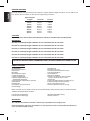
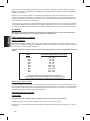
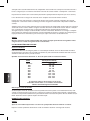
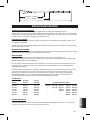
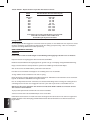
PRIMING VOLUMES
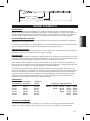
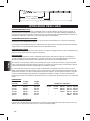
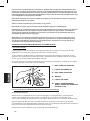
Priming volumes are printed on the catheter at operational lengths of 30 cm, 35 cm, 40 cm, 45
cm, 50 cm, 60 cm and 65 cm for the corresponding catheters.
Operational
Length
30 cm
35 cm
40 cm
45 cm
50 cm
60 cm
65 cm
Arterial
Venous
1.6 cc
1.8 cc
2.0 cc
2.2 cc
2.4 cc
2.8 cc
3.0 cc
1.7 cc
1.9 cc
2.1 cc
2.3 cc
2.5 cc
2.9 cc
3.1 cc
Caution
Federal (U.S.A.) law restricts this device to sale by or on the order of a physician.
WARNINGS
For the 24 cm body length catheter do not cut before the 30 cm mark
For the 28 cm body length catheter do not cut before the 35 cm mark
For the 32 cm body length catheter do not cut before the 40 cm mark
For the 36 cm body length catheter do not cut before the 40 cm mark
For the 40 cm body length catheter do not cut before the 45 cm mark
For the 55 cm body length catheter do not cut before the 60 cm mark
READ ALL INSTRUCTIONS, WARNINGS AND CAUTIONS CAREFULLY PRIOR TO USE
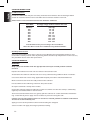
COMPLICATIONS
Air Embolism
Arterial Cannulation
Bacteremia
Bleeding
Brachial Plexus Injury
Cardiac Arrhythmia
Cardiac Tamponade
Catheter Tip Embolus or
Thrombotic Embolus
Central Venous Thrombosis/Stenosis
Chylothorax
Endocarditis
Hematoma (subcutaneous)
Hemorrhage
Hemothorax
Infection (exit site)
Laceration (of the Thoracic Duct)
Lumen Thrombosis
Pneumothorax
Pulmonary Emboli
Puncture (Subclavian Artery, Right
Arterial, Superior Vena Cava)
Septicemia
Trauma to Right Atrium or Major Vessel
Tunnel infection (subcutaneous)
Vessel Laceration, Trauma
Puncture (femoral vein or artery)
Note: Femoral vein insertion increases the risk of infection compared to other insertion locations.
Additional complications include:
Femoral Artery Bleeding
Femoral Nerve Damage
Retroperitoneal Bleeding
Venous Stenosis
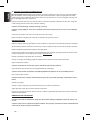
WARNINGS
The catheter should be inserted or removed by a qualified, licensed physician.
Prior to treatment, physician should discuss with patient the risks and benefits of and alternatives to catheterization (if any).
2