1
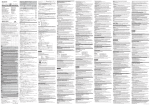
ENGLISH INSTRUCTION FOR USE – 3SHAPE SCAN POSTS INTENDED USES The scan posts are geometry indicators required for scanning post-and-core cases. For intra-oral scanning, the posts are placed in the patients’ root canal(s). For model scanning, the scan posts are placed into the models, in holes created by impression posts. INTRAORAL USE Preparation for use To avoid cross contamination between patients or contamination of operators, the scan posts must be cleaned and sterilized prior to each use. Clean the posts by rinsing with clean water and brushing with a soft brush to remove any residue or dirt. After cleaning, the scan posts must be autoclaved at 121˚C 15 min/ 134˚C 3 min acc. to EN ISO17665-1:2006. Because the scan posts are small, they may not be retained properly in a standard autoclave tray. Therefore, it is strongly recommended to use the tray included with the full set of posts. Also we recommend buying two sets of scan posts, so that the included black/white color coding can be used to distinguish between clean and used posts. Alternatively posts can be cleaned using a standard autoclave pouch. In this case we recommend packing several posts in the autoclave pouch. Refer to your autoclave’s instructions for use on which pouches to use. After autoclaving, let the post cool to room temperature. If still hot, the posts may cause discomfort for the patient, and they may bend and thus give misleading scans. The scan posts must not be warmer than body temperature. Installing the posts in the root canal Choose the proper scan post that matches the system and diameter of the used drill. Also choose an appropriated length of the scan post. The “head” of the post (the cylindrical body) may not be in contact with teeth or other scan posts as this can cause bending. WARNING: To avoid aspiration or swallowing, make sure the post matches the drill and has the correct diameter (the system and diameter are labeled on the top of the scan post). Also make sure it is held firmly in the root canal. Furthermore, position the patient in such a way that should the post come loose nevertheless, it will not drop into the patient’s respiratory tract.