1
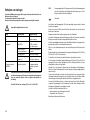
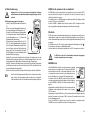
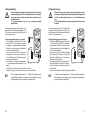
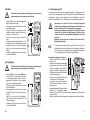
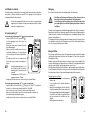
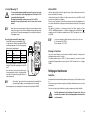
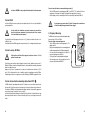
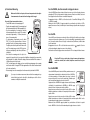
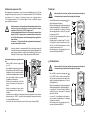
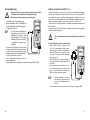
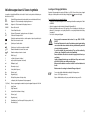
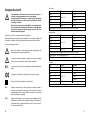
CAT III Dépannage Avec le DMM, vous avez acquis un produit à la pointe du développement technique et bénéficiant d’une grande sécurité de fonctionnement. Il est toutefois possible que des problèmes ou des pannes surviennent. Vous trouverez ci-après plusieurs procédures vous permettant de vous dépanner facilement le cas échéant : Respecter impérativement les consignes de sécurité ! Cause éventuelle Remède Le multimètre ne fonctionne ne fonctionne pas. La pile est-elle usée ? Contrôlez l´état. Remplacement des piles. Pas de modification de la valeur. Une fonction de mesure erronée est-elle activée (AC/DC) ? Contrôler l´affichage (AC/DC) et commutez la fonction, si nécessaire. Enfichez les câbles de mesure dans les douilles de mesure ? Contrôlez le bon maintien des câbles de mesure Le fusible est-il défectueux ? Contrôlez les fusibles. La fonction HOLD est-elle activée (affichage « H ») ? Appuyez sur la touche « H » pour désactiver cette fonction. Câbles de mesure mal raccordés ou innapropriés Raccordez les câbles de mesure correctement à l’appareil de mesure, les échanger ou changer la fonction de mesure. L’appareil de mesure émet un signal sonore et le symbole « WARNING! » clignote Les réparations autres que celles décrites précédemment doivent être exécutées uniquement par un technicien qualifié et agréé. Si vous deviez avoir des questions concernant la manipulation de l´instrument de mesure, notre support technique est à votre disposition par téléphone au numéro suivant : Voltcraft®, 92242 Hirschau, Lindenweg 15, Tel.-Nr. 0180 / 586 582 7. 90 Ground potential For safety and licensing reasons (CE), unauthorised conversion and/or modification of the device is not permitted. Consult an expert when in doubt as to the operation, the safety or the connection of the device. meters and accessories are not toys and have no place in the hands of children. Problème Overvoltage category IV for measuring at the source of the low-voltage installation (e.g. main distribution, house-transfer points of energy providers, etc.) This category also contains all lower categories. On industrial sites, the accident prevention regulations of the association of the industrial workers’ society for electrical equipment and utilities must be followed. In schools, training centres, computer and self-help workshops, handling of meters must be supervised by trained personnel in a responsible manner. Before measuring voltages, always make sure that the meter is not set to a measuring range for currents. The voltage between the connection points of the measuring device and the ground potential must not exceed 1,000 V DC/AC in CAT IV III or 600 V CAT IV. The measuring prods have to be removed from the measured object every time the measuring range is changed. Be especially careful when dealing with voltages higher than 25V AC or 35 V DC. Even at these voltages it is possible to receive a fatal electric shock if you touch electrical conductors. Check the measuring device and its measuring lines for damage before each measurement. Never carry out any measurements if the protecting insulation is defective (torn, ripped off etc.) To avoid an electric shock, make sure not to touch the connections/measuring points to be measured neither directly nor indirectly during measurement. During measuring, do not grip beyond the grip range markings (which you can feel) present on the test probes. Do not use the multimeter just before, during or just after a thunderstorm (lightning! / high-energy overvoltage!). Please make sure that your hands, your shoes, your clothing, the floor, switches and switching components are dry. Avoid an operation near: - strong magnetic or electromagnetic fields - transmitter aerials or HF generators, This could affect the measurement. 39