1
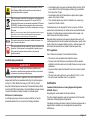
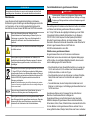
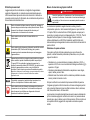
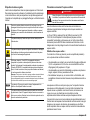
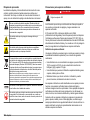
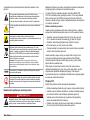
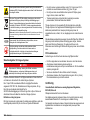
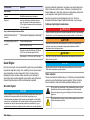
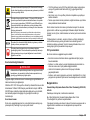
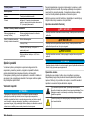
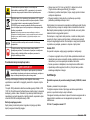
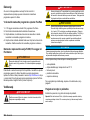
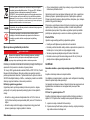
This symbol indicates the presence of devices sensitive to Electrostatic Discharge (ESD) and indicates that care must be taken to
prevent damage with the equipment.
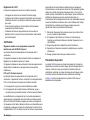
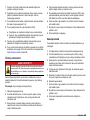
Electrical equipment marked with this symbol may not be disposed of
in European public disposal systems after 12 August of 2005. In
conformity with European local and national regulations (EU Directive
2002/96/EC), European electrical equipment users must now return
old or end-of-life equipment to the Producer for disposal at no charge
to the user.
Note: For return for recycling, please contact the equipment producer or supplier
for instructions on how to return end-of-life equipment, producer-supplied
electrical accessories, and all auxiliary items for proper disposal.
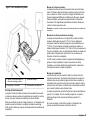
This symbol, when noted on the product, identifies the location of a
fuse or current limiting device.
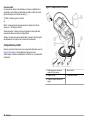
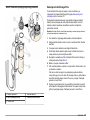
This symbol indicates that the marked item requires a protective earth
connection. If the instrument is not supplied with a ground plug on a
cord, make the protective earth connection to the protective
conductor terminal.
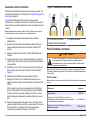
Confined space precautions
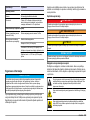
DANGER
Explosion hazard. Training in pre-entry testing, ventilation, entry
procedures, evacuation/rescue procedures and safety work practices
is necessary before entering confined spaces.
The information that follows is supplied to help users understand the
dangers and risks that are associated with entry into confined spaces.
On April 15, 1993, OSHA's final ruling on CFR 1910.146, Permit
Required Confined Spaces, became law. This standard directly affects
more than 250,000 industrial sites in the United States and was created
to protect the health and safety of workers in confined spaces.
Definition of a confined space:
A confined space is any location or enclosure that has (or has the
immediate potential for) one or more of the following conditions:
• An atmosphere with an oxygen concentration that is less than 19.5%
or more than 23.5% and/or a hydrogen sulfide (H2S) concentration
that is more than 10 ppm.
• An atmosphere that can be flammable or explosive due to gases,
vapors, mists, dusts or fibers.
• Toxic materials which upon contact or inhalation can cause injury,
impairment of health or death.
Confined spaces are not designed for human occupancy. Confined
spaces have a restricted entry and contain known or potential hazards.
Examples of confined spaces include manholes, stacks, pipes, vats,
switch vaults and other similar locations.
Standard safety procedures must always be obeyed before entry into
confined spaces and/or locations where hazardous gases, vapors, mists,
dusts or fibers can be present. Before entry into a confined space, find
and read all procedures that are related to confined space entry.
FCC regulations
Use of this device is subject to the conditions that follow:
• There are no user serviceable items inside this device.
• The user must install this device in accordance with the supplied
installation instructions and must not modify the device in any manner
whatsoever.
• Any service that includes the transmitter must only be done by Hach
Company.
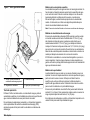
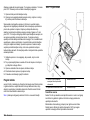
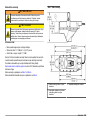
• The user must make sure that no one is within 20 cm (8 in.) of the
face of the radar transmitter when it is in operation.
Certification
Canadian Radio Interference-Causing Equipment Regulation,
IECS-003, Class A:
Supporting test records reside with the manufacturer.
This Class A digital apparatus meets all requirements of the Canadian
Interference-Causing Equipment Regulations.
Cet appareil numérique de classe A répond à toutes les exigences de la
réglementation canadienne sur les équipements provoquant des
interférences.
English 5