1
(1)
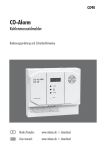
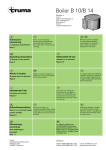
Gehäusefrontansicht
Frontal view of case
Vue du devant du boîtier
(7)
Frontseitige Sensoröffnung
Front side sensor opening
Ouverture du capteur placé à l'avant du boîtier
(2)
Abdeckplatte
Cover plate
Plaque de recouvrement
(8)
Untere Sensoröffnung
Lower sensor opening
Ouverture basse du capteur
(3)
FEHLER LED
FAULT LED
LED DÉFAUT
(9)
Klemme EINGANG 12 V DC (nur bei 12 V-Gerät)
Terminal INPUT 12 V DC (only for 12 V device)
Borne ENTRÉE 12 V CC
(4)
ALARM LED
ALARM LED
LED ALARME
(10)
POWER LED
POWER LED
LED PUISSANCE
Klemme RELAIS AUSGANG
Terminal RELAY OUTPUT
Borne SORTIE RELAIS
(11)
Klemme 12-VOLT AUSGANG
Terminal 12 VOLT OUTPUT
Borne SORTIE 12-VOLT
(5)
(6)
2
(uniquement pour l'appareil 12 V)
Schallöffnung Signalgeber
Hearing tube for signal transmitter (12)
Orifice de bruit pour émetteur
de signaux
Montagelöcher
Assembly holes
Trous de montage
Einleitung
Diese Bedienungsanleitung enthält wichtige Informationen zur sachgerechten Montage
sowie zum Betrieb Ihres Gasalarms. Bitte lesen Sie diese Anleitung vor der Montage
vollständig und sorgfältig durch. Bewahren Sie die Anleitung auf und geben Sie sie
gegebenenfalls an Dritte weiter.
Bestimmungsgemäße Verwendung
Der GASALARM S/200-P ist zur Detektion von Methan-, Butan- und Propangas
konzipiert. Er ist zur Verwendung in Privatwohnungen des Haushalts vorgesehen.
Die Auslegung basiert auf Gerätetyp A - um optisch und akustisch zu alarmieren und
ein Ausgangssignal auszulösen, das zum direkten oder indirekten Einschalten einer
Lüftung oder zur Auslösung einer anderen Hilfseinrichtung verwendet werden kann.
Der Gasalarm ist für den Anschluss an eine Versorgungsspannung von 230 V AC / 50
Hz konzipiert. Der Anschluss an das Stromnetz erfolgt über eine am Gerät angebrachte
Netzleitung. In einer gesonderten Geräteausführung ist der Gasalarm für eine
Betriebsspannung von 12 V DC lieferbar. Der elektrische Anschluss erfolgt in diesem
Fall über eine 2-polige Anschlussklemme.
Der Gasalarm ist nicht in explosionsgefährdeten Räumen zu verwenden und dient nicht
als Maßnahme des primären Explosionsschutzes im Sinne der Richtlinien der
Berufsgenossenschaft.
Achtung:
Geräte zur Detektion brennbarer Gase sind kein Ersatz für eine regelkonforme
Gasinstallation und den ordnungsgemäßen Betrieb von Gasanlagen.
Die Auswahl des Messortes und die korrekte Installation des Gasdetektors sind für
einen ordnungsgemäßen Betrieb von entscheidender Bedeutung. Es wird daher
dringend empfohlen, die Installation des Gerätes nur durch einen Fachmann
vornehmen zu lassen.
Lieferumfang
1 Stück
2 Stück
2 Stück
1 Stück
GASALARM S/200-P
Befestigungsschrauben
Befestigungsdübel
Montage- und Bedienungsanleitung
3
Technische Daten
Alarmschwellen / Empfindlichkeit:
Methan (Stadtgas/Erdgas) 0,4000 Vol. % (ca. 9 % der unteren Explosionsgrenze)
Butan (Flüssiggas)
0,2050 Vol. % (ca. 14,5 % der unteren Explosionsgrenze)
Propan (Flüssiggas)
0,2400 Vol. % (ca. 14,1 % der unteren Explosionsgrenze)
Alarmlautstärke
Relaisausgang
12 V DC Ausgang
Reset
Bauartprüfung
Abmessungen
Schutzart
Schutzklasse
85 dB (A) / 1 m
potentialfreier Wechselkontakt, 5A/230V AC, 5A/30V DC
geschaltet bei Alarm, 12 V DC (±10%), max. 200 mA
automatisch, wenn Gaskonzentration unter die
Alarmschwelle sinkt
-10°C bis +40°C
max. 95% rel.
EN 61000-6-3:2007
EN 50270:2006
EN 50194-1:2009
140 x 125 x 42 mm (B x H x T)
IPX2D
II
230 V - Ausführung:
Betriebsspannung:
Leistungsaufnahme:
Gewicht:
230 V AC / 50 Hz
max. 6 VA
ca. 500 g
12 V - Ausführung:
Betriebsspannung:
Stromaufnahme:
Gewicht:
12 V DC (-15% / +20%)
max. 130 mA
ca. 250 g
Betriebstemperatur
Luftfeuchtigkeit
CE-Konformität
Sicherheitshinweise
Betreiben Sie den Gasalarm ausschließlich mit der geräteseitig
vorgesehenen Betriebsspannung.
Dieses Gerät ist nur für den Betrieb im Innenbereich geeignet.
Von Feuchtigkeit fernhalten.
Bei Veränderungen am Gasalarm besteht die mögliche Gefahr eines elektrischen
Schlages oder einer Fehlfunktion.
Wenn die Netzanschlussleitung dieses Gerätes beschädigt wird, muss sie durch
den Hersteller oder seinen Kundendienst oder eine ähnlich qualifizierte Person
ersetzt werden, um Gefährdungen zu vermeiden.
Gerät nicht öffnen, dadurch erlischt der Anspruch auf Garantieleistungen.
4
Platzierung
Der Gasalarm ist bestimmungsgemäß für die Wandmontage vorgesehen.
Der Montageort ist nach folgenden Kriterien zu wählen:
Für Flüssiggas (Propan/Butan)
Zur Detektierung von Flüssiggas sollte der Abstand vom Fußboden 15 - 30 cm und die
Entfernung zum Gasgerät höchstens 4 m betragen. Bitte achten Sie darauf, dass der
Montageort nicht direkt neben einem Ausgang gewählt wird.
Austretendes Flüssiggas ist schwerer als Luft, sinkt demnach zu Boden und breitet
sich dort aus.
Für Stadtgas/Erdgas (Methan)
Zur Detektierung von Stadtgas/Erdgas sollte der Gasalarm 15 - 30 cm unterhalb der
Decke sowie im Abstand von höchstens 6 m zum Gasgerät installiert werden. Bitte
achten Sie darauf, dass der Montageort oberhalb der höchsten Fenster- oder Türöffnung
gewählt wird.
Stadtgas/Erdgas ist leichter als Luft und steigt daher nach oben.
Folgende Stellen sind als Montageort nicht geeignet:
Außerhalb von Gebäuden, z.B. zur Überwachung von offenen Flaschenkästen
Abgetrennte Bereiche (z.B. Schrankinnenräume oder Bereich hinter Gardinen), die
im Falle eines Gasaustritts die Alarmauslösung blockieren könnten
Im Luftstrom von Ventilatoren (Belüftung, Klimaanlage etc.) oder in Tür- und
Fensterbereichen
Nahe zu einem Dunstabzug
In einem Bereich, in dem die Temperatur unter -10°C fallen oder über +40°C
steigen kann
Feuchträume wie Badezimmer und Duschen, in denen die relative Luftfeuchtigkeit
auf über 95% ansteigen kann
Unmittelbar neben einem Herd
Direkt oberhalb von Kochstellen
Direkt oberhalb eines Abflusses (bei Stadtgas/Erdgas)
Direkt unterhalb eines Abflusses (bei Flüssiggas)
Bereiche, wo Staub und Schmutz den Sensor verstopfen können
In explosionsgefährdeten Räumen
Das Gerät darf nicht im Freien betrieben werden!
Montage
Stellen Sie sicher, dass während der Montage und beim Anschluss der
Stromversorgung keine Spannung anliegt!
Das Gerät wird mit zwei Schrauben an der Wand bzw. dem gewünschten Montageort
befestigt. Verwenden Sie hierzu beiliegende Spaxschrauben. Die Montagelöcher
sowie auch die Anschlussklemmen liegen unter einer Abdeckplatte. Diese Abdeckung
ist lediglich mit zwei Zapfen aufgesteckt und kann ohne weitere Hilfsmittel durch
seitliches Eingreifen abgehoben werden.
Unbedingt Montagehöhe nach Kapitel ‚Platzierung’ beachten!
5
Elektrischer Anschluss
230 V - Ausführung:
Der Gasalarm wird mit Anschlusskabel und Eurostecker geliefert. Dafür ist eine
Eurosteckdose mit 230 V AC (Wechselstrom) zu verwenden.
12 V - Ausführung:
Elektrischer Anschluss nur an 12 Volt Gleichspannung (DC).
Toleranz: -15% / +20%
Zum Anschluss empfehlen wir eine Leitung mit Aderkennzeichnung.
Schließen Sie das Versorgungskabel an die mit ’+’ und ’-’ bezeichneten
Anschlussklemmen an. Stellen Sie hierbei sicher, dass während des Anschlusses der
Stromversorgung keine Spannung anliegt.
Auf polrichtigen Anschluss achten!
Schaltausgänge
Der Gasalarm verfügt über zwei Schaltausgänge zur Ansteuerung einer Alarmanlage
oder weiterer Signalgeber und Geräte.
Die jeweiligen Anschlussklemmen befinden sich unter der Abdeckplatte.
Der Anschluss muss immer bei unterbrochener Stromzufuhr erfolgen!
12-Volt Schaltausgang
Geschaltetes 12 V DC Signal zur direkten Ansteuerung von z.B. einer externen Hupe
oder Warnlampe. Die Maximallast beträgt 200 mA. Der Anschluss erfolgt über die
2-polige Anschlussklemme +/- Ausgang.
Auf polrichtigen Anschluss achten!
Relaisausgang
Potentialfreier Schließer- und Öffnerkontakt. Diese Kontakte werden zum Anschluss
an eine Alarmanlage, ein Telefonwählgerät, eine Warnleuchte o.ä. verwendet.
Die Verbindung für einen Schließerkontakt (normalerweise offen
schließt bei
Alarm) erfolgt an den Klemmen N.O. und COM.
Die Verbindung für einen Öffnerkontakt (normalerweise geschlossen
öffnet bei
Alarm) erfolgt an den Klemmen N.C. und COM.
Im spannungslosen Zustand des Gasmelders sowie im Normalbetrieb sind die Kontakte
N.C. und COM geschlossen, d.h. das Relais befindet sich im Ruhezustand.
Bei Benutzung des Relaisausgangs mit Spannungen von mehr als 25 Volt AC oder 25
Volt DC muss bauseits eine Klemmendose zum Anschluss des Kabels zum externen
Verbraucher (z.B. Warnleuchte) gesetzt werden.
Die Installation muss von einer Elektrofachkraft durchgeführt werden.
Betrieb
Sobald der Gasalarm fehlerfrei an die Stromversorgung angeschlossen ist, findet ein
automatischer Selbsttest statt: Während dieses Selbsttests blinkt die grüne POWER
LED. Der Selbsttest dauert ca. 20 Sekunden. Nach erfolgreichem Abschluss des
Selbsttests leuchten alle drei LEDs kurz auf. Zugleich ertönt die Signalhupe. Anschließend
zeigt die grüne POWER LED die Betriebsbereitschaft an.
6
Alarm
Der Gasalarm erfasst mit dem Sensor den Gasaustritt. Überschreitet die Gaskonzentration
am Sensor die werkseitig voreingestellte Empfindlichkeitsschwelle, gibt das Gerät
Alarm: Es ertönt ein gleichmäßig pulsierender Signalton und die rote ALARM LED
blinkt. Ein Signal wird an ggf. weitere angeschlossene Geräte weitergegeben.
Der Alarm erfolgt so lange, bis die Gaskonzentration wieder unter die voreingestellte
Empfindlichkeitsschwelle sinkt.
Im Alarmfall den Gasalarm nicht ausstecken!
Verhalten bei einem Alarm
Bewahren Sie im Falle eines Alarms oder bei Geruch von Gas Ruhe. Führen Sie
folgende Maßnahmen in der für Sie sinnvoll erscheinenden Reihenfolge durch:
Löschen Sie alle offenen Flammen, einschließlich aller Raucherartikel.
Stellen Sie alle Gasanwendungen ab.
Schalten Sie keine elektrischen Geräte ein oder aus.
Trennen Sie keinesfalls den Gasalarm von der Stromversorgung.
Unterbrechen Sie die Gaszufuhr an Hauptabsperrhahn bzw. am Flaschen- oder
Lagertankventil.
Öffnen Sie Türen und Fenster, um stärker zu lüften.
Benutzen Sie kein Telefon in dem Gebäude, wo die Anwesenheit von Gas vermutet
wird.
Falls der Alarm weiterhin ansteht und die Ursache für den Gasaustritt nicht ersichtlich
ist bzw. nicht behoben werden kann, so ist das Gebäude zu räumen und SOFORT das
Gasversorgungsunternehmen oder der 24-h-Notdienst zu verständigen, damit die
Gasinstallation überprüft, gesichert und repariert werden kann.
Falls der Alarm endet und die Ursache für den Alarm festgestellt und behoben wurde
(z.B. Gashahn war geöffnet und Brenner nicht in Betrieb), so kann die
Hauptgasversorgung wieder geöffnet werden, nachdem die Freisetzung von Gas
gestoppt wurde und sichergestellt ist, dass alle Verbraucher abgeschaltet sind.
Bitte gehen Sie auch dann nach oben beschriebenem Verfahren vor, wenn Sie den
geräteseitigen Schaltausgang zum Schließen eines Magnetventils der Gaszuleitung
verwenden.
Der Gasalarm liefert ein Ausgangssignal, das verwendet werden kann, um eine
Hilfsvorrichtung wie einen Lüftungsventilator oder ein Gasabsperrventil auszulösen.
Einmal ausgelöst müssen diese Vorrichtungen möglicherweise manuell zurückgestellt
werden. Diese Rückstellung sollte erst durchgeführt werden, nachdem die Quelle des
Gases identifiziert und der Fehler beseitigt worden ist. Im Falle von gasbetriebenen
Geräten darf die Entriegelung zur erneuten Gaszufuhr nach einem Schließen des
Magnetventils nur durch einen Fachmann des Vertragsinstallations- oder
Gasversorgungsunternehmens vorgenommen werden.
7
Funktionsprüfung
Für den Funktionstest des Gasalarms verwenden Sie ein Gasfeuerzeug. Bitte gehen
Sie in folgenden Schritten vor:
Lassen Sie Gas aus dem Feuerzeug in unmittelbarer Nähe der Sensoröffnung des
Gasalarms entweichen, ohne dass die Flamme brennt.
Der Sensor erfasst das ausströmende Gas. Überschreitet die Gaskonzentration
am Sensor die voreingestellte Empfindlichkeitsgrenze, so erfolgt ein Alarm: Es
ertönt ein pulsierender Signalton und die rote ALARM LED blinkt.
Sobald der Alarm signalisiert wird, lassen Sie kein weiteres Gas aus dem Feuerzeug
entweichen.
Der Alarm verstummt automatisch, sobald die Gaskonzentration am Sensor unter
die voreingestellte Empfindlichkeitsschwelle sinkt.
Die Funktionsprüfung sollte in regelmäßigen Abständen, mindestens alle 4
Wochen, durchgeführt werden!
Lebensdauer
Die zu erwartende Lebensdauer des Sensors beträgt unter normalen
Umgebungsbedingungen im permanenten Betrieb ca. 5 Jahre.
Ersetzen Sie den Gasalarm nach einer Betriebsdauer von 5 Jahren!
Verschiedene Chemikalien können den Sensor auch dauerhaft schädigen.
Folgenden Stoffen und Umgebungen sollte man den Sensor nicht aussetzen:
Silikonhaltige Sprays und Kleber
Aggressive Umgebungen, in denen Schwefelwasserstoffe, Schwefeldioxid, Chlor
oder Chlorwasserstoff enthalten ist (chlorhaltige Reinigungsmittel, Entkalker-Sprays)
Feuchtigkeit und Kondenswasser
Salzhaltige Atmosphäre
Fehleranzeige
Der Gasalarm führt eine ständige Selbstkontrolle durch. Hierbei auftretende Fehler
werden durch Blinken der gelben FEHLER-Anzeige angezeigt. Weiterhin werden zwei
kurze Signaltöne pro Minute ausgegeben.
2 kurze Signaltöne alle 60 Sekunden,
gelbe FEHLER-Anzeige blinkt
Die Fehleranzeige kann entweder durch die Umgebung ausgelöst werden oder es liegt
ein Gerätedefekt vor.
Wird ein Fehler angezeigt, so gehen Sie bitte folgendermaßen vor:
Prüfen Sie, ob die Umgebungstemperatur außerhalb des zulässigen Bereichs von
-10°C bis +40°C liegt.
Prüfen Sie, ob in der Luft vorhandene chemische oder andere Stoffe die Fehleranzeige
ausgelöst haben könnten, wie z.B. eine hohe Konzentration von Säure oder Alkohol
in der Luft, Reinigungsflüssigkeiten, Farben, Lacke, Sprays, Poliermittel, Kochdampf,
Tabakqualm. Gegebenfalls prüfen Sie den Gasalarm in einem anderen Raum. Wird
dort kein Fehler signalisiert, so liegt die Ursache in den Umgebungsbedingungen
am ursprünglichen Installationsort.
Ist die Fehleranzeige weiterhin aktiv, so liegt entweder ein Gerätedefekt vor oder der
Gasalarm ist nach einer Betriebsdauer von ca. 5 Jahren verbraucht.
In diesem Fall ist der Gasalarm zu ersetzen!
8
Wartung und Reinigung
Reinigen Sie regelmäßig das Gehäuse des Gasalarms mit einem Staublappen oder
einem leicht feuchten Tuch. Entfernen Sie hierbei mögliche Staubablagerungen an
der Sensoröffnung.
Der Gasalarm darf niemals mit Wasser besprüht werden!
Kontrollieren Sie regelmäßig die Funktionstüchtigkeit des Gerätes (siehe Kap.
Funktionsprüfung).
Wichtige Hinweise
Zur maximalen Sicherheit sollte das Gerät kontinuierlich betrieben werden.
Es wird darauf hingewiesen, dass die Gasinstallation und gegebenenfalls die
Abschaltvorrichtung die gültigen nationalen Vorschriften des Landes, in dem sie
installiert wird, erfüllen muss.
Der Gasalarm ist fachgerecht zu installieren. Bitte befolgen Sie diese
Bedienungsanleitung.
Beachten Sie unbedingt die Montagehöhe in Abhängigkeit von der Gasart.
Eine Geruchsentwicklung kann eventuell wahrgenommen werden, bevor der
Gasalarm den Alarm auslöst.
Es wird darauf hingewiesen, dass der Gasmelder auch auf kurzzeitiges Ausströmen
von Gas reagieren kann, zum Beispiel während der Startphase eines Gerätes.
Um technisch stets aktuelle Warngeräte anbieten zu können, behalten wir uns
Verbesserungen von Konstruktion und Design vor.
Entsorgung
Elektrische Geräte dürfen nicht mit dem normalen Hausmüll entsorgt werden.
Gemäß geltender gesetzlichen Vorschrift müssen verbrauchte Elektrogeräte
einer umweltgerechten Wiederverwertung zugeführt werden. Befördern Sie
das ausgediente Gerät zu einer Entsorgungseinrichtung Ihrer Stadt oder
Gemeinde.
Garantie
Wir gewähren auf dieses Gerät 2 Jahre Garantie ab Kaufdatum.
Die Garantieleistung gilt ausschließlich für Material- und Fabrikationsfehler. Weitergehende
oder andere Ansprüche, insbesondere solche auf Ersatz außerhalb des Gerätes
entstehender Personen- oder Sachschäden sind ausgeschlossen. Es besteht kein
Anspruch auf Schadensersatz im Falle eines Brandes oder einer Explosion. Wir sind
nicht verpflichtet, eine Reparatur oder einen Austausch von Teilen zu übernehmen,
deren Mängel auf missbräuchliche Verwendung, Beschädigung oder Umbau nach dem
Kaufdatum zurückzuführen sind. Die sich aus dem Verkauf des Gasalarms für uns
ergebende Haftungsverpflichtung überschreitet keinesfalls die Kosten für den
Produktaustausch. Wir haften keinesfalls für Folgeschäden, die sich aus dem
Produktmangel ergeben. Die Garantie gilt in Verbindung mit dem Kaufbeleg, der mit
dem Gerät einzusenden ist. Die Rücksendung hat frei Haus zu erfolgen. Bei Eingriffen
in das Gerät entfällt der Garantieanspruch.
Ihre gesetzlichen Rechte werden durch diese Garantie nicht eingeschränkt.
Das Produkt ist ausschließlich für den privaten und nicht für den gewerblichen Gebrauch
bestimmt.
9
Hersteller:
Automatische Mess- und
Steuerungstechnik GmbH
Enge Gasse 1, D-91275 Auerbach/Opf.
Tel.: +49(0)9643 / 9205-0
Fax: +49(0)9643 / 9205-90
E-Mail: [email protected]
GA S/200-P-0709-2010-D
10
Introduction
These operating instructions provide important information on the correct installation
and operation of the gas alarm. Please read the instructions completely and carefully
before installation. Keep the instructions and pass them on to third parties as necessary.
Intended use
The GASALARM S/200-P is designed to detect methane, butane and propane gas. It
is intended for use in private homes.
The design is based on a type A device - to emit a visual and acoustic alarm and trigger
an output signal which, in turn, directly or indirectly activates the ventilation or triggers
other auxiliary equipment.
The gas alarm is designed to be connected to a supply voltage of 230 V AC / 50 Hz.
A mains cable attached to the device is used to connect to the mains. In a separate
model, the gas alarm is available for an operating voltage of 12 V DC. The electrical
connection for this model is made via a 2-pole connecting terminal.
The gas alarm must not be used in rooms with potentially explosive atmospheres and
is not a primary measure of protection against explosions in accordance with the
guidelines of the Accident Prevention & Insurance Association.
Attention:
Devices designed to detect combustible gases are no substitute for correct gas
installation and proper operation of gas plants.
The selection of the location at which measurements are made and the correct
installation of the gas detector are decisive for the proper operation of device. It is
strongly recommended, therefore, that the device is only installed by a qualified
specialist.
Scope of delivery
1 GASALARM S/200-P
2 fixing screws used for installation
2 fixing plugs
1 Installation and Operating Instructions
11
Technical data
Alarm thresholds / sensitivity:
Methane
(town gas/natural gas) 0.4000 vol. % (approx. 9 % of the lower explosion limit)
Butane
0.2050 vol. % (approx. 14.5 % of the lower explosion limit)
(liquefied gas)
Propane (liquefied gas) 0.2400 vol. % (approx. 14.1 % of the lower explosion limit)
Type test
Dimensions
Protection level
Protection class
85 dB (A) / 1 m
potential-free changeover contact, 5A/230V AC, 5A/30V DC
switched when an alarm goes off, 12 V DC (±10%),
max. 200 mA
automatic if gas concentrations fall below the alarm
threshold
-10°C to +40°C
max. 95% rel.
EN 61000-6-3:2007
EN 50270:2006
EN 50194-1:2009
140 x 125 x 42 mm (W x H x D)
IPX2D
II
230 V model:
Operating voltage:
Power consumption:
Weight:
230 V AC / 50 Hz
max. 6 VA
approx. 500 g
12 V model:
Operating voltage:
Current consumption:
Weight:
12 V DC (-15% / +20%)
max. 130 mA
approx. 250 g
Alarm volume
Relay output
12 V DC output
Reset
Operating temperature
Humidity
CE conformity
Safety information
Operate the gas alarm only with the operating voltage specified for the device.
This device is only suitable for indoor use. Keep away from moisture.
Modifications made to the gas alarm can result in electric shock or malfunction.
If the mains power cable of this device is damaged, it must be replaced by the
manufacturer or his customer service department or a similarly qualified person
in order to avoid hazards.
Do not open the device. Opening the device voids all guarantee claims.
12
Placement
The gas alarm is designed to be wall-mounted.
The installation location must be selected in accordance with the following criteria:
For liquefied gas (propane/butane)
For the detection of liquefied gas, the distance from the floor should be 15 - 30 cm and
the distance to the gas device at most 4 m. Please make sure that the selected
installation site is not directly next to an exit.
Escaping liquefied gas is heavier than air so falls to the floor and spreads out there.
For town gas/natural gas (methane)
For the detection of town gas/natural gas, the gas alarm should be installed 15 - 30
cm below the ceiling and at most 6 m from the gas device. Please make sure that the
selected installation site is above the highest window or door opening.
Town gas and natural gas are lighter than air so rise upwards.
The following locations are not suitable installation sites:
Outside of buildings, e.g. for the monitoring of open bottle crates
Separated areas (e.g. closet interiors or behind curtains) which
could, in the event of a gas leak, prevent the alarm from triggering
In air currents from fans (ventilation, air-conditioning, etc.) or in the vicinity
of doors or windows
Close to a smoke exhaust
Areas in which the temperature can fall below -10°C or rise above +40°C
Wet rooms such as bathrooms and showers where the relative humidity
can rise above 95%
Directly next to a cooking stove
Directly above cooking facilities
Directly above a drain (for town gas/natural gas)
Directly below a drain (for liquefied gas)
Areas where dirt and dust can clog the sensor
In rooms with potentially explosive atmospheres
The alarm may not be used outdoors!
Installation
Make sure that the voltage is disconnected during installation
and when connecting the power supply!
Two screws are used to fasten the alarm to the wall or selected location. Use the
enclosed spax screws. Both the assembly holes and the connection terminals are under
a cover plate. The cover plate is attached simply with two pins and can be lifted off by
moving it sideways without the need for tools.
Make absolutely sure to install the alarm at the height specified in the
chapter entitled 'Placement'!
13
Electrical connection
230 V model:
The gas alarm is delivered with a connection cable and Euro plug. This is to be used
with a 230 V AC (alternating current) power socket.
12 V model:
Electrical connection to 12 Volt direct current (DC) only.
Tolerance: -15% / +20%
We recommend a connection cable with core identification.
Connect the supply cable to the '+' and '-' connection terminals. Make sure that the
voltage is disconnected when connecting the current supply.
Make sure the connections have the correct polarity!
Switching outputs
The gas alarm has two switching outputs which are used to control an alarm system
or other signal transmitters and devices.
The respective connection terminals are under the cover plate.
Only connect the alarm when the power supply is disconnected!
12 Volt switching output
Switched 12 V DC signal for the direct control of an external horn or warning light, for
example. The maximum load is 200 mA. The connection is made via a 2-pole +/terminal output connection.
Make sure the connections have the correct polarity!
Relay output
Potential-free NO and NC contact. These contacts are used for connection to an alarm
system, a telephone dialer, a warning light or similar.
Connection to an NO contact (normally open
closes in the event of an alarm)
is made at the N.O. and COM terminals.
Connection to an NC contact (normally closed
opens in the event of an alarm)
is made at the N.C. and COM terminals.
When the gas alarm is de-energised and in normal mode, the N.C. and COM contacts
are closed, i.e. the relay is at rest.
When using the relay output with voltages higher than 25 Volt AC or 25 Volt DC, a
terminal box on site must be used for connection of the cable to the external consumer
(e.g. warning light).
Installation must be carried out by a qualified electrician.
Operation
As soon as the gas alarm has been properly connected to the power supply, an automatic
self-test is conducted: The green POWER LED flashes during this self-test. The selftest takes approx. 20 seconds. The three LEDs light up briefly when the self-test has
been successfully completed. A signal horn sounds at the same time. The green
POWER LED then indicates that the alarm is operational.
14
Alarm
The sensor of the gas alarm registers escaping gas. The device emits an alarm if the
sensor registers a gas concentration in excess of the sensitivity threshold set in the
factory: An evenly pulsing signal tone sounds and the red ALARM LED flashes. A signal
is fed to any other connected devices.
The alarm continues until the gas concentration falls below the preset sensitivity
threshold.
Do not disconnect the gas alarm in the event of an alarm!
What to do in the event of an alarm
Remain calm in the event of an alarm or if you smell gas. Carry out the following
measures in the sequence that makes the most sense to you:
Extinguish all open flames including all smokers' articles such as cigarettes, cigars,
pipes, matches, lighters, etc.
Turn off all gas applications.
Do not turn electrical devices on or off.
Do not, under any circumstances, disconnect the gas alarm from the power supply.
Interrupt the gas supply at the main shutoff valve or at the cylinder or storage
tank valve.
Open doors and windows to increase ventilation.
Do not use telephones in the building in which the presence of gas is suspected.
If the alarm continues and the source of the escaping gas is not obvious or cannot be
corrected, the building must be cleared and the gas supplier or the 24-hour emergency
service IMMEDIATELY informed so that the gas installation can be checked, secured
and repaired.
If the alarm stops and the cause of the alarm has been established and corrected
(e.g. the gas valve was open and the burner not in operation), the main gas supply
can be opened again once the escaping of gas has been stopped and it is sure that
all consumers have been shut down.
Please also proceed as outlined above when using the device's switching output to
close a solenoid valve in the gas line.
The gas alarm issues an output signal which can be used to trigger auxiliary equipment
such as a ventilation fan or a gas shutoff valve. Once it has been triggered, it may be
necessary to manually reset the equipment. The equipment should not be reset until
the source of the gas has been identified and the fault has been corrected. In the case
of gas-operated devices, if the gas supply was cut off by closing the solenoid valve, it
may only be opened by a qualified plumbing contractor or a specialist from the gas
supplier.
15
Function checks
Use a gas lighter to test that the gas alarm is functioning. Please proceed in the
following steps:
Let gas out of the lighter directly next to the sensor opening of the gas alarm without
a flame.
The sensor will register the escaping gas. The device emits an alarm if the sensor
registers a gas concentration in excess of the preset sensitivity threshold: A pulsing
signal tone sounds and the red ALARM LED flashes.
As soon as the alarm signal goes off, do not let any more gas out of the lighter.
The alarm mutes automatically as soon as the gas concentration at the sensor falls
below the preset sensitivity threshold.
The function test should be carried out regularly, at least every 4 weeks!
Service life
When operating continuously under normal ambient conditions, the expected service
life of the sensor is approx. 5 years.
Replace the gas alarm after a service life of 5 years!
Various chemicals can damage the sensor permanently.
Do not subject the sensor to the following substances and environments:
Sprays and adhesives containing silicone
Aggressive environments in which hydrogen sulphides, sulphur dioxide,
chlorine or hydrogen chloride is present (cleaning agents containing chlorine,
descaler sprays)
Moisture and condensate
Salt-laden atmospheres
Fault display
The gas alarm carries out a continuous self-test. Flashing of the yellow FAULT indictor
indicates the presence of a fault. In addition, two short signal tones are issued per
minute.
2 short signal tones every 60 seconds,
yellow FAULT indicator flashes
The fault display can either be triggered by the surroundings or there is a defect in the
device.
Please proceed as follows if a fault is indicated:
Check whether the ambient temperature lies outside the permissible range
of -10°C to +40°C.
Check whether chemicals in the ambient air or other substances could have
triggered the fault display, such as an excessive concentration of acid or alcohol
in the air, cleaning liquids, paints, lacquers, sprays, polishing agents, cooking
vapours or tobacco smoke. Check the gas alarm in another room if necessary.
If an alarm is not signalled in the other room, the cause of the fault is in the original
installation site.
If the fault display continues to be active, there is either a defect in the device or the
gas alarm is worn out after a service life of approx. 5 years.
The gas alarm must be replaced in this case!
16
Maintenance and cleaning
Regularly clean the housing of the gas alarm with a duster or slightly damp cloth.
Remove as much of the dust deposits as possible from the opening in the sensor.
The gas alarm must never be sprayed with water!
Regularly check the functionality of the device (see the chapter on function tests).
Important
For maximum security, the device should be operated continuously.
We draw to your attention to the fact that the gas installation and any shut-off device
must fulfil the regulations that apply in the country where the alarm is installed.
The gas alarm must be installed properly. Please work as specified in the operating
instructions.
Make absolutely sure that the gas alarm is installed at the correct height for each
type of gas.
The formation of gas could be registered before the gas alarm is triggered.
We draw to your attention to the fact that the gas alarm can also react to a brief
escape of gas, e.g. when a device starts up.
We reserve the right to make improvements to the construction and design so we
are always able to supply state-of-the-art warning devices.
Disposal
Electrical devices may not be disposed of in normal household waste. In
accordance with the law, used electrical devices must be recycled in an
environmentally compatible way. At the end of its service life, take the device
to the waste disposal facility of your city or community.
Guarantee
We guarantee this device for 2 years from the date of purchase.
The guarantee applies only to material and manufacturing defects. Further claims or
other claims, especially those for compensation for injury to persons or damage to
property outside of the device, are excluded. There is no legal claim for the compensation
of damage arising from fire or explosion. We are under no obligation to make repairs
or to replace components whose defects derive from misuse, damage or modification
after the date of purchase. The obligation to bear liability arising from the sale of the
gas alarm will under no circumstances exceed the cost for replacement of the product.
Under no circumstances will we assume liability for consequential damages arising
from product defects. The guarantee applies in connection with the sales receipt which
must be sent in with the device. The cost of postage is borne by the customer.
Unauthorised work on the device invalidates all guarantee claims.
Your statutory rights are not limited by this guarantee.
The product is intended for private use only, and not for commercial use.
17
Manufacturer:
Automatische Mess- und
Steuerungstechnik GmbH
Enge Gasse 1, D-91275 Auerbach/Opf.
Phone: +49(0)9643 / 9205-0
Fax: +49(0)9643 / 9205-90
E-mail: [email protected]
GA S/200-P-0709-2010-GB
18
Introduction
Ce mode d'emploi contient des informations importantes concernant le montage correct
et le fonctionnement de votre alarme à gaz. Veuillez lire entièrement et attentivement
ces directives de montage avant l'installation. Conservez ce mode d'emploi et transmettezle à des tiers, le cas échéant.
Utilisation conforme
Le détecteur GASALARM S/200-P a été conçu pour détecter le méthane, le butane
et le propane. Il est destiné à être utilisé dans des logements privés.
Sa conception est basée sur la classe d'appareils A - destinés à émettre une alarme
optique et acoustique et à déclencher un signal de sortie pouvant être utilisé pour la
mise en route directe ou indirecte d'une ventilation ou pour le déclenchement d'un autre
dispositif auxiliaire.
L'alarme à gaz peut être raccordée à une tension d'alimentation de 230 V CA / 50 Hz.
Le raccordement au secteur se fait par un câble secteur fourni sur l'appareil. Une
variante de l'alarme à gaz permet le raccordement à une tension d'alimentation de
12 V CC. Le raccordement électrique se fait, dans ce cas, par une borne de raccordement
à 2 pôles.
L'alarme à gaz ne doit pas être utilisée dans des pièces exposées à des risques
d'explosion et ne peut être utilisée comme mesure de protection primaire contre les
explosions, telle prévue par les directives des associations professionnelles.
Attention:
Les appareils de détection des gaz inflammables ne remplacent pas une installation
de gaz conforme ni le bon fonctionnement des installations de gaz.
Pour obtenir un bon fonctionnement, l'emplacement de la mesure et l'installation
correcte du détecteur à gaz sont très importants. C'est pourquoi nous vous
recommandons de faire installer l'appareil par un spécialiste agréé.
Volume de livraison
1 pièce GASALARM S/200-P
2 pièces Vis de fixation
2 pièces Chevilles de fixation
1 pièce Directives de montage et mode d'emploi
19
Caractéristiques techniques
Seuil d'alerte / Sensibilité :
Méthane
(gaz de ville/gaz naturel) 0,4000 Vol. % (env. 9 % de la limite inférieure d'explosion)
Butane (gaz liquide)
0,2050 Vol. % (env. 14,5 % de la limite inférieure d'explosion)
Propane (gaz liquide)
0,2400 Vol. % (env. 14,1 % de la limite inférieure d'explosion)
Niveau sonore
de l'alarme
Sortie relais
Sortie 12 V CC
Réinitialisation
Température de
fonctionnement
Humidité ambiante
Conformité CE
Contrôle de type
Dimensions
Type de protection
Classe de protection
85 dB (A) / 1 m
contact inverseur sans potentiel, 5 A/230 V CA, 5 A/30 V CC
activée en cas d'alarme, 12 V CC (±10%), 200 mA maxi
automatique, dès que la concentration de gaz redescend
en-dessous du seuil d'alerte
-10°C à +40°C
95% relative maxi
EN 61000-6-3:2007
EN 50270:2006
EN 50194-1:2009
140 x 125 x 42 mm (l x H x P)
IPX2D
II
Configuration 230 V :
Tension de fonctionnement :
Puissance absorbée :
Poids :
230 V CA / 50 Hz
6 VA maxi
env. 500 g
Configuration 12 V :
Tension de fonctionnement :
Consommation électrique :
Poids :
12 V CC (-15% / +20%)
130 mA maxi
env. 250 g
Consignes de sécurité
Faites fonctionner l'alarme à gaz exclusivement à la tension
de fonctionnement prévue par l'appareil.
Cet appareil est destiné exclusivement à une utilisation intérieure. Maintenez-le à
l'abri de l'humidité.
Toute modification effectuée sur l'alarme à gaz entraîne un risque de choc
électrique ou de dysfonctionnement.
Si la ligne de raccordement au réseau de cet appareil est endommagée, elle doit
être remplacée par le constructeur ou son service après-vente ou une autre
personne disposant des qualifications requises afin d'éviter tout danger.
L'ouverture de l'appareil entraîne l'annulation de la garantie.
20
Placement
L'alarme à gaz est conçue pour un montage au mur.
Sélectionnez l'emplacement de l'installation en fonction des critères suivants :
Pour le gaz liquide (propane/butane)
Observez, pour la détection du gaz liquide, une distance de 15 à 30 cm par rapport
au sol et de 4 m maximum de l'appareil à gaz. Veillez à ne pas installer l'appareil à
proximité immédiate d'une sortie.
Le gaz liquide fuyant est plus lourd que l'air, il tombe donc vers le sol pour s'y étaler.
Pour le gaz de ville/gaz naturel (méthane)
Pour détecter le gaz de ville/gaz naturel, placez l'alarme à gaz à environ 15 à 30 cm
du plafond et à une distance de 6 m au maximum de l'appareil à gaz. Veillez à ne pas
installer l'appareil au-dessus des ouvertures de fenêtres ou de portes les plus hautes.
Le gaz de ville/gaz naturel est plus léger que l'air et part donc vers le haut.
Les endroits suivantes ne sont pas adaptés pour l'installation :
L'extérieur des bâtiments, pour la surveillance, p.ex., de parcs à bouteilles ouverts
Zones isolées (intérieur d'armoire ou derrière les rideaux, p.ex.), pouvant bloquer
le déclenchement de l'alarme en cas d'émanation de gaz
Dans le flux d'air des ventilateurs (aération, climatisation, etc.) ou les zones de
portes et fenêtres
À proximité d'une aspiration
Dans une zone, dans laquelle la température peut descendre en-dessous
de -10°C ou monter au-delà de +40°C
Pièces humides comme les salles de bain ou de douche, dans lesquelles
l'humidité relative ambiante peut excéder 95%
À proximité immédiate d'une cuisinière
Directement au-dessus d'une cuisinière
Directement au-dessus d'un écoulement d'eau (pour le gaz de ville/gaz naturel)
Directement en-dessous d'un écoulement d'eau (pour le gaz liquide)
Zones où la saleté et la poussière peuvent boucher le capteur
Pièces soumises à des risques d'explosion
L'appareil ne doit pas fonctionner à l'extérieur !
Installation
Assurez-vous que l'alimentation électrique est hors tension lors de
l'installation et du raccordement électrique !
Fixez, à l'aide de deux vis, l'appareil au mur ou à l'emplacement de votre choix. Utilisez,
pour ce faire, les vis pour aggloméré fournies. Les trous de montage ainsi que les
bornes de raccordement se trouvent sous une plaque de recouvrement. Ce recouvrement
est encastré à l'aide de deux pions uniquement et peut être aisément enlevé sans outil
par une manipulation latérale.
Respectez impérativement la hauteur d'installation indiquée au chapitre
« Placement » !
21
Raccordement électrique
Configuration 230 V :
L'alarme à gaz est livrée avec un câble de raccordement et une fiche européenne.
Utilisez une prise européenne de 230 V CA (courant alternatif).
Configuration 12 V :
Raccordement électrique exclusivement à une tension continue de 12 V (CC).
Tolérance : -15% / +20%
Nous vous conseillons d'utiliser, pour le raccordement, un câble à fils identifiés.
Raccordez le câble d'alimentation aux bornes de raccordement marquées « + » et
« - ». Assurez-vous que l'alimentation électrique est hors tension lors de l'installation.
Respectez la bonne polarité !
Sorties de commutation
L'alarme à gaz dispose de deux sorties de commutation pour le pilotage d'une alarme
ou de tout autre indicateur de signaux ou appareil.
Les bornes de raccordement correspondantes se situent sous la plaque de
recouvrement.
Le raccordement doit toujours être effectué alimentation électrique coupée !
Sortie de commutation 12 Volt
Signal 12 V CC commuté pour le pilotage direct d'une sirène externe ou d'un voyant
d'avertissement, p.ex. La charge maximale est de 200 mA. Le raccordement est
effectué sur la borne de raccordement à 2 pôles, sortie +/-.
Respectez la bonne polarité !
Sortie relais
Contacts de fermeture et d'ouverture sans potentiel. Ces contacts sont utilisés pour
le raccordement d'une alarme, d'un appareil téléphonique, d'un voyant d'avertissement,
etc.
Le raccordement pour un contact de fermeture (normalement ouvert
ferme en
cas d'alarme) est effectué sur les bornes N.O. et COM.
Le raccordement pour un contact d'ouverture (normalement fermé
ouvre en cas
d'alarme) est effectué sur les bornes N.C. et COM.
Lorsque le détecteur de gaz est hors tension et en fonctionnement normal, les contacts
N.C. et COM sont fermés, ce qui signifie que le relais est désactivé.
En cas d'utilisation de la sortie du relais avec des tensions supérieures à 25 volts CA
ou 25 volts CC, il incombe au client d'installer un bornier pour le raccordement du câble
vers les consommateurs externes (voyant d'avertissement, etc.).
L'installation doit être réalisée par un électricien qualifié.
22
Fonctionnement
Dès que l'alarme à gaz est raccordée sans défaut à l'alimentation électrique, un autotest automatique a lieu : Pendant l'auto-test, la LED PUISSANCE verte clignote. L'autotest dure env. 20 secondes. Une fois l'auto-test abouti, les trois LED s'allument
brièvement. Un signal sonore retentit simultanément. Puis la LED PUISSANCE verte
indique que l'appareil est prêt à fonctionner.
Alarme
Le capteur de l'alarme à gaz détecte les émanation de gaz. Lorsque la concentration
de gaz dépasse le seuil de sensibilité réglé sur le capteur, l'appareil émet une
alarme : On entend un signal sonore pulsant régulier et la LED ALARME rouge clignote.
Un signal est envoyé aux appareils raccordés, le cas échéant.
L'alarme est maintenue jusqu'à ce que la concentration de gaz redescende en-dessous
du seuil de sensibilité réglé.
Ne pas débrancher l'alarme à gaz en cas d'alarme !
Comportement en cas d'alarme
Conservez toujours votre calme en cas d'alarme ou d'odeur de gaz. Effectuer les
mesures suivantes dans l'ordre vous paraissant le mieux adapté :
Éteignez toutes les flammes visibles, y compris tous les articles de fumeur.
Arrêtez toutes les applications de gaz.
N'allumez, ni n'éteignez aucun appareil électrique.
Ne débranchez pas l'alarme à gaz du secteur.
Interrompez l'alimentation en gaz au robinet d'arrêt principal ou à la vanne de la
bouteille ou du réservoir.
Ouvrez les portes et les fenêtres pour ventiler au maximum.
N'utilisez pas le téléphone dans le bâtiment où vous pensez qu'il peut y avoir une
présence de gaz.
Si l'alarme perdure et que la cause de la fuite de gaz n'est pas évidente ou ne peut
pas être solutionnée, évacuez le bâtiment et contactez IMMÉDIATEMENT la société
de distribution de gaz ou le service 24h/24 afin de faire vérifier, sécuriser et réparer
l'installation de gaz.
Si l'alarme s'arrête et que vous avez trouvé et réparé l'origine de l'alarme (p.ex. le
robinet de gaz était ouvert sans que le brûleur ne fonctionne), vous pouvez ré-ouvrir
l'alimentation de gaz principale, après l'arrêt de l'émanation de gaz et après vous être
assuré que tous les consommateurs sont éteints.
Veuillez également suivre la procédure indiquée ci-dessus si vous utilisez la sortie de
commutation de l'appareil pour fermer l'électrovanne de la conduite de gaz.
L'alarme à gaz émet un signal de sortie pouvant être utilisé pour déclencher un dispositif
auxiliaire, comme un ventilateur ou une vanne d'arrêt de gaz. Si ces dispositifs ont été
déclenchés, vous devrez peut-être les ré-enclencher manuellement. N'effectuez pas
cette réinitialisation avant d'avoir identifié la source de gaz ni avant d'avoir résolu le
défaut. Pour les appareils à gaz, seul un spécialiste de votre contrat d'installation ou
de l'entreprise de distribution de gaz, peut, après la fermeture de l'électrovanne
déverrouiller la ré-alimentation en gaz.
23
Contrôle de fonctionnement
Utilisez un briquet à gaz pour effectuer le contrôle de fonctionnement de l'alarme à
gaz. Veuillez suivre les étapes suivantes :
Laissez sortir du gaz du briquet à proximité immédiate de l'alarme à gaz, sans que
la flamme ne soit allumée.
Le capteur détecte le gaz fuyant. Lorsque la concentration de gaz dépasse le seuil
de sensibilité réglé sur le capteur, l'appareil émet une alarme : On entend un signal
sonore pulsant régulier et la LED ALARME rouge clignote.
Dès que l'alarme est signalisée, ne laissez plus sortir de gaz du briquet.
L'alarme est maintenue jusqu'à ce que la concentration de gaz redescende endessous du seuil de sensibilité réglé.
Effectuez le contrôle de fonctionnement à intervalles réguliers, au moins toutes
les quatre semaines !
Durée de vie
La durée de vie prévue du capteur est de 5 ans dans des conditions environnementales
normales et en fonctionnement continu.
Remplacez l'alarme à gaz près une durée de fonctionnement de 5 ans !
Divers produits chimiques peuvent également endommager le capteur durablement.
Ne soumettez pas le capteur aux substances et conditions suivantes :
Vaporisateurs et colles contenant de la silicone
Conditions agressives contenant du chlorure de sulfure d'hydrogène, du dioxyde
de soufre, du chlore ou de l'hydrogène chloré (produits de nettoyage contenant
du chlore, vaporisateurs de détartrage)
L'humidité et la condensation
Les atmosphères salines
24
Affichage de défaut
L'alarme à gaz effectue en continu un auto-contrôle. Les défauts alors reconnus sont
affichés par le clignotement de l'affichage DÉFAUT jaune. Deux signaux sonores brefs
sont toujours émis par minute.
2 signaux sonores brefs toutes les 60 secondes,
l'affichage DÉFAUT jaune clignote
L'affichage de défaut peut être déclenché soit par l'environnement, soit par un défaut
de l'appareil.
En cas d'affichage de défaut, procédez comme suit :
Vérifiez que la température ambiante se situe hors de la plage autorisée de -10°C
à +40°C.
Vérifiez si l'affichage du défaut a pu être déclenché par des substances chimiques
ou autres contenues dans l'air, comme, p.ex., une concentration élevée d'acide ou
d'alcool dans l'air, des liquides de nettoyage, de la peinture, du vernis, des
vaporisateurs, des produits de polissage, de la vapeur de cuisson, de la fumée de
tabac. Vérifiez, si nécessaire, l'alarme à gaz dans une autre pièce. Si aucun défaut
n'est affiché, la cause est liée aux conditions environnementales du lieu d'installation.
Si l'affichage de défaut est activé, il s'agit soit d'un défaut de l'appareil, soit de la fin
de vie de l'alarme à gaz après 5 années de service environ.
Remplacez dans ce cas l'alarme à gaz !
Entretien et nettoyage
Nettoyez régulièrement le boîtier de l'alarme à gaz à l'aide d'un chiffon à poussière
ou d'un chiffon humide. Enlevez tous les dépôts de poussière des ouvertures du
capteur.
Ne vaporisez jamais d'eau sur l'alarme à gaz !
Contrôlez régulièrement le bon fonctionnement de l'appareil (voir le chap. Contrôle
de fonctionnement).
Remarques importantes
Pour une sécurité maximale, l'appareil doit fonctionner en continu.
Nous attirons votre attention sur le fait que votre installation de gaz et, le cas
échéant, votre dispositif d'arrêt, doivent répondre aux dispositions nationales en
vigueur dans leur pays d'installation.
L'installation de l'alarme à gaz doit être effectuée correctement. Veuillez respectez
ces directives d'installation et ce mode d'emploi.
Veuillez respecter impérativement la hauteur d'installation en fonction du type
de gaz.
Vous pouvez éventuellement ressentir une odeur avant que l'alarme à gaz ne
se déclenche.
Nous attirons votre attention sur le fait que le détecteur à gaz peut également
réagir à une émanation brève de gaz, pendant la phase de démarrage d'un appareil,
par exemple.
Nous nous réservons le droit d'effectuer toute modification de construction et
de conception susceptibles de vous procurer des appareils d'alarme au dernier
niveau technologique.
25
Élimination
Les appareils électriques ne doivent pas être éliminés avec les déchets
ménagers. Conformément aux directives légales, les appareils électriques
usagés doivent être soumis à une revalorisation respectueuse de
l'environnement. Déposez l'appareil en fin de vie dans un établissement
d'évacuation de votre ville ou communauté.
Garantie
Cet appareil est garanti 2 ans à compter de la date d'achat.
Cette garantie ne s'applique qu'aux défauts de matériel et de fabrication. Toute autre
exigence, en particulier le dédommagement de dommages corporels ou matériels
survenus hors de l'appareil est exclue. La garantie ne couvre pas le remplacement des
dommages provoqués par un incendie ou une explosion. Nous ne saurions être tenus
de prendre en charge les réparations ni le remplacement de pièces dont les défauts
émanent d'une utilisation non conforme ou d'une modification effectuée après la date
d'achat. La garantie suivant la vente de l'alarme à gaz ne peut en aucun cas dépasser
les coûts d'un remplacement du produit. Nous n'acceptons en aucun cas la responsabilité
des conséquences résultant de la défectuosité du produit. La garantie est valable avec
la preuve d'achat à envoyer avec le produit. Le renvoi de l'appareil est à votre charge.
Toute intrusion dans l'appareil annule la garantie.
Vos droits légaux ne sont pas limités par cette garantie.
Le produit est destiné exclusivement à un usage privatif et non professionnel.
26
Fabricant :
Automatische Mess- und
Steuerungstechnik GmbH
Enge Gasse 1, D-91275 Auerbach/Opf.
Tél.: +49(0)9643 / 9205-0
Fax: +49(0)9643 / 9205-90
Courrier électronique: [email protected]
GA S/200-P-0709-2010-F
27