Download EW1050H EW1060H
Transcript
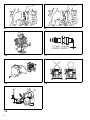
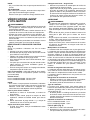
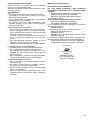
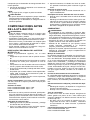
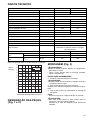
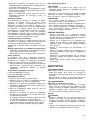
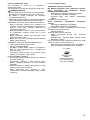
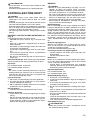
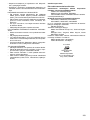
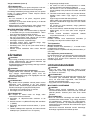
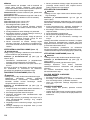
Priming water (Fig. 6) CAUTION: • Do not start the pump without water in the pump case. Otherwise mechanical seal could be damaged. Remove priming plug and add clear water until pump case is filled up with water. After filling tighten the priming plug. NOTE: • If the water intake is not sufficient, self-priming capacity becomes lower. • Be sure the pump is placed on the firm place and as near to available water source as possible. • The higher the suction head is the more time will be required for priming with a less discharge. CHECKING ENGINE: – Carefully check fuel hoses and joints for looseness and fuel leakage. Leaked fuel creates a potentially dangerous situation. – Check bolts and nuts for looseness. If any, retighten them. A loose bolt or nut may cause serious engine trouble. – Check the engine oil and refill if necessary. – Check the fuel level and refill if necessary. Take care not to overfill the tank. – Keep cylinder fins and recoil starter free of dirt, grass and other debris. – Wear snug fitting working clothes when operating the engine. OPERATION WARNING: • Never touch a hot engine muffler especially when restarting the engine. The engine muffler becomes hot after running the engine. • Do not put your hands or foreign objects in the release valves when the pump is in use. WARNING: Beware of water-hammering • Do not allow the wheel of a vehicle to run over the delivery hose. Do not close the delivery valve abruptly, because a water-hammer will occur which may result in heavy damage to the pump. Starting: CAUTION: • Because the lubricating oil has not yet spread enough, do not rev up the engine just after engine starts. Unnecessary high-revolution shortens life of the equipment or cause damage. 1. Check that the pump case is filled with water. 2. Check that the strainer is set under the water. CAUTION: • Employ some preventive method when the bottom of the water is covered with mud or sand. 3. Check there is no obstacle on the mouth of delivery hose. 4. Turn the engine I-O (ON/OFF) switch to the “I” (ON) position. 5. Check that the throttle lever indicates “L”. (Fig. 7) 6. Continue to push the primer pump until fuel comes into the primer pump. (In general, 7 to 10 pushes.) 7. Adjust the choke lever. – If the engine is cold or the ambient temperature is low, close the choke lever fully. (Fig. 8) – If the engine is warm or the ambient temperature is high, open the choke lever half-way, or keep it fully open. 8. Pull the starter knob gently until a certain resistance is felt. Then, return the starter knob, and pull it strongly. Never pull the rope to the full extension. Once the starter knob is pulled, never release your hand immediately. Hold the starter knob until it returns to its original point. If it is difficult to start the engine, open the throttle by about 1/3. 9. Once engine starts, set choke lever to the OPEN position if you have closed the choke lever. (Fig. 9) 10.Allow the engine to properly “warm up”. Continue warm-up operation for 2 to 3 minutes at “L” position. Running engine: Turn the throttle lever to middle position, and check water come out from the delivery hose. Finishing operation Stopping engine Turn the throttle lever to “L” position to set the engine at the lowest revolution. Turn the engine I-O (ON/OFF) switch to the “O” (OFF) position. Drain of water after use Water inside the pump case freezes at below 0°C in winter and pump may possibly break. After use, drain water from the drain at bottom to store. SERVICING INSTRUCTIONS WARNING: • Before doing any work on the equipment, always stop the engine. Do not perform any work when the engine is still hot. CAUTION: • Do not modify or adjust the carburetor. It is already factory adjusted for its best efficiency. In case adjustment is required, ask your local service center. • Do not wash the engine with water during servicing. ENGINE OIL CHANGE WARNING: • The engine and engine oil is still hot just after stopping engine. Allow sufficient time for the engine and engine oil to cool down. Otherwise a skin burn may result. CAUTION: • Before changing oil, check for a suitable way to dispose of old oil. Do not pour it down into sewage drains, onto garden soil or into open streams. Your local zoning or environmental regulations will give you more detailed instructions on proper disposal. Deteriorated engine oil shortens the life of the engine. Be sure to check the oil and level regularly. NOTE: • If the oil filled above the limit, it may be contaminated or may catch fire with white smoke. Allow sufficient time after stopping engine for the engine oil to return to the oil tank to ensure accurate reading of the oil level. 9