1
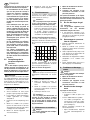
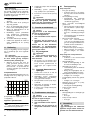
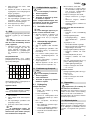
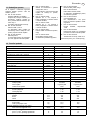
ENGLISH damage by the water overheating in the pump. 2. Slowly pour in clear water, until the pump is filled. 3. To reduce the time needed for priming you can also fill the suction line. 4. Replace the water filler plug, complete with gasket. 5. Open pressure line (open tap or spray nozzle) for any air to escape during priming. 1. Switch Off. 2. Unplug. 6. Start equipment (see “Operation”). 3. 7. Switch equipment OFF when water runs out steadily. Ensure that pressure is relieved from equipment and connected accessories. 6. Operation Pump and suction line must be connected and filled (see “Prior to Operation”). Caution! Pump must not run dry. Ensure there is always sufficient pumping medium (water) available. A If the motor does not start, no pressure is built up or similar effects are evident, switch the equipment OFF – and try to remove the fault (see “Trouble Shooting”). Pump characteristic curve The pump characteristic curve shows which pump capacity is possible in dependance on the delivery head. 7. Care and Maintenance A Danger! Prior to all servicing: Service and repair work other than described here must be left to qualified specialists. 7.1 Danger of freezing Caution! Frost damages the pump and accessories, as both always contain water! A When there is danger of freezing, dismount equipment and accessories and store at a freeze-proof location (see below). 7.2 Equipment dismounting and storing 1. Switch equipment OFF and unplug. 2. Open pressure line (open tap or spray nozzle) and drain water completely. 3. Drain pump completely; to do so remove the drain plug from the pump 4. Disconnect suction and pressure lines from the equipment. 5. Store equipment in a frost-free space (at least 5 °C). 8. Trouble Shooting (Pump characteristic curve for 0.5 m suction head and 1" suction hose.) Commissioning A Danger! Prior to all servicing: 1. Switch Off. 2. Unplug. 3. Ensure that pressure is relieved from equipment and connected accessories. Note: 3 This pumps runs as long as the ON/OFF switch is switched ON. 1. Plug power cable in. 2. Switch pump on with the ON/OFF switch. 3. Open pressure line (open tap or spray nozzle). 4. Check to see that the water comes out! Caution! With a closed pressure line do not let pump run for more then 10 minutes, otherwise there could be A 8.1 Fault finding Pump does not run: No mains voltage. • Check cables, plug, outlet and mains fuse. Mains voltage too low. • Use only extension cables with sufficient lead cross section (see “Technical Specifications”). Motor overheated, motor protection relay tripped. • After cooling off the pump will switch ON again. • Ensure sufficient ventilation, keep vent slots clear. • Observe max. temperature of the pumped medium. Motor hums but does not start. • With the motor switched OFF, put screwdriver or similar through the fan cover's vent slots and turn the fan. Pump blocked or out of order. • Disassemble pump and clean. • Clean diffusor, replace if necessary. • Clean impeller, replace if necessary. Pump does not prime correctly or runs very noisily: Lack of water. • Ensure there is a sufficient water supply. Suction line leaky. • Seal suction line, tighten screw fittings. Suction head too high. • Observe max. suction head. • Install check valve, fill suction line with water. Suction strainer (accessory) blocked. • Clean, replace if necessary. Check valve (accessory) blocked. • Clean, replace if necessary. Water leaks between motor and pump, Duocone seal worn. • Replace Duocone seal. Pump blocked or out of order. • see above. Pressure too low: Suction line leaky or too much suction head. • see above. Pump blocked or out of order. • see above. 9. Repairs A Danger! Repairs to electric tools must only be carried out by a qualified electrician! Electric tools in need of repair can be sent to an authorised service center in your country. See spare parts list for address. Please attach a description of the fault to the electric tool. 10. Environmental Protection The packaging of the pump can be 100 % recycled. Worn out power tools and accessories contain considerable amounts of valuable raw and plastic materials, which can be recycled. 11