1
Lifting:
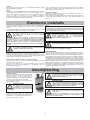
Every pump needs a stout lifting rope. Its end must remain accessible under all
circumstances.
Only a competent electrician should be allowed to work on the electrical circuit,
since only he knows the dangers involved and the regulations to be followed.
Cable:
Before switching on:
The cable and its possible watertight connection and extension cable must reach
to a level beyond reach of flooding. An electrician can extend a cable and make
the splice waterproof, if he is experienced and has the proper 3M or equivalent
kit. Replacement of the cable, in a workshop only, is always preferable.
Voltage loss due to underrated cabling between power source and pump, is by far
the most common cause of motor overload.
Do not connect the power supply if any part of the pump or its installation has not
been completed and inspected, or if anyone is touching the water.
Two additional hazards for the cable are snagging whilst the pump is being
lowered, and crushing by vehicle tires or tracks. Transport is also a potential
source of change.
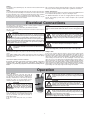
Electrical Connections
The pump must be connected to terminals or starting equipment installed at a
level at which it cannot be flooded.
All electrical work must be carried out by an authorized electrician.
Only open a motor at a workshop. All measurements must be made at the free
end of the cable.
NOTE!
If a plug and socket are used, the grounding lead should be longer than the
phases to ensure that the other leads will, in case of a strong pull, be torn
first.
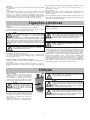
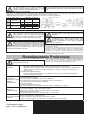
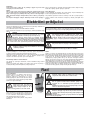
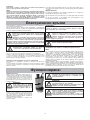
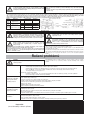
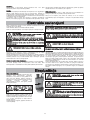
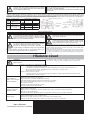
CAUTION!
CAUTION!
All electrical equipment must always be earthed (grounded).
this applies both to the pump and to any monitoring equipment.
Before connecting the cabtyre cable to the terminal board,
make sure that the power supply (i.e. circuit breaker) is
properly disconnected. Failure to do so may lead to electrical
shock, short, or injury caused by the unintended starting of the pump.
Improper wiring can lead to current leakage, electrical shock or fire.
Be sure to use a ground leakage breaker and an overcurrent protector (or
breaker) to prevent damage to the pump that may lead to electrical shock.
Imperfect grounding can cause the pump to be put out of operation by
electro-galvanic corrosion very quickly.
CAUTION!
If a cable is damaged, it must always be replaced.
CAUTION!
The electrical installations must conform to national and local
regulations.
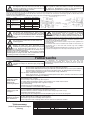
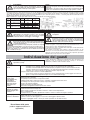
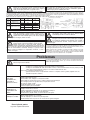
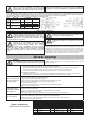
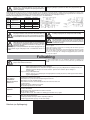
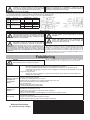
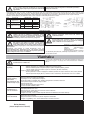
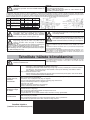
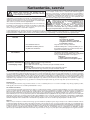
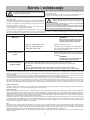
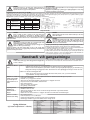
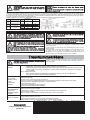
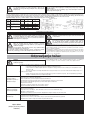
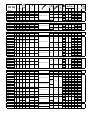
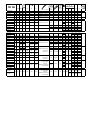
For connecting the cables correctly to the terminal board please
keep to the diagramme indicated in the table in the appendix
Cabtyre cable
Check that the nameplate of the pump to verify that its voltage and frequency are
correct.
Power supply variation must be within ±1Hz (frequency) and ±5% (voltage) of
rated values. Check that the thermal overload relays has been set to the pump’s
rated ampere draw.
If one or more extension cables are used, they may need to be of larger section
than the pump cable, according to length and possible other loads. A cable of
insufficient section results in loss of voltage and hence overheating of motor and
cable, which may lead to repeated motor stoppage, unreliability, shortcircuit, fire,
current leakage and electric shock. So does a damaged or unsecurely wired
cable, the more so if it is submerged. No attempt should be made to replace or
splice the pump cable, or open the motor, outside of a suitably manned workshop.
Always protect the cable against pulling, crushing, grazing and kinking, as the
copper conductors are fragile and must remain insulated to avoid lack of voltage,
shortcircuiting or electric shock. Apply no load to a cable that is lying in a roll, as
a peak voltage can result, high enough to burn through the insulation.
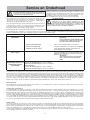
Connection of starter and motor conductors
If electrical connection of the pump is found to be difficult, contact your
Tsurumi dealer. To enable the correct connections, the number of
conductors, any monitoring equipment and the method of starting must be
known.
Operation
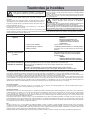
Before Starting:
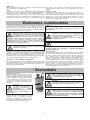
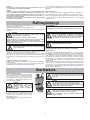
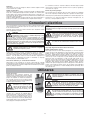
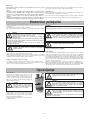
CAUTION!
Check that all persons concerned agree that all
verifications have been completed. Check that all bolts
are tight and the pump´s weight is supported, the
discharge conduit has been connected up, nobody is
touching the water nor is unnecessarily near the
conduit or switchgear. Be prepared to stop at once.
Reversal of the direction of rotation on a plug that has no
phase transposing device may be done only by an authorized
person.
CAUTION!
If the built-in motor protection has tripped, the pump will stop
but will restart automatically when it has cooled down.
NEVER open the motor to make measurements, this can be
done at the free end of the cable.
CAUTION!
The starting jerk may be violent.
Don´t hold the pump handle when
checking the direction of rotation.
Make sure that the pump is firmly supported and
cannot rotate.
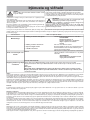
WARNING!
Never insert your hand or any other object into the inlet
opening on the underside of the pump casing when the pump
is connected to the power supply.
Before inspecting the pump casing, check that the pump has been isolated
from the power supply and cannot be energized.
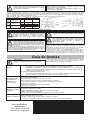
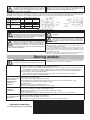
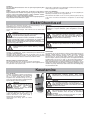
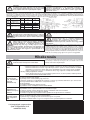
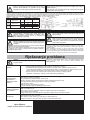
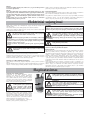
The pump will jerk anti-clockwise when viewed from
above, indicating that it is running clockwise. If not, two
of the three phases U, V, W should be transposed with
care by an electrician at the point of connection of
pump cable to starter.
In the case of star delta please ask your Tsurumi
dealer.
3