1
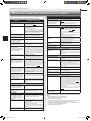
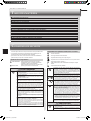
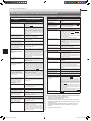
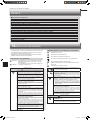
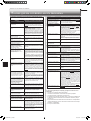
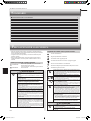
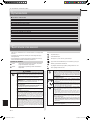
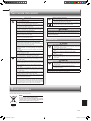
SAFETY PRECAUTIONS
CAUTION
Do not expose pets or houseplants to direct airflow.
• This may cause injury to the pets or plants.
Do not place other electric appliances or furniture under the
indoor/outdoor unit.
• Water may drip down from the unit, which may cause damage or
malfunction.
Do not operate switches with wet hands.
• This may cause electric shock.
Do not clean the air conditioner with water or place an object that
contains water, such as a flower vase, on it.
• This may cause fire or electric shock.
Do not step on or place any object on the outdoor unit.
• This may cause injury if you or the object falls down.
Do not leave the unit on a damaged installation stand.
• The unit may fall and cause injury.
Do not step on an unstable bench to operate or clean the unit.
• This may cause injury if you fall down.
Do not pull the power cord.
• This may cause a portion of the core wire to break, which may
cause overheating or fire.
Do not charge or disassemble the batteries, and do not throw
them into a fire.
• This may cause the batteries to leak, or cause a fire or explosion.
Do not operate the unit for more than 4 hours at high humidity (80% RH or more) and/or with windows or outside door left
open.
• This may cause the water condensation in the air conditioner, which
may drip down, wetting or damaging the furniture.
• The water condensation in the air conditioner may contribute to
growth of fungi, such as mold.
Do not use the unit for special purposes, such as storing food,
raising animals, growing plants, or preserving precision devices
or art objects.
• This may cause deterioration of quality, or harm to animals and
plants.
Do not expose combustion appliances to direct airflow.
• This may cause incomplete combustion.
Never put batteries in your mouth for any reason to avoid accidental ingestion.
• Battery ingestion may cause choking and/or poisoning.
Before cleaning the unit, switch it OFF and disconnect the power
plug or turn the breaker OFF.
• This may cause injury, since the fan inside rotates at high speeds
during operation.
When the unit will be unused for a long time, disconnect the
power plug or turn the breaker OFF.
• The unit may accumulate dirt, which may cause overheating or
fire.
Replace all batteries of the remote controller with new ones of
the same type.
• Using an old battery together with a new one may cause overheating, leakage, or explosion.
If the battery fluid comes in contact with your skin or clothes,
wash them thoroughly with clean water.
• If the battery fluid comes in contact with your eyes, wash them
thoroughly with clean water and immediately seek medical attention.
Ensure that the area is well-ventilated when the unit is operated
together with a combustion appliance.
• Inadequate ventilation may cause oxygen starvation.
Turn the breaker OFF when you hear thunder and there is a possibility of a lightning strike.
• The unit may be damaged if lightning strikes.
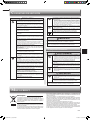
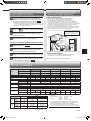
IMPORTANT
Dirty filters cause condensation in the air conditioner which will contribute to
the growth of fungi such as mold. It is therefore recommended to clean air filters
every 2 weeks.
Before starting the operation, ensure that the horizontal vanes are in the closed
position. If operation starts when the horizontal vanes are in the open position,
they may not return to the correct position.
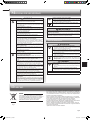
For installation
WARNING
Consult your dealer for installing the air conditioner.
• It should not be installed by the user since installation requires specialized
knowledge and skills. An improperly installed air conditioner may cause
water leakage, fire, or electric shock.
Provide a dedicated power supply for the air conditioner.
• A non-dedicated power supply may cause overheating or fire.
Do not install the unit where flammable gas could leak.
• If gas leaks and accumulates around the outdoor unit, it may cause an
explosion.
Earth the unit correctly.
• Do not connect the earth wire to a gas pipe, water pipe, lightning rod, or
a telephone ground wire. Improper earthing may cause electric shock.
CAUTION
Install an earth leakage breaker depending on the installation location
of the air conditioner (such as highly humid areas).
• If an earth leakage breaker is not installed, it may cause electric
shock.
Ensure that the drain water is properly drained.
• If the drain passage is improper, water may drip down from the indoor/
outdoor unit, wetting and damaging the furniture.
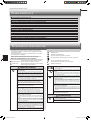
In case of an abnormal condition
Immediately stop operating the air conditioner and consult your dealer.
After the air conditioner is used for several seasons, perform
inspection and maintenance in addition to normal cleaning.
• Dirt or dust in the unit may create an unpleasant odor, contribute
to growth of fungi, such as mold, or clog the drain passage, and
cause water to leak from the indoor unit. Consult your dealer for
inspection and maintenance, which require specialized knowledge
and skills.
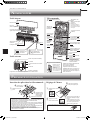
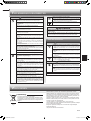
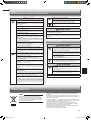
DISPOSAL
To dispose of this product, consult your dealer.
Note:
This symbol mark is for EU countries only.
This symbol mark is according to the directive 2002/96/
EC Article 10 Information for users and Annex IV, and/
or to the directive 2006/66/EC Article 20 Information for
end-users and Annex II.
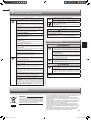
Fig. 1
Your MITSUBISHI ELECTRIC product is designed and manufactured with high
quality materials and components which can be recycled and/or reused.
This symbol means that electrical and electronic equipment, batteries and
accumulators, at their end-of-life, should be disposed of separately from your
household waste.
If a chemical symbol is printed beneath the symbol (Fig. 1), this chemical symbol means that the battery or accumulator contains a heavy metal at a certain
concentration. This will be indicated as follows:
Hg: mercury (0,0005%), Cd: cadmium (0,002%), Pb: lead (0,004%)
In the European Union there are separate collection systems for used electrical
and electronic products, batteries and accumulators.
Please, dispose of this equipment, batteries and accumulators correctly at your
local community waste collection/recycling centre.
Please, help us to conserve the environment we live in!
En-2
JG79A844H01_en.indd 2
2013/11/20 13:45:30