1
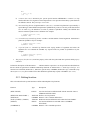
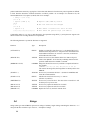
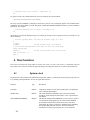
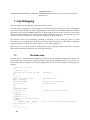
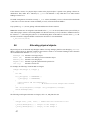
a_setf(s,add(x,y));
// assign s to new integer being sum of a x and y
printf(“The sum is %d\n”,dr(s,integercell)->integer);
a_free(s);
// release locations s, x, y
a_free(x);
a_free(y);
}
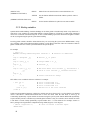
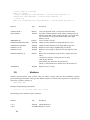
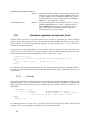
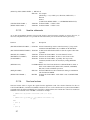
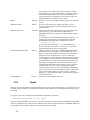
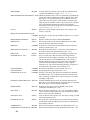
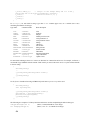
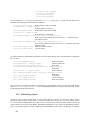
In storage.h, for each built-in storage type there is a C constant (upper case) or a variable (lower case)
containing the identifier for the type.
Type-name
LIST
SYMBOL
INTEGER
REAL
EXTFN
CLOSURE
STRING
ARRAY
STREAM
TEXTSTREAM
SOCKET
HASHTAB
HASHBUCKET
OID
HISTEVENT
constant/variable
Short description
LISTTYPE
SYMBOLTYPE
INTEGERTYPE
REALTYPE
EXTFNTYPE
CLOSURETYPE
STRINGTYPE
ARRAYTYPE
STREAMTYPE
TEXTSTREAMTYPE
sockettype
HASHTYPE
HASHBUCKETTYPE
objecttag
histeventtype
Lists
Symbols
Integers
Double precision reals
ALisp function in C
ALisp function closure
Strings
1D Arrays
File streams
String streams
Socket streams
Hash tables
Internal to hash tables
Object identifiers
Update events
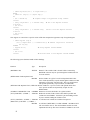
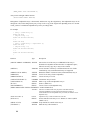
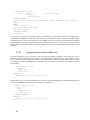
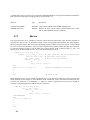
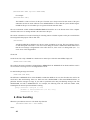
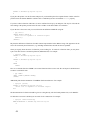
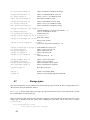
For most built-in datatypes there are C macros or functions for construction and access. For example, to allocate a
new handle of type STRING with the content “Hello world” you can use the macro mkstring that returns a handle
to the new string:
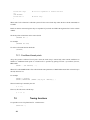
{
dcloid(mystring);
...
a_setf(mystring,mkstring("Hello world"))
...
a_free(mystring);
};
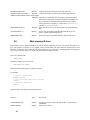
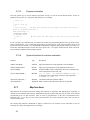
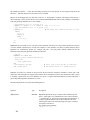
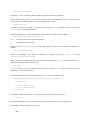
To dereference a handle referencing a STRING object the macro getstring can be used:
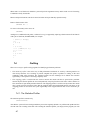
{
dcloid(mystring};
char *mystringcont;
a_setf(mystring,mkstring("Hello world"));
mystringcont = getstring(mystring);
printf("%s\n",mystringcont);
a_free(mystring);
};
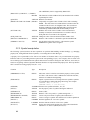
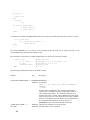
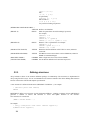
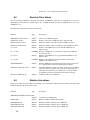
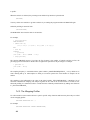
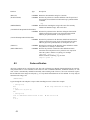
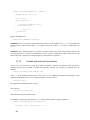
The following are examples of C library functions and macros used for manipulating the built-in data types:
oidtype mkinteger(int x)
int integerp(oidtype x)
58
(macro) Construct handle for a new integer
(macro) TRUE if X is a handle for an integer