1
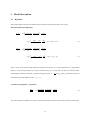
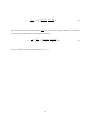
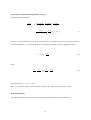
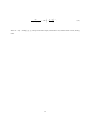
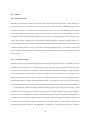
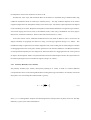
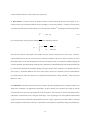
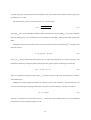
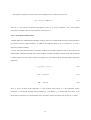
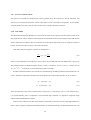
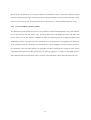
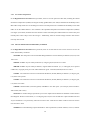
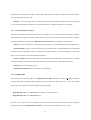
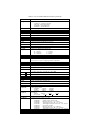
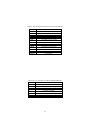
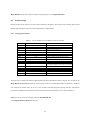
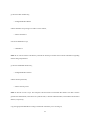
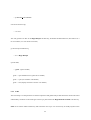
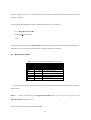
where τ is the ABE removal time scale.
The fundamental difference between the two assumptions is that the AS74 closure assumption relates the
convective fluxes and rainfall to the tendencies in the state of the atmosphere, while the FC80 closure assumption
relates the convective fluxes to the degree of instability in the atmosphere. Both schemes achieve a statistical
equilibrium between convection and the large-scale processes.
3. MIT-Emanuel scheme: The newest cumulus convection option to the REGional Climate Model version 3
(RegCM3) is the Massachusetts Institute of Technology (MIT) scheme. More detailed descriptions can be found
in Emanuel (1991) and Emanuel and Zivkovic-Rothman (1999). The scheme assumes that the mixing in clouds is
highly episodic and inhomogeneous (as opposed to a continuous entraining plume) and considers convective fluxes
based on an idealized model of sub-cloud-scale updrafts and downdrafts. Convection is triggered when the level
of neutral buoyancy is greater than the cloud base level. Between these two levels, air is lifted and a fraction of
the condensed moisture forms precipitation while the remaining fraction forms the cloud. The cloud is assumed to
mix with the air from the environment according to a uniform spectrum of mixtures that ascend or descend to their
respective levels of neutral buoyancy. The mixing entrainment and detrainment rates are functions of the vertical
gradients of buoyancy in clouds. The fraction of the total cloud base mass flux that mixes with its environment at
each level is proportional to the undiluted buoyancy rate of change with altitude. The cloud base upward mass flux
is relaxed towards the sub-cloud layer quasi equilibrium.
In addition to a more physical representation of convection, the MIT-Emanuel scheme offers several advantages
compared to the other RegCM3 convection options. For instance, it includes a formulation of the auto-conversion
of cloud water into precipitation inside cumulus clouds, and ice processes are accounted for by allowing the autoconversion threshold water content to be temperature dependent. Additionally, the precipitation is added to a single,
hydrostatic, unsaturated downdraft that transports heat and water. Lastly, the MIT-Emanuel scheme considers the
transport of passive tracers.
2.2.5 Large-Scale Precipitation Scheme
Subgrid Explicit Moisture Scheme (SUBEX) is used to handle nonconvective clouds and precipitation resolved
by the model. This is one of the new components of the model. SUBEX accounts for the subgrid variability in
21