1
OSA-279-200OK_Manual.qxd
20/11/2006
14:36
Page 3
PACEMAKER/DEFIBRILLATORS
SERVICE & REPAIR
All staff/personnel with a pacemaker/defibrillator fitted must be aware that the electromagnetic energy
generated when arc welding may cause your pacemaker to continually pace your heart. If your heart is
beating on its own, this may result in an irregular heart rate. The intense energy created when spot
welding or starting a bead may cause your pacemaker (including the pacemaker function of an
implantable defibrillator) to pause temporarily if it were pacing your heart. Your implantable defibrillator
could detect the electromagnetic energy from the welder (especially when spot welding) as a fast heart
rhythm, causing it to deliver a shock.
A comprehensive in house repair
and service facility is available
through your local agent.
SPECIFICATIONS
Model:
Nominal Voltage
Electrode capacity: Rutile, Basic, Stainless Steel, Cast Iron
Weight
Duty Cycle 100%
Duty Cycle 60%
Duty Cycle 40%
Voltage: Open Circuit (no welding being carried out)
Voltage: Supply
MINI-MAX125
230v~50 Hz
1.6mm - 2.5mm
2.8kg
50A
65A
70A
70v
230v
INSTALLATION
ACCESSORIES/CONSUMABLES
recommends using KENNEDY welding rods available from your nearest
Osaki Distribtuor.
*
Electrodes for Mild Steels
Arc welding rods for mild steel and medium tensile steels.
Medium rutile coated, all positional rods*.
Applications: for steel plate and strip including
structural steels and pipe work, especially under
site conditions.
Superb finish with self-releasing slag.
N.B. Suitable for AC (50V minimum open circuit) and DC +/-.
Order Code
KEN-891
-3010K
-3020K
-3030K
Size
No of Rods
(mm)
(per pack)
2.50 x 300
260
3.25 x 350
150
4.00 x 450
100
Weight
(per pack)
5.0kg
5.0kg
5.0kg
Minimum Maximum
Amperage Amperage
50A
90A
80A
125A
120A
180A
6
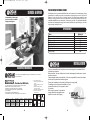
1. Flat or Downhand position
2. Fillet welding in the horizontal vertical
position
3. Butt and fillet welding in the vertical
up position
4. Butt and fillet welding using the
vertical down technique
5. Butt welding in the horizontal position
6. Butt and fillet welding in the
overhead position
3
2
1
4
The user is responsible for the installation and use of the equipment in accordance with the
manufacturers instructions.
Before installation, the user should assess the risk of electromagnetic interference on persons
and the environment.
If electromagnetic interference is detected it is the user’s responsibility to remedy the situation
with the help of a professional electrical engineer.
This may be remedied by the introduction of filtering on the supply cable.
The welding machine should not be modified in any way
and should be used only for the purpose for which
it is intended.
When using the machine it is advisable to
arrange cables tidily and together where
possible to minimise risk of tripping.
”
5
6
3
the
balance of power ”