1
1. Introduction
1
2
Introduction
Adept (Automatic Differentiation using Expression Templates) is a software library that enables algorithms written in C and C++ to be automatically differentiated. It uses an operator overloading approach, so very little code
modification is required. Differentiation can be performed in forward mode (the “tangent-linear” computation),
reverse mode (the “adjoint” computation), or the full Jacobian matrix can be computed. This behaviour is common to several other libraries, namely ADOL-C (Griewank et al., 1996), CppAD (Bell, 2007) and Sacado (Gay,
2005), but the use of expression templates, an efficient way to store the differential information and several other
optimizations mean that reverse-mode differentiation tends to be significantly faster and use less memory. In fact,
Adept is also usually only a little slower than an adjoint code you might write by hand, but immeasurably faster in
terms of user time; adjoint coding is very time consuming and error-prone. For technical details of how it works,
benchmark results and further discussion of the factors affecting its speed when applied to a particular code, see
Hogan (2014).
This user guide describes how to apply the Adept software library to your code, and many of the examples
map on to those in the test directory of the Adept software package. Section 2 describes the functionality that the
library provides. Section 3 outlines how to install it on your system and how to compile your own code to use it.
Section 4 describes how to prepare your code for automatic differentiation, and section 5 describes how to perform
forward- and reverse-mode automatic differentiation on this code. Section 6 describes how to compute Jacobian
matrices. Section 7 provides a detailed description of how to interface an algorithm implemented using Adept with
a third-party minimization library. Section 8 describes how to call a function both with and without automatic
differentiation from within the same program. Section 9 describes how to interface to software modules that
compute their own Jacobians. Section 11 provides some tips for getting the best performance from Adept. Section
12 describes the user-oriented member functions of the Stack class that contains the differential information and
section 13 describes the member functions of the “active” double-precision type adouble. Section 14 describes
the exceptions that can be thrown by some Adept functions. Section 15 describes how to configure the behaviour of
Adept by defining certain preprocessor variables, and section 16 answers some frequently asked questions. Finally,
section 17 describes the license terms.
2
What functionality does Adept provide?
Adept provides the following functionality:
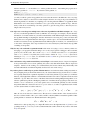
Full Jacobian matrix Given the non-linear function y = f (x) relating vector y to vector x coded in C or C++,
after a little code modification Adept can compute the Jacobian matrix H = ∂y/x, where the element at
row i and column j of H is Hi, j = ∂yi /∂x j . This matrix will be computed much more rapidly and accurately
than if you simply recompute the function multiple times, each time perturbing a different element of x by
a small amount. The Jacobian matrix is used in the Gauss-Newton and Levenberg-Marquardt minimization
algorithms.
Reverse-mode differentiation This is a key component in optimization problems where a non-linear function
needs to be minimized but the state vector x is too large for it to make sense to compute the full Jacobian
matrix. Atmospheric data assimilation is the canonical example in the field of meteorology. Given a nonlinear function J(x) relating the scalar to be minimized J to vector x, Adept will compute the vector of adjoints
∂J/∂x. Moreover, for a component of the code that may be expressed as a multi-dimensional non-linear
function y = f (x), Adept can compute ∂J/∂x if it is provided with the vector of input adjoints ∂J/∂y. In
this case, ∂J/∂x is equal to the matrix-vector product HT ∂J/∂y, but it is computed here without computing
the full Jacobian matrix H. The vector ∂J/∂x may then be used in a quasi-Newton minimization scheme
(e.g., Liu and Nocedal, 1989).
Forward-mode differentiation Given the non-linear function y = f (x) and a vector of perturbations δx, Adept
will compute the corresponding vector δy arising from a linearization of the function f . Formally, δy is
equal to the matrix-vector product Hδx, but it is computed here without computing the full Jacobian matrix
H. Note that Adept is designed for the reverse case, so might not be as fast or economical in memory in