1
Arterial Blood
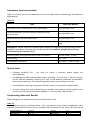
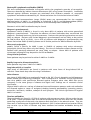
Arterial blood specimens are usually taken only for blood gas analyses, in which case it is
important that the syringe is properly heparinised and that the blood is collected anaerobically.
When the heparinised syringe has been filled with blood remove any air bubbles and seal with a
plastic syringe cap. Mix the blood by inversion and label the syringe before taking it to the
analyser. Keep the syringe in ice if the analysis cannot be performed immediately.
Capillary Blood
Capillary blood should be collected whenever possible in children to avoid the occasional
hazards of venepuncture. However, good collecting technique is essential in the interests of
both the quality and the quantity of the specimen.
Cerebrospinal Fluid
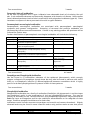
Cerebrospinal fluid (CSF) for protein estimation should be collected after the microbiology
samples to minimise inadvertent contamination with blood. CSF samples for measurement of
glucose should be collected into fluoride oxalate and accompanied by a blood sample collected
into a similar tube.
Urine
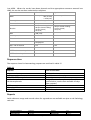
Random urine samples
An aliquot of random (usually early morning) urine is best collected into plastic WHITE CAPPED
universal (Sterilin) bottles. NEVER use red capped Sterilin bottles for chemical pathology.
Random urines for osmolality should be accompanied by a sample for serum osmolality.
Timed urine samples
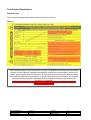
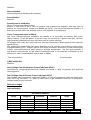
Urine collection bottles may contain a preservative that has safety hazards. It is important that
the patient is instructed NOT TO VOID URINE DIRECTLY INTO THE CONTAINER.
It is essential that timed urine collections are made with great care. Precise instructions must be
given regarding the emptying of a patient’s bladder at the start of the collection period
(discarding the urine).
It is usually convenient to collect a 24 hour urine from one morning to the next. At some
suitable time, e.g. 08.00 hrs, the bladder is emptied and the urine discarded. All urine passed
during the day and the following night is collected. The bladder is emptied at the same time
the following morning and this sample is added to the collection. The bladder should be
emptied and the urine saved before defecation.
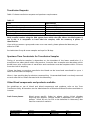
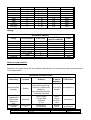
Refrigerate the urine during the collection if possible and send it to the laboratory with the
minimum of delay when the collection is complete. Appropriate preservatives may be necessary
and since these will be added to each bottle when it is requested from the department, the
bottles should not be emptied or rinsed before use and they should not be used for assays for
which they were not requested.
Document Number:
Document Name:
Review Interval:
Qual0035
Pathology User Guide
Isotracker
Version:
Review date:
Reviewed by:
Page 22 of 140
4.03
Guided by Isotracker
C Brock