1
Gill Instruments Ltd
_____________________________________________________________________________________________________________
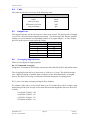
10.5. Returning unit
If the unit has to be returned, it should be carefully packed in the original packaging and
returned to your authorised Gill distributor, with a full description of the fault condition.
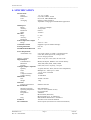
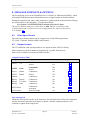
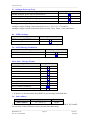
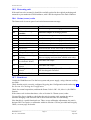
10.6. Status (error) codes
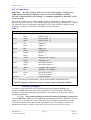
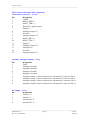
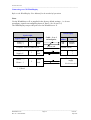
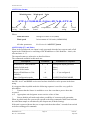
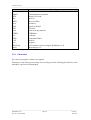
The Status code is sent as part of each wind measurement message.
Code
00
60
A
01
02
04
08
09
10
50
51
62
63
65
V
Status
OK
OK and heating
enabled
OK
Axis 1 failed
Axis 2 failed
Axis 1 and 2 failed
NVM error
ROM error
System gain at max.
Marginal system gain
Measurement average
building.
Heating current tripped
or electronic failure,
Heater Thermistor open
circuit
Heating element open
circuit
NMEA data Void
Condition
Sufficient samples in average period
Sufficient samples in average period
NMEA data Acceptable
Insufficient samples in average period on U axis
Insufficient samples in average period on V axis
Insufficient samples in average period on both axes
NVM checksum failed, data could be uncalibrated.
ROM checksum failed, data could be uncalibrated.
Inaccurate data likely
Data valid, but marginal operation
Data valid but warns that average period not reached
when averaging used (non-heat enabled units only).
Valid data still output
Valid data still output.
Valid data still output, Heater Element or Heater
PSU has dropped out/failed
Invalid data output
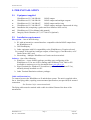
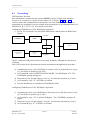
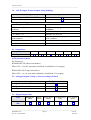
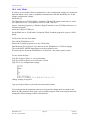
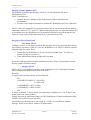
10.7. Bench test
Couple the WindObserver II to the host system and power supply, using a known working
test cable.
Check that the unit is correctly configured by going into Configuration mode and using D3
See Section 9.3 Checking the Configuration.
Check for normal output data, and that the Status Code is OK – 00, 60 or A (for NMEA
format).
If the status code is other than these, refer to Section 10.5 Status (error) codes.
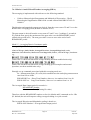
Use an office fan or similar to check that the unit is sensing wind, turning the unit to
simulate changing wind direction and to check that both axes are functioning.
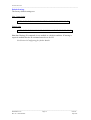
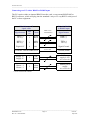
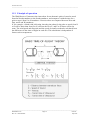
Note that this is a quick functional test. There are no calibration adjustments; the unit is
designed NOT to require re-calibration within its lifetime. Gill has provided and Integrity
Check, see next page for details.
________________________________________________________________________________________________
WindObserver II
Page 51
Issue 22
Doc. No. 1390-PS-0004
July 2014