1
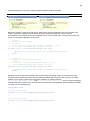
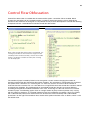
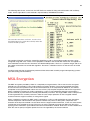
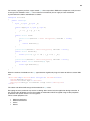
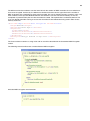
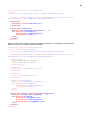
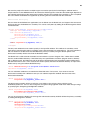
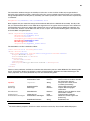
29 Obfuscation Agent The Obfuscation Agent consists of a list of tasks that Babel performs against the target assembly type model to determinate which symbols should not be obfuscated. The Agent prevents symbol names from being obfuscated according the Common Language Runtimes design rules. Babel is able to run a set of preconfigured tasks, and they are continuously updated in each new product release. Some of these tasks are simple—like checking fields of serizializable types. Other tasks are more complex and involve MSIL code static analysis. The Agent works to prepare a safer obfuscation process and most of the time the final obfuscated assembly will run perfectly. Because the Agent can only perform static code analysis, it may not discover types that are controlled during execution. For example: the names of types, stored into strings that are built at runtime are opaque to the Agent. Using those strings as parameters of reflection methods impose a restriction on obfuscating the relative type or member name. Changing those type names will likely break the obfuscated assembly. For this scenario, XML rules files, combined with Agent, are the recommended solution. Babel’s Agent is enabled by default and should be left enabled whenever possible. There is generally no reason to disable the Agent entirely. But if you want, you can arrange an XML Rules file to skip a particular task from being processed. This scenario is useful when an XML rule is overridden by an Agent task outcome. Agent tasks run after the Rules processing phase, so any custom XML Rule enforced on a member will be overridden by the Agent task. The only way to disable agent rules is to define an XML Rule to switch off the Agent task on that particular member. For instance, suppose that you want to obfuscate a public type named RedBlackTree. So you prepare a rule to force Babel to rename the type: <Rule name="RedBlackTree" feature="renaming" exclude="false"> <Target>Classes</Target> <Pattern>*.RedBlackTree</Pattern> <Description>Rename RedBlackTree class.</Description> </Rule> Then you discover that the type was not renamed because the Agent found that the type is serializable, and serializable types are not renamed. But suppose you don’t care about serialization and you want that type to be obfuscated. You can get around this in two different ways. One way is to tell Babel to turn off Agent analysis with the option –noagent. But this is overkill for our purpose, and the application process might be broken after the obfuscation because the Agent has not run. The better way, however, is to add a second rule that forces the Agent to ignore the RedBlackTree type when the serialization task is running. <Rule name="RedBlackTree agent" feature="agent" exclude="true"> <Pattern>.*RedBlackTree</Pattern> <Properties> <TaskNameList>Serializable types</TaskNameList> </Properties> <Description>Ignore Serializable types tasks for RedBlackTree.</Description> </Rule> In this rule we have two elements that are meant to be explained. The feature is set to agent to tell the rule processor that we want the rule to be applied to the agent. The presence of the element Properties with the property TaskNameList that contains the name of the agent task “Serializable types”. This tells the rule processor that we want to exclude only the analysis carried on serializable types.