1
Chapter 3. Formalizing a problem
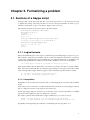
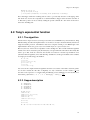
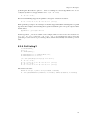
Results for a in [-inf, 1] and b in [2, 3] and f in [9, inf]:
Inequalities that give an upper bound on an absolute value are treated differently. They are assumed
to be full enclosures with a lower bound equal to zero. In other words, |x| <= 1 is syntactic sugar
for |x| in [0,1].
3.1.1.2. Relative errors
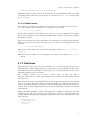
The relative error between an approximate value x and a more precise value y is expressed by (x y) / y. For instance, when one wants to prove a bound on it, one can write:
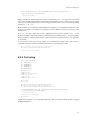
{ ... -> |(x - y) / y| <= 0x1p-53 }
However, this bound can only be obtained if y is (proved to be) nonzero. Similarly, if a hypothesis
was a bound on a relative error, this hypothesis would be usable by Gappa only if it can prove that its
denominator is nonzero.
Gappa provides another way of expressing relative errors which does not depend on the denominator
being nonzero. It cannot be used as a subexpression; it can only be used as the left-hand side of an
enclosure:
{ ... -> x -/ y in [-0x1p-53,0x1p-53] }
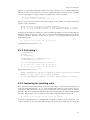
This enclosure on the relative error represents the following proposition: ∃ ∈ [−2−53 , 2−53 ], x =
y × (1 + ).
When the bounds on a relative error are symmetric, the enclosure can be written as |x -/ y| <=
... instead.
3.1.2. Definitions
Typing the whole expressions in the logical formula can soon become annoying and error-prone,
especially if they contain rounding operators. To ease this work, the user can define in another section
beforehand the expressions that will be used more than once. A special syntax also allows to avoid
embedding rounding operators everywhere.
First, rounding operators can be given a shorter name by using the @name =
definition<parameters> syntax. name can then be used wherever the whole definition would
have been used.
Next, common sub-terms of a mathematical expression can be shared by giving them a name with the
name = term syntax. This name can then be used in later definitions or in the logical formula or in
the hints. The equality itself does not hold any semantic meaning. Gappa will only use the name as
a shorter expression when displaying the sub-term, and in the generated proof instead of a randomly
generated name.
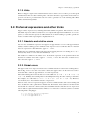
Finally, when all the arithmetic operations on the right side of a definition are followed by the same
rounding operator, this operator can be put once and for all on the left of the equal symbol. For
example, with the following script, Gappa will complain that y and z are two different names for the
same expression.
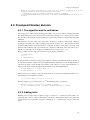
@rnd = float< ieee_32, ne>;
y = rnd(x * rnd(1 - x));
z rnd= x * (1 - x);
{ y - z >= 0 }
7