1
USER MANUAL
Most pilots get to know the wing relatively fast and quickly gain enough trust
to fly it in stronger conditions than they did ever before. Still, you should
always be careful when flying low. Remember that Plasma flies faster than
ordinary paragliders and sometimes it can be of importance (e.g. when
landing on a slope).
After landing in strong wind the paraglider can be safely put down with B
risers, or with a strong pull on the rear D risers.
3.2.4 WINCHING
Plasma is not designed for winching. As mentioned before, reflex profile
used in the wing has an inherent tendency to increase the angle of attack.
While in normal flight such a disposition makes it safer, during winch start it
can be dangerous.
Nevertheless, a lot of successful winches on Plasma have been made.
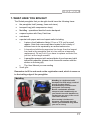
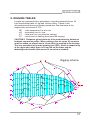
Experience shows that it should only be done with opened trims (blue area).
To sum it up: winching can be done, but proper attention must be paid.
3.3
POWERED FLIGHT
CAUTION: Before each start it is necessary to have a thorough check of the
wing, harness and power unit.
In powered flight most of the wing characteristics remain as described above
(chapter 3.2). Still there is additional information needed, concerning power
output, proper matching of the wing/engine/propeller etc.
Dudek Paragliders cannot take responsibility for all possible combinations,
but if you contact us we are always ready to help.
First flights
In order to get familiar with your wing we recommend flying with closed
trimmers at first (read area), because in this configuration Plasma behaves
asa standard wing. Flying like that try pulling the brakes some until you feel
resistance, usually it will be at about 1/4 of the range.
Once you feel competent with your wing, you can start experimenting with
faster trim settings and speed system. Learn to use all the additional speed
and safety of the Plasma.
13