1
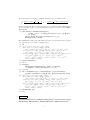
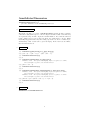
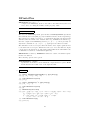
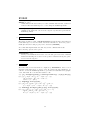
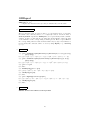
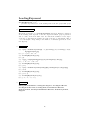
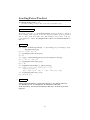
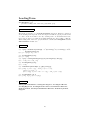
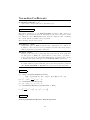
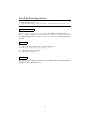
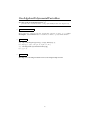
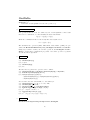
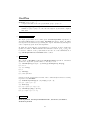
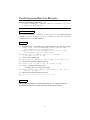
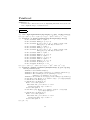
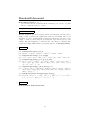
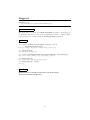
OreAlgebra
OreAlgebra g1 , g2 , . . .
creates an Ore algebra with the generators g1 , g2 , . . . .
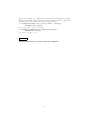
OreAlgebra opoly
gives the Ore algebra in which the Ore polynomial opoly is represented.
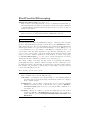
OreAlgebra ann
gives the Ore algebra in which the annihilating ideal ann is represented.
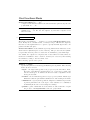
O
More Information
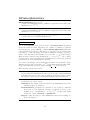
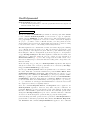
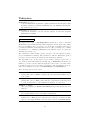
In the above specification, opoly is assumed to be an OrePolynomial expression and ann to be a list of such. The elements of ann usually will be represented
in the same Ore algebra, so this algebra will be returned. However, if you give
a list of OrePolynomial expressions that do not share the same algebra, you
get back a list of Ore algebras, corresponding to the elements of the input ann.
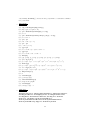
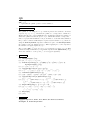
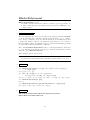
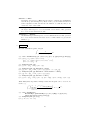
The command OreAlgebra is also used to create an Ore algebra. For this
purpose, the generators of the desired Ore algebra have to be given as arguments. By the “generators of an Ore algebra” we understand all variables and
Ore operators that occur polynomially. An Ore algebra in general has the form
K(x1 , . . . , xk )[y1 , . . . , yn ][∂1 ; σ1 , δ1 ] · · · [∂d ; σd , δd ]; the generators of this Ore algebra are y1 , . . . , yn , ∂1 , . . . , ∂d . Note that the Ore operators ∂i always have to
be included into the set of generators (no division by those is allowed!).
The endomorphisms σi and δi are not given explicitely when creating an Ore
algebra. They have to be “attached” to the symbols ∂i before, using the commands OreSigma, OreDelta, and OreAction. For standard applications this
is not necessary since the common Ore operators are already predefined.
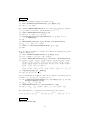
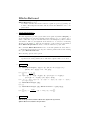
The order in which the generators g1 , g2 , . . . are given is used when an Ore polynomial is represented in this algebra: all power products are written according
to this order. For example, when dealing with the Weyl algebra, you can choose
whether x appears always on the left and Dx on the right (the standard way),
or the other way round. The coefficients (in the general form as stated above
they are elements in K(x1 , . . . , xk )) are always written on the left.
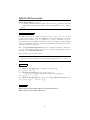
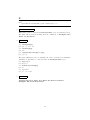
When working in a module over some Ore algebra, use position variables: to
represent the element (T1 , . . . , Tm ), Ti ∈ O, write it either as p1 T1 + · · · + pm Tm
with new indeterminates p1 , . . . , pm (“position variables”), or as pT1 + p2 T2 +
· · · + pm T m with a single position variable p. The position variables have to
be added to the generators of O and their positions among the generators have
to be given with the option ModuleBasis to the relevant commands that can
deal with modules (OreGroebnerBasis, FGLM, FindRelation, etc.).
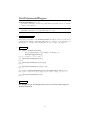
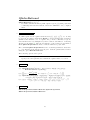
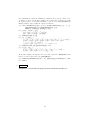
An Ore algebra is displayed using the standard mathematical notation for such
algebras, but internally it is represented as a Mathematica expression of the
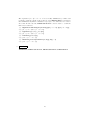
form OreAlgebraObject[gens, cNormal, cPlus, cTimes, ext]. Herein, gens is
a list containing the generators of the algebra. The next three arguments are
51