1
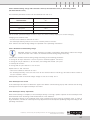
Requirement
Our recommendation
Ventilation source
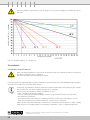
Sufficient room ventilation is absolutely required in order to
limit the hydrogen concentration (H2 concentration) in the ambient air of the battery room to a value of < 2% by volume.
Hydrogen is lighter than air. Make sure that hydrogen does not
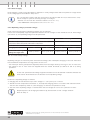
Danger!
accumulate (e.g. in the ceiling area). Ventilation and deaeration openings should be placed near the ceiling (see also Chap.
5.2.1.1 and Chap. 5.2.1.2).
Environment
The ambience should be clean and dry. Water, oil and dirt must be kept away
from the cell surface.
Passageway width in
front of and between the
battery racks
(and cabinets)
Europe: Passageway width = 1.5 x cell width (installation depth), at least
500 mm (see also EN 50272–2).
USA: 36“ or 915 mm
HOPPECKE recommendation:
If possible at the installation location: 1 m.
Otherwise: In accordance with local regulations.
Minimum distances
Rack to wall
Battery to wall
Conductive parts to ground
Battery ent terminals
Battery to sources of ignition
Upper surface of battery to
next tier of rack or bottom
of the next cabinet
50 mm
100 mm
1500 mm for Unom or Upart >120 V DC between non-insulated and grounded
parts (e.g. water lines)
1500 mm for Unom >120 V DC
See calculation of safety distance in Chap. 5.1.1.
250 mm It must be possible to measure the voltage and density and to
add water.
Access door
Lockable and fire retardant (T90).
Lighting
Recommend: at least 100 Ix.
Labeling
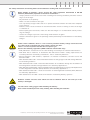
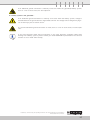
Warning signs in accordance with EN 50272–2.
Warning sign depicting risk of electrical voltage only necessary if battery voltage exceeds
60 V DC.
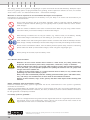
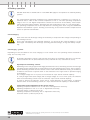
Risk of explosion
No sources of ignition (e.g. open flame, glowing objects, electrical switches,
sparks) near to the cell openings.
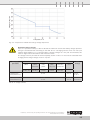
Ambient temperature
The recommended operating temperature is between 10 °C and 30 °C. The
optimal temperature is 20 °C ± 5 K. Higher temperatures shorten the service
life of the battery. All technical data is valid for the nominal temperature of
20 °C. Lower temperatures decrease battery capacity. Exceeding the limit temperature of 55 °C is not permissible. Avoid operating at temperatures in excess
of 45 °C for long periods of time.
Batteries should not be exposed to direct sunlight or near heat sources.
Ambient air
The air in the battery room must be free of impurities, e.g. suspended matter,
metal particles or flammable gases.
The humidity should be at a maximum of 85%.
Earthing
If you ground the racks or battery cabinets, make sure that you use a connection
to a reliable grounding point.
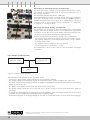
Battery installation
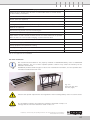
We recommend that batteries are properly installed in HOPPECKE battery racks
or cabinets. The use of other operator-specific solutions may render the warranty for the batteries null and void.
Country-specific
regulations
Some countries require batteries and racks to be installed in collection tanks.
Please observe all local regulations and contact your local HOPPECKE representative if necessary.
Tab. 5–1: Demands on the erection site
Installation, commissioning and operating instructions for vented stationary lead-acid batteries
7140203152 V1.1 (02.2014)
21