1
RTR Server Types
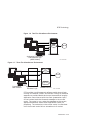
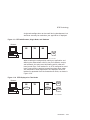
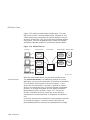
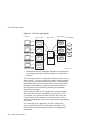
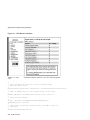
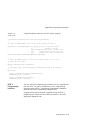
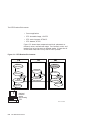
Figure 1–16 shows a simple shadow configuration. The main
(BE) Server at Site 1 and the shadow server (Shadow) at Site
2 both receive every transaction for the data partition they are
servicing. Should Site 1 fail, Site 2 continues to operate without
interruption. Sites can be geographically remote, for example,
available at separate locations in a wide area network (WAN).
Figure 1–16 Shadow Servers
Terminals
Frontends (FE)
Routers (TR)
Backends (BE) Database (DB)
BE - SITE 1
FE
Client
Server
DB
BE - SITE 2
FE
Client
Shadow
DB
TR
FE
Client
ZKO-GS014-99AI
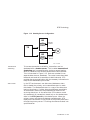
Note that each shadow server can also have standby servers.
Concurrent server
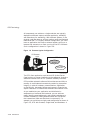
The concurrent server is an additional instance of a server
application running on the same node. RTR delivers transactions
to a free server from the pool of concurrent servers. If one
server fails, the transaction in process is replayed to another
server in the concurrent pool. Concurrent servers are designed
primarily to increase throughput and can exploit Symmetric
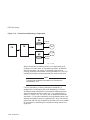
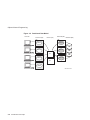
Multiprocessing (SMP) systems. Figure 1–17, Concurrent
Servers, illustrates the use of concurrent servers sending
transactions to the same partition on a backend, the partition
A-N.
Concurrent servers allow transactions to be processed in parallel
to increase throughput. Concurrent servers deal with the
same database partition, and may be implemented as multiple
1–18 Introduction