1
TABLE OF CONTENTS
PAGE
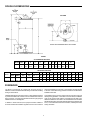
ROUGH-IN DIMENSIONS .............................................................. 2
FOREWORD ............................................................................... 2
GENERAL SAFETY INFORMATION
Precautions ............................................................................ 3
Chemical Vapor Corrosion ...................................................... 3
Improper Combustion .............................................................. 3
Liquid Petroleum Models ........................................................ 3-4
Extended Non-Use periods ..................................................... 4
Insulation Blankets .................................................................. 4
Circulating Pump ..................................................................... 4
Dishwashing Machine Requirements ...................................... 4
INSTALLATION
Required Ability ...................................................................... 4
General .................................................................................. 4
Grounding .............................................................................. 4
High Altitude Installation .......................................................... 4
Location Of Heater ............................................................... 4-5
Air Requirements .................................................................... 5
Unconfined Space .................................................................. 5
Confined Space ...................................................................... 5
Water Connections ................................................................. 5
Water (Potable) Heating & Space Heating ............................. 5-6
Closed Water System ............................................................. 6
Relief Valve ............................................................................ 6
Venting ................................................................................... 6
Vent Pipe Termination ............................................................ 6-7
Planning The Vent System .................................................... 7-8
PAGE
Installation Of Sidewall Vent System ....................................... 7
Vent Terminal Installation, Sidewall .......................................... 7
Preparation Of Blower Assembly ......................................... 8-9
Installation Of Vent System, Sidewall ..................................... 10
Installation Of Vertical Vent System ....................................... 10
Vent Pipe Preparation ......................................................... 10-12
Gas Connections ................................................................... 12
Connection of Gas Pipe ......................................................... 12
OPERATION
To Operate Heater ................................................................. 12
Lighting & Operating Label ..................................................... 13
Purging .................................................................................. 14
Temperature Regulation ......................................................... 14
MAINTENANCE
Main Burner ........................................................................... 14
High Temperature Cut-Off Switch .......................................... 15
Venting System ..................................................................... 15
Power Venter Maintenance ................................................... 15
T & P Valve ............................................................................ 15
Draining ................................................................................. 15
Main Burner And Igniter ...................................................... 15-16
Condensation ........................................................................ 16
Cathodic Protection - Anode .................................................. 16
Service & Repair ................................................................... 16
TROUBLE SHOOTING ............................................................. 16-19
LIMITED WARRANTY ................................................................. 20
GENERAL SAFETY INFORMATION
IMPROPER COMBUSTION
PRECAUTIONS
WARNING
ATTIC AND/OR EXHAUST FANS OPERATING ON THE PREMISES WITH A
WATER HEATER CAN RESULT IN CARBON MONOXIDE POISONING AND
DEATH.
DO NOT USE THIS APPLIANCE IF ANY PART HAS BEEN UNDER WATER.
Immediately call a qualified service technician to inspect the appliance
and to replace any part of the control system and any gas control which
has been under water.
OPERATION OF THESE FANS CAN PRODUCE A NEGATIVE DRAFT IN
THE AREA OF THE WATER HEATER PREVENTING THE PRODUCTS OF
COMBUSTION FROM EXHAUSTING THROUGH THE VENT PIPE.
IF THE UNIT IS EXPOSED TO THE FOLLOWING, DO NOT OPERATE HEATER
UNTIL ALL CORRECTIVE STEPS HAVE BEEN MADE BY A QUALIFIED
SERVICEMAN.
The venting of the water heater should be inspected by a qualified service
technician at the time of installation and periodically thereafter to ensure
a down-draft condition does not exist.
1. EXTERNAL FIRE.
DO NOT OBSTRUCT THE FLOW OF COMBUSTION AND VENTILATING
AIR. ADEQUATE AIR FOR COMBUSTION AND VENTILATION MUST BE
PROVIDED FOR SAFE OPERATION.
2. DAMAGE.
3. FIRING WITHOUT WATER.
4. SOOTING.
LIQUID PETROLEUM MODELS
CHEMICAL VAPOR CORROSION
WARNING
Water heaters for propane or liquefied petroleum gas (LPG) are different
from natural gas models. A natural gas heater will not function safely
on LP gas and no attempt should be made to convert a heater from
natural gas to LP gas.
WARNING
CORROSION OF THE FLUEWAYS AND VENT SYSTEM MAY OCCUR IF
AIR FOR COMBUSTION CONTAINS CERTAIN CHEMICAL VAPORS. SUCH
CORROSION MAY RESULT IN FAILURE AND RISK OF ASPHYXIATION.
LP gas must be used with great caution. It is highly explosive and heavier
than air. It collects first in the low areas making its odor difficult to detect
at nose level. If LP gas is present or even suspected, do not attempt to
find the cause yourself. Go to a neighbor's house, leaving your doors
open to ventilate the house, then call your gas supplier or service agent.
Keep area clear until a service call has been made.
Spray can propellants, cleaning solvents, refrigerator and air conditioning
refrigerants, swimming pool chemicals, calcium and sodium chloride
(water softener salt), waxes, and process chemicals are typical
compounds which are potentially corrosive.
Do not store products of this sort near the heater. Also, air which is
brought in contact with the heater should not contain any of these
chemicals. If necessary, uncontaminated air should be obtained from
remote or outside sources. The limited warranty is voided when failure
of water heater is due to a corrosive atmosphere. (Refer to the limited
warranty for complete terms and conditions).
At times you may not be able to smell an LP gas leak. One cause is odor
fade, which is a loss of the chemical odorant that gives LP gas its
distinctive smell. Another cause can be your physical condition, such
as having a cold or a diminishing sense of smell with age. For these
reasons, the use of a propane gas detector is recommended.
3