1
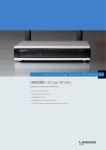
LANCOM IAP-321
Features as of: LCOS 9.00
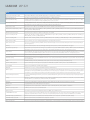
WLAN
Frequency band 2.4 GHz or 5 GHz
2400-2483.5 MHz (ISM) or 5150-5825 MHz (depending on country-specific restrictions)
Data rates IEEE 802.11n
300 Mbps according to IEEE 802.11n with MCS15 (Fallback to 6,5 Mbps with MCS0)
Data rates IEEE 802.11b/g
54 Mbps to IEEE 802.11g (fallback to 48, 36 , 24, 18, 12, 9, 6 Mbps, Automatic Rate Selection) compatible to IEEE 802.11b (11, 5.5, 2, 1 Mbps,
Automatic Rate Selection), IEEE 802.11 b/g compatibility mode or pure g or pure b
Data rates IEEE 802.11a/ h
54 Mbps (fallback to 48, 36 , 24, 18, 12, 9, 6 Mbps, Automatic Rate Selection), fully compatible with TPC (adjustable power output) and DFS
(automatic channel selection, radar detection) according to EN 301 893 and EN 302 502
Range (outdoor / P2P)
More than 20 km in 5 GHz. See our LANCOM Antenna Distance Calculator under www.lancom.de
Output power at radio module, 5 GHz
IEEE 802.11a/h: 17 dBm @ 6 bis 24 MBit/s, 15 dBm @ 36 MBit/s, 13 dBm @ 54 MBit/s, IEEE 802.11n: 17 dBm @ 6,5/13/30 MBit/s (MCS0/8), 13
dBm @ 65/130/300 MBit/s (MCS7/15)
Minimum transmission power
Transmission power reduction in software in 1 dB steps to min. 0.5 dBm
Receiver sensitivity 2.4 GHz
IEEE 802.11b: -89 dBm @ 11 MBit/s, -94 dBm @ 1 MBit/s IEEE 802.11g: -93 dBm @ 6 MBit/s, -79 dBm @ 54 MBit/s IEEE 802.11n: -93 dBm @6,5
MBit/s (MCS0/8), -75 dBm @ 65 MBit/s (MCS7/15)
Receiver sensitivity 5 GHz
IEEE 802.11a/h: -93 dBm @ 6MBit/s, -75 dBm @ 54 MBit/s IEEE 802.11n: -93 dBm @ 6,5 MBit/s (MCS0/8), -71 dBm @ 65 MBit/s (MCS7/15)
Radio channels 2.4 GHz
Up to 13 channels, max. 3 non-overlapping (depending on country-specific restrictions)
Radio channels 5 GHz
Up to 26 non-overlapping channels (available channels and further obligations such as automatic DFS dynamic channel selection depending on
national regulations)
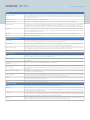
Roaming
Seamless handover between radio cells, IAPP support with optional restriction to an ARF context, IEEE 802.11d support
Opportunistic Key Caching**
Opportunistic key caching allows fast roaming processes between access points. WLAN installations utilizing a WLAN controller and IEEE 802.1X
authentication cache the access keys of the clients and are transmitted by the WLAN controller to all mananged access points
Fast roaming*
Based on IEEE 802.11r, allows fast roaming procedures between access points. This is possible by using IEEE 802.1X authentication or pre-shared
keys in controller based WLAN installations, which save the access keys temporarily and distribute them to the managed access points.
Concurrent WLAN clients
Up to 30 clients per radio (recommended), 512 clients (max.)
Fast client roaming
With background scanning, moving LANCOM 'client mode' access points pre-authenticate to alternative access points which offer a better signal
before Roaming fails
VLAN
VLAN ID definable per interface, WLAN SSID, point-to-point connection and routing context (4094 IDs) IEEE 802.1q
Dynamic VLAN assignment
Dynamic VLAN assignment for target user groups based on MAC addresses, BSSID or SSID by means of external RADIUS server.
Q-in-Q tagging
Support of layered IEEE 802.1q VLANs (double tagging)
Multi-SSID
Simultaneous use of up to 8 independent WLAN networks per WLAN interface
IGMP snooping
Support for Internet Group Management Protocol (IGMP) in the WLAN bridge for WLAN SSIDs and LAN interfaces for specific switching of multicast
packets (devices with integrated WLAN only). Automated detection of multicast groups. Configurable action for multicast packets without registration.
Configuration of static multicast group members per VLAN ID. Configuration of query simulation for multicast membership per VLAN ID
Protected Management Frames
Protection of WLAN Management Frames, based on the standard IEEE 802.11w, against man-in-the-middle attacks by using Message Ingegrity
Codes (MIC)
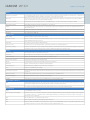
Security
IEEE 802.11i / WPA2 with passphrase (WPA2-Personal) or IEEE 802.1X (WPA2-Enterprise) and hardware-accelerated AES, closed network, WEP64,
WEP128, WEP152, user authentication, IEEE 802.1x /EAP, LEPS, WPA1/TKIP
EAP Types
EAP-TLS, EAP-TTLS/MSCHAPv2, PEAPv0/EAP-MSCHAPv2, PEAPv1/EAP-GTC, EAP-SIM, EAP-AKA, EAP-AKA Prime, EAP-FAST
RADIUS server
Integrated RADIUS server for MAC address list management
EAP server
Integrated EAP server for authentication of IEEE 802.1X clients via EAP-TLS, EAP-TTLS, PEAP, MSCHAP or MSCHAPv2
RADIUS Accounting per SSID
A RADIUS server can be set for each individual SSID
Quality of Service
Prioritization according to Wireless Multimedia Extensions (WME, subset of IEEE 802.11e)
U-APSD/WMM Power Save
Extension of power saving according to IEEE 802.11e by Unscheduled Automatic Power Save Delivery (equivalent to WMM Power Save). U-APSD
supports the automatic switch of clients to a doze mode. Increasmed battery lifetime for telephone calls over VoWLAN (Voice over WLAN)
bandwidth limitation per WLAN client
Maximum transmit and receive bandwith and an individual VLAN ID can be assigned to each WLAN client (MAC address)
bandwidth limitation per SSID
Maximum transmit and receive bandwith can be assigned to each SSID
Broken link detection
If the link of a chosen LAN interface breaks down, a WLAN module can be deactivated to let the associated clients search for a new base station