1
20
P5000 CONSUMABLES QUESTIONS & ANSWERS
“Why does my generic ribbon print darker than the Printronix ribbon?”
This is a true indication of an over-inked ribbon. Many generic ribbons contain excessive ink and appear to print darker.
These ribbons will lead to expensive repairs due to ink migration onto the print hammers. When ink builds up as gummy,
sticky deposits in the hammerbank, print quality deteriorates. This can result in the most costly repair in the printer.
Often service contracts will not cover these repair costs. Printronix ribbons have a precisely controlled ink load and are
guaranteed to prevent ink migration problems.
“Aren't all printer ribbons similar and made with similar inks?”
The selection and use of the ink formulation incorporated in any printer ribbon is dependent upon the impression method
of the printer, the paper or label material upon which the data is to be printed and the eventual application and use of
the data or graphics created. The ribbon inks used in Genuine Printronix Ribbons are formulated for consistency, quality
and extended life with your applications in mind.
“What causes the quality and darkness of my printed output to change drastically every time I change my printer ribbon?”
If not properly controlled during manufacturing, the amount of ink within a new ribbon can vary not only between various
suppliers, but also from batch to batch from a single vendor. These variations of ink content can produce significant
inconsistencies and quality variations in your printed data and bar code applications. Ideally, ribbons should have an
initial inking level of approximately 19% by weight. Below this level, useful ribbon life will be significantly reduced.
Above this level, spreading and smearing of barcodes and characters will be observed.
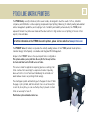
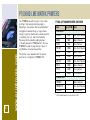
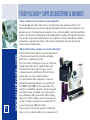
“Why is there a Ball Shot attachment instead of a
mylar leader?”
In a continuous drive to improve ribbon quality and
reliability, we have found the mechanical security of
ball shot ribbon attachment superior to previous
adhesive based attachment methods. The benefit is
more uptime with fewer possible interruptions. The
ball-shot attachment is combined to a stitched wire that
gives the reversal action signal to the printer when it
reaches the end of the ribbon (see photos on the right).
Stitched wire giving the
signal to reverse
Ball-shot attachment