1
EXPOSURE
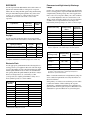
Use the exposure index (EI) numbers below with cameras or
light meters marked for ISO or ASA speeds or exposure
indexes. Do not change the film-speed setting when metering
through a filter. Metering through filters may affect meter
accuracy; see your meter or camera manual for specific
information. For critical work, make a series of test
exposures.
Light Source
KODAK
WRATTEN
Gelatin Filter
Exposure
Index
Daylight or Electronic Flash
None
200
Photolamp (3400 K)
No. 80B
64
Tungsten (3200 K)
No. 80A
50
Fluorescent and High-Intensity Discharge
Lamps
Use the color-compensating filters and exposure adjustments
below as starting points to expose this film under fluorescent
or high-intensity discharge lamps. For critical applications,
make a series of test exposures under your actual conditions.
To avoid the brightness and color variations that occur
during a single alternating-current cycle, use exposure times
of 1/60 second or longer with fluorescent lamps; with
high-intensity discharge lamps, use 1/125 second or longer.
Fluorescent Lamp
KODAK Color
Compensating
Filters
Exposure
Adjustment
Daylight
50R
+1 stop
White
40M
+2⁄3 stop
Daylight
Warm White
20C + 40M
+1 stop
Use the exposures in the table below for average frontlit
subjects from 2 hours after sunrise to 2 hours before sunset.
Warm White Deluxe
30B + 30C
+1 1⁄3 stops
Cool White
40M + 10Y
+1 stop
Cool White Deluxe
20C + 10M
+2⁄3 stop
30M
+2⁄3 stop
Shutter Speed
Lens
(second)
Opening
Lighting Conditions
Bright/hazy sun on sand or snow
1/250
ƒ/22
Bright/hazy sun, distinct shadows
1/250
ƒ/16*
Weak, hazy sun, soft shadows
1/250
ƒ/11
Cloudy bright, no shadows
1/250
ƒ/8
Heavy overcast or open shade†
1/250
ƒ/5.6
*Use ƒ/8 for backlit close-up subjects.
† Subjects shaded from sun but lit by large area of clear sky.
Electronic Flash
Use the appropriate guide number in the following table as a
starting point for your equipment. First select the unit output
closest to the number given by your flash manufacturer. Then
find the guide number for feet or metres. To determine the
lens opening, divide the guide number by the flash-to-subject
distance. If transparencies are consistently too thin
(overexposed), use a higher guide number; if they are too
dense (underexposed), use a lower number.
Guide Number
Unit Output
(BCPS*)
Distance in Feet
Distance in Metres
350
60
18
500
70
21
700
85
26
1000
100
30
1400
120
36
2000
140
42
2800
170
50
4000
200
60
5600
240
70
8000
280
85
Unknown Fluorescent*
* When the type of fluorescent lamp is unknown, try this filter and
exposure adjustment; color rendition may be less than optimum.
KODAK Color
Compensating
Filters
Exposure
Adjustment
General Electric
Lucalox*
80B + 20C
+2 1⁄3 stops
General Electric
Multi-Vapor
20R + 20M
+2⁄3 stop
Deluxe White
Mercury
30R + 30M
+1 1⁄3 stops
Clear Mercury
70R
+1 1⁄3 stops
High-Intensity
Discharge Lamp
* This is a high-pressure sodium-vapor lamp. The information here may
not apply to other manufacturers’ sodium-vapor lamps due to
differences in spectral characteristics.
Note: Consult the manufacturer of high-intensity lamps for
ozone ventilation requirements and safety information on
ultraviolet radiation.
Some primary color filters were used in the previous tables
to reduce the number of filters and keep the exposure
adjustment to a minimum. Red filters were substituted for
equivalent filtration in magenta and yellow. Blue filters were
substituted for equivalent filtration in cyan and magenta.
* BCPS=beam candlepower seconds.
2
KODAK PROFESSIONAL EKTACHROME Film E200 • E-28