1
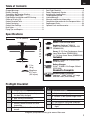
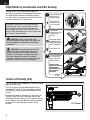
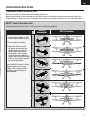
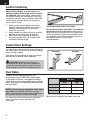
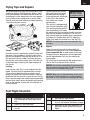
EN Table of Contents Charger Warnings ..................................................4 Battery Charging....................................................4 Transmitter and Receiver Binding...........................5 Low Voltage Cutoff (LVC) ........................................5 Flight Battery Installation and ESC Arming..............6 Center of Gravity (CG) ............................................6 Control Direction Tests ...........................................7 Control Centering ..................................................8 Control Horn Settings .............................................8 Dual Rates .............................................................8 Flying Tips and Repairs ..........................................9 Post Flight Checklist ..............................................9 Power Components Service .................................10 Installing the Landing Gear ..................................11 Troubleshooting Guide .........................................12 Limited Warranty .................................................13 Warranty and Service Information ........................15 Compliance Information for the European Union ...15 Replacement Parts...............................................58 Optional Parts and Accessories ............................59 Specifications 15.3 in (388mm) Installed 12.2 in (310mm) Motor: 8.5mm Brushed Motor Receiver: Spektrum™ AS6410 DSMX® 6Ch UM AS3X® Receiver ESC (SPMAR6410L) Servo: (2) 2.3-Gram Performance Linear Long Throw Servo (SPMSA2030L) (1) 1.8-Gram Linear Servo (SPMSA2005) Included Battery: 150mAh 1S 3.7V 25C Li-Po (EFLB1501S25) Battery Charger: E-flite® 1S USB Li-Po Charger, 300mA (EFLC1008) 1.7oz (48 g) Wing Area: 67.5 sq in (435 sq cm) Needed to Complete Recommended Transmitter: Spektrum™ DSM2®/DSMX® full range with dual-rates (DX4e and up) Preflight Checklist 1. Charge flight battery. 7. Set dual rates. 2. Install flight battery in aircraft (once it has been fully charged). 8. Adjust center of gravity. 3. Bind aircraft to transmitter. 4. Make sure linkages move freely. 5. Perform Control Direction Test with transmitter. 6. Perform AS3X Control Direction Test with aircraft. 9. Perform a radio system Range Check. 10. Find a safe and open area. 11. Plan flight for flying field conditions. 12. Set flight timer for 5 minutes for first flight. To register your product online, go to www.e-fliterc.com 3