1
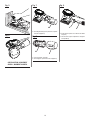
OPERATION NOTE: If you forget to remove the sandpaper after a sanding operation, sand for a few minutes to soften the adhesive backing before attempting to remove sandpaper. USING THE DUST BAG The dust bag provides a dust collection system for the sander. Dust is drawn up through holes in the sandpaper and cushion and collected in the dust bag during sanding. ATTACHING THE DUST BAG ASSEMBLY See Figure 7, page 13. Unplug the sander. WARNING: Collected sanding dust from sanding surface coatings such as polyurethanes, linseed oil, etc., can self-ignite in the sander dust bag or elsewhere and cause fire. To reduce the risk of fire, always empty the dust bag frequently (10-15 minutes) while sanding and never store or leave a sander without totally emptying its dust bag. Also follow the recommendations of the coatings manufacturers. ATTACHING SANDER TO VACUUM Slide the dust bag assembly onto the blower exhaust on the sander using a slight twisting motion. CLEANING THE DUST BAG See Figures 7 - 8, page 13. For more efficient operation, empty the dust bag when it is no more than half full. This will permit the air to flow through the bag better. To empty the dust bag: Unplug the sander. Remove the dust bag assembly from the sander and shake out dust. For a more thorough cleaning of the dust bag, remove dust bag from the frame and shake out dust. Replace the dust bag over the frame, then reinstall on the sander. See Figure 9, page 13. When sanding for an extended period of time, you can easily attach the dust collection system of the sander to a vacuum. To attach: Unplug the sander. Remove dust bag from sander. Attach vacuum hose to dust exhaust. NOTE: Vacuum hose fits inside dust exhaust. Connect sander and vacuum to power supply. WARNING: When sander is not connected to vacuum, always install dust bag back on sander. Failure to do so could cause sanding dust or foreign objects to be thrown into the face or eyes which could result in possible serious injury. 11 - English