1
PRODUCT DESIGN
General Operation
The G*S8 furnaces are equipped with an electronic ignition
device used to light the burners and an induced draft blower
to exhaust combustion products.
An interlock switch prevents furnace operation if the inner
blower door is not in place. Keep the blower access door in
place except for inspection and maintenance. (See illustration on pages 5 and 6.)
This furnace is also equipped with a self-diagnosing electronic control module. In the event a furnace component is
not operating properly, the control module LED will flash on
and off in a factory-programmed sequence, depending on
the problem encountered. This light can be viewed through
the observation window in the blower access door. Refer to
the Troubleshooting Chart for further explanation of the LED
codes and Abnormal Operation - Integrated Ignition Control
section in the Service Instructions for an explanation of the
possible problem.
The rated heating capacity of the furnace should be greater
than or equal to the total heat loss of the area to be heated.
The total heat loss should be calculated by an approved
method or in accordance with “ASHRAE Guide” or “Manual
J-Load Calculations” published by the Air Conditioning Contractors of America.
*Obtain from: American National Standards Institute 1430
Broadway New York, NY 10018
Location Considerations
•
The furnace should be as centralized as is practical
with respect to the air distribution system.
•
Do not install the furnace directly on carpeting, tile, or
combustible material other than wood flooring.
•
When installed in a residential garage, the furnace
must be positioned so the burners and ignition source
are located not less than 18 inches (457 mm) above
the floor and protected from physical damage by vehicles.
Notes:
WARNING
TO PREVENT POSSIBLE PERSONAL INJURY OR DEATH DUE TO ASPHYXIATION,
THIS FURNACE MUST BE CATEGORY I VENTED. DO NOT VENT USING
CATEGORY III VENTING.
Category I Venting is venting at a non-positive pressure. A
furnace vented as Category I is considered a fan-assisted
appliance and the vent system does not have to be “gas
tight.” NOTE: Single stage gas furnaces with induced draft
blowers draw products of combustion through a heat exchanger allowing, in some instances, common venting with
natural draft appliances (i.e. water heaters). All installations
must be vented in accordance with National Fuel Gas Code
4
NFPA 54/ANSI Z223.1 - latest edition. In Canada, the furnaces must be vented in accordance with the National Standard of Canada, CAN/CSA B149.1 and CAN/CSA B149.2 latest editions and amendments.
NOTE: The vertical height of the Category I venting system
must be at least as great as the horizontal length of the
venting system.
Accessibility Clearances (Minimum)
Unobstructed front clearance of 24" for servicing is recommended.
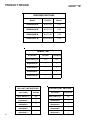
MINIMUM CLEARANCE TO COMBUSTIBLE MATERIALS - INCHES
Sides
Rear
Front*
1
0
3
Vent
SW
B
6
1
Top
1
* 24" clearance for serviceability recommended.
** Single Wall Vent (SW) to be used only as a connector.
Refer to the venting tables outlined in the Installation Manual for
additional venting requirements.
Note: In all cases accessibility clearance shall take precedence over clearances from the enclosure where accessibility clearances are greater. All dimensions are given in inches.
High Altitude Derate
IMPORTANT NOTE: The furnace as shipped requires no
change to run between 0 - 4500 feet. Do not attempt to
increase the firing rate by changing orifices or increasing
the manifold pressure below 4500 feet. This can cause poor
combustion and equipment failure.
High altitude installations above 4500 feet may require both
a pressure switch and an orifice change. These changes
are necessary to compensate for the natural reduction in
the density of both the gas fuel and the combustion air at
higher altitude.
For installations above 4500 feet, please refer to your distributor for required kit(s). Contact the distributor for a tabular
listing of appropriate manufacturer’s kits for propane gas
and/or high altitude installations. The indicated kits must be
used to insure safe and proper furnace operation. All conversions must be performed by a qualified installer, or service agency.