1
[9.1] Smoke Entry Tests
[9.1.1] Air Flow
[9.1.4] Air Flow Test using Dwyer Series 607 Differential Pressure
Transmitter
This product is designed to operate over an extended air speed range of 100
Verify the air speed of the duct using an anemometer. Air speed must be at
to 4000 FPM. To verify sufficient sampling of ducted air, turn the air han-
least 100 FPM. Wire the Dwyer transmitter as shown in Figure 8. Connect
dler on and use a manometer to measure the differential pressure between
the leads of the meter to either side of the 1000Ω resistor. Allow unit to
the two sampling tubes. The differential pressure should measure at least
warm up for 15 seconds. With both HIGH and LOW pressure ports open
0.0015 inches of water and no more than 1.2 inches of water. Because most
to ambient air, measure and record the voltage drop across the 1000Ω
commercially available manometers cannot accurately measure very low
resistor (measurement 1), 4.00 volts is typical. Using flexible tubing and
pressure differentials, applications with less than 500 FPM of duct air speed
rubber stoppers, connect the HIGH side of the transmitter to the sampling
may require one of the following: 1) the use of a current-sourcing pressure
tube of the duct smoke detector housing, and the LOW side of the trans-
transmitter (Dwyer Series 607) per Section 9.1.4 or; 2) the use of aerosol
mitter to the exhaust tube of the duct smoke detector housing. Measure
smoke per section 9.1.2.
and record the voltage drop across the 1000Ω resistor (measurement 2).
Subtract the voltage recorded in measurement 1 from the voltage recorded
[9.1.2] Air Flow Test using Aerosol Smoke
in measurement 2. If the difference is greater than 0.15 volts, there is
This test is intended for low-flow systems (100-500 FPM). If the air speed
enough air flow through the duct smoke detector for proper operation.
is greater than 500 FPM, use a conventional manometer to measure differ-
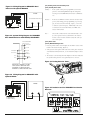
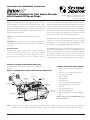
Figure 8. Procedure for verifying air flow:
ential pressure between the sampling tubes, as described in 9.1.1.
TO SAMPLING TUBE
Drill a 1⁄4″ hole 3 feet upstream from the duct smoke detector. With the
TO EXHAUST TUBE
air handler on, measure the air velocity with an anemometer. Air speed
must be at least 100 FPM. Spray aerosol smoke* into the duct through the
HIGH
1
⁄4″ hole for five seconds. Wait two minutes for the duct smoke detector
LOW
DIFFERENTIAL
PRESSURE
TRANSMITTER
MODEL #607-01
to alarm. If the duct smoke detector alarms, air is flowing through the
detector. Remove the duct smoke detector cover and blow out the residual
15 TO 36VDC
SUPPLY
aerosol smoke from the chamber and reset the duct smoke detector. Use
9 VOLT
BATTERY
duct tape to seal the aerosol smoke entry hole.
1000 OHM 5% 1 WATT RESISTOR
9 VOLT
BATTERY
9 VOLT
BATTERY
*Aerosol smoke can be purchased from Home Safeguard Industries,
Malibu, CA. Phone: 310/457-5813.
VOLT METER
FLUKE MODEL 87
OR EQUIVALENT
[9.1.3] Smoke Entry Test
To determine if smoke is capable of entering the sensing chamber, visually
identify any obstructions. Plug the exhaust and sampling tube holes to
prevent ducted air from carrying smoke away from the detector head, then
blow smoke such as cigarette, cotton wick, or punk directly at the head to
cause an alarm. REMEMBER TO REMOVE THE PLUGS AFTER THIS TEST,
OR THE DETECTOR WILL NOT FUNCTION PROPERLY.
H0163-01
[9.1.5] Filter Replacement
The filters do not substantially affect smoke performance even when up
to 90% of the filter is clogged. Quarterly visual inspection usually suffices to determine whether the filters should be replaced because only a
high percentage of contamination affects performance. If further testing
is required, compare differential pressure readings with and without the
filters installed. If the difference exceeds 10% replace the filters. In no case
should the pressure differential fall below 0.0015 inches of water.
1
2
COM (-)
COM (+)
COM (-)
+
COM (+)
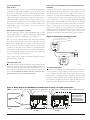
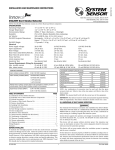
Figure 9. Wiring Diagram for DH200RPL Duct Smoke Detector using a UL listed control panel:
NOTE: Jumper J1 shunt must be installed for 2-W applications. J1 shunt must be removed for power PCB supervision.
NOTE: J1 JUMPER MUST
BE INSTALLED FOR 2W
APPLICATIONS. THE
J1 JUMPER MUST BE
REMOVED FOR POWER
BOARD SUPERVISION.
1 2
COMMUNICATION
LINE
–
UL LISTED CONTROL
PANEL
D200-39-00
J1 JUMPER
1ST DETECTOR
IN LOOP
J1 JUMPER
5
2ND DETECTOR
IN LOOP
I56-1977-004R